Yearly Expenses by Quarter
What this document covers
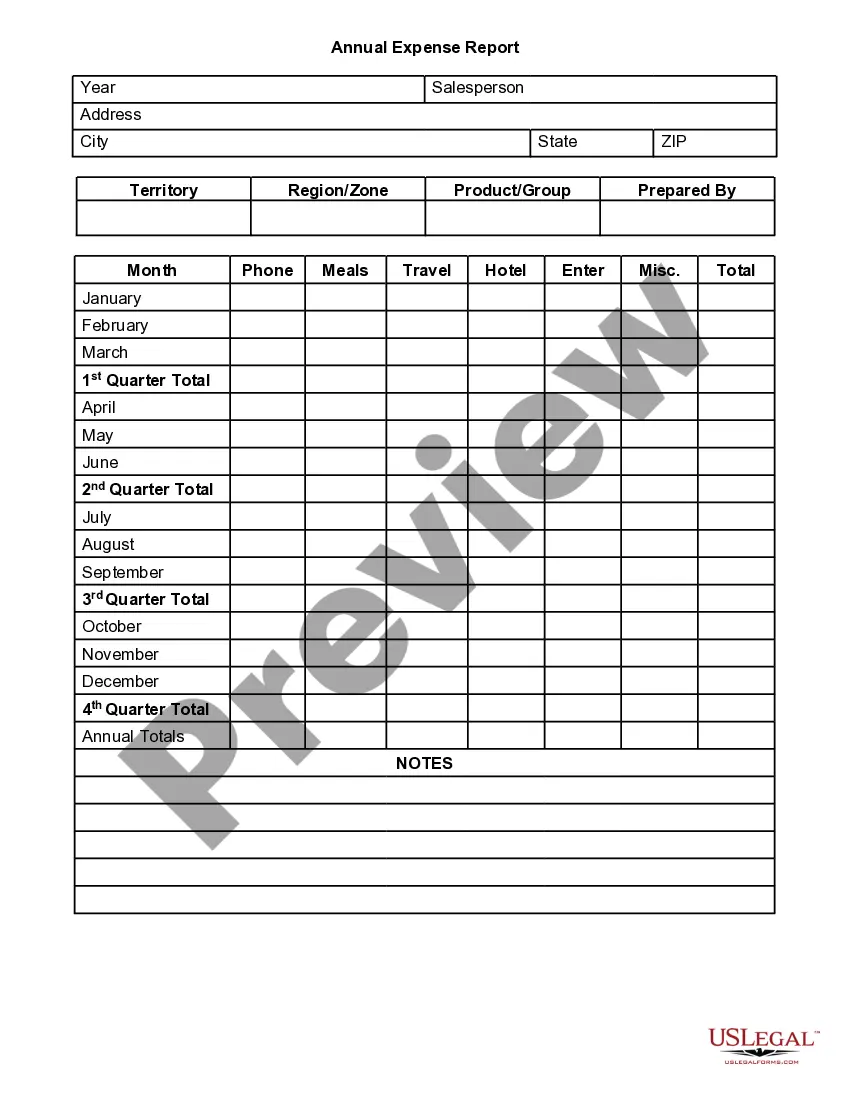
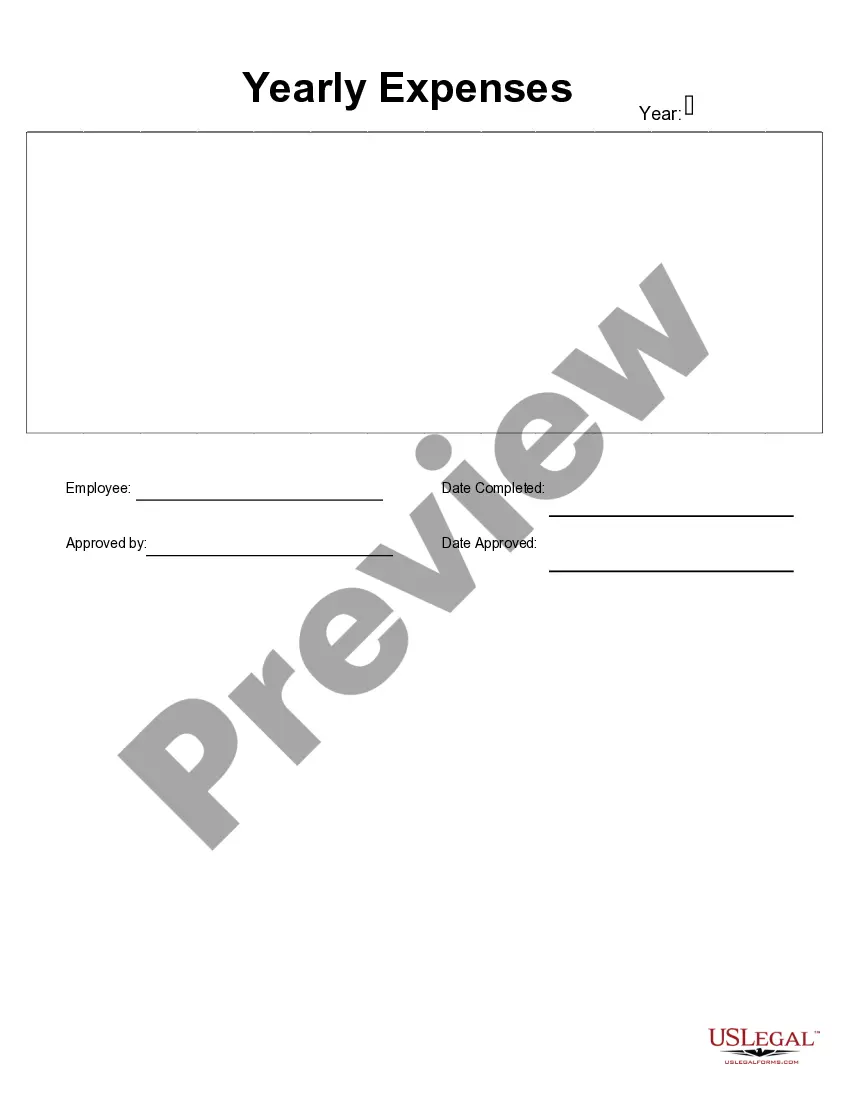
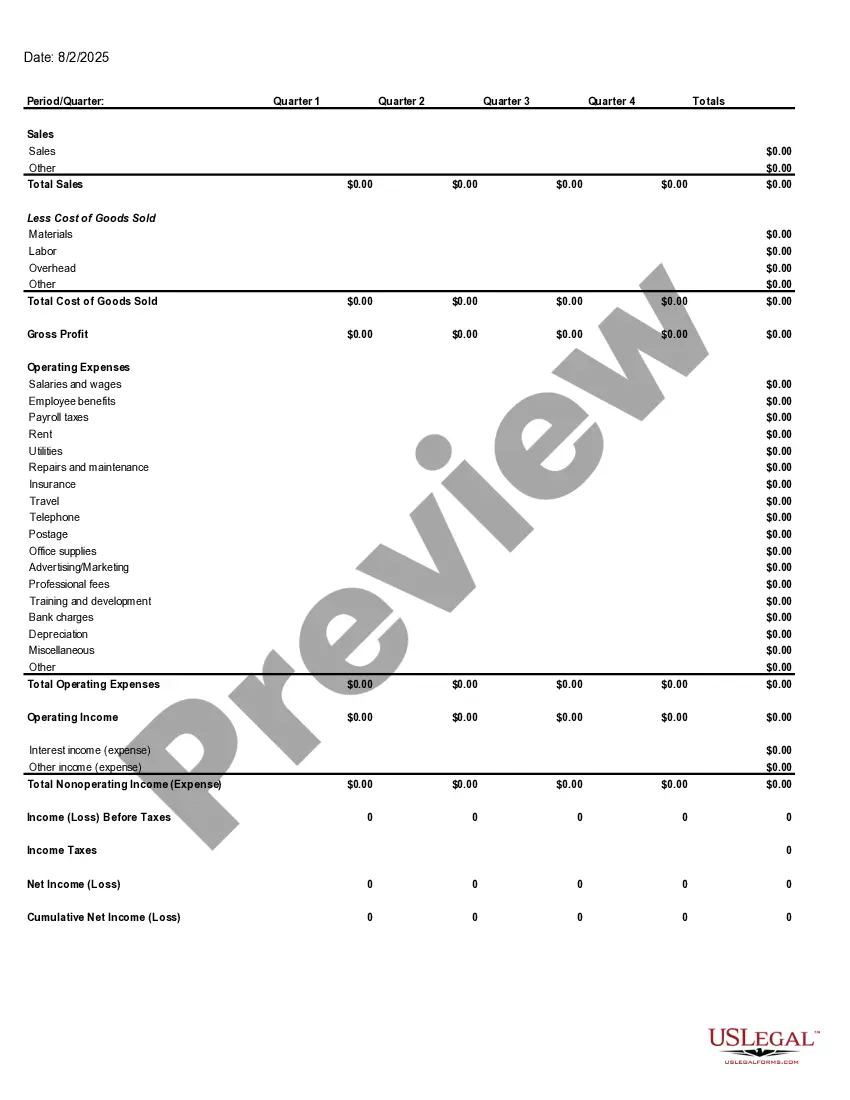
The Yearly Expenses by Quarter form is designed for businesses to organize and track their financial expenditures over a twelve-month period, divided into quarters. This form helps businesses maintain a clear overview of their spending patterns, facilitating budget planning and financial analysis. Unlike generic expense reports, this form specifically segments expenses quarterly, making it easier for businesses to identify trends and prepare for future financial decisions.
Key components of this form
- Quarterly expense categories to break down spending (e.g., marketing, operations, salaries).
- Total expenses calculated for each quarter to provide an overview of financial health.
- Space for notes to explain or justify any unusual expenses.
- Yearly summary section to aggregate total spending.
Common use cases
This form is essential for businesses that need to track their yearly expenses systematically. It is particularly useful during financial reviews, budgeting sessions, or tax preparation, as it provides a clear record of spent funds across different periods. By utilizing this form, businesses can ensure they have a concrete understanding of where their money goes and make informed decisions moving forward.
Who needs this form
- Business owners looking to maintain a clear picture of their quarterly spending.
- Accountants and financial professionals managing budgets for businesses.
- Financial analysts who need to examine spending patterns over time.
- Individuals or organizations preparing for tax submissions that require detailed expense tracking.
How to prepare this document
- Identify and list the various expense categories relevant to your business.
- Enter the specific expenses incurred for each category during each quarter.
- Review and total the expenses for each quarter to ensure accuracy.
- Add notes for any significant or unexpected expenses to provide clarity.
- Summarize total yearly expenses at the end to facilitate financial reviews.
Is notarization required?
This form does not typically require notarization unless specified by local law.
Get your form ready online
Our built-in tools help you complete, sign, share, and store your documents in one place.
Make edits, fill in missing information, and update formatting in US Legal Forms—just like you would in MS Word.
Download a copy, print it, send it by email, or mail it via USPS—whatever works best for your next step.
Sign and collect signatures with our SignNow integration. Send to multiple recipients, set reminders, and more. Go Premium to unlock E-Sign.
If this form requires notarization, complete it online through a secure video call—no need to meet a notary in person or wait for an appointment.
We protect your documents and personal data by following strict security and privacy standards.

Make edits, fill in missing information, and update formatting in US Legal Forms—just like you would in MS Word.

Download a copy, print it, send it by email, or mail it via USPS—whatever works best for your next step.

Sign and collect signatures with our SignNow integration. Send to multiple recipients, set reminders, and more. Go Premium to unlock E-Sign.

If this form requires notarization, complete it online through a secure video call—no need to meet a notary in person or wait for an appointment.

We protect your documents and personal data by following strict security and privacy standards.
Common mistakes
- Failing to categorize expenses properly, leading to inaccurate totals.
- Not keeping notes for unusual expenses, which can cause confusion during analysis.
- Overlooking to summarize total yearly expenses, missing out on a comprehensive financial overview.
Why complete this form online
- Easy access: Downloadable format allows for offline completion and storage.
- Editability: Users can fill out the form digitally, ensuring clarity and organization.
- Time-efficient: Quickly generate and print reports for meetings or reviews.
Legal use & context
- This form is designed for financial record-keeping and does not need to meet extensive legal standards.
- It provides a useful framework for businesses to maintain accurate financial records, which may be required for audits or tax filings.
Quick recap
- The Yearly Expenses by Quarter form helps businesses efficiently track and analyze financial expenditures.
- Utilizing this form aids in accurate budgeting and preparing for taxes.
- Proper categorization and note-taking enhance the clarity and utility of the form.
Looking for another form?


Form popularity
FAQ
Cost of goods sold. Sales commissions expense. Delivery expense. Rent expense. Salaries expense. Advertising expense.
Auto registration fees. Annual scheduled car maintenance. New tires and brakes (as needed) Car insurance premiums. Renter's insurance premiums. Holiday, birthday and anniversary gifts. Holiday and birthday parties/entertaining. Pet wellness visits and vaccinations.
Fixed expenses, savings expenses, and variable costs are the three categories that make up your budget, and are vitally important when learning to manage your money properly. When you've committed to living on a budget, you must know how to put your plan into action.
You might think expenses are expenses. If the money's going out, it's an expense. But here at Fiscal Fitness, we like to think of your expenses in four distinct ways: fixed, recurring, non-recurring, and whammies (the worst kind of expense, by far). What are these different types of expenses and why do they matter?
Subtract your total expenses from your total sales revenue to calculate your quarterly earnings. If your result is positive, you earned a profit during the quarter. If your result is negative, you sustained a quarterly loss.
Some other examples of Funds for yearly expenses are auto expenses, home, vacation, gifts, clothing, seasonal utilities, holidays, and big ticket items (TV, stereo, trampoline, etc).
Mortgage/rent. Homeowners or renters insurance. Property tax (if not already included in the mortgage payment). Auto insurance. Health insurance. Out-of-pocket medical costs. Life insurance. Electricity and natural gas.
The Three Keys to Live on Less Fact: The largest three expenses for almost everyone is your house, your transportation, and your food. The average U.S. citizen spends approximately 34% of their income on their home, 18% on transportation, and 12% on food.
A quarterly budget is a budget that uses three months for the budget timeframe. The year is broken up into four quarters, each with three months.