Stock Option Agreement
About this form
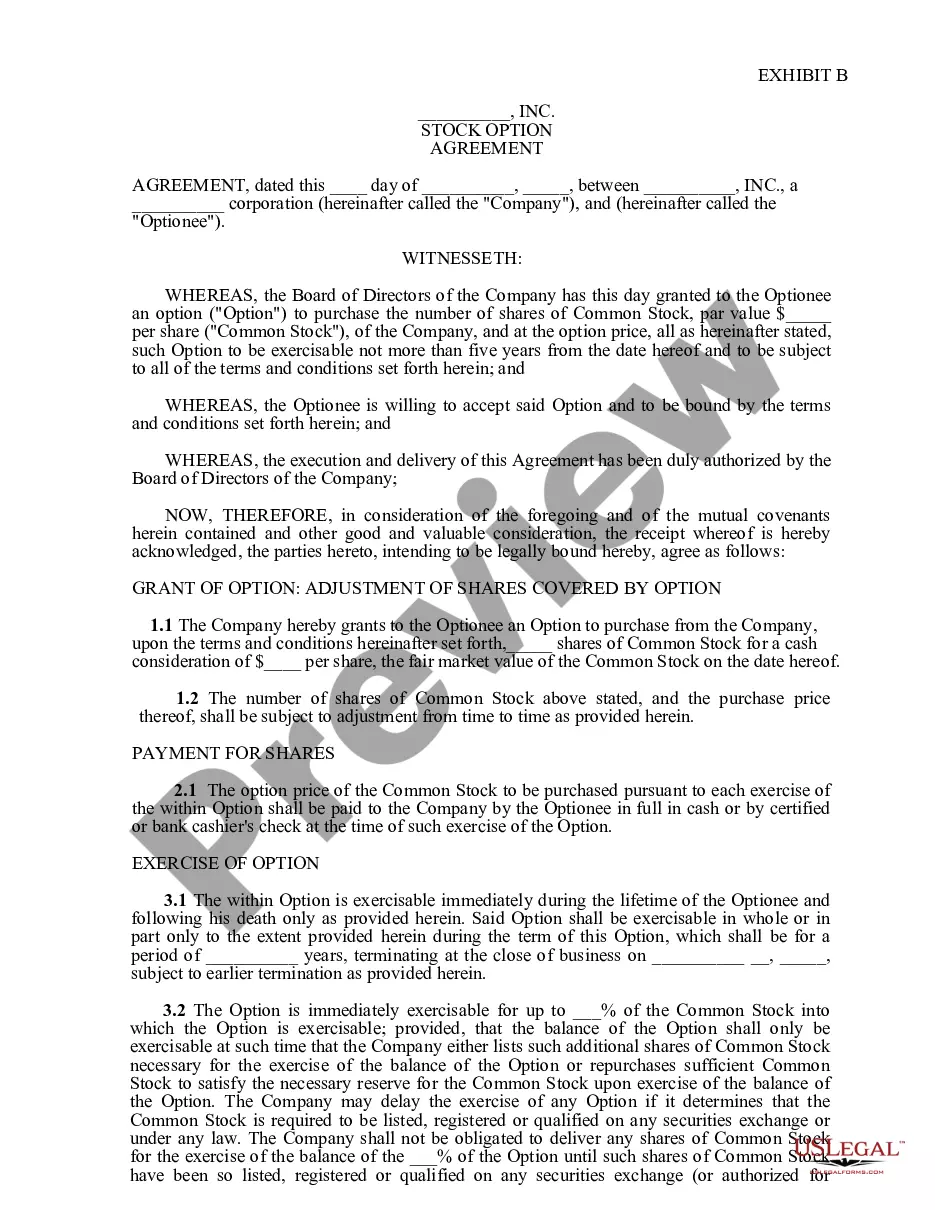
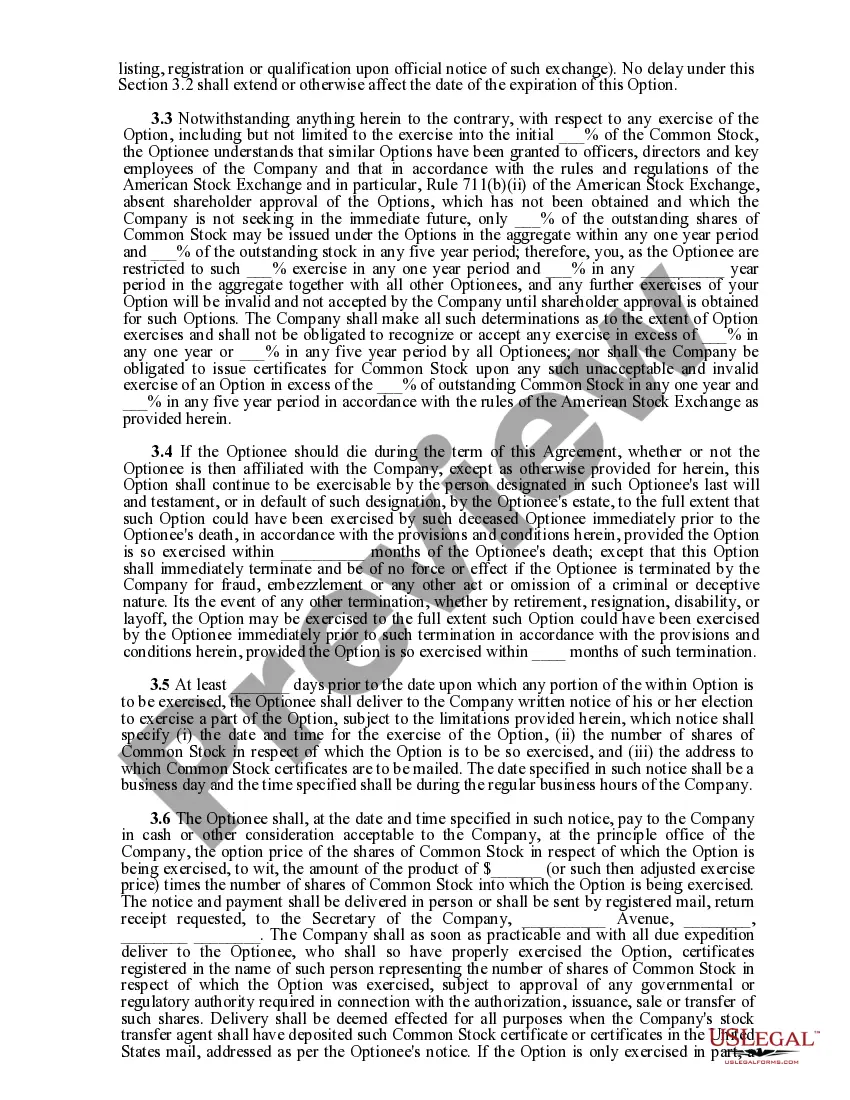
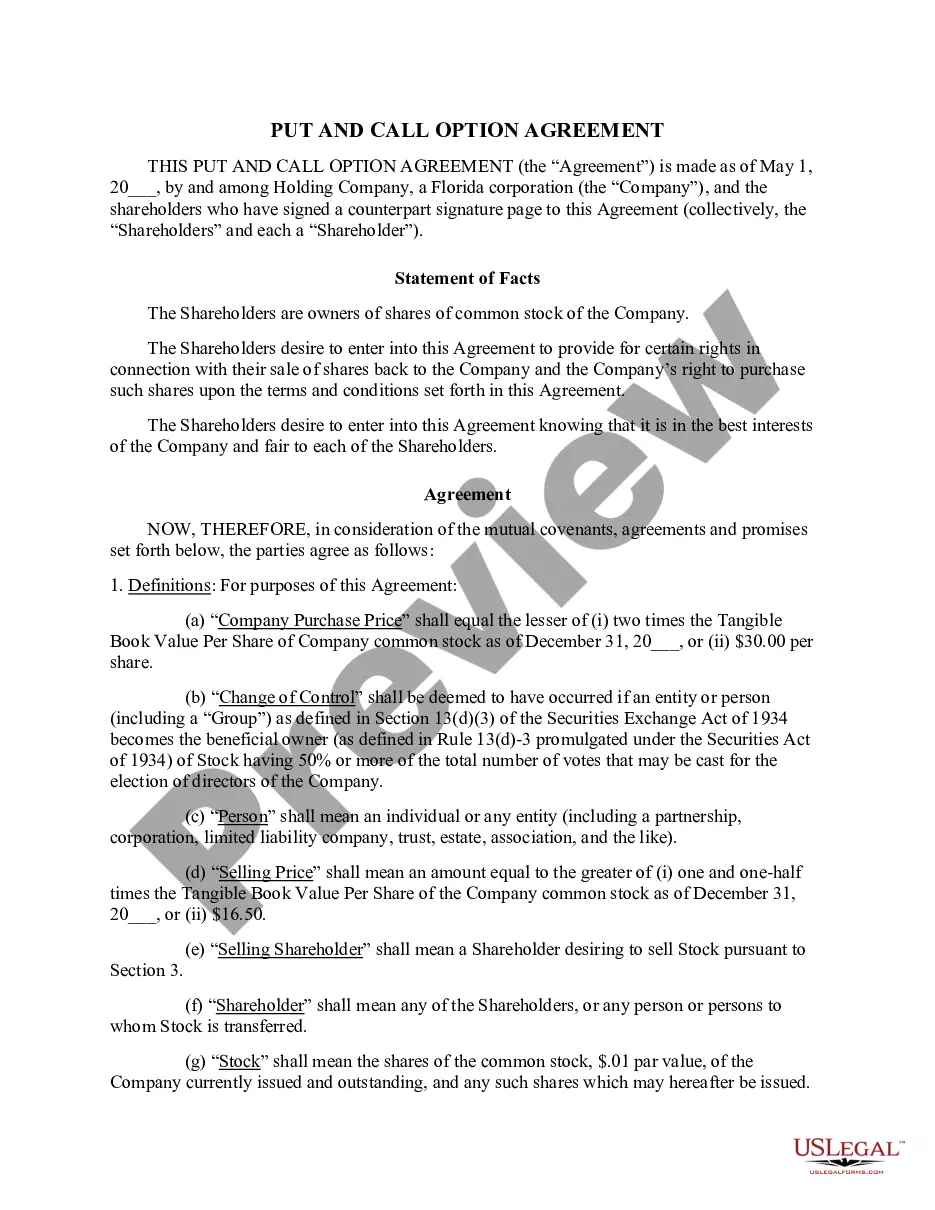
The Stock Option Agreement is a legal document that outlines the terms under which an employee or individual (the Optionee) is granted the right to purchase shares of a company's stock at a predetermined price. This agreement is beneficial for companies aiming to incentivize key personnel through ownership stakes while providing clarity on the terms and conditions of the stock option. Unlike other agreements, the Stock Option Agreement focuses specifically on the rights of the Optionee concerning the purchase of shares, including pricing, expiration terms, and conditions for exercise.
Form components explained
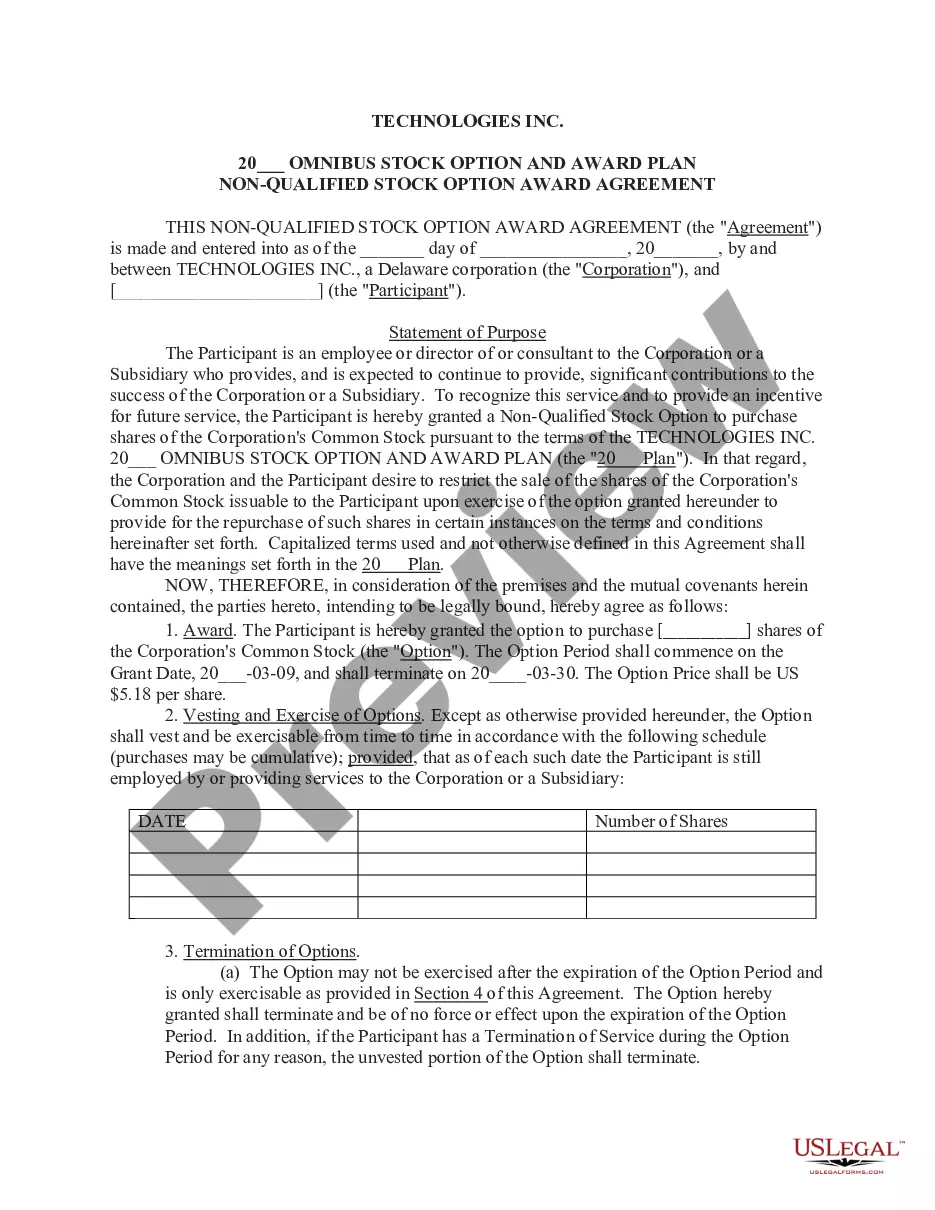
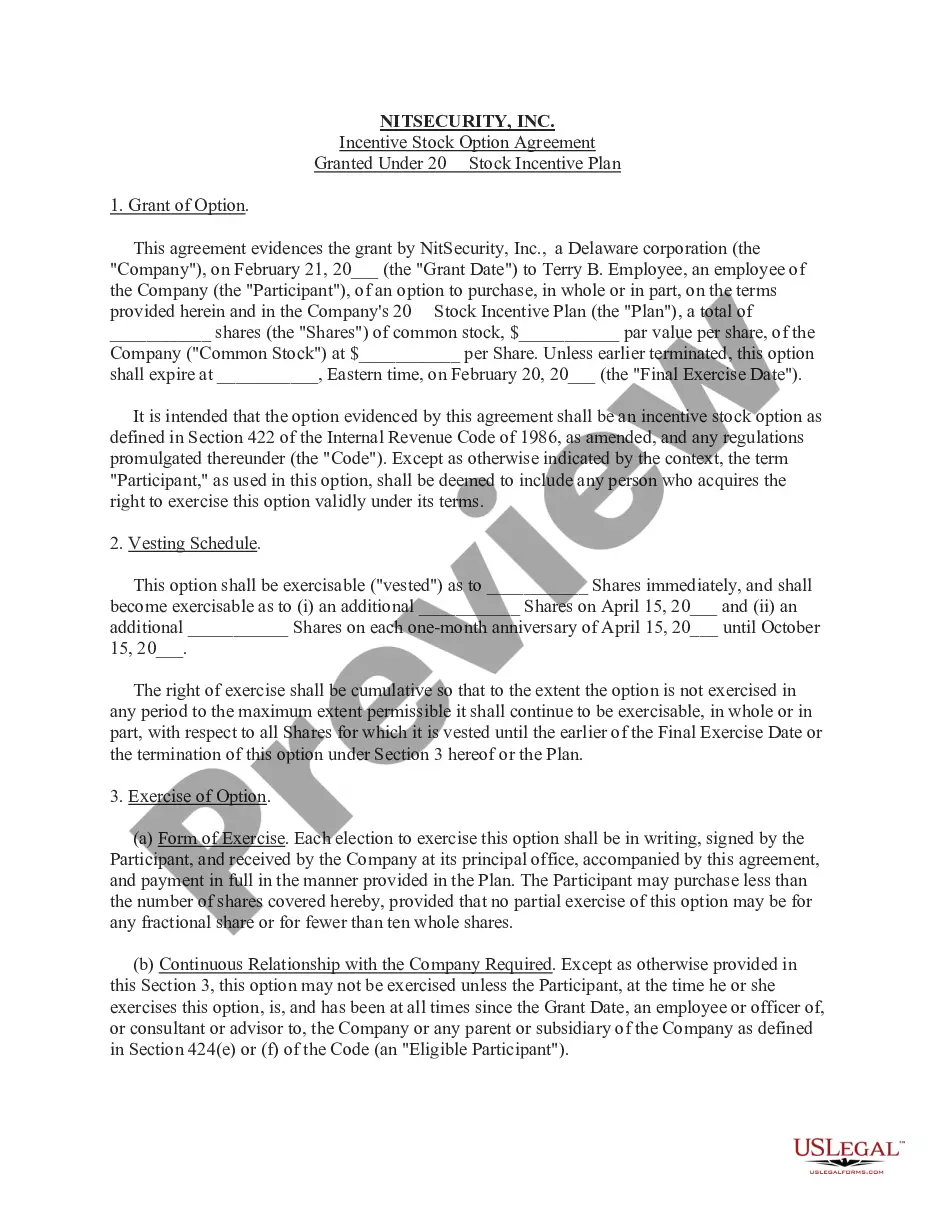
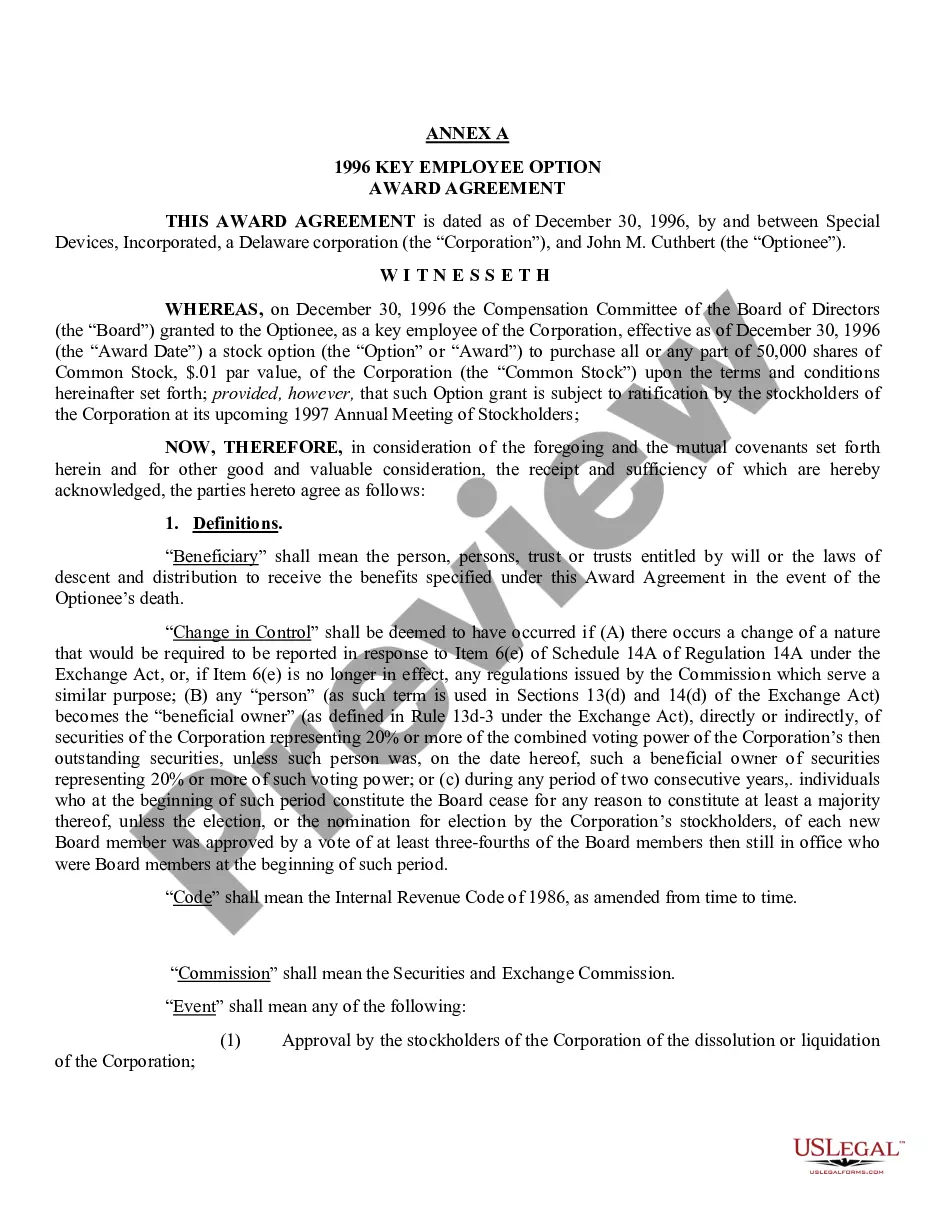
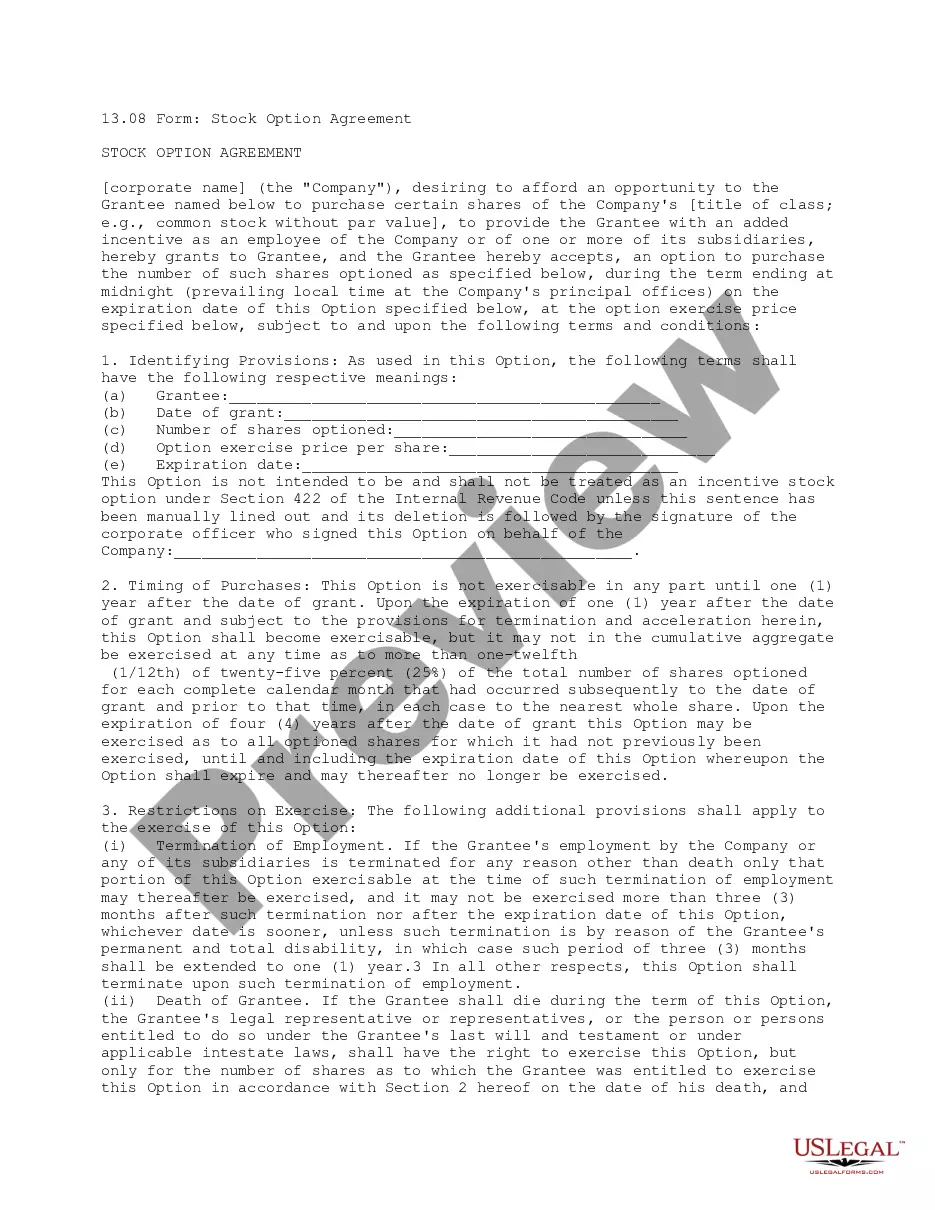
- Grant of Option: Specifies the number of shares and the price at which they can be purchased.
- Exercise of Option: Outlines how and when the Optionee can exercise their options over the life of the agreement.
- Payment Terms: Describes the payment methods for exercising the stock options.
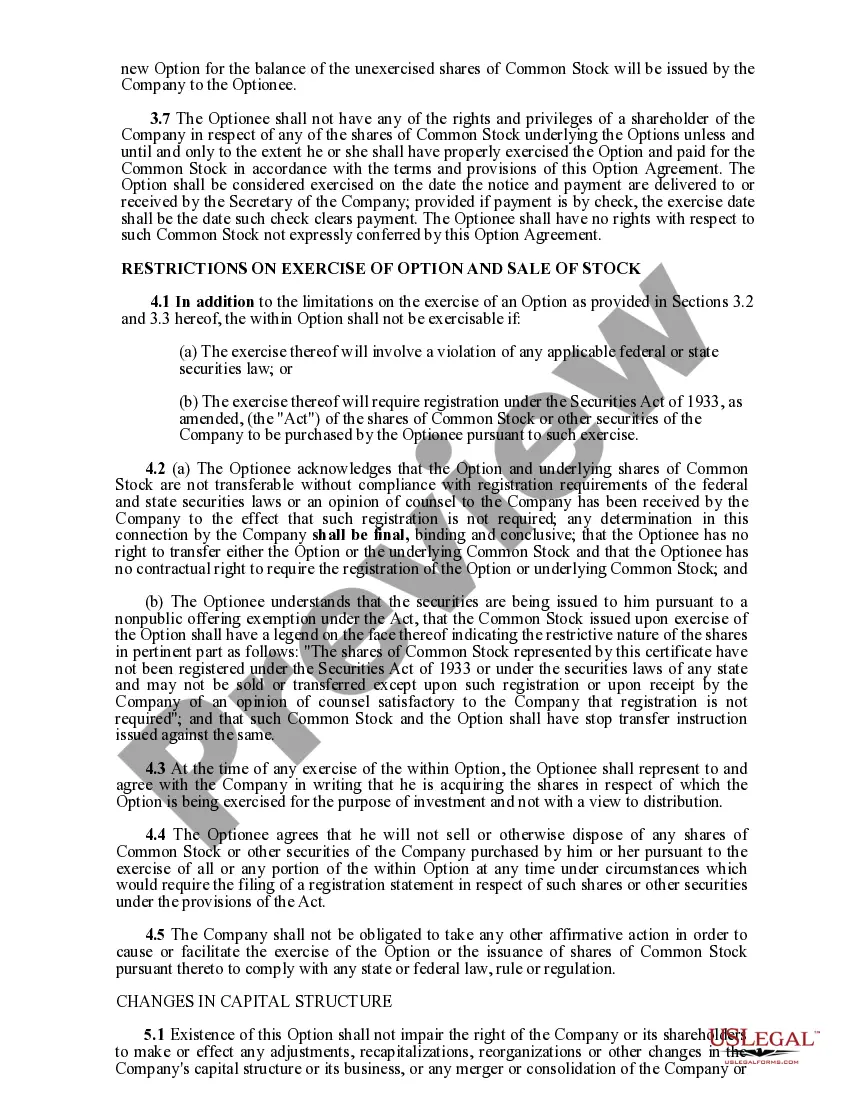
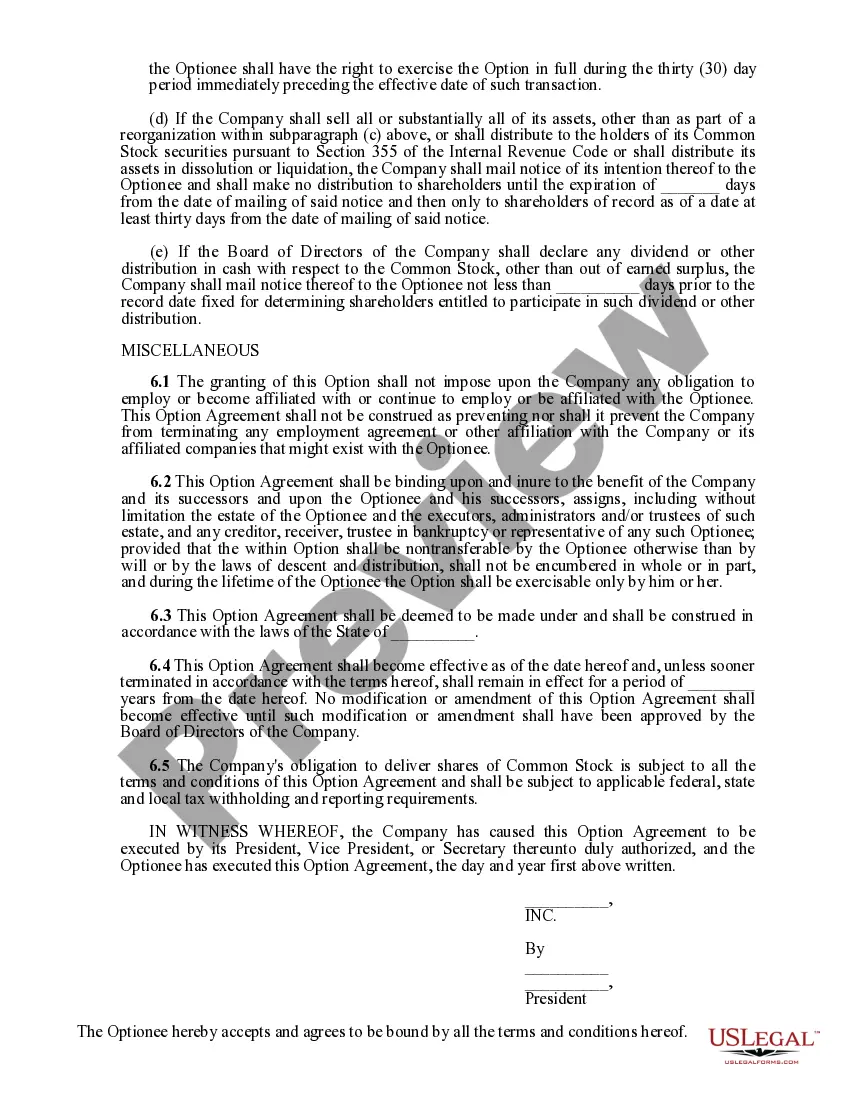
- Restrictions on Exercise: Lists scenarios under which the exercise of the option may be limited or prohibited.
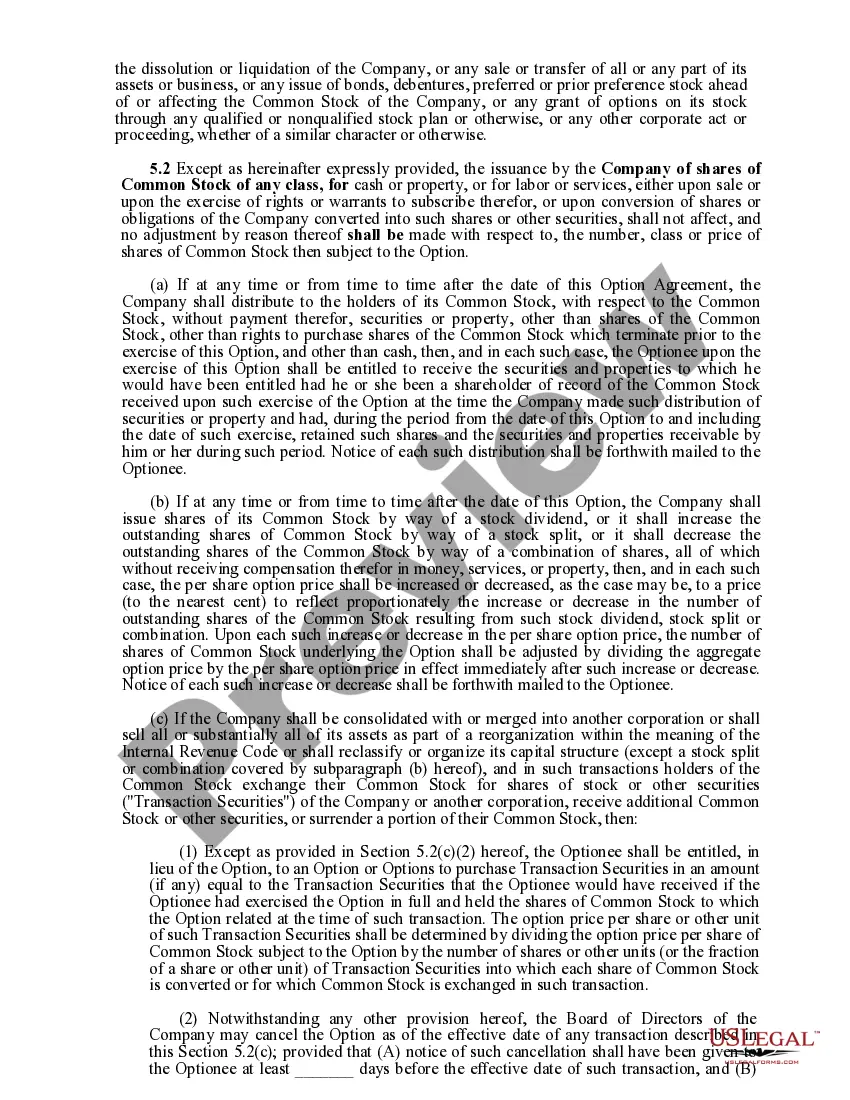
- Changes in Capital Structure: Addresses adjustments in the agreement due to company restructuring or stock changes.
Common use cases
This form is essential for companies that are granting stock options to their employees or key stakeholders. It is particularly relevant when an organization aims to attract talent, align employee interests with shareholder value, or facilitate employee investment in the company. Use this form when formalizing an option grant, ensuring that all parties involved understand their rights and obligations.
Intended users of this form
- Employers looking to provide stock options to their employees.
- Employees or individuals receiving stock options as part of their compensation package.
- Companies undergoing initial public offerings (IPOs) or seeking to create employee stock ownership programs.
Steps to complete this form
- Identify the parties: Fill in the names of the company and the Optionee.
- Specify the grant details: Outline the number of shares and the option price per share.
- Clarify exercise terms: State the duration of the option and any conditions on exercising it.
- Incorporate any restrictions: Include details on limitations for exercising options based on company bylaws or regulations.
- Add signatures: Ensure the authorized representatives of the company and the Optionee sign the agreement to validate it.
Notarization guidance
This form does not typically require notarization to be legally valid. However, some jurisdictions or document types may still require it. US Legal Forms provides secure online notarization powered by Notarize, available 24/7 for added convenience.
Get your form ready online
Our built-in tools help you complete, sign, share, and store your documents in one place.
Make edits, fill in missing information, and update formatting in US Legal Forms—just like you would in MS Word.
Download a copy, print it, send it by email, or mail it via USPS—whatever works best for your next step.
Sign and collect signatures with our SignNow integration. Send to multiple recipients, set reminders, and more. Go Premium to unlock E-Sign.
If this form requires notarization, complete it online through a secure video call—no need to meet a notary in person or wait for an appointment.
We protect your documents and personal data by following strict security and privacy standards.

Make edits, fill in missing information, and update formatting in US Legal Forms—just like you would in MS Word.

Download a copy, print it, send it by email, or mail it via USPS—whatever works best for your next step.

Sign and collect signatures with our SignNow integration. Send to multiple recipients, set reminders, and more. Go Premium to unlock E-Sign.

If this form requires notarization, complete it online through a secure video call—no need to meet a notary in person or wait for an appointment.

We protect your documents and personal data by following strict security and privacy standards.
Common mistakes to avoid
- Failing to specify the purchase price or number of shares.
- Not clarifying the conditions for option expiration or exercise.
- Overlooking state-specific securities laws applicable to stock options.
Why use this form online
- Convenience: Download and fill out the form at your pace.
- Editability: Make necessary adjustments to fit your specific agreement needs.
- Reliability: Use forms drafted by licensed attorneys experienced in corporate law.
Legal use & context
- This Stock Option Agreement is legally binding once executed by both the company and the Optionee.
- The agreement must comply with federal and state securities laws, ensuring the options can be exercised without legal issues.
Summary of main points
- The Stock Option Agreement outlines the details of ownership rights given to employees.
- Understanding terms of exercise and payment is crucial for both company and Optionee.
- Consulting with legal advice can ensure compliance with applicable laws and regulations.
Looking for another form?
Form popularity
FAQ
It's free and you're not obligated to purchase your options Just because you accepted your stock grant doesn't mean you actually have to purchase your shares. You're not making any kind of financial agreementrather, you're just agreeing to have the ability to purchase shares of stock in the future.
It may sound complicated, but accepting your stock grant should be a no-brainer for anyone who's starting at a new company. It's low-risk and can provide measurable benefits down the road. To get started on the ins and outs of stock options, check out part 1 of our series Equity 101: Startup Employee Stock Options.
Stock options are a form of compensation. Companies can grant them to employees, contractors, consultants and investors. These options, which are contracts, give an employee the right to buy or exercise a set number of shares of the company stock at a pre-set price, also known as the grant price.
A stock option is the right to buy a specific number of shares of company stock at a pre-set price, known as the exercise or strike price, for a fixed period of time, usually following a predetermined waiting period, called the vesting period. Most vesting periods span follow three to five years, with a certain
Stock options are only valuable if the market value of the stock is higher than the grant price at some point in the vesting period. Otherwise, you're paying more for the shares than you could in theory sell them for. RSUs, meanwhile, are pure gain, as you don't have to pay for them.
You Could Make a Lot of Money with Stock Options (But There's No Guarantee) Think of a start-up company that gives you 100,000 company stock options with a strike price of $1 per share. At issue, they probably won't be worth much.If that happened, the value of the stock options would go from nothing to $9,900,000.
RSUs are generally always worth something versus stock options, which can expire worthless if the stock price is below the strike price. Additionally, with RSUs you don't have to come up with the cash to exercise the options if your company doesn't offer some sort of cashless exercise option.
About Stock Option Agreements When a company offers employees stock options, they do so through a special contract called a stock option agreement.The option agreement dictates all the terms of the offer -- including vesting schedule, time limits for exercise once vested and any other special conditions.
If you have been given the opportunity to purchase stock options, you may want to take advantage of them if you can afford to do so. But you should not go into debt to purchase stock options.You should also only purchase stock options if you are confident that the company is going to continue to grow and profit.