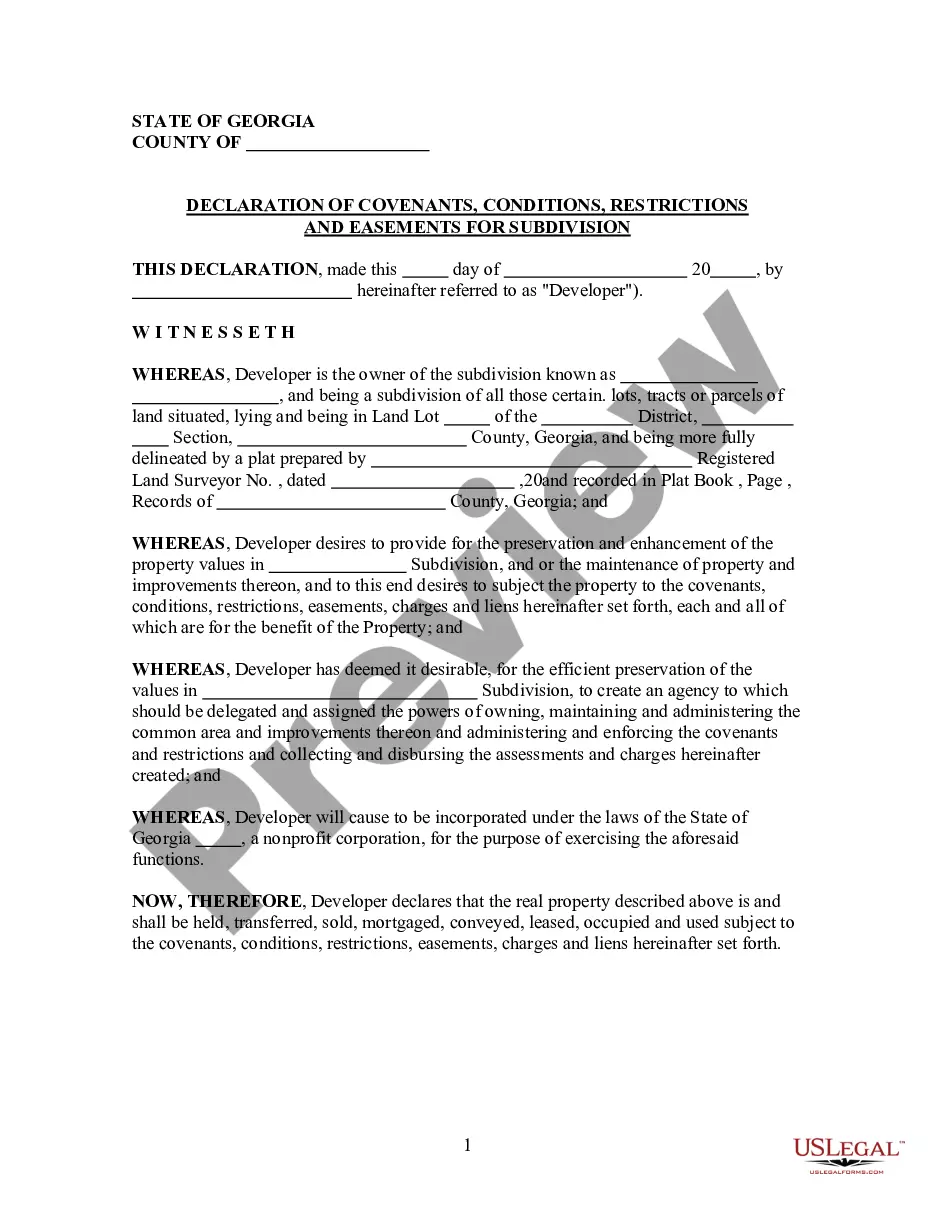
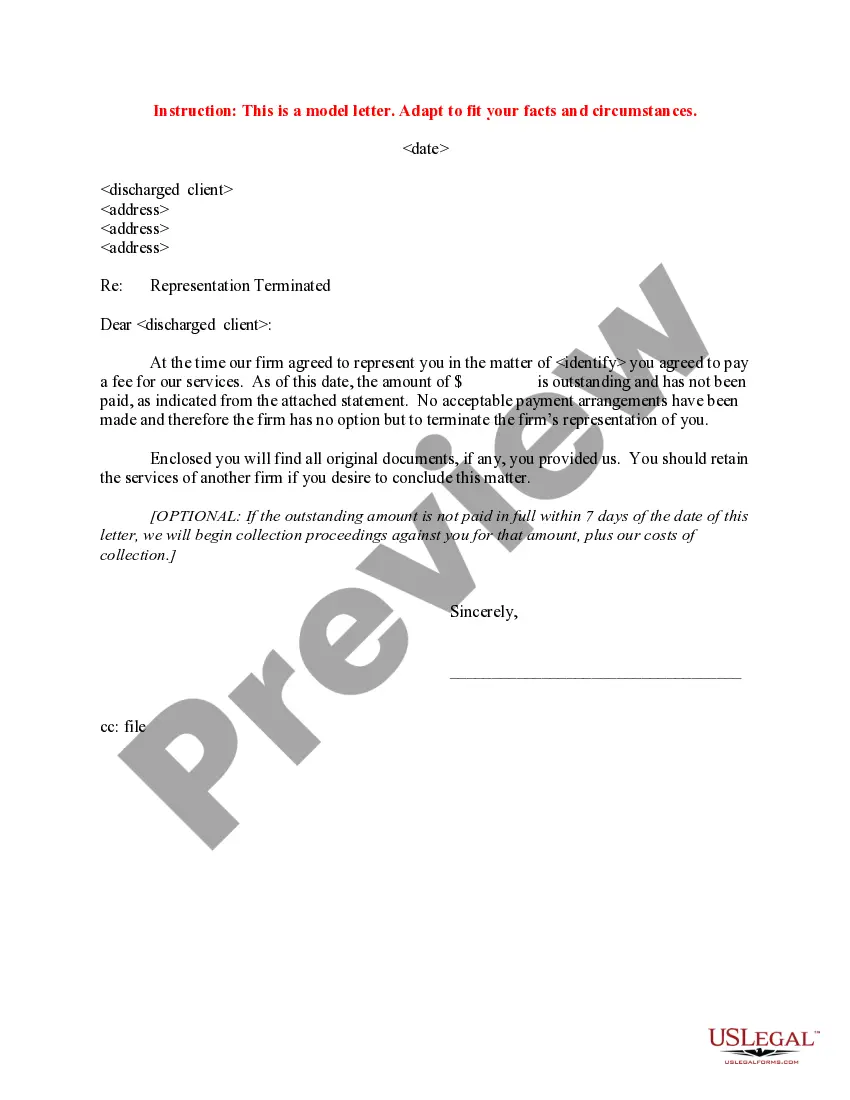
Sample Letter to Client - Termination of Representation
Understanding this form
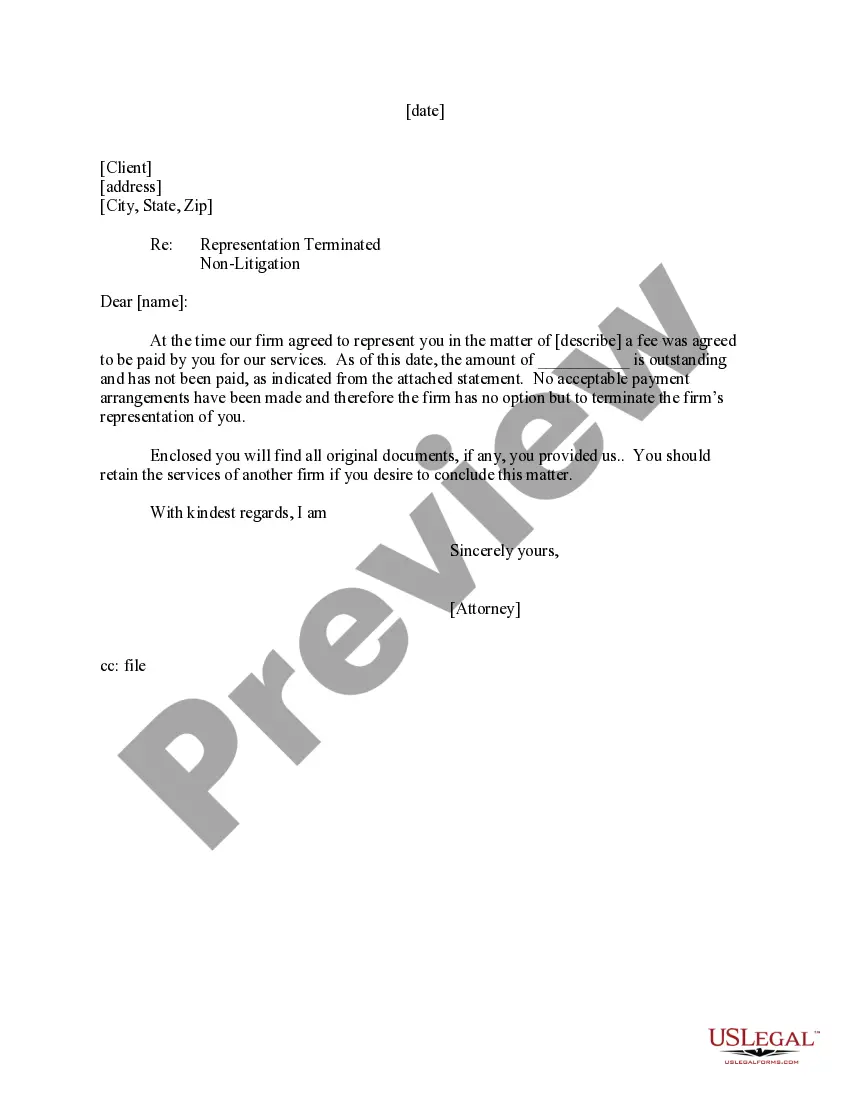
The Sample Letter to Client - Termination of Representation is a template that provides a professional means for attorneys to formally notify clients that their legal representation has been terminated. This letter is essential for maintaining clear communication and ensures that all parties understand their rights and responsibilities following the termination. Unlike other forms, this letter specifically addresses the termination of services and outlines any outstanding fees that need to be settled.
Main sections of this form
- Sender's date and contact information
- Client's name and address
- Subject line indicating the termination of representation
- Statement of outstanding fees owed
- Information regarding the return of original documents
- Optional collection notice if fees are not settled
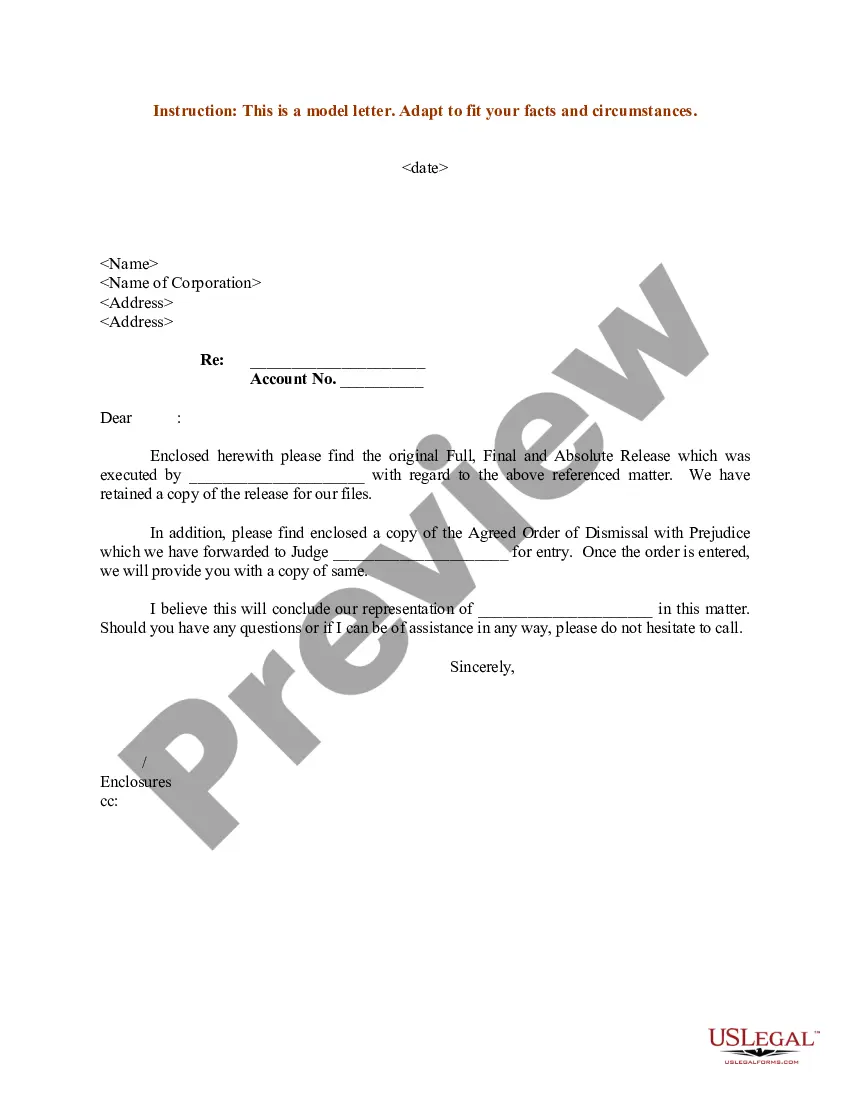

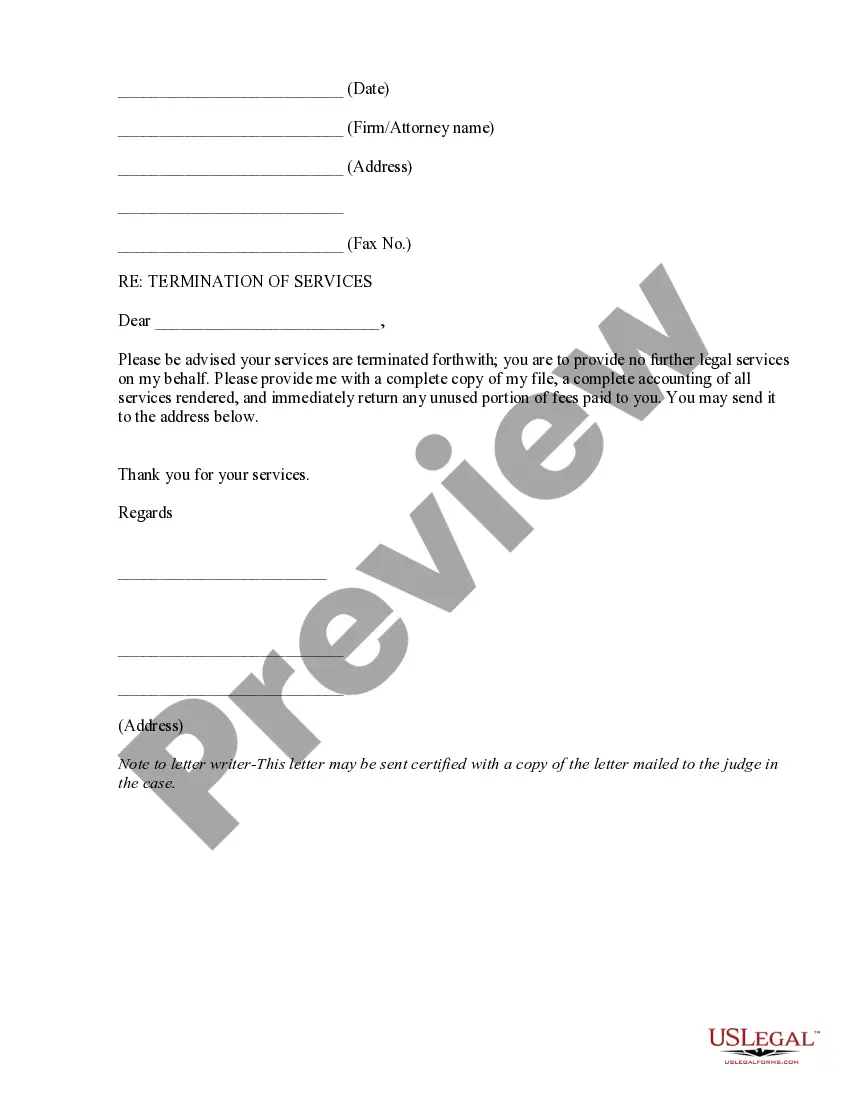
Situations where this form applies
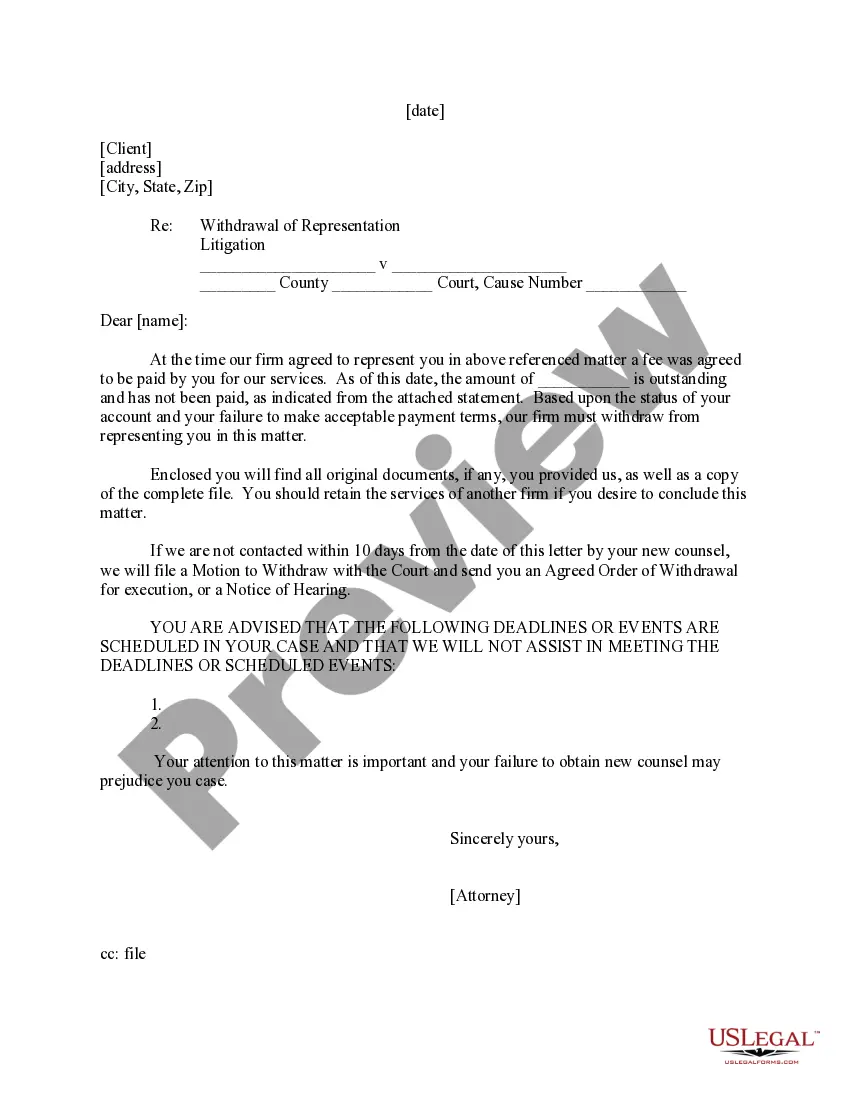
This form should be used when an attorney must terminate their representation of a client due to non-payment of fees or other circumstances requiring a formal withdrawal. It is important in situations where ongoing communication is necessary to conclude the attorney-client relationship properly.
Who this form is for
- Attorneys who need to terminate representation for a client
- Law firms managing multiple client accounts
- Clients experiencing non-payment issues
- Legal professionals seeking a structured approach to conclude representation
Instructions for completing this form
- Enter the date at the top of the letter.
- Provide the client's name and complete address.
- Clearly state the subject line indicating that representation is terminated.
- Detail any outstanding fees and provide an attached statement if necessary.
- Include any necessary remarks about returning documents.
- Sign the letter before sending it to the client.
Does this document require notarization?
This form usually doesn’t need to be notarized. However, local laws or specific transactions may require it. Our online notarization service, powered by Notarize, lets you complete it remotely through a secure video session, available 24/7.
Get your form ready online
Our built-in tools help you complete, sign, share, and store your documents in one place.
Make edits, fill in missing information, and update formatting in US Legal Forms—just like you would in MS Word.
Download a copy, print it, send it by email, or mail it via USPS—whatever works best for your next step.
Sign and collect signatures with our SignNow integration. Send to multiple recipients, set reminders, and more. Go Premium to unlock E-Sign.
If this form requires notarization, complete it online through a secure video call—no need to meet a notary in person or wait for an appointment.
We protect your documents and personal data by following strict security and privacy standards.

Make edits, fill in missing information, and update formatting in US Legal Forms—just like you would in MS Word.

Download a copy, print it, send it by email, or mail it via USPS—whatever works best for your next step.

Sign and collect signatures with our SignNow integration. Send to multiple recipients, set reminders, and more. Go Premium to unlock E-Sign.

If this form requires notarization, complete it online through a secure video call—no need to meet a notary in person or wait for an appointment.

We protect your documents and personal data by following strict security and privacy standards.
Common mistakes
- Failing to mention outstanding fees in the letter.
- Not including the date of termination.
- Neglecting to provide a clear subject line.
- Omitting the return of original documents.
Why complete this form online
- Easy access and download for immediate use.
- Editable Word format allows for personal customization.
- Reliability of templates drafted by licensed attorneys.
- Convenience of completing forms at any time.
Legal use & context
- This letter serves to protect both the attorney and the client by formalizing the end of the attorney-client relationship.
- Effective communication helps prevent misunderstandings regarding any outstanding fees or responsibilities.
What to keep in mind
- The Sample Letter to Client - Termination of Representation is a crucial tool for attorneys managing client relationships.
- Clear communication and documentation are essential in the termination process.
- It is essential to review any state-specific laws that might apply when using this form.
Looking for another form?
Form popularity
FAQ
Notify the employee of their termination date. State the reason(s) for termination. Explain their compensation and benefits going forward. Notify them of any company property they must return. Remind them of signed agreements. Include HR contact information.
Be respectful. Make it simple. Don't feel you must explain or justify. Assign responsibility for your refusal to something else. Stand firm. Refer, refer, refer.
It's not necessary, or suggested, to include a reason for the termination. Tell the client what they need to do to move forward without you and what could happen if they don't. Termination means it's the end. Send the letter via a traceable delivery method. Be wary of terminating a client right before a deadline.
The Rules of Professional Conduct of the State Bar of California specify three circumstances under which an attorney must terminate a client relationship: (1) where the attorney knows or should know that a client is bringing an action, conducting a defense, asserting a position in litigation, or taking an appeal,
If you decide to decline representation after research or investigation, you should protect yourself and your client by (1) promptly advising the client in writing of your decision not to take the case or matter; (2) be certain to inform the client of his or her right to contact another lawyer for a second opinion;
Stay calm, rational and polite. Give reasons for terminating the relationship, but keep emotion and name-calling out of the conversation. Follow-up with a phone call. You can start the process with an email, but you should follow-up with a phone call to talk your client through the process and answer any questions.
The court may request an explanation for the withdrawal, while the lawyer may be bound to keep confidential the facts that would constitute such an explanation. The lawyer's statement that professional considerations require termination of the representation ordinarily should be accepted as sufficient.
Include the date of the letter along with the name and contact details of the organization. Also, give your complete name, your mailing address, and the subscription or membership details based on the records of the company. Use a polite, friendly, and professional tone while writing the letter.
Yes a lawyer may, generally speaking, refuse to represent a client for any reason they choose (or no reason at all), even (in most jurisdictions) reasons that would be otherwise illegal for someone providing a public service to refuse for (such as racial, ethnic, religious, gender, or other reasons).