Texas Adverse Possession Affidavit - Squatters Rights
What is this form?
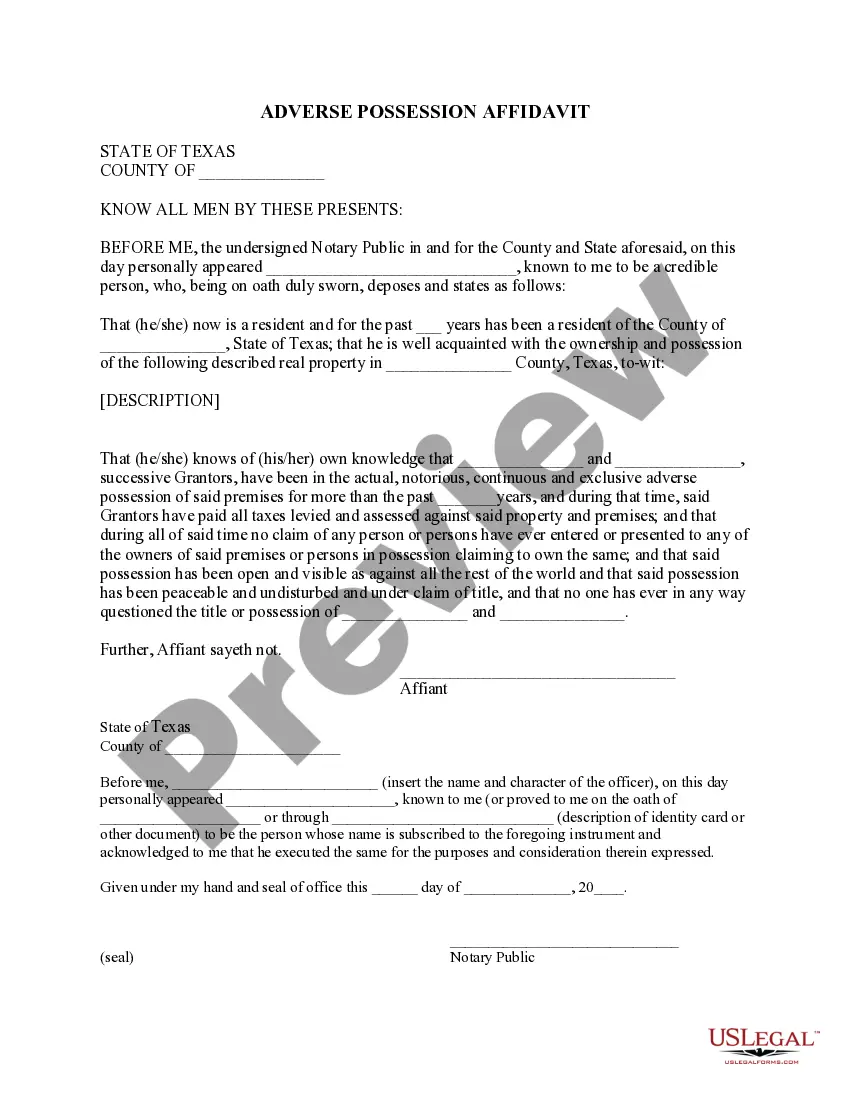
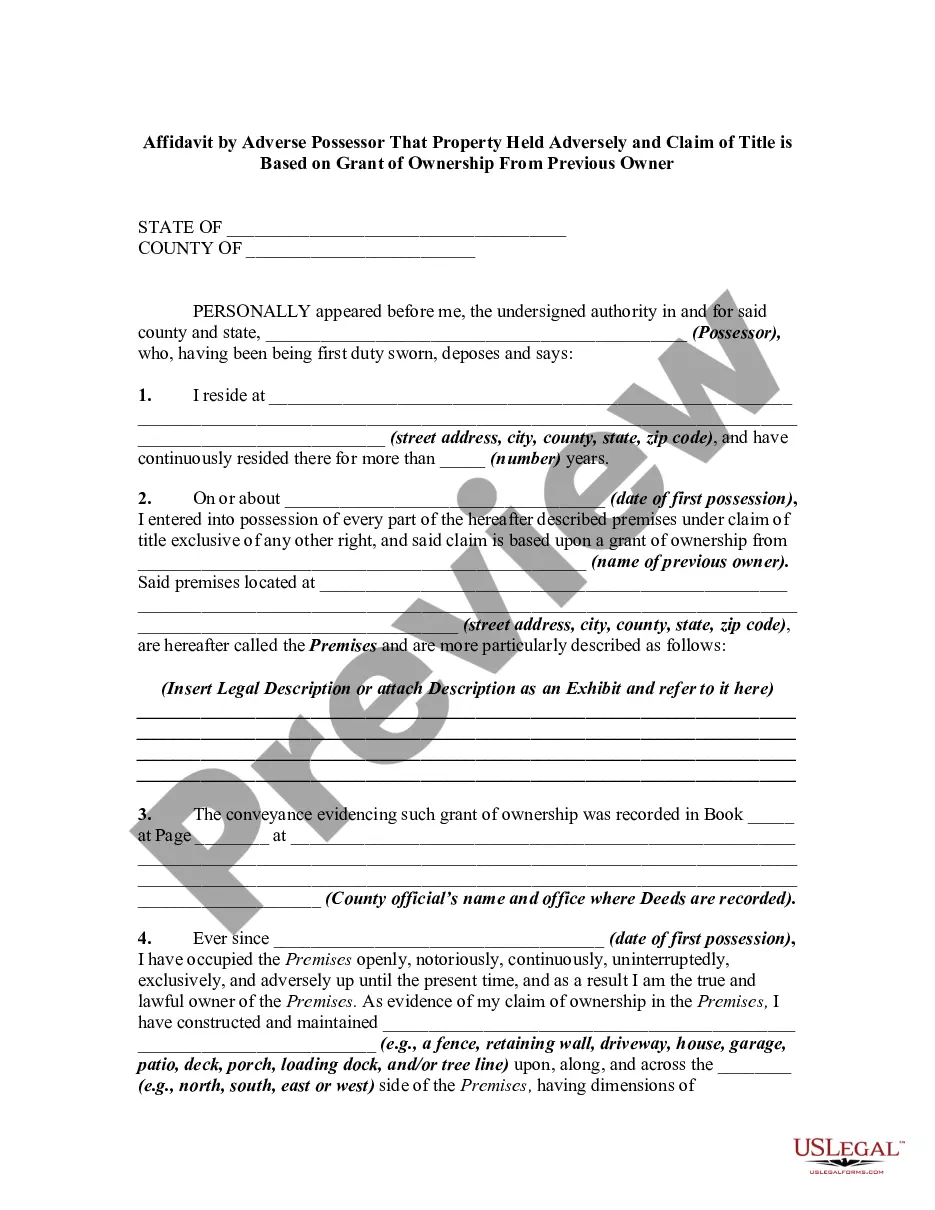
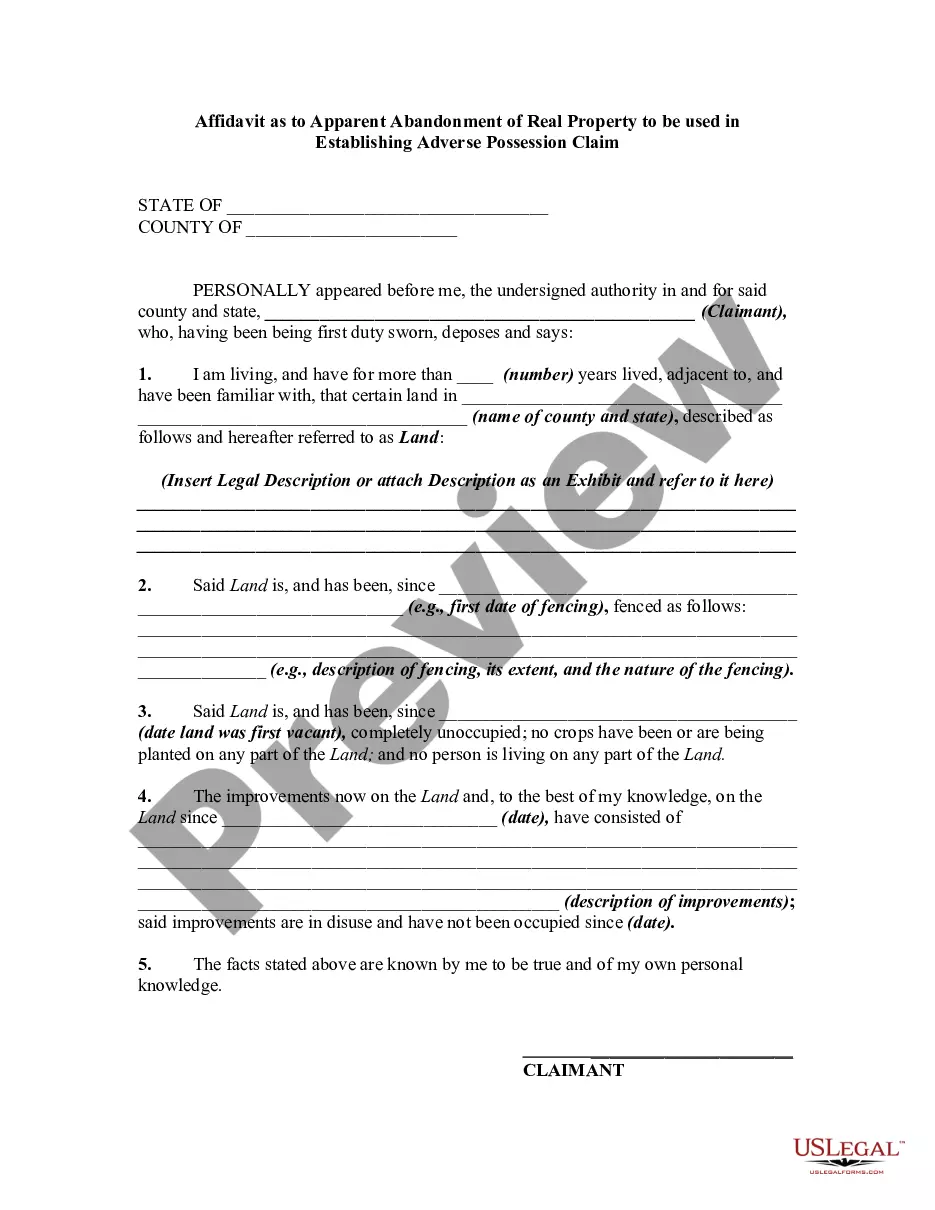
The Adverse Possession Affidavit, often referred to as a squatters rights affidavit, is a legal document used to assert a claim of ownership over a property through adverse possession. This form is specifically tailored to comply with Texas law and serves as a formal declaration to notify current property owners of the claim. By filing this affidavit, individuals can establish a legal basis for their occupancy and ownership, differentiating it from other real estate forms that may simply involve rental agreements or property transfers.
What’s included in this form
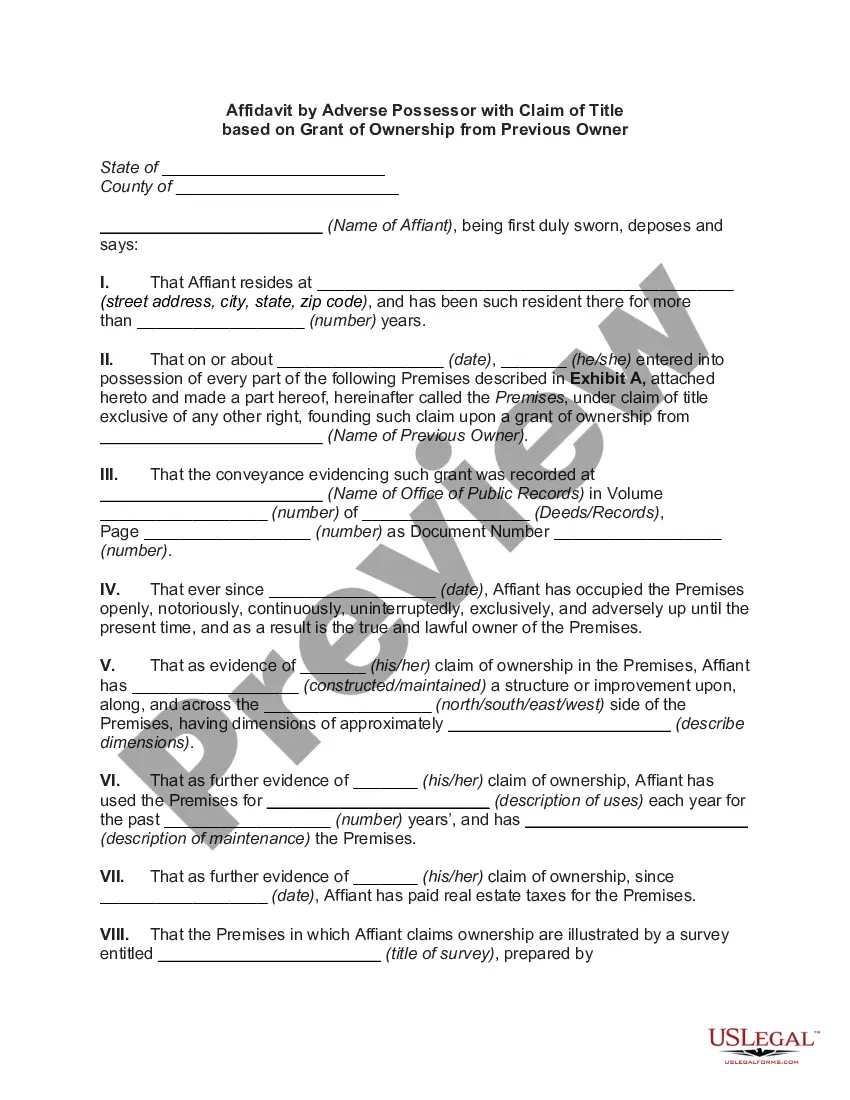
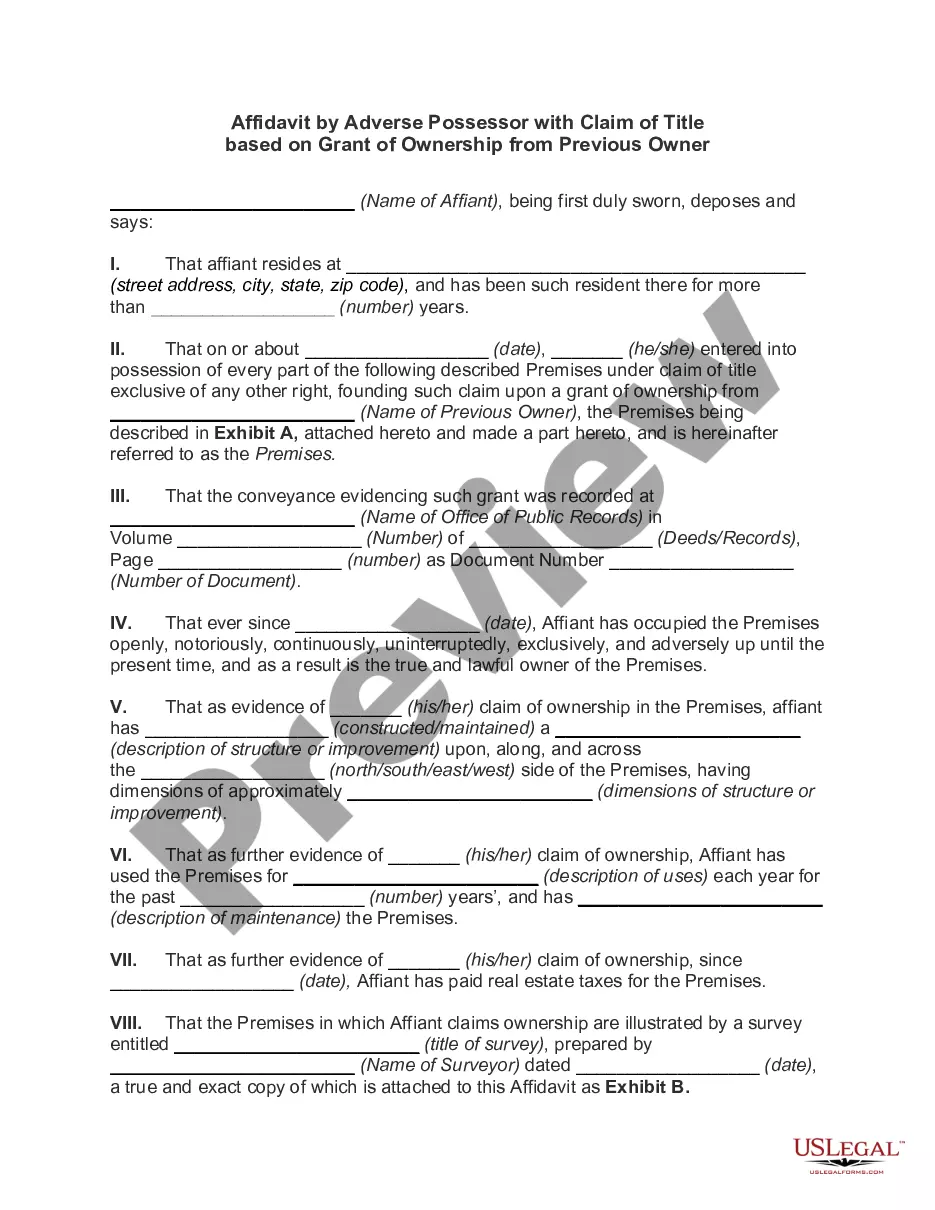
- Identification of the affiant, the person making the claim.
- Details about the property in question, including legal description and location.
- Statement of the affiant's residency and duration of occupancy.
- Declaration of adverse possession by the previous owners, including payment of taxes.
- Notary public section for official validation of the affidavit.
When to use this form
This form is typically used when an individual has occupied a property without the owner's consent for a specific period, usually ten years in Texas, while meeting the criteria of visible and continuous possession. The affidavit serves to formally claim ownership rights against any prior owners or parties that may dispute the claim. It is essential in situations where squatters wish to assert their rights to avoid eviction or challenge property ownership disputes.
Who should use this form
- Individuals who have occupied a property as squatters and wish to claim ownership.
- Current residents of Texas needing to establish legal rights to property.
- Attorneys assisting clients with adverse possession claims.
Instructions for completing this form
- Identify and fill in the name of the affiant who is claiming adverse possession.
- Specify the county and state of residence for proper jurisdiction.
- Provide the legal description of the property in question.
- State the length of occupancy and any relevant details about the prior owners.
- Sign the affidavit in the presence of a notary public to validate the claim.
Does this document require notarization?
Notarization is required for this form to take effect. Our online notarization service, powered by Notarize, lets you verify and sign documents remotely through an encrypted video session, available 24/7.
Get your form ready online
Our built-in tools help you complete, sign, share, and store your documents in one place.
Make edits, fill in missing information, and update formatting in US Legal Forms—just like you would in MS Word.
Download a copy, print it, send it by email, or mail it via USPS—whatever works best for your next step.
Sign and collect signatures with our SignNow integration. Send to multiple recipients, set reminders, and more. Go Premium to unlock E-Sign.
If this form requires notarization, complete it online through a secure video call—no need to meet a notary in person or wait for an appointment.
We protect your documents and personal data by following strict security and privacy standards.

Make edits, fill in missing information, and update formatting in US Legal Forms—just like you would in MS Word.

Download a copy, print it, send it by email, or mail it via USPS—whatever works best for your next step.

Sign and collect signatures with our SignNow integration. Send to multiple recipients, set reminders, and more. Go Premium to unlock E-Sign.

If this form requires notarization, complete it online through a secure video call—no need to meet a notary in person or wait for an appointment.

We protect your documents and personal data by following strict security and privacy standards.
Typical mistakes to avoid
- Failing to provide a complete legal description of the property.
- Not specifying the duration of residency accurately.
- Omitting the required signatures or notary section.
- Neglecting to retain copies of the filed affidavit for personal records.
Why complete this form online
- Convenient access to the form for immediate download and completion.
- Editability allows users to customize the affidavit as needed.
- Reliability of having legally vetted templates created by licensed attorneys.
Legal use & context
- The affidavit establishes a claim of ownership through adverse possession under Texas law.
- It provides a formal notice to the original owners regarding the claim.
- Adverse possession can lead to legal disputes, making proper documentation crucial.
Summary of main points
- The Adverse Possession Affidavit is essential for those claiming ownership through occupation.
- Complete all sections accurately to avoid common mistakes.
- Notarization is necessary to validate the affidavit and strengthen the claim.
Looking for another form?
Form popularity
FAQ
The Texas Adverse Possession Affidavit - Squatters Rights is a Texas-specific form used to assert ownership through adverse possession. It formally notifies current property owners of a claim and provides a basis for occupancy and ownership under Texas law. The document is designed to capture the affiant’s claim, property details, residency, and tax-related support, then be notarized.
Squatting is occupying property without permission, while adverse possession is a legal ownership claim. This form is used to convert that occupancy into a formal, Texas-based claim by documenting residency, duration of occupancy, and related facts, and then filing a notarized affidavit to support ownership against the current owner.
Typically ten years of visible, continuous occupancy is required to establish adverse possession in Texas, as noted in the form’s guidance. The Texas Adverse Possession Affidavit helps document this period, including residency, property details, and taxes paid, and ends with a notary acknowledgment to formalize the ownership claim against the prior owner.
This form is a formal Texas-specific declaration used to notify current owners of a potential adverse possession claim. It requires the affiant’s identification, the property's legal description and location, the residency and duration of occupancy, a declaration of adverse possession including taxes paid, and a notary public section to validate the affidavit.
Who should use this Texas Adverse Possession Affidavit - Squatters Rights? It’s intended for individuals who have occupied a property as squatters seeking ownership, current Texas residents needing to establish legal property rights, and attorneys assisting clients with adverse possession claims.
It is tailored to Texas law and the squatters rights context, including a Texas-specific notary section and required elements—affiant identification, property details, residency and occupancy duration, and tax payments—to support a formal ownership claim.