Stock Option Agreement
Overview of this form
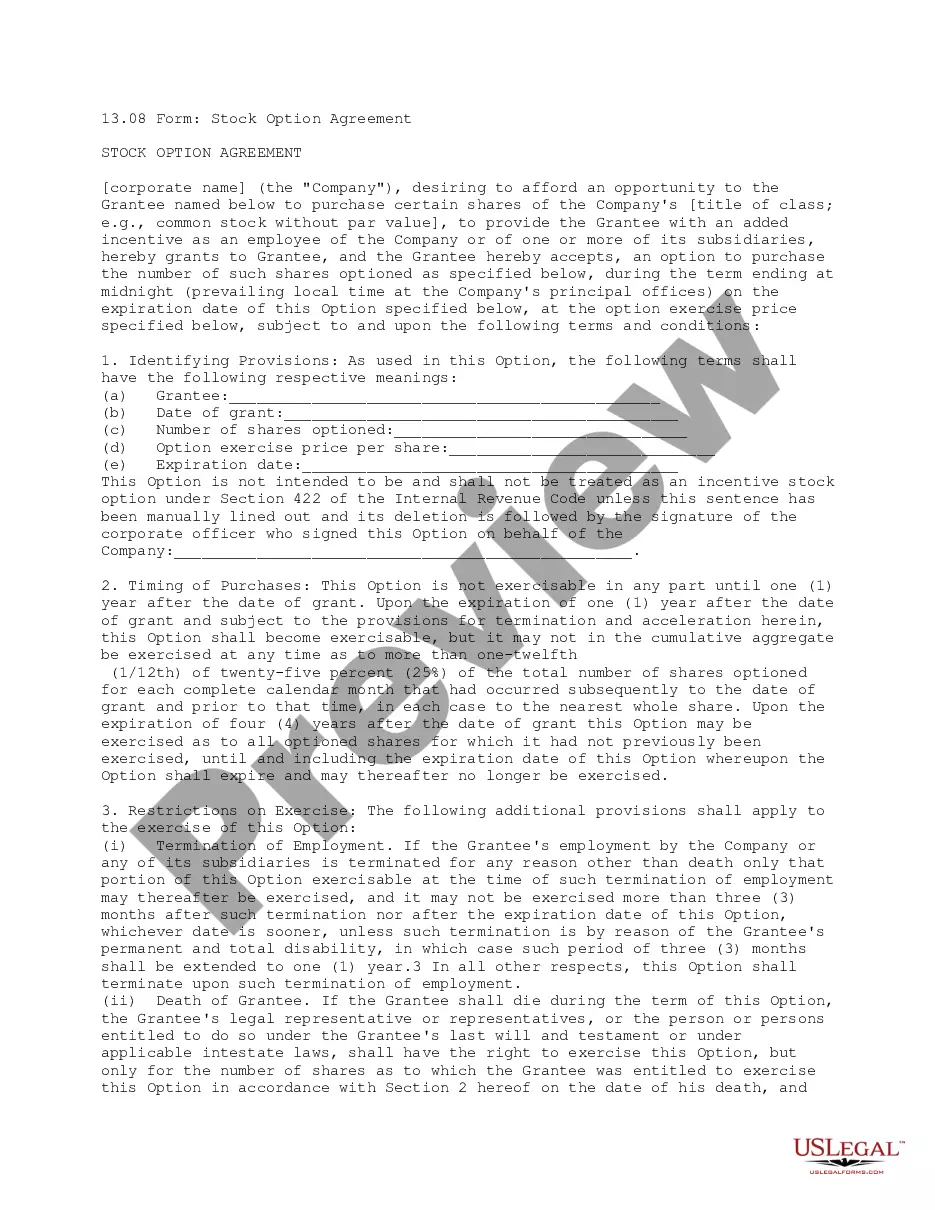
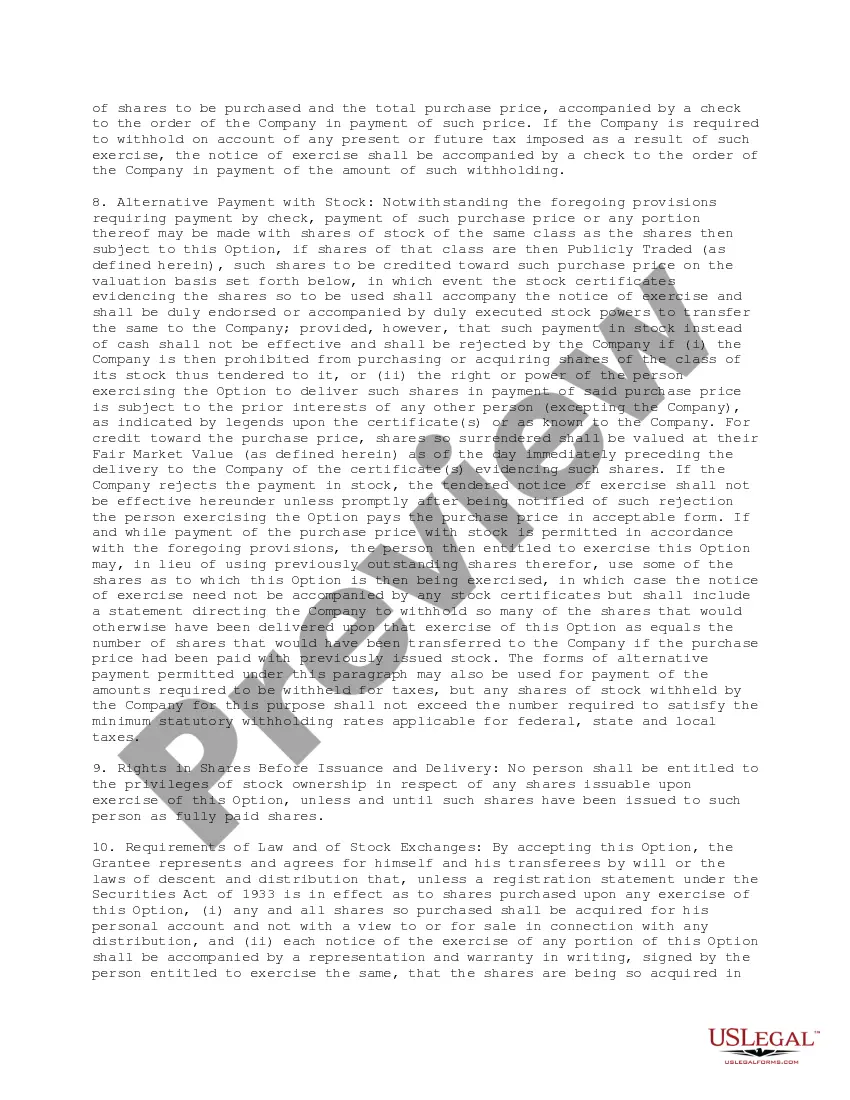
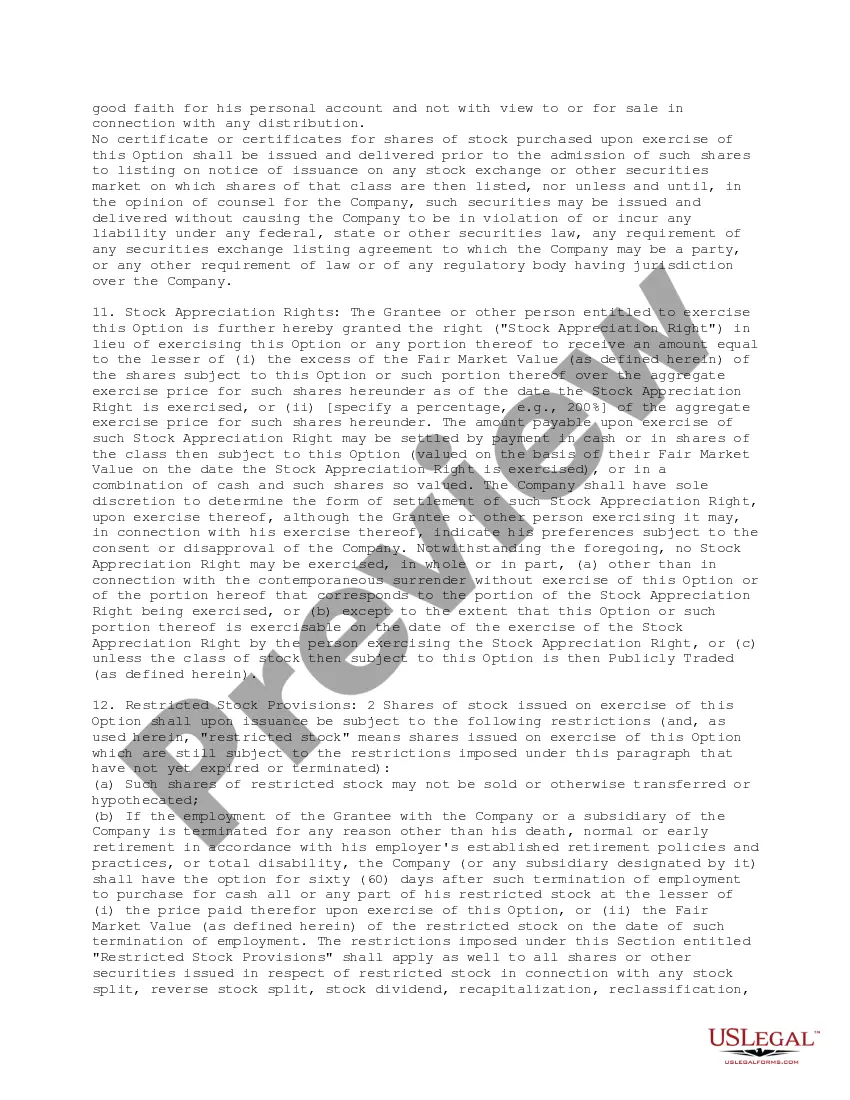
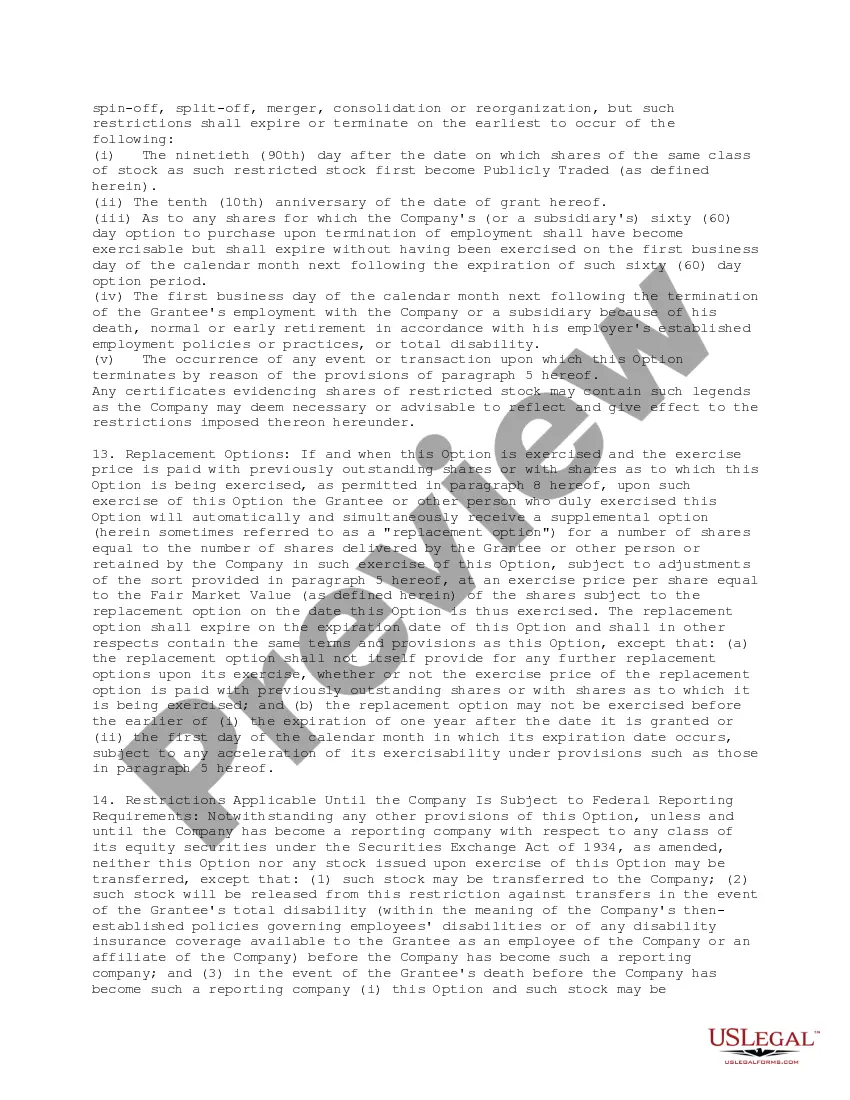
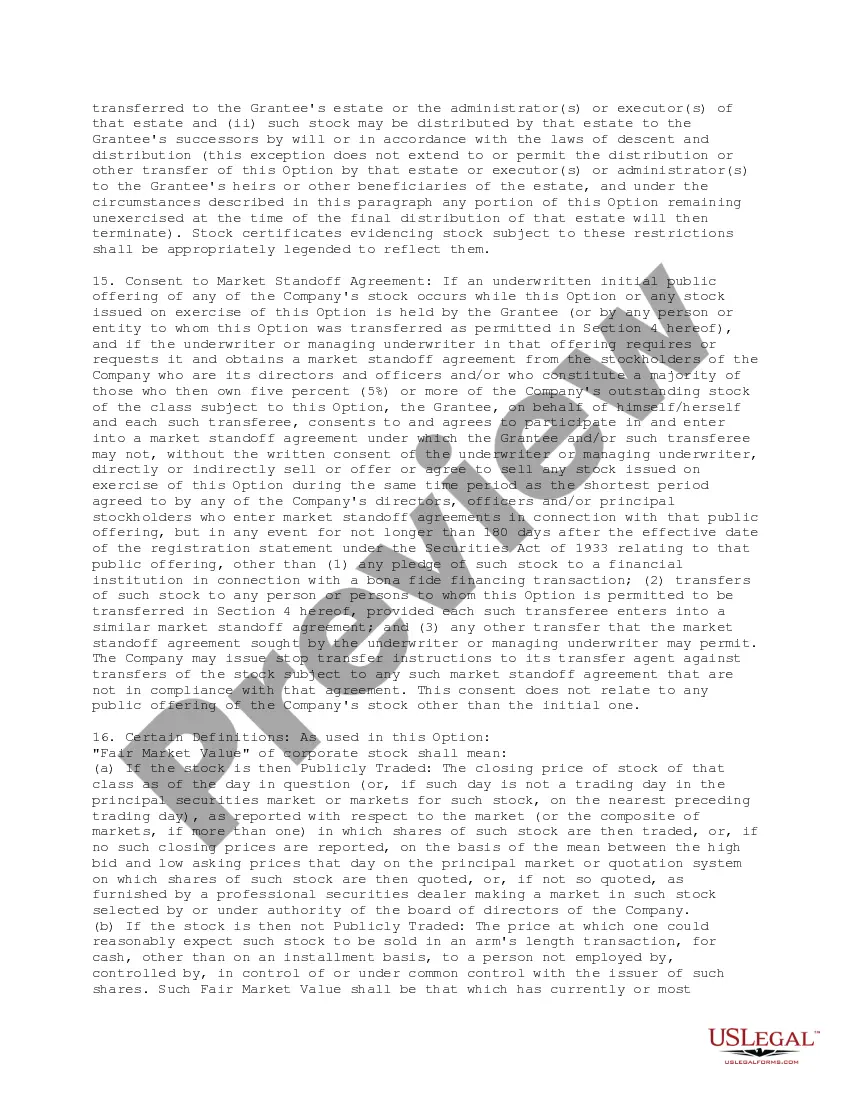
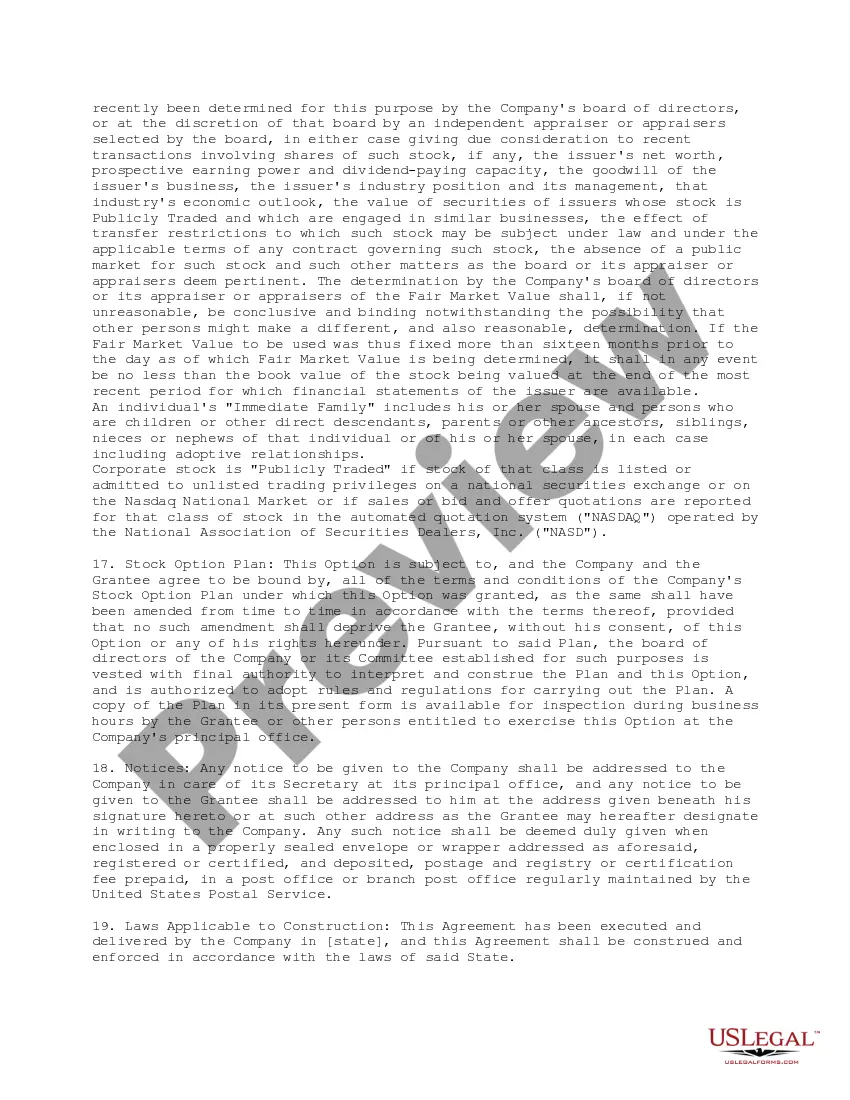
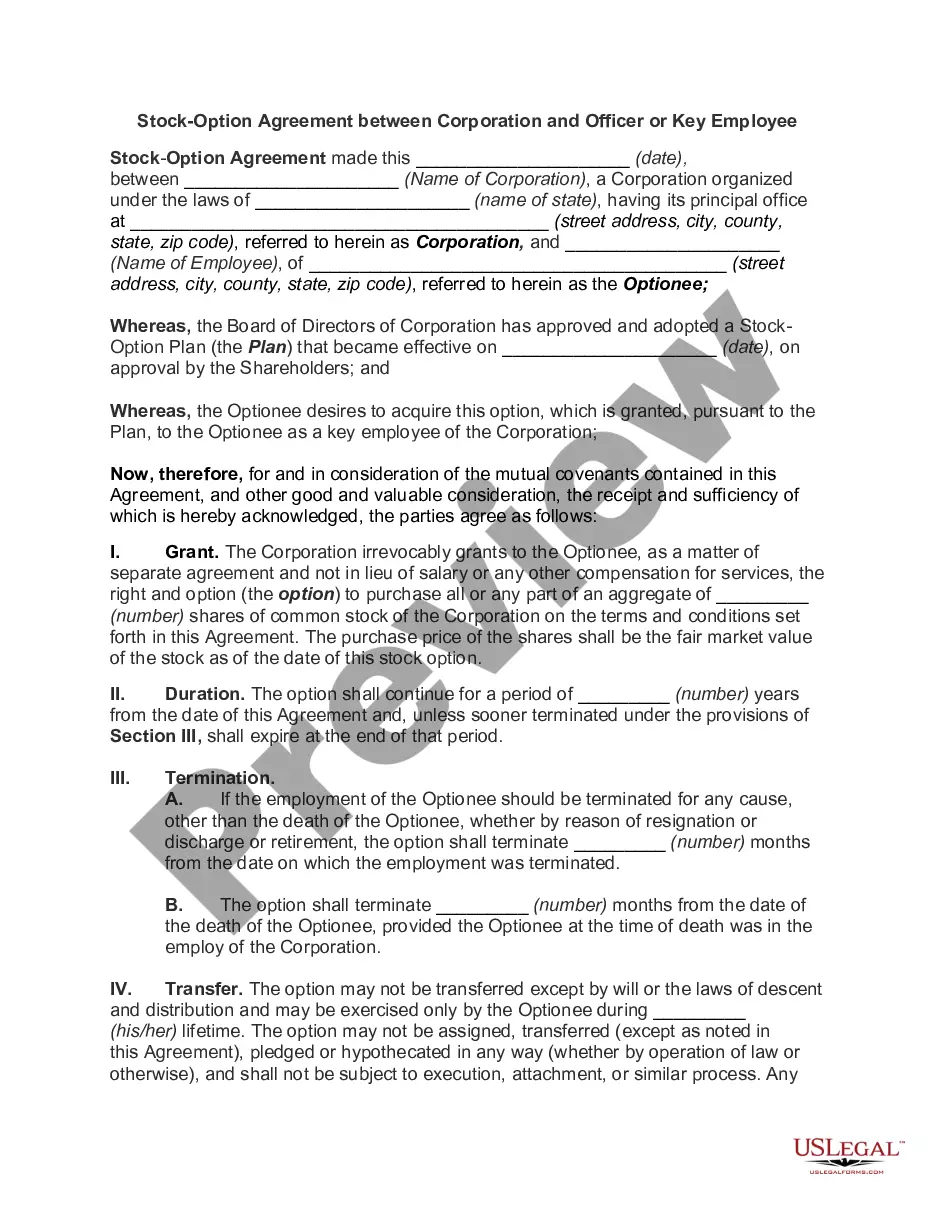
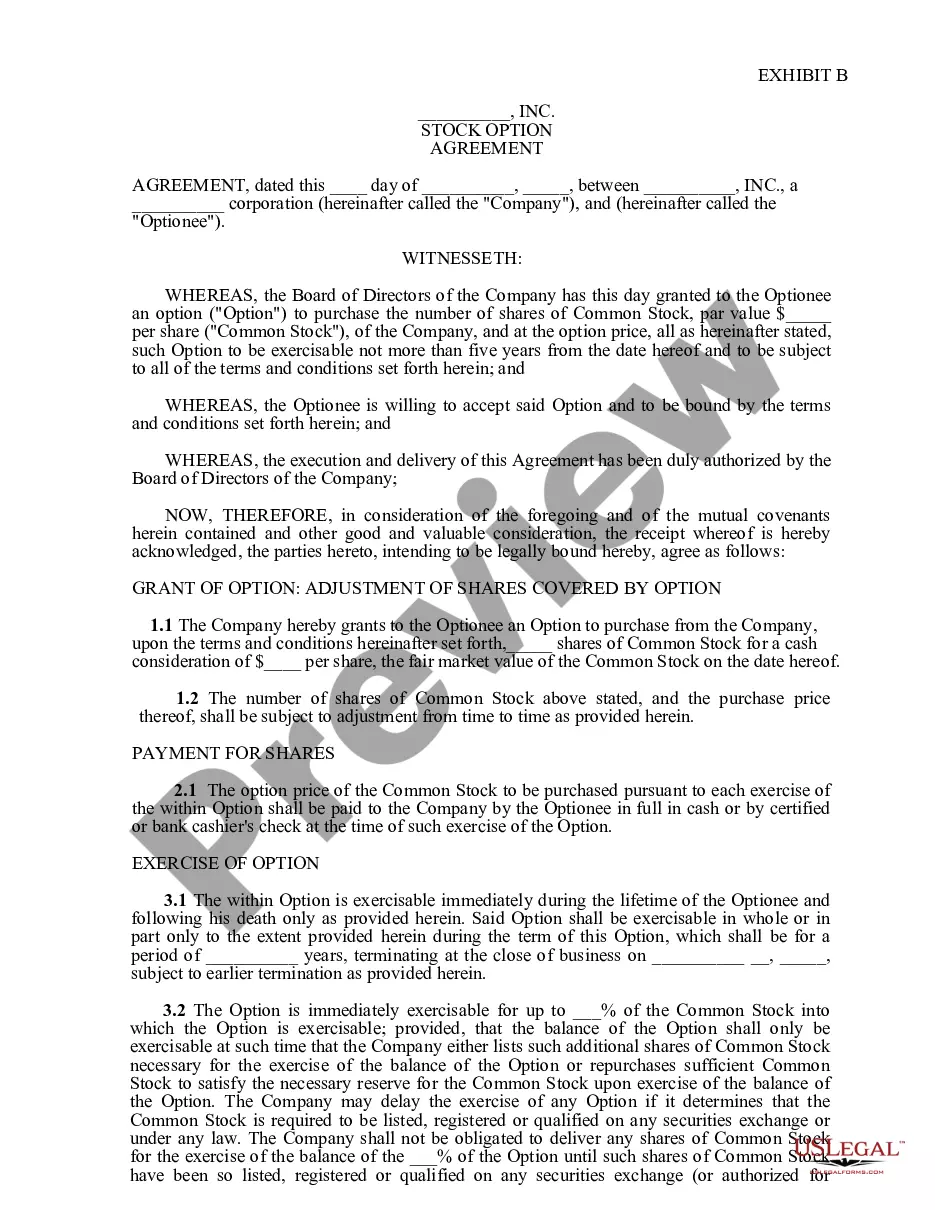
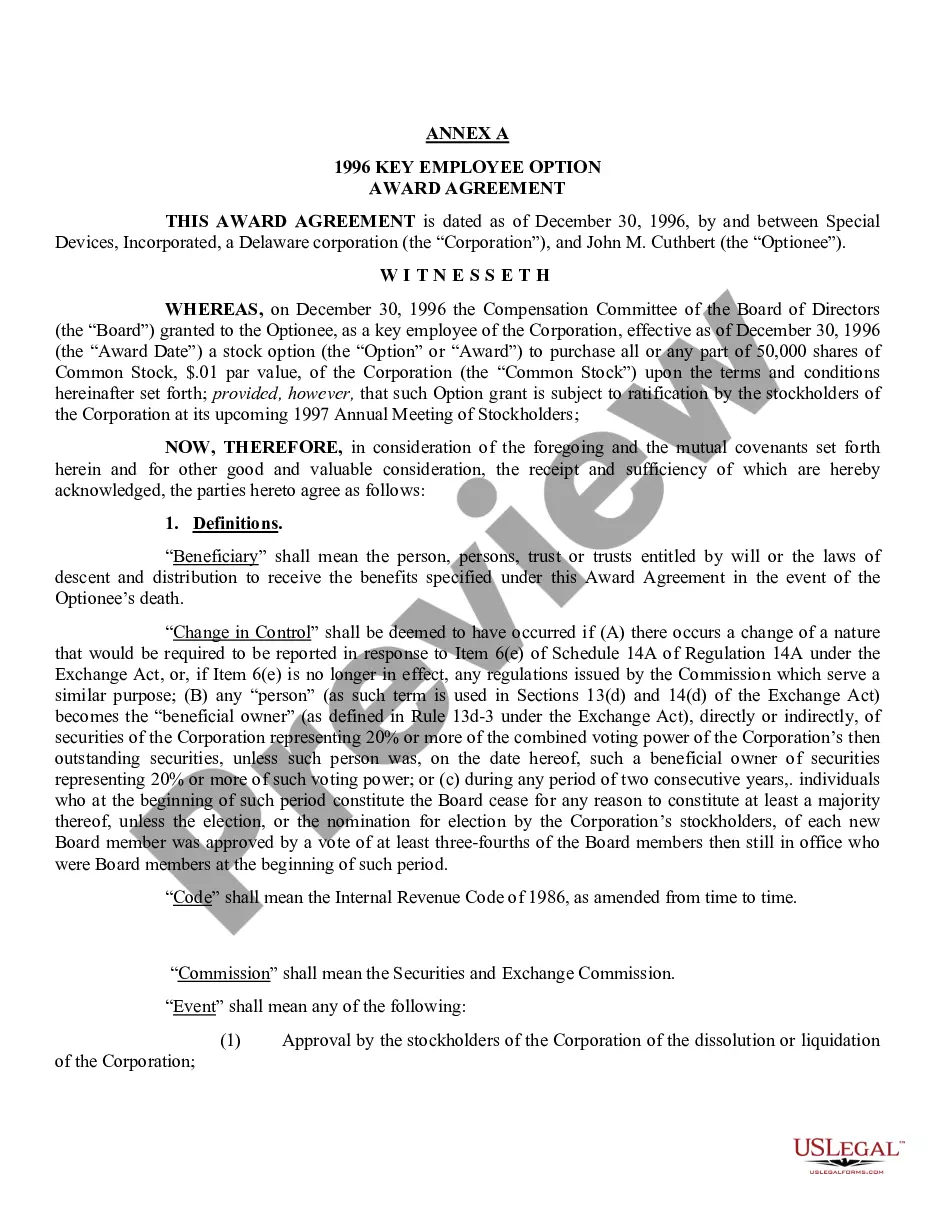
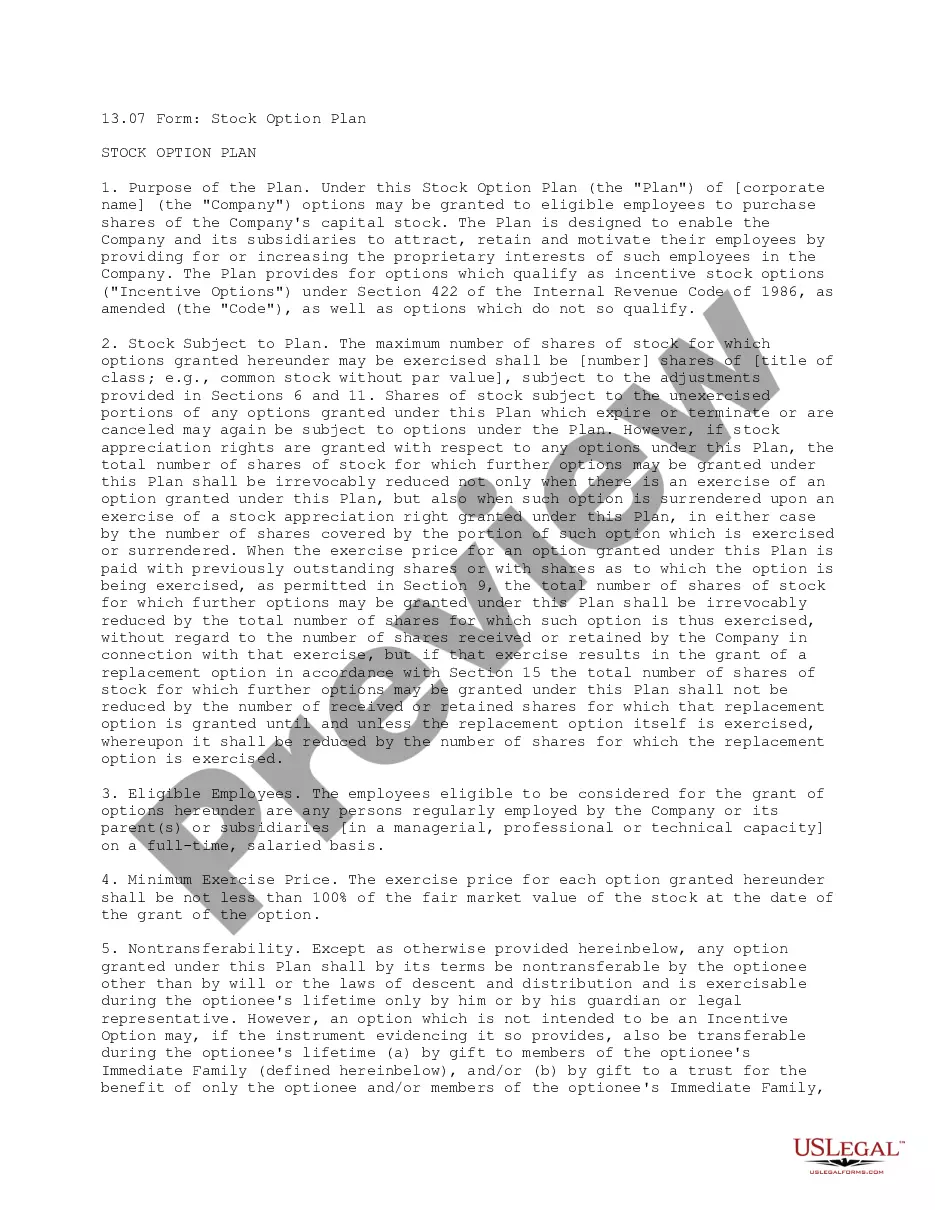
A Stock Option Agreement is a legal document that outlines the terms under which an employee can purchase company stock at a predetermined price during a specific period. This form is crucial for providing employees with an incentive to contribute to the company's growth, distinguishing it from other employment-related agreements. It typically includes detailed provisions regarding the stock option grant, including the number of shares, the exercise price, and the expiration date of the option.
Key components of this form
- Identifying provisions: Includes details about the grantee, date of grant, number of shares, exercise price, and expiration date.
- Timing of purchases: Specifies when the options become exercisable and any limitations on exercising them.
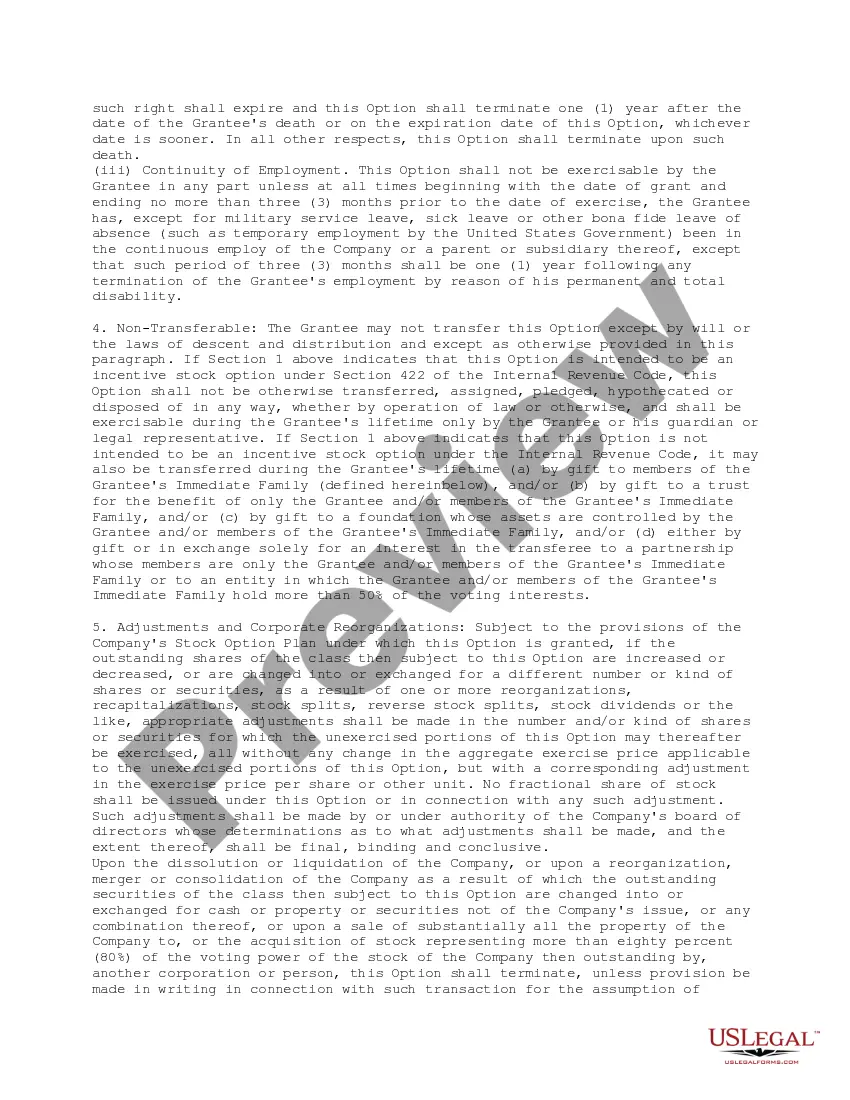
- Restrictions on exercise: Outlines conditions under which the option may be exercised, including employment termination and death of the grantee.
- Non-transferability: States that the grantee cannot transfer the option except in specific circumstances.
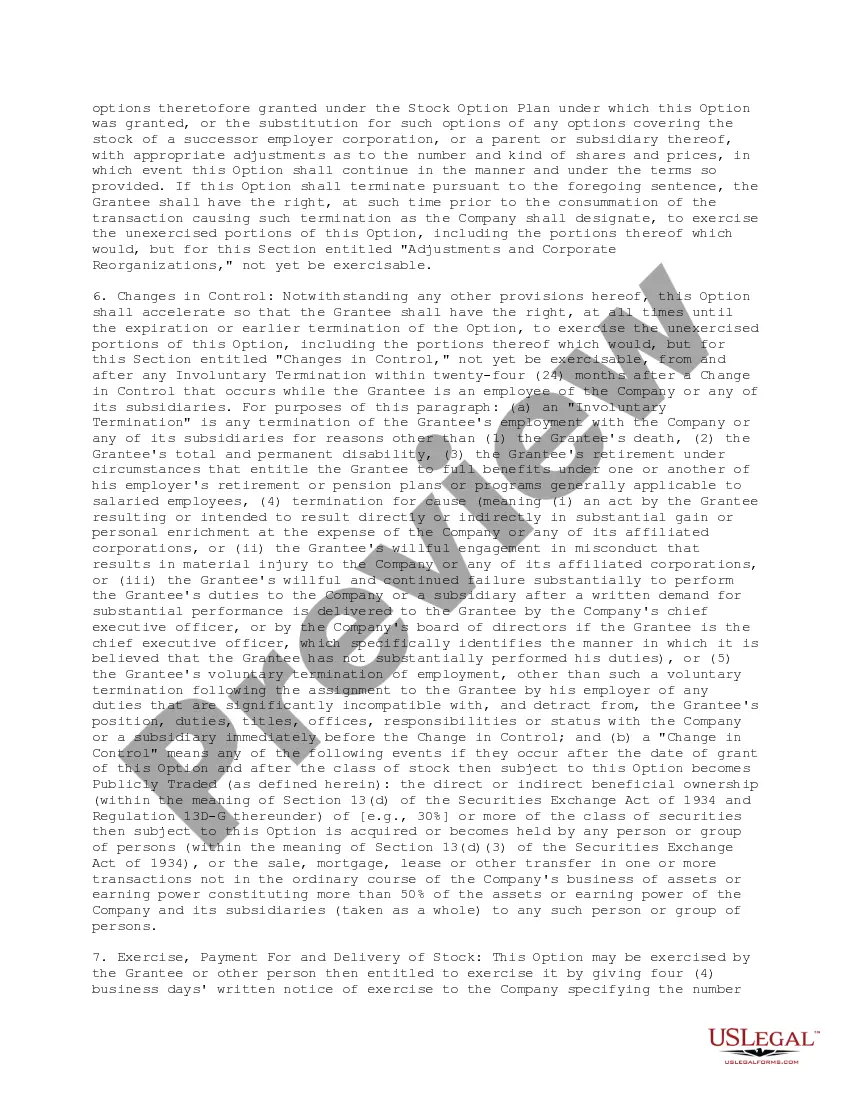
- Adjustments and corporate reorganizations: Describes how the agreement adjusts in case of stock or company changes.


When to use this document
This form should be used when a company wants to grant stock options to its employees as part of their compensation package. It is particularly valuable during the hiring process, promotion phases, or when rewarding exceptional performance. Employers should use this agreement to ensure that all terms regarding equity compensation are clearly defined and legally enforceable.
Who this form is for
This form is intended for:
- Employers looking to offer stock options as part of employee compensation.
- Human resources departments responsible for drafting and managing employee contracts.
- Legal professionals advising companies on employment and equity matters.
- Employees being offered stock options who wish to understand their rights and obligations.
How to complete this form
- Enter the corporate name of the company granting the stock options.
- Specify the name of the grantee, along with the date of the grant.
- Fill in the number of shares being offered and the exercise price per share.
- Define the expiration date for the option to ensure clarity on its validity.
- Review and initial any provisions related to employment termination and rights upon death.
Notarization guidance
This form does not typically require notarization unless specified by local law.
Get your form ready online
Our built-in tools help you complete, sign, share, and store your documents in one place.
Make edits, fill in missing information, and update formatting in US Legal Forms—just like you would in MS Word.
Download a copy, print it, send it by email, or mail it via USPS—whatever works best for your next step.
Sign and collect signatures with our SignNow integration. Send to multiple recipients, set reminders, and more. Go Premium to unlock E-Sign.
If this form requires notarization, complete it online through a secure video call—no need to meet a notary in person or wait for an appointment.
We protect your documents and personal data by following strict security and privacy standards.

Make edits, fill in missing information, and update formatting in US Legal Forms—just like you would in MS Word.

Download a copy, print it, send it by email, or mail it via USPS—whatever works best for your next step.

Sign and collect signatures with our SignNow integration. Send to multiple recipients, set reminders, and more. Go Premium to unlock E-Sign.

If this form requires notarization, complete it online through a secure video call—no need to meet a notary in person or wait for an appointment.

We protect your documents and personal data by following strict security and privacy standards.
Mistakes to watch out for
- Not clearly defining the number of shares or exercise price.
- Failing to specify the expiration date, leading to confusion about the validity of the option.
- Omitting conditions surrounding termination of employment and their impact on the option.
- Forgetting to adjust the terms in case of corporate changes like mergers or acquisitions.
Benefits of completing this form online
- Instant access: Download and complete the form at your convenience without delays.
- Editable format: Customize the agreement easily to suit your specific needs.
- Legal reliability: Use templates prepared by licensed attorneys to ensure compliance with legal standards.
Legal use & context
- This Stock Option Agreement is legally binding upon the parties once signed.
- It is important to ensure that the terms comply with both federal and state securities regulations.
- If not executed properly, the company risks non-compliance, which can lead to financial and legal penalties.
What to keep in mind
- A Stock Option Agreement is essential for offering stock options to employees.
- Understanding the terms of exercise and restrictions is crucial for both the employer and employee.
- It is important to ensure compliance with state-specific requirements.
Looking for another form?




Form popularity
FAQ
Oftentimes, stock-based compensation is redeemable at the employee's or employer's option. Stock-based compensation that is redeemable at the employee's option is a considered an employer obligation, and thus a liability while awards that are redeemable at the employer's option are classified as equity.
The quick way of calculating the value of your options is to take the value of the company as given by the TechCrunch announcement of its latest funding round, divide by the number of outstanding shares and multiply by the number of options you have.
Stock Option Journal Entries Year 1 The stock option compensation is an expense of the business and is represented by the debit to the expense account in the income statement. The other side of the entry is to the additional paid in capital account (APIC) which is part of the total equity of the business.
About Stock Option Agreements When a company offers employees stock options, they do so through a special contract called a stock option agreement.The option agreement dictates all the terms of the offer -- including vesting schedule, time limits for exercise once vested and any other special conditions.
Stock options may be considered a form of compensation which gives the employee the right to buy an amount of company stock at a set price during a certain time period. Under U.S. accounting methods, stock options are expensed according to the stock options' fair value.
What is a Stock Option? A stock option gives an investor the right, but not the obligation, to buy or sell a stock at an agreed upon price and date. There are two types of options: puts, which is a bet that a stock will fall, or calls, which is a bet that a stock will rise.
Employee stock options (ESOs) are a type of equity compensation granted by companies to their employees and executives.Typically, ESOs are issued by the company and cannot be sold, unlike standard listed or exchange-traded options.
The stock option compensation is an expense of the business and is represented by the debit to the expense account in the income statement. The other side of the entry is to the additional paid in capital account (APIC) which is part of the total equity of the business.
These options, which are contracts, give an employee the right to buy or exercise a set number of shares of the company stock at a pre-set price, also known as the grant price. This offer doesn't last forever, though. You have a set amount of time to exercise your options before they expire.