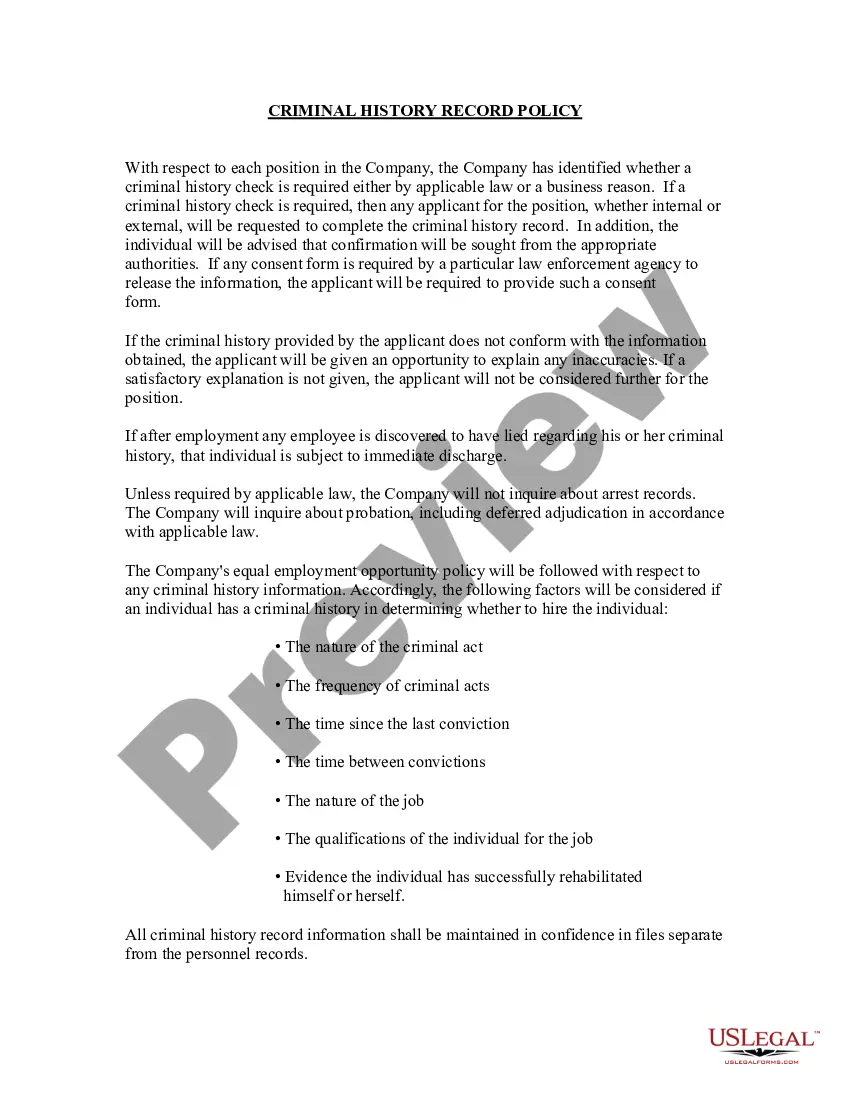
Criminal History Record Policy
What is this form?
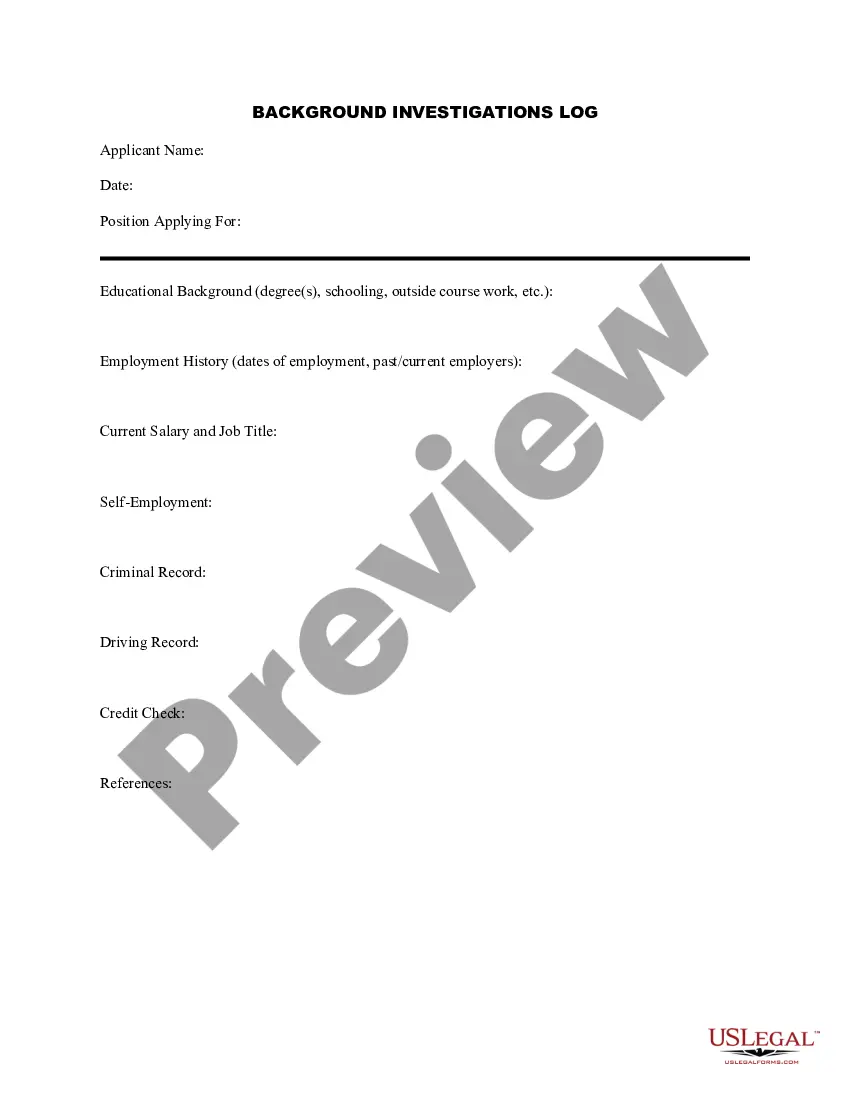
The Criminal History Record Policy outlines a company's approach to conducting criminal history background checks on applicants. This form provides clear guidelines on when checks are necessary and how applicants are processed during hiring. It differs from other forms by specifically addressing the implications of criminal history in employment contexts, ensuring compliance with applicable laws and company policies.
Main sections of this form
- Identification of positions requiring a criminal history check.
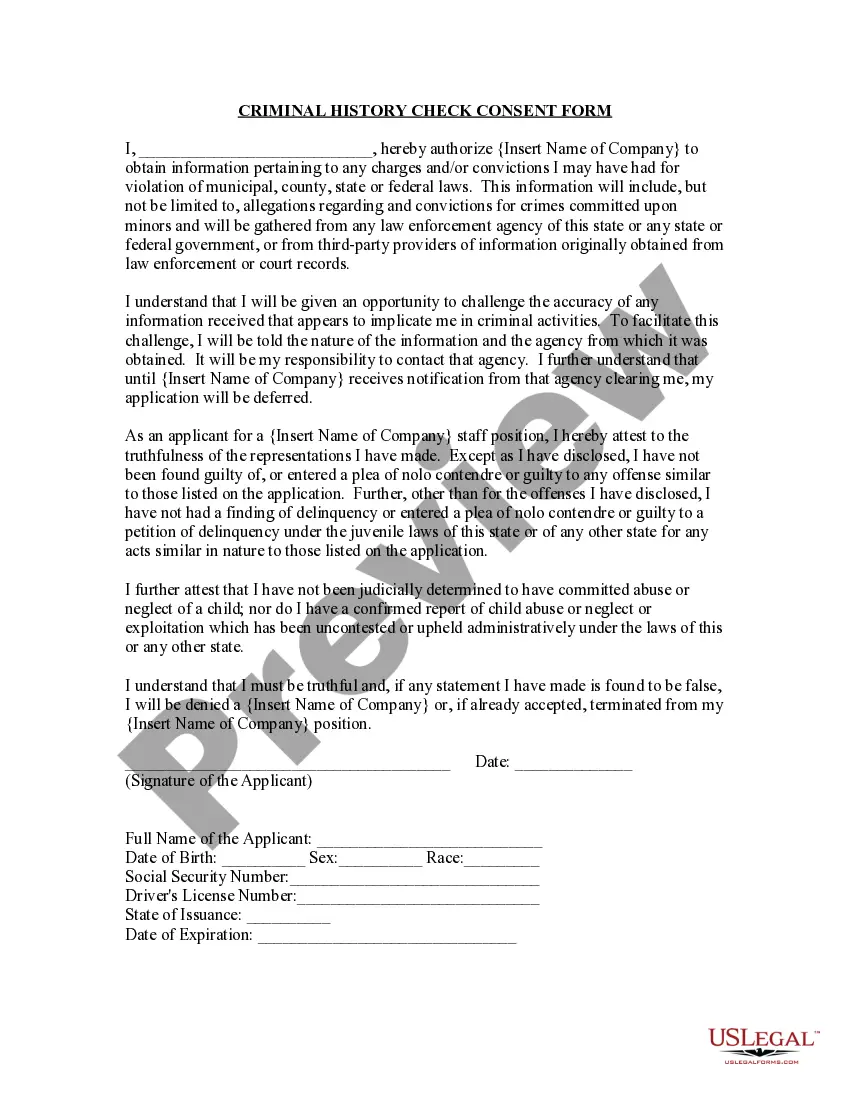
- Procedure for requesting criminal history from applicants.
- Policy on handling discrepancies in reported criminal history.
- Guidelines for considering criminal history in hiring decisions.
- Confidentiality measures for maintaining criminal history records.
When to use this document
This form is needed when an employer implements a policy regarding criminal history background checks. It is essential for organizations that require these checks for certain positions to ensure compliance with federal, state, and local laws, as well as to maintain a fair hiring process.
Intended users of this form
This form is intended for:
- Human resource professionals managing hiring processes.
- Employers in need of a formal policy regarding background checks.
- Legal departments ensuring compliance with employment laws.
- Companies assessing candidates for positions requiring integrity or trust.
How to complete this form
- Determine which positions require a criminal history check.
- Include a section for applicants to provide their criminal history information.
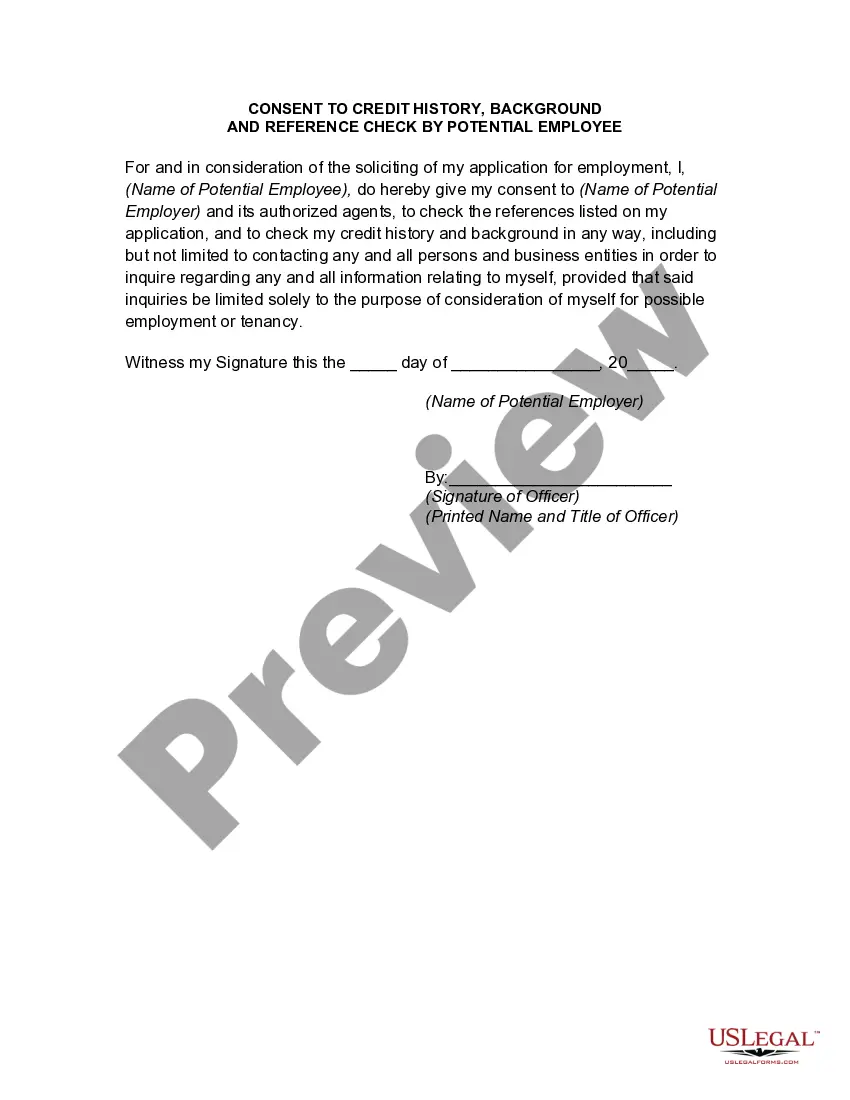
- Add a statement regarding the need for consent when retrieving background check information.
- Outline the criteria for evaluating criminal history in hiring decisions.
- Ensure confidential handling of all criminal history information in separate files.
Is notarization required?
Notarization is generally not required for this form. However, certain states or situations might demand it. You can complete notarization online through US Legal Forms, powered by Notarize, using a verified video call available anytime.
Get your form ready online
Our built-in tools help you complete, sign, share, and store your documents in one place.
Make edits, fill in missing information, and update formatting in US Legal Forms—just like you would in MS Word.
Download a copy, print it, send it by email, or mail it via USPS—whatever works best for your next step.
Sign and collect signatures with our SignNow integration. Send to multiple recipients, set reminders, and more. Go Premium to unlock E-Sign.
If this form requires notarization, complete it online through a secure video call—no need to meet a notary in person or wait for an appointment.
We protect your documents and personal data by following strict security and privacy standards.

Make edits, fill in missing information, and update formatting in US Legal Forms—just like you would in MS Word.

Download a copy, print it, send it by email, or mail it via USPS—whatever works best for your next step.

Sign and collect signatures with our SignNow integration. Send to multiple recipients, set reminders, and more. Go Premium to unlock E-Sign.

If this form requires notarization, complete it online through a secure video call—no need to meet a notary in person or wait for an appointment.

We protect your documents and personal data by following strict security and privacy standards.
Common mistakes
- Failing to include all positions that require a criminal history check.
- Not properly obtaining consent from applicants before retrieving records.
- Ignoring state-specific regulations when implementing the policy.
- Overlooking the importance of confidentiality in handling criminal history data.
Advantages of online completion
- Immediate access to a professionally drafted policy tailored for background checks.
- Easy customization to fit specific company needs and state requirements.
- Secure, downloadable format for easy distribution and storage.
- Assured compliance with relevant employment laws when correctly utilized.
Legal use & context
- This form helps ensure compliance with the Fair Credit Reporting Act (FCRA) and other relevant laws.
- It provides a framework for fair employment practices concerning criminal history.
- Employers using this form may mitigate risks associated with negligent hiring claims.
Main things to remember
- The Criminal History Record Policy is essential for fair and compliant hiring practices.
- Employers must clearly communicate background check requirements to applicants.
- Confidentiality must be maintained regarding criminal history information.
- State-specific regulations should always be consulted when implementing this policy.
Looking for another form?



Form popularity
FAQ
Know Your History. Make sure you are fully aware of what potential employers and other decision-makers will see when they check your criminal background. Be Prepared. Answer Questions Truthfully. Take Responsibility.
California, Colorado, Kansas, Maryland, Massachusetts, Montana, Nevada, New Hampshire, New York, Texas, and Washington. However, there are some salary limitations that can change this rule. In California, if the salary is over $125,000, an employer can look as far as 10 years.
So, How Long Do Criminal Records Last? Typically, most convicted crimes are not automatically removed until an individual is 80 years old. There are some cases where the crime is much more severe and will not disappear until the person is 100 years old.
The applicant's age. Evidence of rehabilitation, such as education or training. The work history of the applicant, including whether he or she has been successfully employed in other, similar positions. The relevance and character of an applicant's references.
SEVEN-YEAR STATES: California, Colorado, Kansas, Maryland, Massachusetts, Montana, Nevada, New Hampshire, New Mexico, New York, Texas, and Washington. In some of these states, the 7-year reporting restriction for convictions only applies if the applicant does not meet a certain salary threshold.
1. What is a DBS Check/Employment Background Check? A Disclosure and Barring Service check (or DBS check for short) is the term used for the analysis and record of a person's past, looking specifically at any convictions, cautions, reprimands and warnings they may have received.
Most convictions become spent after 10 crime free years for adult offenders and 3 crime free years for child offenders. This means the conviction will no longer be part of your record.
While it is rare for a company to run a background check that that reaches 20 years into the past, it is possible. There is no law that limits how far into the past an employer can request background information. However, when it comes to requesting criminal records, employers are limited to a seven year history.
California's ban the box law prohibits employers from inquiring into an applicant's criminal history before making a conditional offer of employment. Even after making an offer of employment, an employer cannot deny the applicant because of a conviction without making an individualized assessment.