General or Common Law Affidavit
What is this form?
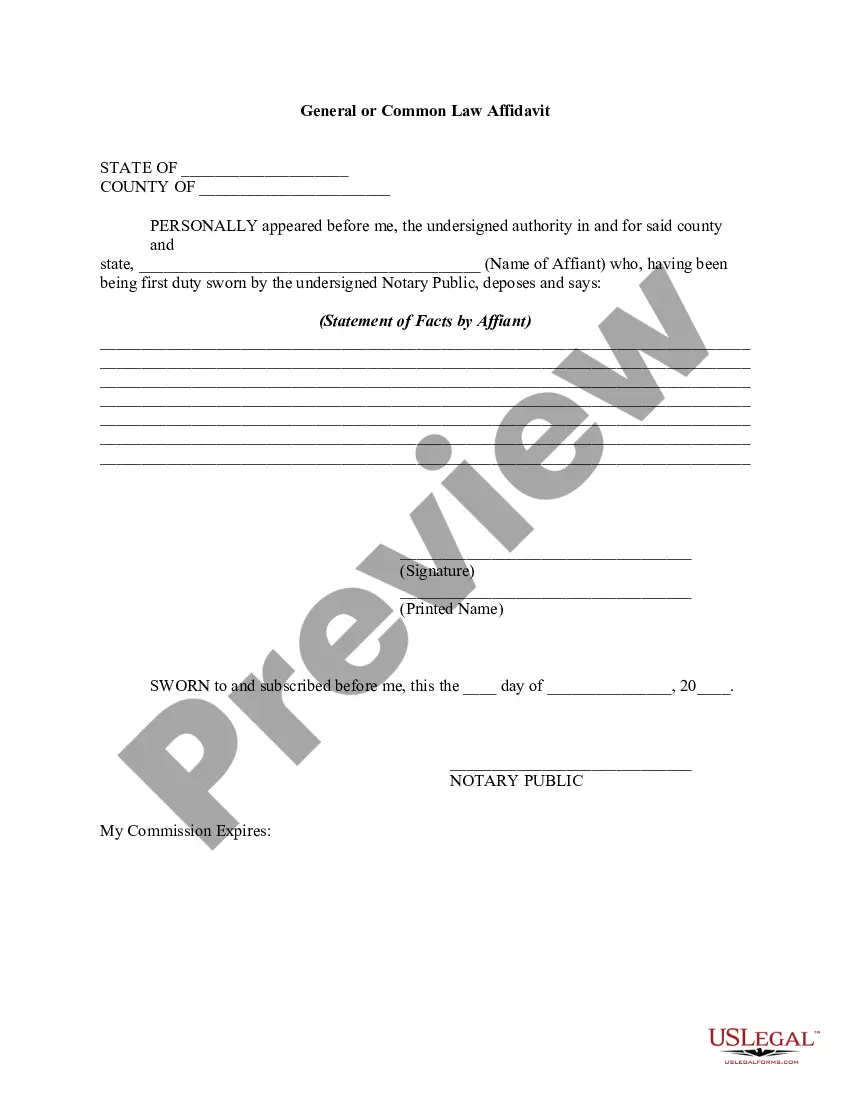
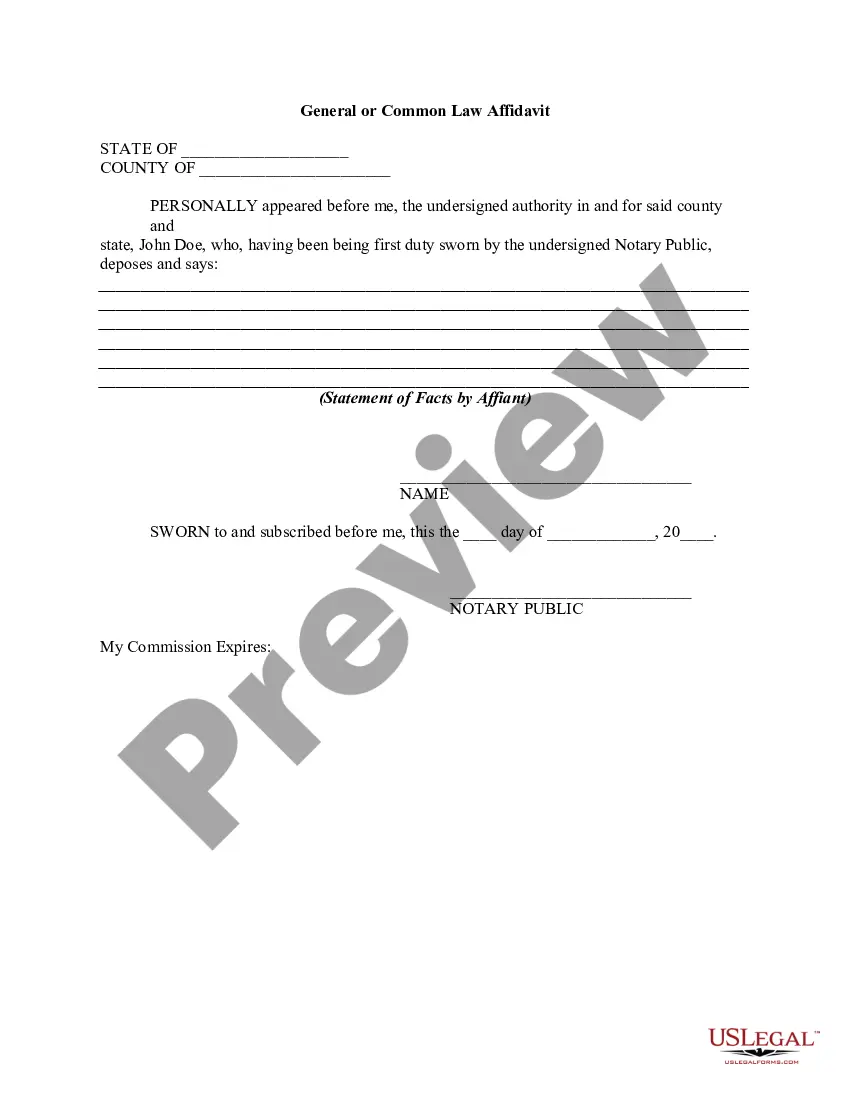
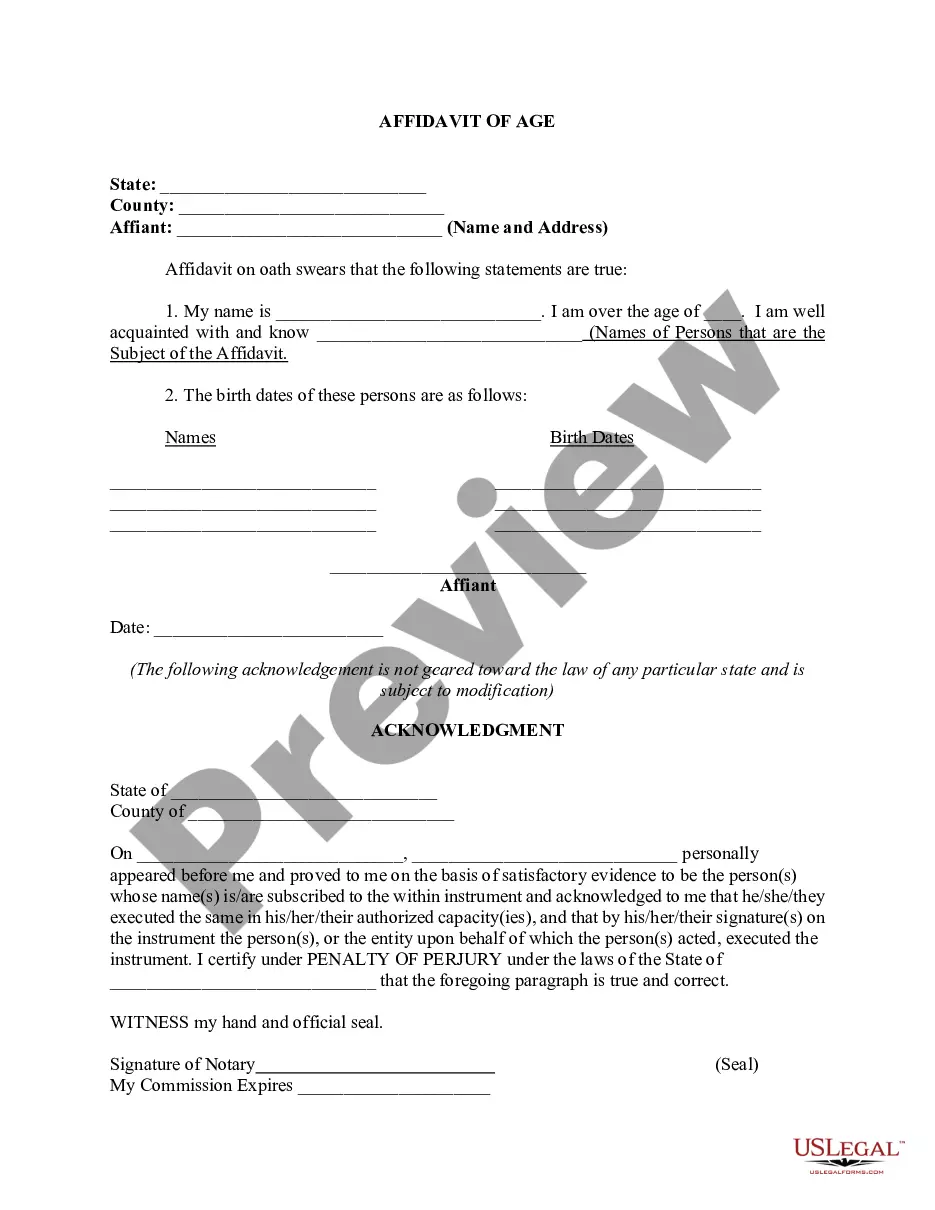
The General or Common Law Affidavit is a written statement sworn to or affirmed by an individual, known as the affiant, before a legally authorized officer, such as a notary public. This form serves to declare facts that can be used as evidence in legal proceedings. Unlike other forms, affidavits specifically require an oath or affirmation to establish the truthfulness of the statements contained within. This makes them a crucial element in various legal situations, ensuring credibility and reliability in the information presented.
Key parts of this document
- Identification of the venue where the affidavit is executed.
- Signature and printed name of the affiant, the person giving the affidavit.
- A statement of facts provided by the affiant.
- Certification from the notary public confirming that the affidavit was properly administered.
- Date of notarization and expiration of the notary's commission.

Common use cases
This affidavit is commonly used in various situations including, but not limited to, verifying identity, supporting legal claims, providing testimony in civil cases, or substantiating information in financial transactions. It is often required when individuals need to formally attest to particular facts, such as marriage, residency, or business transactions, especially when supporting documentation may not be readily available.
Intended users of this form
- Individuals who need to provide a sworn statement in legal matters.
- People involved in legal proceedings that require an affidavit.
- Anyone who needs to validate facts concerning personal or business affairs.
- Individuals who are required by law to provide sworn information.
Instructions for completing this form
- Identify the state and county where the affidavit will be executed.
- Fill in the name of the affiant in the designated area.
- Provide a clear and concise statement of facts you are attesting to.
- Sign the affidavit in front of a notary public.
- Ensure the notary public fills out their certification, including their signature and commission expiration date.
Notarization requirements for this form
Notarization is required for this form to take effect. Our online notarization service, powered by Notarize, lets you verify and sign documents remotely through an encrypted video session, available 24/7.
Get your form ready online
Our built-in tools help you complete, sign, share, and store your documents in one place.
Make edits, fill in missing information, and update formatting in US Legal Forms—just like you would in MS Word.
Download a copy, print it, send it by email, or mail it via USPS—whatever works best for your next step.
Sign and collect signatures with our SignNow integration. Send to multiple recipients, set reminders, and more. Go Premium to unlock E-Sign.
If this form requires notarization, complete it online through a secure video call—no need to meet a notary in person or wait for an appointment.
We protect your documents and personal data by following strict security and privacy standards.

Make edits, fill in missing information, and update formatting in US Legal Forms—just like you would in MS Word.

Download a copy, print it, send it by email, or mail it via USPS—whatever works best for your next step.

Sign and collect signatures with our SignNow integration. Send to multiple recipients, set reminders, and more. Go Premium to unlock E-Sign.

If this form requires notarization, complete it online through a secure video call—no need to meet a notary in person or wait for an appointment.

We protect your documents and personal data by following strict security and privacy standards.
Mistakes to watch out for
- Failing to notarize the affidavit, which can render it invalid.
- Omitting required details, such as the venue or the date.
- Not providing a complete statement of facts, which is essential for clarity.
- Using the incorrect name or title for the notary public.
Benefits of using this form online
- Convenient access to download and fill out the document at any time.
- User-friendly design makes it simple to complete the form accurately.
- Availability of templates drafted by licensed attorneys ensures legal compliance.
- Secure storage options for completed forms to maintain organization.
Legal use & context
- An affidavit serves as a legally binding document that may be used as evidence in court.
- It is important to comply with jurisdictional requirements to ensure enforceability.
- Carefully crafted affidavits can have significant implications for legal proceedings.
Key takeaways
- The General or Common Law Affidavit is a versatile legal document essential for stating facts under oath.
- It is crucial to comply with local laws and notarization requirements.
- Proper completion of the affidavit enhances its validity and effectiveness in legal contexts.
Looking for another form?


Form popularity
FAQ
En espanol Social Security recognizes a common-law marriage if: The couple lives in a state where common-law marriage is legal, or did so when the marriage began. The couple can show Social Security that they are in such a relationship (more on that below).
Shared ownership of residential property. joint leases or rental agreements. bills for shared utility accounts, such as: gas. electricity. important documents for both of you showing the same address, such as: driver's licenses. identification documents.
If you and your partner live in a state that recognizes common-law marriages and your relationship meets the legal definition of common-law marriage in that state, Medicare will consider you spouses and apply the spousal rules.
To prove a common law marriage to Social Security so that you'll be eligible for dependents or survivors benefits, one of the following must be provided. If you are both alive, then you must both provide statements that affirm your marriage and you must provide a statement from a blood relative of each of you.
Title the affidavit. First, you'll need to title your affidavit. Craft a statement of identity. The very next section of your affidavit is what's known as a statement of identity. Write a statement of truth. State the facts. Reiterate your statement of truth. Sign and notarize.
Deeds showing title to property held jointly by both parties to the common law marriage. Bank statements and checks showing joint ownership of the accounts. Insurance policies naming the other party as beneficiary. Birth certificates naming you and your common law spouse as parents of your child.
The Social Security Administration mandates that you must provide evidence of your marriage. Evidence to prove a common-law marriage in the States that recognize such marriages must include: A statement from each spouse and a statement from a blood relative of each, if both spouses are living, OR.
The foundation to establish a common law marriage is mutual consent or agreement of the parties to be spouses, and thereafter a mutual and open assumption of a marital relationship.
Step 2: Write the purpose of the Affidavit or the Heading. Step 3: Write the name of the parties in case of an affidavit being filled in Court or Write the name of the Deponent in case of other affidavits. Step 4: Write the complete address of the deponent.