Sample Letter for Mailing Matrix
What this document covers
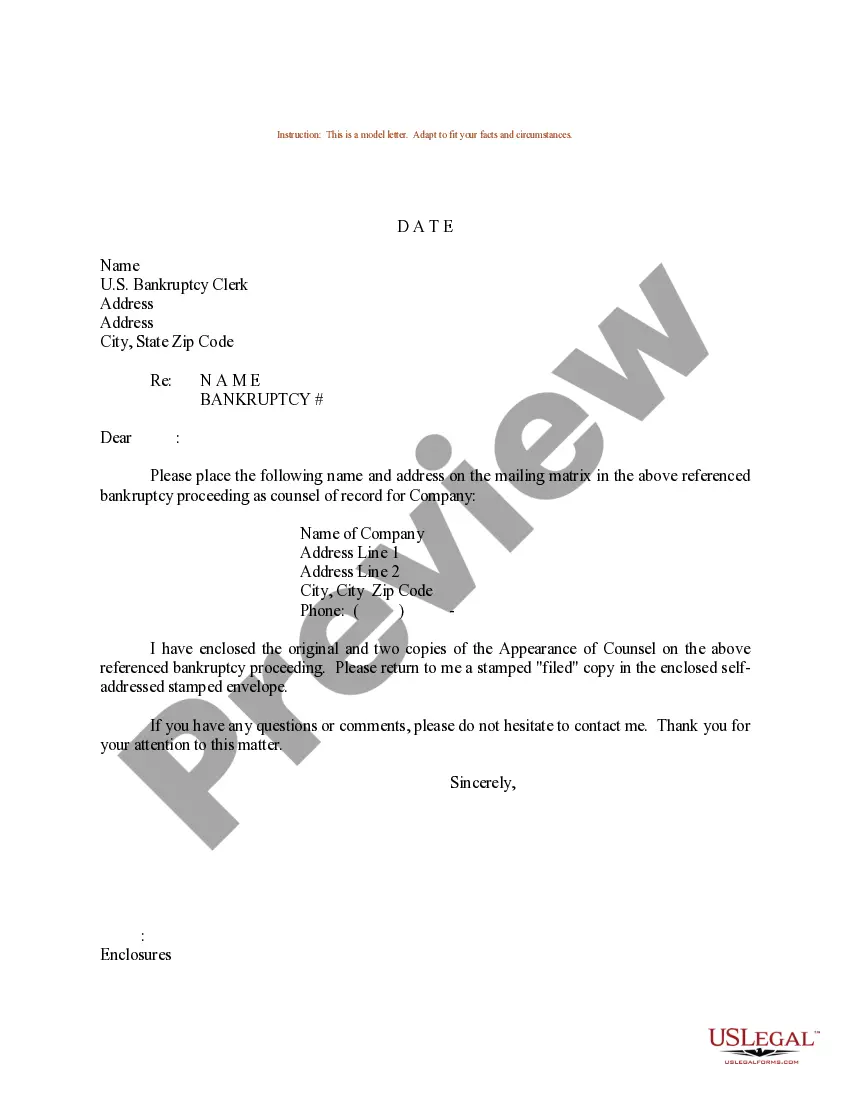
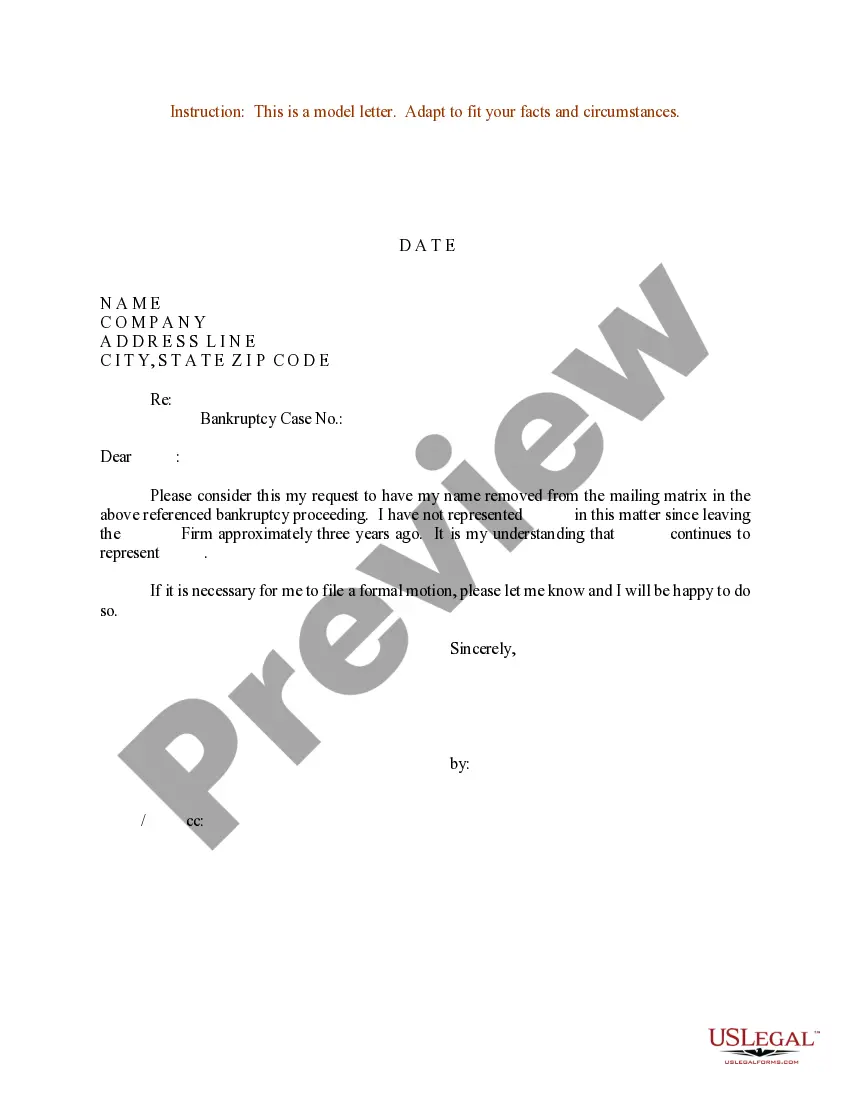
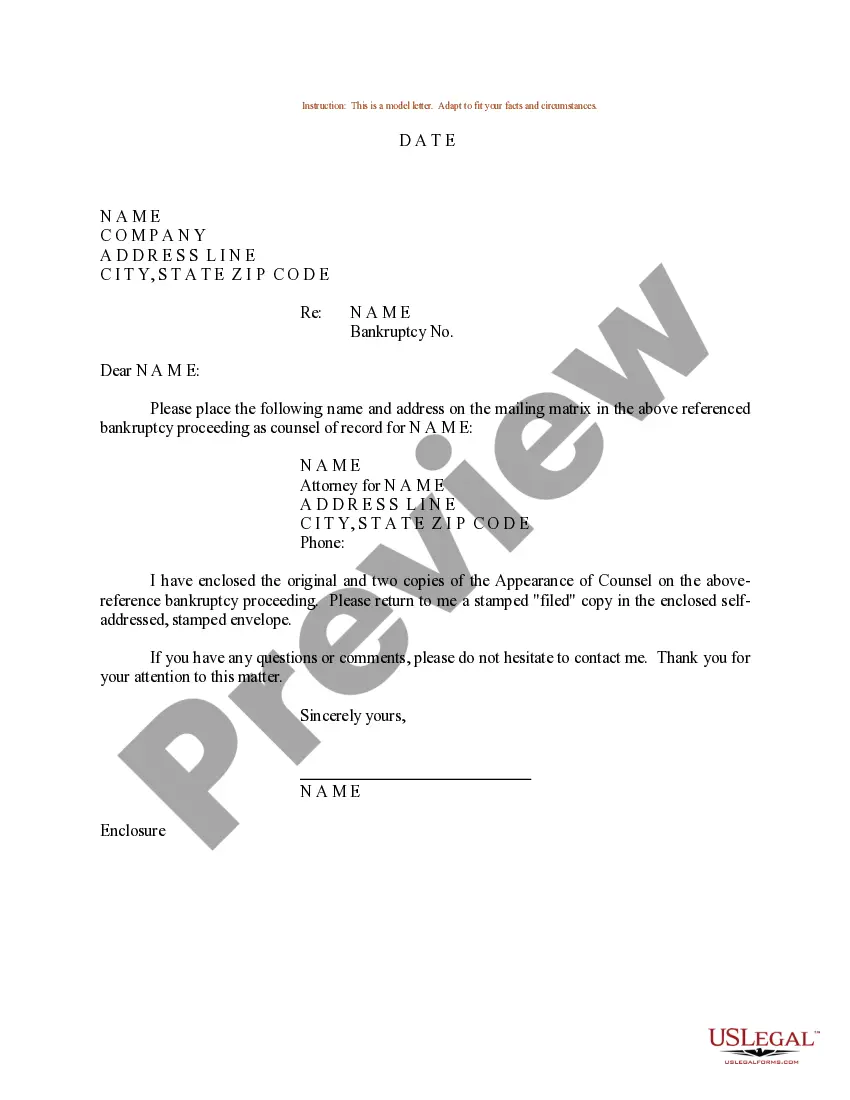
The Sample Letter for Mailing Matrix is a Word document designed to assist individuals in communicating with the U.S. Bankruptcy Clerk. This template serves as a clear and formal means to provide necessary information and inquiries related to bankruptcy matters. Unlike other legal forms, this letter template focuses specifically on the communication aspects within bankruptcy proceedings, making it an essential tool for effective correspondence in this context.
Main sections of this form
- Date of the letter
- Recipient's name and address (U.S. Bankruptcy Clerk)
- Subject line (to clearly indicate the purpose)
- Body of the letter (space for questions or comments)
- Closing signature section
When this form is needed
This form is useful when you need to send an official letter to the U.S. Bankruptcy Clerk. Situations might include inquiring about the status of a bankruptcy case, submitting additional documentation, or addressing concerns related to your bankruptcy filing. It ensures that your communication is professionally formatted and clear, which can facilitate a more efficient response from the clerk's office.
Who should use this form
This letter template is suitable for:
- Individuals currently undergoing bankruptcy proceedings
- Bankruptcy attorneys seeking a formal communication template
- Anyone needing to address the U.S. Bankruptcy Clerk on related matters
Instructions for completing this form
- Enter the date when the letter is being sent.
- Fill in the name and address of the U.S. Bankruptcy Clerk.
- Provide a relevant subject line to clarify the letter's intent.
- Add your questions or comments in the body of the letter.
- Sign the letter in the closing section.
Notarization requirements for this form
This form does not typically require notarization unless specified by local law. Always check with your jurisdiction for any specific requirements related to formal correspondence.
Get your form ready online
Our built-in tools help you complete, sign, share, and store your documents in one place.
Make edits, fill in missing information, and update formatting in US Legal Forms—just like you would in MS Word.
Download a copy, print it, send it by email, or mail it via USPS—whatever works best for your next step.
Sign and collect signatures with our SignNow integration. Send to multiple recipients, set reminders, and more. Go Premium to unlock E-Sign.
If this form requires notarization, complete it online through a secure video call—no need to meet a notary in person or wait for an appointment.
We protect your documents and personal data by following strict security and privacy standards.

Make edits, fill in missing information, and update formatting in US Legal Forms—just like you would in MS Word.

Download a copy, print it, send it by email, or mail it via USPS—whatever works best for your next step.

Sign and collect signatures with our SignNow integration. Send to multiple recipients, set reminders, and more. Go Premium to unlock E-Sign.

If this form requires notarization, complete it online through a secure video call—no need to meet a notary in person or wait for an appointment.

We protect your documents and personal data by following strict security and privacy standards.
Common mistakes to avoid
- Failing to include the date increases confusion about the timing.
- Leaving out the recipient's full address can result in misdirected correspondence.
- Using informal language in the body instead of a professional tone.
- Not clearly stating the purpose in the subject line leads to potential misunderstandings.
Benefits of completing this form online
- Convenient download in a Word format, making it easy to edit.
- Trustworthy templates ensure compliance with legal standards.
- Quick access to necessary forms, saving time in legal processes.
- Designed by licensed attorneys, enhancing your communication's legality and professionalism.
Main things to remember
- The Sample Letter for Mailing Matrix is essential for formal communication with the U.S. Bankruptcy Clerk.
- Ensure you include all necessary details, including dates and clear subject lines.
- This letter is suited for anyone involved in bankruptcy proceedings.
- Utilizing the template can help maintain professionalism in your communications.
Looking for another form?
Form popularity
FAQ
A creditor matrix contains each creditor's name and mailing address. This information is used for noticing and claims information. The debtor is required to provide a list of ALL creditors.PLEASE NOTE: DEBTORS WHO FAIL TO PROVIDE A PROPERLY FORMATTED MATRIX MAY BE REQUIRED TO RE-TYPE THE MATRIX.
The mailing list/matrix is a list of the names and addresses of creditors and parties in interest in a bankruptcy case. This information is used for noticing and also for claims information when applicable. The debtor is responsible for providing complete information on the matrix.
Most lawyers order your credit reports for you and list the debts from your credit report on your bankruptcy forms. You can request a free copy of your credit report from each one of the three credit bureaus once per year.
A creditor or the trustee can object to the discharge of one or all of your debts in bankruptcy.But even if a debt qualifies for a discharge, a creditor or the bankruptcy trustee can object to the discharge of a particular debt or the entire bankruptcy case by filing a motion or lawsuit called an adversary proceeding.
A creditor is an entity, a company or a person of a legal nature that has provided goods, services, or a monetary loan to a debtor. Keep track of money your company is owed with online accounting software.
Check your credit file. The easiest way to find out what you owe is to check your credit file online. Check emails and letters from creditors. Contact your creditors. Check your bank account statements. Find CCJs and court records online.
The first stop in determining what debts you owe should be to get your credit reports from the three major credit bureaus: Experian, TransUnion and Equifax. Creditors generally report debt accounts to one or more credit bureau, which then add it to the credit report they maintain.