Separation and Support Agreement with Joint Custody, Visitation, and Mutual Support of Children
What is this form?
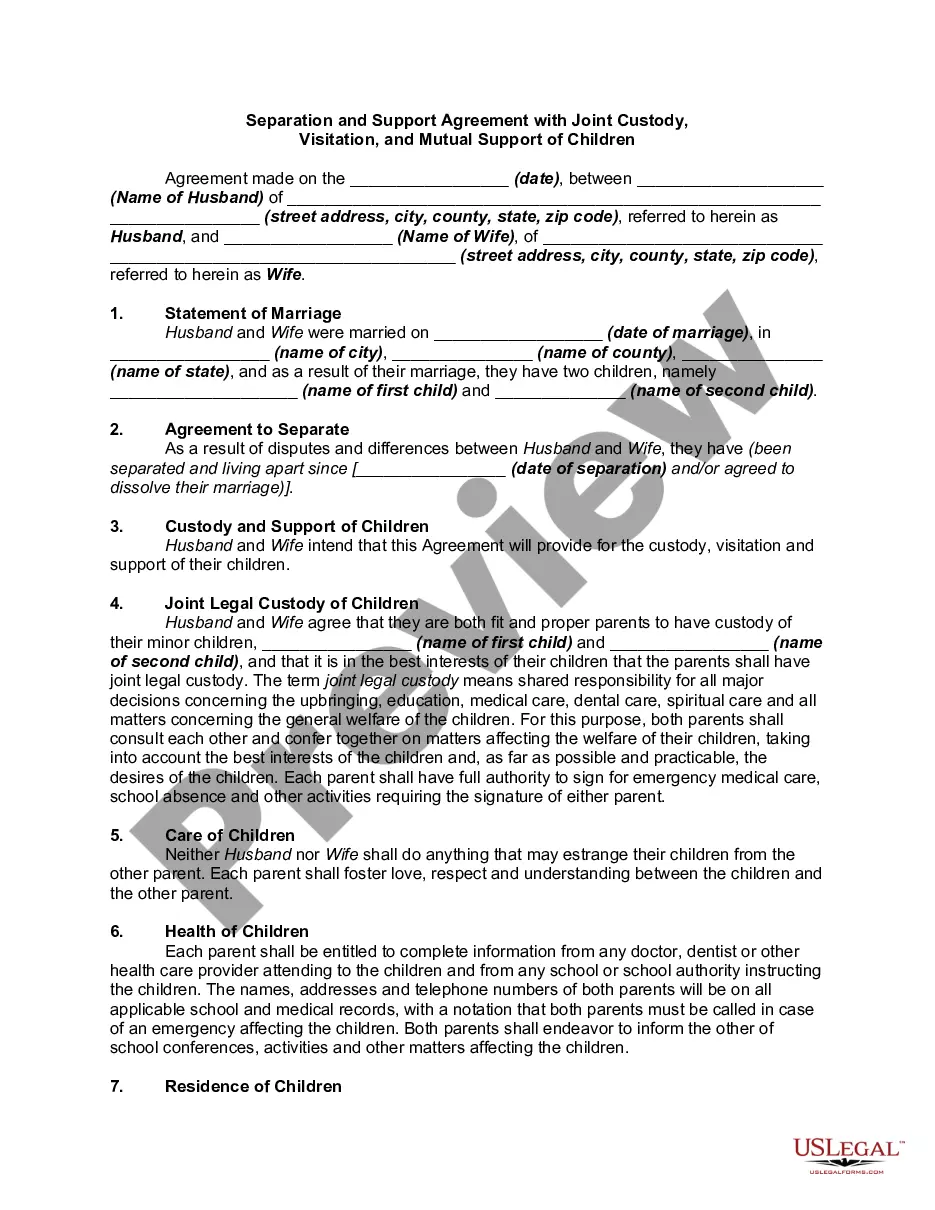
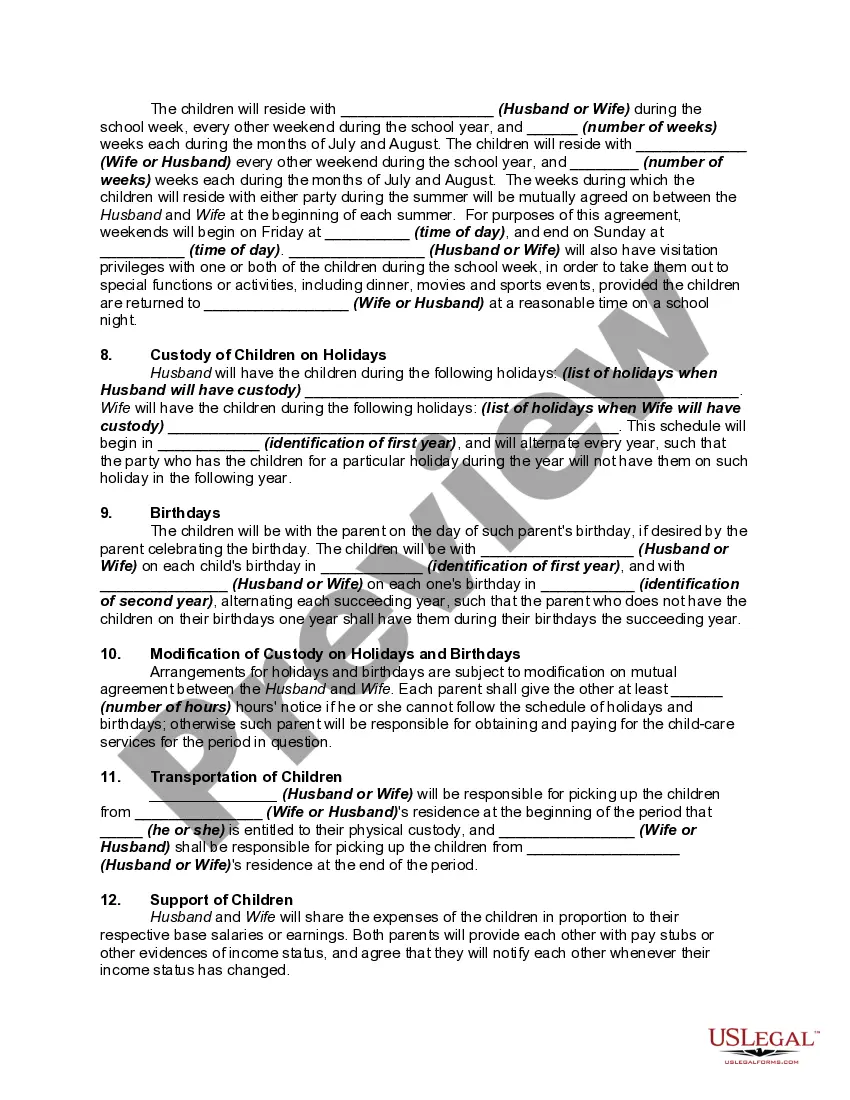
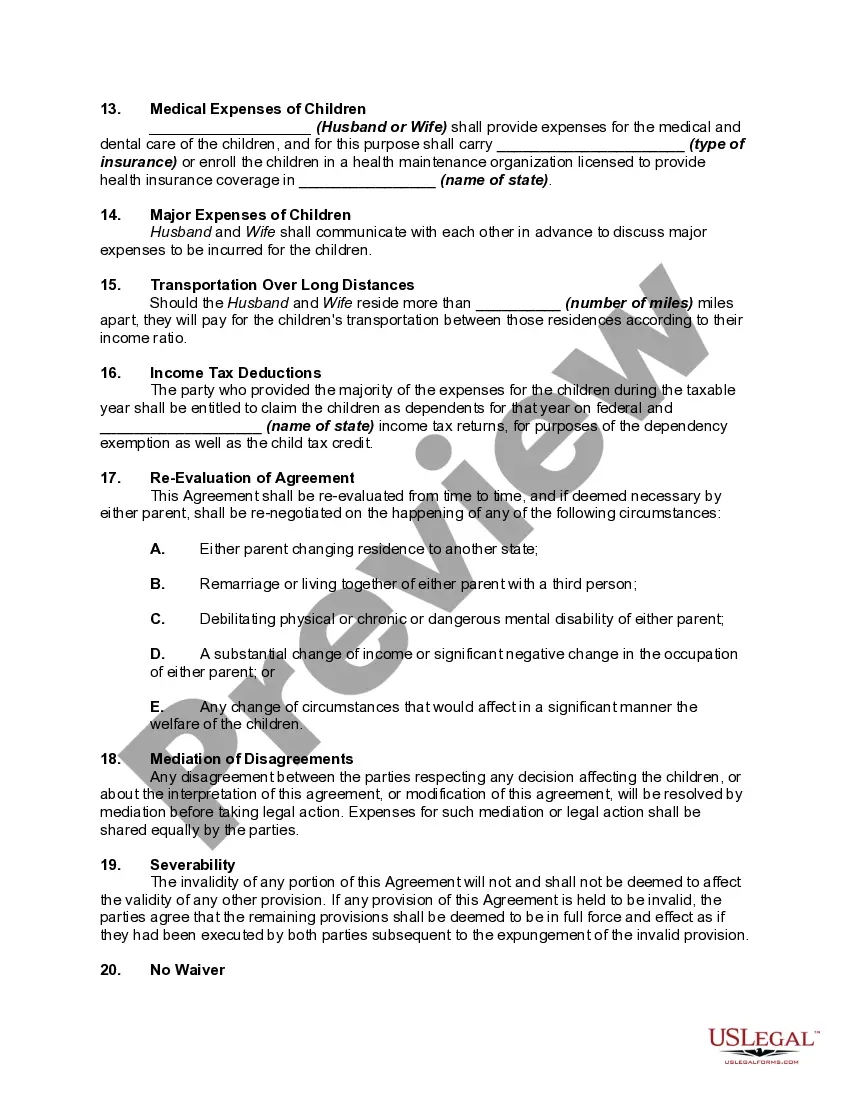
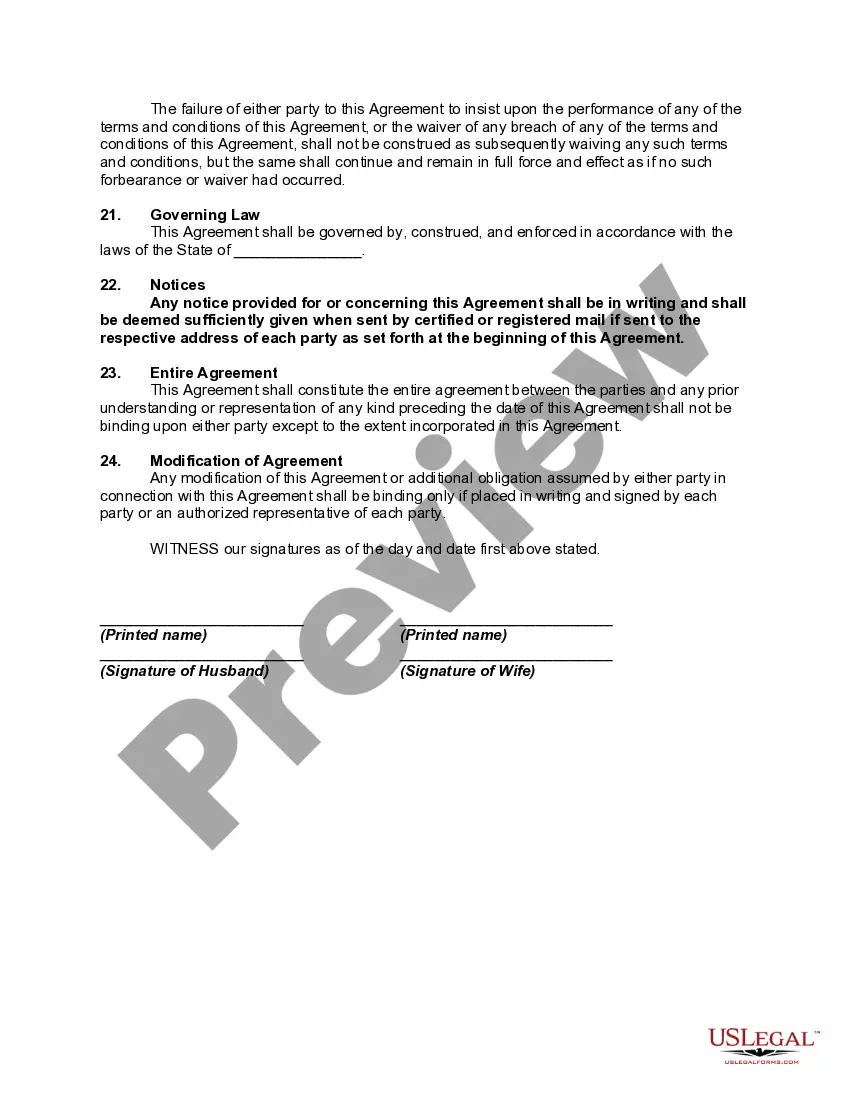
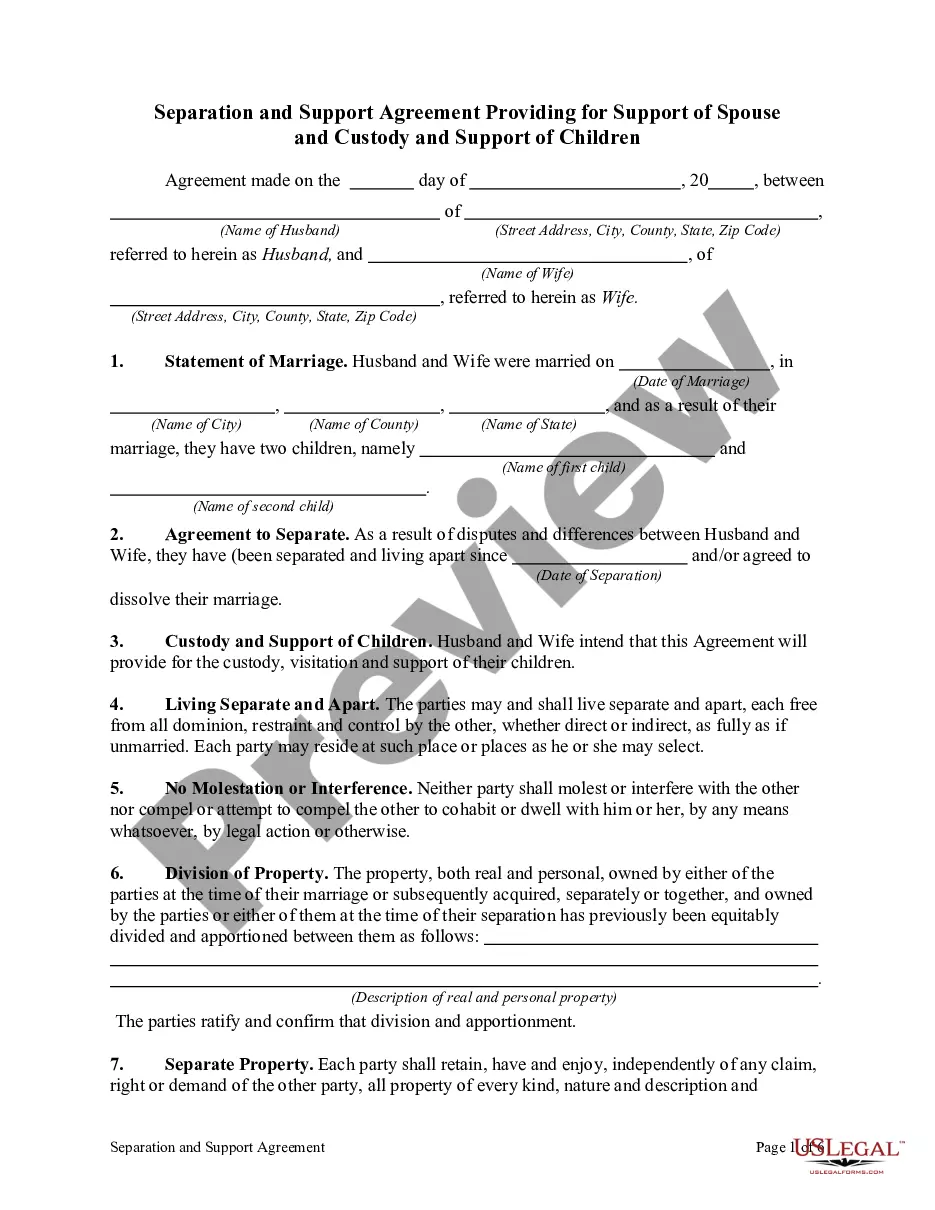
The Separation and Support Agreement with Joint Custody, Visitation, and Mutual Support of Children is a legal document that formalizes the arrangements between spouses who are separating. This form outlines key aspects such as child custody, visitation, child support, and responsibilities for joint expenses. It helps ensure that both parties have clear expectations and responsibilities, thus reducing future conflict. Unlike other divorce agreements that may not specifically address children, this form emphasizes the well-being and mutual support of children during and after the separation process.
Key components of this form
- Statement of marriage details, including names, addresses, and date of marriage.
- Terms of separation and arrangement for living apart.
- Details regarding joint legal custody and shared responsibilities for the children's upbringing.
- Visitation rights and schedule for both parents.
- Financial obligations for child support, medical expenses, and other costs.
- Protocol for modifying the agreement in response to changing circumstances.
When to use this document
This agreement is ideal for couples who are formally separating while having children together. It can be used when the parents wish to delineate their shared responsibilities regarding child custody, visitation schedules, and financial support during their separation. If you need a clear understanding of each parent's responsibilities and rights related to the children and mutual support, this form is appropriate.
Who can use this document
- Couples who are legally married and planning to separate.
- Parents seeking to establish a clear custody and support agreement for their children.
- Individuals looking to formalize arrangements about residence, visitation, and financial responsibilities post-separation.
- Those wanting to avoid future conflicts by having a documented agreement outlining all aspects of child custody and support.
Steps to complete this form
- Identify the names and addresses of both parties involved in the agreement.
- Enter the date of marriage and the date of separation.
- Specify the details regarding child custody and visitation schedules.
- Outline the terms of child support and other financial responsibilities.
- Ensure all parties sign and date the agreement to make it enforceable.
Notarization guidance
This form does not typically require notarization to be legally valid. However, some jurisdictions or document types may still require it. US Legal Forms provides secure online notarization powered by Notarize, available 24/7 for added convenience.
Get your form ready online
Our built-in tools help you complete, sign, share, and store your documents in one place.
Make edits, fill in missing information, and update formatting in US Legal Forms—just like you would in MS Word.
Download a copy, print it, send it by email, or mail it via USPS—whatever works best for your next step.
Sign and collect signatures with our SignNow integration. Send to multiple recipients, set reminders, and more. Go Premium to unlock E-Sign.
If this form requires notarization, complete it online through a secure video call—no need to meet a notary in person or wait for an appointment.
We protect your documents and personal data by following strict security and privacy standards.

Make edits, fill in missing information, and update formatting in US Legal Forms—just like you would in MS Word.

Download a copy, print it, send it by email, or mail it via USPS—whatever works best for your next step.

Sign and collect signatures with our SignNow integration. Send to multiple recipients, set reminders, and more. Go Premium to unlock E-Sign.

If this form requires notarization, complete it online through a secure video call—no need to meet a notary in person or wait for an appointment.

We protect your documents and personal data by following strict security and privacy standards.
Avoid these common issues
- Neglecting to include clear visitation schedules can lead to misunderstandings.
- Failing to specify child support amounts might result in disputes later.
- Not accounting for future changes in income or circumstances can complicate the agreement.
- Omitting signatures or dates on the form can make it unenforceable.
Why complete this form online
- Convenience of downloading and using the document from home.
- Editability allows for adjustments to be made easily before finalizing.
- Access to professionally drafted templates ensures legal compliance.
- Immediate availability helps in resolving separation matters quickly.
Legal use & context
- This agreement serves as a legally binding document that is enforceable in court.
- Both parties must agree to the terms outlined within the document for it to be valid.
- Changes to this agreement may require re-evaluation and mutual consent from both parties.
Key takeaways
- The Separation and Support Agreement provides a clear framework for child custody and support arrangements.
- It helps to minimize conflict and misunderstandings during a challenging time.
- Using this form ensures that both parents have agreed upon their respective roles and responsibilities.
Looking for another form?

Form popularity
FAQ
A declaration of custody. The division of parental authority and decision-making abilities. A child visitation schedule. Methods for reviewing and modifying the custody agreement. A method of dispute resolution. Any additional provisions you would like to include.
A custody and visitation schedule (including a holiday schedule) Parenting provisions. Child support information. Anything else that will help you and the other parent raise the child.
Common joint physical custody schedules Two weeks each schedule when the child lives with one parent for two weeks and the other parent the next two weeks. 2-2-3 schedule where the child lives with one parent for two days, the other parent for two days and the parents alternate a three day weekend.
In writing your own custody and support agreement, you should use language that reflects your willingness to cooperate with the other parent. The tone should be positive and indicate that both parties are willing to comply with the terms of the document. If written this way, a judge is more likely to approve its terms.
Child support is intended to make both households as equal as possible. So even if it is joint custody, if one parent makes significantly more income than the other, they may have to pay child support.
Decide what type of custody each parent gets. Describe your agreed upon arrangement. Provide a detailed visitation and parenting plan. Use positive language.
Even though wills are considered more complicated contracts, they can still be handwritten to be considered legally enforceable.It is important to note that even if a written requirement is required under the Statute of Frauds, a handwritten agreement will still work to make the document legally binding.
50/50 schedules work best when: The parents live fairly close to each other, so exchanges are easier. The parents are able to communicate with each other about the child without fighting. The child is able to handle switching between parents' homes.