Time and Material Building and Construction Contract - Owner to Supply Materials
Overview of this form
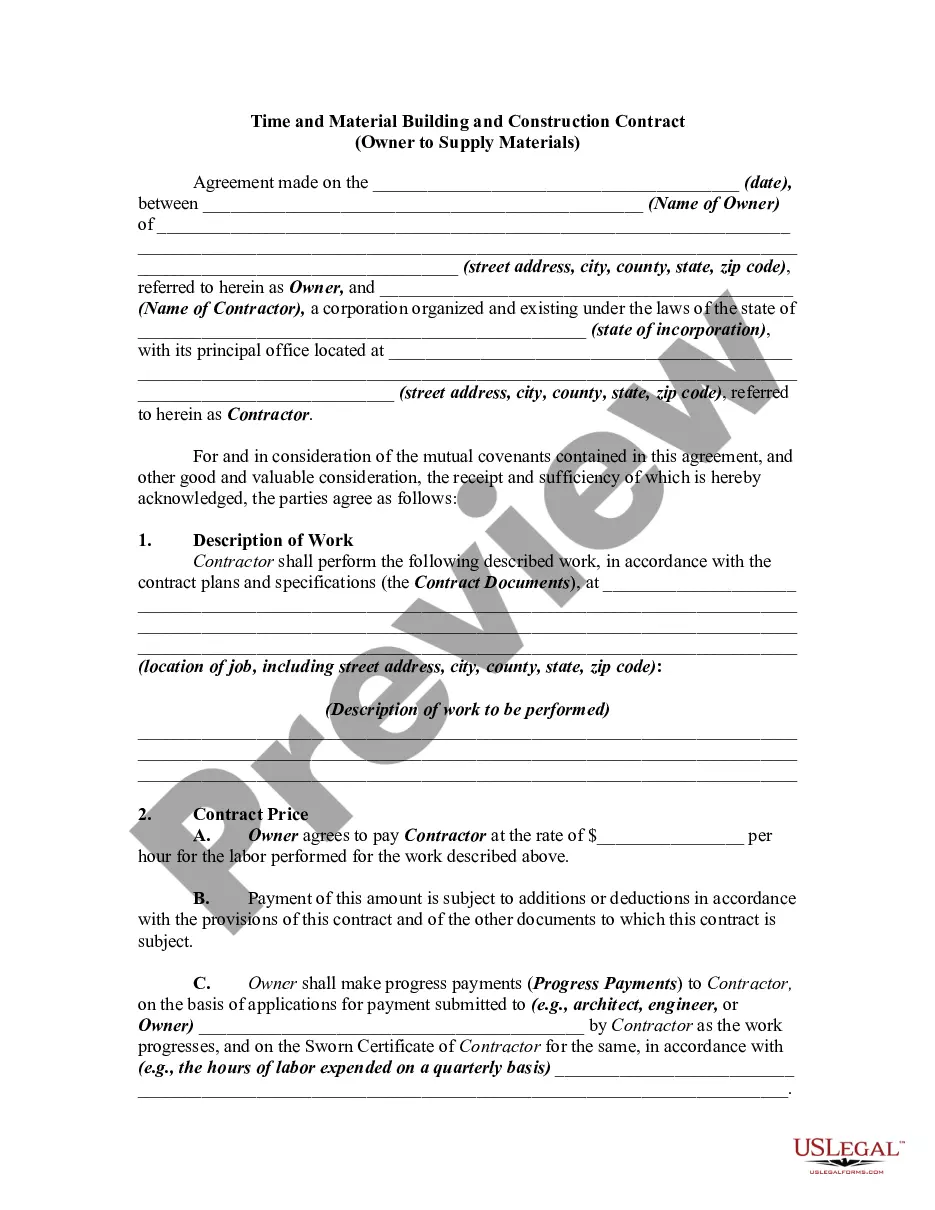
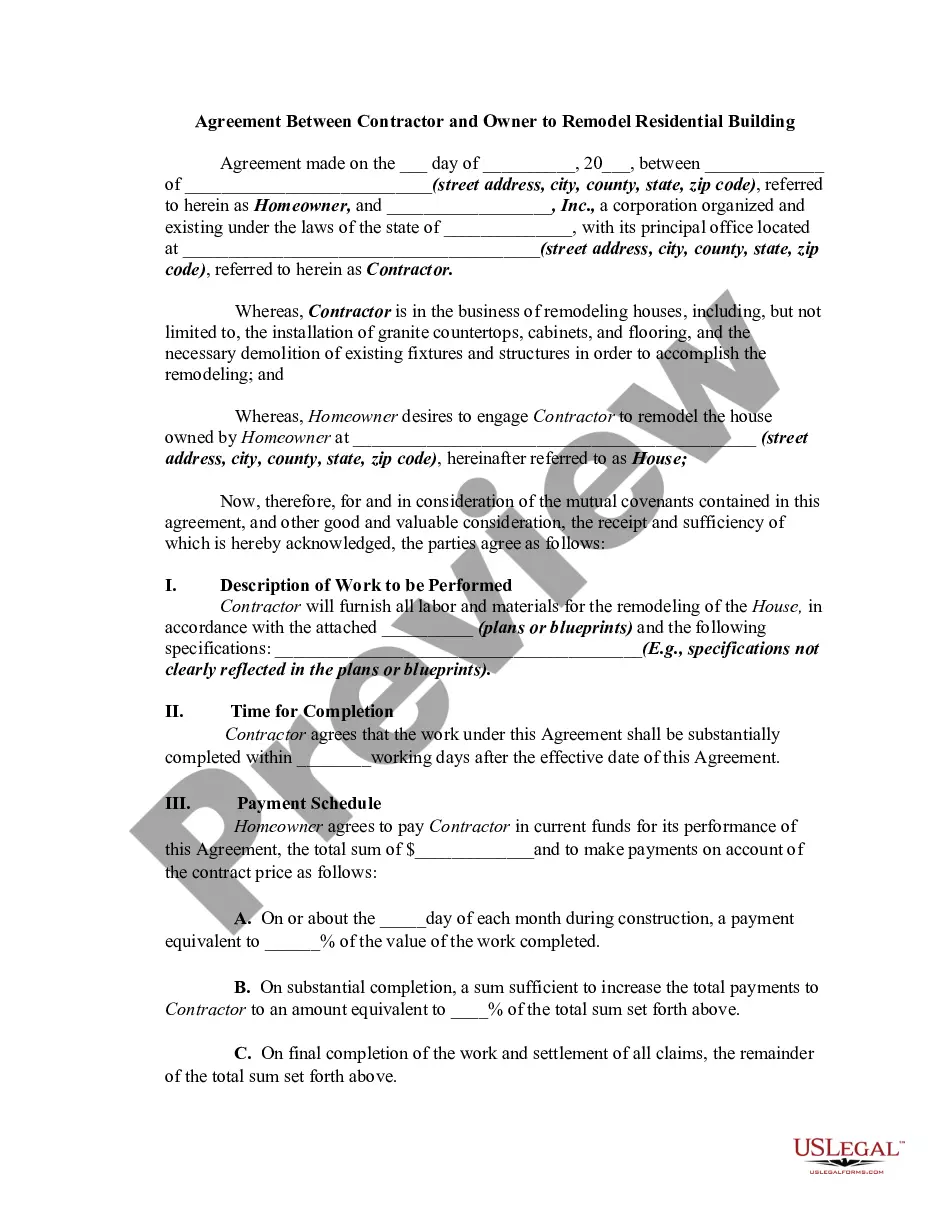
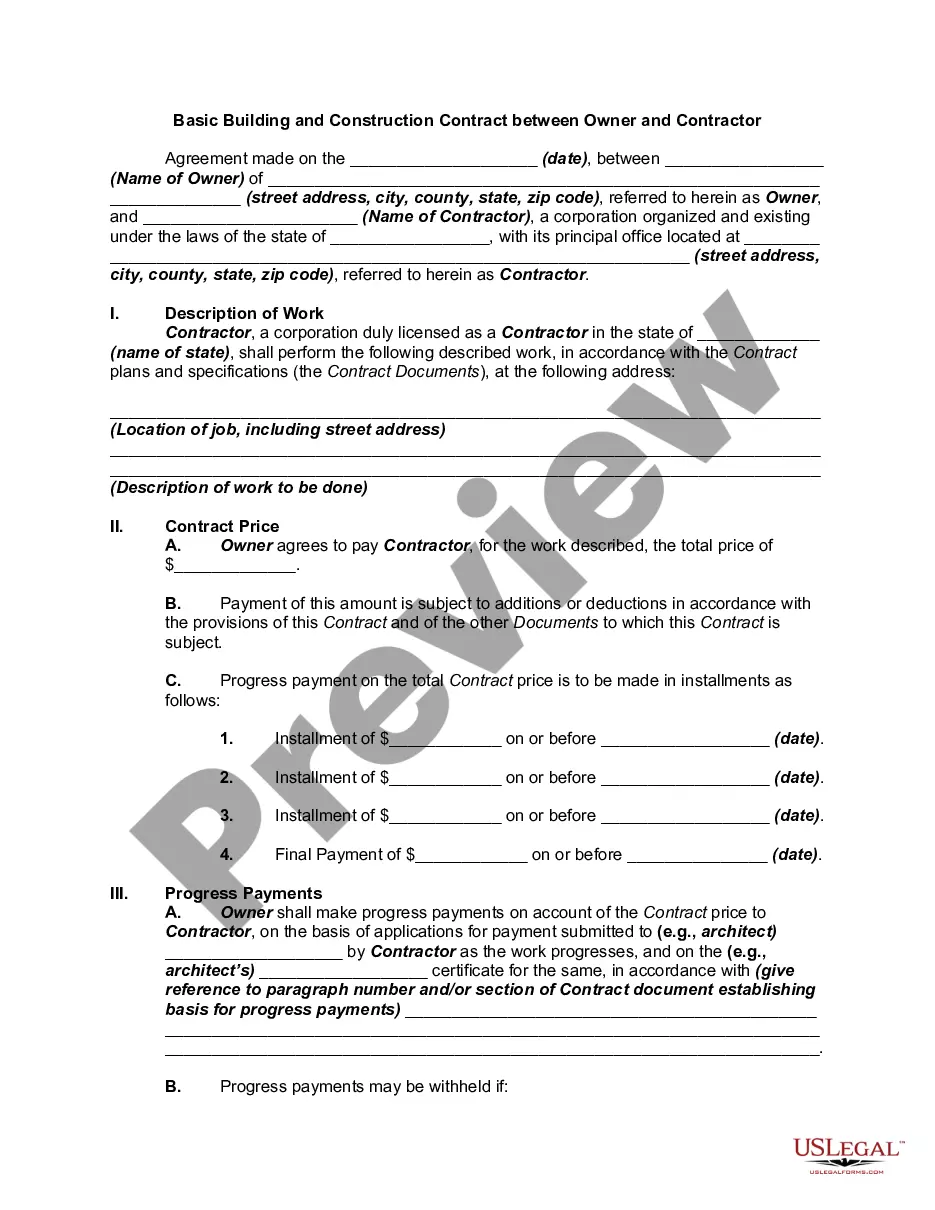
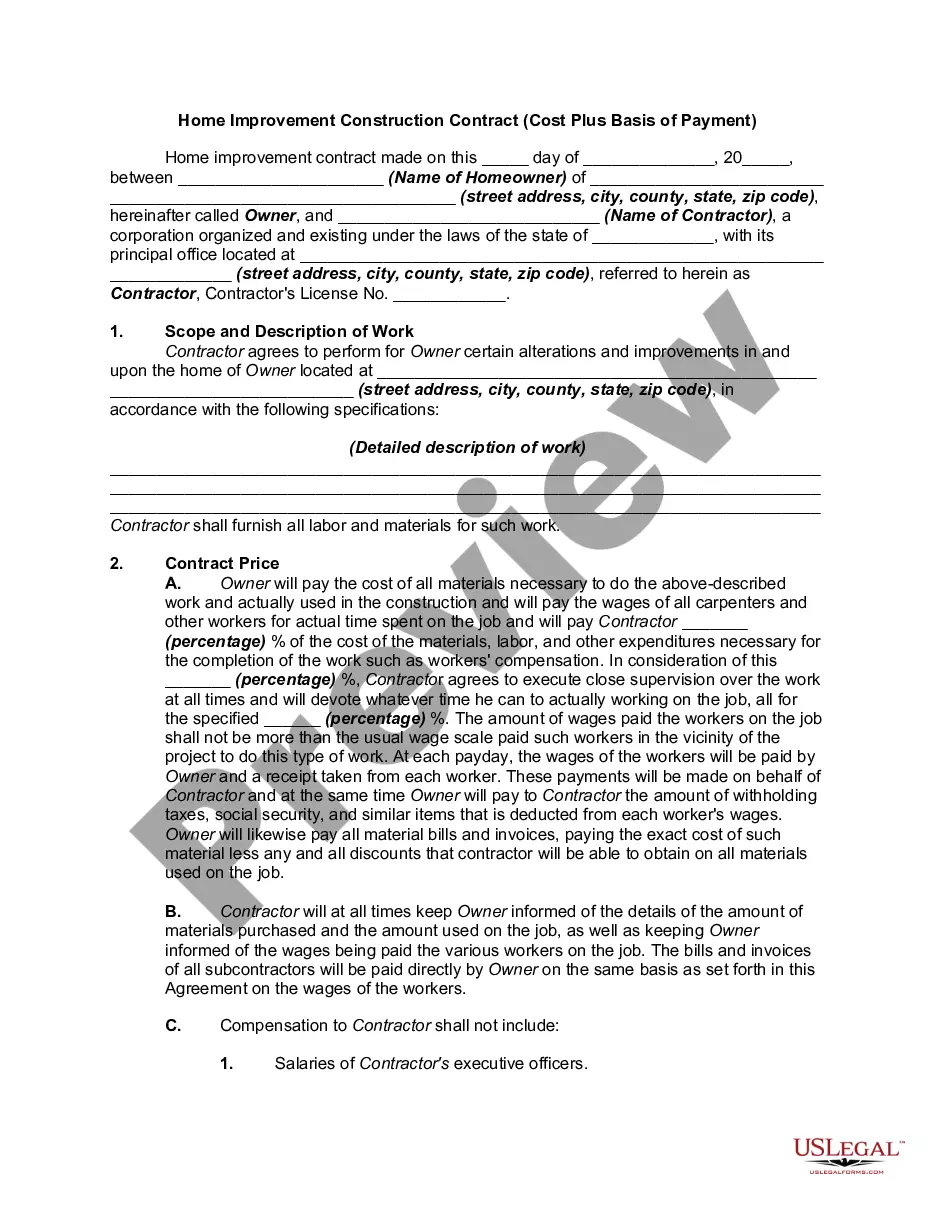
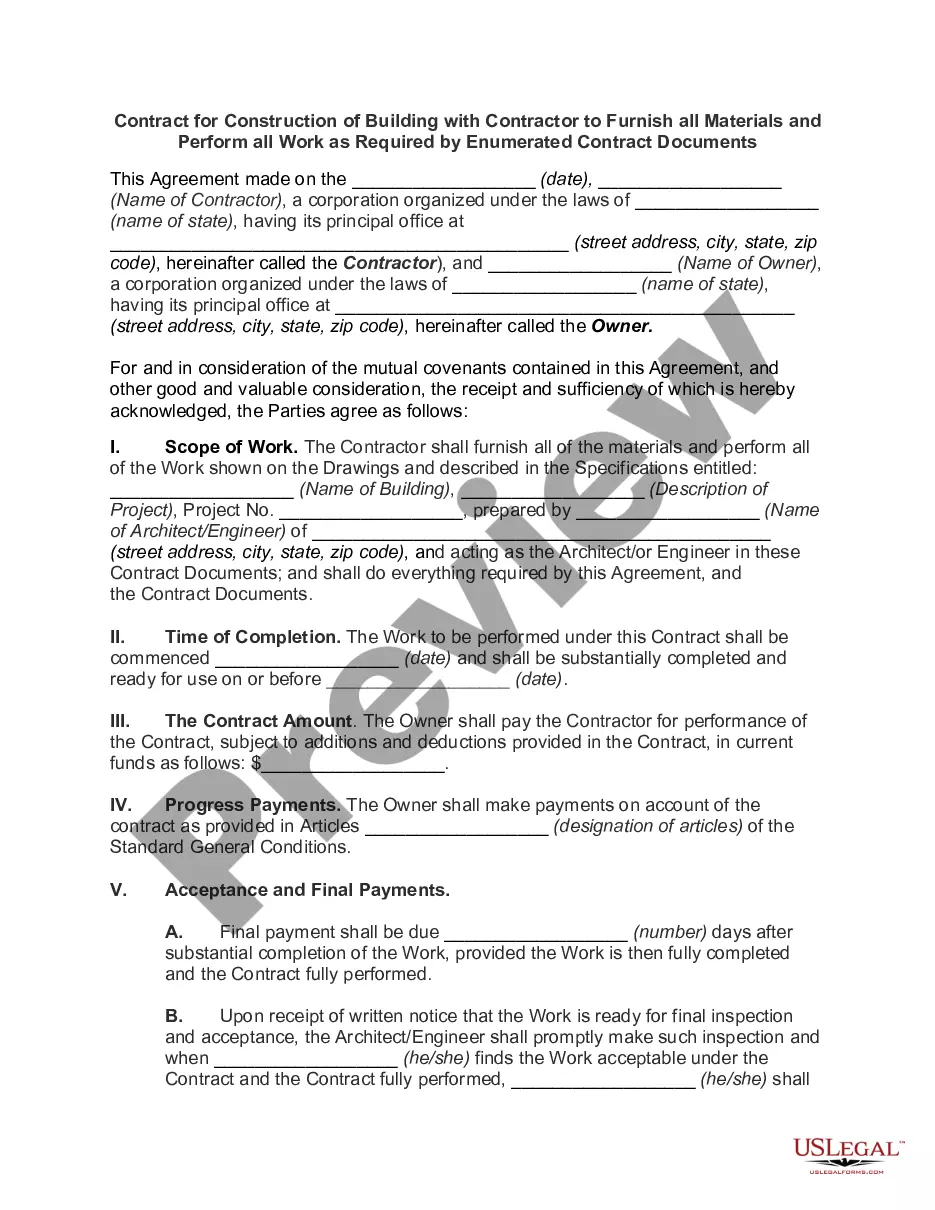
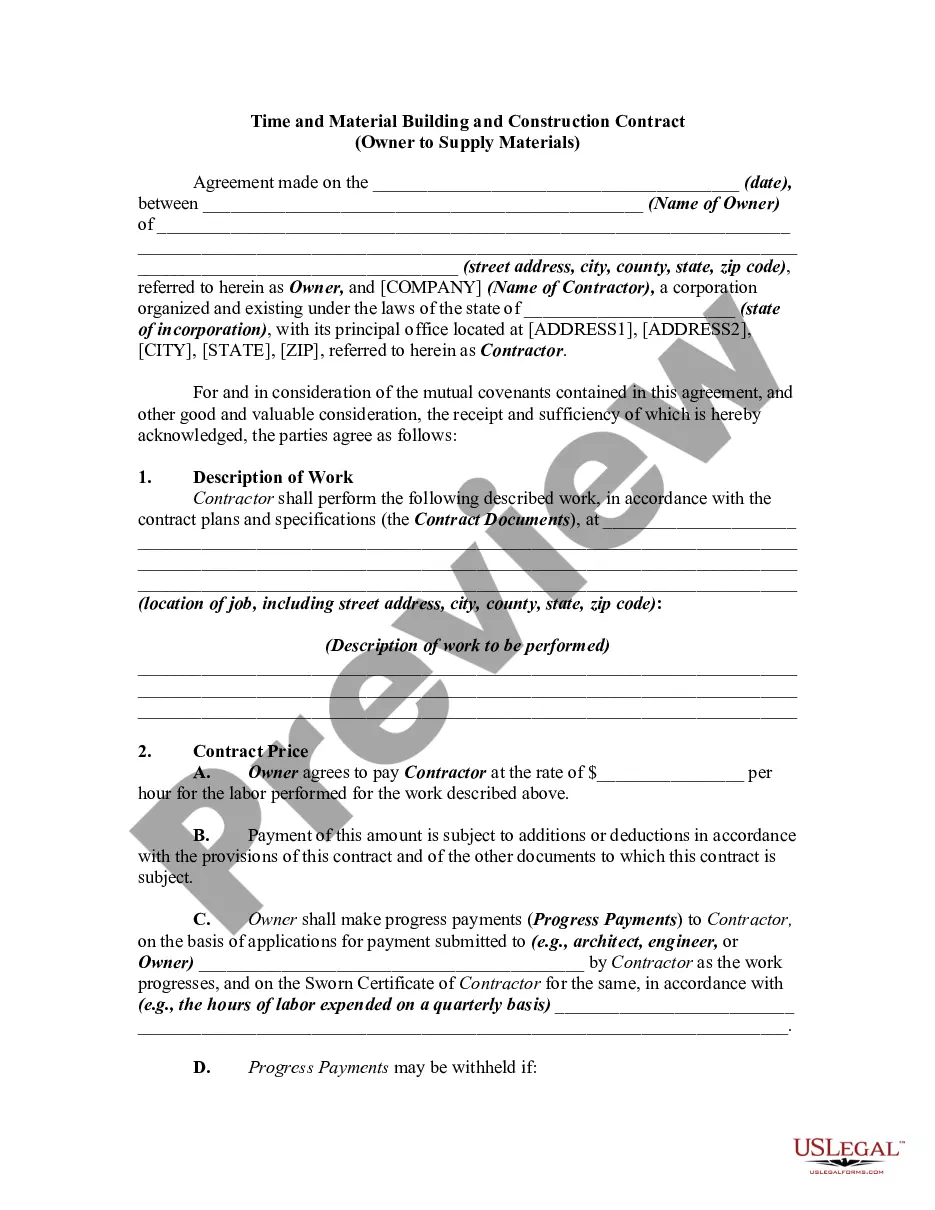
The Time and Material Building and Construction Contract - Owner to Supply Materials is a legal agreement used when an owner wants to hire a contractor based on the time and materials used for construction. This form allows for payment based on the effort expended rather than a fixed fee, making it suitable for projects where costs may vary. This contract differs from traditional fixed-price contracts by ensuring the owner provides materials, while labor is paid per hour, accommodating changes in project scope and resources efficiently.
What’s included in this form
- Agreement date and parties involved: Identifies the owner and contractor, including their addresses.
- Description of work: Outlines the specific tasks to be completed and the location of the project.
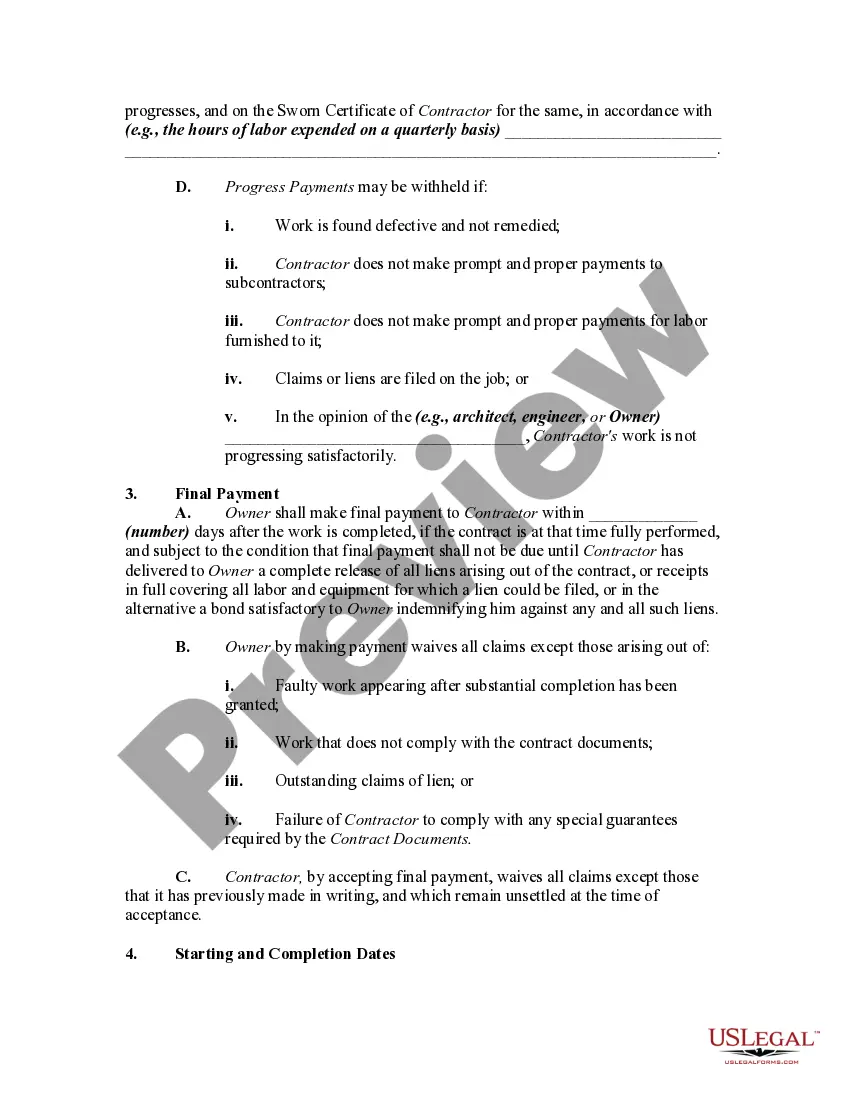
- Contract price structure: Details the hourly rates for labor and conditions for progress payments.
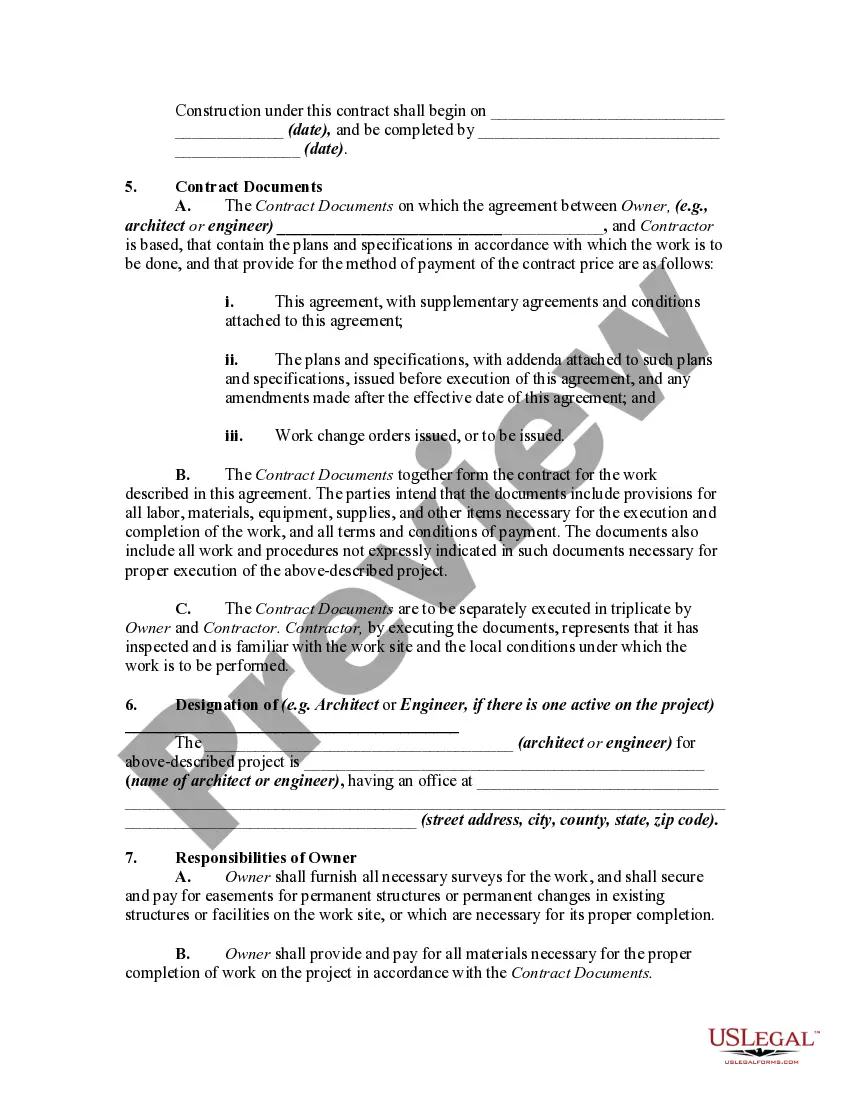
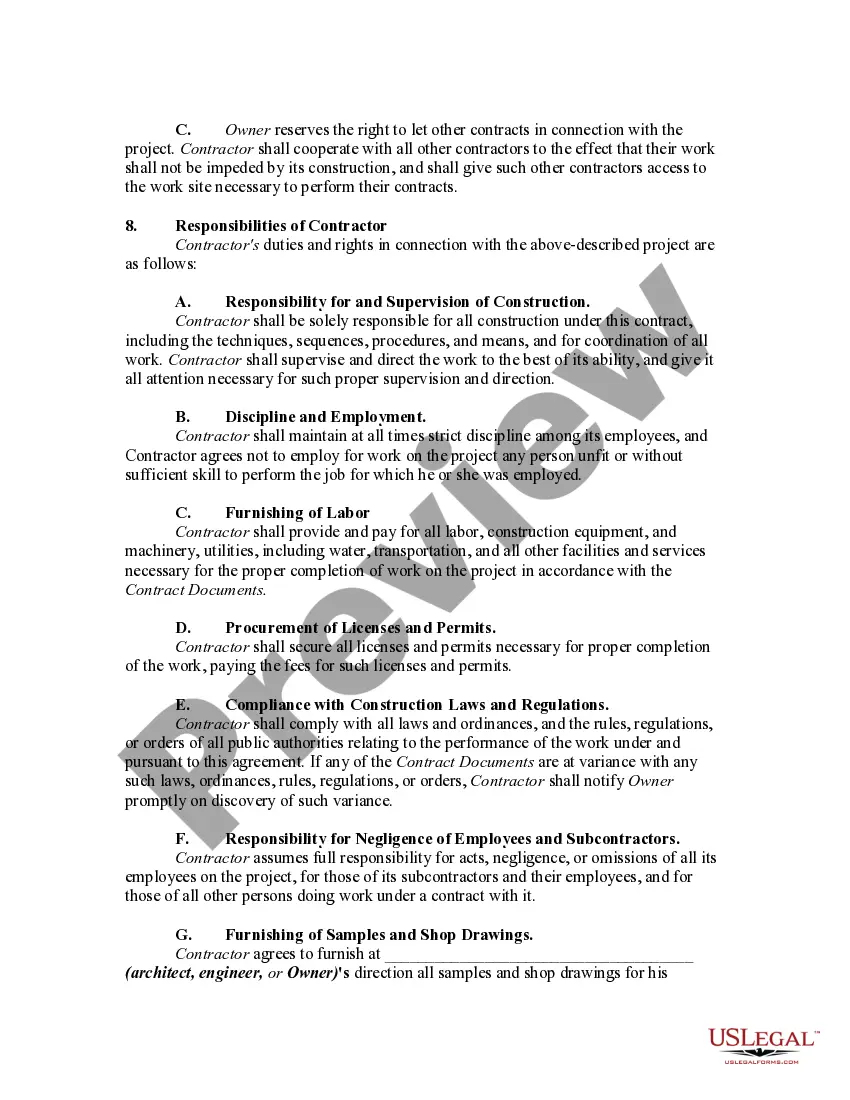
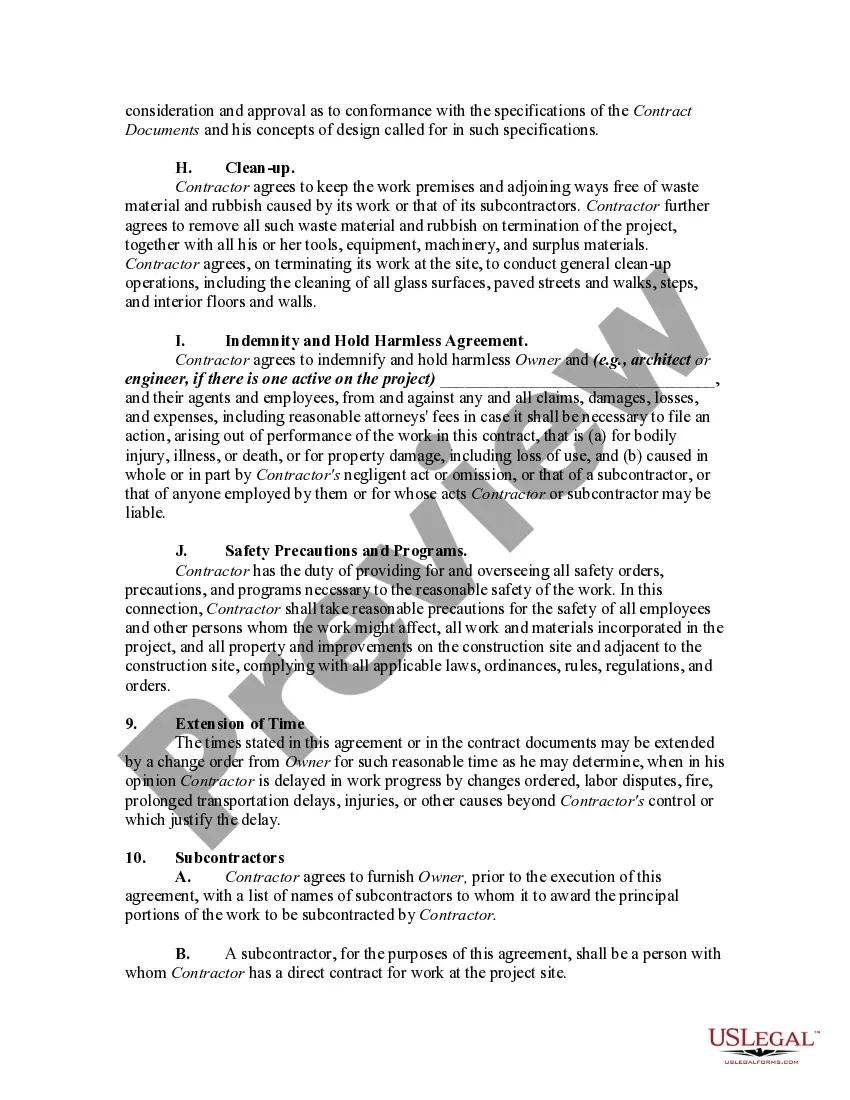
- Responsibilities of both parties: Highlights obligations for the owner and contractor, including supply of materials and oversight of work.
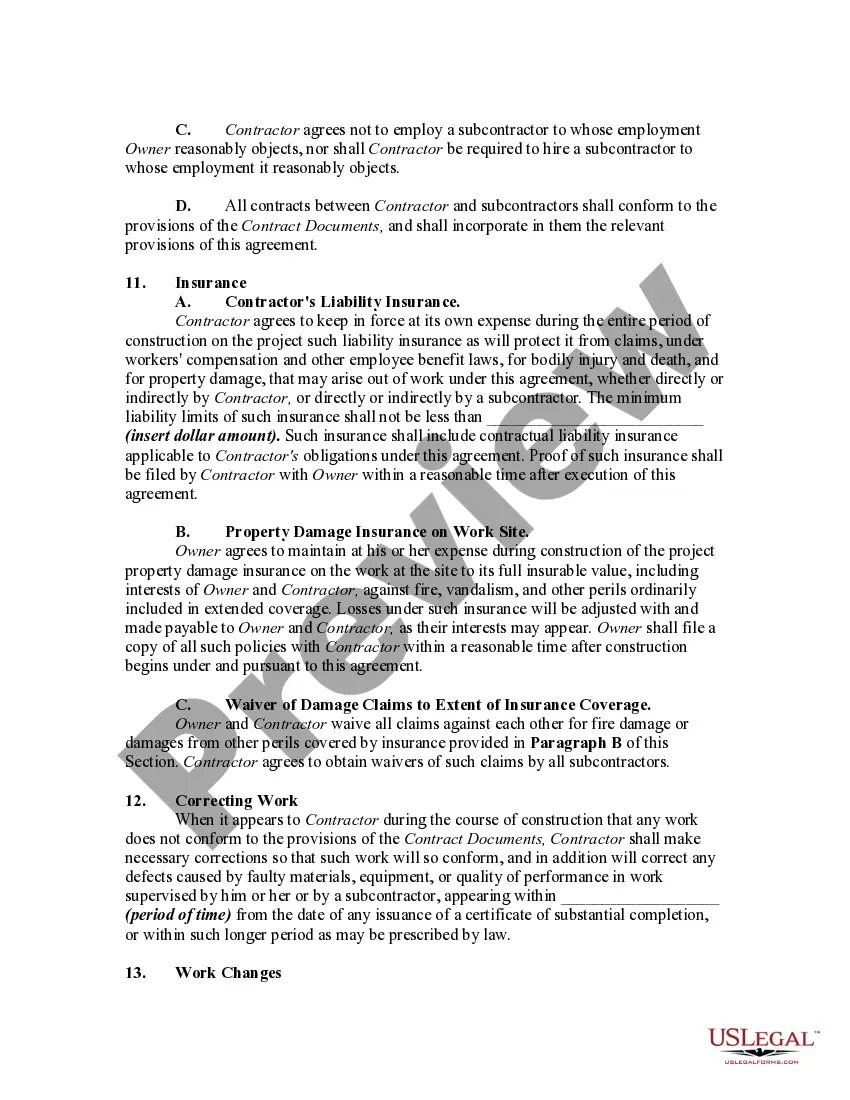
- Insurance requirements: Specifies liability insurance needs for the contractor, ensuring protection during the construction process.
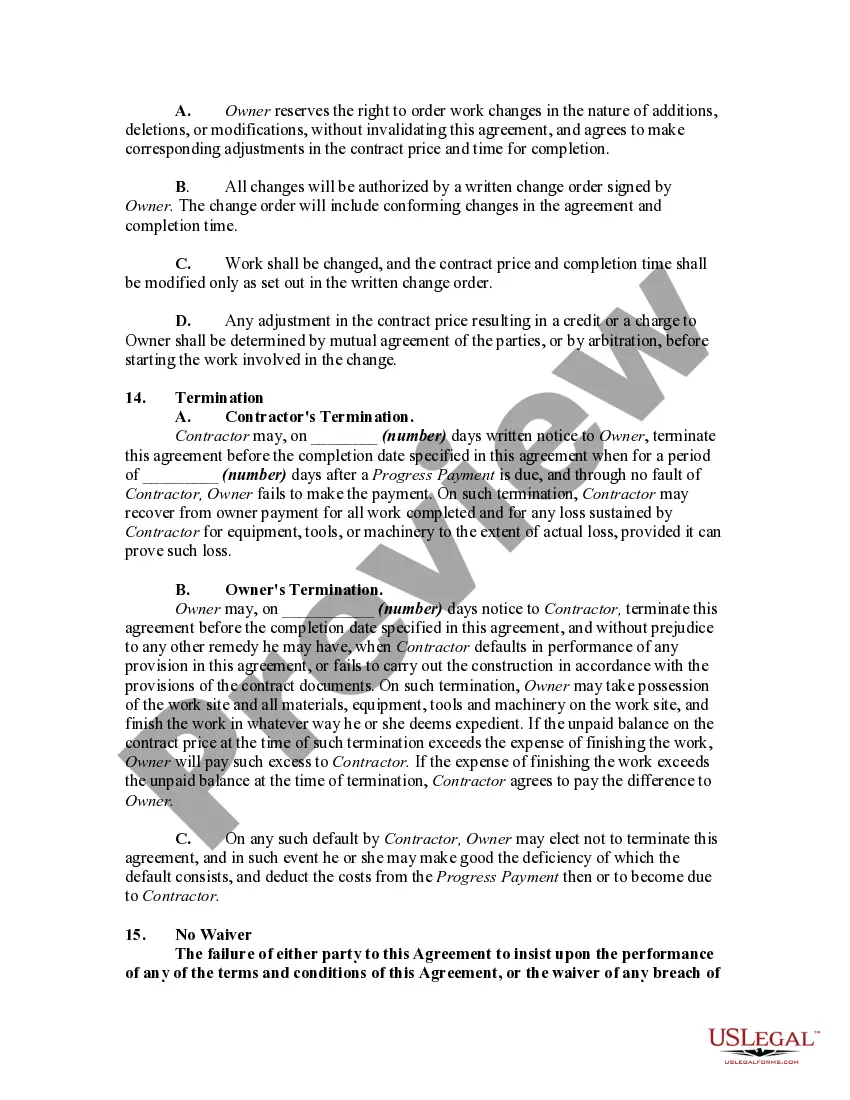
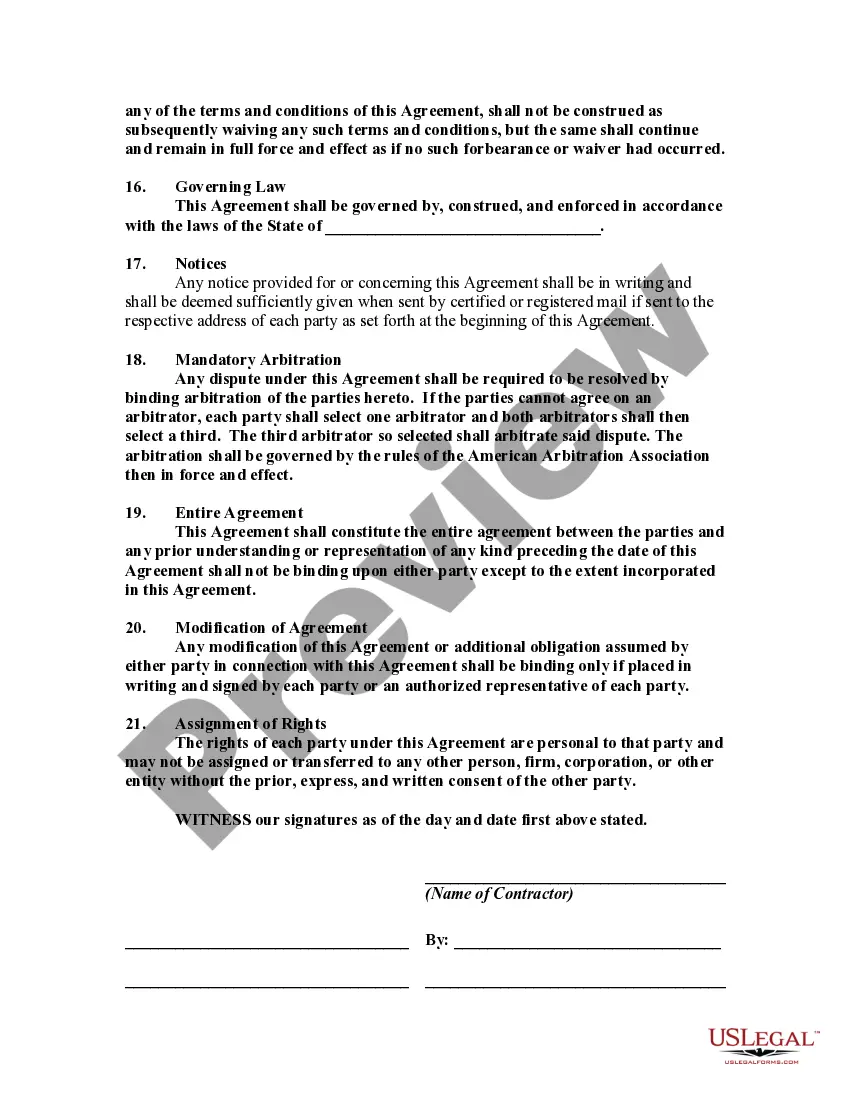
- Termination conditions: Outlines how either party may exit the agreement under specific circumstances.

When to use this document
This form is ideal for construction projects where the owner wants flexibility in budgeting based on actual hours worked and materials used. It should be utilized in scenarios such as renovations, custom builds, or when the full scope of work cannot be determined in advance. This contract type is particularly useful in projects with variable costs or evolving requirements, ensuring that both the owner and contractor are clear on payment terms and responsibilities.
Who can use this document
This form is suitable for:
- Property owners looking to undertake construction projects while supplying their own materials.
- Contractors who want a clear outline of their payment terms based on labor and materials.
- Homeowners engaging contractors for renovation or construction where precise costs are difficult to estimate upfront.
- Construction professionals needing a flexible contract to manage unforeseen changes in project requirements.
Completing this form step by step
- Identify the parties: Fill in the names and addresses of the owner and contractor.
- Specify the contract date: Enter the date the agreement is made.
- Detail the work description: Clearly outline the work to be performed and the project's location.
- Set the contract price: Indicate the hourly rate for labor and any conditions for progress payments.
- Complete the project timeline: Enter the start and completion dates for the construction work.
Does this document require notarization?
This form does not typically require notarization to be legally valid. However, some jurisdictions or document types may still require it. US Legal Forms provides secure online notarization powered by Notarize, available 24/7 for added convenience.
Get your form ready online
Our built-in tools help you complete, sign, share, and store your documents in one place.
Make edits, fill in missing information, and update formatting in US Legal Forms—just like you would in MS Word.
Download a copy, print it, send it by email, or mail it via USPS—whatever works best for your next step.
Sign and collect signatures with our SignNow integration. Send to multiple recipients, set reminders, and more. Go Premium to unlock E-Sign.
If this form requires notarization, complete it online through a secure video call—no need to meet a notary in person or wait for an appointment.
We protect your documents and personal data by following strict security and privacy standards.

Make edits, fill in missing information, and update formatting in US Legal Forms—just like you would in MS Word.

Download a copy, print it, send it by email, or mail it via USPS—whatever works best for your next step.

Sign and collect signatures with our SignNow integration. Send to multiple recipients, set reminders, and more. Go Premium to unlock E-Sign.

If this form requires notarization, complete it online through a secure video call—no need to meet a notary in person or wait for an appointment.

We protect your documents and personal data by following strict security and privacy standards.
Common mistakes to avoid
- Failing to clearly define the scope of work, which can lead to disputes later.
- Not specifying the hourly payment rate for labor or leaving it blank.
- Neglecting to include all necessary parties in the agreement, which may affect enforceability.
- Overlooking state-specific requirements that could invalidate the contract.
- Failure to document changes or modifications properly through written change orders.
Benefits of using this form online
- Convenience of instant access to the form, allowing for faster project initiation.
- Editability ensures customization to fit specific project needs.
- Reliability from using a professionally drafted form, increasing legal protection.
- Ease of use without needing extensive legal knowledge, making it accessible for all users.
Looking for another form?


Form popularity
FAQ
Time and material (T&M) contract is absolutely different. It presupposes billing clients for actual work scope based on hourly rates of labor. Customers are charged for the amount of hours spent on a specific project, plus costs of materials.
Time and Material (T&M) contracts are not "cost-type" (i.e., cost-reimbursement) contracts.
Time and materials (T&M) contracts are used in construction when the project's scope isn't predetermined, making it difficult to agree on a fixed price and timeline for the contract.
Time & Materials contracts (a.k.a. T&M) are contracts where a Client pays only for the time spent by the Vendor and any materials they buy to finish the project. Proposals for T&M projects should come with a rate card outlining how much the Vendor will charge for the time of each of their team members.
A fixed price contract defines the service to be provided very specifically, and then sets a single price for the project, regardless of how much time and expense your company incurs.Time-and-materials, on the other hand, bills the client for the hours spent on the project, as well as expenses you incur.
Time-and-materials (T&M) contracts may be used for acquiring supplies or services. These contracts provide for the payment of labor costs on the basis of fixed hourly billing rates which are specified in the contract.
Time and materials (T&M) is a standard phrase in a contract for construction, product development or any other piece of work in which the employer agrees to pay the contractor based upon the time spent by the contractor's employees and subcontractors employees to perform the work, and for materials used in the
Identifying/Contact Information. Title and Description of the Project. Projected Timeline and Completion Date. Cost Estimate and Payment Schedule. Stop Work Clause and Stop Payment Clause. Act of God Clause. Change Order Agreement. Warranty.