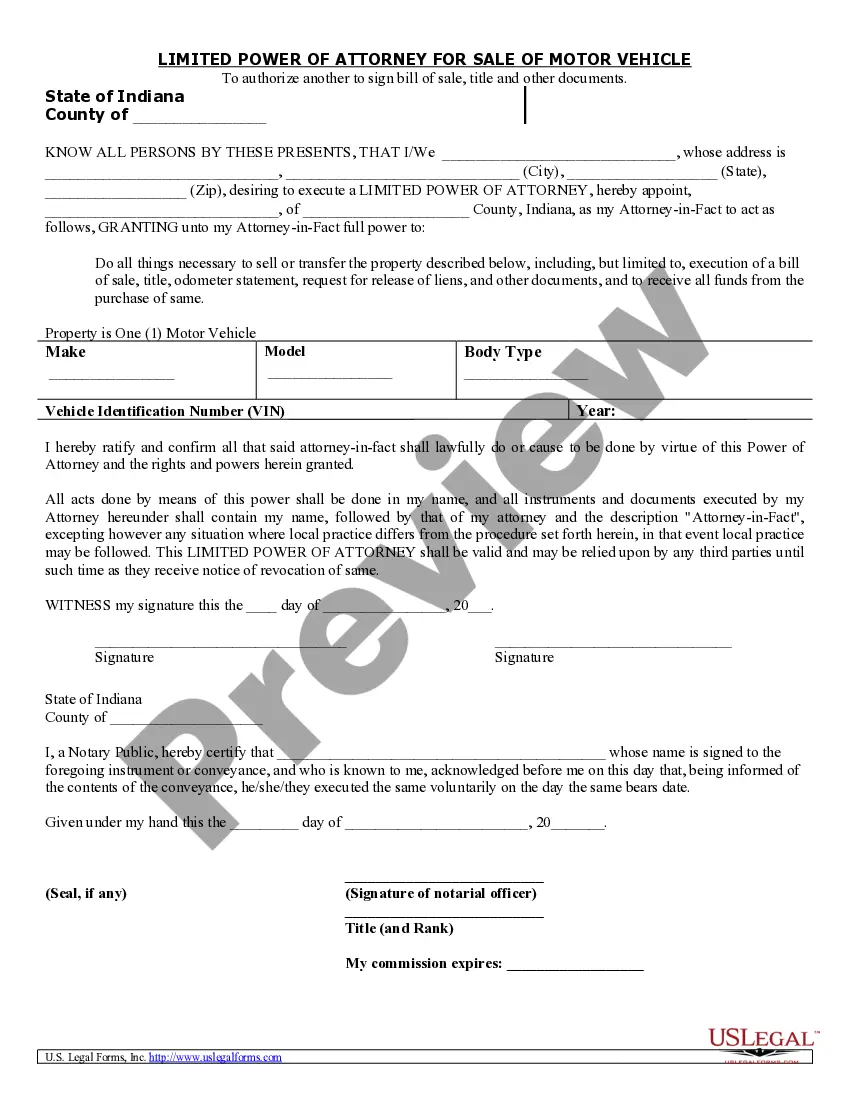
Contract for Construction of Building with Contractor to Furnish all Materials and Perform all Work as Required by Enumerated Contract Documents
What this document covers
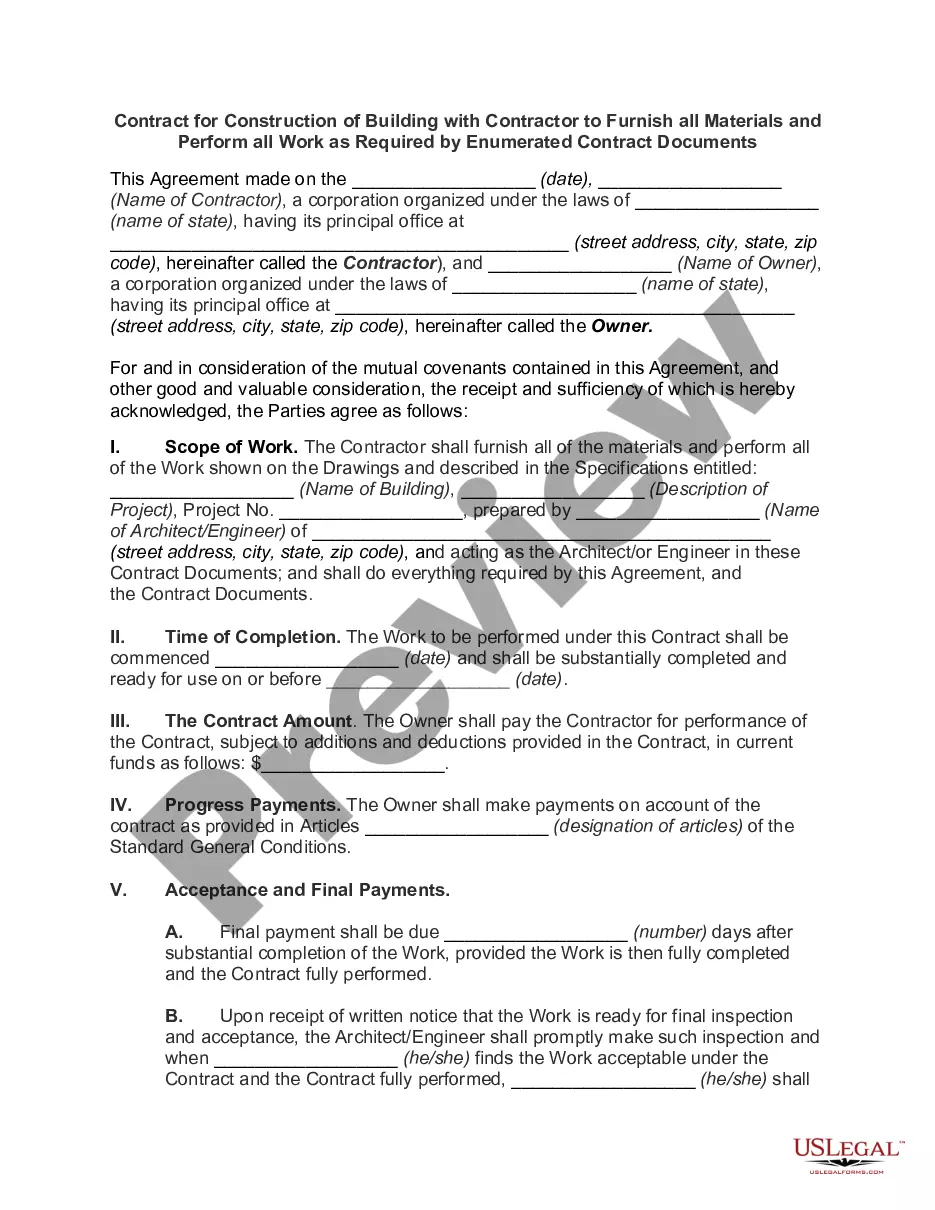
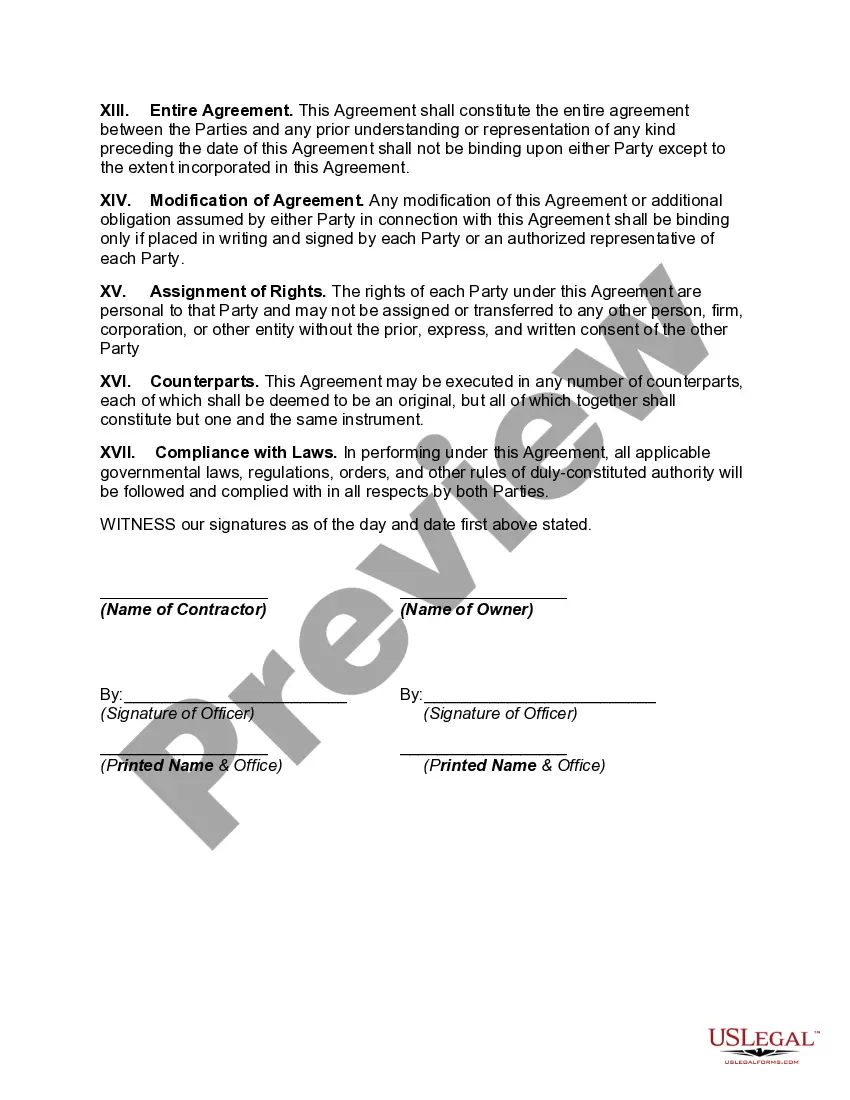
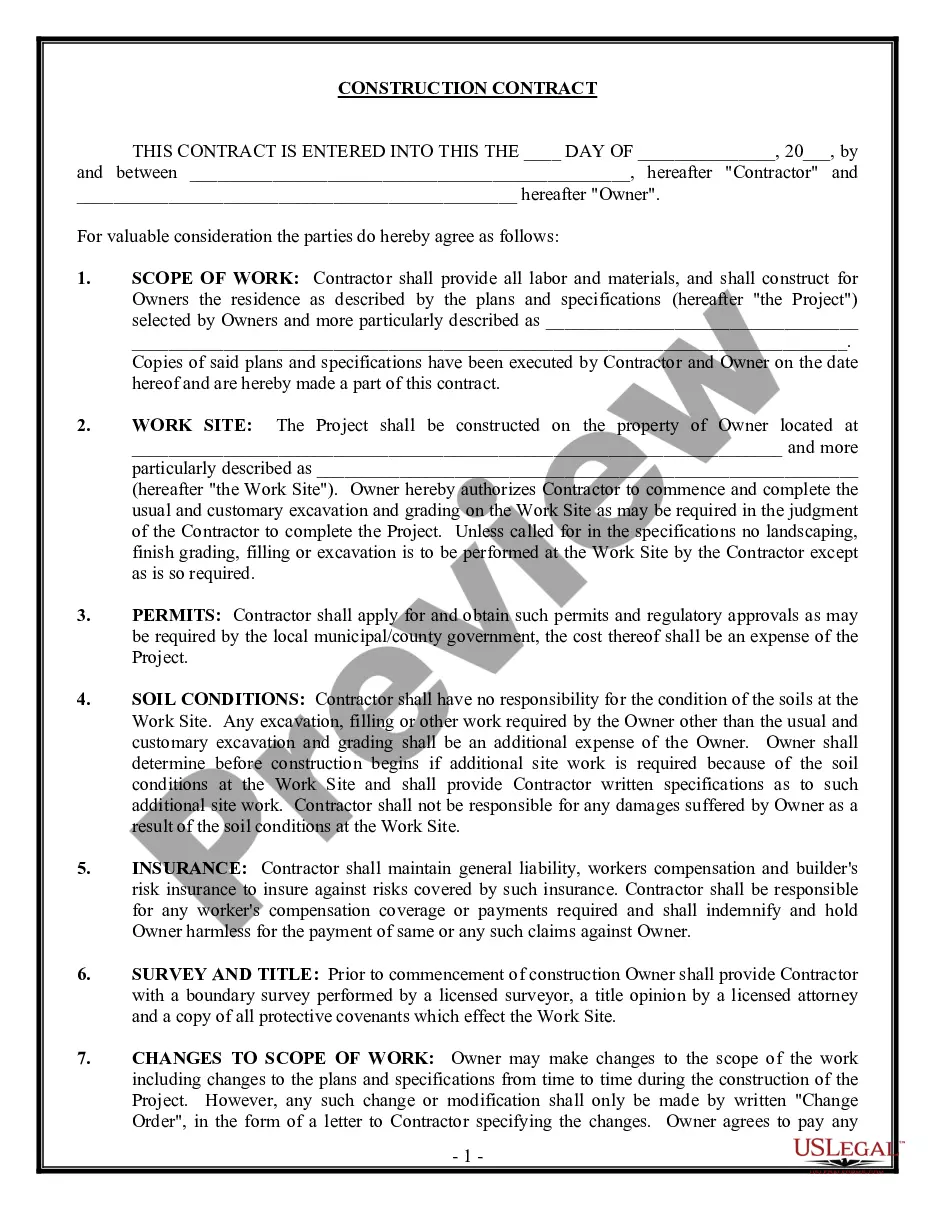
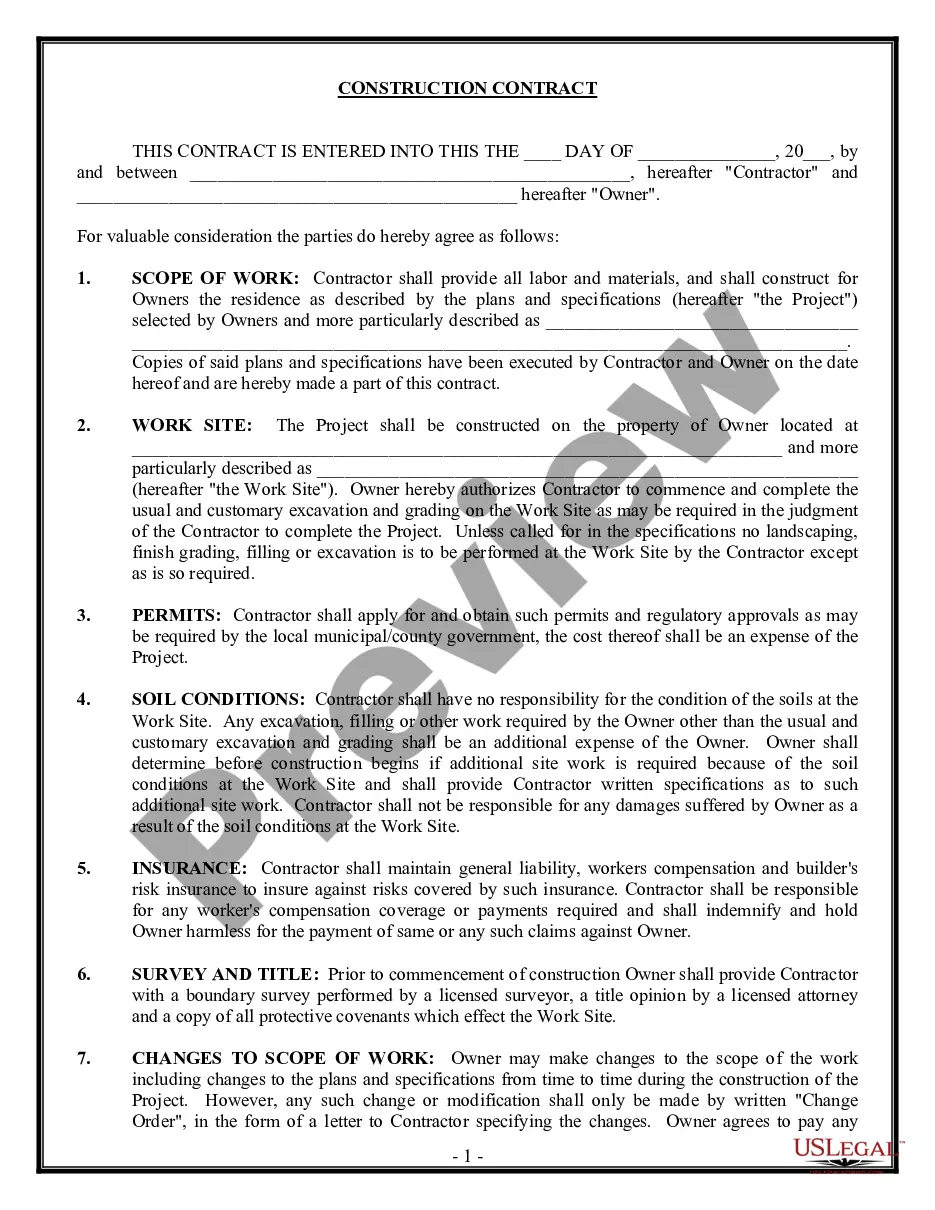
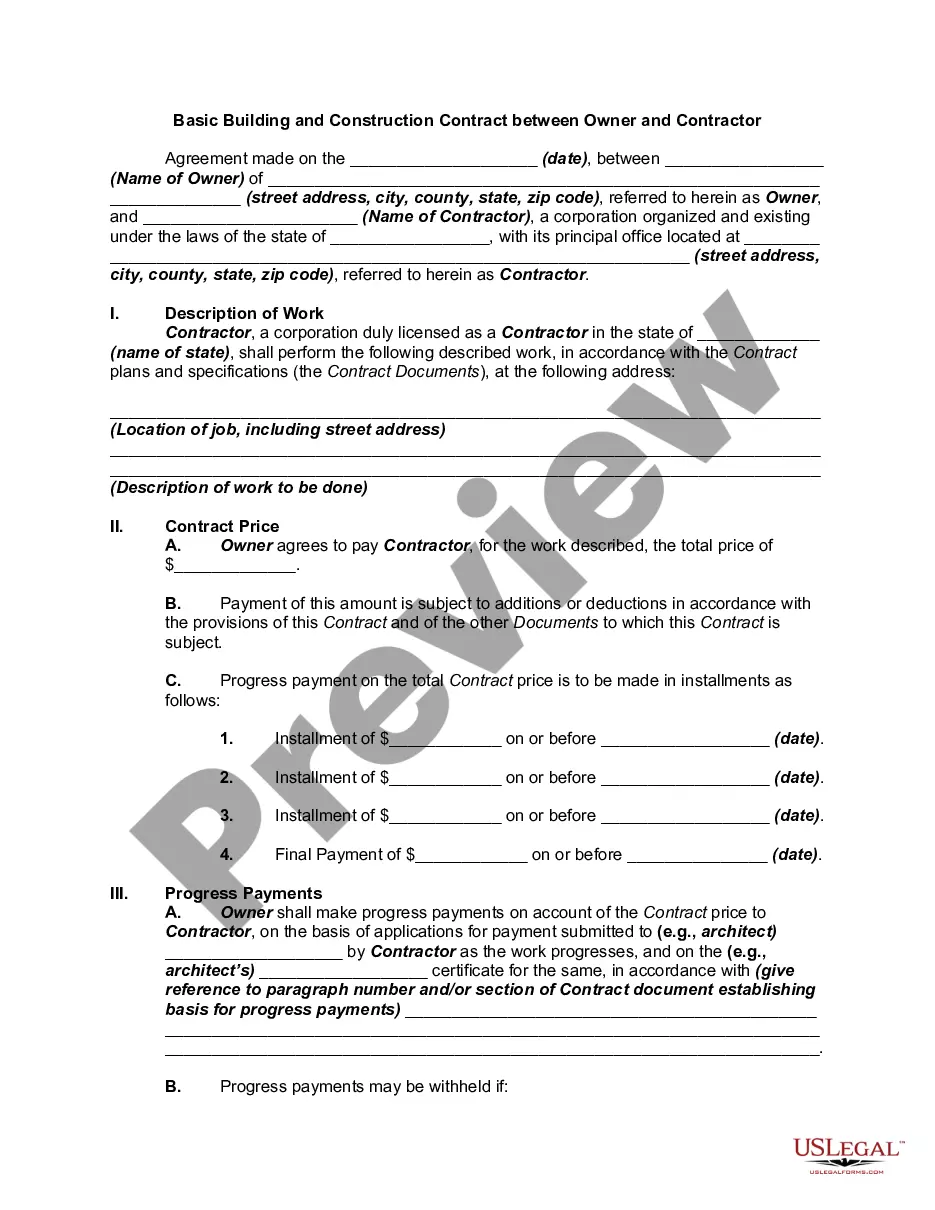
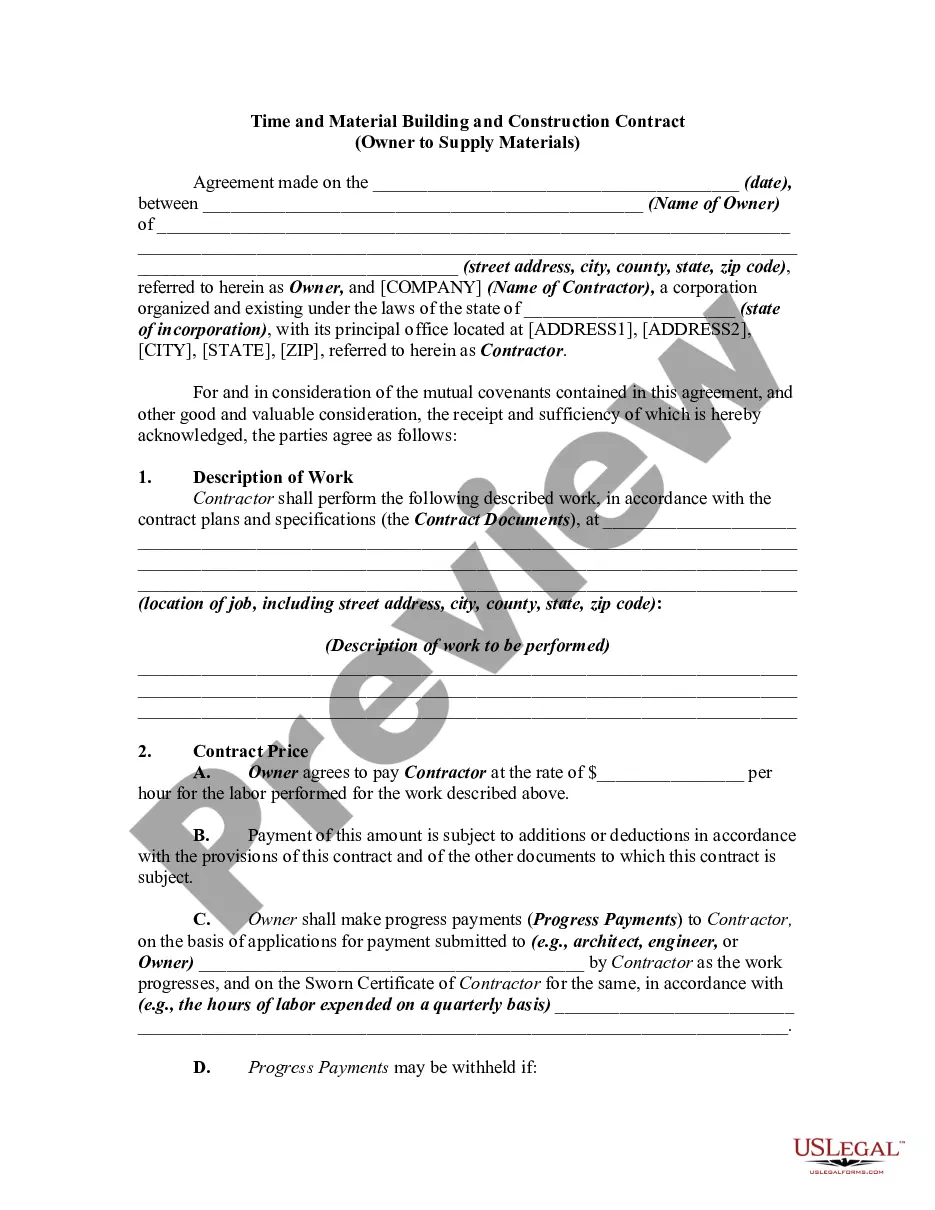
The Contract for Construction of Building with Contractor to Furnish all Materials and Perform all Work as Required by Enumerated Contract Documents is a key legal document that outlines the agreement between a property owner and a contractor. This form facilitates the construction process by clearly defining the roles, responsibilities, and payment structure between both parties. Unlike other construction contracts, this form specifies that the contractor will supply all materials and complete all work as detailed in the project documents.
Form components explained
- Scope of Work: Outlines what the contractor is responsible for, including materials and labor.
- Time of Completion: States the start and deadline dates for the project.
- Contract Amount: Specifies the payment amount due to the contractor.
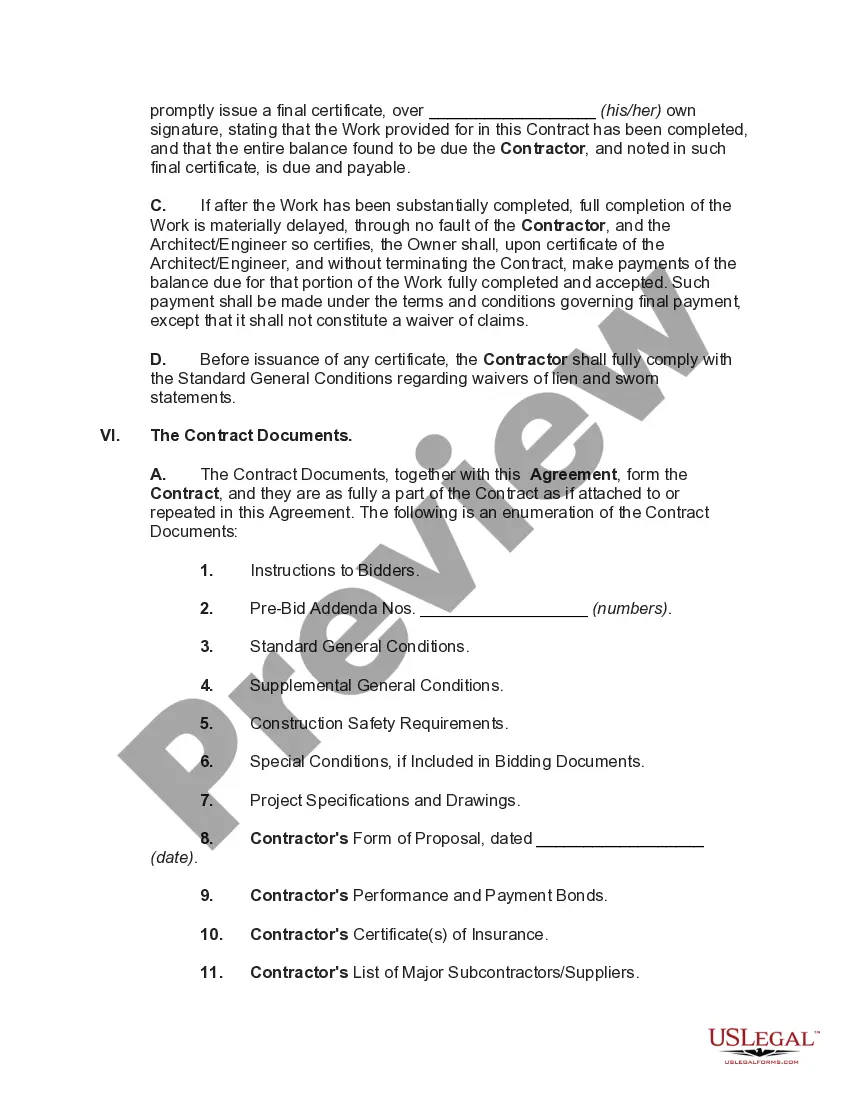
- Progress Payments: Details how and when payments will be made during the construction process.
- Acceptance and Final Payments: Outlines terms for final inspection and payment after completion.
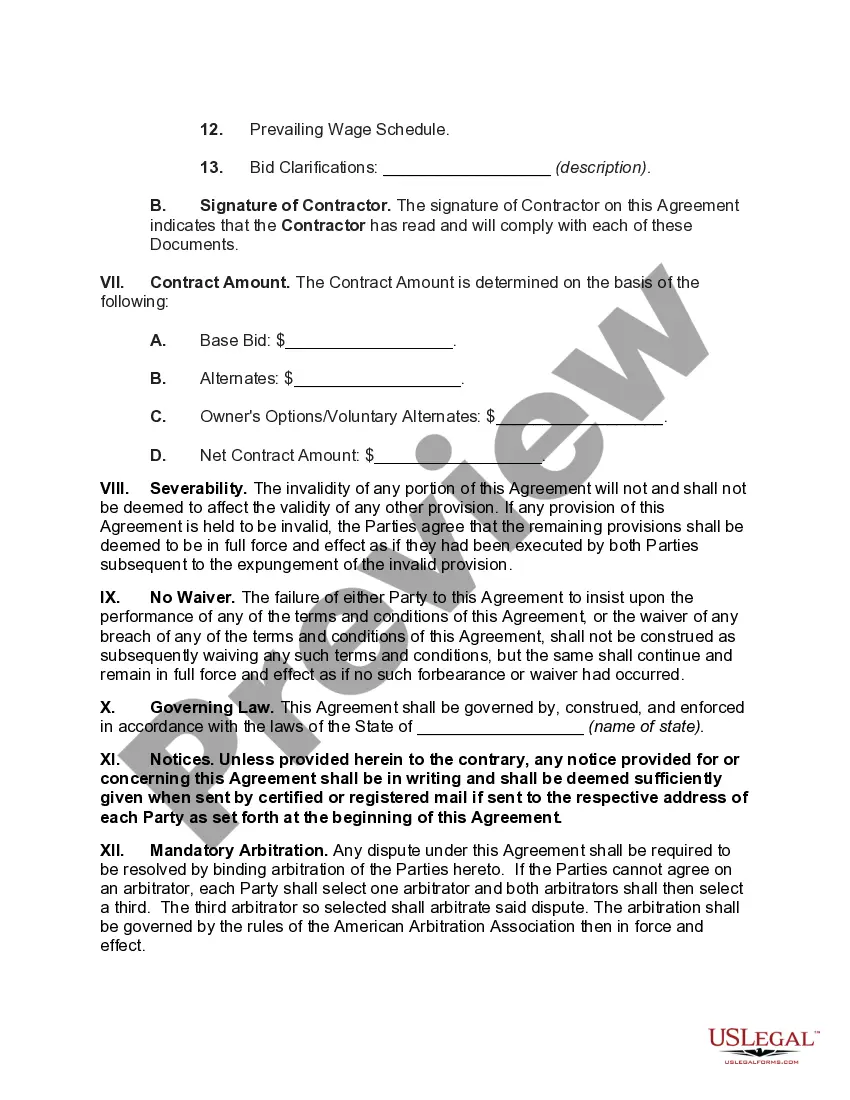
- Contract Documents: Lists all documents that form part of the agreement.

Situations where this form applies
This form should be used when a property owner engages a contractor to build a new structure or undertake significant renovations. It is particularly useful in situations where the contractor is expected to supply all necessary materials and perform all work according to detailed specifications, ensuring both parties are aligned on the project expectations and legal obligations.
Who this form is for
- Property owners looking to engage a contractor for construction projects.
- Contractors who need a formal agreement for the construction of a building.
- Architects or engineers involved in the construction process to ensure compliance with project specifications.
How to prepare this document
- Identify the parties involved by entering the names of the contractor and the property owner along with their business addresses.
- Specify the details of the project in the Scope of Work section, including project name and description.
- Enter the starting date for the work and the expected completion date.
- Provide the contract amount that the owner agrees to pay the contractor.
- Complete any necessary sections regarding progress payments and final payments based on the conditions set forth in the contract.
- Ensure both parties sign and date the agreement to finalize the contract.
Notarization guidance
This form does not typically require notarization unless specified by local law. However, it's advisable to verify jurisdiction-specific requirements to ensure the contract's enforceability.
Get your form ready online
Our built-in tools help you complete, sign, share, and store your documents in one place.
Make edits, fill in missing information, and update formatting in US Legal Forms—just like you would in MS Word.
Download a copy, print it, send it by email, or mail it via USPS—whatever works best for your next step.
Sign and collect signatures with our SignNow integration. Send to multiple recipients, set reminders, and more. Go Premium to unlock E-Sign.
If this form requires notarization, complete it online through a secure video call—no need to meet a notary in person or wait for an appointment.
We protect your documents and personal data by following strict security and privacy standards.

Make edits, fill in missing information, and update formatting in US Legal Forms—just like you would in MS Word.

Download a copy, print it, send it by email, or mail it via USPS—whatever works best for your next step.

Sign and collect signatures with our SignNow integration. Send to multiple recipients, set reminders, and more. Go Premium to unlock E-Sign.

If this form requires notarization, complete it online through a secure video call—no need to meet a notary in person or wait for an appointment.

We protect your documents and personal data by following strict security and privacy standards.
Common mistakes
- Failing to clearly outline the scope of work, leading to misunderstandings about responsibilities.
- Not specifying dates for project commencement and completion, which can cause delays.
- Neglecting to detail payment terms, resulting in disputes over finances.
- Overlooking the need for signatures from both parties, which can invalidate the agreement.
Benefits of completing this form online
- Convenience of downloading and customizing the form at any time.
- Access to legally vetted templates created by licensed attorneys.
- The ability to make changes easily to meet specific project needs.
Legal use & context
- This contract serves as a binding agreement, ensuring that both parties understand their obligations.
- It helps prevent disputes by clearly outlining work requirements, timelines, and payments.
- Having a signed contract provides legal recourse if either party fails to meet their obligations.
Key takeaways
- This contract is essential for any construction project where the contractor provides all materials and labor.
- Clear definitions of responsibilities and payment terms help avoid conflicts.
- Always ensure that both parties understand and agree to the terms outlined in the contract.
Looking for another form?

Form popularity
FAQ
Construction Contract Documents are the written documents that define the roles, responsibilities, and Work under the construction Contract, and are legally-binding on the parties (Owner and Contractor).Anote the differences in the definitions of Bidding Documents and Contract Documents.
1Begin with the Date and the Address of the Other Party.2Start with the Basic Details of the Planned Work.3Include Special Stipulations.4State Whether There Will be a Further Agreement.5Create an Area for Signatures.6Sign and Date the Contract Letter.
Identifying/Contact Information. Title and Description of the Project. Projected Timeline and Completion Date. Cost Estimate and Payment Schedule. Stop Work Clause and Stop Payment Clause. Act of God Clause. Change Order Agreement. Warranty.
Name of contractor and contact information.Name of homeowner and contact information.Describe property in legal terms.List attachments to the contract.The cost.Failure of homeowner to obtain financing.Description of the work and the completion date.Right to stop the project.19 Things Every Construction Contract Should Have .com\nwww..com > articles > 19-things-every-construction-contract-sho...
Construction Contract Documents are the written documents that define the roles, responsibilities, and Work under the construction Contract, and are legally-binding on the parties (Owner and Contractor).Common examples of vagueness in this regard include phrases such as, the Contract Documents2026
1#1: Review Your Bid.2#2: Review Complete Plans.3#3: Review All Specifications.4#4: Visit the Job Site.5#5: Review the Job Schedule.6#6: Complete a Project Checklist.7#7: Verify Project Funding.8#8: Read Complete Contract.9 Steps to Signing a Successful Construction Contract AWCI's\nwww.awci.org > media-archives > construction-dimensions > 548-9-steps-t...
Direct project overhead costs are often referred to as general conditions and include costs incurred at the jobsite for supervision and administration of the overall contract but not ascribable to any particular onsite construction activity.
There are three main types of construction contract, identified according to the mechanism for calculating the sum due to be paid by the employer: lump sum contracts, re-measurement contracts and cost-reimbursable contracts.
The Agreement. The agreement is the most fundamental document in a construction contract bundle. General Conditions. Special Conditions. Scope of Work. Drawings. Specifications. Bill of Quantities. Construction Schedule.