Time and Material Building and Construction Contract (Owner to Supply Materials)
About this form
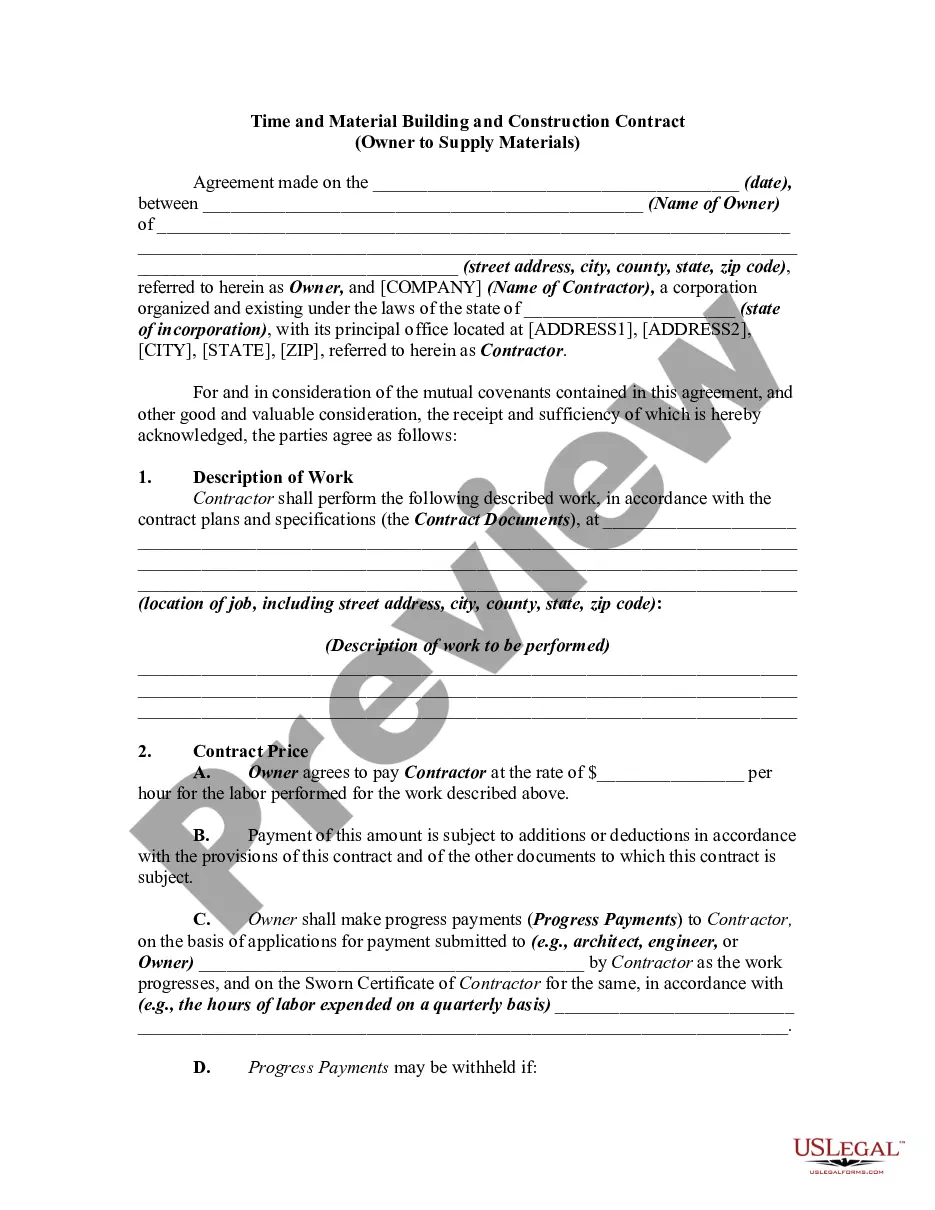
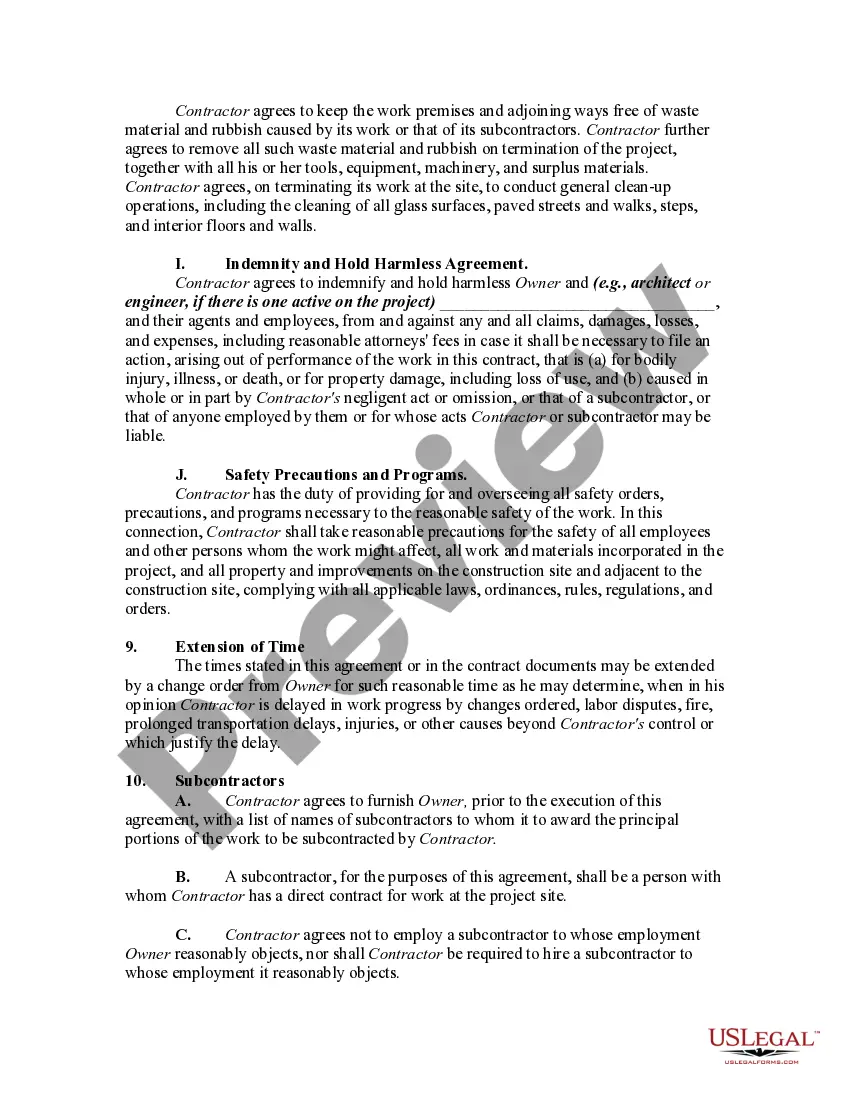
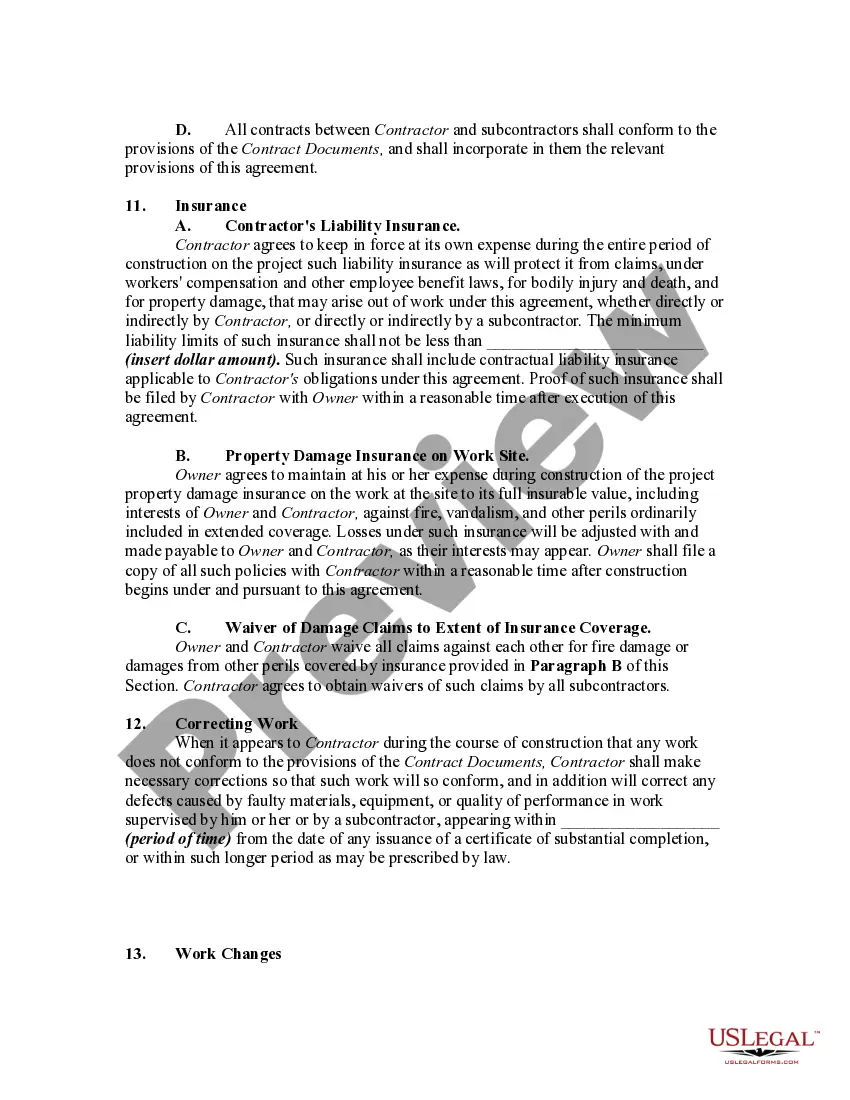
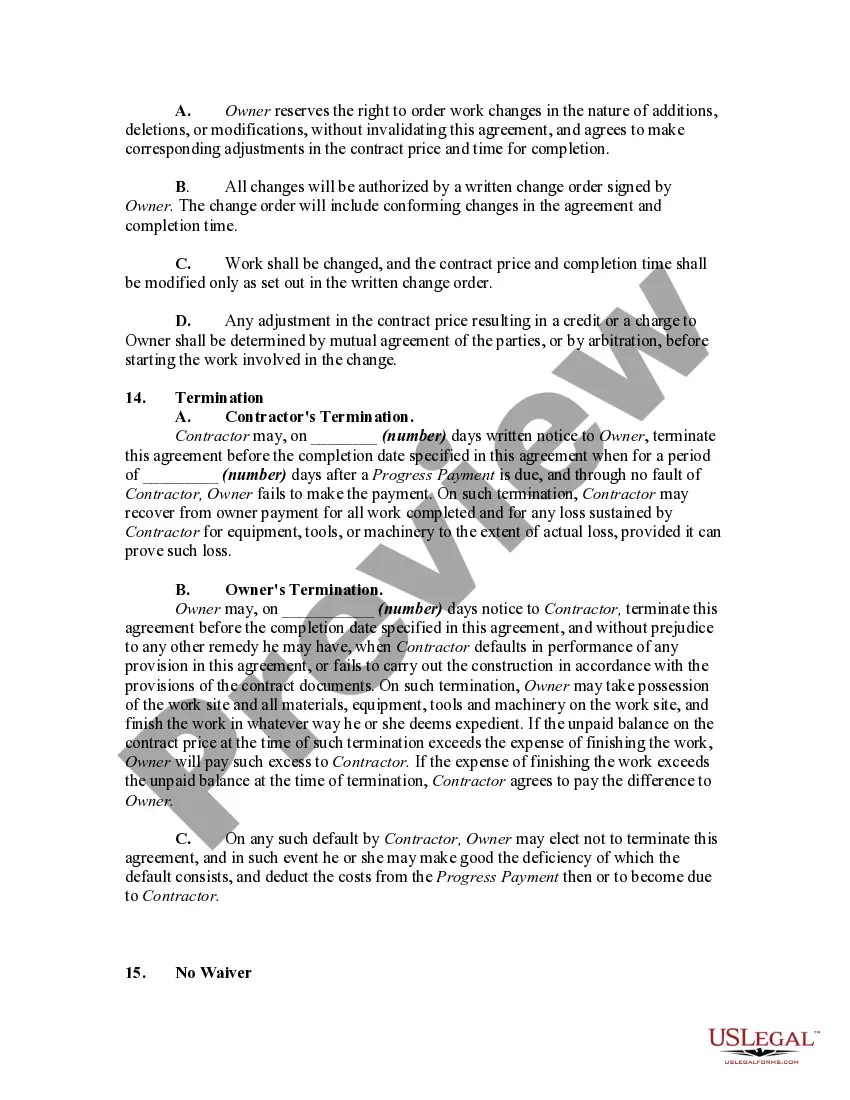
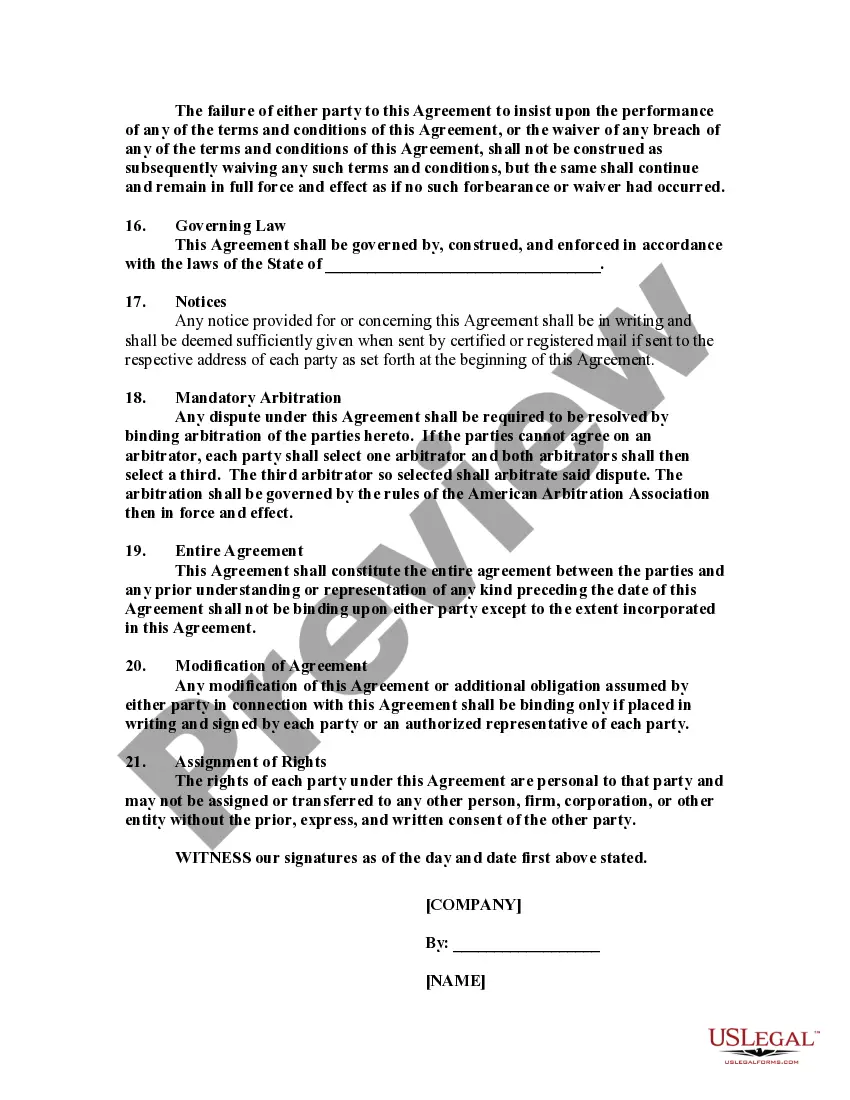
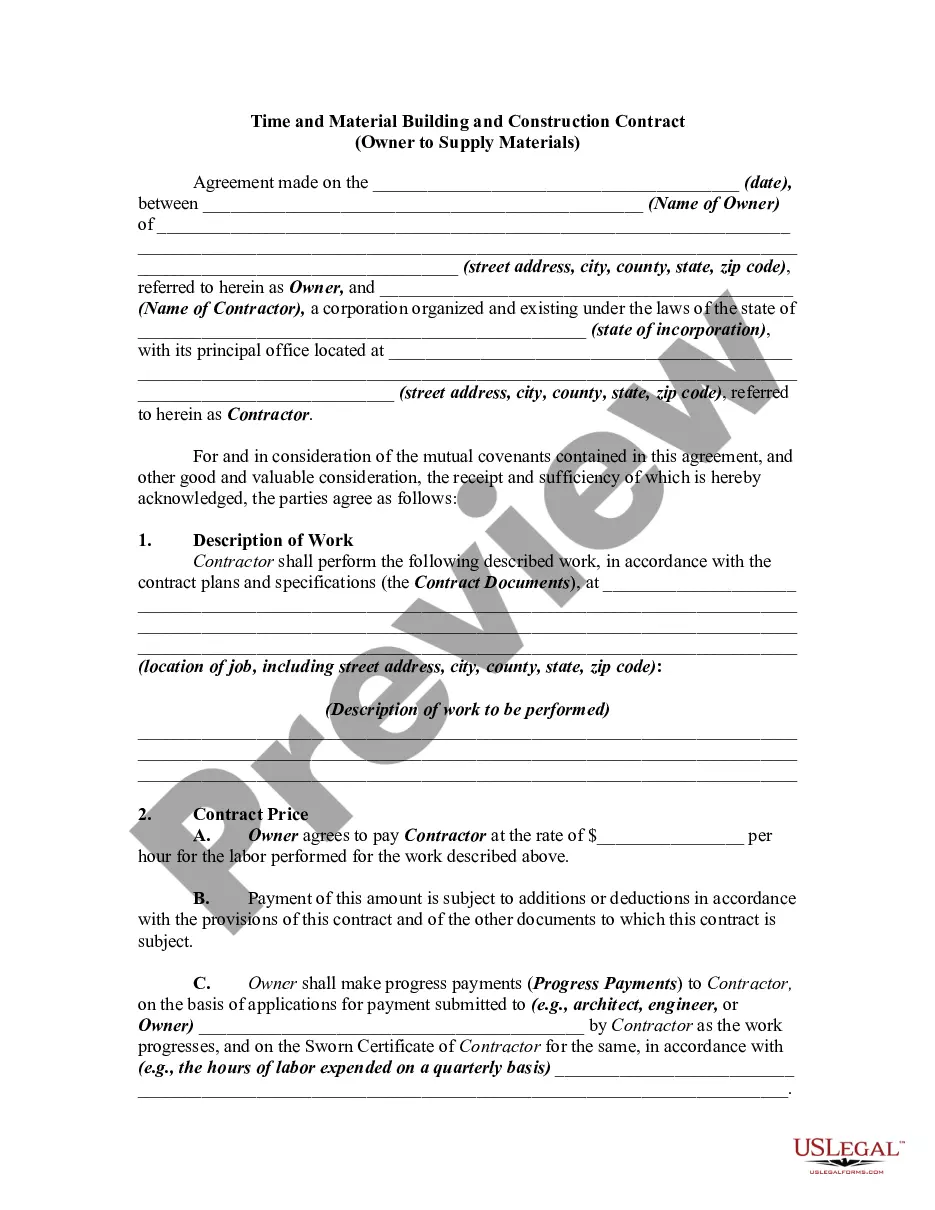
The Time and Material Building and Construction Contract (Owner to Supply Materials) is a legal document that outlines the terms and conditions between the property owner and the contractor for a construction project. This type of contract allows for flexibility, as the owner compensates the contractor based on the actual labor and materials used, without a fixed fee. Unlike fixed-price contracts, this format is particularly useful when project scopes are uncertain or likely to change, as it accommodates adjustments based on real-time expenses.
Main sections of this form
- Agreement section outlining the date and the parties involved.
- Description of the work to be performed, including project location.
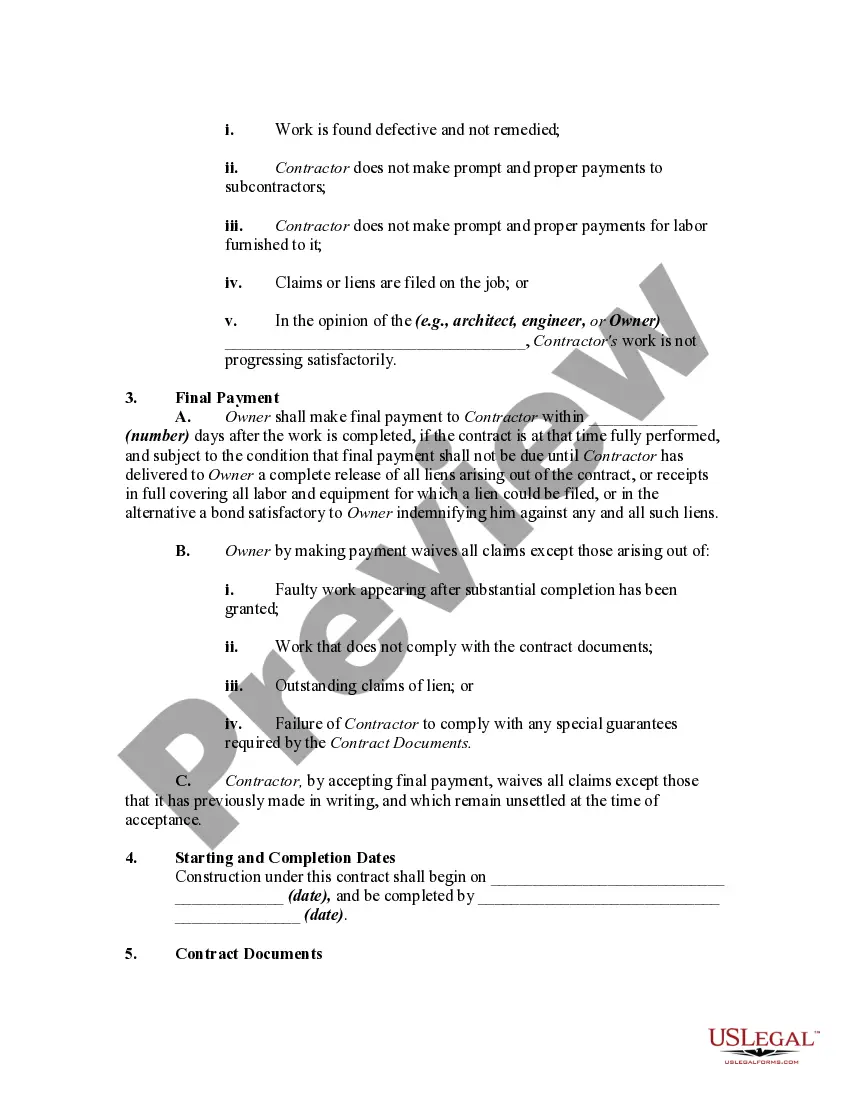
- Contract price detailing hourly rates and conditions for progress payments.
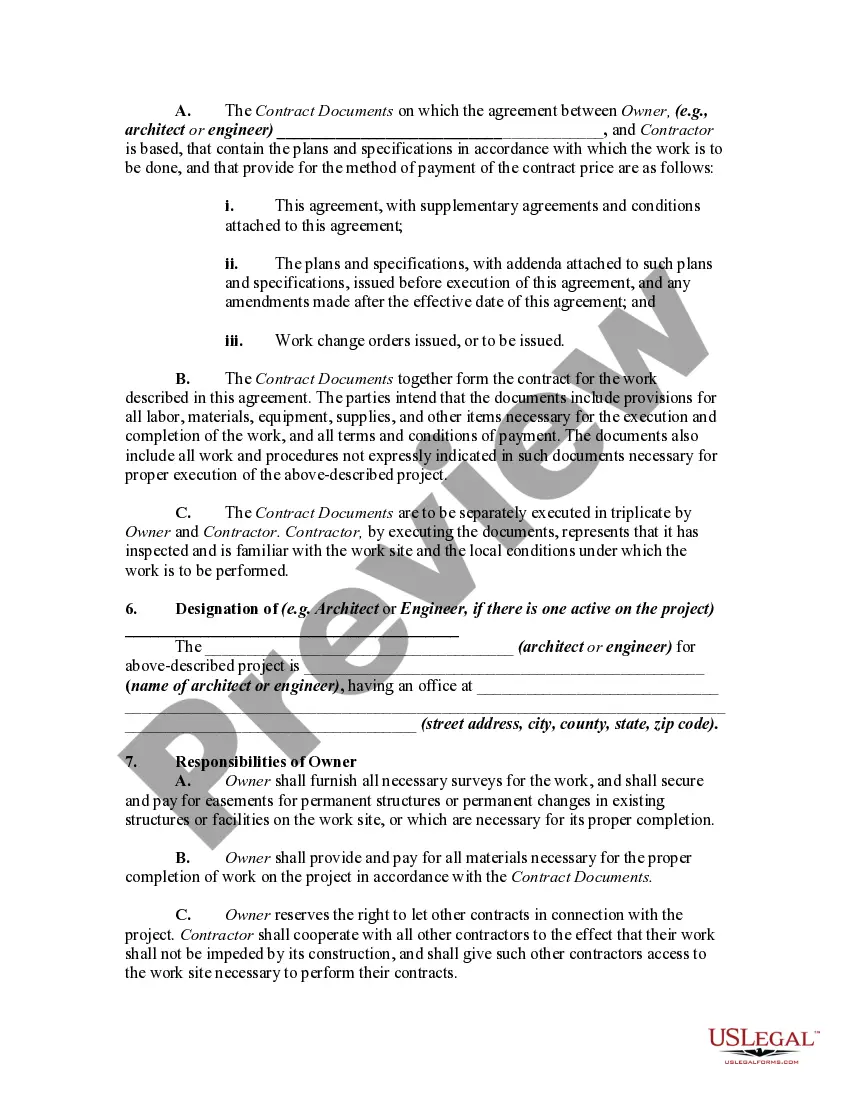
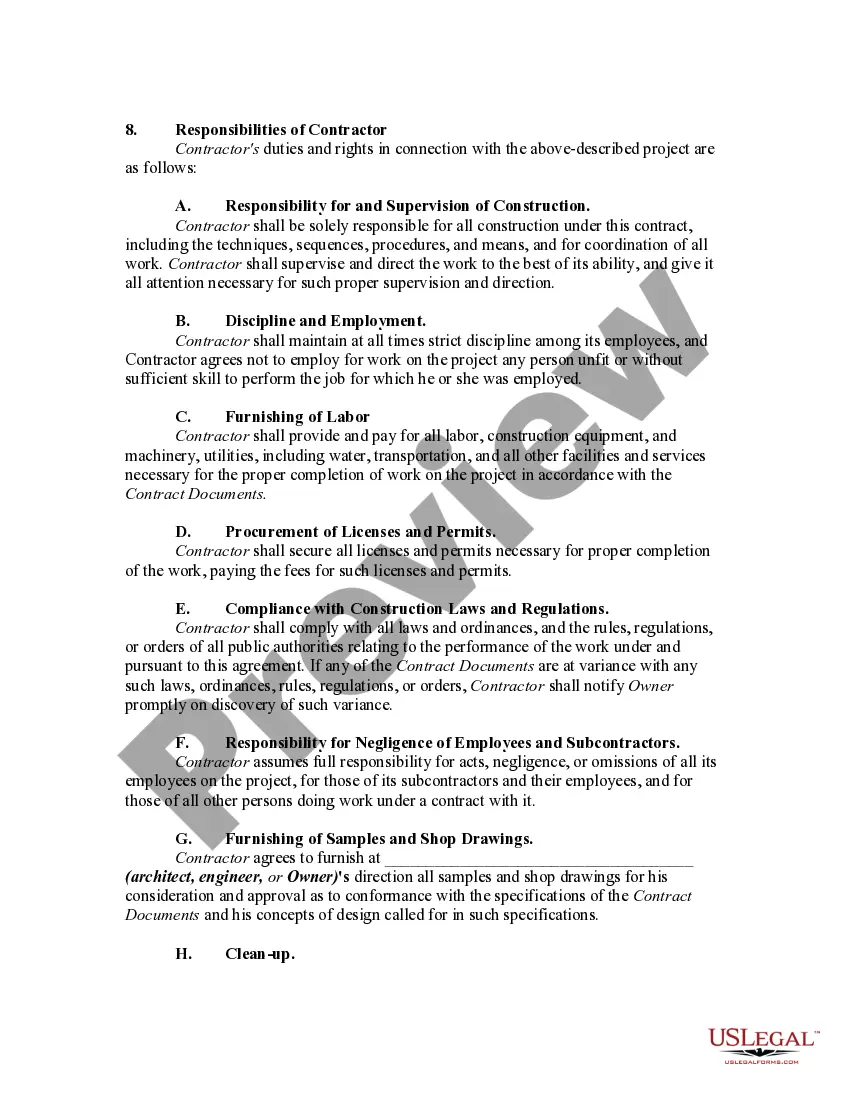
- Responsibilities of both the owner and contractor, addressing material provision, supervision, and compliance with legal regulations.
- Insurance requirements to cover potential liabilities during construction.
- Termination conditions for both parties, including grounds for canceling the agreement.


Common use cases
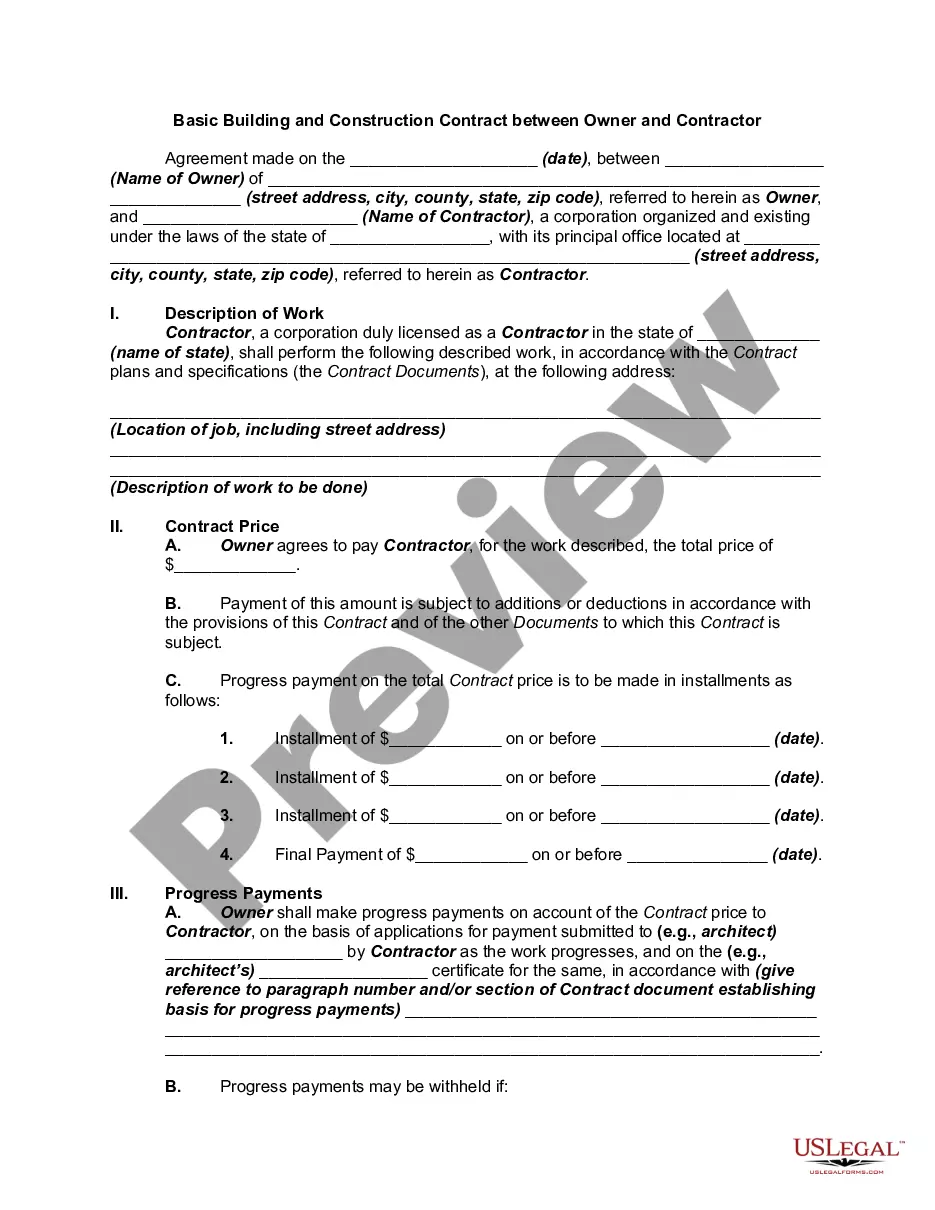
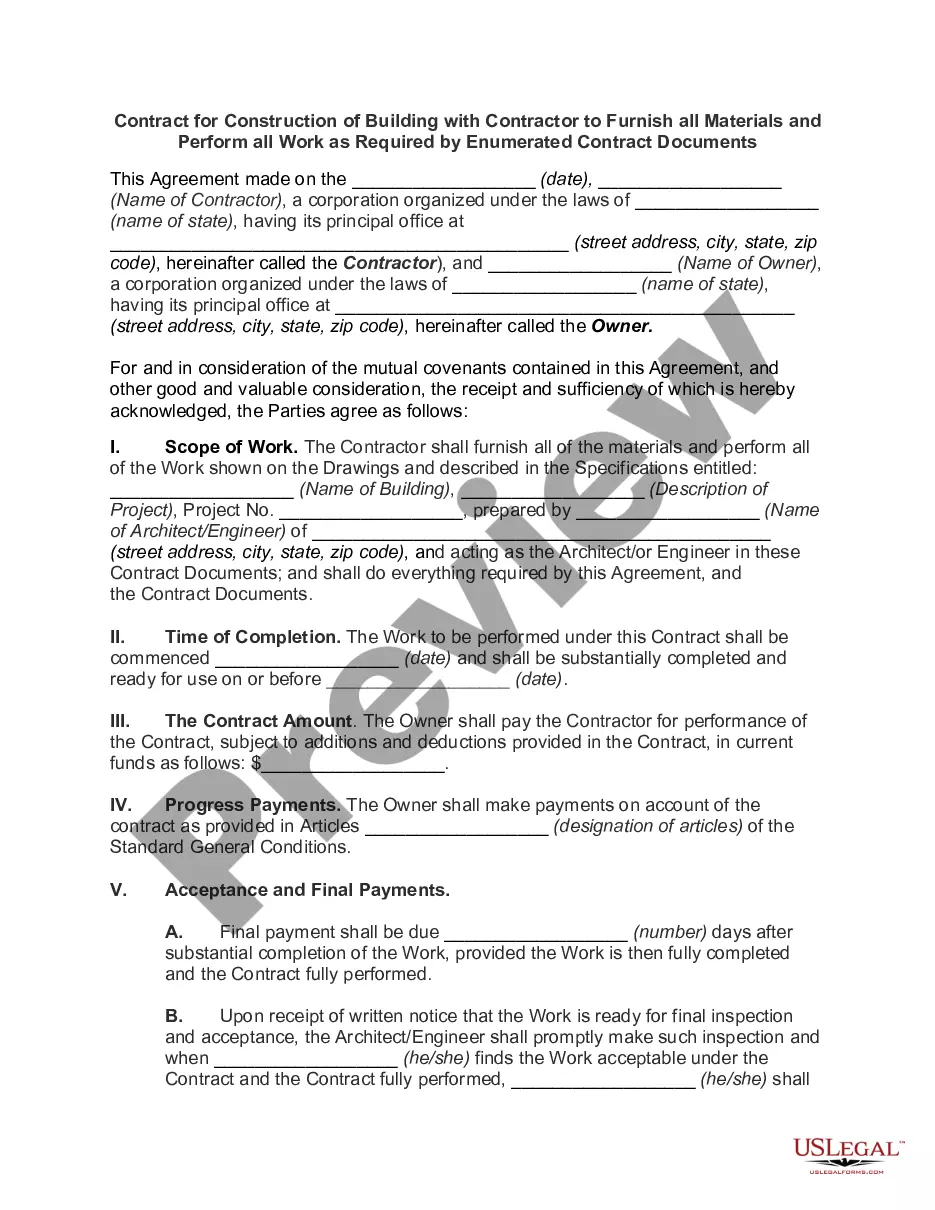
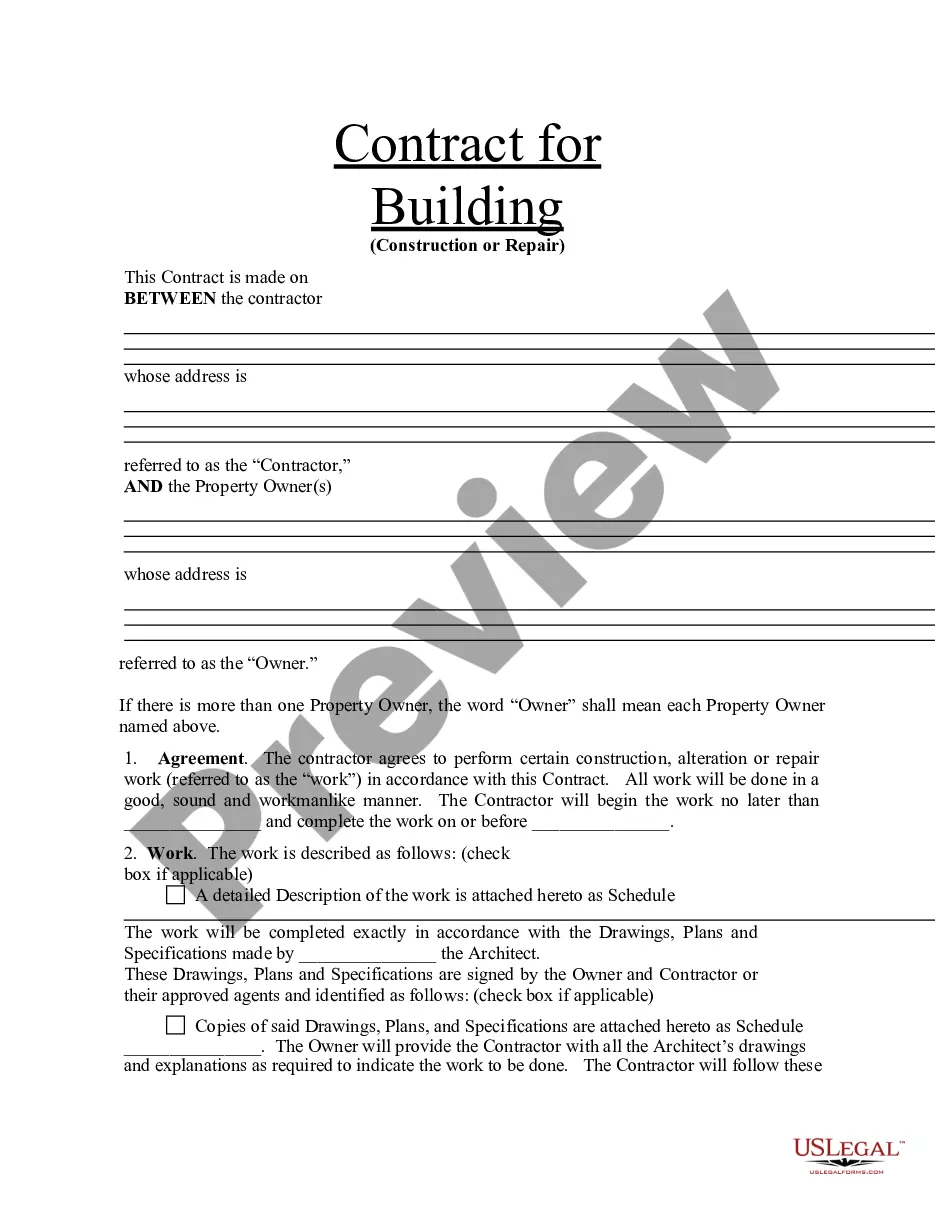
This form is essential when an owner hires a contractor for construction work but wants to provide the materials themselves. It is particularly relevant in situations where the scope of work may change or is not fully defined at the outset, allowing for labor and materials to be billed as they are used. It is beneficial for renovations, custom builds, or projects requiring ongoing adjustments.
Intended users of this form
Those who should use this form include:
- Property owners looking to engage contractors for building or renovation projects.
- Contractors seeking clear terms for projects where material supply is handled by the owner.
- Individuals or businesses without legal representation who want a straightforward construction agreement.
Completing this form step by step
Steps to complete this form:
- Identify the parties involved, including full names and addresses of the owner and contractor.
- Specify the date the agreement is made.
- Detail the specific work to be performed and its location.
- Enter the agreed hourly labor rate and any terms regarding progress payments.
- Outline responsibilities for both parties regarding materials and compliance with laws.
- Review and sign the document to finalize the agreement.
Notarization requirements for this form
This form does not typically require notarization unless specified by local law. However, it is advisable to check your jurisdiction's requirements to ensure the contract is legally valid.
Get your form ready online
Our built-in tools help you complete, sign, share, and store your documents in one place.
Make edits, fill in missing information, and update formatting in US Legal Forms—just like you would in MS Word.
Download a copy, print it, send it by email, or mail it via USPS—whatever works best for your next step.
Sign and collect signatures with our SignNow integration. Send to multiple recipients, set reminders, and more. Go Premium to unlock E-Sign.
If this form requires notarization, complete it online through a secure video call—no need to meet a notary in person or wait for an appointment.
We protect your documents and personal data by following strict security and privacy standards.

Make edits, fill in missing information, and update formatting in US Legal Forms—just like you would in MS Word.

Download a copy, print it, send it by email, or mail it via USPS—whatever works best for your next step.

Sign and collect signatures with our SignNow integration. Send to multiple recipients, set reminders, and more. Go Premium to unlock E-Sign.

If this form requires notarization, complete it online through a secure video call—no need to meet a notary in person or wait for an appointment.

We protect your documents and personal data by following strict security and privacy standards.
Typical mistakes to avoid
Common mistakes:
- Failing to clearly define the scope of work, leading to misunderstandings.
- Not specifying payment terms and conditions, which could cause disputes.
- Neglecting to include a completion timeline for the project.
Benefits of using this form online
Benefits of using this form online:
- Easy access to customizable templates that can be tailored to specific needs.
- Convenience of completing the form from anywhere, at any time.
- Ensured compliance with legal standards through professionally drafted language.
Legal use & context
- This contract is enforceable when properly filled out and signed by both parties.
- It may be subject to specific state laws regarding construction contractual agreements.
- Proper adherence to the outlined responsibilities and payment terms is critical for avoiding disputes.
Main things to remember
- The Time and Material Building and Construction Contract provides flexible payment structures based on work done.
- Properly outlining responsibilities for both the owner and contractor is essential for project success.
- Both parties must sign the contract for it to be legally binding.
Looking for another form?
Form popularity
FAQ
What is an example of a time and materials contract? An example of a time and materials contract is a contract that stipulates a $30 hourly rate plus an additional 10% on any items purchased. It also states that buyers will not pay more than $1,000 in materials and in excess of 80 hours of labor.
The main advantage of a time and materials contract is that it allows for flexibility, since the contractor can adjust the amount of time and materials used as needed.
A time and materials contract requires a client to pay for a contractor's time and money spent on materials. They usually specify an hourly rate plus a markup for materials. While many of these contracts are based on an estimate, the estimate may not be the full price required at the end of the project.
The industry-standard markup for time and materials contracts ranges between 15% and 35%. That means, if a subcontractor paid $1,000 to their vendor for lumber, the price for materials billed to the project budget could range between $1,150 and $1,350.
Disadvantages: Clients often prefer a fixed price contract because their risk is lower and budgeting is easier. When bidding against a fixed price contract, the contractor with a time and materials contract may lose the bid. Tracking materials costs and labor hours is extra work for the contractor.