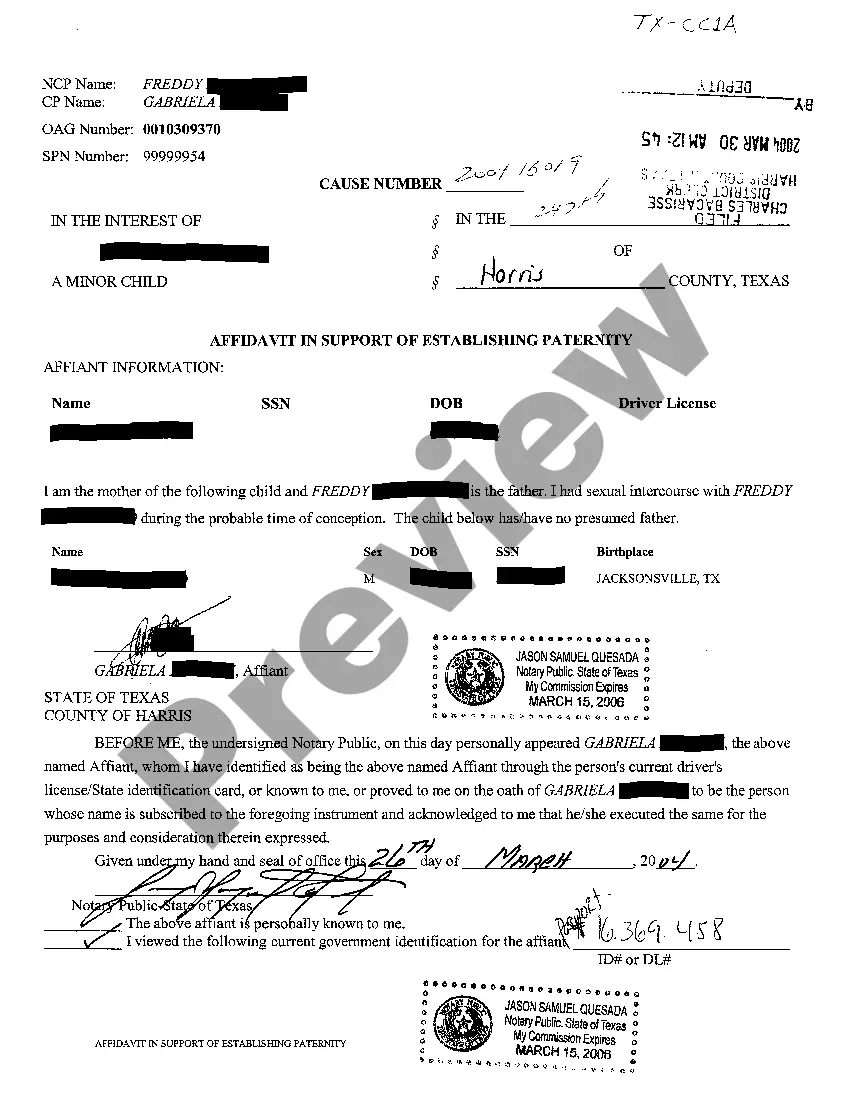
Texas Correction Warranty Deed
About this form
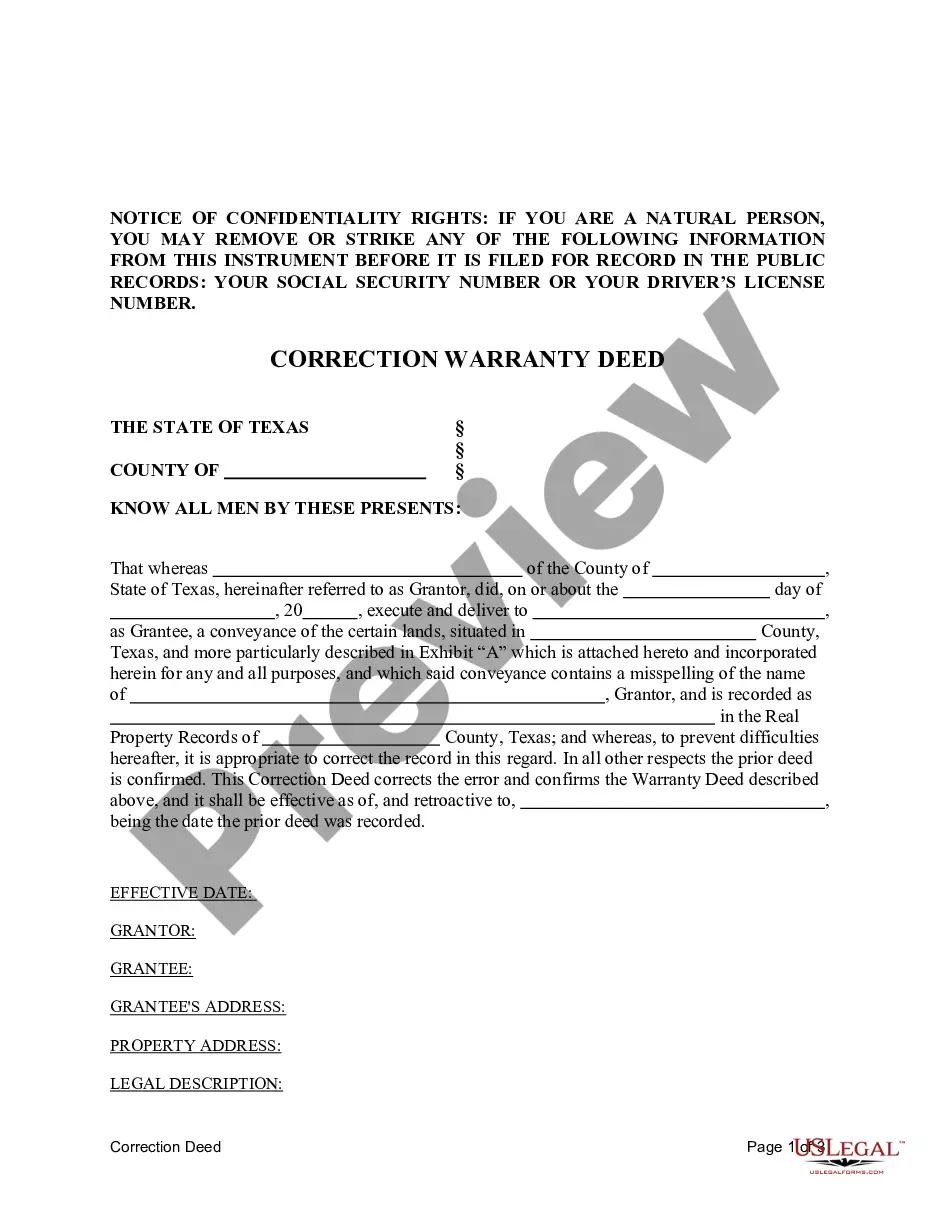
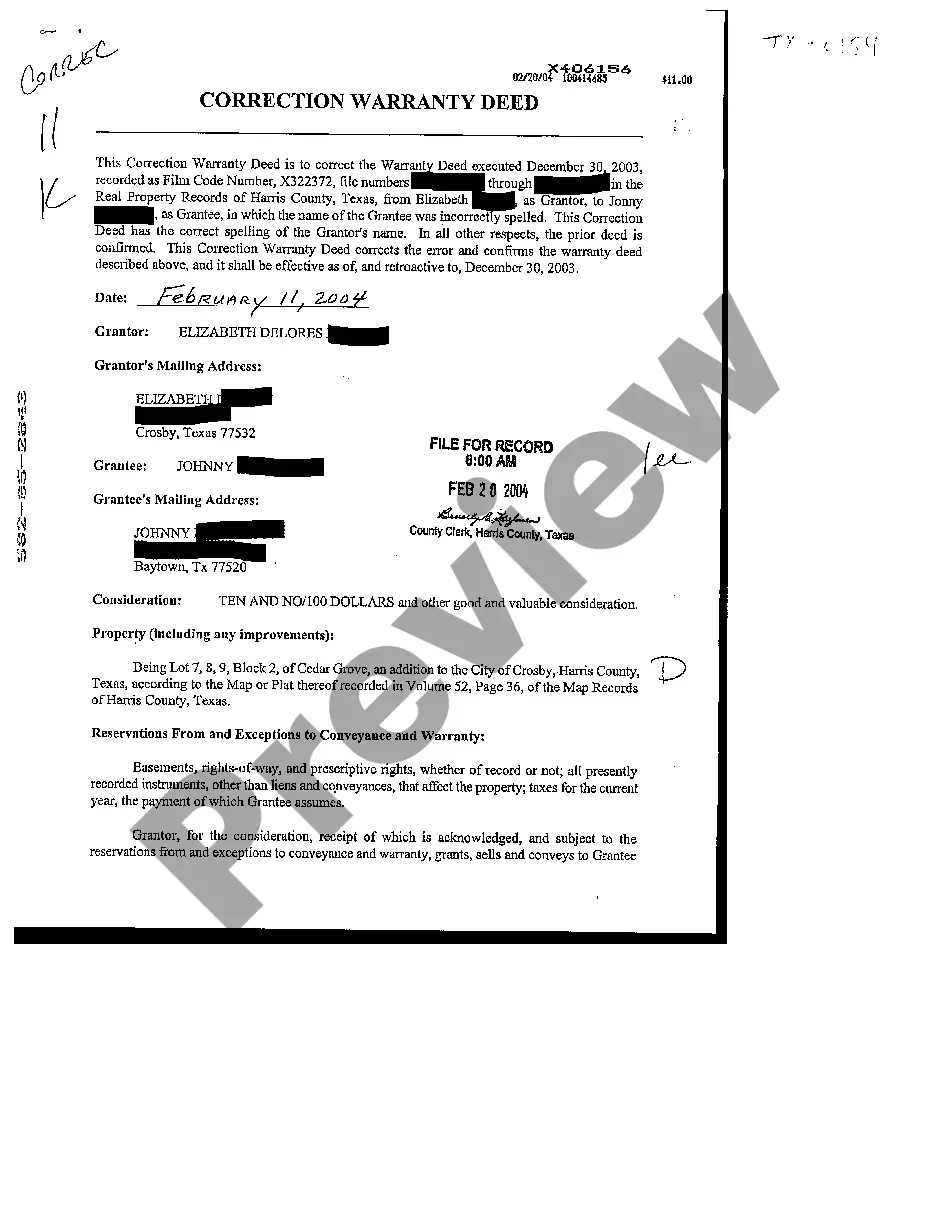
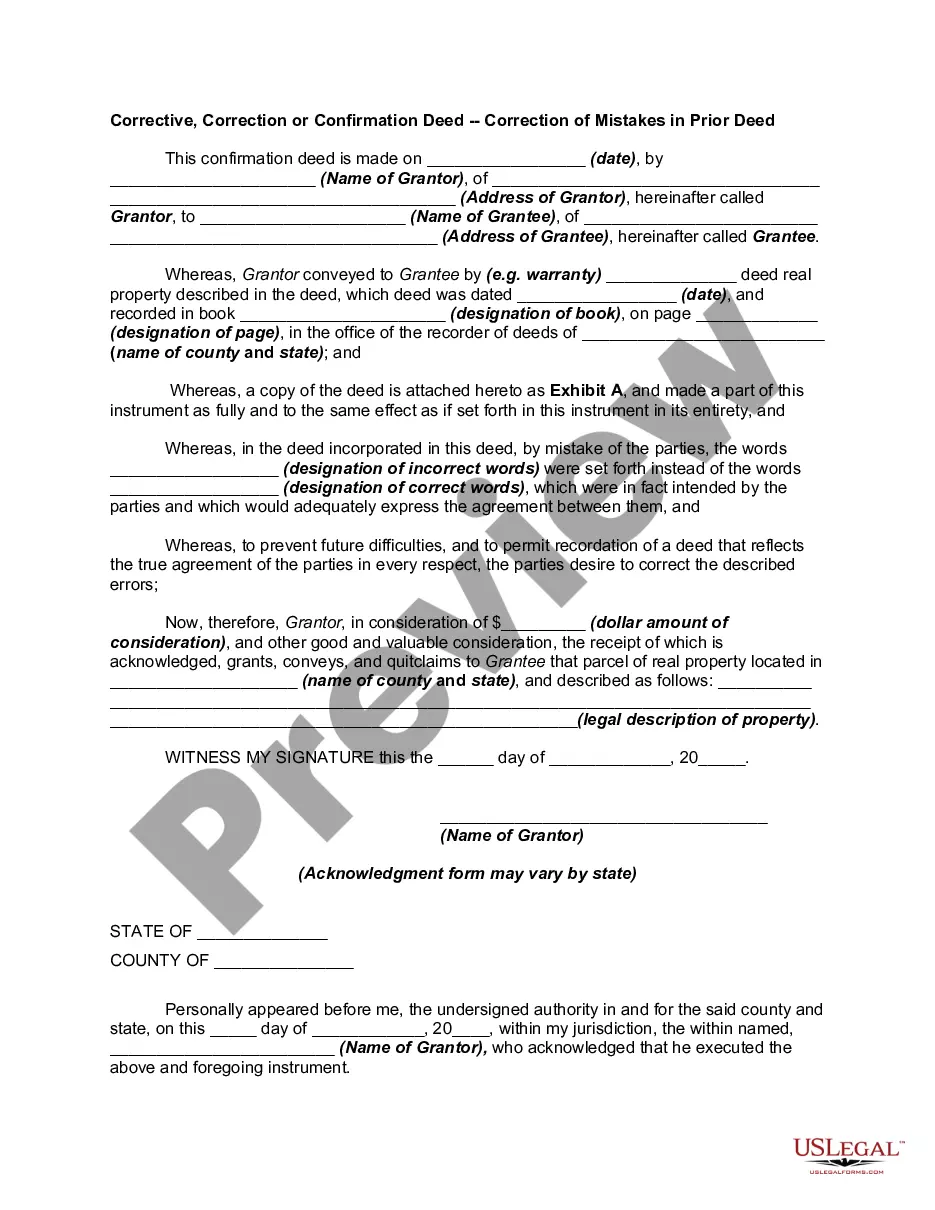
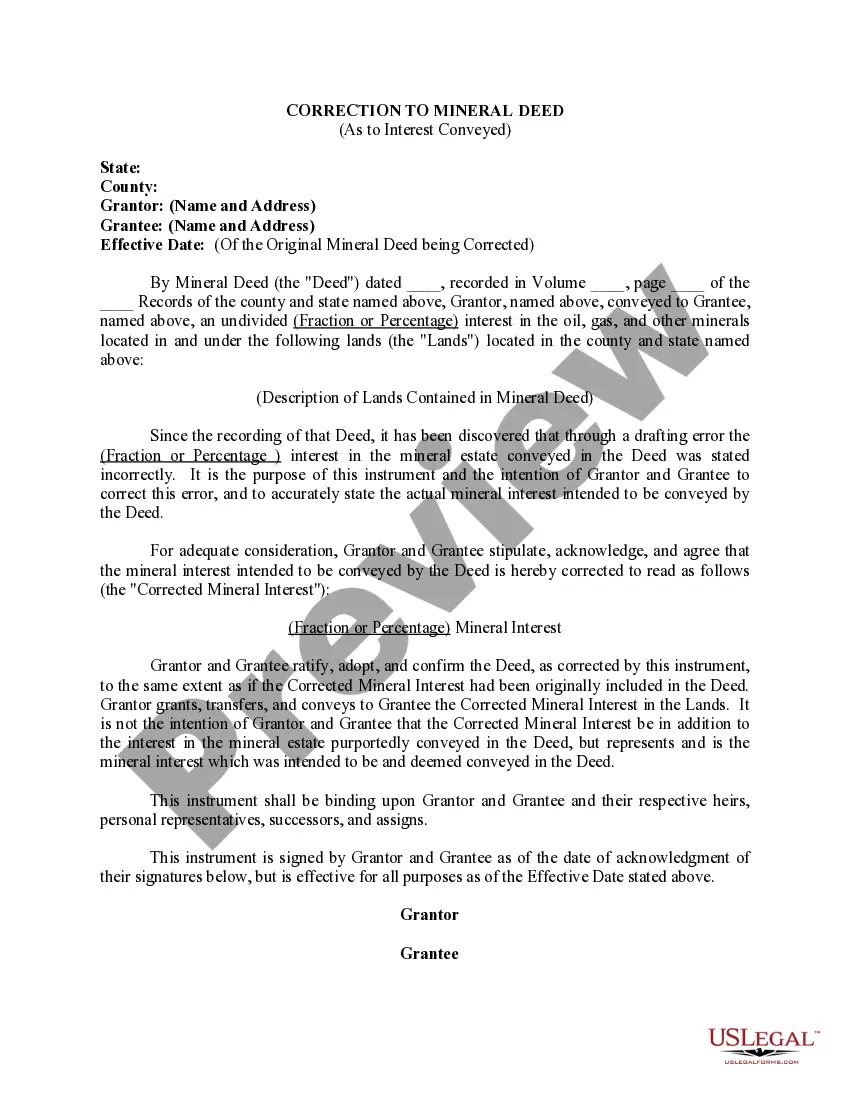
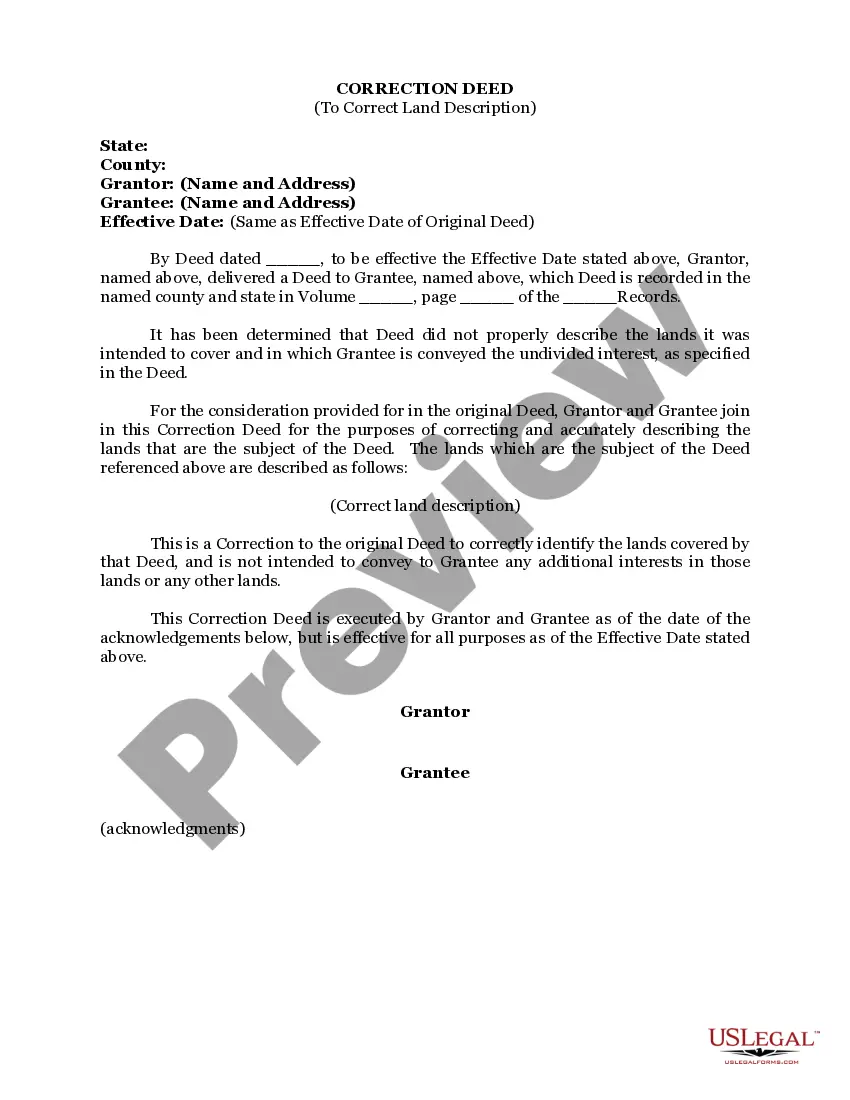
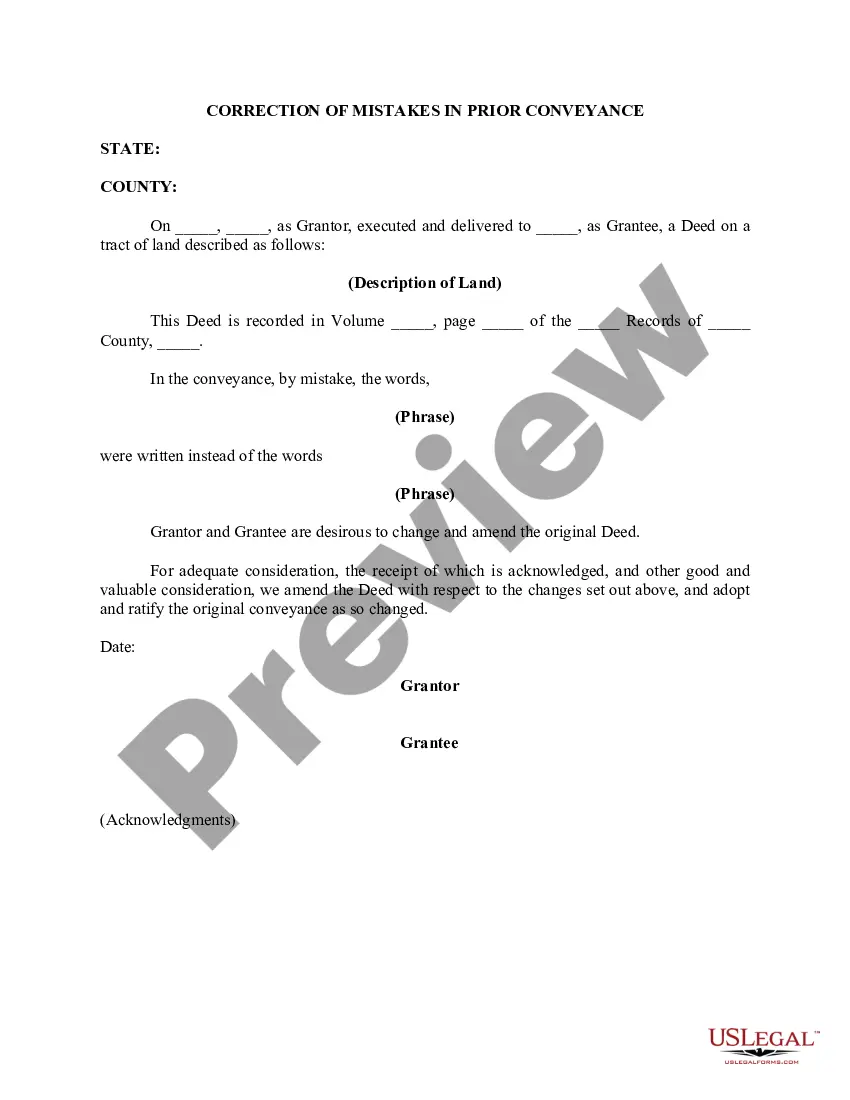
The Correction Warranty Deed is a legal document used to rectify a mutual mistake in a property transaction, specifically to correct errors such as a misspelled name of a party. Unlike a standard warranty deed, this form ensures that previous inaccuracies do not affect the validity of property ownership. This form is crucial for maintaining clear and correct land records.
Key components of this form
- Identification of the grantor (the person correcting the mistake) and the grantee (the person receiving the corrected deed).
- A detailed description of the property involved in the correction.
- Clear statement specifying the nature of the mistake being corrected.
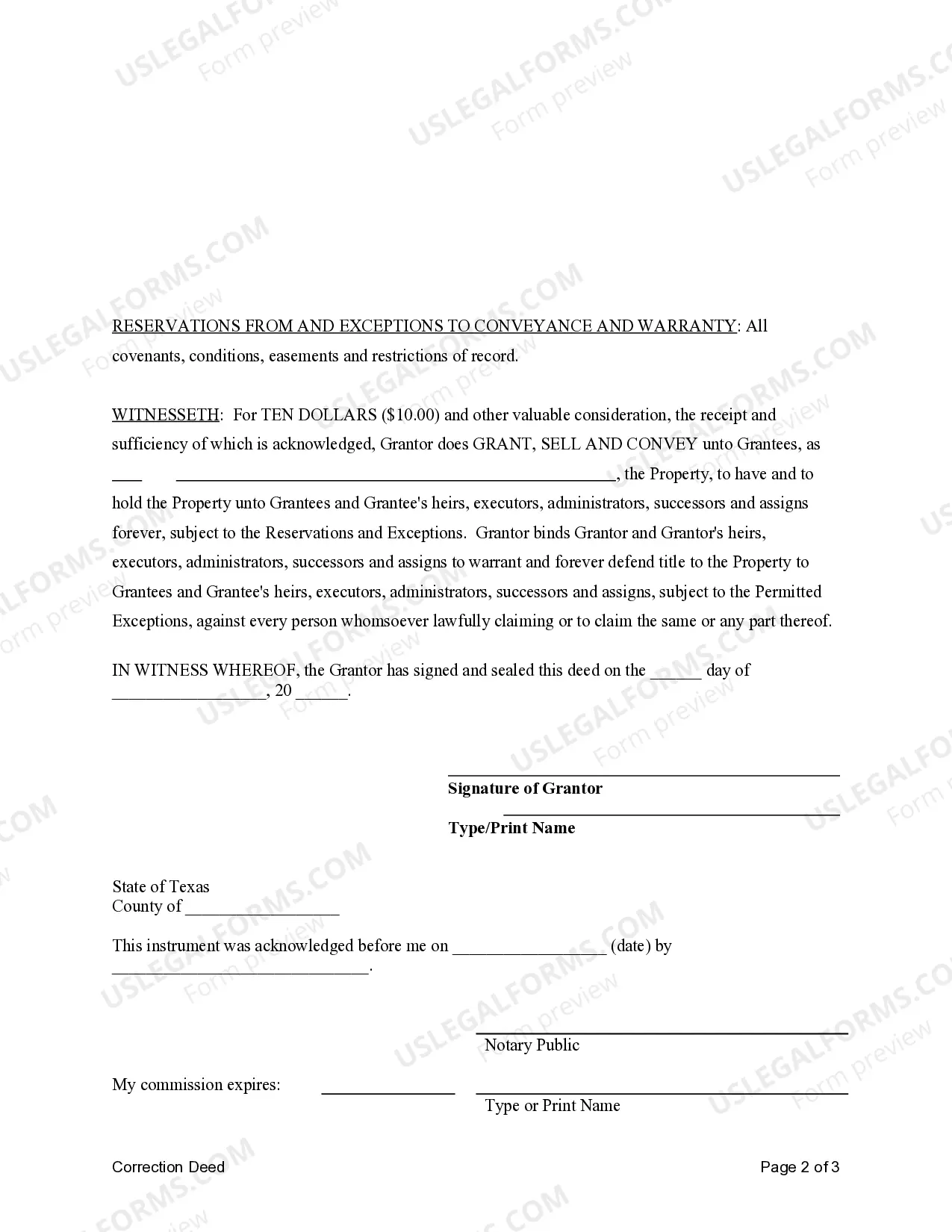
- Signatures of both parties to validate the agreement.
- Notarization clause, if required, to authenticate the identities of the signers.
Common use cases
This Correction Warranty Deed should be used when there has been a mutual mistake in a property transaction, such as when a name has been misspelled on an existing deed. It is essential in situations where accurate property records are necessary to ensure the legality of ownership and to prevent potential disputes in the future.
Who this form is for
- Property owners who need to correct a name error on a warranty deed.
- Individuals involved in mutual agreements regarding real estate transactions.
- Legal representatives and attorneys handling property documentation for clients.
Steps to complete this form
- Identify the parties involved as grantor and grantee clearly.
- Provide a detailed legal description of the property.
- Specify the mistake that is being corrected in the deed.
- Have all parties sign the document in the presence of a notary, if required.
- Ensure the completed deed is filed with the appropriate local government office.
Notarization guidance
To make this form legally binding, it must be notarized. Our online notarization service, powered by Notarize, lets you verify and sign documents remotely through an encrypted video session.
Get your form ready online
Our built-in tools help you complete, sign, share, and store your documents in one place.
Make edits, fill in missing information, and update formatting in US Legal Forms—just like you would in MS Word.
Download a copy, print it, send it by email, or mail it via USPS—whatever works best for your next step.
Sign and collect signatures with our SignNow integration. Send to multiple recipients, set reminders, and more. Go Premium to unlock E-Sign.
If this form requires notarization, complete it online through a secure video call—no need to meet a notary in person or wait for an appointment.
We protect your documents and personal data by following strict security and privacy standards.

Make edits, fill in missing information, and update formatting in US Legal Forms—just like you would in MS Word.

Download a copy, print it, send it by email, or mail it via USPS—whatever works best for your next step.

Sign and collect signatures with our SignNow integration. Send to multiple recipients, set reminders, and more. Go Premium to unlock E-Sign.

If this form requires notarization, complete it online through a secure video call—no need to meet a notary in person or wait for an appointment.

We protect your documents and personal data by following strict security and privacy standards.
Typical mistakes to avoid
- Failing to clearly identify all parties involved in the transaction.
- Not providing a precise legal description of the property.
- Omitting the nature of the mistake being corrected.
- Neglecting to obtain notarization if required by local law.
- Not filing the corrected deed with the appropriate authorities.
Advantages of online completion
- Convenience of completing and downloading the form anytime, from anywhere.
- Editability allows users to input accurate information easily.
- Reliability, as the forms are drafted by licensed attorneys to comply with legal standards.
Looking for another form?

Form popularity
FAQ
Find the most recent deed to the property. It is best to begin with a copy of the most recent deed to the property (the deed that transferred the property to the current grantor). Create a new deed. Sign and notarize the deed. File the documents in the county land records.
Fill out the "grantor" section of the warranty deed. The grantors are the givers, or current owners, of the property. Use the legal name of each grantor and insert current addresses after each grantor's name.
Write the county where the property is located on line provided next to the words "County of" beneath the words "The State of Texas." Write the name and address of the grantor on the lines provided after the words "Know all men by these presents, That I."
You can change your name on title deeds by completing form AP1 and providing the relevant documentation, such as a marriage certificate, deed poll certificate or a sworn declaration. You can also change your gender on title deeds using form CNG and providing appropriate proof of the change.
Re-recording of the original document. With corrections made in the body of the original document. A cover sheet detailing the changes. Must be re-signed and re-acknowledged. Correction Deed. A new deed reflecting the corrections/changes. Must meet all recording requirements of a deed.
In Texas, a correction deed is the deed issued to make changes to an erroneous deed, referred to as the corrected deed. These two instruments are closely linked, and all corrections are effective as of the date of the original recorded instrument (Property Code Sec. 5.030).
Determine if the error is harmless or fatal to the transfer of title. Decide what instrument is best suited to the error. Draft a corrective deed, affidavit, or new deed. Original Grantor(s) signature(s) obtained. Deed is re-executed. Re-acknowledgment before a notary.