Sample Letter for General and Absolute Release for Settlement Offer
Understanding this form
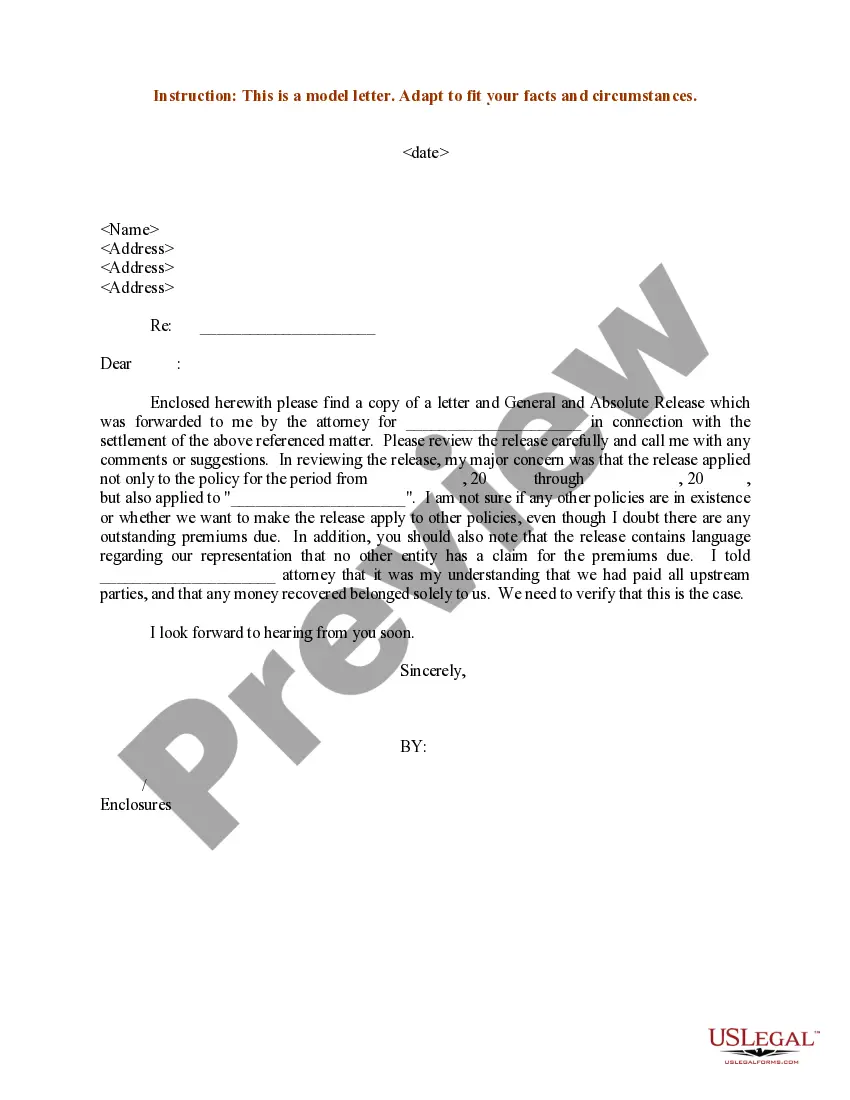
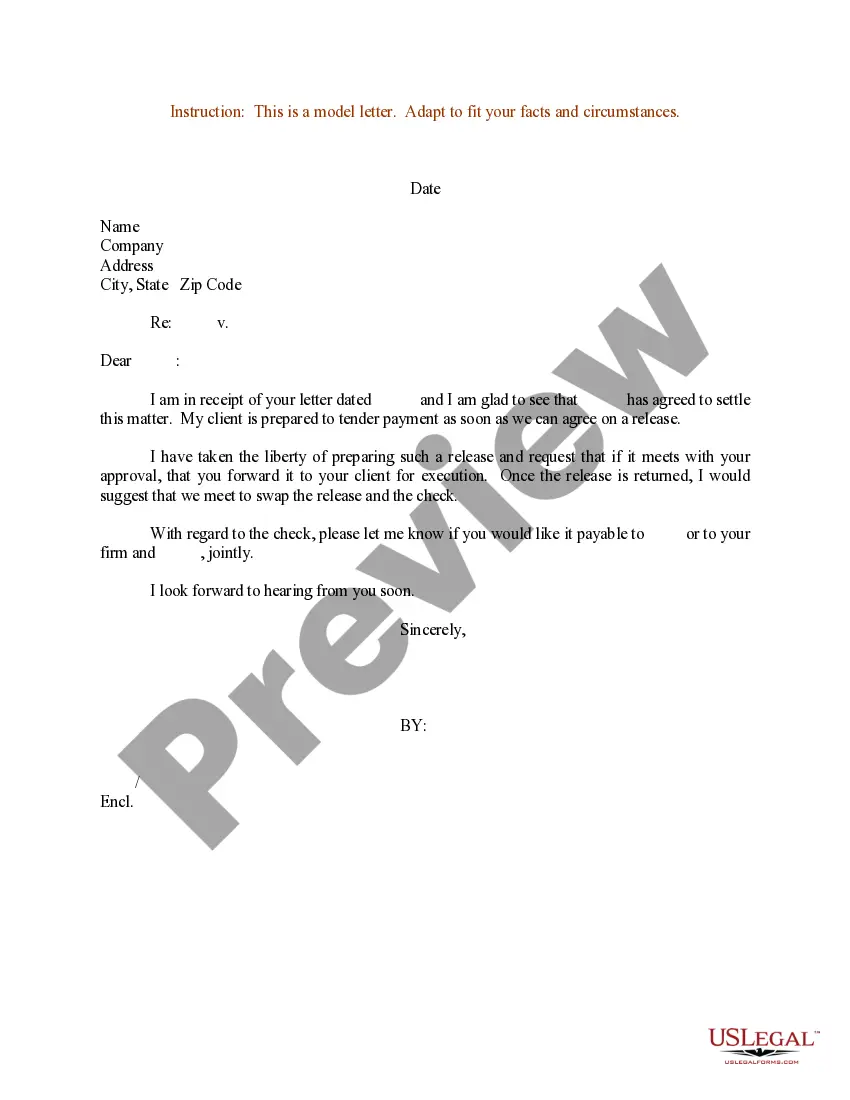
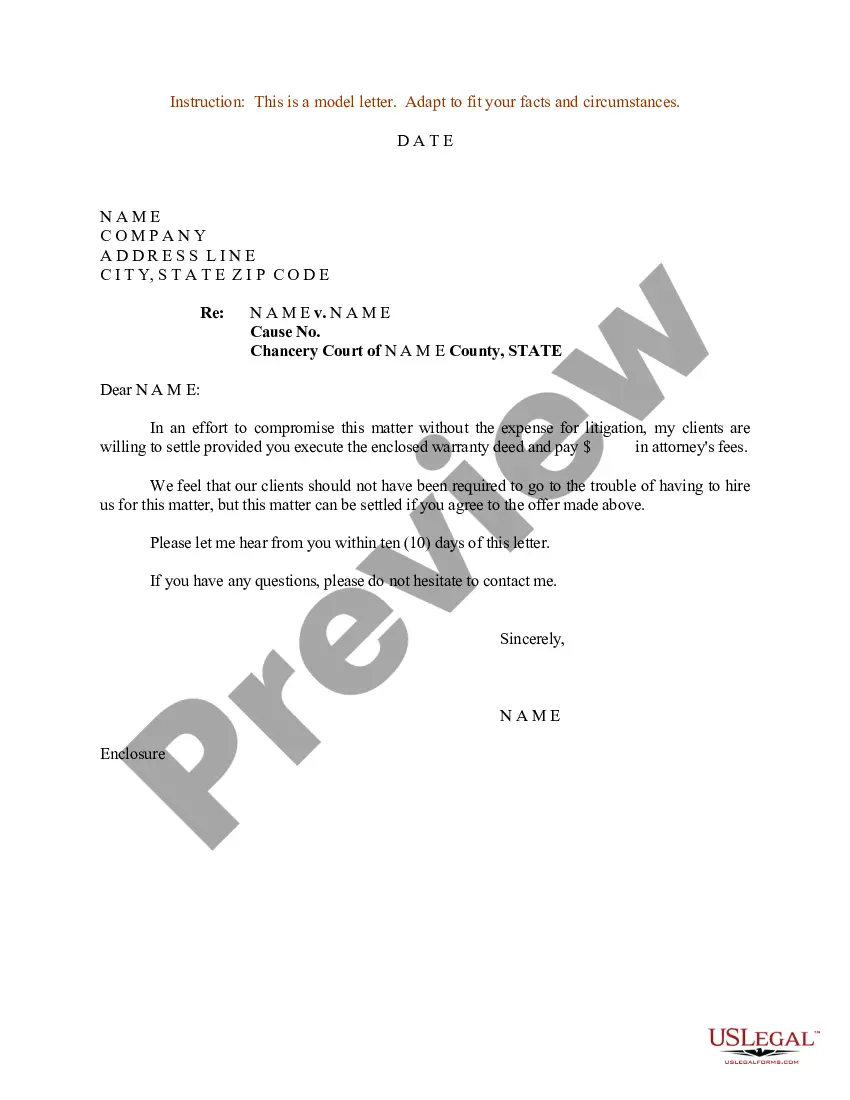
This Sample Letter for General and Absolute Release for Settlement Offer is a template that allows parties to formally accept a settlement offer while releasing any legal claims related to the matter. This letter serves a specific purpose by providing clarity and closure in a legal dispute, distinguishing itself from general release forms by its focus on settlement agreements.
Main sections of this form
- Date of the letter
- Sender's name and address
- Recipient's name and address
- Subject line indicating the purpose of the letter
- Space for specific claims being released

Situations where this form applies
This form is typically used when a party receives a settlement offer and wishes to accept it, thereby releasing the other party from further claims or liabilities. It is essential in disputes related to personal injury, contract issues, or other civil matters where negotiation has reached an agreement. Use this letter to ensure both parties have a clear understanding of the terms of the settlement.
Who this form is for
- Individuals or businesses involved in a legal dispute
- Parties receiving a settlement offer
- Those looking to finalize an agreement to avoid further disputes
- Legal professionals preparing documentation for clients
Steps to complete this form
- Write the date at the top of the letter.
- Fill in your name and address as the sender.
- Include the recipient's name and address.
- Clearly state the subject of the letter, indicating it is related to a settlement offer.
- Detail the claims being released in the body of the letter.
Does this form need to be notarized?
Notarization is generally not required for this form. However, certain states or situations might demand it. You can complete notarization online through US Legal Forms, powered by Notarize, using a verified video call available anytime.
Get your form ready online
Our built-in tools help you complete, sign, share, and store your documents in one place.
Make edits, fill in missing information, and update formatting in US Legal Forms—just like you would in MS Word.
Download a copy, print it, send it by email, or mail it via USPS—whatever works best for your next step.
Sign and collect signatures with our SignNow integration. Send to multiple recipients, set reminders, and more. Go Premium to unlock E-Sign.
If this form requires notarization, complete it online through a secure video call—no need to meet a notary in person or wait for an appointment.
We protect your documents and personal data by following strict security and privacy standards.

Make edits, fill in missing information, and update formatting in US Legal Forms—just like you would in MS Word.

Download a copy, print it, send it by email, or mail it via USPS—whatever works best for your next step.

Sign and collect signatures with our SignNow integration. Send to multiple recipients, set reminders, and more. Go Premium to unlock E-Sign.

If this form requires notarization, complete it online through a secure video call—no need to meet a notary in person or wait for an appointment.

We protect your documents and personal data by following strict security and privacy standards.
Avoid these common issues
- Failing to specify the claims that are being released.
- Not including all necessary contact information.
- Neglecting to sign and date the letter.
- Using vague language that may lead to misunderstandings.
Why use this form online
- Convenient access to a professionally drafted letter template.
- Easy to customize to reflect your specific needs.
- Ensures compliance with legal standards and terminology.
Legal use & context
- This letter serves as a formal acceptance of a settlement offer.
- It releases the other party from further legal claims, making it enforceable in court.
- Failure to use a proper release letter may result in disputes over unpaid claims.
Key takeaways
- This form is essential when accepting a settlement offer.
- Customizing the template ensures clear communication of claims being released.
- Using this form can help avoid future legal issues related to the settlement.
Looking for another form?
Form popularity
FAQ
If you and the opposing party in a suit reach a settlement agreement in good faith, there is likely very little you can do to get out of the deal. However, if either party (or even your attorney) somehow induced you to agree to the settlement through fraud or misrepresentation, you may be able to void the agreement.
When you sign a settlement agreement, your employment is terminated. You'll typically receive a sum of money in return for losing your job and certain employment rights. If you refuse to sign, however, you may well face a disciplinary procedure or a redundancy situation.
The agreement contains a provision which permits rescission. The other party allows you to rescind.
Generally, the insurance company will not authorize the settlement check to be cashed until the Release is executed and returned back to the insurance company and the insurance company will typically require that the Release is signed by you and notarized by a certified Notary Public.
Lawyers call an agreement to settle a dispute a "release," because in exchange for some act (often the payment of money), one person gives up (or releases) his or her claim against another.
No, until a settlement agreement is signed, you can change your mind. However, if the attorney has told the other side he will take the offer, it does put him in a bad position. Also, if your attorney strongly recommends the offer, you may want to consider his advice.
It is possible to back out of a settlement agreement if both parties consent and it has not been incorporated into a court order. However, the issue arises if the other party does not agree.The settlement agreement can be voided if it was formed through fraud or misrepresentation.
2714 Retain relevant documents. 2714 Decide whether (and when) to make offer. 2714 Evaluate the reasons for settling. 2714 Assess motivating factors to settle. 2714 Confirm client's ability to settle. 2714 List all covered parties. 2714 List all legal issues to be settled.
A release is an agreement not to sue; it waives your right to sue and company and "releases" your employer from legal liability for claims you may have against it. A release may be as broad or as narrow as the parties agree to make it.