Joint Venture Agreement between a Limited Liability Company and Professional Golfer to Sponsor and Provide Funds
What this document covers
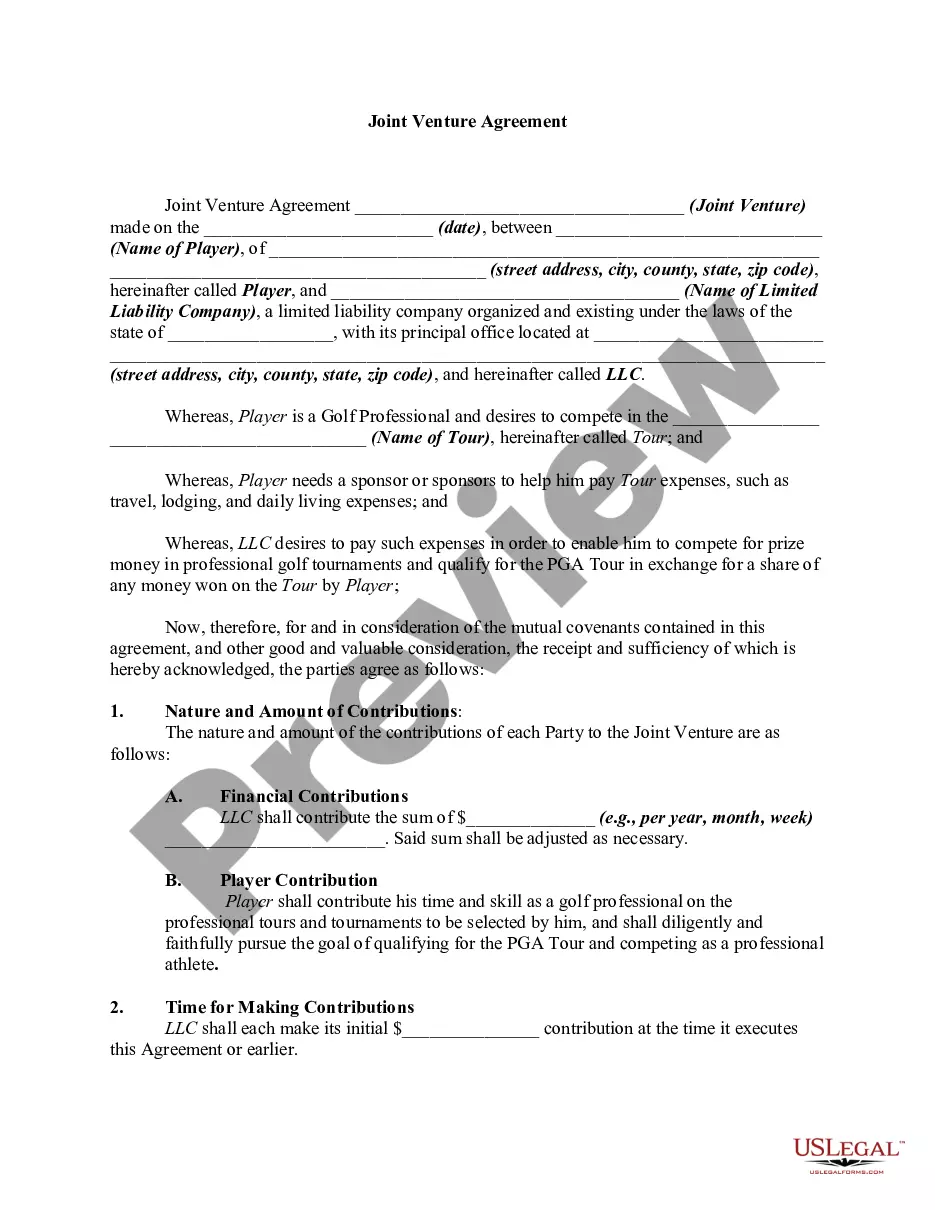
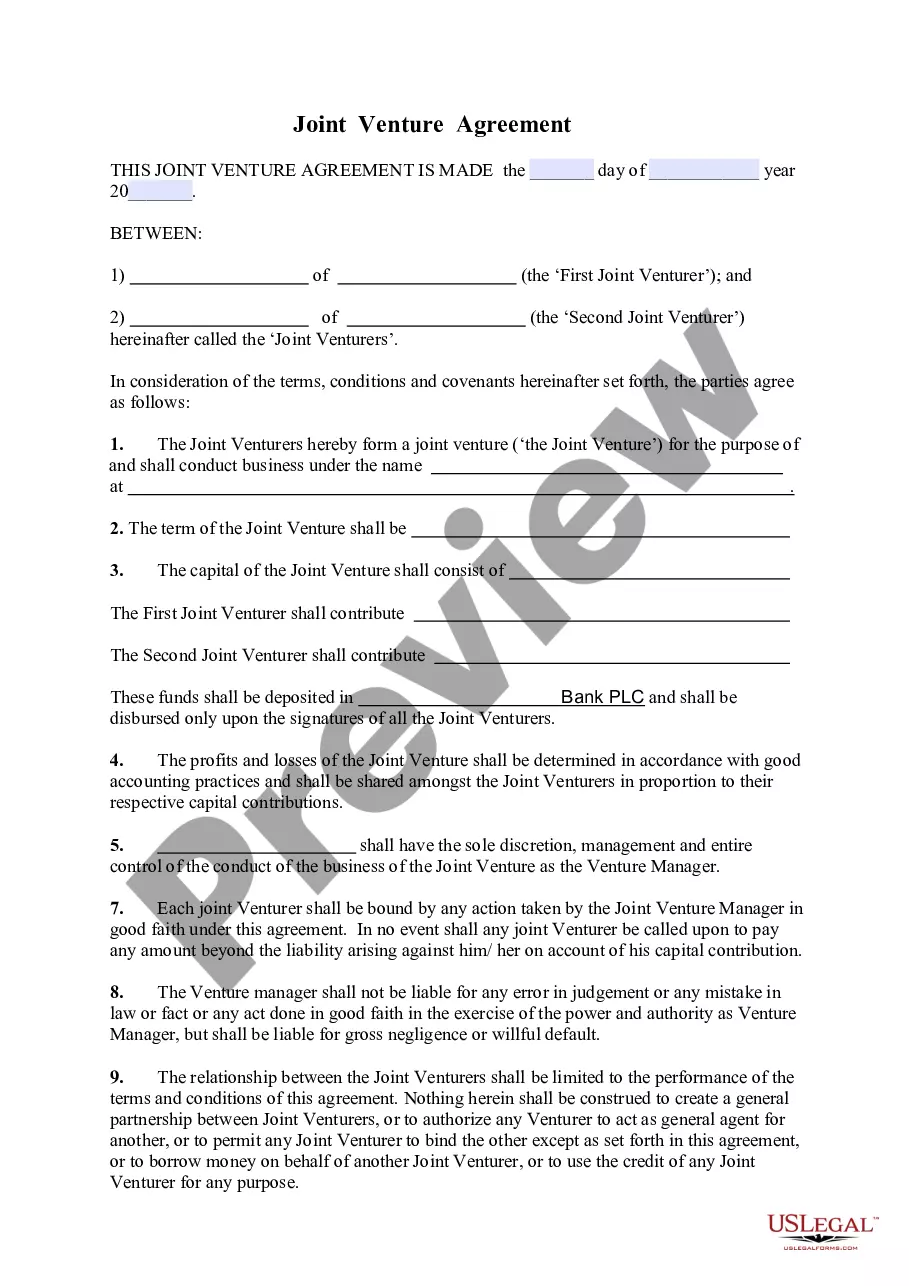
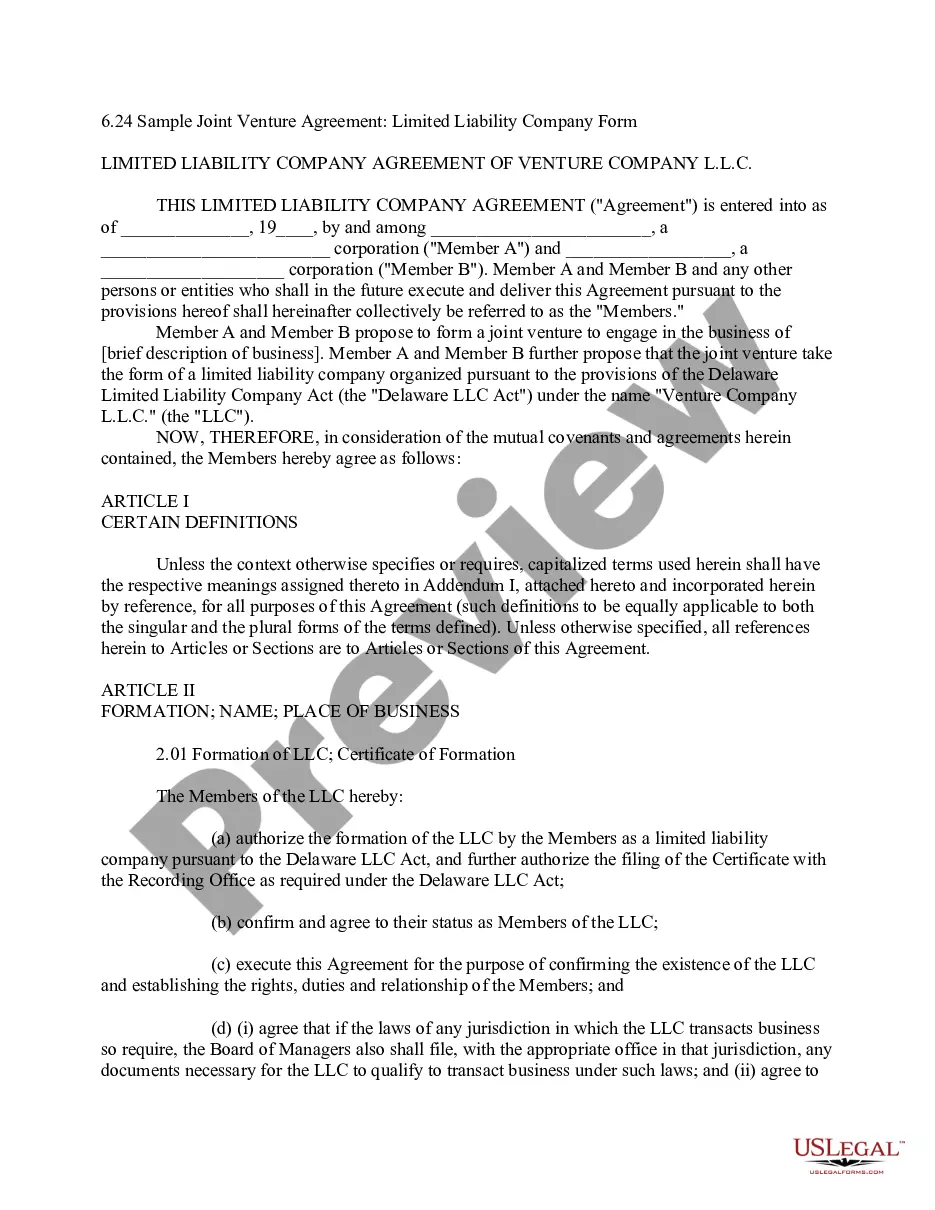
The Joint Venture Agreement between a Limited Liability Company and Professional Golfer to Sponsor and Provide Funds is a legal document that outlines the relationship between a professional golfer and an LLC for the purpose of sponsorship. This agreement enables the golfer to receive financial support for expenses related to participating in professional golf tournaments, while also allowing the LLC to partake in potential earnings from the golfer's success. It specifically differs from standard partnership agreements, as it is focused on a single business endeavor rather than an ongoing business relationship.
Key components of this form
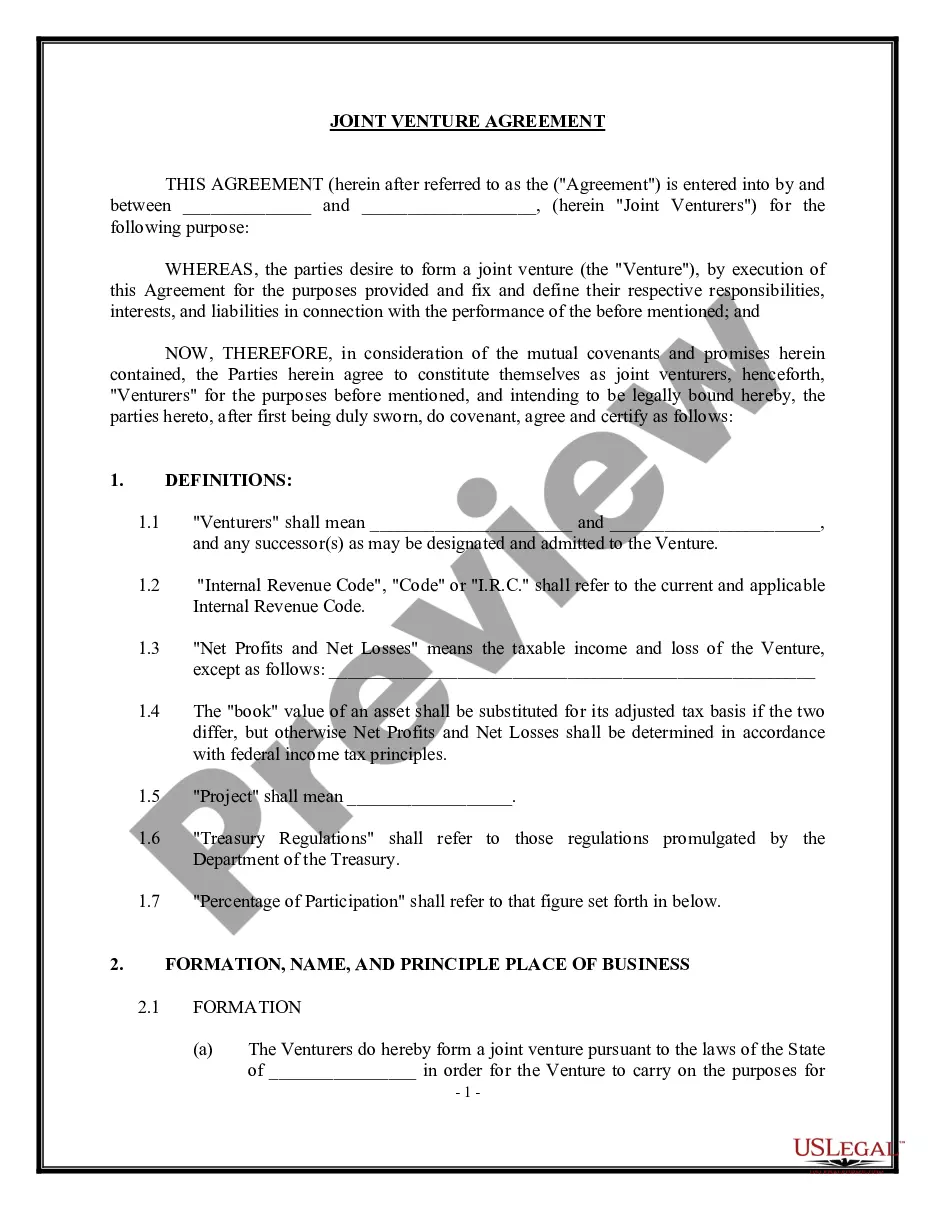
- Identification of the parties involved, including the golfer and the LLC.
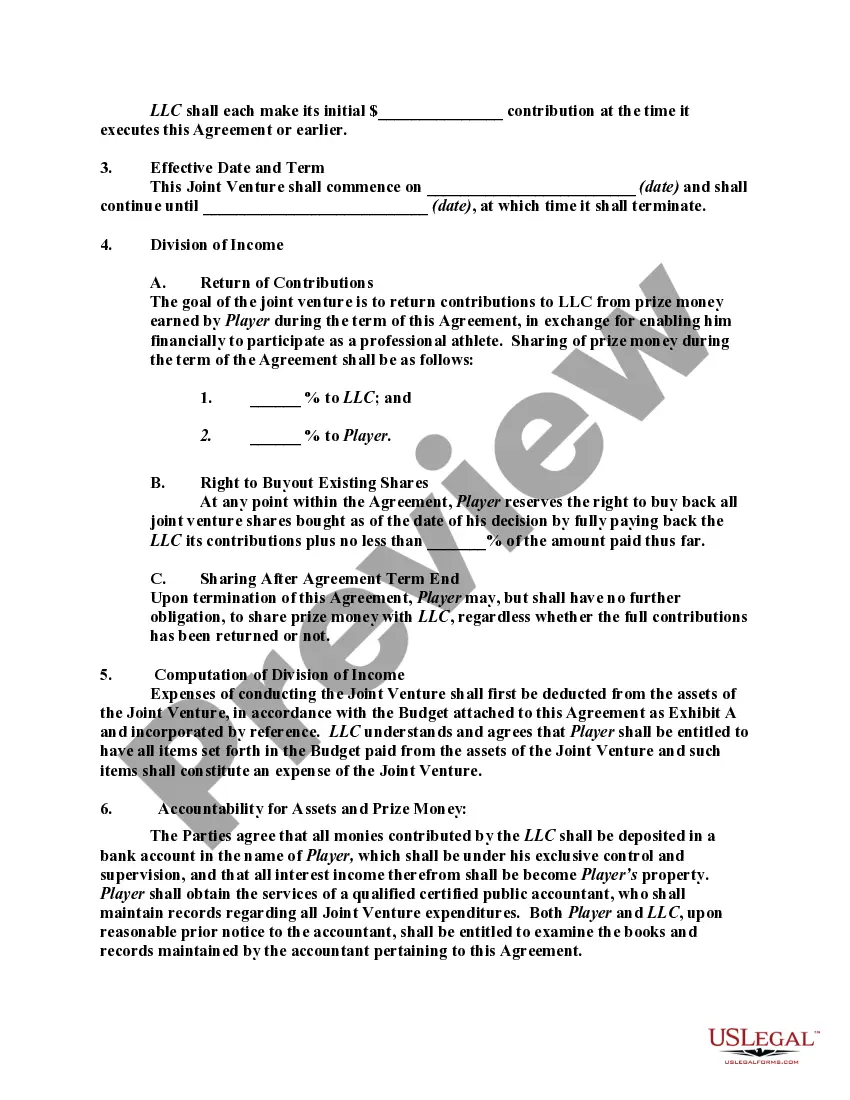
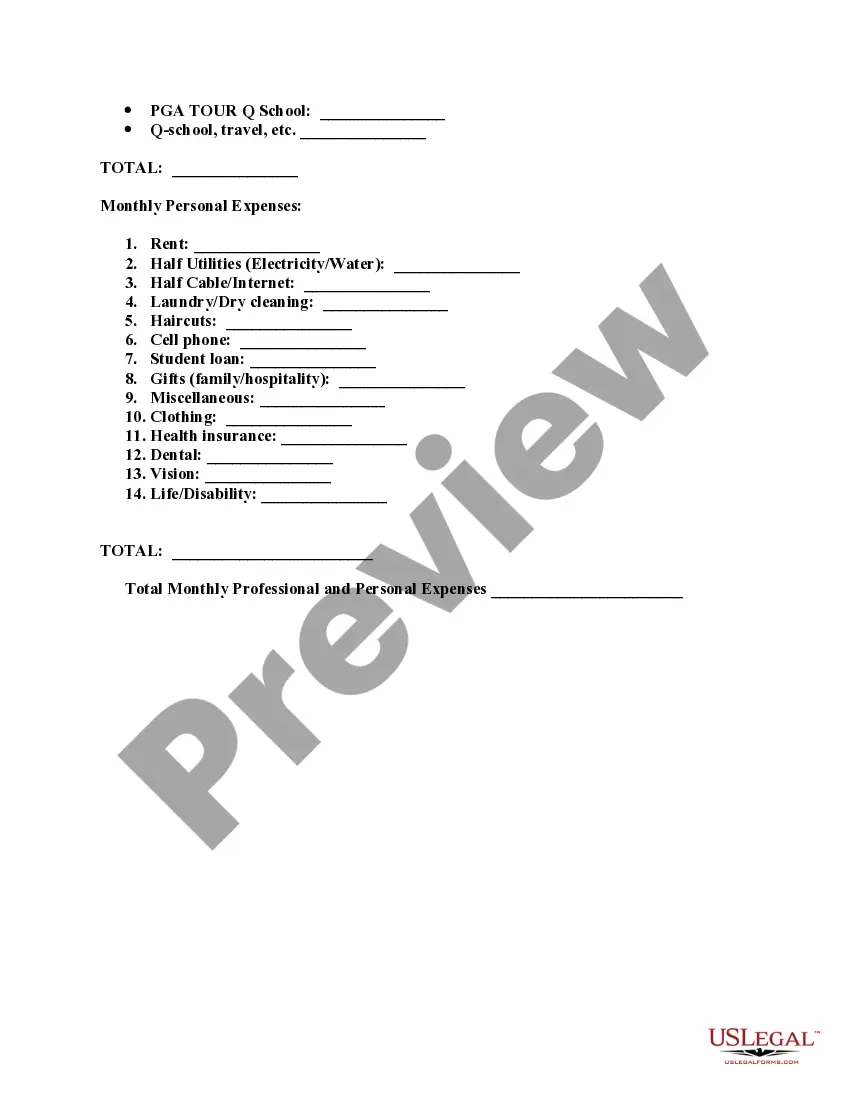
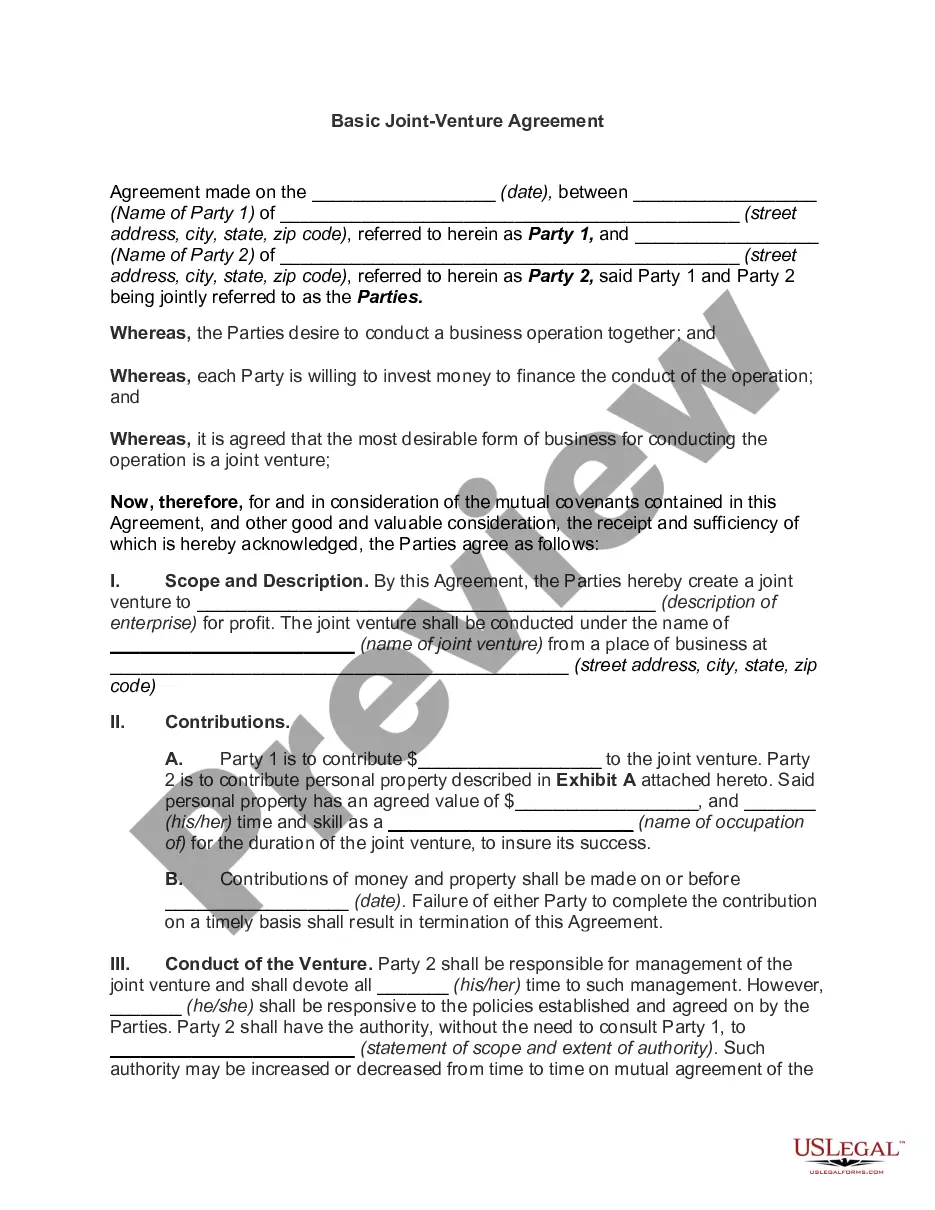
- Detailed description of financial contributions from both parties.
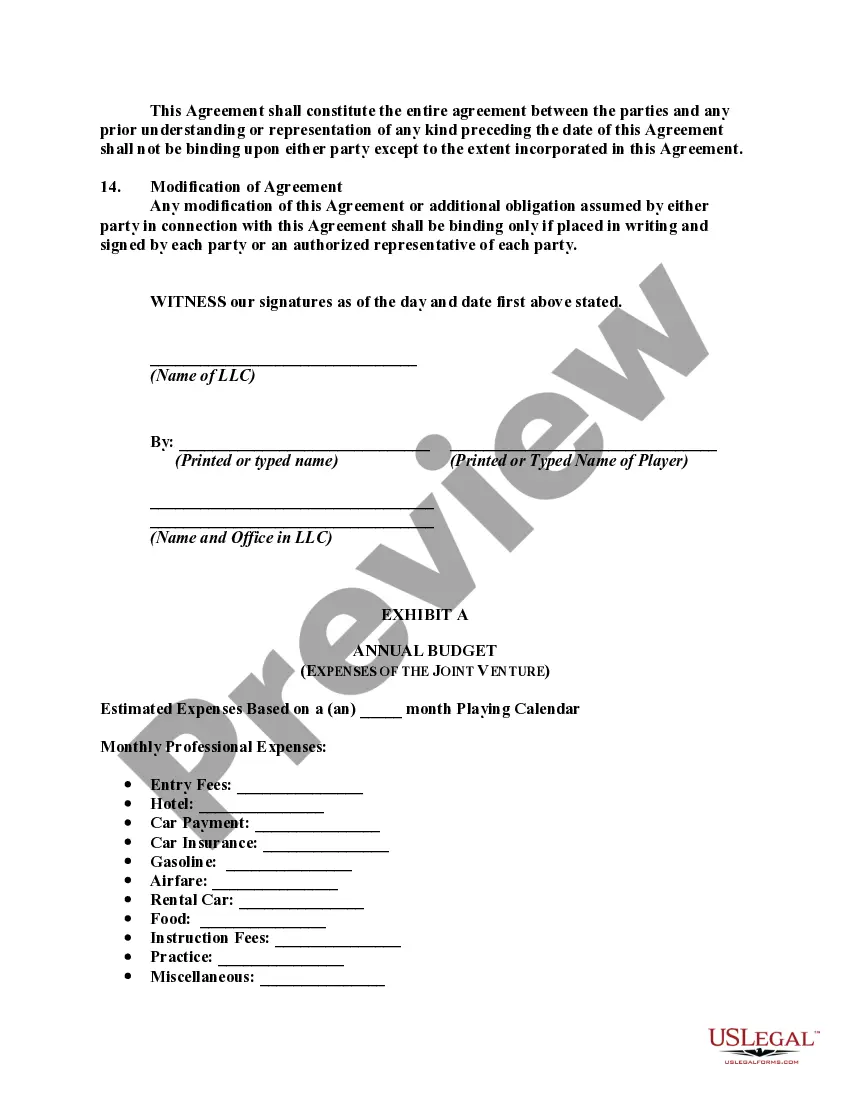
- Terms for the duration of the joint venture and conditions for termination.
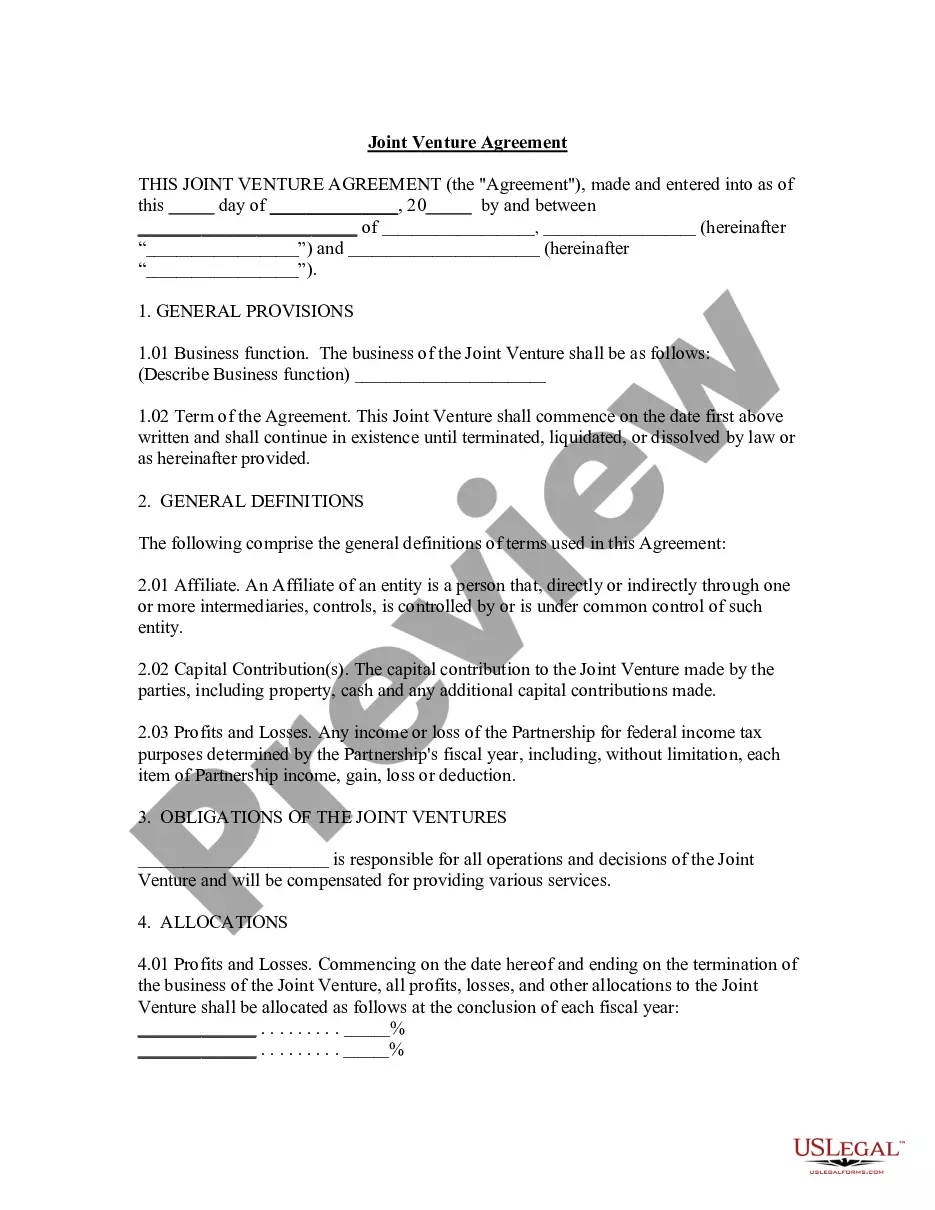
- Structure for sharing income generated from the golfer's winnings.
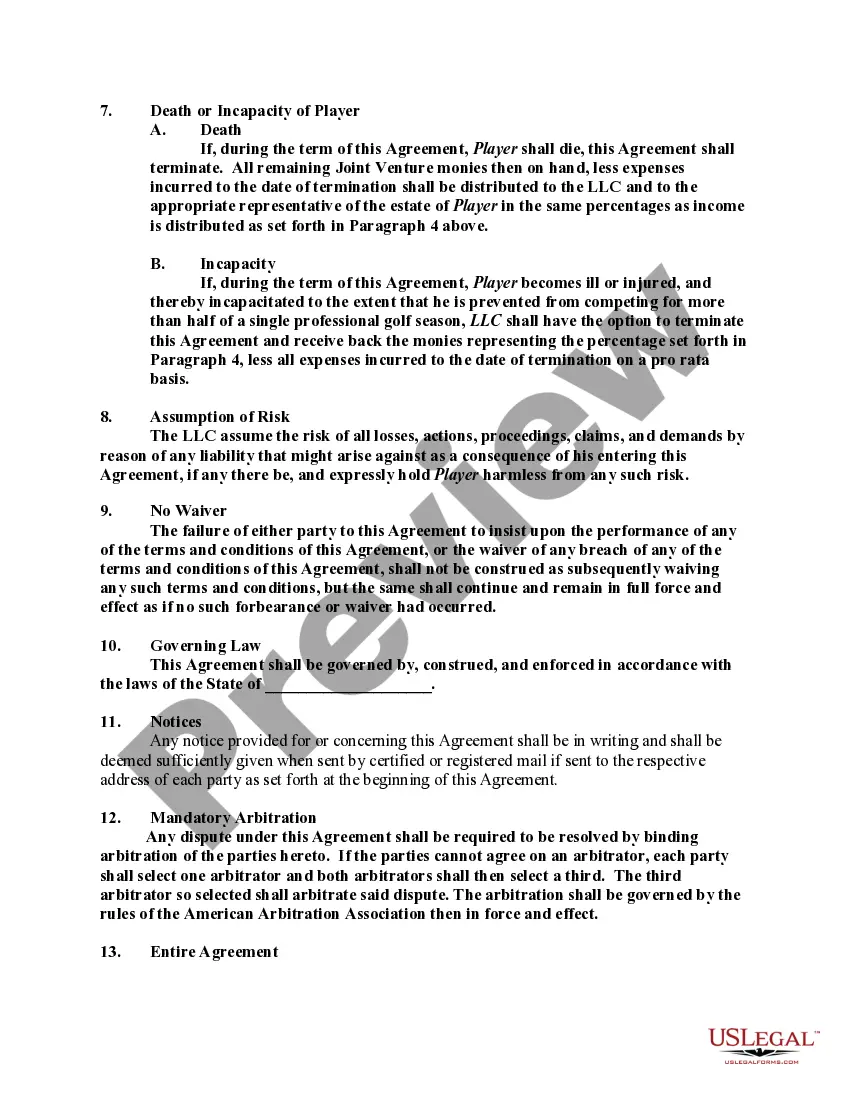
- Provisions regarding the death or incapacity of the player.
- Governing law and requirements for dispute resolution through arbitration.
When to use this document
This form is used when a professional golfer seeks to enter into a financial sponsorship agreement with a limited liability company. It is particularly useful when the golfer requires support for expenses related to tournaments and aims to formalize the sharing of any potential winnings. Scenarios include a golfer trying to qualify for a tour or a series of professional events, where funding for travel, lodging, and other living expenses is necessary.
Who needs this form
- Professional golfers looking for sponsorship to participate in tours.
- LLCs or businesses interested in supporting sports professionals in exchange for a share of potential earnings.
- Individuals needing a structured agreement that clearly outlines sponsor and player responsibilities and rights.
How to complete this form
- Identify and fill in the names and addresses of both the professional golfer and the LLC.
- Specify the date the agreement is made and the duration of the joint venture.
- Detail the financial contributions expected from the LLC and the golfer's commitments.
- Include provisions regarding income sharing and conditions in case of termination.
- Sign and date the agreement along with any necessary witnesses or legal representatives.
Notarization guidance
This form does not typically require notarization unless specified by local law. However, it is advisable to have the agreement reviewed by a legal professional to ensure compliance with specific state requirements.
Get your form ready online
Our built-in tools help you complete, sign, share, and store your documents in one place.
Make edits, fill in missing information, and update formatting in US Legal Forms—just like you would in MS Word.
Download a copy, print it, send it by email, or mail it via USPS—whatever works best for your next step.
Sign and collect signatures with our SignNow integration. Send to multiple recipients, set reminders, and more. Go Premium to unlock E-Sign.
If this form requires notarization, complete it online through a secure video call—no need to meet a notary in person or wait for an appointment.
We protect your documents and personal data by following strict security and privacy standards.

Make edits, fill in missing information, and update formatting in US Legal Forms—just like you would in MS Word.

Download a copy, print it, send it by email, or mail it via USPS—whatever works best for your next step.

Sign and collect signatures with our SignNow integration. Send to multiple recipients, set reminders, and more. Go Premium to unlock E-Sign.

If this form requires notarization, complete it online through a secure video call—no need to meet a notary in person or wait for an appointment.

We protect your documents and personal data by following strict security and privacy standards.
Mistakes to watch out for
- Failing to clearly outline contributions and obligations of both parties.
- Not specifying the terms for income sharing after the agreement ends.
- Neglecting to include details about termination conditions or procedures.
- Leaving out the indication of the governing state's law for the agreement.
Why complete this form online
- Convenient access to a legally vetted form that saves time and reduces errors.
- Editability allows customization to fit specific needs and scenarios.
- Reliable support and resources available through the platform for users.
Legal use & context
- This form is legally binding when properly completed and signed by both parties.
- The agreement clarifies expectations and obligations, reducing potential conflicts.
- It is advisable for both parties to seek legal counsel before signing to understand all implications.
What to keep in mind
- A Joint Venture Agreement is crucial for defining the roles and contributions of both the golfer and the sponsoring LLC.
- Clearly outlining income division and contributions can prevent future disputes.
- This form can be adapted for use across multiple states but may require local legal consultation to ensure compliance.
Looking for another form?


Form popularity
FAQ
Most entities formed in the United States to conduct joint ventures organize as limited liability companies, or LLCs. Although there is no requirement to form as a separate entity, a joint venture can form as an LLC if the parties involved wish to do so.
Note: In California, an LLC owned by Registered Domestic Partners is not allowed to use a Qualified Joint Venture. Instead, the LLC must be taxed as a Partnership.
Get it in writing. Keep it simple. Deal with the right person. Identify each party correctly. Spell out all of the details. Specify payment obligations. Agree on circumstances that terminate the contract. Agree on a way to resolve disputes.
There isn't a set legal structure for a joint venture. That means that your business collaboration can take the form that best suits your planned project. A joint venture can either be: A contractual joint venture with no separate legal entity or.
An Introduction to Yourself and Your Opportunity. The Reason You Got in Touch. Information about Your Audience. Your Activation and Sponsorship Opportunities. A Mention of When You Will Follow Up.
While signing a Joint Venture agreement, the following clauses must be properly examined such as: Object and scope of the Joint Venture; Equity participation by local and foreign investors and agreement to a future issue of capital; Management Committee; Financial arrangements; The composition of the board and
A Sponsorship Agreement (or contract) governs the legal relationship between a Sponsor and those entitled to enforce the Sponsorship obligation.It has a number of terms and conditions agreeing a service (or services) in return for a fee.
A sponsorship agreement should include the length of the agreement, an exclusivity clause, payment calculation and method, the sponsor benefits, intellectual property rights and termination conditions.
The date the parties enter into the agreement. The names and addresses of the sponsor and rights holder/property. The start and end date the agreement. Terms regarding the right of renewal/right of first refusal.