Temporary Contract of Employment
What is this form?
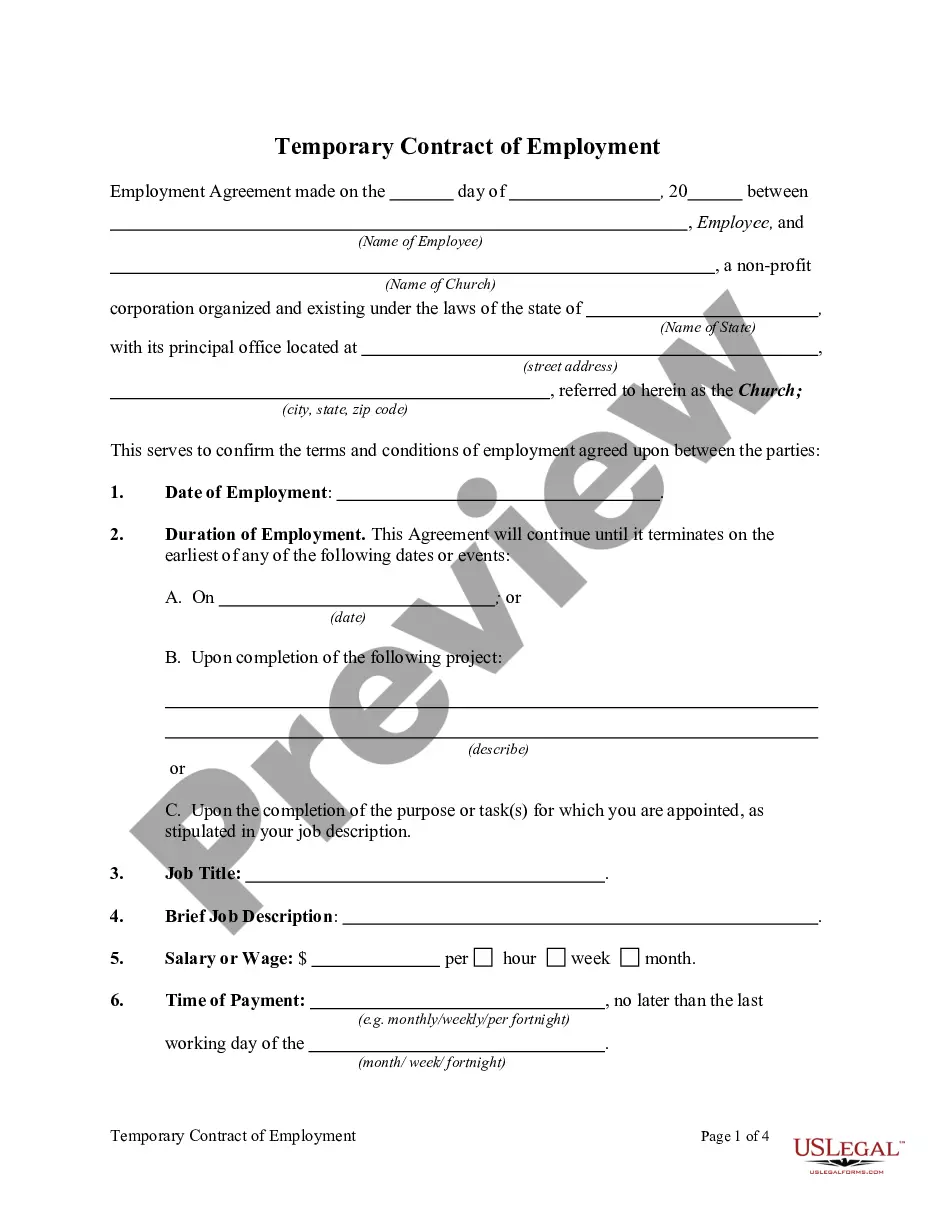
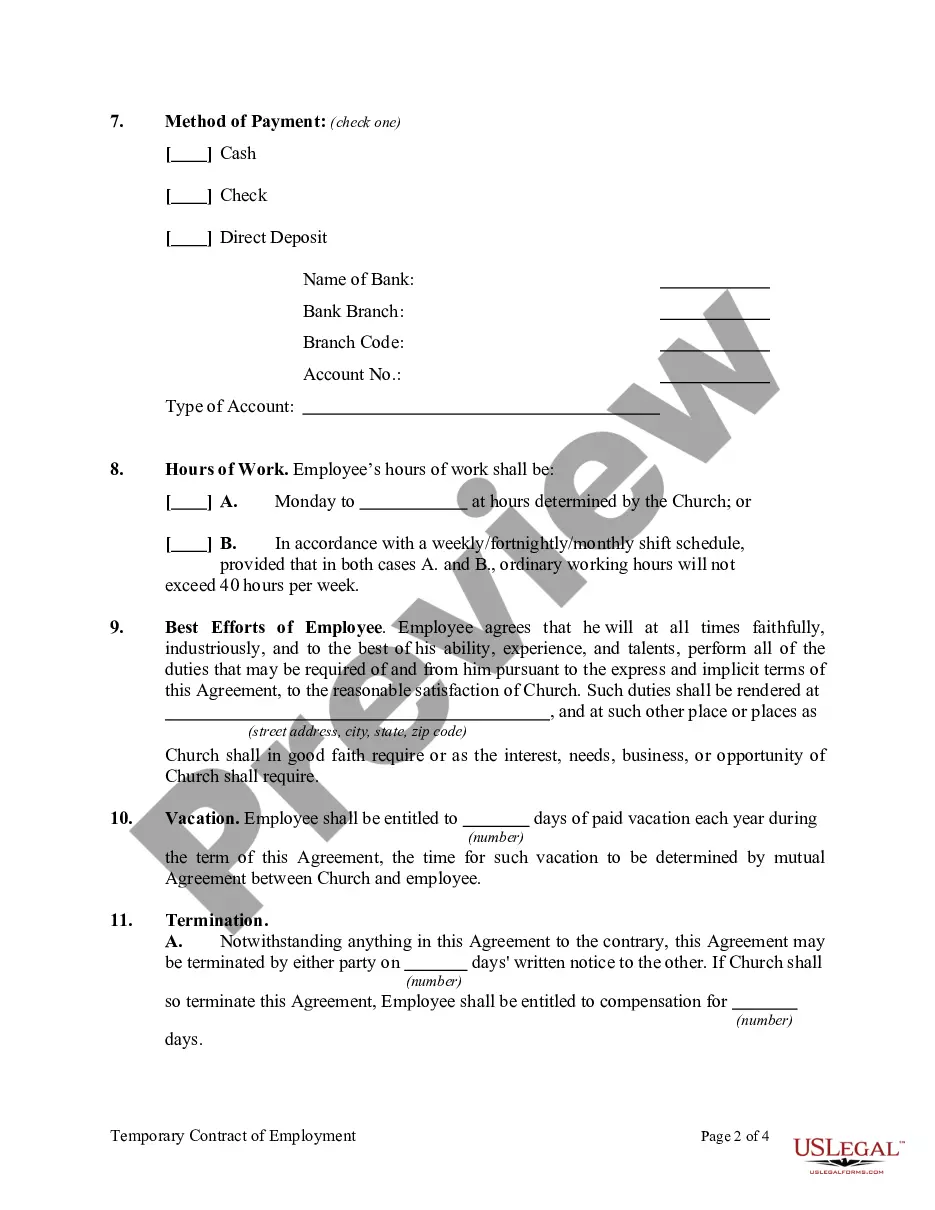
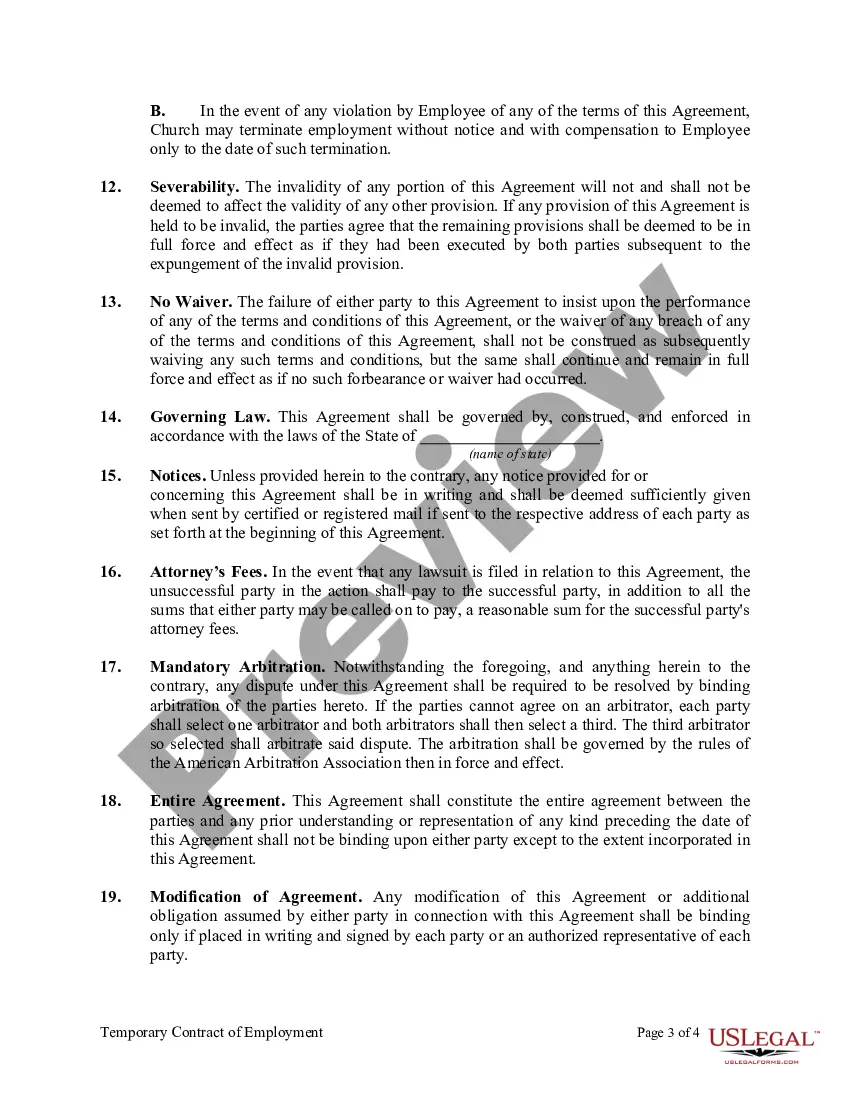
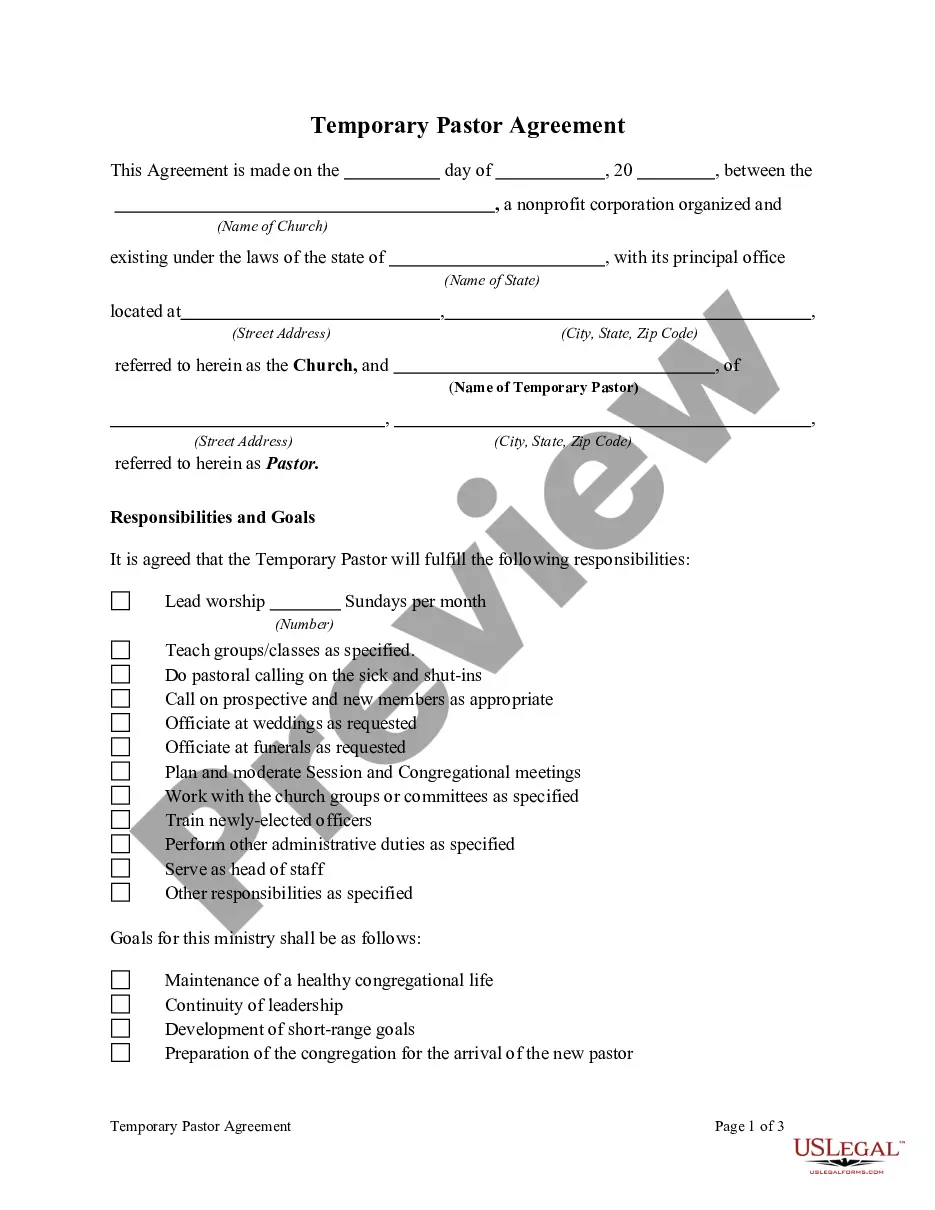
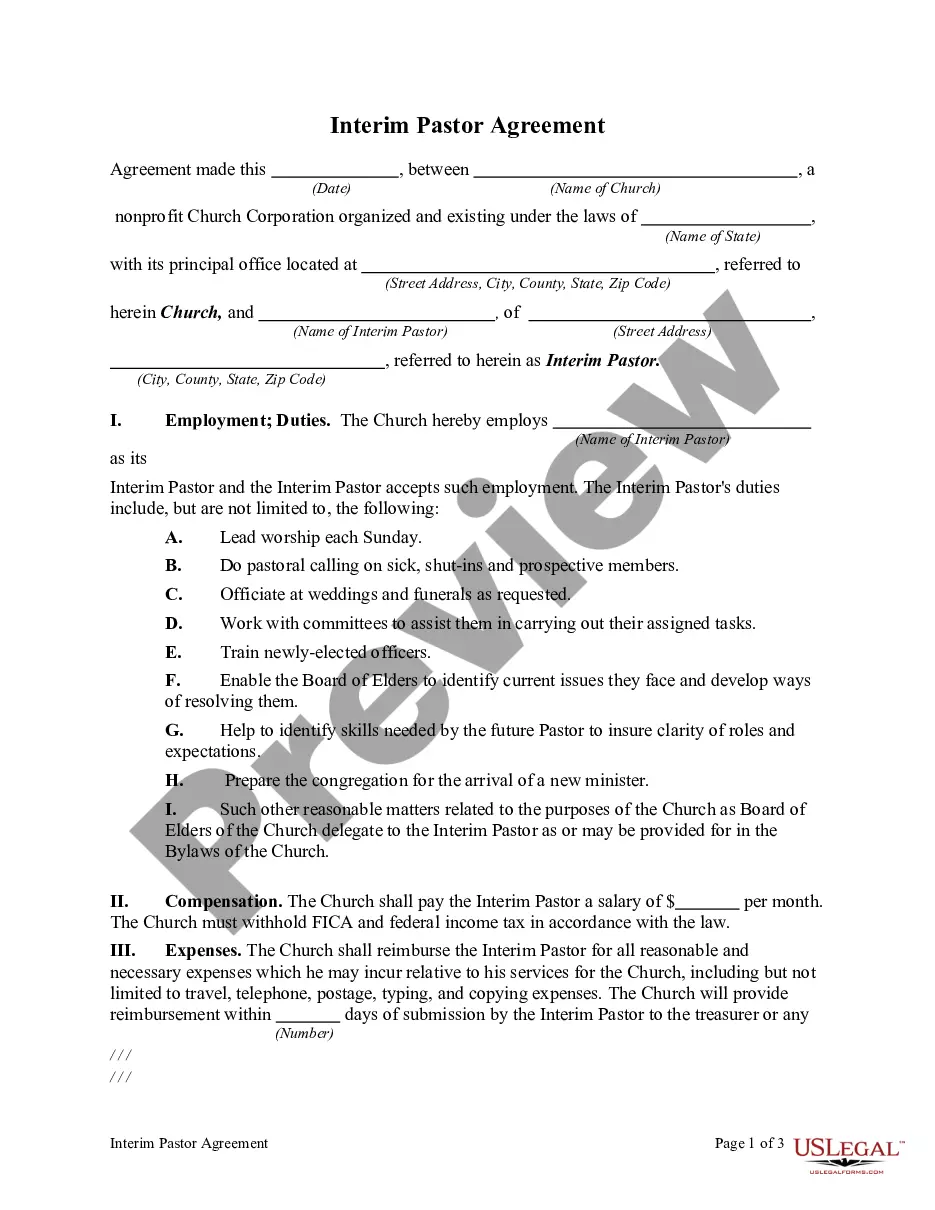
A Temporary Contract of Employment is a legal document used to outline the terms of a short-term employment relationship. This form details the specific duties of the employee, how they will be compensated, and the duration of their employment. Unlike a regular employment contract, a Temporary Employment Contract clarifies that the position is temporary, protecting employers from the legal obligations associated with permanent employment.
Key components of this form
- Identification of the parties involved in the employment agreement.
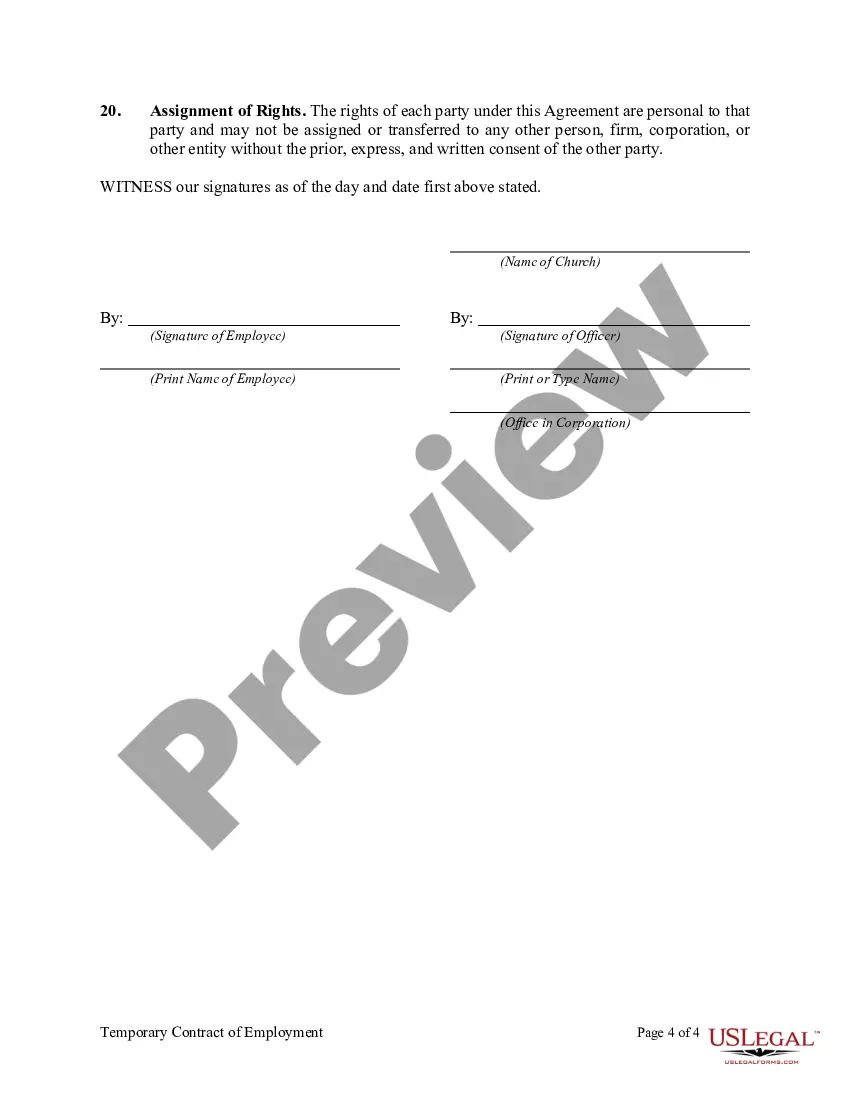
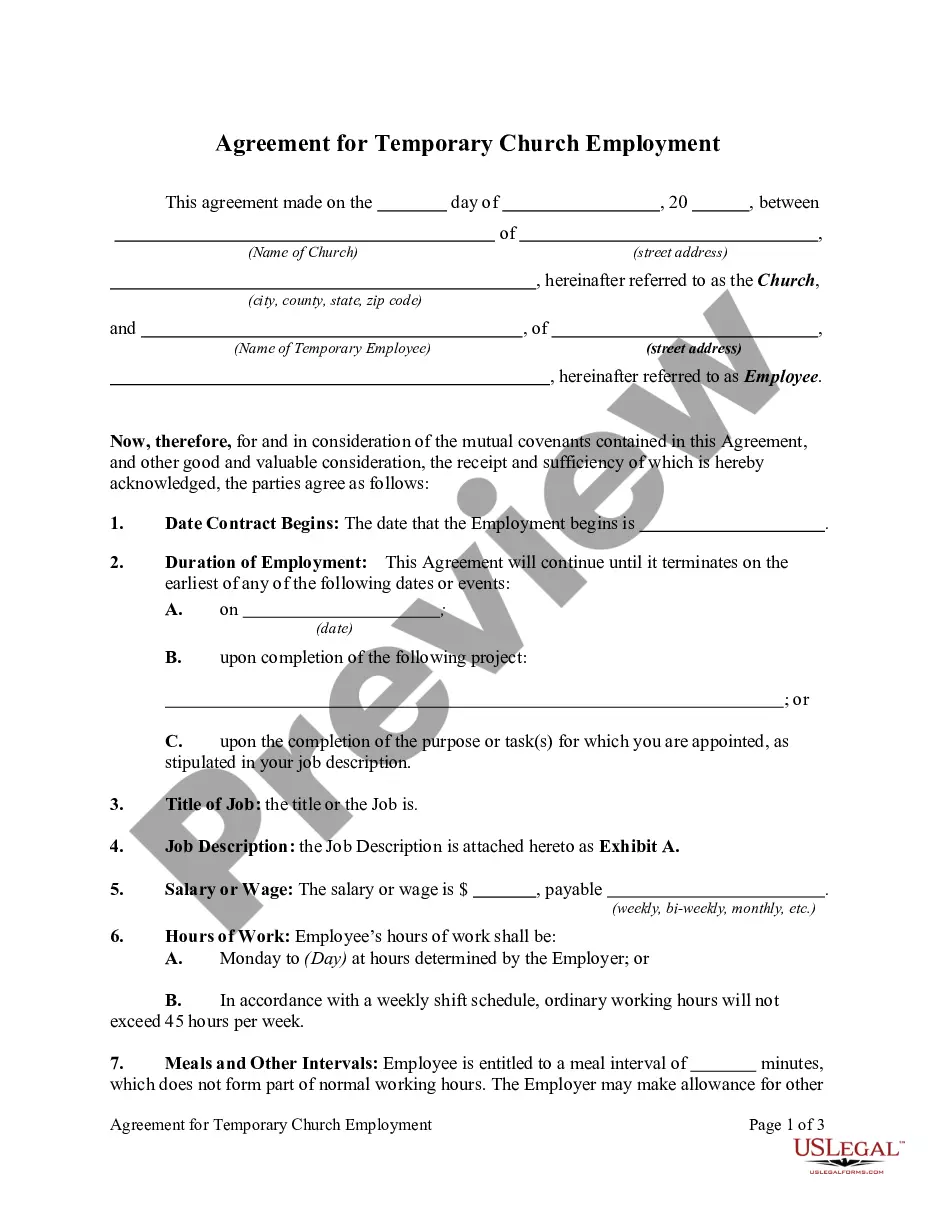
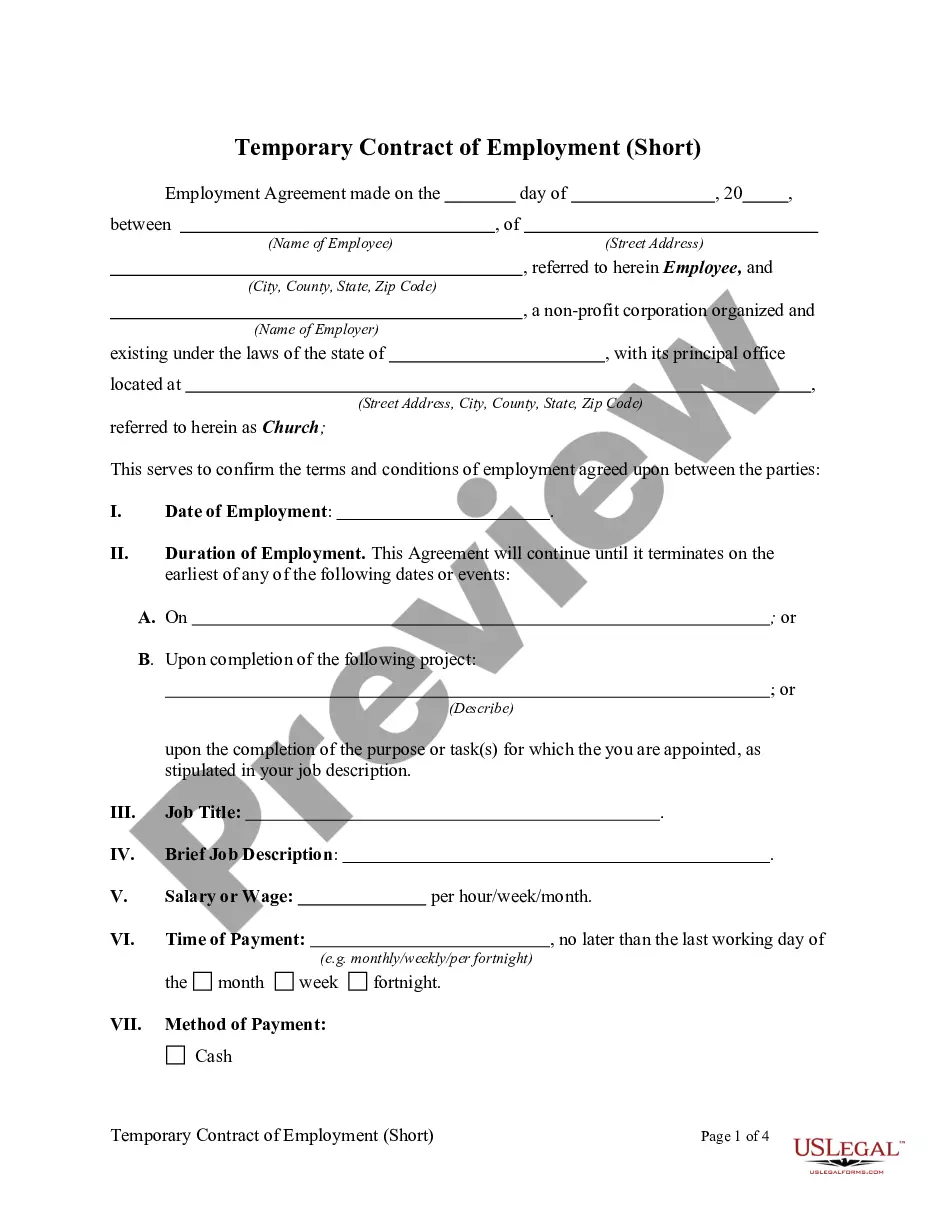
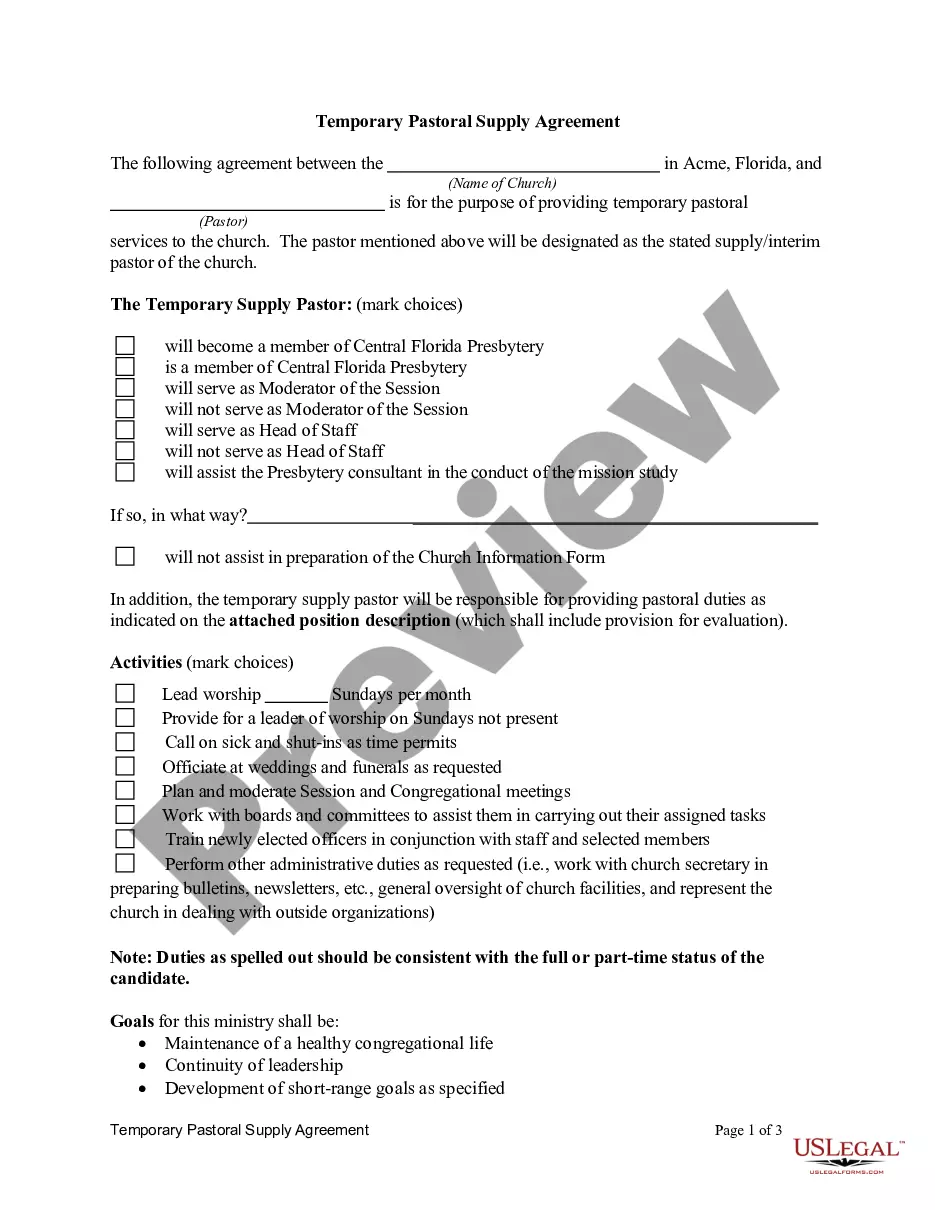
- Details of the employee's position, including job responsibilities.
- Compensation terms, including rates of pay and payment schedule.
- Duration of the employment, specifying start and end dates.
- A clause addressing the severability of the agreement.
Common use cases
This form is useful in various scenarios, such as when a business needs to hire staff for a busy season, cover for an employee on maternity or medical leave, or fulfill short-term project needs. It provides clear terms for both parties and establishes that the employment is limited in duration, minimizing future legal complications for the employer.
Who this form is for
- Employers needing temporary staff for specific projects.
- Businesses hiring seasonal workers during peak periods.
- Companies looking to fill short-term vacancies caused by absences.
- HR professionals managing short-term employment arrangements.
Completing this form step by step
- Identify the employer and employee parties by providing their names and contact information.
- Specify the job title and a brief description of the employee's duties.
- Enter compensation details, including payment rates and schedule.
- Set the duration of employment, indicating both the start and end dates.
- Include any additional clauses necessary, such as confidentiality or non-compete agreements, if applicable.
Is notarization required?
Notarization is not commonly needed for this form. However, certain documents or local rules may make it necessary. Our notarization service, powered by Notarize, allows you to finalize it securely online anytime, day or night.
Get your form ready online
Our built-in tools help you complete, sign, share, and store your documents in one place.
Make edits, fill in missing information, and update formatting in US Legal Forms—just like you would in MS Word.
Download a copy, print it, send it by email, or mail it via USPS—whatever works best for your next step.
Sign and collect signatures with our SignNow integration. Send to multiple recipients, set reminders, and more. Go Premium to unlock E-Sign.
If this form requires notarization, complete it online through a secure video call—no need to meet a notary in person or wait for an appointment.
We protect your documents and personal data by following strict security and privacy standards.

Make edits, fill in missing information, and update formatting in US Legal Forms—just like you would in MS Word.

Download a copy, print it, send it by email, or mail it via USPS—whatever works best for your next step.

Sign and collect signatures with our SignNow integration. Send to multiple recipients, set reminders, and more. Go Premium to unlock E-Sign.

If this form requires notarization, complete it online through a secure video call—no need to meet a notary in person or wait for an appointment.

We protect your documents and personal data by following strict security and privacy standards.
Avoid these common issues
- Failing to clearly define the duration of employment.
- Not specifying job responsibilities, leading to misunderstandings.
- Omitting critical payment terms, risking disputes over compensation.
- Neglecting to include a severability clause, which can affect the overall contract enforcement.
Why complete this form online
- Convenience of downloading and filling out the form at your own pace.
- Editability allows for customization of the contract to meet specific business needs.
- Reliable legal support ensures compliance with regulations.
Legal use & context
- A Temporary Employment Contract can protect both the employer and employee by clearly outlining the terms of employment.
- This form helps avoid legal obligations linked to permanent employment status, such as benefits.
- Ensure all parties understand the nature of the temporary arrangement to prevent disputes.
Main things to remember
- A Temporary Employment Contract is essential for defining short-term job relationships.
- This form protects employers from legal liabilities associated with permanent hires.
- Clearly outlining terms in the contract minimizes the risk of future disputes.
Looking for another form?

Form popularity
FAQ
An employee can be kept on successive fixed-term contracts for a limit of four years. If your contract is renewed after that you become a permanent employee unless the employer can show a good reason why you should stay on a fixed-term contract.
Any employee on fixed-term contracts for 4 or more years will automatically become a permanent employee, unless the employer can show there is a good business reason not to do so.
Renewing fixed-term contracts An employee can be kept on successive fixed-term contracts for a limit of four years. If your contract is renewed after that you become a permanent employee unless the employer can show a good reason why you should stay on a fixed-term contract.
If you didn't use a job description, take an hour to sit down and write out the duties you want your employee to perform. Be as specific as possible. The job description also should have included the target wage. You should consider whether or not you are paying a fair rate.
If you didn't use a job description, take an hour to sit down and write out the duties you want your employee to perform. Be as specific as possible. The job description also should have included the target wage. You should consider whether or not you are paying a fair rate.
While duration is only one factor among many that determines whether a worker is a contractor or an employee, six months is usually recommended as a safe duration and one-year should usually be considered an outside limit, assuming that the other independent contractor criteria are met.
Types of Employment Contracts: Permanent employment, temporary employment and independent contractors.
Similar to fixed-term, temporary contracts are offered when a contract is not expected to become permanent.As such, temporary workers may have their contracts extended in line with demand and availability. Despite their short-term status, temporary workers are entitled to the same rights as any other member of staff.
Known as the 1000-hour rule for temporary employees, the regulation makes part-time workers eligible to participate in employer-sponsored benefits, such as health insurance or retirement plans, if they have worked at least 1,000 hours or approximately 20 hours per week within a year's time.