Florida Water and Wastewater Agreement
What is this form?
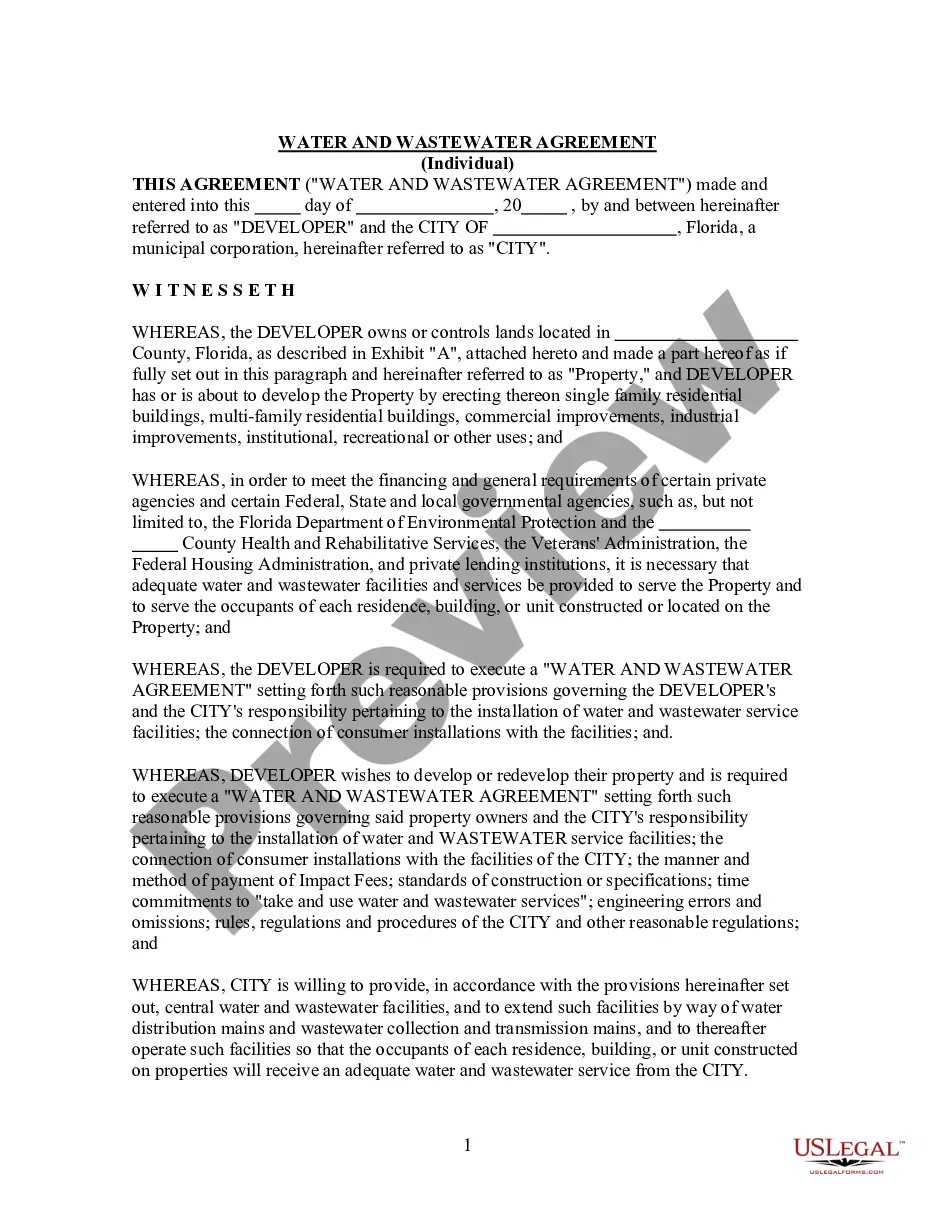
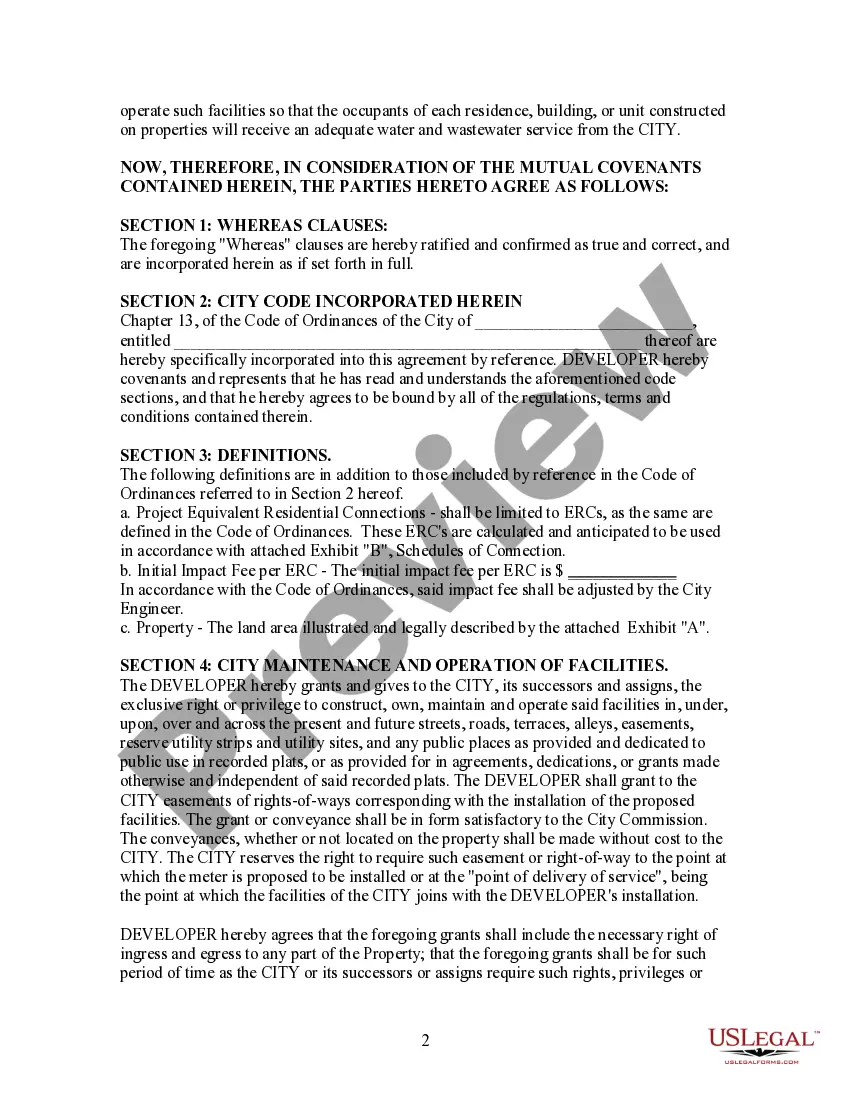
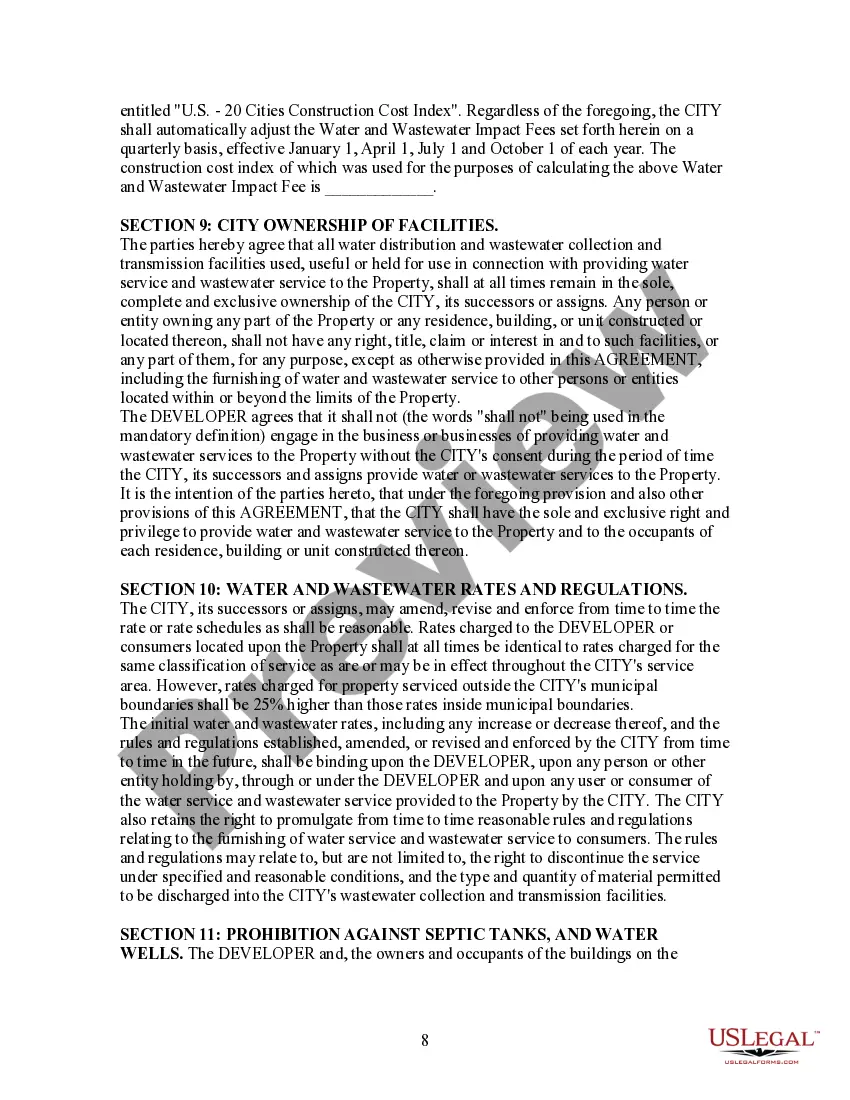
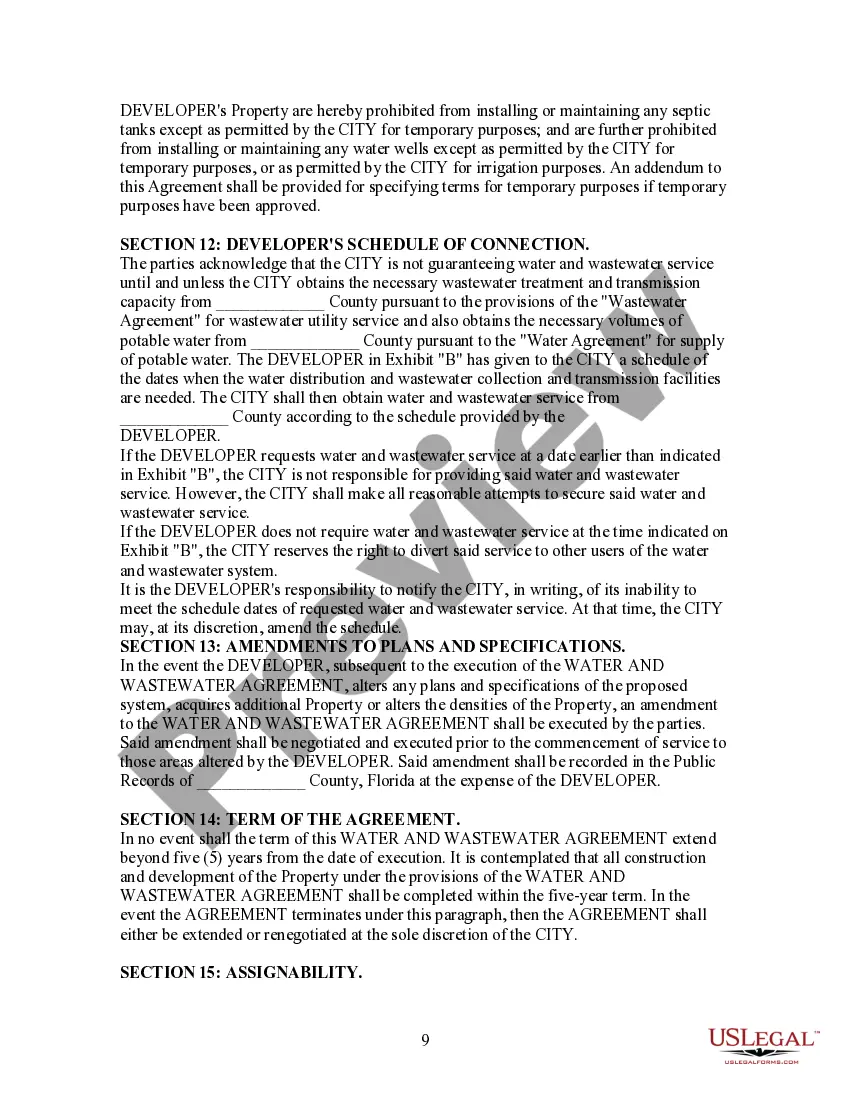
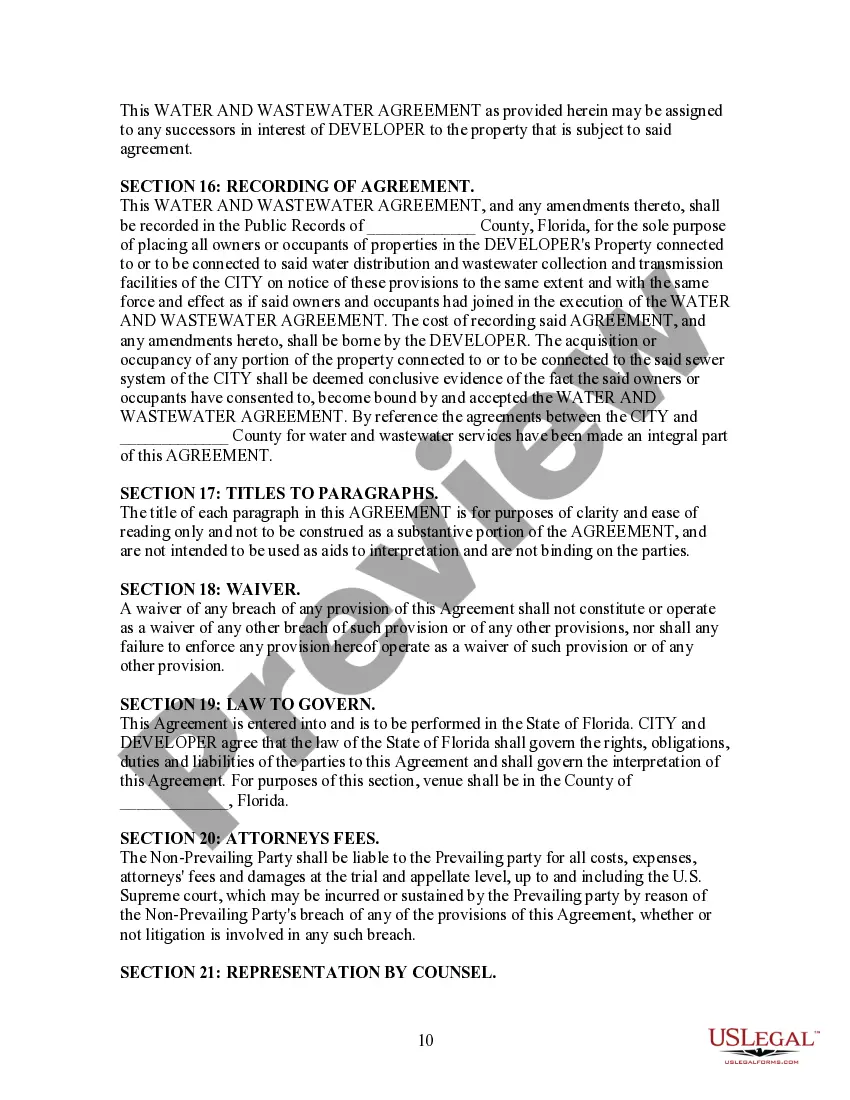
The Water and Wastewater Agreement is a legal document that outlines the responsibilities of developers and the city regarding the installation and connection of water and wastewater service facilities. This agreement clarifies the obligations of each party, ensuring consumers receive adequate utility services. Unlike general service agreements, this form specifically addresses the unique aspects of water and wastewater infrastructure, making it essential for developers in areas requiring municipal utility connections.
Key parts of this document
- Definitions of terms related to the agreement, including property descriptions.
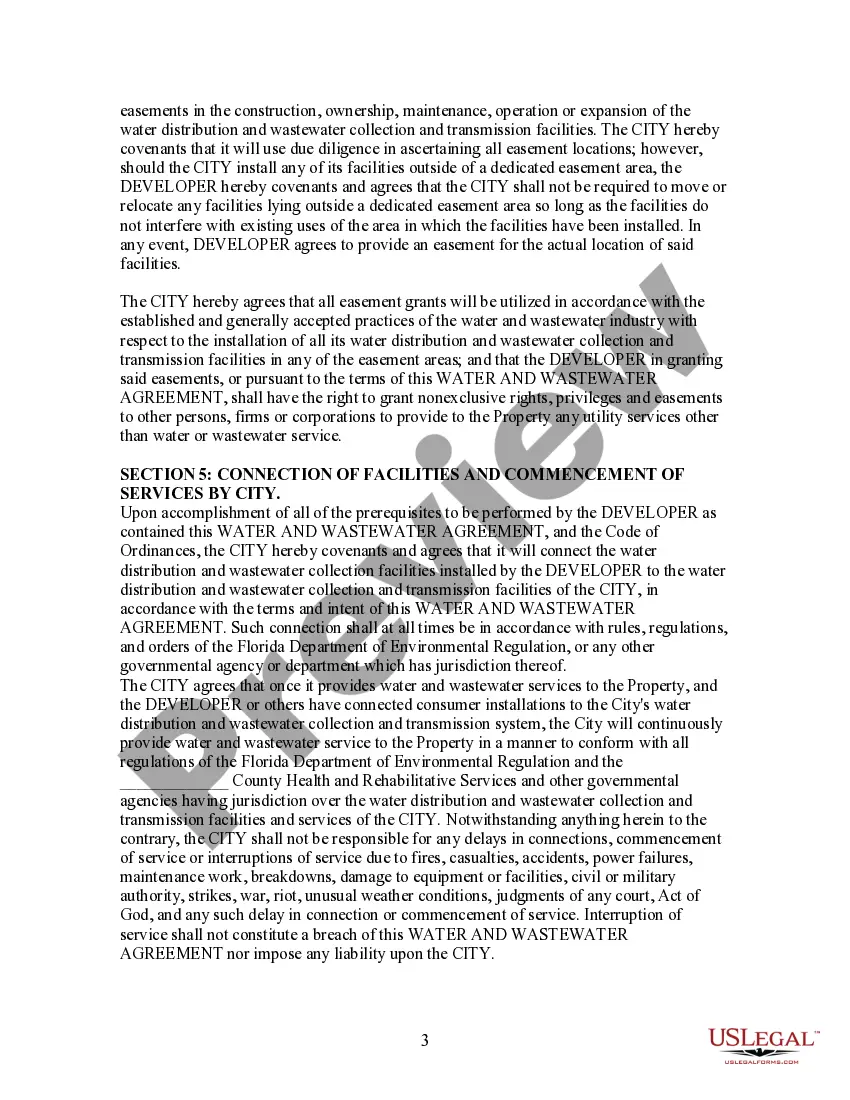
- City's responsibilities for operating and maintaining water and wastewater facilities.
- Developer's obligations regarding construction, connection, and transfer of utility systems.
- Details on impact fees to be paid by the developer for water and wastewater services.
- Provisions for easements and rights-of-way necessary for installation and maintenance.
- Regulations relating to the prohibition of septic tanks and water wells unless permitted by the city.

When to use this document
This form should be used during property development or redevelopment processes when a developer needs to connect to municipal water and wastewater services. It is essential when the developer plans to install water distribution and wastewater collection systems and when permits for these installations are required. Utilizing this agreement ensures all legal obligations are met for both the city and the developer, facilitating a smoother development process.
Intended users of this form
This agreement is intended for:
- Developers seeking to establish new residential or commercial projects that require water and wastewater services.
- City officials involved in managing municipal utility services and planning infrastructure development.
- Property owners engaging in development that necessitates compliance with local utility regulations.
Steps to complete this form
- Identify and enter the parties involved, including the developer and city representatives.
- Specify the property location and relevant land descriptions attached as an exhibit.
- Outline the responsibilities of each party regarding the installation and maintenance of facilities.
- Include details on payment of any required impact fees, as well as easement agreements.
- Ensure that all signatures are obtained from authorized representatives of both parties.
Notarization guidance
This form does not typically require notarization unless specified by local law. It is advisable to check state-specific regulations to ensure compliance with administrative requirements.
Get your form ready online
Our built-in tools help you complete, sign, share, and store your documents in one place.
Make edits, fill in missing information, and update formatting in US Legal Forms—just like you would in MS Word.
Download a copy, print it, send it by email, or mail it via USPS—whatever works best for your next step.
Sign and collect signatures with our SignNow integration. Send to multiple recipients, set reminders, and more. Go Premium to unlock E-Sign.
If this form requires notarization, complete it online through a secure video call—no need to meet a notary in person or wait for an appointment.
We protect your documents and personal data by following strict security and privacy standards.

Make edits, fill in missing information, and update formatting in US Legal Forms—just like you would in MS Word.

Download a copy, print it, send it by email, or mail it via USPS—whatever works best for your next step.

Sign and collect signatures with our SignNow integration. Send to multiple recipients, set reminders, and more. Go Premium to unlock E-Sign.

If this form requires notarization, complete it online through a secure video call—no need to meet a notary in person or wait for an appointment.

We protect your documents and personal data by following strict security and privacy standards.
Typical mistakes to avoid
- Failing to accurately describe the property involved, leading to potential legal disputes.
- Not outlining all responsibilities clearly, which could result in oversights during development.
- Omitting necessary signatures or failing to have the document notarized if required by local law.
- Neglecting to address changes in impact fees or construction costs that may arise.
Benefits of completing this form online
- Immediate access to the legal template, saving time on document preparation.
- Editability allows customization to meet specific project needs and local regulations.
- Secure download ensures confidential handling of sensitive information.
- The Water and Wastewater Agreement is enforceable under state law, ensuring both parties fulfill their obligations.
- Developers must comply with the rules and regulations set forth by the city and applicable environmental regulations.
- Failure to adhere to the agreement could result in penalties or the inability to connect to the city's necessary utilities.
Summary of main points
- The Water and Wastewater Agreement establishes clear responsibilities for utility service installations.
- It is essential for any developer planning new construction that will utilize municipal water and wastewater services.
- Complying with the terms of this agreement ensures legal protection and clarity for both developers and the city.
Looking for another form?


Form popularity
FAQ
The Florida Department of Environmental Protection is also tasked with overseeing the protection of wetlands in Florida. They ensure compliance with regulations designed to preserve these critical ecosystems, as outlined in the Florida Water and Wastewater Agreement. Their efforts contribute to the protection of biodiversity and natural habitats throughout the state.
The Florida Department of Environmental Protection leads the administration of water resources at the state level. They develop policies and regulations that comply with the Florida Water and Wastewater Agreement, promoting efficient and effective water resource management across Florida. This agency plays a vital role in maintaining the integrity of Florida's water systems.
Water control in Florida is a shared responsibility involving state agencies and local governments. Regulatory frameworks, including the Florida Water and Wastewater Agreement, guide how water resources are managed and allocated. This collaboration ensures that the needs of residents, industries, and the environment are met efficiently.
Water regulation in Florida typically falls under the jurisdiction of the Florida Department of Environmental Protection and various water management districts. These entities work together to enforce the provisions of the Florida Water and Wastewater Agreement, ensuring sustainable water use and effective resource management for the state's diverse communities.
The Florida Department of Environmental Protection is the primary agency responsible for maintaining both water and air quality in the state. They work diligently to regulate pollutants and enforce standards outlined in the Florida Water and Wastewater Agreement. Their mission is to promote a healthy environment for all Florida residents.
Florida boasts over 600 wastewater treatment plants that serve various communities across the state. These facilities play a crucial role in managing sewage and wastewater in compliance with the Florida Water and Wastewater Agreement. This ensures that treated water is returned to the environment safely, protecting public health and natural ecosystems.
The Florida Department of Environmental Protection (FDEP) implements laws to protect Florida's surface waters. They enforce regulations that help maintain water quality and promote sustainable practices. This includes oversight of the Florida Water and Wastewater Agreement, which ensures responsible management of these vital resources.