Stormwater Control Ordinance
What is this form?
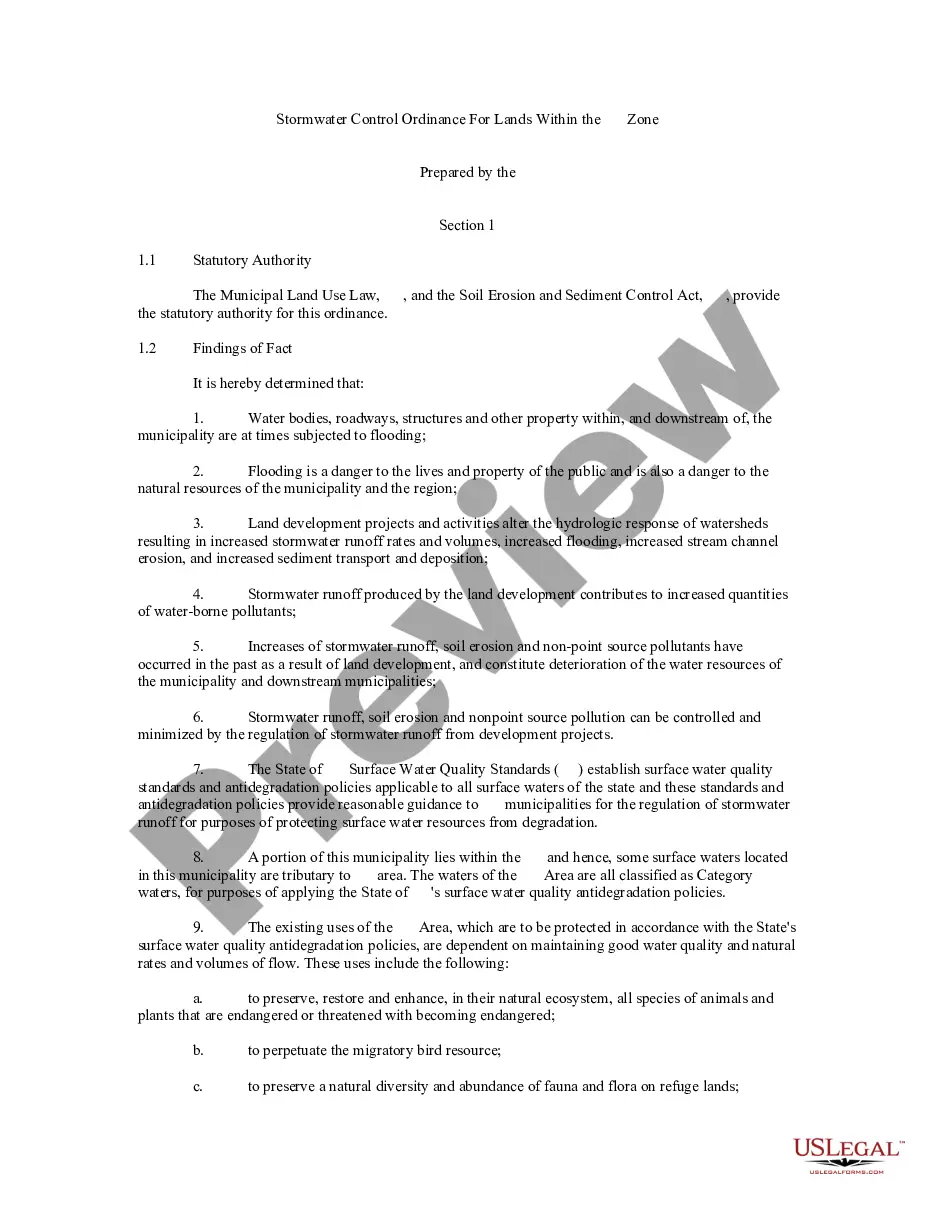
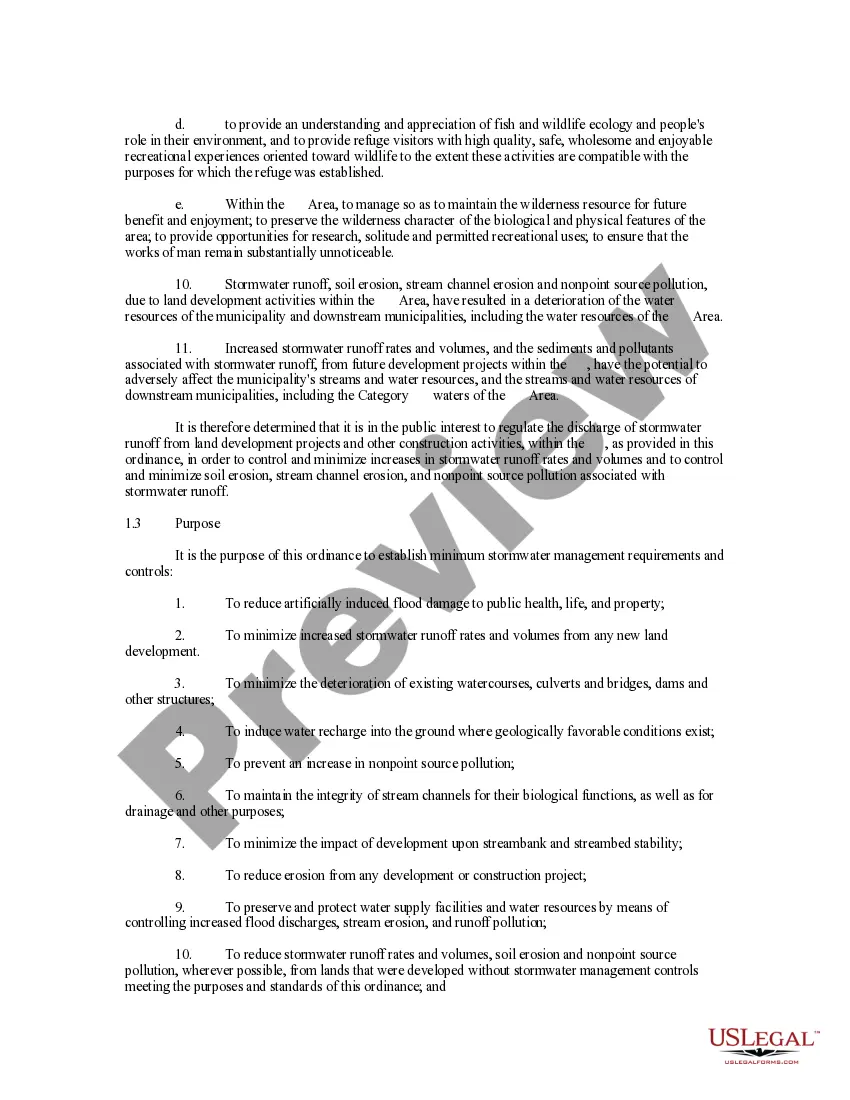
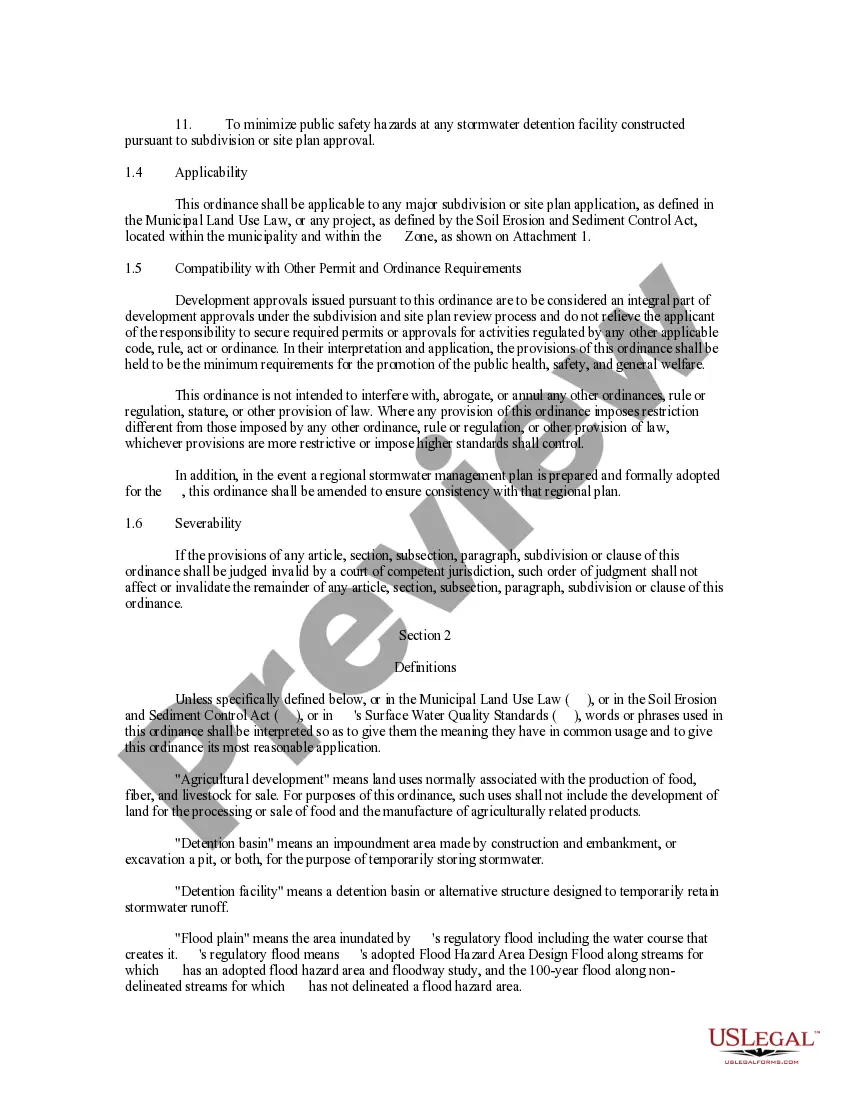
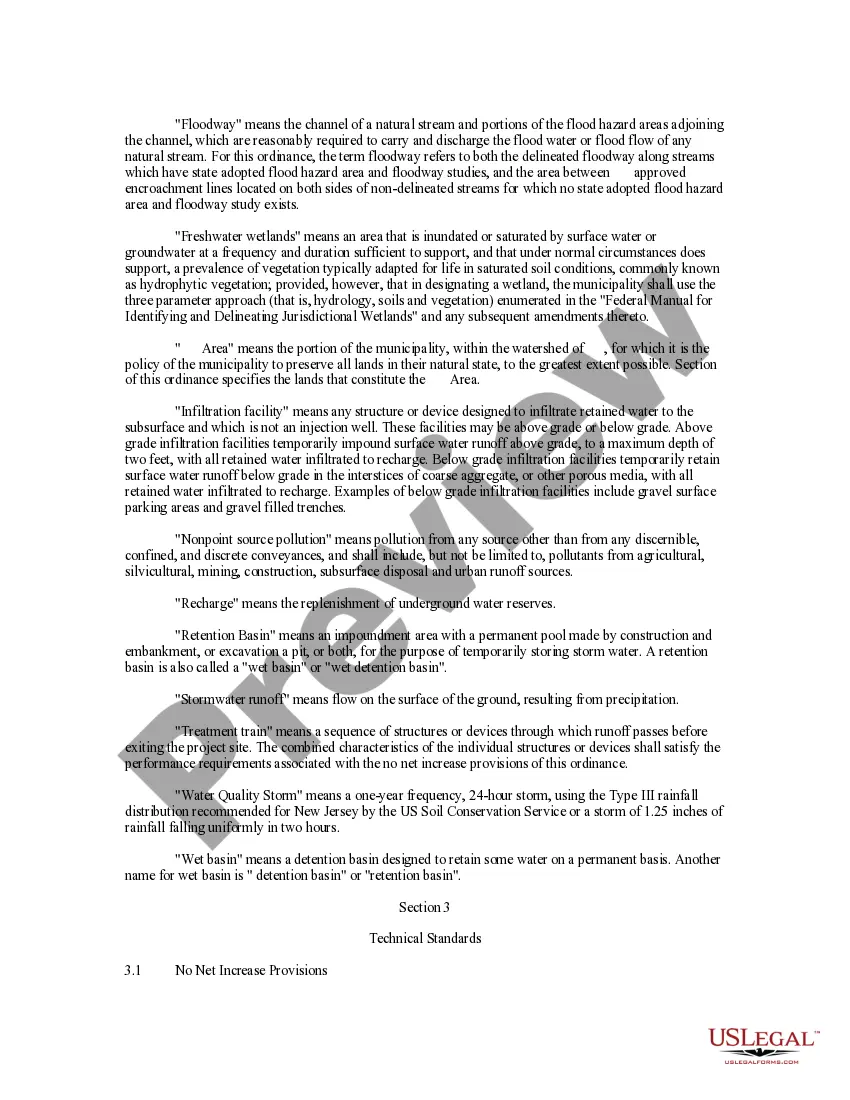
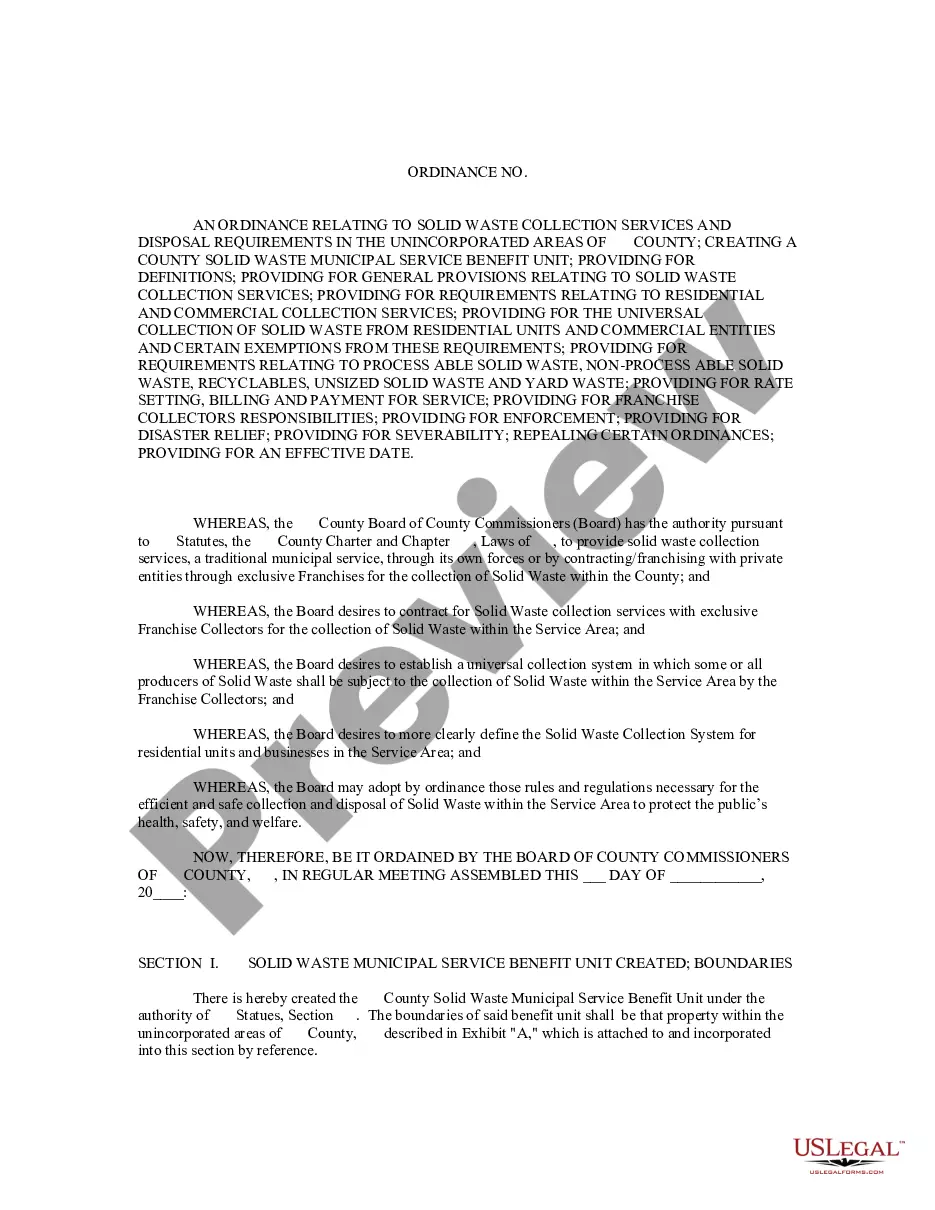
The Stormwater Control Ordinance is a legal document designed for municipalities to manage and regulate stormwater runoff from new land development projects. This ordinance helps protect public health and the environment by minimizing flooding and controlling water quality. Unlike other general regulatory forms, it specifically addresses stormwater management and outlines the responsibilities of developers and property owners to ensure compliance with local regulations.
What’s included in this form
- Statutory Authority: Details the legal framework under which the ordinance is established.
- Purpose: Lists objectives, including flood damage reduction and water quality maintenance.
- Applicability: Specifies the types of developments that must comply with the ordinance.
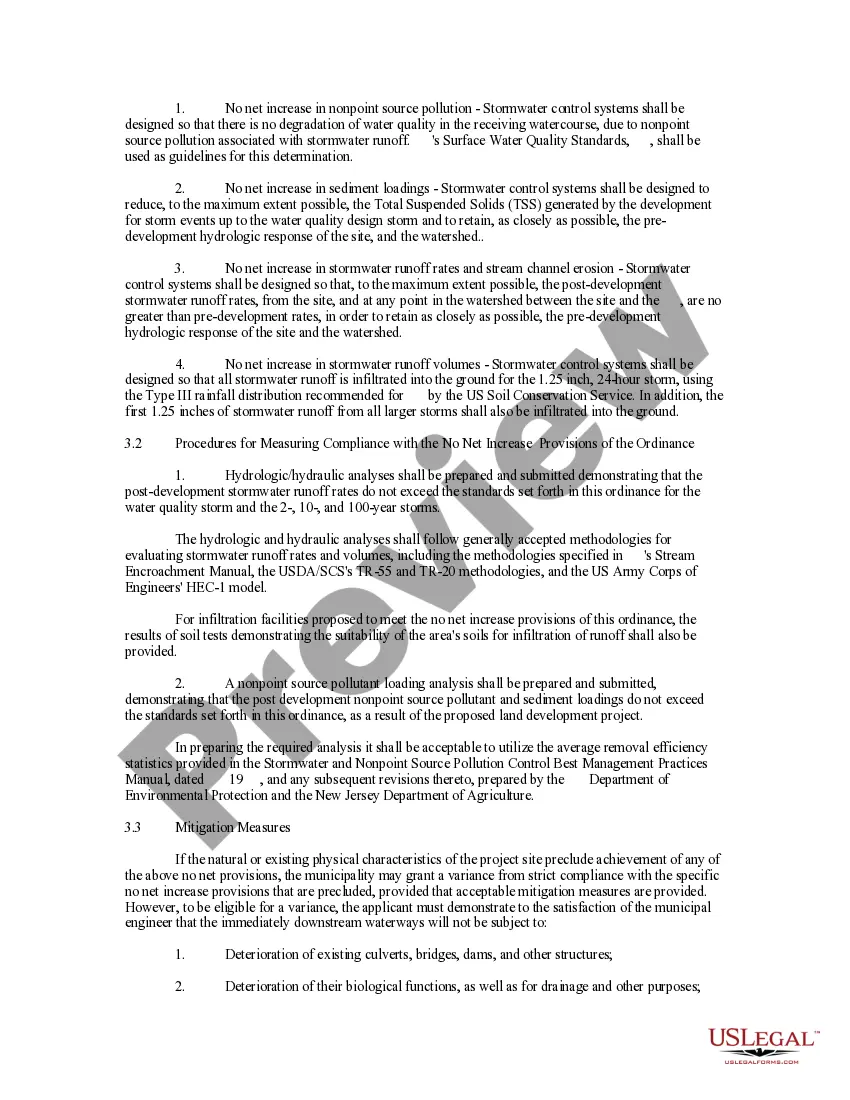
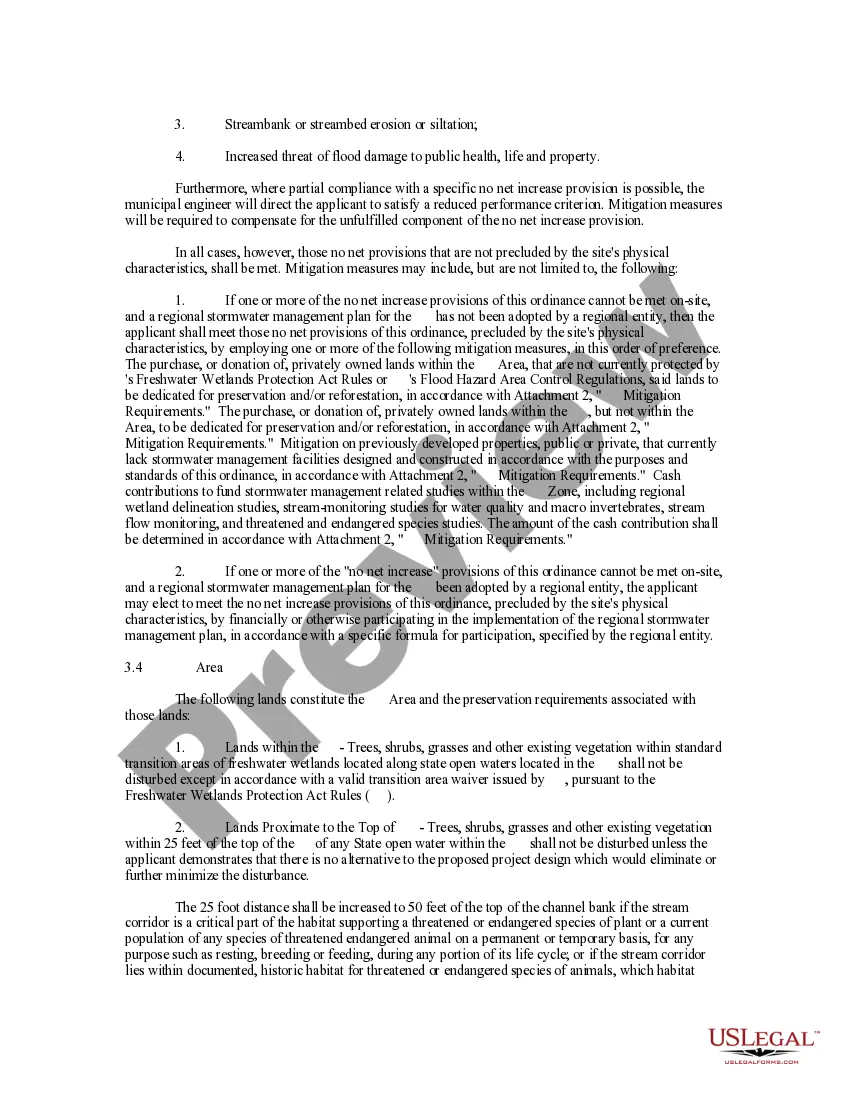
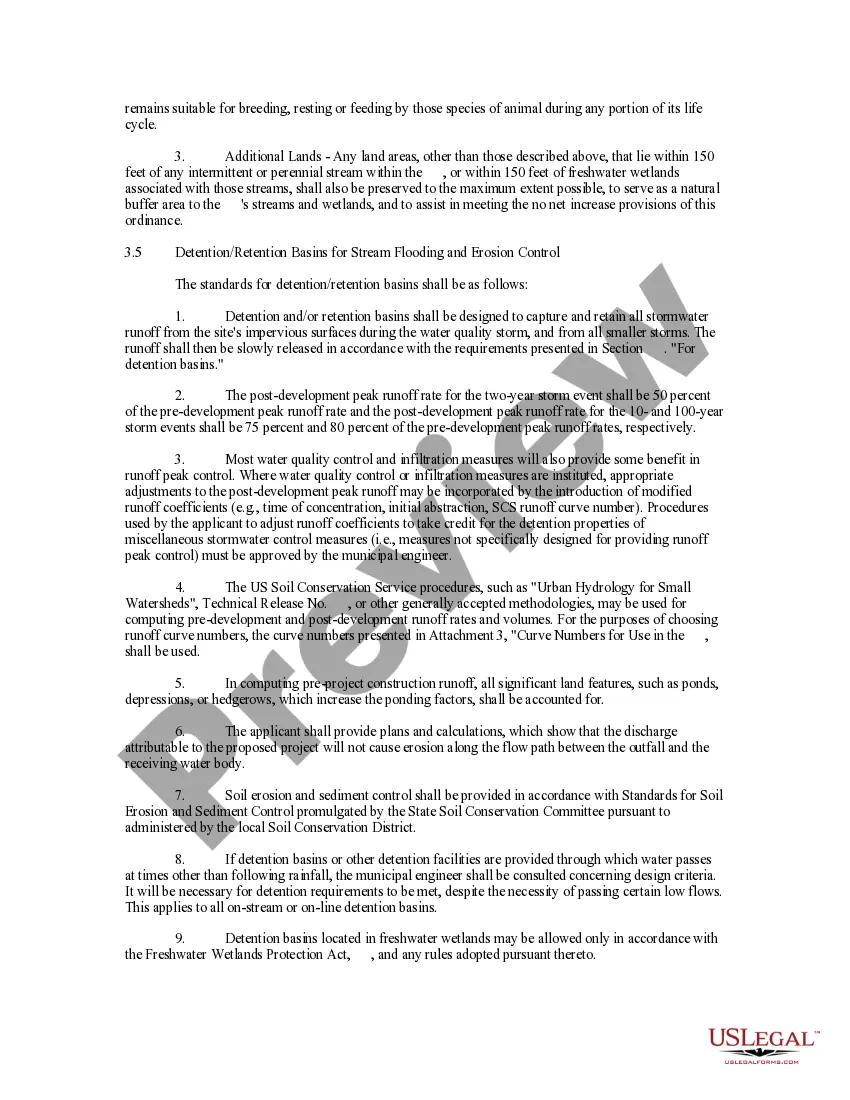
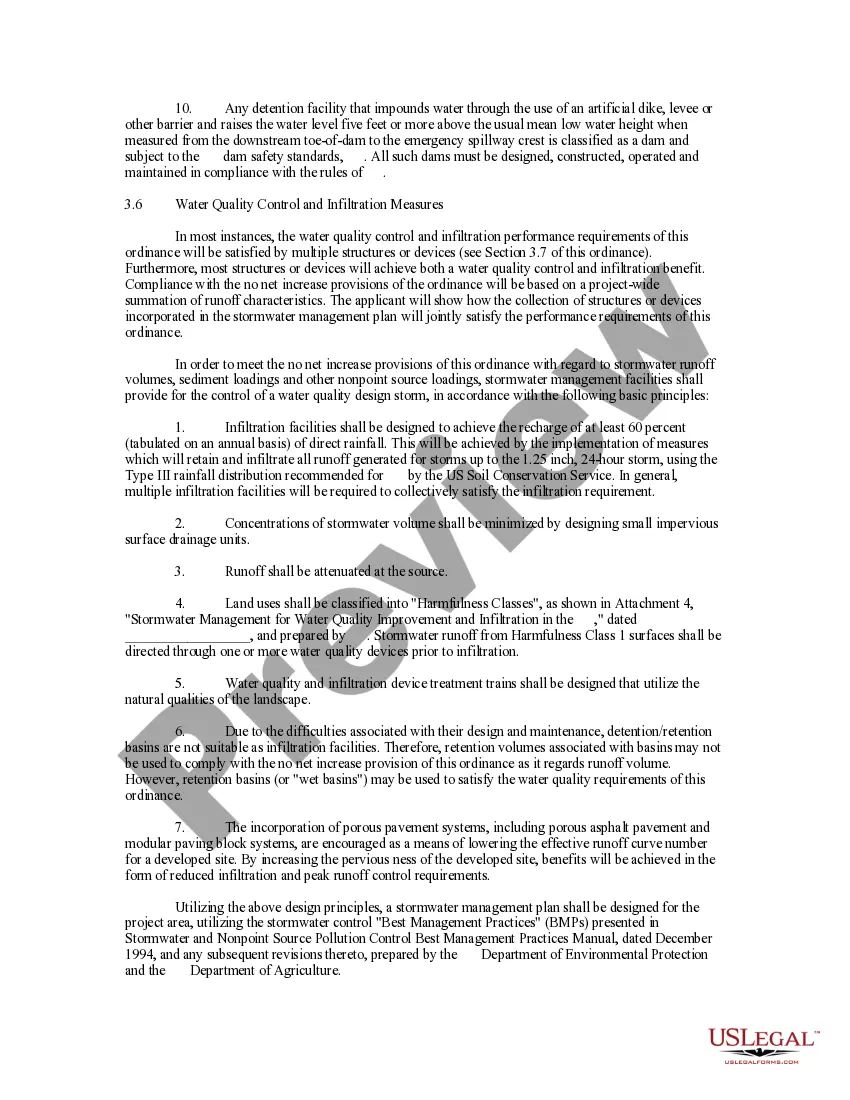
- Technical Standards: Outlines the necessary requirements for stormwater management systems.
- Maintenance Responsibilities: States the ongoing obligations for property owners regarding stormwater systems.

Common use cases
This ordinance should be used when a municipality seeks to implement regulations that control stormwater runoff from new construction projects. It is particularly important in areas prone to flooding or where water quality is at risk from new developments. Municipalities facing increasing development pressures can utilize this ordinance to ensure sustainable land use and environmental protection.
Intended users of this form
- Municipal governments establishing regulatory frameworks for stormwater management.
- Urban planners and land developers looking to comply with environmental regulations.
- Environmental consultants advising municipalities on stormwater management policies.
Completing this form step by step
- Identify the statutory authority under which the ordinance is established.
- Clearly state the purpose of the ordinance, detailing objectives and benefits.
- Define the applicability section to ensure clarity on which projects must comply.
- Outline the technical standards that developers must follow for stormwater management.
- Specify the maintenance responsibilities of property owners regarding the stormwater systems.
Does this document require notarization?
This form usually doesn’t need to be notarized. However, local laws or specific transactions may require it. Our online notarization service, powered by Notarize, lets you complete it remotely through a secure video session, available 24/7.
Get your form ready online
Our built-in tools help you complete, sign, share, and store your documents in one place.
Make edits, fill in missing information, and update formatting in US Legal Forms—just like you would in MS Word.
Download a copy, print it, send it by email, or mail it via USPS—whatever works best for your next step.
Sign and collect signatures with our SignNow integration. Send to multiple recipients, set reminders, and more. Go Premium to unlock E-Sign.
If this form requires notarization, complete it online through a secure video call—no need to meet a notary in person or wait for an appointment.
We protect your documents and personal data by following strict security and privacy standards.

Make edits, fill in missing information, and update formatting in US Legal Forms—just like you would in MS Word.

Download a copy, print it, send it by email, or mail it via USPS—whatever works best for your next step.

Sign and collect signatures with our SignNow integration. Send to multiple recipients, set reminders, and more. Go Premium to unlock E-Sign.

If this form requires notarization, complete it online through a secure video call—no need to meet a notary in person or wait for an appointment.

We protect your documents and personal data by following strict security and privacy standards.
Mistakes to watch out for
- Failing to include specific local regulations when customizing the ordinance.
- Neglecting to update the ordinance to reflect changes in environmental laws.
- Not clearly defining developer responsibilities, leading to enforcement issues.
Why use this form online
- Convenience of downloading and customizing the ordinance to fit local needs.
- Access to legal templates prepared by licensed attorneys, ensuring compliance.
- Easy storage and retrieval of legal documents applicable to stormwater management.
Key takeaways
- The Stormwater Control Ordinance is essential for managing stormwater effects from development projects.
- It is tailored to local needs and legal requirements, protecting water resources and public safety.
- Proper implementation involves thorough analysis and clear guidelines for maintenance and compliance.
Looking for another form?


Form popularity
FAQ
Some SCMs are engineered or constructed facilities, such as a stormwater wetland or infiltration basin, that reduce pollutant loading and modify volumes and flow. Other SCMs are preventative, including such activities as education and better site design to limit the generation of stormwater runoff or pollutants.
If each party is found to be reasonable in the use of the land, the upper owner will ultimately be responsible for any damages to the lower owner caused by the runoff. If the lower owner is shown to have acted unreasonably, the upper owner can be protected from liability.
In New South Wales, local councils have the responsibility to manage stormwater drains and systems from public land (for example, roads and parks), private land that pays council rates or other land like Department of Housing properties.
Stormwater Program - What is Stormwater. Do you know what responsibilities the State Water Resources Control Board (SWRCB) and the Regional Water Quality Control Boards (RWQCB) have regarding storm drain water? The SWRCB is responsible for protecting the quality of water in California and allocating water rights.
In New South Wales, local councils have the responsibility to manage stormwater drains and systems from public land (for example, roads and parks), private land that pays council rates or other land like Department of Housing properties.
Dig Swales and Build Berms. These landscape features help redirect runoff away from your property. Install In-Ground Drainage to a Dry Well. Control excess water runoff by directing it to a dry well. Catch Runoff in French Drains.
Infiltration-based stormwater control measures function by requiring the water quality volume to filter through a design medium for treatment prior to discharge.Depth of amended soils is critical where specific infiltration volumes are assumed as part of stormwater control measure performance.
Some ways to help control runoff are preventing soil erosion, pro- viding basement flood protection, landscaping, providing proper roof drainage, and minimizing paved surfaces. Completing this fact sheet will help you evaluate how storm water affects the environmental quality of your property and properties downstream.
The runoff picks up pollutants like trash, chemicals, oils, and dirt/sediment that can harm our rivers, streams, lakes, and coastal waters. To protect these resources, communities, construction companies, industries, and others, use stormwater controls, known as best management practices (BMPs).