Erosion and Sediment Control Ordinance
Understanding this form
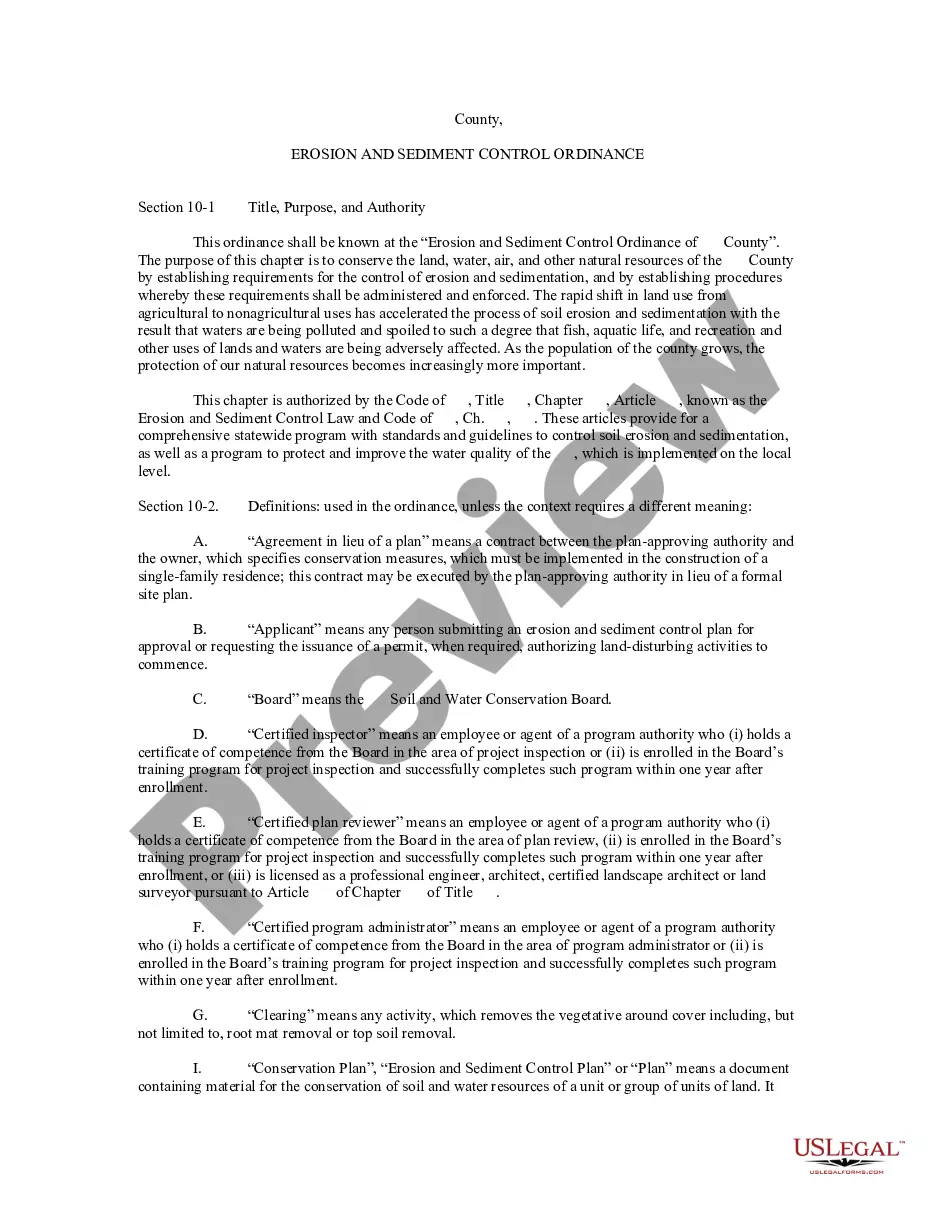
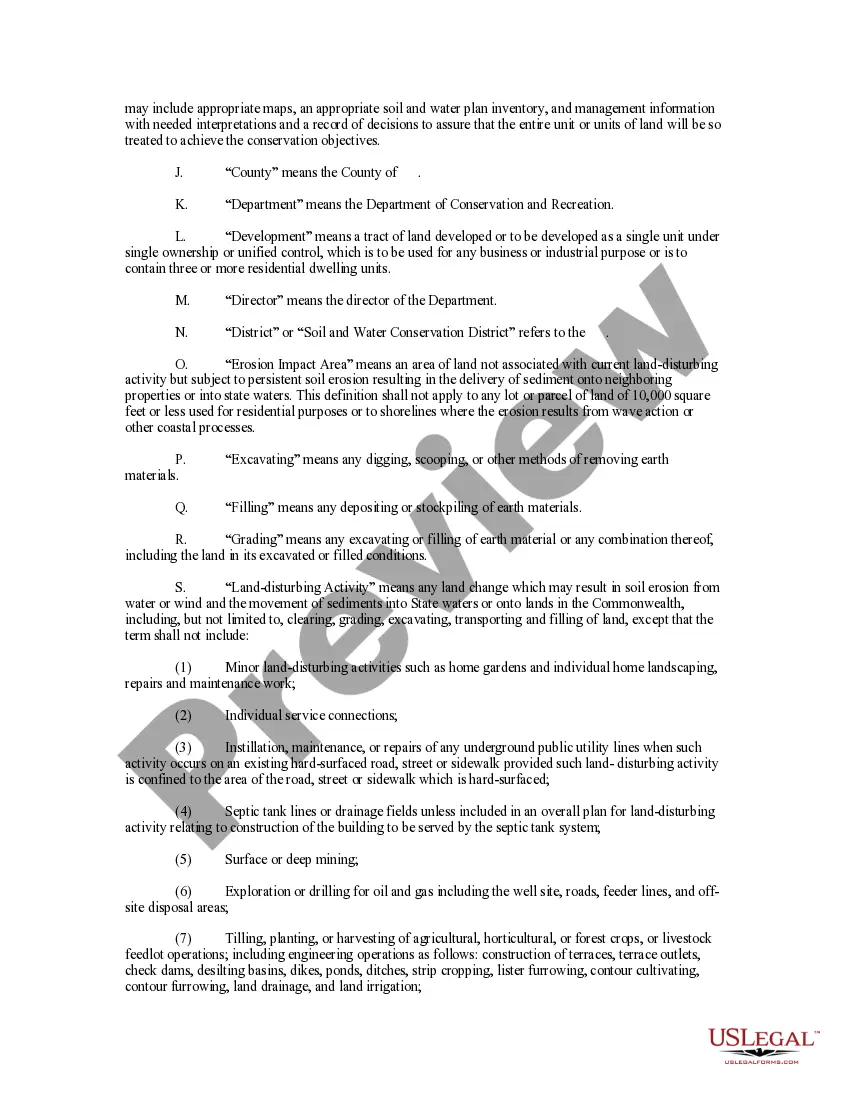
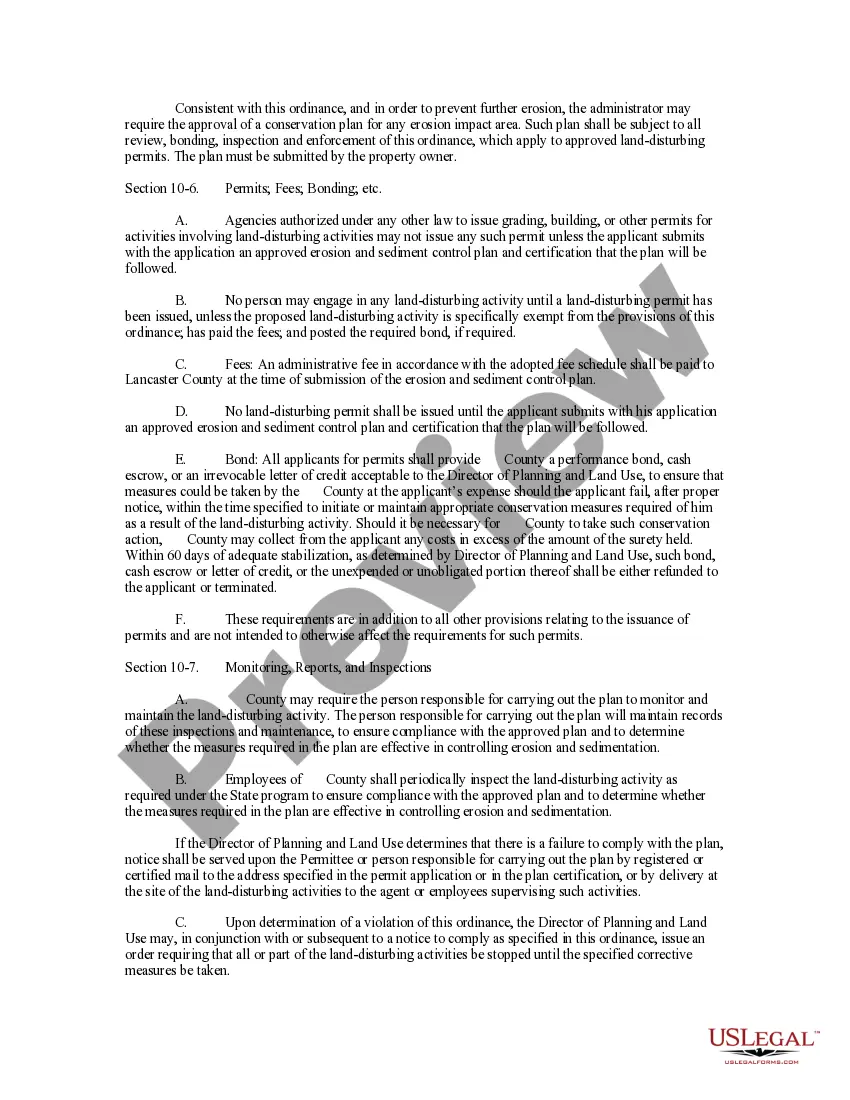
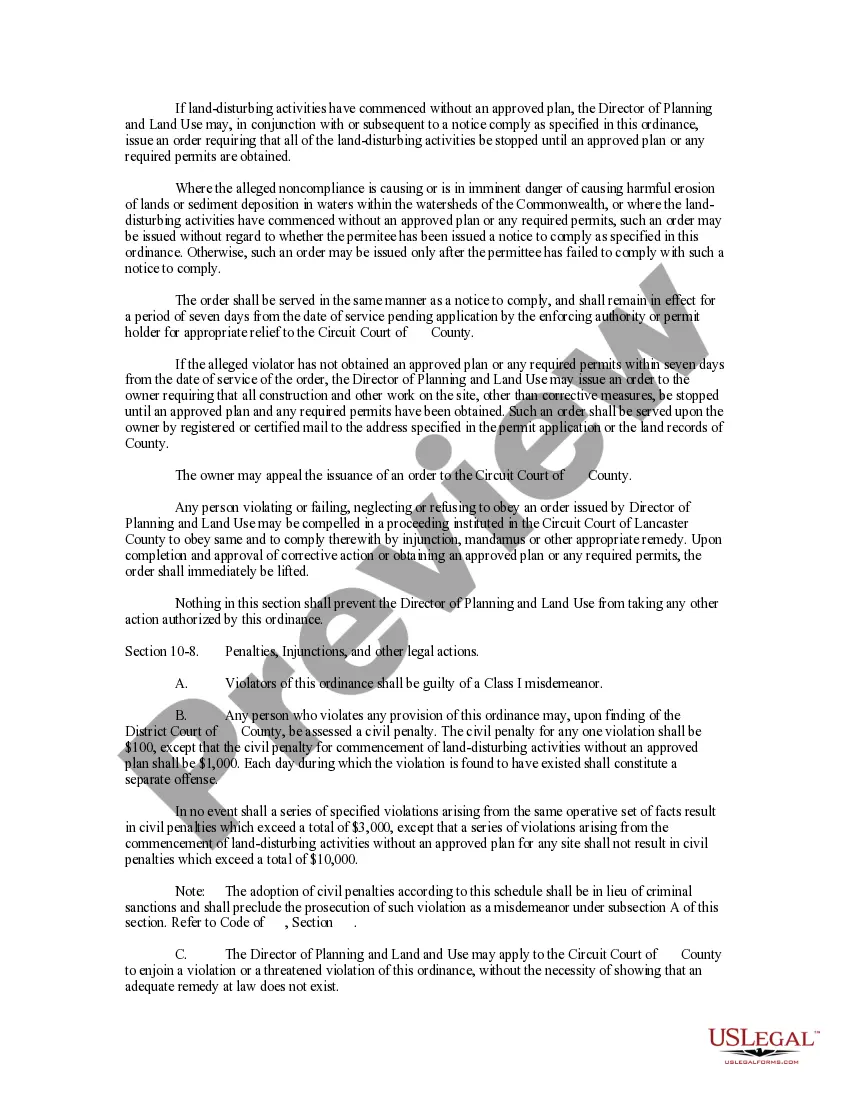
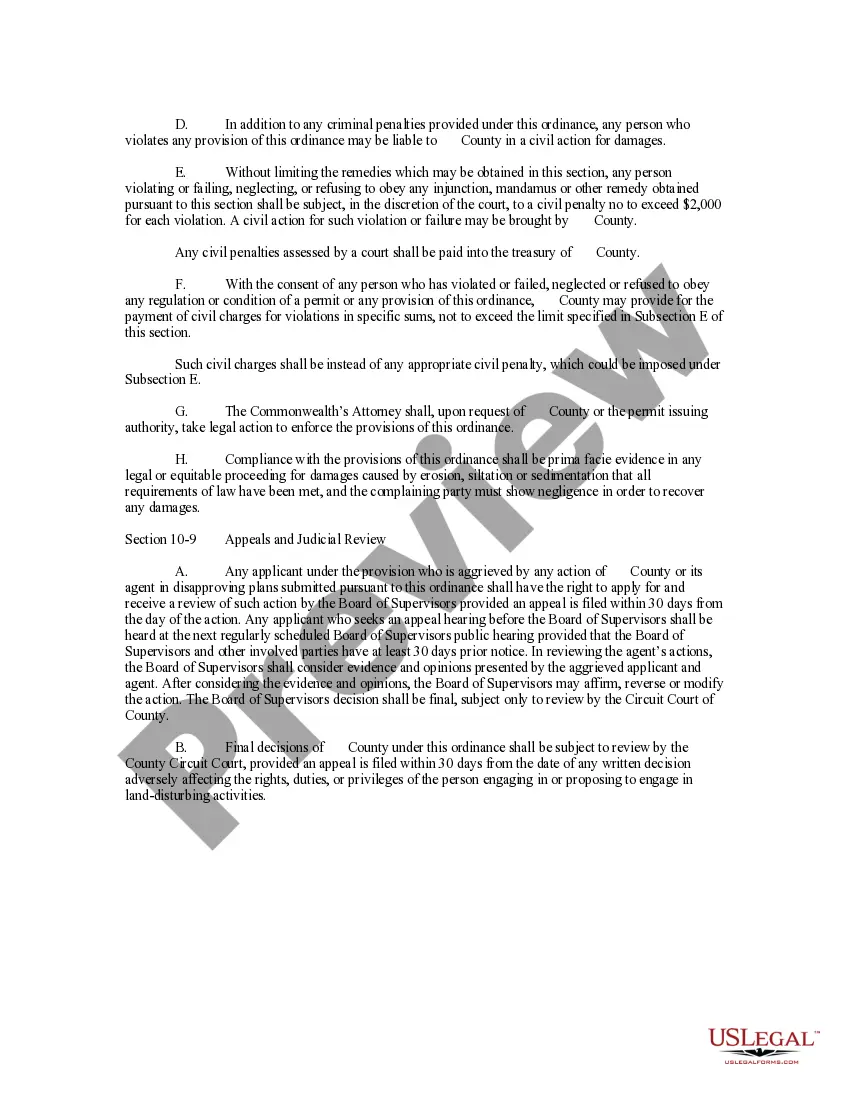
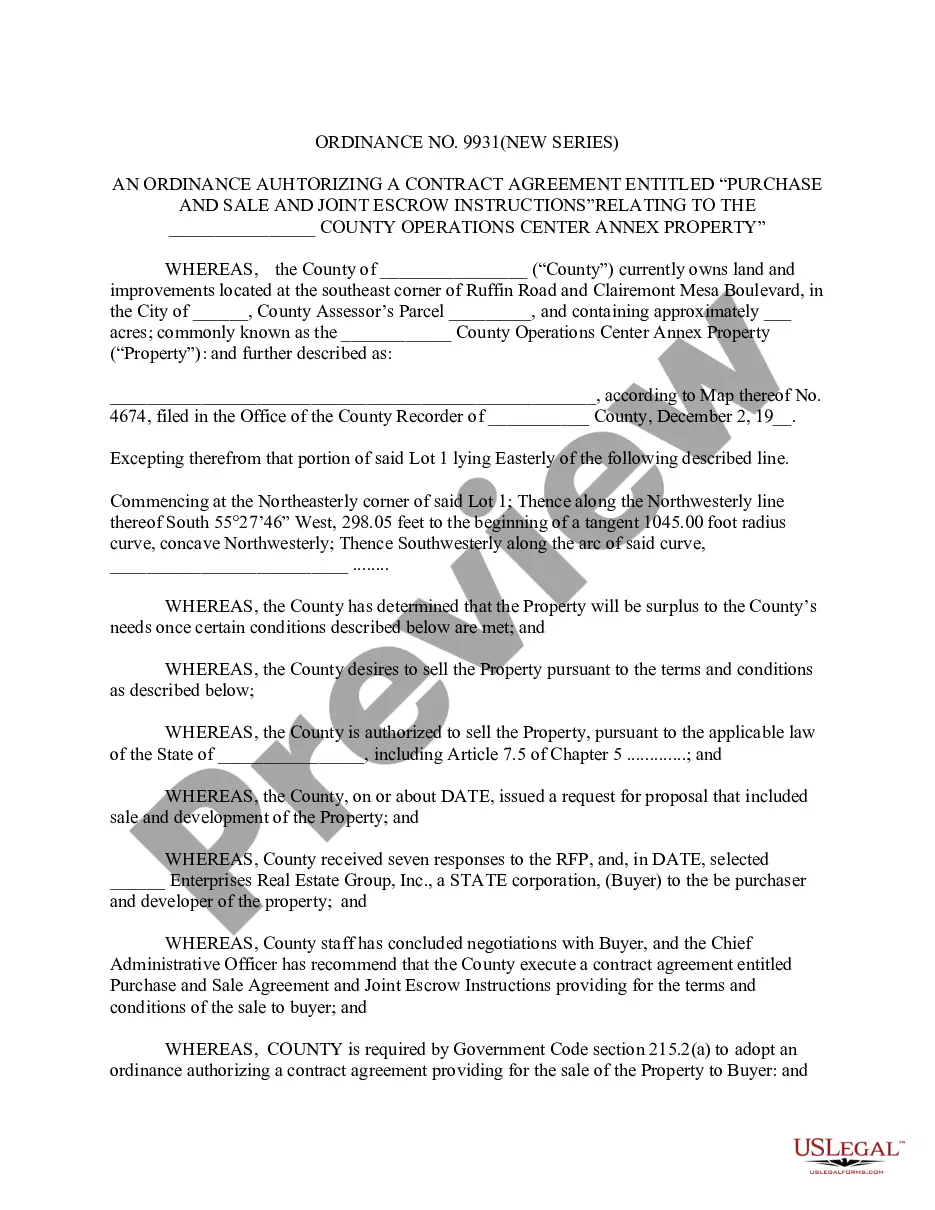
The Erosion and Sediment Control Ordinance is a legal document designed to establish guidelines and procedures for controlling soil erosion and sedimentation in a given county. It serves to protect natural resources by imposing requirements on land-disturbing activities. This ordinance is essential for municipalities looking to mitigate water pollution and ensure the sustainability of local ecosystems.
Main sections of this form
- Title, Purpose, and Authority: Outlines the ordinance's purpose and the legal authority under which it operates.
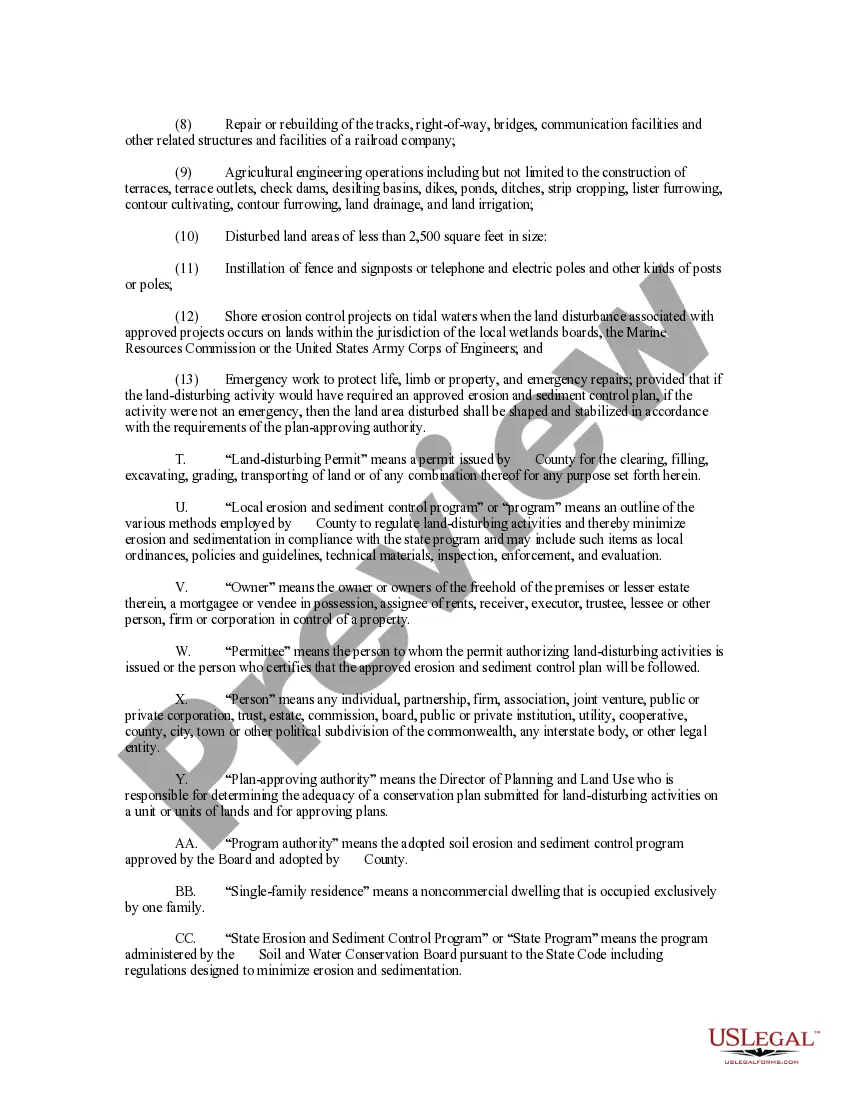
- Definitions: Clarifies key terms such as "land-disturbing activity," "applicant," and "certified inspector."
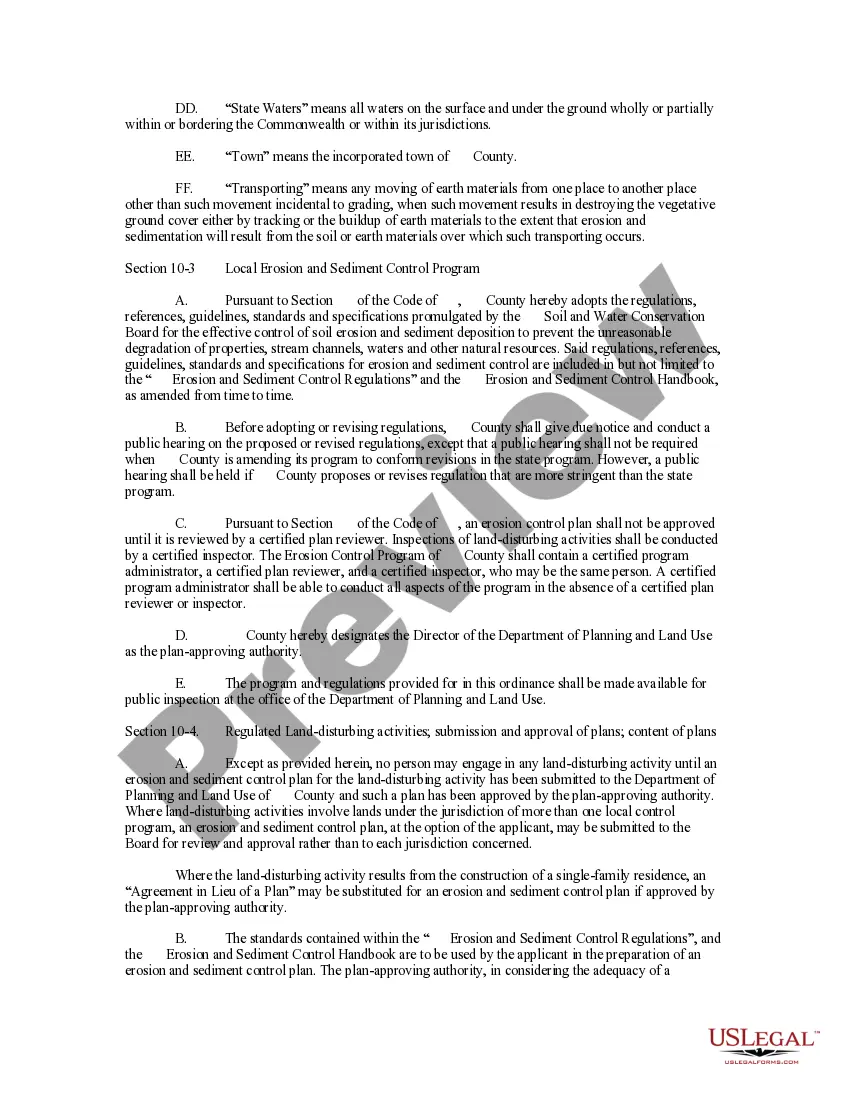
- Local Erosion and Sediment Control Program: Details the structure and implementation of local control measures to prevent erosion.
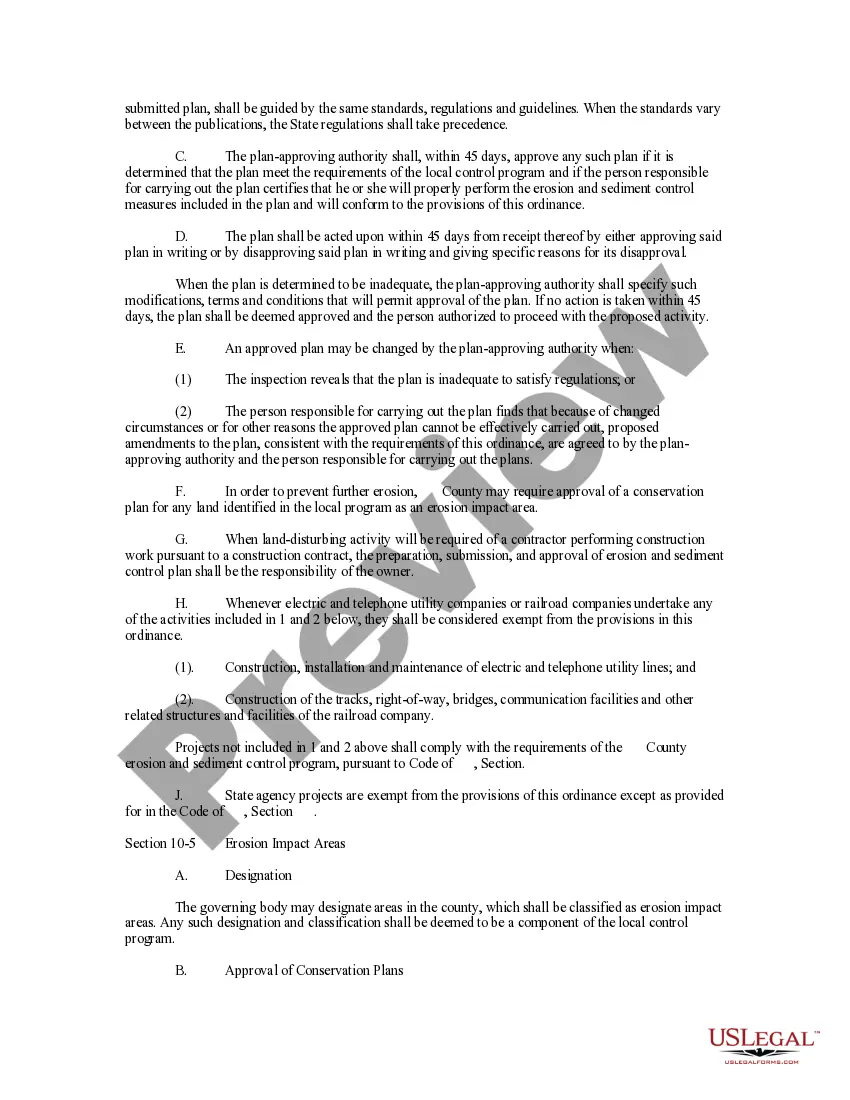
- Submission and Approval of Plans: Describes the process for submitting and approving erosion and sediment control plans.
- Permits: Specifies requirements for obtaining permits for land-disturbing activities.
- Enforcement and Penalties: Lists the legal penalties for non-compliance with the ordinance.
Common use cases
This form is essential when engaging in any land-disturbing activity, such as construction or grading, within the jurisdiction of a county. It should be utilized by developers, property owners, and government agencies to outline methods for controlling erosion and sedimentation, and to obtain the necessary permits before commencing any work that may impact the local environment.
Who should use this form
- Property owners planning significant land-disturbing activities.
- Developers and contractors involved in residential or commercial construction.
- Municipal authorities tasked with enforcing local environmental regulations.
- Environmental consultants preparing erosion and sediment control plans.
How to complete this form
- Identify the land-disturbing activities you plan to conduct.
- Gather necessary permits and documentation required for land use.
- Prepare an erosion and sediment control plan according to local standards.
- Submit the completed plan to the designated plan-approving authority for review.
- Obtain any required permits and implement the approved measures during project execution.
Does this form need to be notarized?
In most cases, this form does not require notarization. However, some jurisdictions or signing circumstances might. US Legal Forms offers online notarization powered by Notarize, accessible 24/7 for a quick, remote process.
Get your form ready online
Our built-in tools help you complete, sign, share, and store your documents in one place.
Make edits, fill in missing information, and update formatting in US Legal Forms—just like you would in MS Word.
Download a copy, print it, send it by email, or mail it via USPS—whatever works best for your next step.
Sign and collect signatures with our SignNow integration. Send to multiple recipients, set reminders, and more. Go Premium to unlock E-Sign.
If this form requires notarization, complete it online through a secure video call—no need to meet a notary in person or wait for an appointment.
We protect your documents and personal data by following strict security and privacy standards.

Make edits, fill in missing information, and update formatting in US Legal Forms—just like you would in MS Word.

Download a copy, print it, send it by email, or mail it via USPS—whatever works best for your next step.

Sign and collect signatures with our SignNow integration. Send to multiple recipients, set reminders, and more. Go Premium to unlock E-Sign.

If this form requires notarization, complete it online through a secure video call—no need to meet a notary in person or wait for an appointment.

We protect your documents and personal data by following strict security and privacy standards.
Common mistakes to avoid
- Failing to submit the erosion and sediment control plan before starting work.
- Using incorrect definitions for key terms within the ordinance.
- Not updating the control plan when changes to the project occur.
- Neglecting to secure all necessary permits before proceeding with construction.
Advantages of online completion
- Convenience of accessing the ordinance forms from anywhere at any time.
- Editable formats allow for quick adjustments and personalization.
- Reliable templates that ensure compliance with legal standards.
Legal use & context
- Erosion and sediment control ordinances are enforceable at the local level and can include penalties for non-compliance.
- Compliance with this ordinance can help prevent environmental degradation and safeguard natural resources.
- Feels like an essential document for municipal governance around land use regulations.
What to keep in mind
- The ordinance aims to regulate land-disturbing activities to prevent soil erosion and protect water quality.
- It outlines the procedures for submitting erosion and sediment control plans and obtaining permits.
- Failure to comply with the ordinance can lead to legal penalties and enforced corrective actions.
Glossary of terms used in this form
- Erosion: The process by which soil and rock are removed from one location and transported to another.
- Sedimentation: The accumulation of sediments that can lead to pollution in water bodies.
- Land-disturbing activity: Any land changes that can cause soil erosion and sediment movement.
Looking for another form?

Form popularity
FAQ
Sediment controls are usually employed together with erosion controls, which are designed to prevent or minimize erosion and thus reduce the need for sediment controls. Sediment controls are generally designed to be temporary measures, however, some can be used for storm water management purposes.
Examples of erosion control methods include the following: cellular confinement systems. crop rotation. conservation tillage.
Soil erosion and sedimentation involves three steps:Erosion control practices are typically designed to prevent detachment and transportation of soil particles while sediment control is designed to trap eroding soil on-site.
Erosion and sedimentation result in: loss of fertile topsoil, filling of lakes and streams, increased flooding, damage to plant and animal life and structural damage to buildings and roads.
Sediment is the result of erosion. Sedimentation is the build-up of eroded soil particles that are transported in runoff from their site of origin and deposited in drainage systems, on other ground surfaces, or in bodies of water or wetlands.
The erosion control plan needs to show what BMPs will be used and where, as well as the total disturbance area. The plan must include measures to prevent erosion, contain sediment and control drainage. The erosion control plan must also include installation details of the BMPs as well as notes.
Erosion and Sediment A set of plans prepared by or under the direction of a licensed professional engineer Control Plan indicating the specific measures and sequencing to be used to control sediment and erosion on a development site during and after construction.
Sediment Controls. Erosion: is the process of wind, water, or other natural agents gradually wearing down soil, rock, or land. Sedimentation: is the process of settling or deposition of those eroded particles.
2.2 What is sediment management? Sediment management covers a wide range of activities that includes anything from the small scale removal of dry gravels to the dredging of whole river channels and the reintroduction of removed sediment into the water environment.