New York Affidavit Deed/Leasehold Assignment in Lieu of Foreclosure
What is this form?
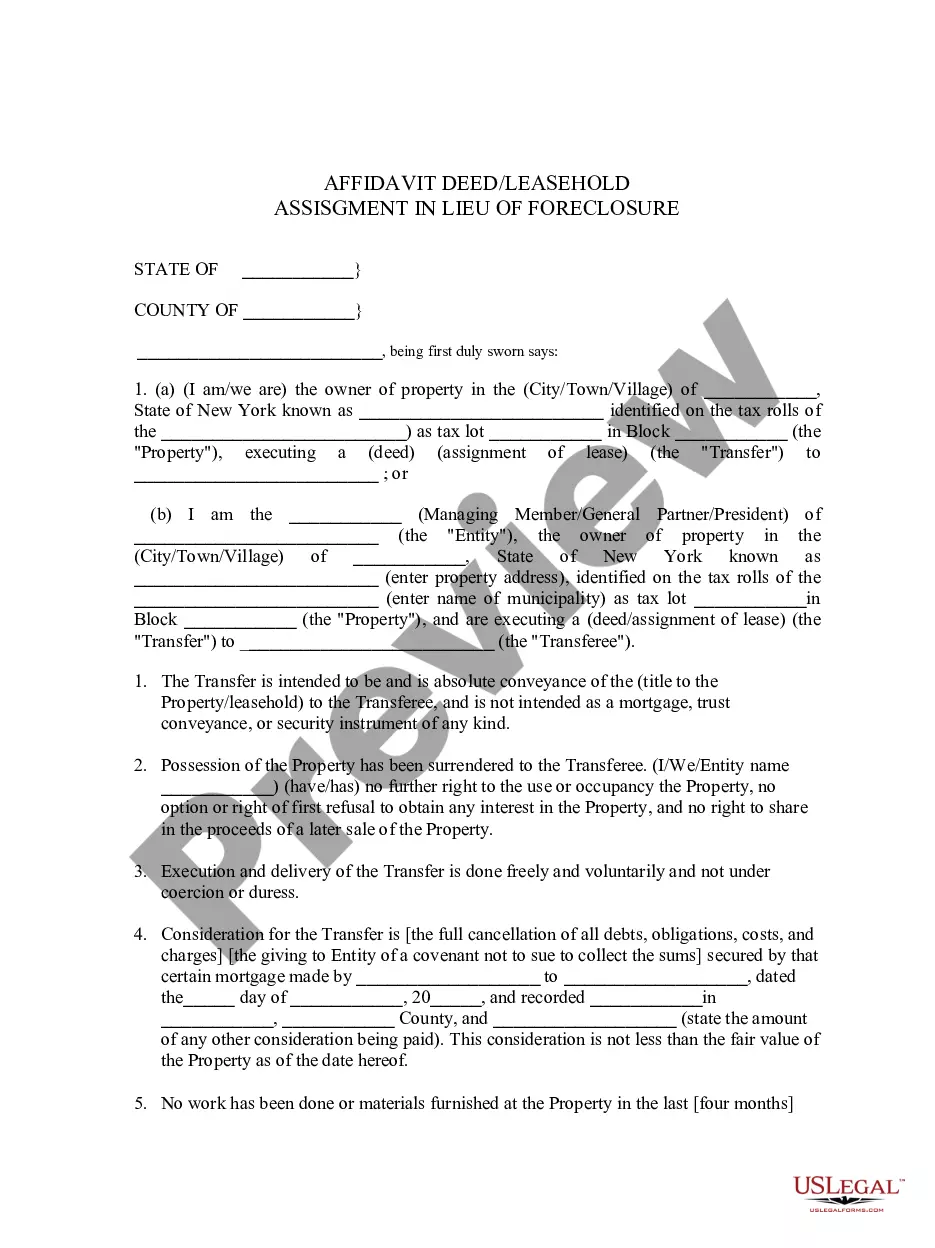
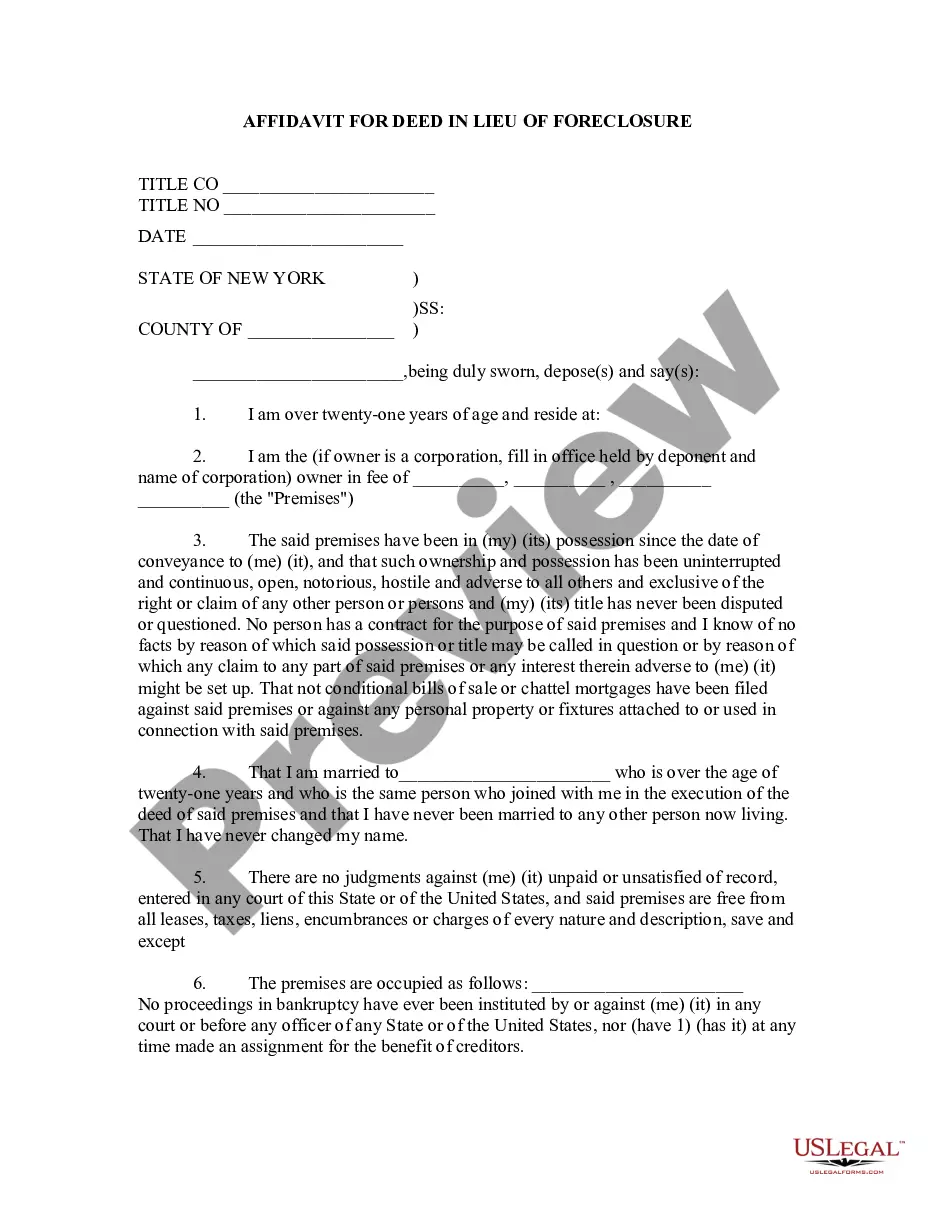
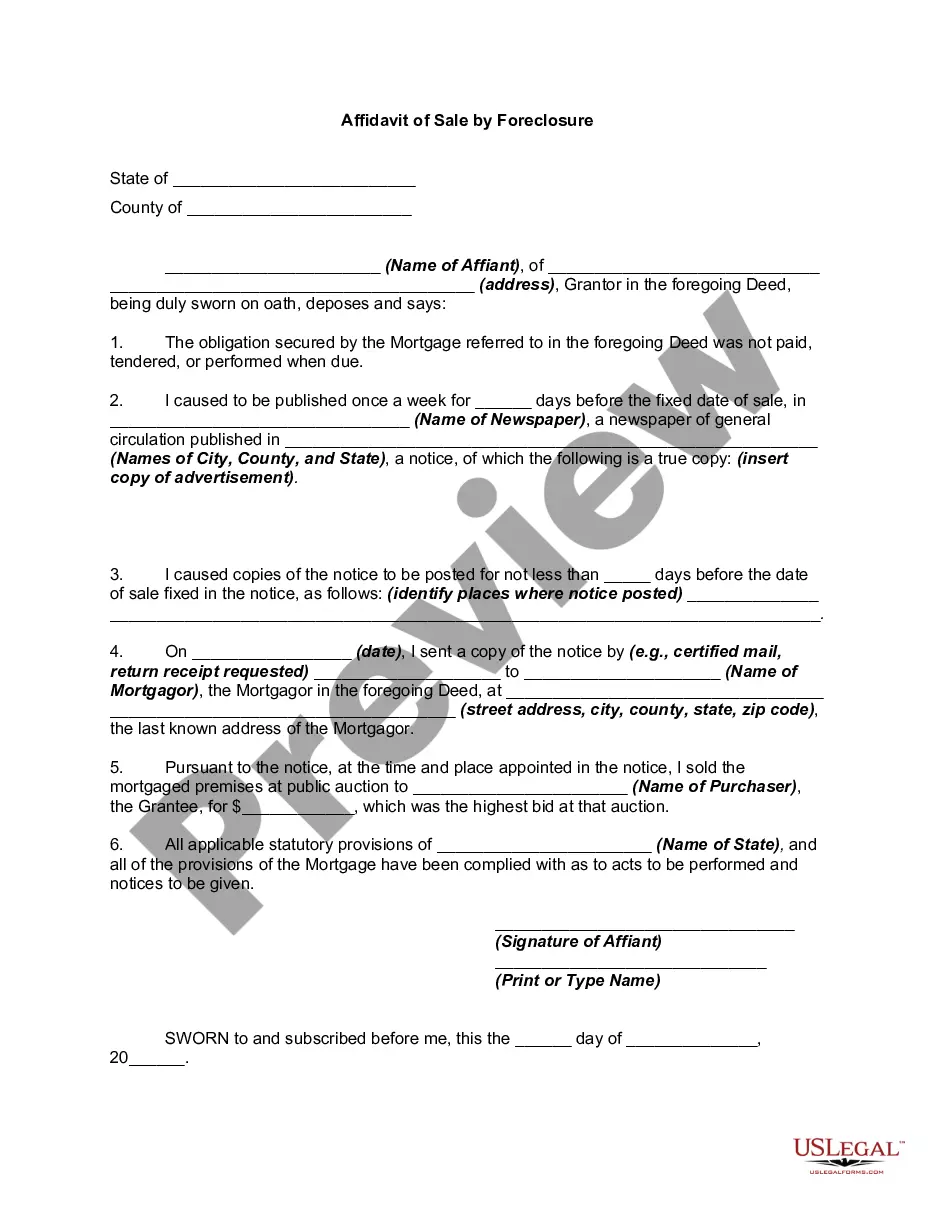
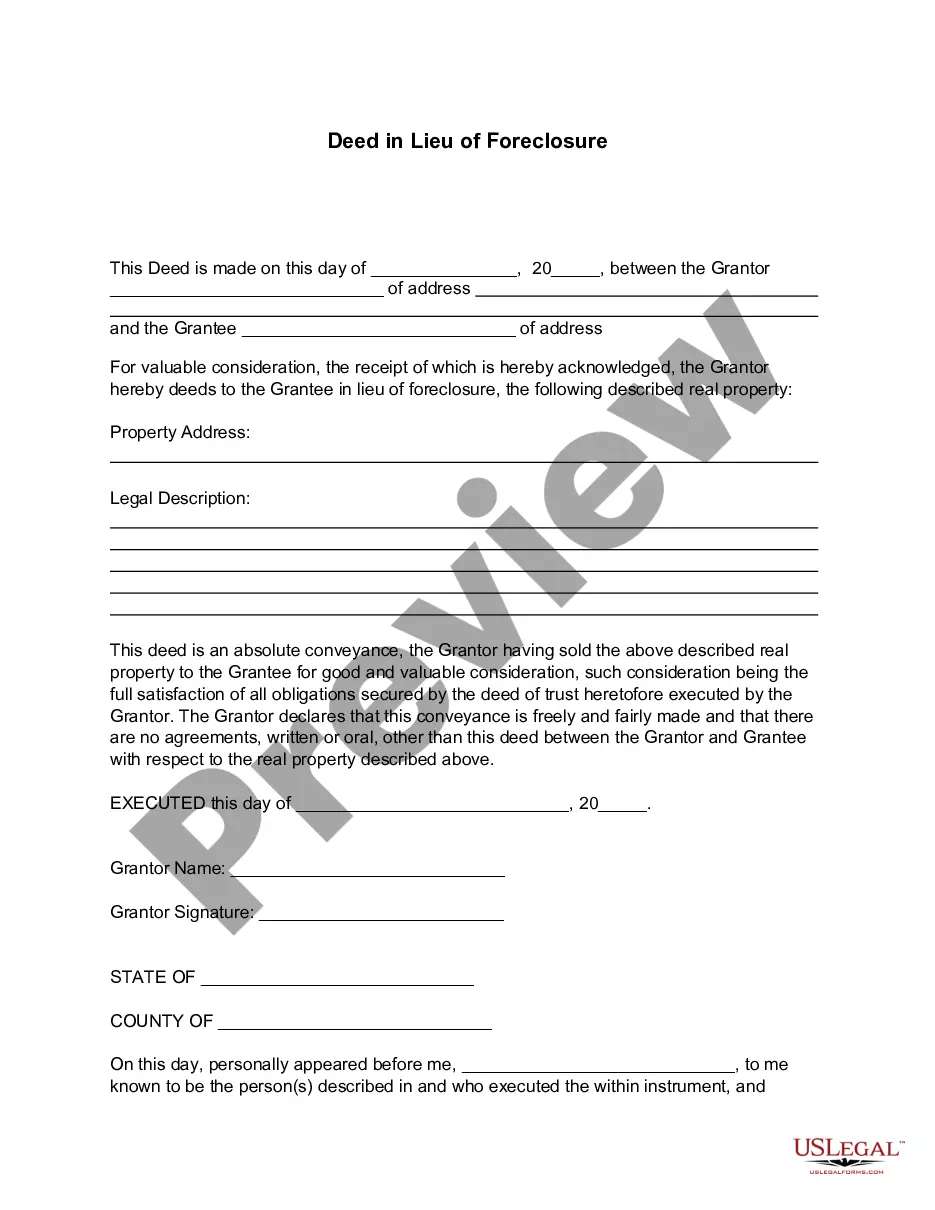
The Affidavit Deed/Leasehold Assignment in Lieu of Foreclosure is a legal document used to simplify the transfer of property ownership as an alternative to traditional foreclosure. This form allows a lienholder to receive the property directly from the debtor, thereby avoiding the lengthy and often expensive foreclosure process. Unlike standard foreclosure proceedings, this method can expedite the resolution of property debts while benefiting both parties involved.
What’s included in this form
- Identification of the property involved, including details like the city, county, and tax lot number.
- Declaration of ownership and confirmation of the transfer to the bank or lienholder.
- Statement ensuring the transfer is an absolute conveyance and not a security instrument.
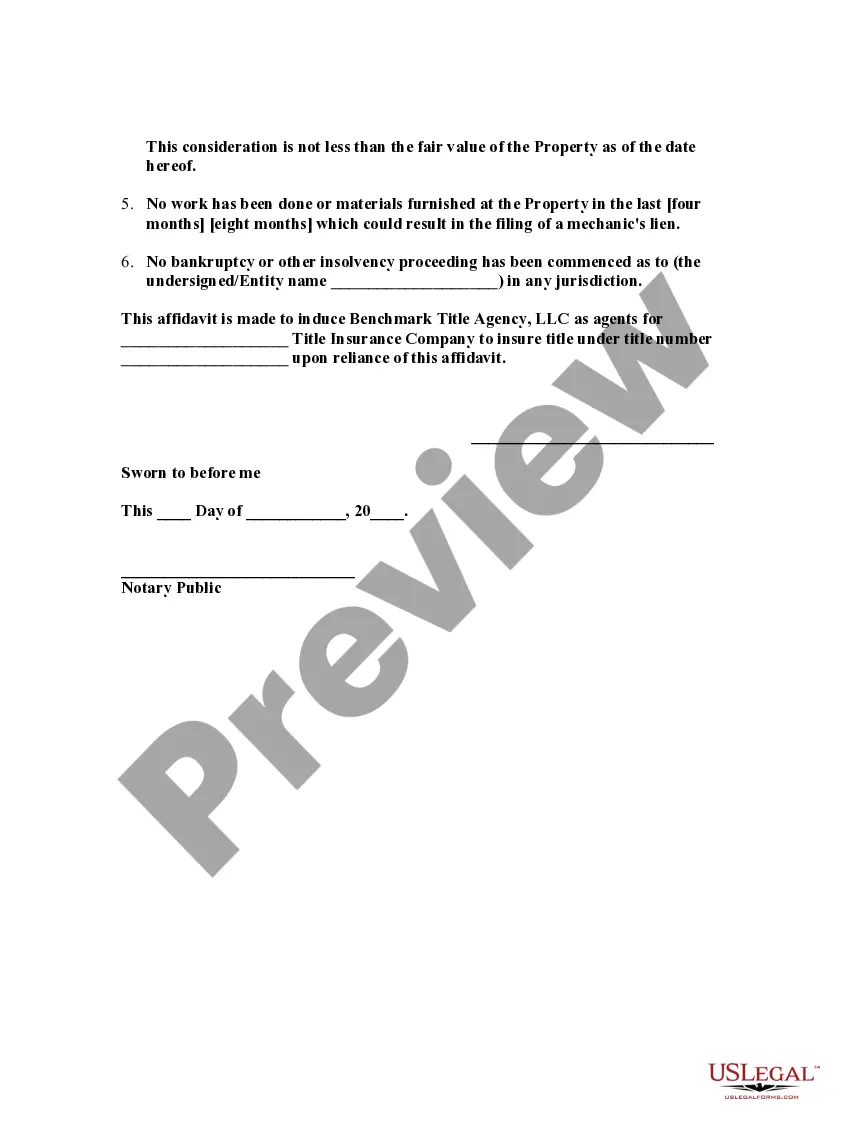
- Details of consideration for the transfer, including cancellation of debts and any additional compensation.
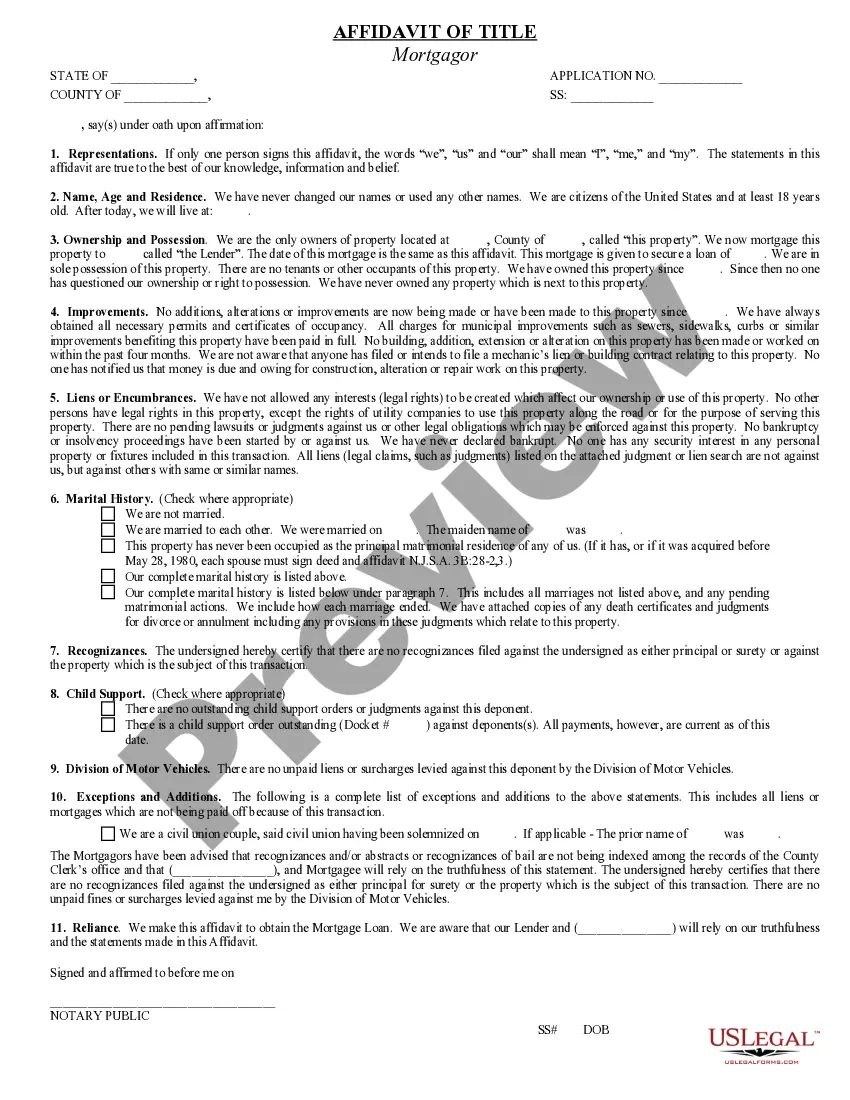
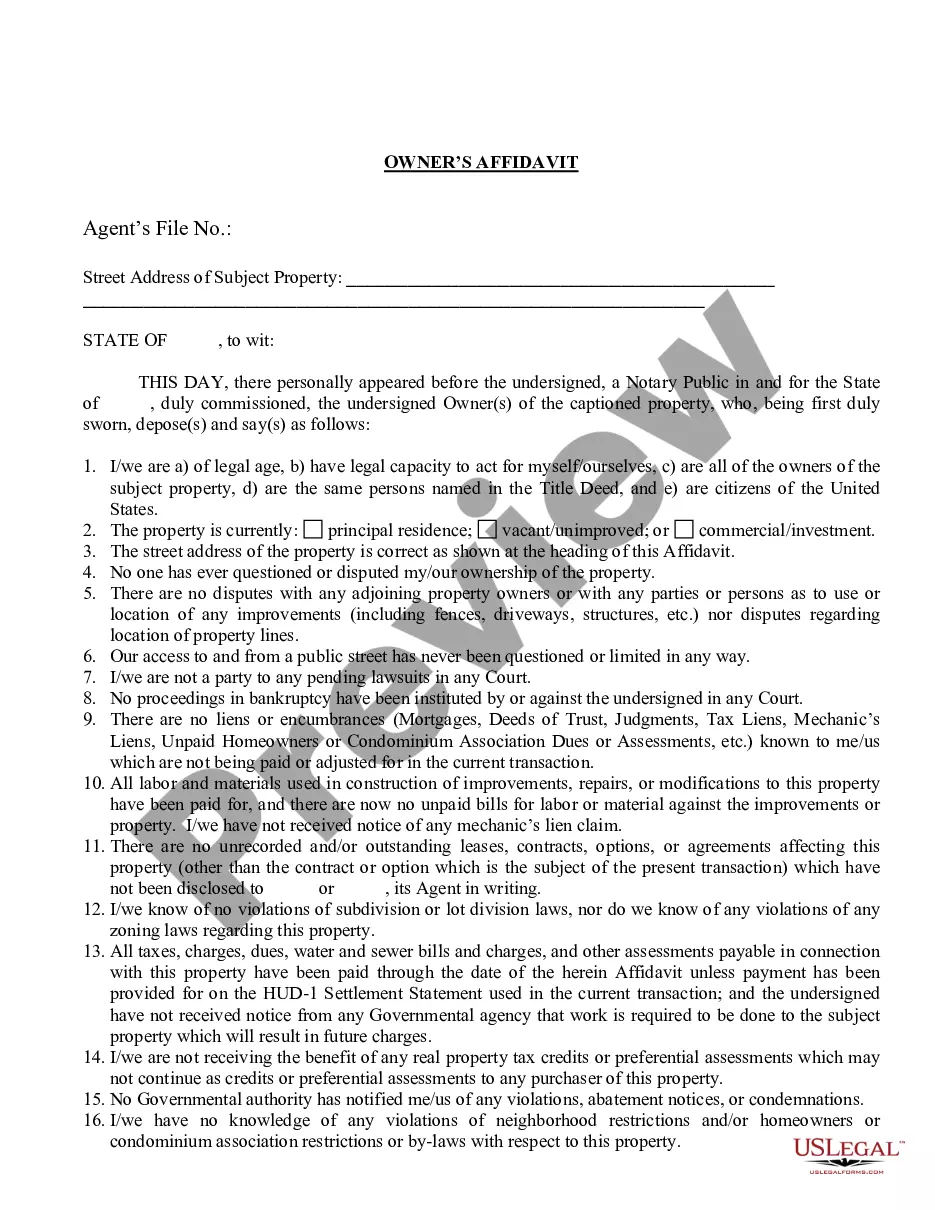
- Affidavit clause confirming no recent work on the property that could lead to a mechanic's lien.
- Notary acknowledgment section for legal validation of the affidavit.
When to use this form
This form is typically used when a property owner is struggling financially and wishes to relinquish their property without undergoing a formal foreclosure process. It is applicable in scenarios where the lienholder prefers to take ownership of the property outright as full payment for outstanding debts. Using this method can save time and resources, making it a practical choice for parties looking to settle property obligations quickly.
Intended users of this form
- Individual or entity property owners facing potential foreclosure.
- Lienholders or banks seeking to simplify property ownership transfer.
- Legal representatives handling real estate transactions involving distressed properties.
- Individuals who prefer avoiding the formalities and costs associated with foreclosure.
How to prepare this document
- Identify and enter the full legal description of the property.
- Specify the names of the transferor (property owner) and transferee (lienholder or bank).
- Detail the consideration for the transfer, including the cancellation of any debts.
- Check the box indicating whether it is a deed or assignment of lease, depending on the situation.
- Have the affidavit signed in the presence of a notary public.
Is notarization required?
Yes, this form must be notarized to be legally valid. US Legal Forms offers integrated online notarization services, allowing you to complete this process securely via video call, ensuring legal equivalence without needing to travel.
Get your form ready online
Our built-in tools help you complete, sign, share, and store your documents in one place.
Make edits, fill in missing information, and update formatting in US Legal Forms—just like you would in MS Word.
Download a copy, print it, send it by email, or mail it via USPS—whatever works best for your next step.
Sign and collect signatures with our SignNow integration. Send to multiple recipients, set reminders, and more. Go Premium to unlock E-Sign.
If this form requires notarization, complete it online through a secure video call—no need to meet a notary in person or wait for an appointment.
We protect your documents and personal data by following strict security and privacy standards.

Make edits, fill in missing information, and update formatting in US Legal Forms—just like you would in MS Word.

Download a copy, print it, send it by email, or mail it via USPS—whatever works best for your next step.

Sign and collect signatures with our SignNow integration. Send to multiple recipients, set reminders, and more. Go Premium to unlock E-Sign.

If this form requires notarization, complete it online through a secure video call—no need to meet a notary in person or wait for an appointment.

We protect your documents and personal data by following strict security and privacy standards.
Mistakes to watch out for
- Failing to accurately complete property identification details.
- Not specifying the correct type of transfer (deed vs. lease assignment).
- Omitting or incorrectly stating the consideration for the transfer.
- Neglecting the notary requirement, leading to an invalid affidavit.
Why use this form online
- Convenient access to legal forms any time of day, without the need for physical visits.
- Editability to customize the form according to individual needs and details.
- Reliability of attorney-drafted templates ensuring compliance with legal standards.
Looking for another form?
Form popularity
FAQ
Your credit will still take a hit: While a deed in lieu arrangement won't harm your credit as drastically as a foreclosure, you can still expect your score to drop. You also won't be able to easily get another mortgage if you have a deed in lieu on your credit report.
A Deed in Lieu does not clear second (or even third) mortgages, and therefore will not allow the lender to take clear title to the property. (These are sometimes referred to as junior liens.) And if the Deed in Lieu is accepted, the secondary lender may come after you for the deficiency.
A Standard Document deed drafted in favor of the lender that transfers title to commercial real property from a borrower (grantor) to its lender (grantee) relating to a deed-in-lieu of foreclosure transaction in New Jersey.
inlieu of foreclosure is an arrangement where you voluntarily turn over ownership of your home to the lender to avoid the foreclosure process. inlieu of foreclosure may help you avoid being personally liable for any amount remaining on the mortgage.
Most often a deed in lieu of foreclosure is preferred to foreclosure itself. This is because a deed in lieu allows you to avoid the foreclosure process and may even allow you to remain in the house. While both processes damage your credit, foreclosure lasts 7 years on your credit report but deed in lieu just 4 years.
With a deed in lieu, you simply give the property back to the bank and move out. In most cases, the lender will agree to forgive the balance on the loan if the property is worth less than you owe. Another advantage of a deed in lieu is that it won't harm your credit as much as a foreclosure.
inlieu of foreclosure is an arrangement where you voluntarily turn over ownership of your home to the lender to avoid the foreclosure process. inlieu of foreclosure may help you avoid being personally liable for any amount remaining on the mortgage.