New York Affidavit for Deed in Lieu of Foreclosure
What this document covers
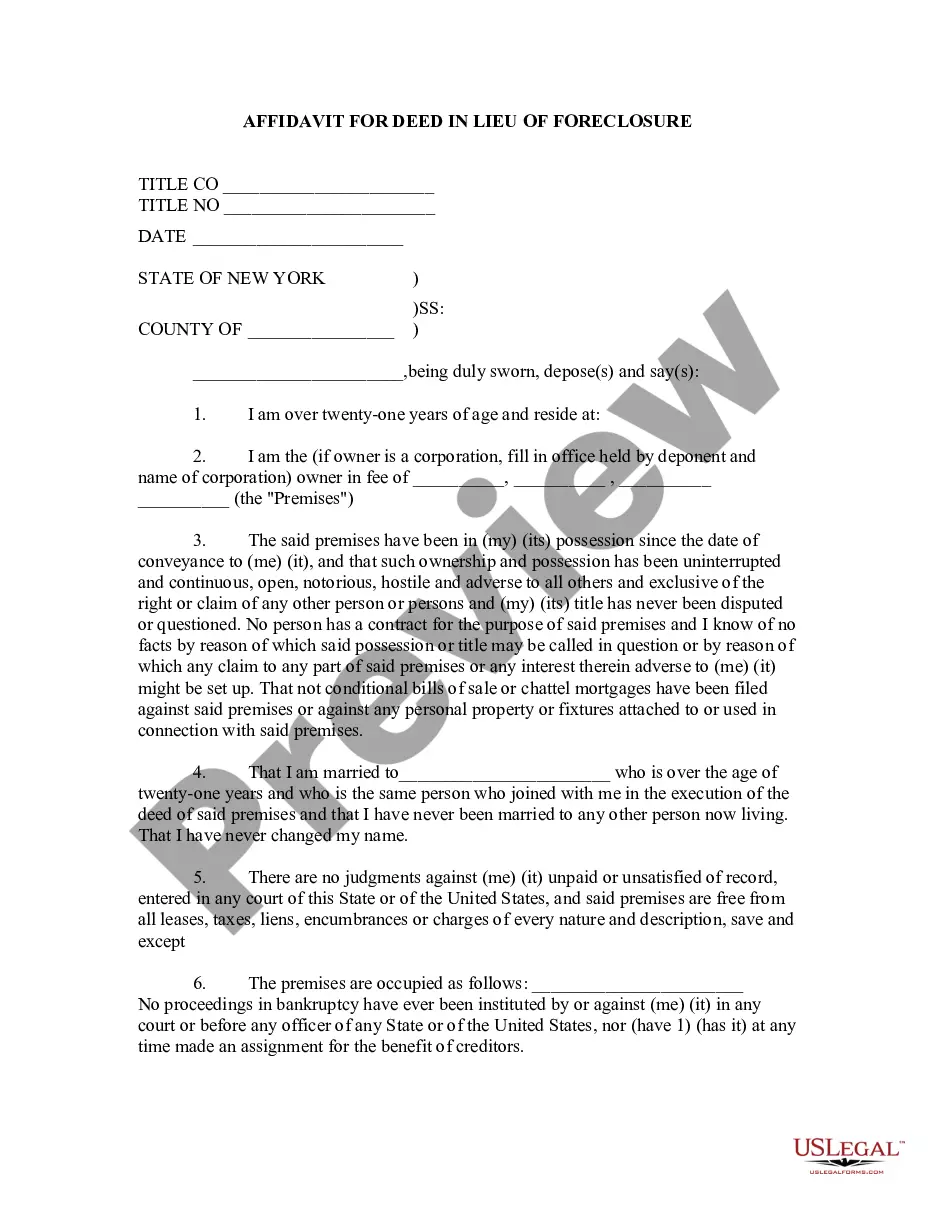
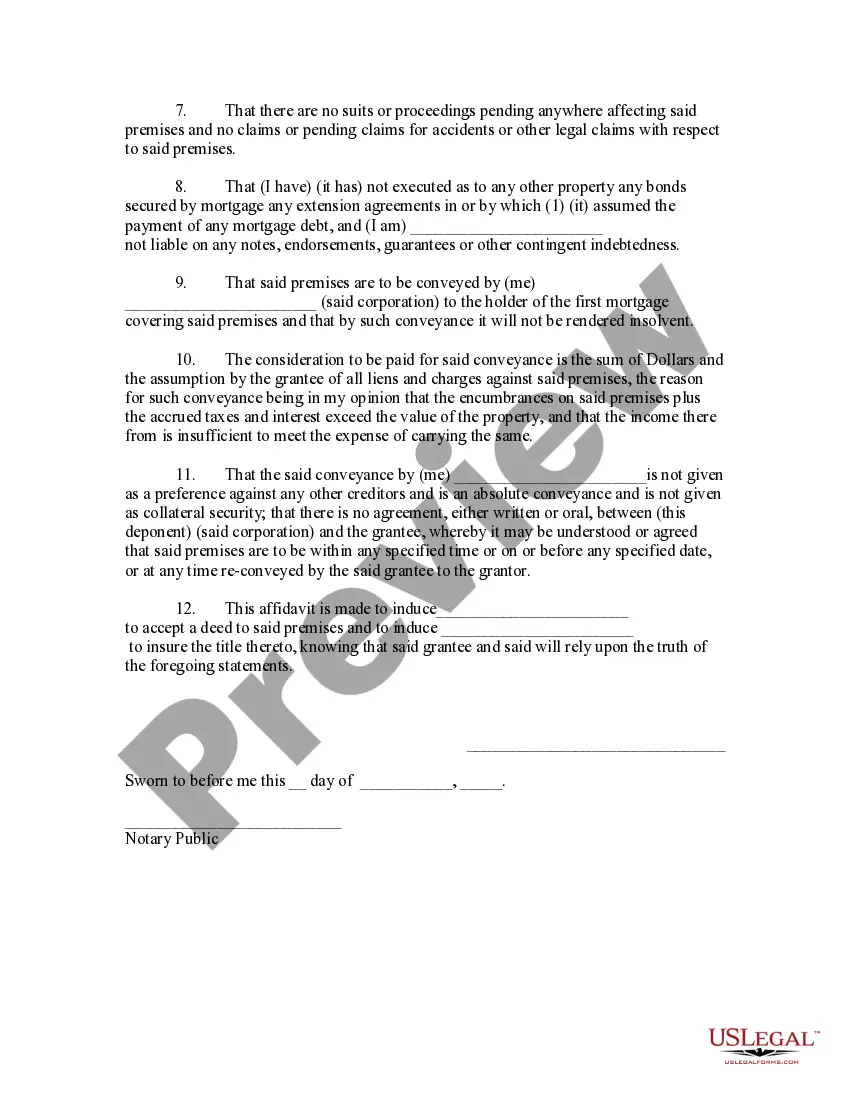
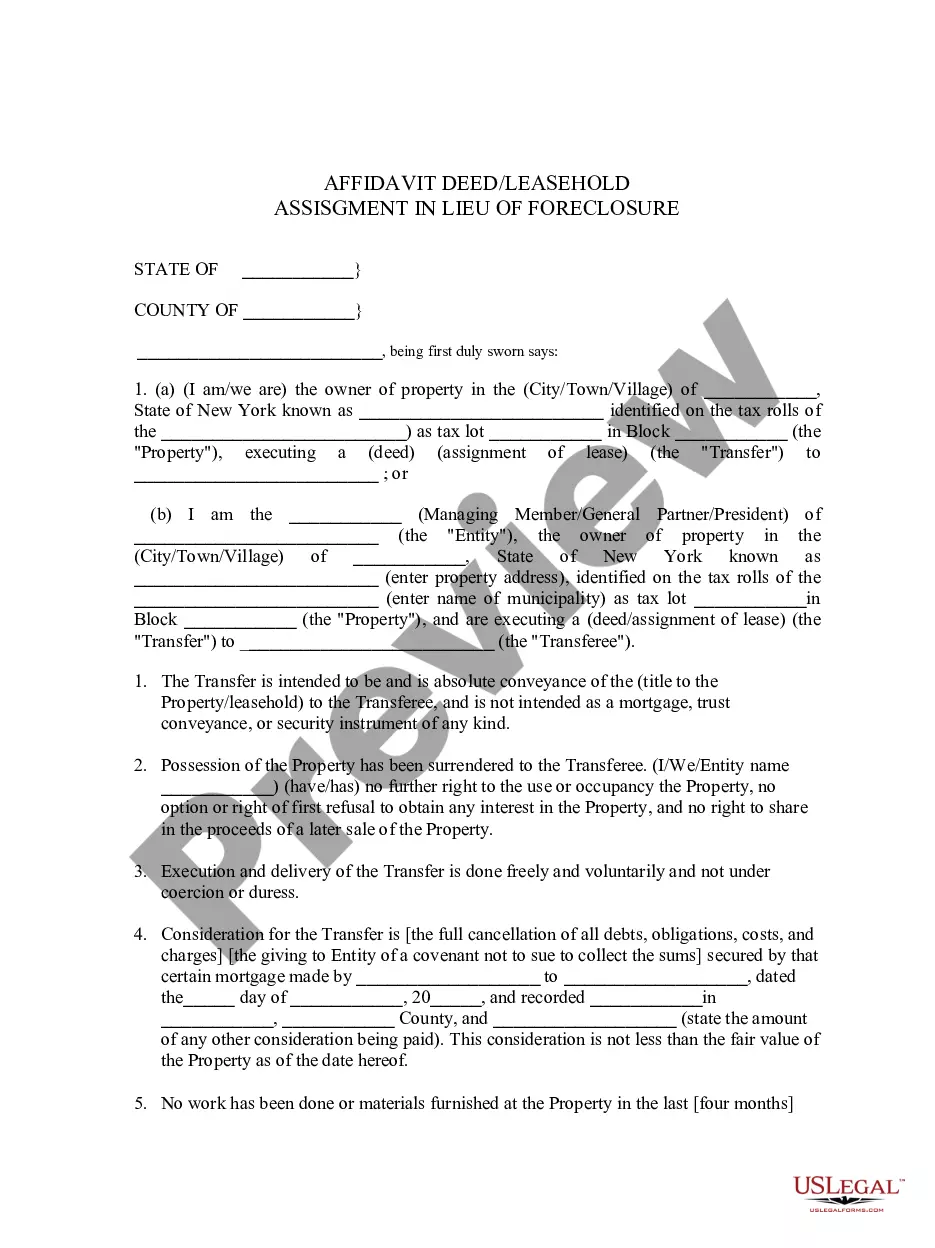
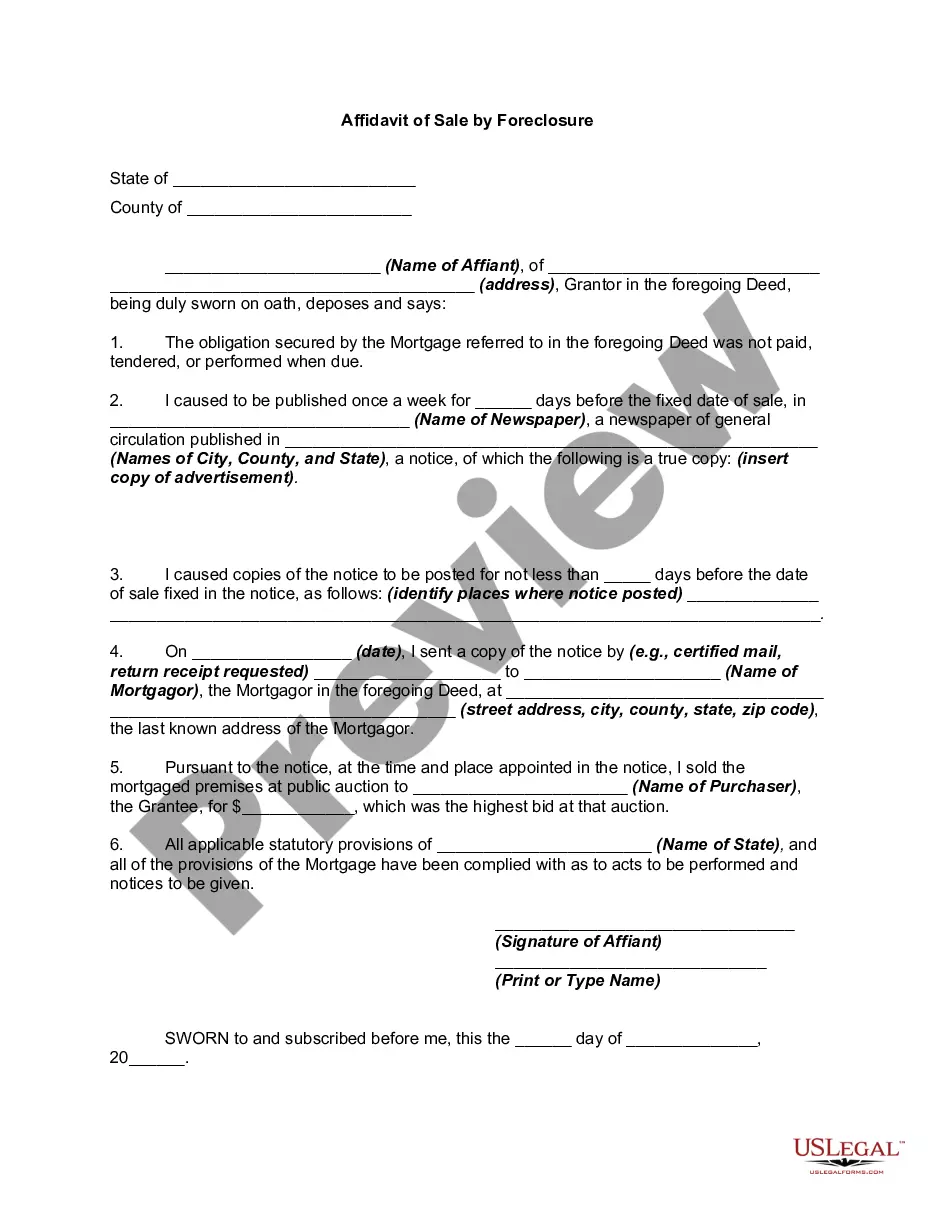
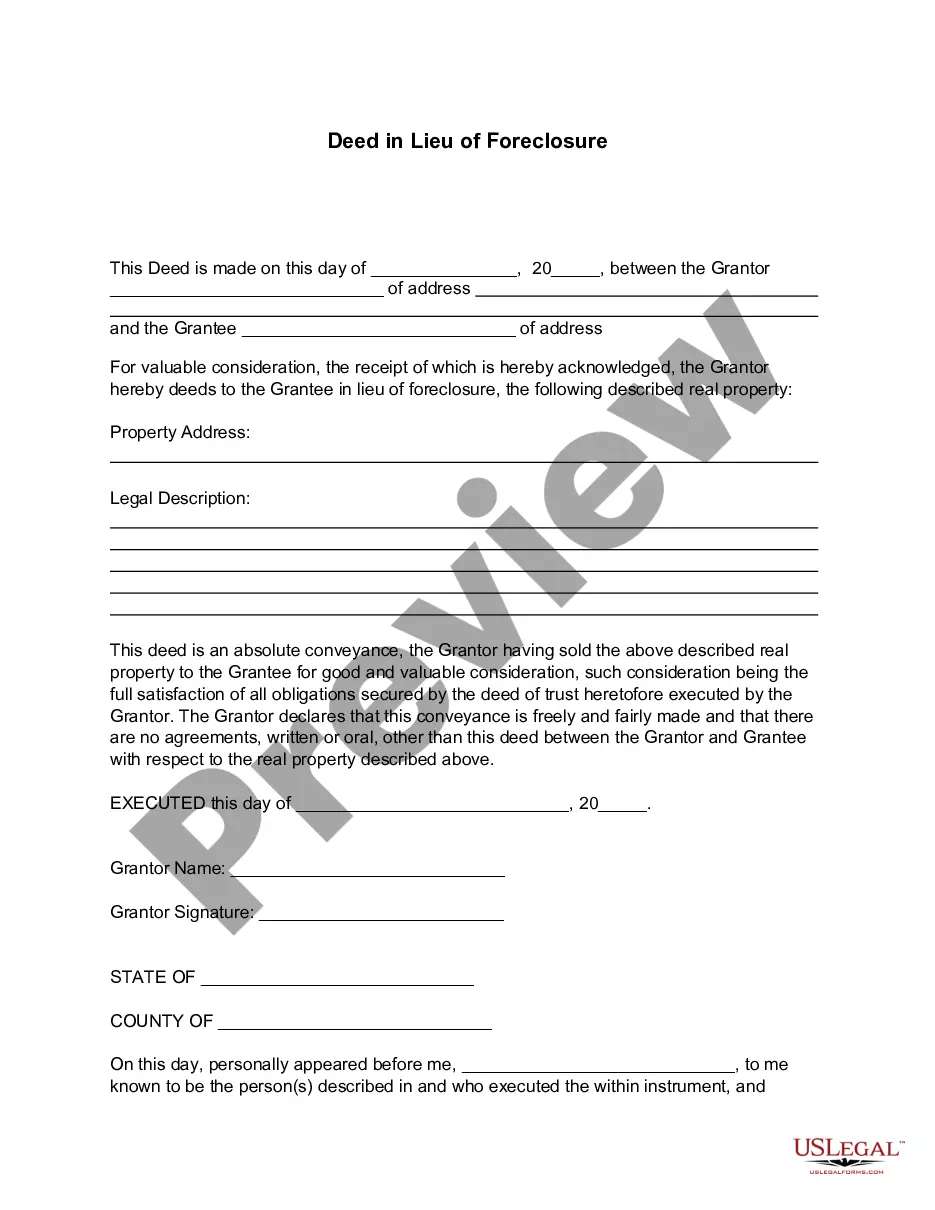
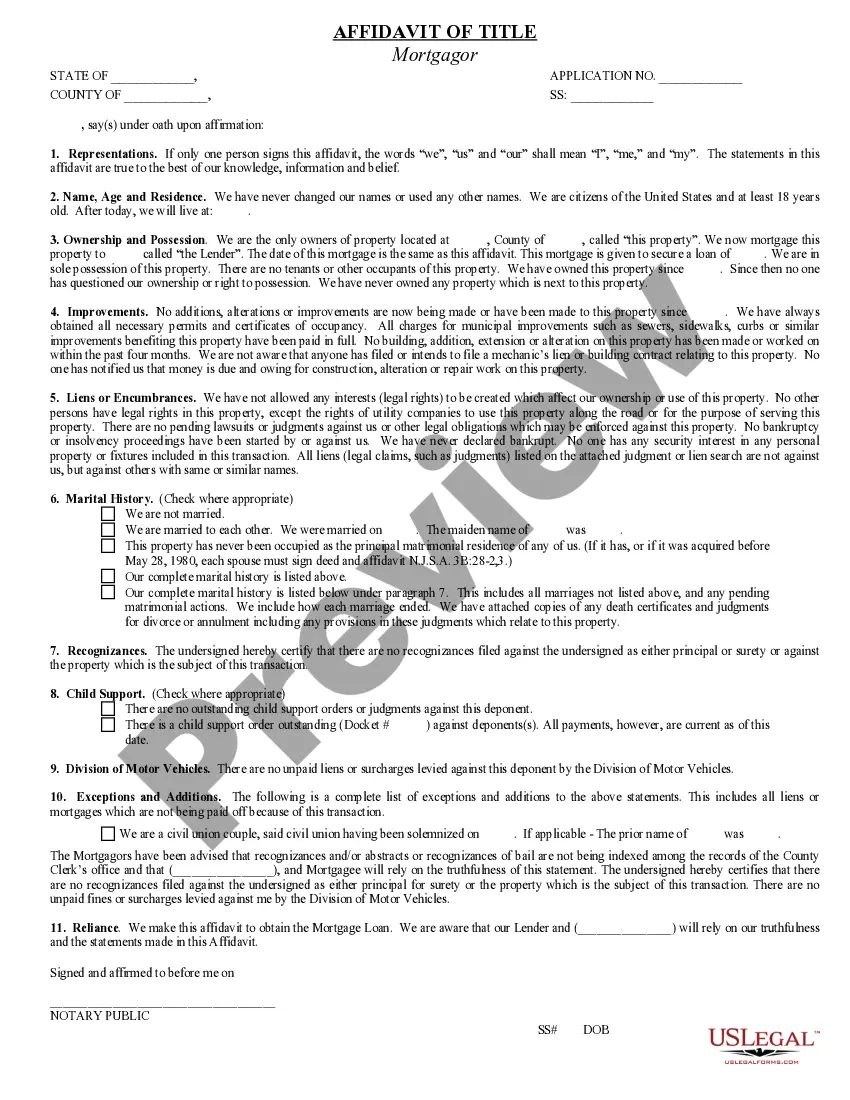
The Affidavit for Deed in Lieu of Foreclosure is a legal document that serves to protect the interests of the grantee in a real estate transaction. This affidavit outlines the ownership of the property and confirms that the owner is transferring the property to the mortgage holder to avoid foreclosure. It differs from other real estate forms as it explicitly accounts for the legal ownership status, any existing claims against the property, and the nature of the transaction, ensuring clarity for all parties involved.
Form components explained
- Identification of the title company and title number.
- Affirmation of ownership and possession history of the property.
- Statement regarding the absence of legal disputes or claims against the property.
- Details about any existing liens, taxes, or encumbrances.
- Confirmation of marital status and other personal declarations.
- Notarization which confirms the authenticity of the affidavit.
When to use this document
This form should be used when a property owner is transferring ownership of their property to the lender in order to avoid foreclosure. It is relevant in situations where the property has become a financial burden, and the owner agrees to hand over the title in exchange for debt cancellation. This form is essential in providing a clear record of the transfer and protecting both parties' interests.
Intended users of this form
This affidavit is suitable for:
- Property owners facing foreclosure who wish to take proactive steps to mitigate their financial situation.
- Lenders or mortgage holders requiring legal documentation for property transfers in lieu of foreclosure.
- Attorneys or legal representatives assisting clients with matters related to real estate and foreclosure.
How to prepare this document
- Begin by entering the title company and title number at the top of the form.
- Fill in the date and identify the property owner and any relevant corporate title.
- Provide a detailed description of the property being transferred.
- Affirm the absence of any existing liens or claims against the property.
- Sign the affidavit in the presence of a notary public.
Notarization requirements for this form
Yes, this form must be notarized to be legally valid. Notarization verifies the authenticity of the signatures, adding a layer of protection for all parties involved in the transaction. US Legal Forms offers integrated online notarization, allowing you to complete this step securely through a virtual appointment.
Get your form ready online
Our built-in tools help you complete, sign, share, and store your documents in one place.
Make edits, fill in missing information, and update formatting in US Legal Forms—just like you would in MS Word.
Download a copy, print it, send it by email, or mail it via USPS—whatever works best for your next step.
Sign and collect signatures with our SignNow integration. Send to multiple recipients, set reminders, and more. Go Premium to unlock E-Sign.
If this form requires notarization, complete it online through a secure video call—no need to meet a notary in person or wait for an appointment.
We protect your documents and personal data by following strict security and privacy standards.

Make edits, fill in missing information, and update formatting in US Legal Forms—just like you would in MS Word.

Download a copy, print it, send it by email, or mail it via USPS—whatever works best for your next step.

Sign and collect signatures with our SignNow integration. Send to multiple recipients, set reminders, and more. Go Premium to unlock E-Sign.

If this form requires notarization, complete it online through a secure video call—no need to meet a notary in person or wait for an appointment.

We protect your documents and personal data by following strict security and privacy standards.
Common mistakes
- Failing to provide complete property information, leading to potential legal disputes.
- Not including the notary section, which can invalidate the affidavit.
- Omitting details about additional debts or liens against the property.
Why complete this form online
- Quick and convenient access to necessary legal documents.
- Ability to customize the affidavit easily to fit specific situations.
- Assurance that the form has been drafted by licensed attorneys, ensuring legal compliance.
Looking for another form?
Form popularity
FAQ
In a deed-in-lieu of foreclosure, the lender agrees to take back the property. Both a short sale and deed-in-lieu of foreclosure may result in you still owing money to the lender or can have serious tax consequences.
inlieu of foreclosure is an arrangement where you voluntarily turn over ownership of your home to the lender to avoid the foreclosure process. inlieu of foreclosure may help you avoid being personally liable for any amount remaining on the mortgage.
With a deed in lieu, you simply give the property back to the bank and move out. In most cases, the lender will agree to forgive the balance on the loan if the property is worth less than you owe. Another advantage of a deed in lieu is that it won't harm your credit as much as a foreclosure.
inlieu of foreclosure is an arrangement where you voluntarily turn over ownership of your home to the lender to avoid the foreclosure process. inlieu of foreclosure may help you avoid being personally liable for any amount remaining on the mortgage.
Your credit will still take a hit: While a deed in lieu arrangement won't harm your credit as drastically as a foreclosure, you can still expect your score to drop. You also won't be able to easily get another mortgage if you have a deed in lieu on your credit report.
Disadvantages of a Deed in Lieu of Foreclosure The most obvious disadvantage to you is the loss of your property, any income from the real estate, and your home investment. There are tax costs associated with the conveyance of property as well.
Most often a deed in lieu of foreclosure is preferred to foreclosure itself. This is because a deed in lieu allows you to avoid the foreclosure process and may even allow you to remain in the house. While both processes damage your credit, foreclosure lasts 7 years on your credit report but deed in lieu just 4 years.
A Standard Document deed drafted in favor of the lender that transfers title to commercial real property from a borrower (grantor) to its lender (grantee) relating to a deed-in-lieu of foreclosure transaction in New Jersey.