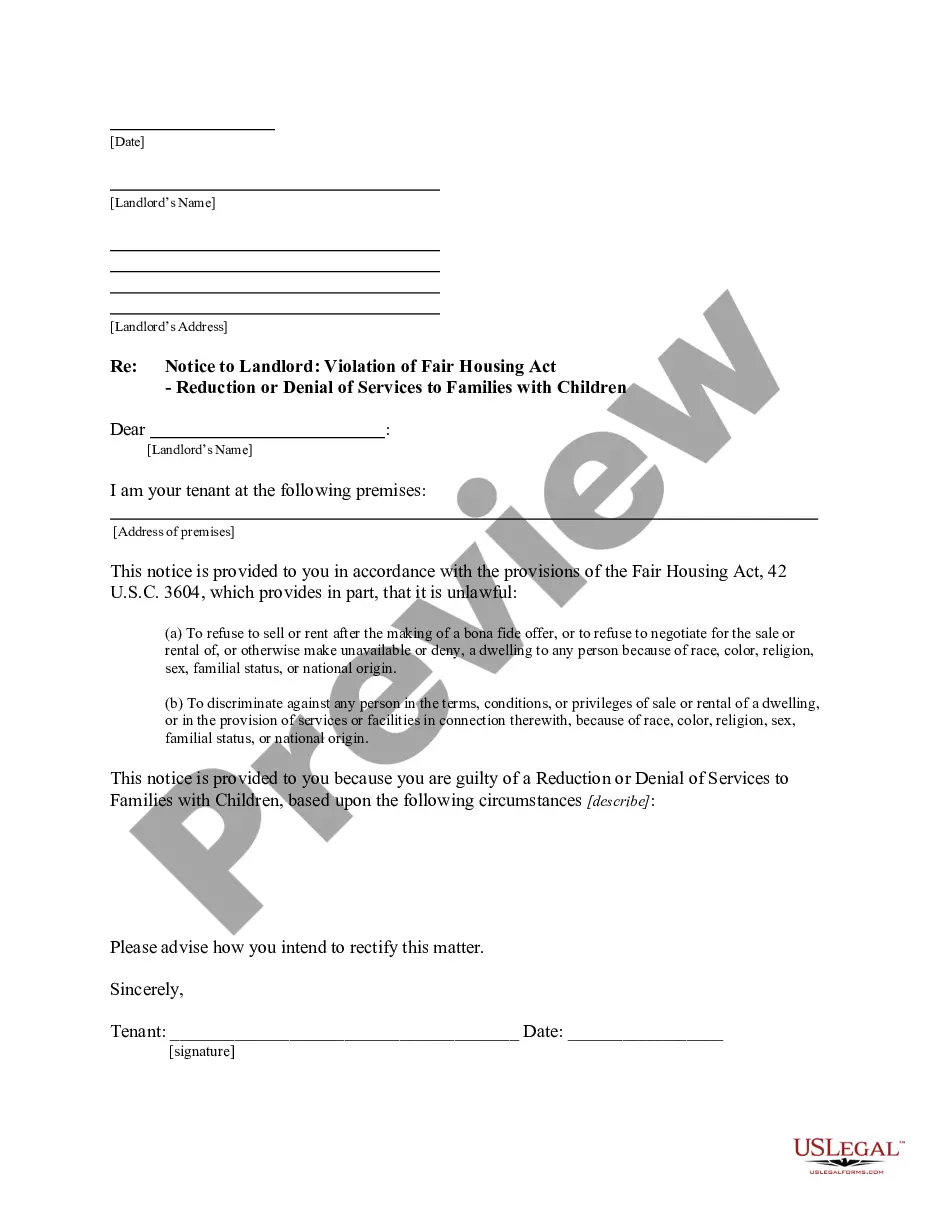
Proposal for the Stock Split and Increase in the Authorized Number of Shares
Overview of this form
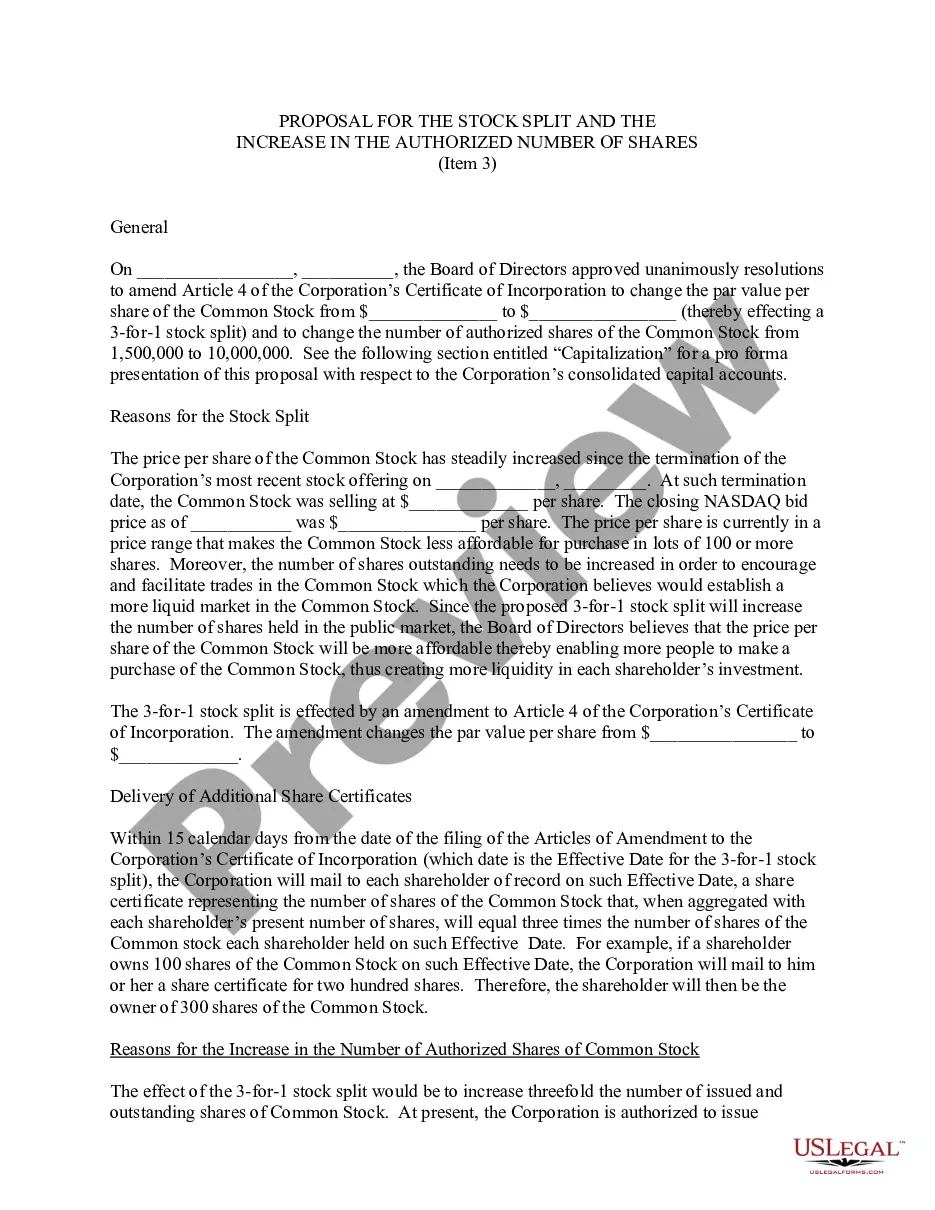
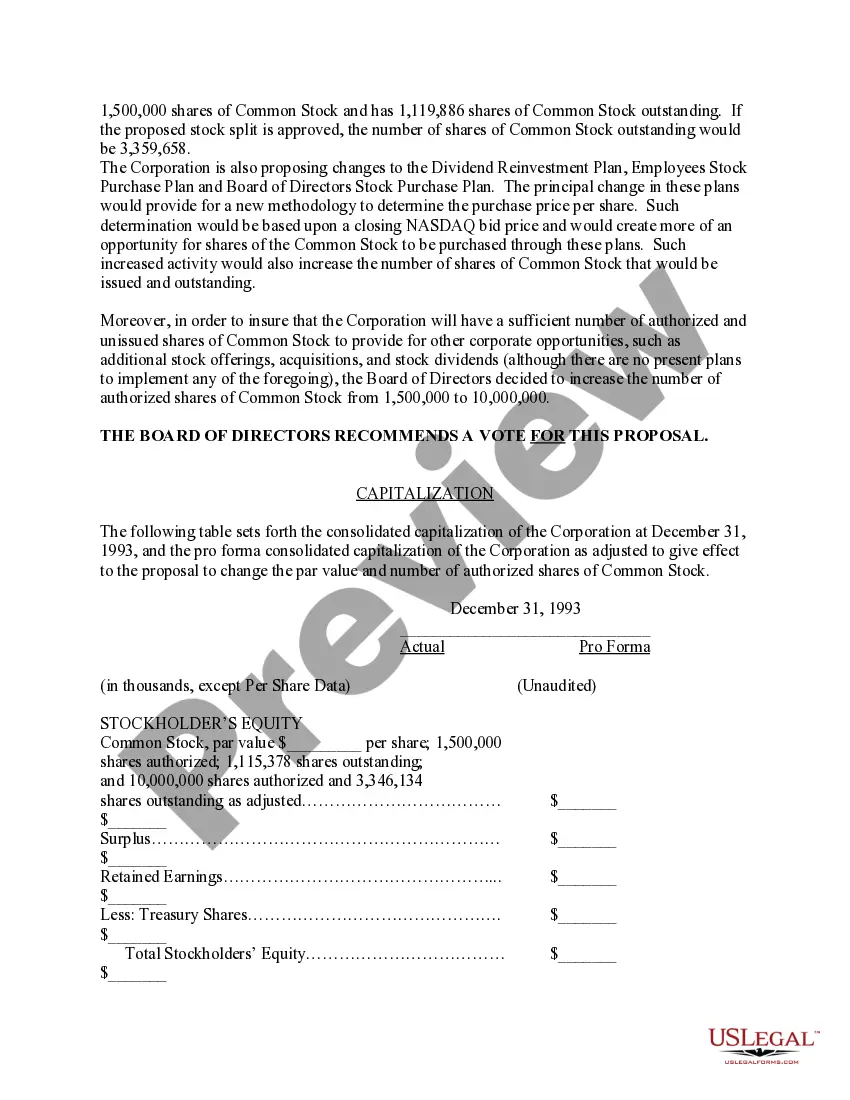
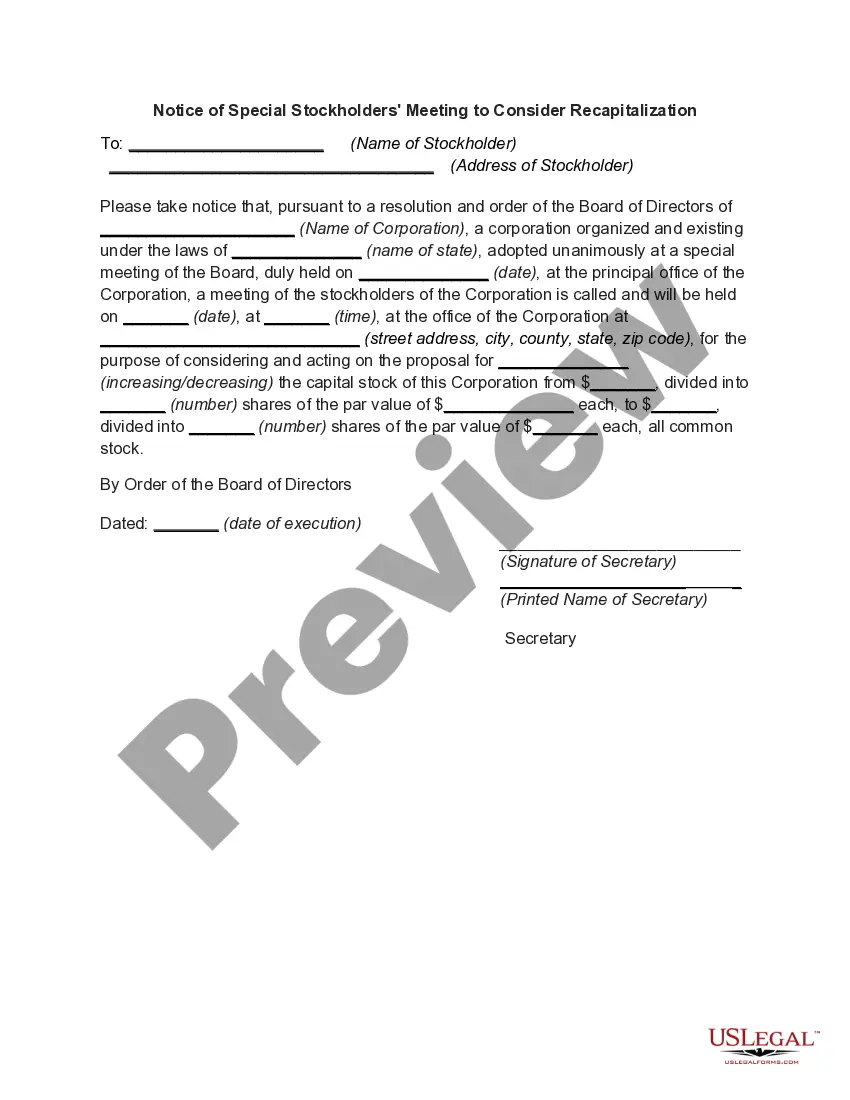
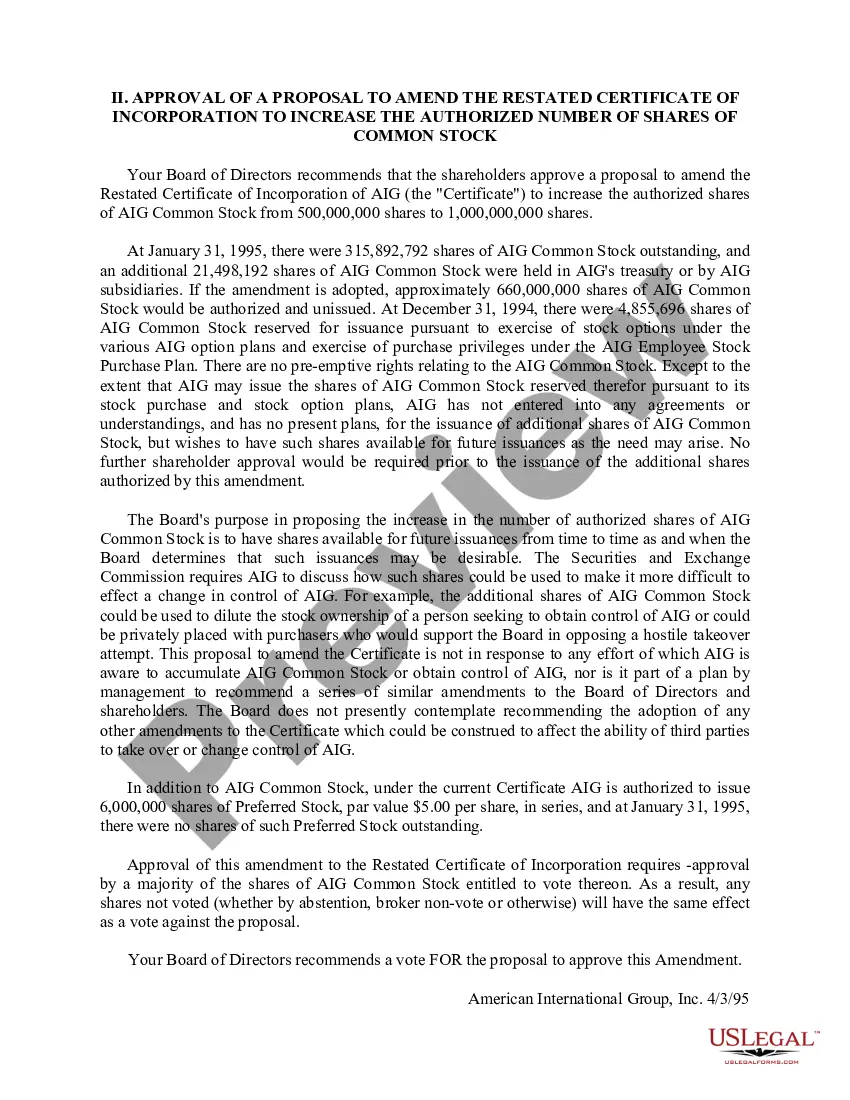
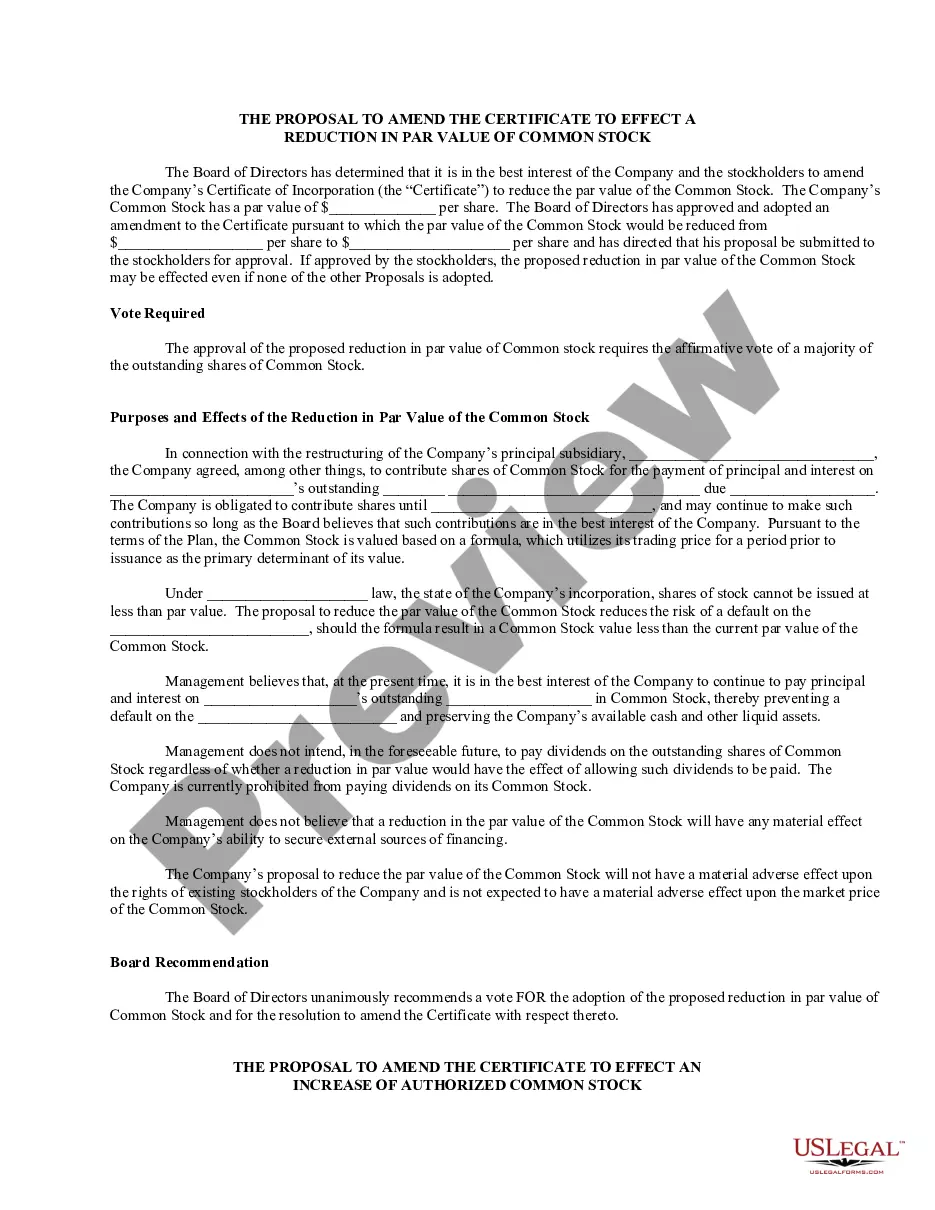
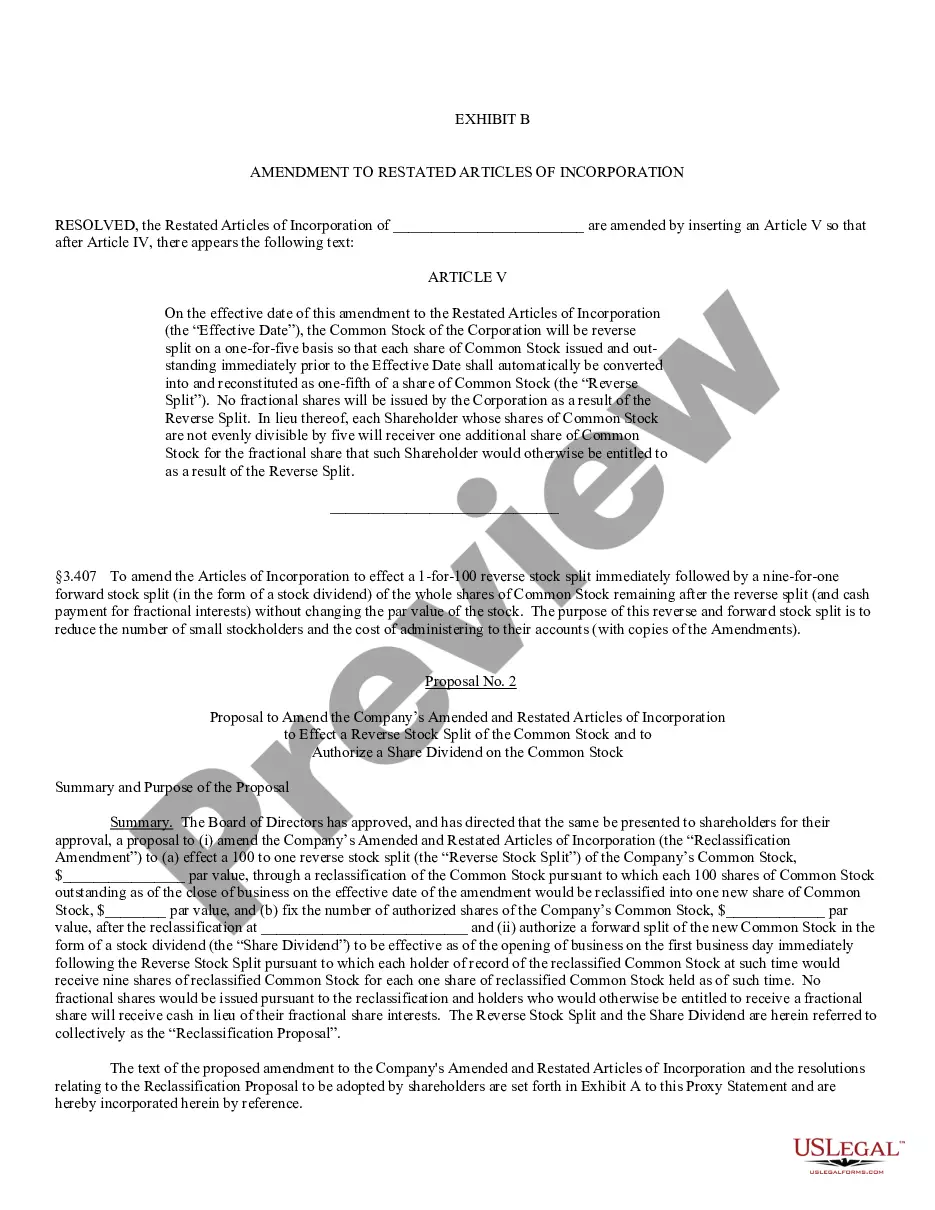
The Proposal for the Stock Split and Increase in the Authorized Number of Shares is a legal document used in corporate settings to propose changes in a company's stock structure. This form specifically details a plan for a 3-for-1 stock split and an increase in the number of authorized shares. It is essential for corporations looking to make their stock more affordable and to ensure sufficient shares are available for future corporate needs. Unlike other corporate forms, this proposal includes specific details regarding the stock split and the rationale behind the increase in authorized shares, making it uniquely tailored to these circumstances.
What’s included in this form
- Date of Board of Directors' approval
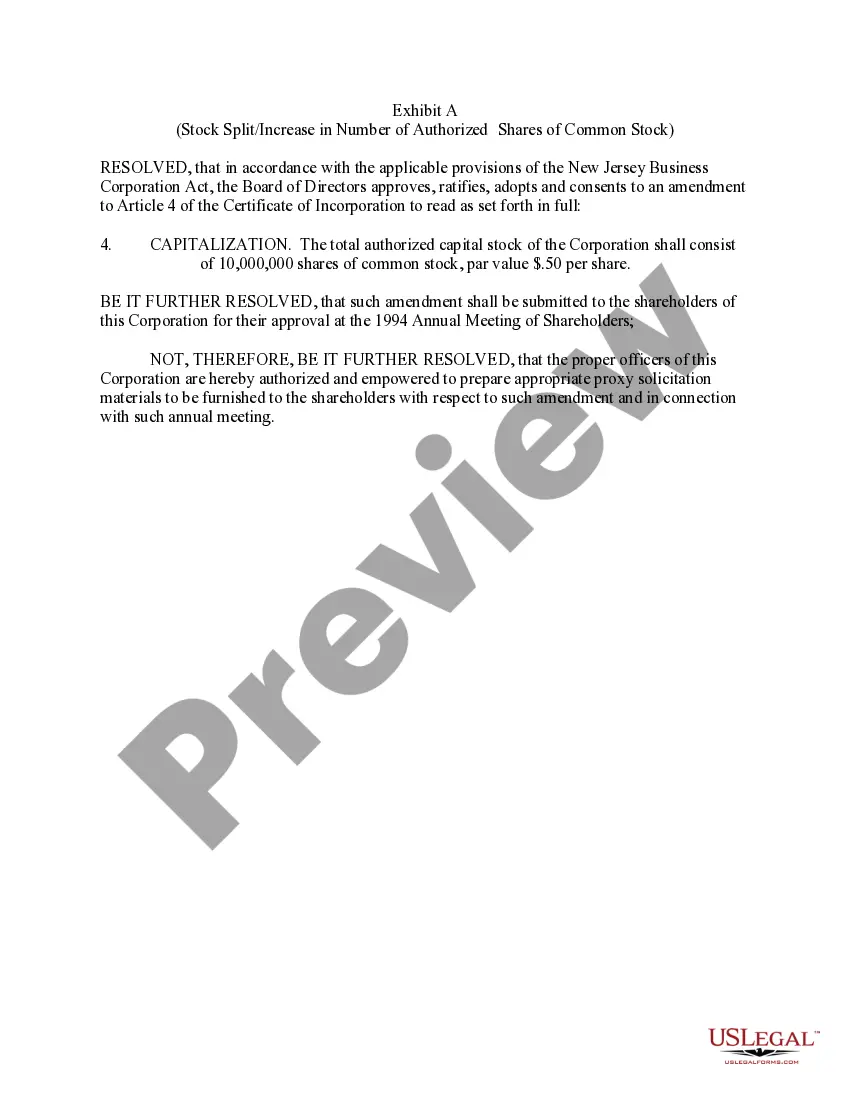
- Changes to the par value per share
- Details of the stock split ratio
- Rationale for the stock split and increase in authorized shares
- Procedures for issuing new share certificates
- A summary of changes to corporate plans, such as Dividend Reinvestment and Employee Stock Purchase Plans

When to use this document
This form should be utilized when a corporation's Board of Directors decides to propose a stock split and an increase in authorized shares. It is relevant when the stock price becomes too high for average investors, thereby hindering market liquidity. Corporations may also need this proposal when planning for future growth opportunities that require a larger number of shares available for issuance, such as acquisitions or additional fundraising efforts.
Who this form is for
- Corporations looking to adjust their stock structure
- Board members seeking to present a formal proposal to shareholders
- Shareholders interested in understanding changes to their holdings
- Corporate attorneys or legal advisors assisting with corporate governance
Steps to complete this form
- Fill in the date of the Board of Directors' resolution.
- Specify the current and new par value per share.
- Indicate the proposed stock split ratio (e.g., 3-for-1).
- Provide details on the reasons for the changes, including market observations.
- Outline the process and timeline for issuing new share certificates to shareholders after the split.
Notarization requirements for this form
Notarization is not commonly needed for this form. However, certain documents or local rules may make it necessary. Our notarization service, powered by Notarize, allows you to finalize it securely online anytime, day or night.
Get your form ready online
Our built-in tools help you complete, sign, share, and store your documents in one place.
Make edits, fill in missing information, and update formatting in US Legal Forms—just like you would in MS Word.
Download a copy, print it, send it by email, or mail it via USPS—whatever works best for your next step.
Sign and collect signatures with our SignNow integration. Send to multiple recipients, set reminders, and more. Go Premium to unlock E-Sign.
If this form requires notarization, complete it online through a secure video call—no need to meet a notary in person or wait for an appointment.
We protect your documents and personal data by following strict security and privacy standards.

Make edits, fill in missing information, and update formatting in US Legal Forms—just like you would in MS Word.

Download a copy, print it, send it by email, or mail it via USPS—whatever works best for your next step.

Sign and collect signatures with our SignNow integration. Send to multiple recipients, set reminders, and more. Go Premium to unlock E-Sign.

If this form requires notarization, complete it online through a secure video call—no need to meet a notary in person or wait for an appointment.

We protect your documents and personal data by following strict security and privacy standards.
Common mistakes to avoid
- Failing to obtain proper Board approval before filing the proposal.
- Not indicating the correct date for the proposed changes.
- Neglecting to explain the rationale clearly, which may confuse shareholders.
- Forgetting to adjust the par value correctly in all sections of the document.
Why use this form online
- Convenient access and easy download of legal templates.
- Editable formats allow customization to meet specific corporate needs.
- Reliable templates crafted by licensed attorneys ensure legal compliance.
Legal use & context
- Enables corporations to align their capital structure with business objectives.
- Facilitates comparison for investors through clearer stock pricing.
- Ensures compliance with state corporate governance regulations.
- Defines the process for amending the corporate articles of incorporation.
What to keep in mind
- The form is essential for proposing a stock split and increasing authorized shares.
- Clear rationale and procedural instructions are important for effective communication with shareholders.
- Ensuring compliance with state laws is vital for the proposal's validity.
Looking for another form?


Form popularity
FAQ
The only journal entry needed for a stock split is a memo entry to note that the number of shares has changed and that the par value per share has changed (if the stock has a par value).
The number of authorized shares per company is assessed at the company's creation and can only be increased or decreased through a vote by the shareholders.
Stock splits don't create a taxable event; you merely receive more stock evidencing the same ownership interest in the corporation that issued the stock. You don't report income until you sell the stock. Your overall basis doesn't change as a result of a stock split, but your per share basis changes.
If you own a stock that declares a split, the number of shares you would own after the split increases. However, the price per share reduces. This is because the market capitalisation remains the same. So, as an investor, though the price you get for each share actually declines, the total number of shares increases.
The value of a company's shares remain the same before and after a stock split.The value of the investment remained at $6,000. If the stock pays a dividend, the amount of dividend will also be reduced by the ratio of the split. There is no investment value advantage to buy shares before or after a stock split.
When a stock splits, it has no effect on stockholders' equity. During a stock split, the company does not receive any additional money for the shares that are created. If a company simply issued new shares it would receive money for these, which would increase stockholders' equity.
The only journal entry needed for a stock split is a memo entry to note that the number of shares has changed and that the par value per share has changed (if the stock has a par value).
Forward Splits A forward stock split increases the total number of shares issued and outstanding.If the forward split results in more stock issued than is available in authorized shares, the board holds a vote of the stockholders to authorize more shares.
An increase in the number of issued and outstanding shares of stock which decreases the share price proportionately.However, in practice, most US companies effect stock splits by issuing stock dividends, because this generally does not require stockholder approval.