Florida Public Utility Easement
What this document covers
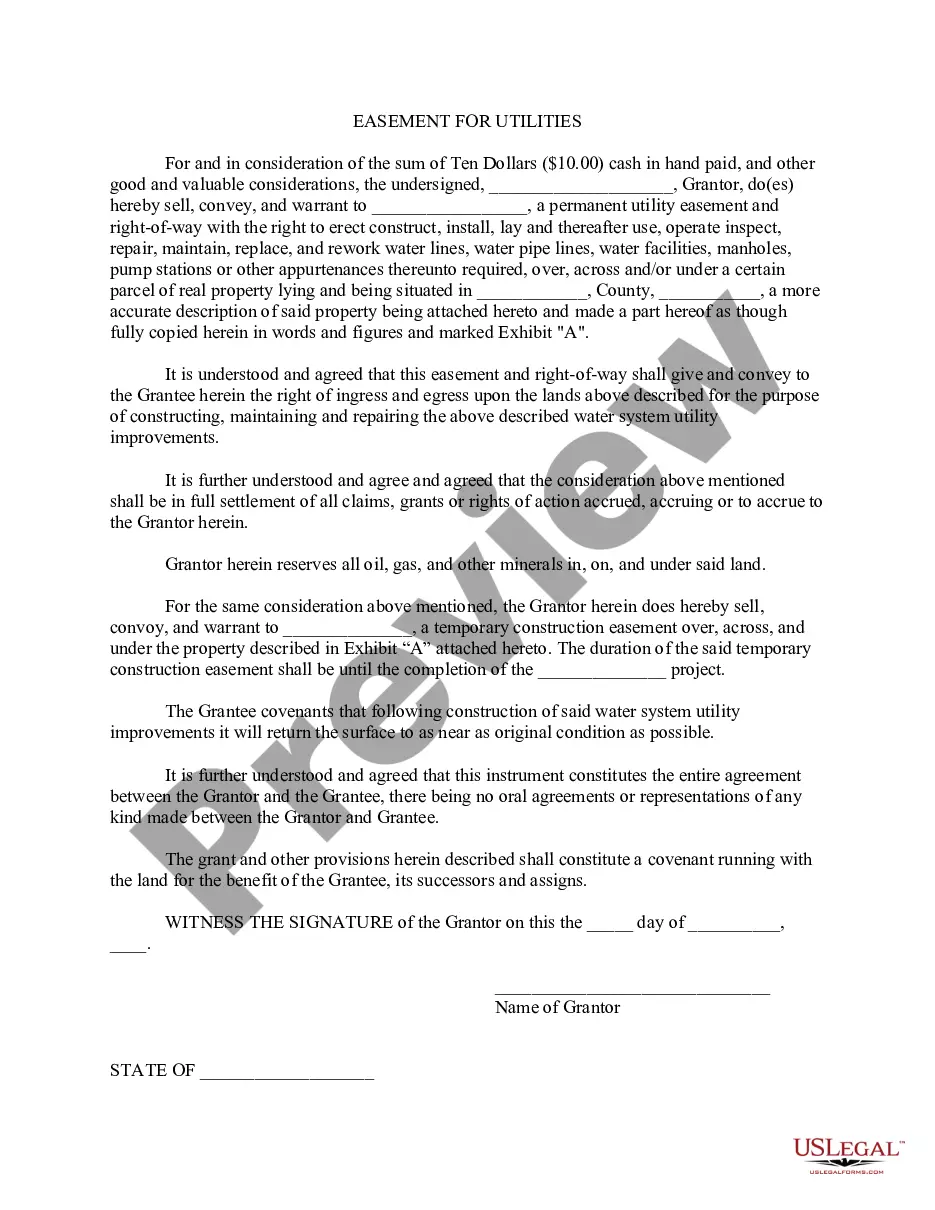
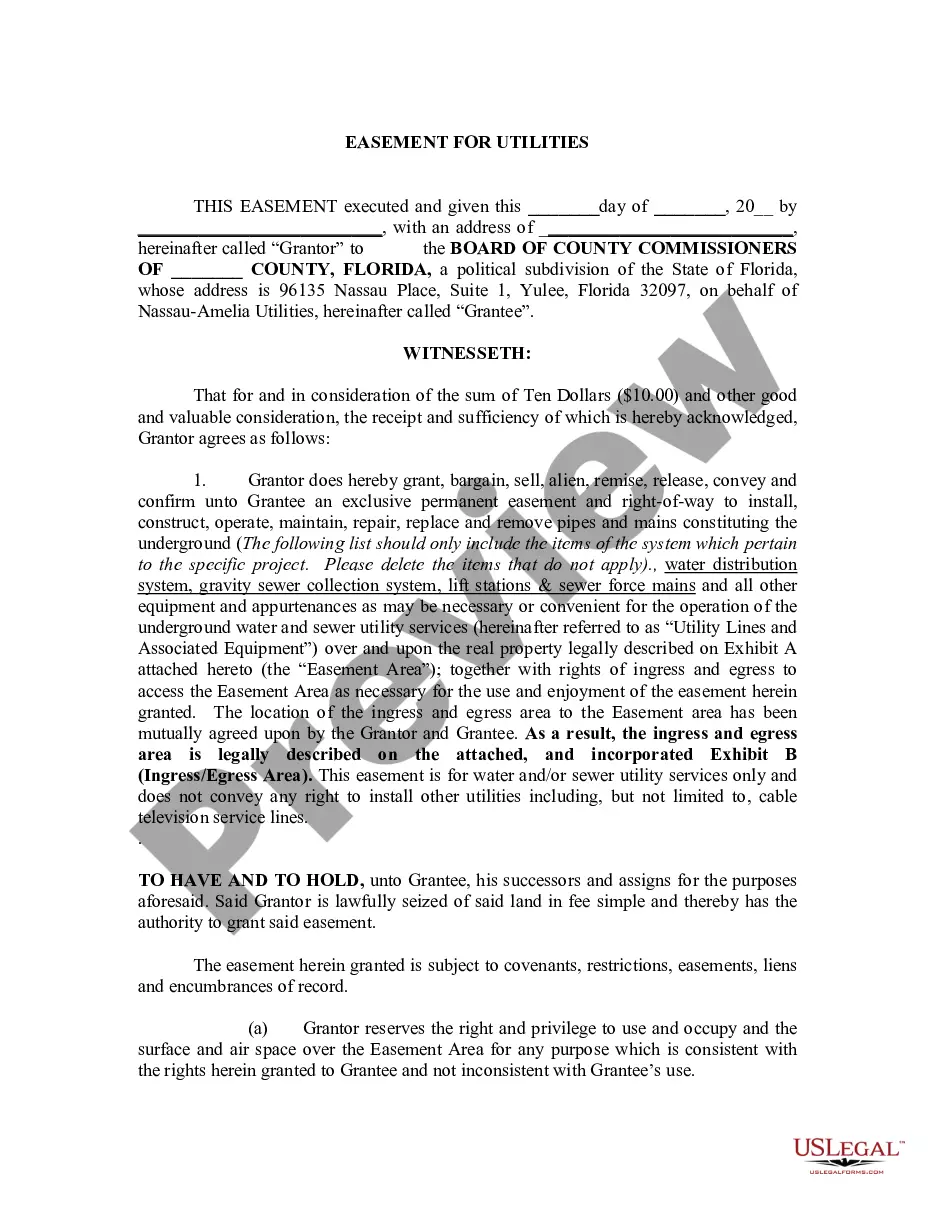
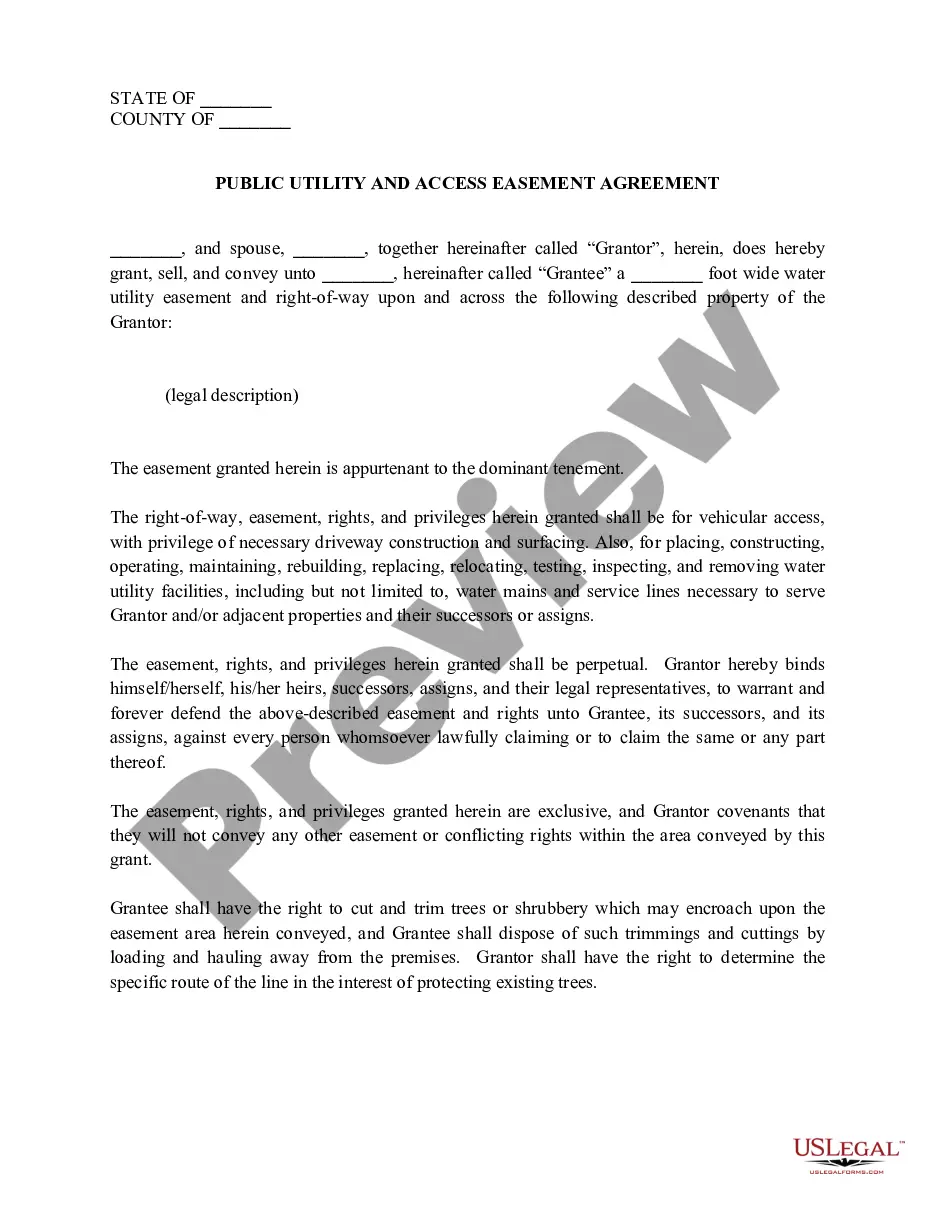
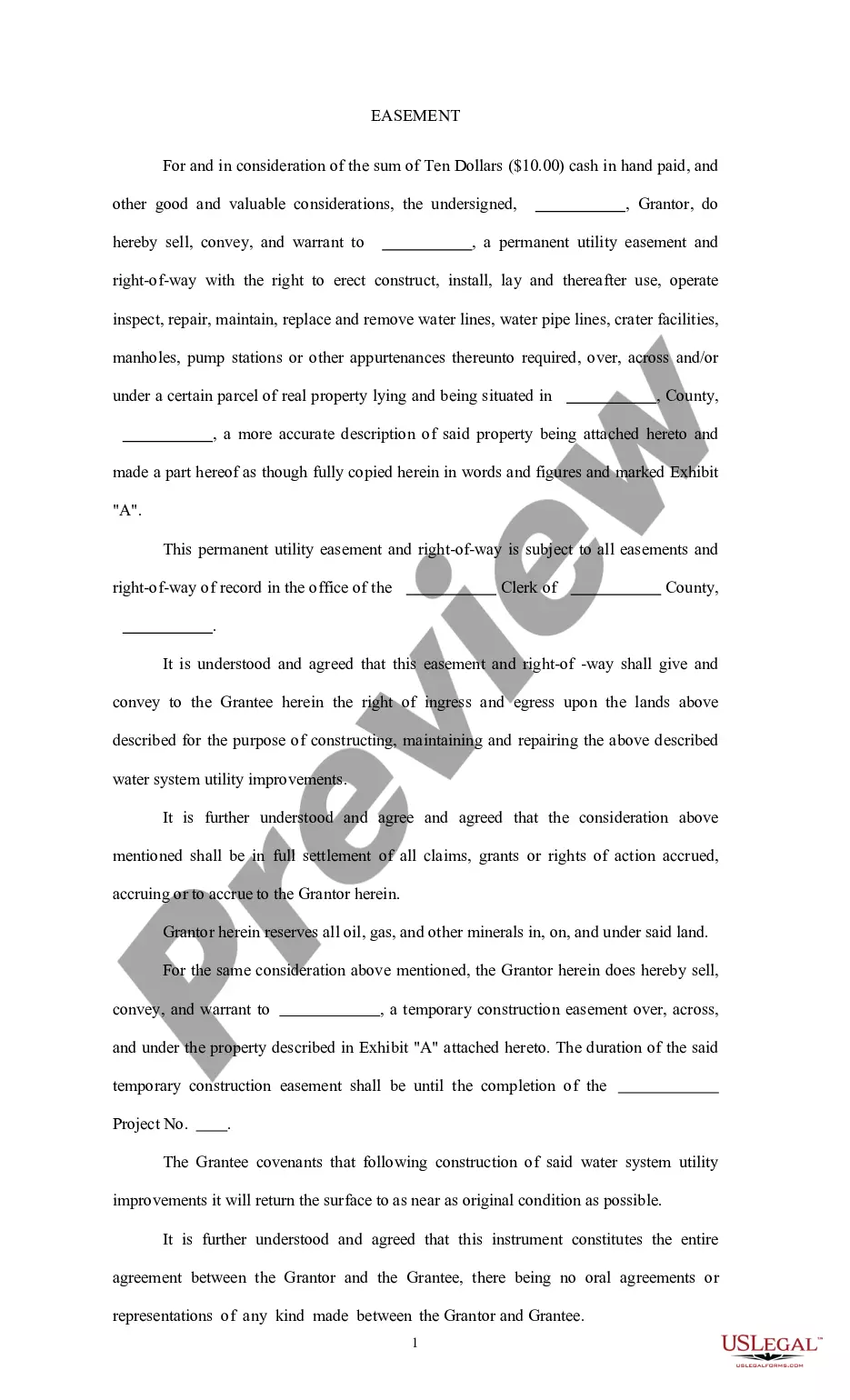
The Public Utility Easement is a legal document that grants a utility company the right to access and maintain public utilities on a property. Unlike other easements, this specific form is designed to ensure that the utility can run pipes, cables, or other infrastructure across private lands without conflicting with the property owner's rights. It outlines the terms under which the utility can operate, providing both the property owner and the utility with clear guidelines and protection.
Key parts of this document
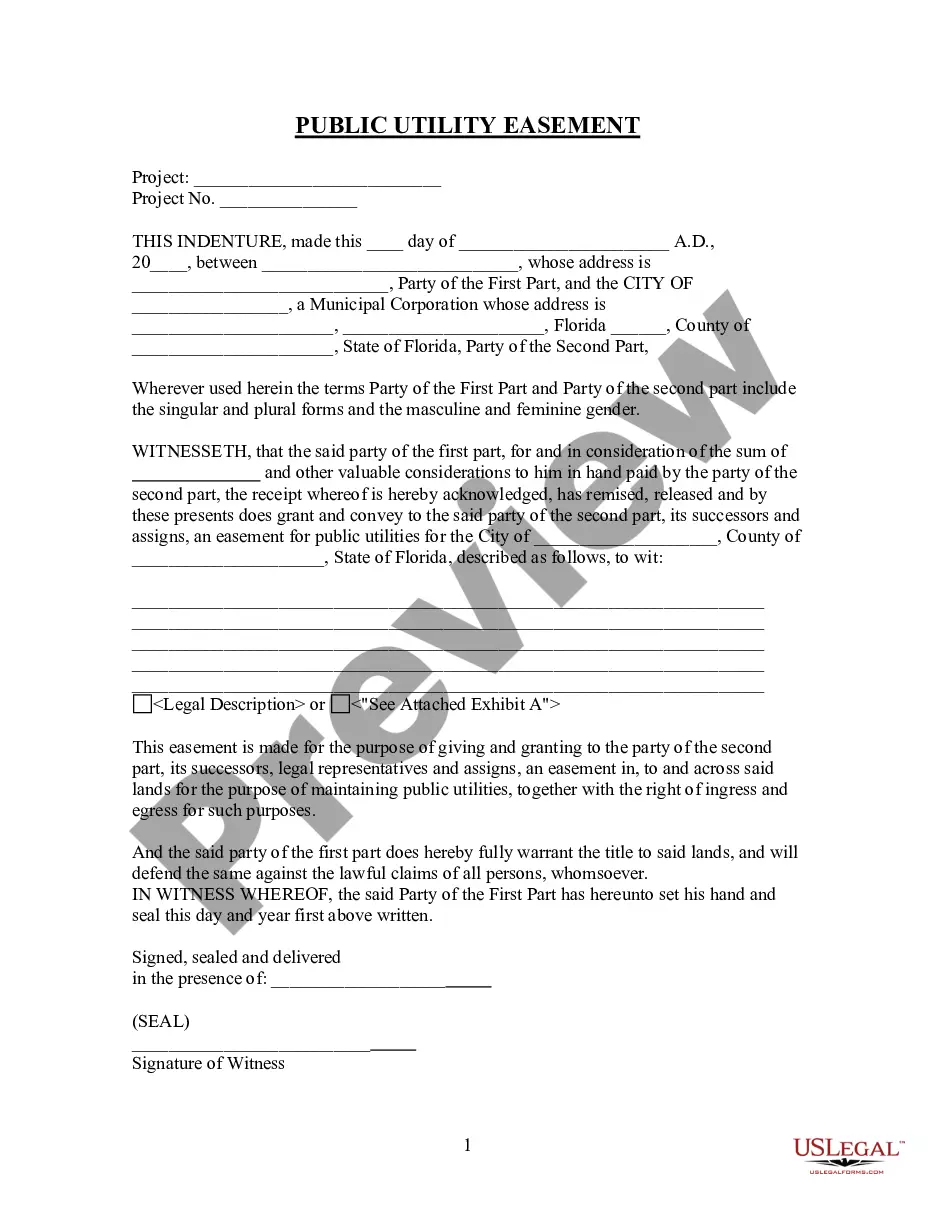
- Project details: Includes the project name and identification number.
- Parties involved: Identification of the parties granting and receiving the easement.
- Legal description: A detailed description of the property involved in the easement.
- Grant of easement: The specific rights granted for utility maintenance and access.
- Warrant of title: Assurance that the party granting the easement holds clear title to the property.
When to use this form
This form should be used when a utility company requires access to a private property for the installation, maintenance, or repair of its services. Examples include allowing electric, gas, water, or telecommunications companies to set up lines or pipelines. It is necessary when the utility must work on a property that does not belong to them, ensuring a legal basis for their activities.
Intended users of this form
- Property owners wishing to grant utility companies access to their land.
- Utility companies that need to formalize their right to use another's property for public utilities.
- Municipal corporations involved in infrastructure projects requiring easements.
- Real estate professionals facilitating agreements between landowners and utility providers.
Completing this form step by step
- Identify the parties: Fill in the names and addresses of the property owner and the utility company.
- Specify the property: Provide a legal description of the land affected by the easement.
- Detail the project: Include the project name and number associated with the easement.
- Review the terms: Ensure all rights and responsibilities are clearly outlined in the easement grant.
- Sign and date: Both parties must sign the document to make it legally binding.
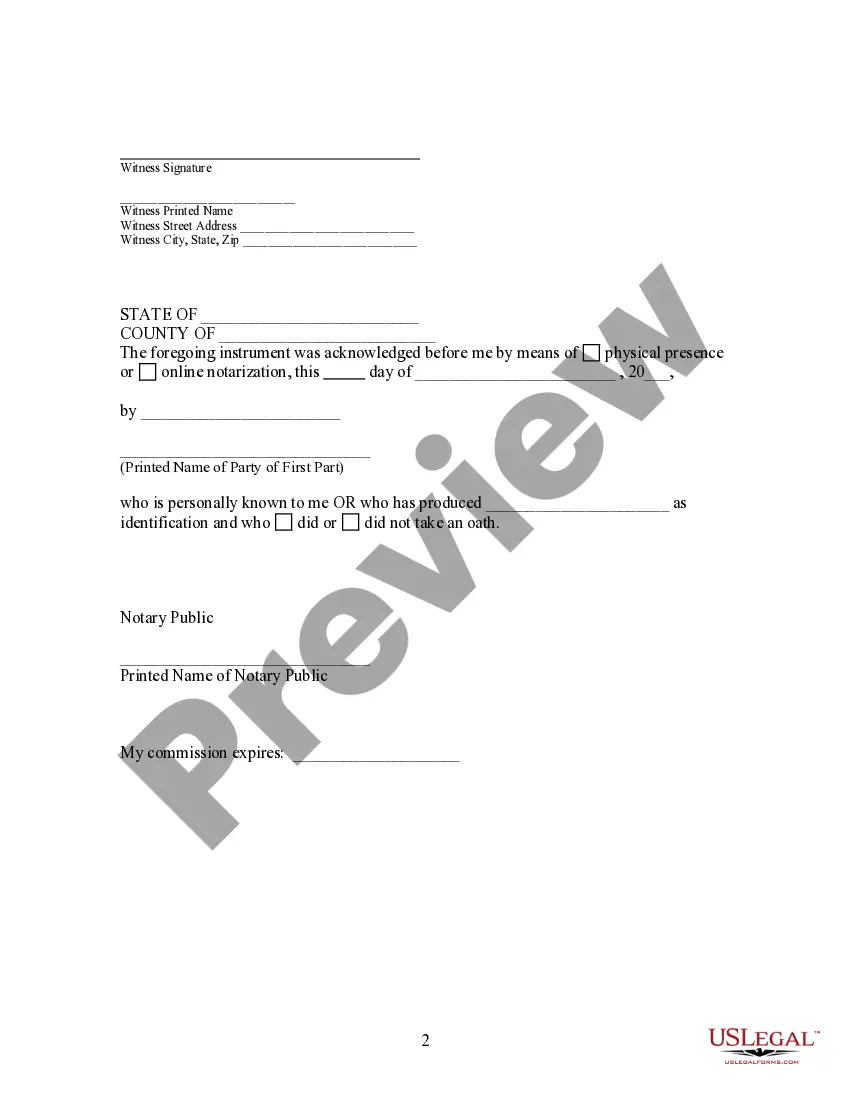
Does this document require notarization?
This form needs to be notarized to ensure legal validity. US Legal Forms provides secure online notarization powered by Notarize, allowing you to complete the process through a verified video call, available anytime.
Get your form ready online
Our built-in tools help you complete, sign, share, and store your documents in one place.
Make edits, fill in missing information, and update formatting in US Legal Forms—just like you would in MS Word.
Download a copy, print it, send it by email, or mail it via USPS—whatever works best for your next step.
Sign and collect signatures with our SignNow integration. Send to multiple recipients, set reminders, and more. Go Premium to unlock E-Sign.
If this form requires notarization, complete it online through a secure video call—no need to meet a notary in person or wait for an appointment.
We protect your documents and personal data by following strict security and privacy standards.

Make edits, fill in missing information, and update formatting in US Legal Forms—just like you would in MS Word.

Download a copy, print it, send it by email, or mail it via USPS—whatever works best for your next step.

Sign and collect signatures with our SignNow integration. Send to multiple recipients, set reminders, and more. Go Premium to unlock E-Sign.

If this form requires notarization, complete it online through a secure video call—no need to meet a notary in person or wait for an appointment.

We protect your documents and personal data by following strict security and privacy standards.
Common mistakes to avoid
- Failing to include a detailed legal description of the property.
- Not clearly identifying the responsibilities for maintenance and repair.
- Overlooking the signature of both parties, which can invalidate the document.
- Using outdated or incorrect project information.
Why complete this form online
- Convenience of downloading and filling out the form from home.
- Editable format to easily customize details specific to your situation.
- Access to accurate and up-to-date legal language drafted by licensed attorneys.
Looking for another form?


Form popularity
FAQ
An example of a Florida Public Utility Easement could be an area designated for utilities such as water, electricity, or gas lines. For instance, a utility company might have a permanent easement running through a residential property to access and maintain power lines. These easements allow necessary infrastructure to exist while respecting property boundaries. It is essential to recognize how these easements can impact your property.
Generally, a property owner cannot block a Florida Public Utility Easement if it is legally established and documented. Utility companies have rights to access the easement for maintenance or installation purposes. However, owners can discuss specific concerns with the utility company to find a mutually agreeable solution. Understanding your rights and responsibilities is crucial.
To fill out a Florida Public Utility Easement form, start by obtaining the correct document from a reliable source, like uslegalforms. Ensure you provide accurate property information and include the utility company's details. Clearly describe the easement's purpose and any limitations or conditions. Double-check everything before submitting to avoid delays.
Yes, you can run utilities on a Florida Public Utility Easement. These easements are specifically designated areas where utility companies can install, maintain, and operate their services. It is essential, however, to comply with local regulations and to obtain any necessary permits. If you are unsure about the requirements, you can use US Legal Forms to find resources and templates that guide you in navigating the legal aspects of utility easements.
While it is natural to wish to maintain your property rights, refusing a utility easement can often lead to legal challenges or service interruptions. Florida law generally sides with utility companies when the easement serves a public need. Seeking advice from a legal professional or utilizing resources from uslegalforms can provide clarity on your options regarding a Florida Public Utility Easement.
Florida utility easement laws grant utility companies the right to use specific portions of private property for the purpose of installing and maintaining essential services, like electricity and water. These laws also define the obligations of property owners and utility providers, protecting against unauthorized use. Understanding these laws helps both homeowners and utility companies navigate their responsibilities effectively.
Refusing a utility easement in Florida can be complicated. If the easement is necessary for public utility services, you may have limited options to deny it. It’s essential to consult with a legal expert familiar with Florida Public Utility Easement laws to understand your rights and potential implications.
In Florida, the width of a utility easement can vary based on the utility service provider and local regulations. Generally, these easements range from 10 to 20 feet, but it’s important to confirm with your local authority or utility provider. A Florida Public Utility Easement gives utility companies the right to access certain areas for maintenance and installation, ensuring reliable service to residents.