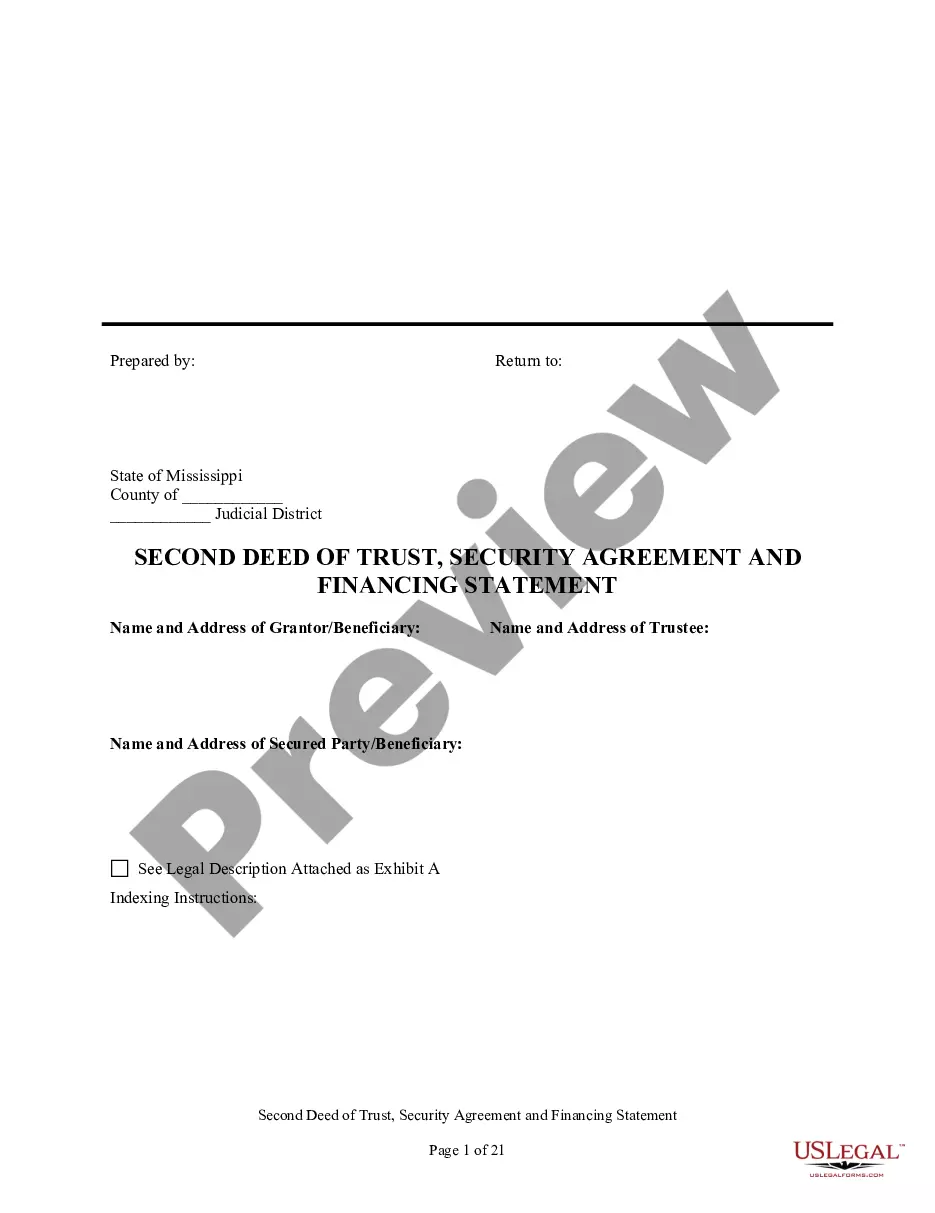
Mississippi Second Deed of Trust, Security Agreement, and Financing Statement
About this form
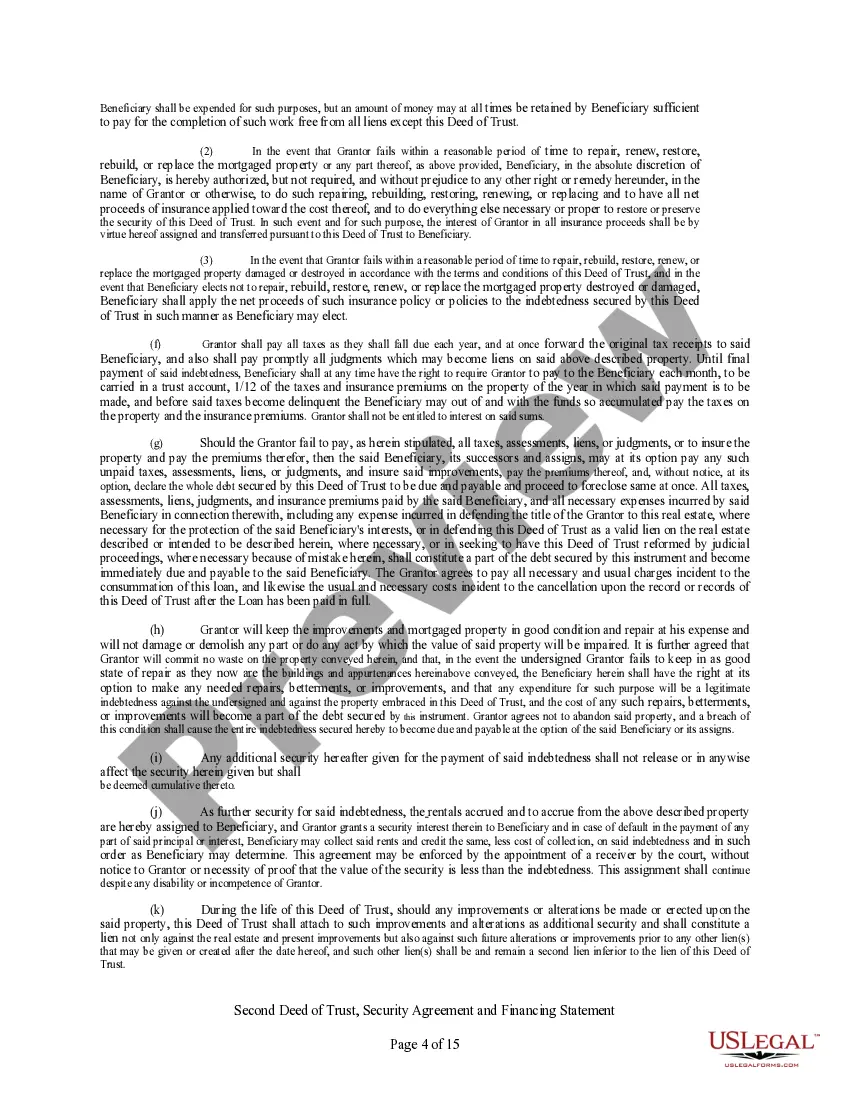
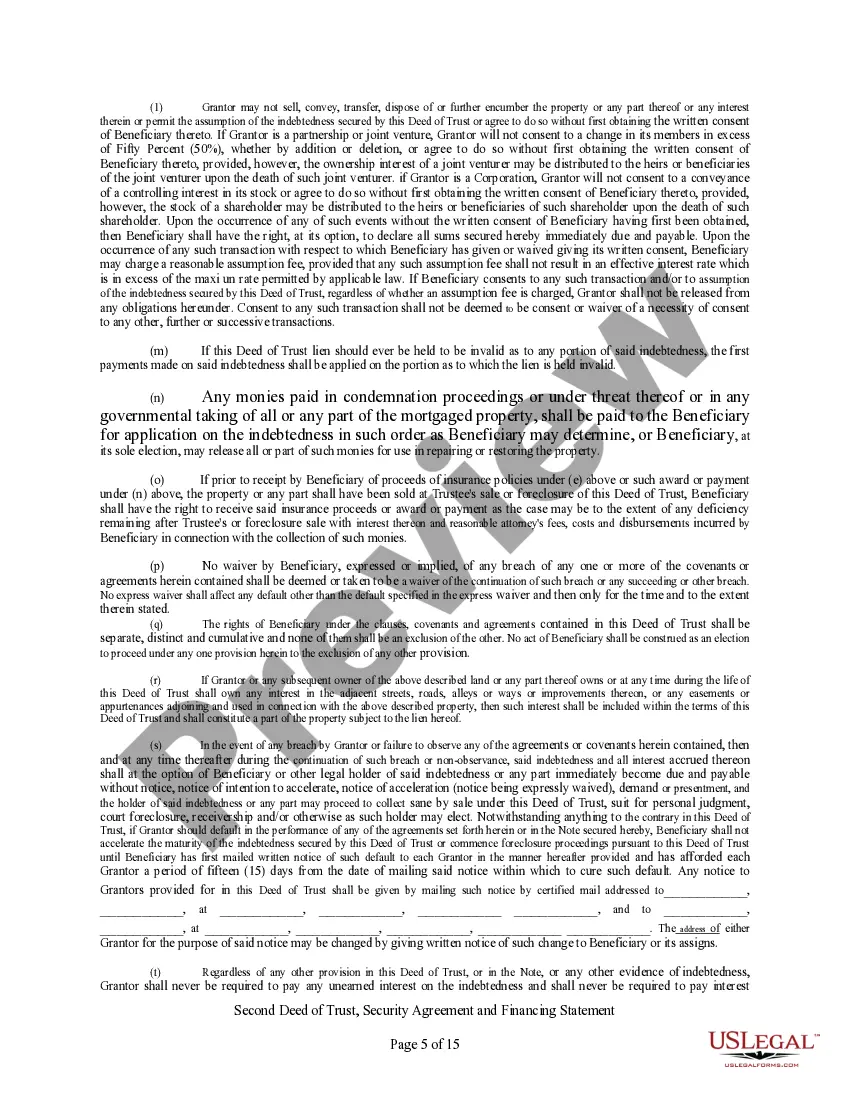
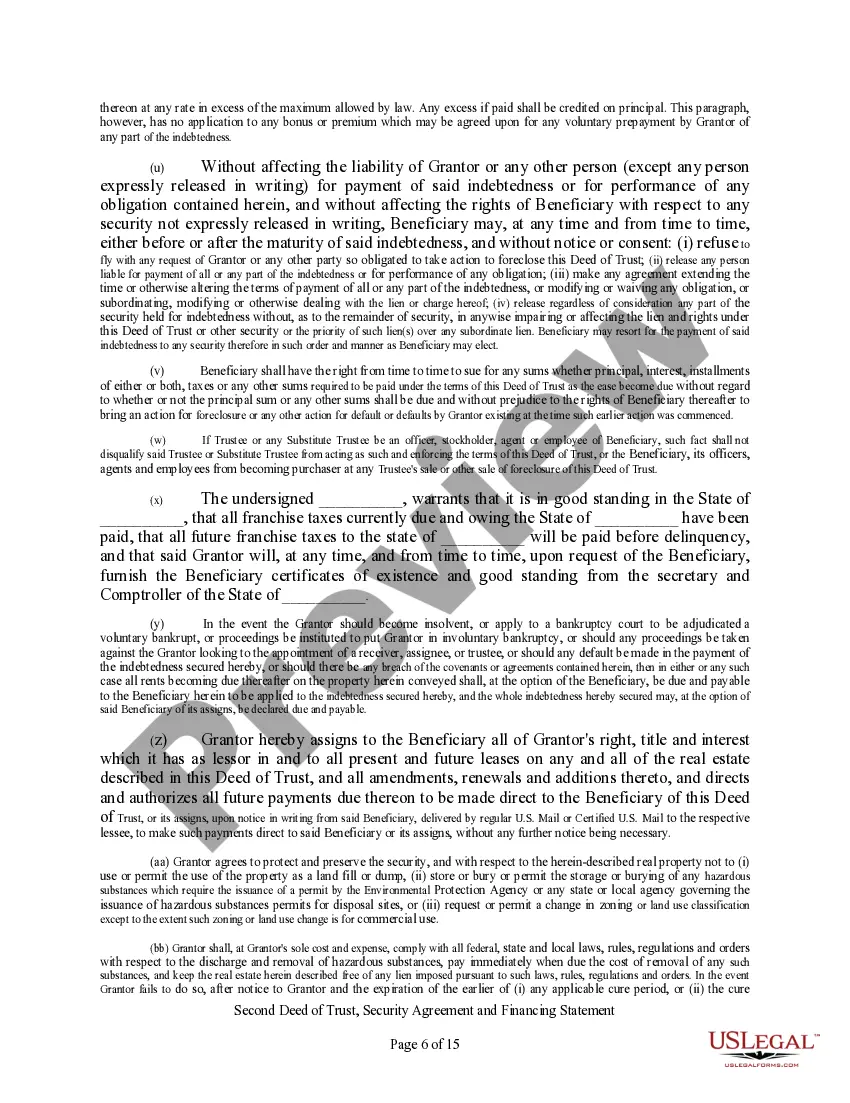
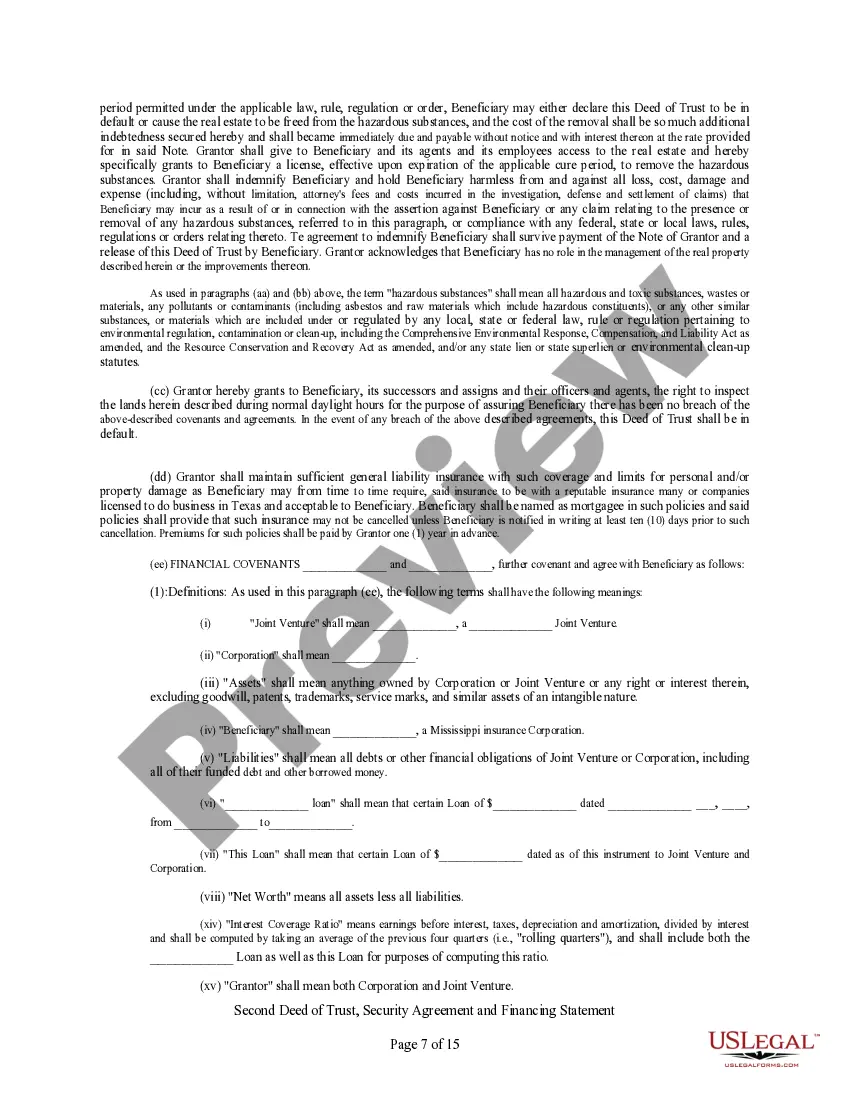
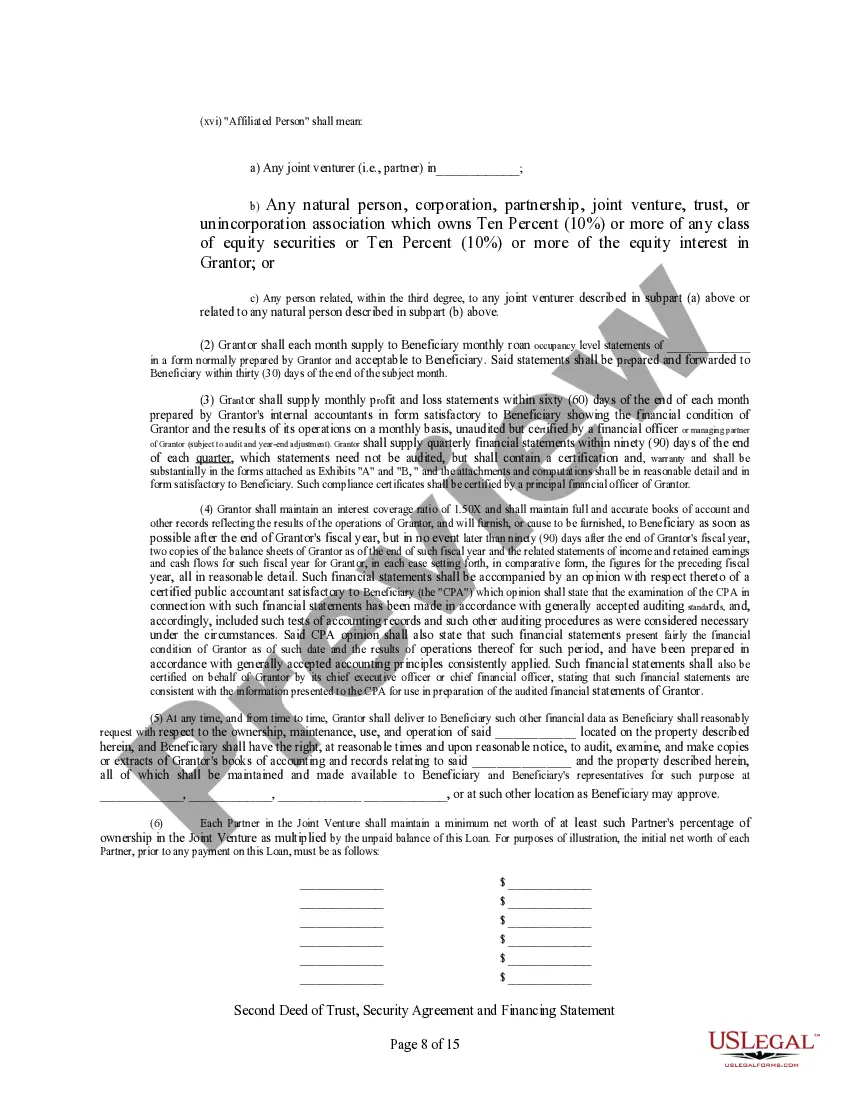
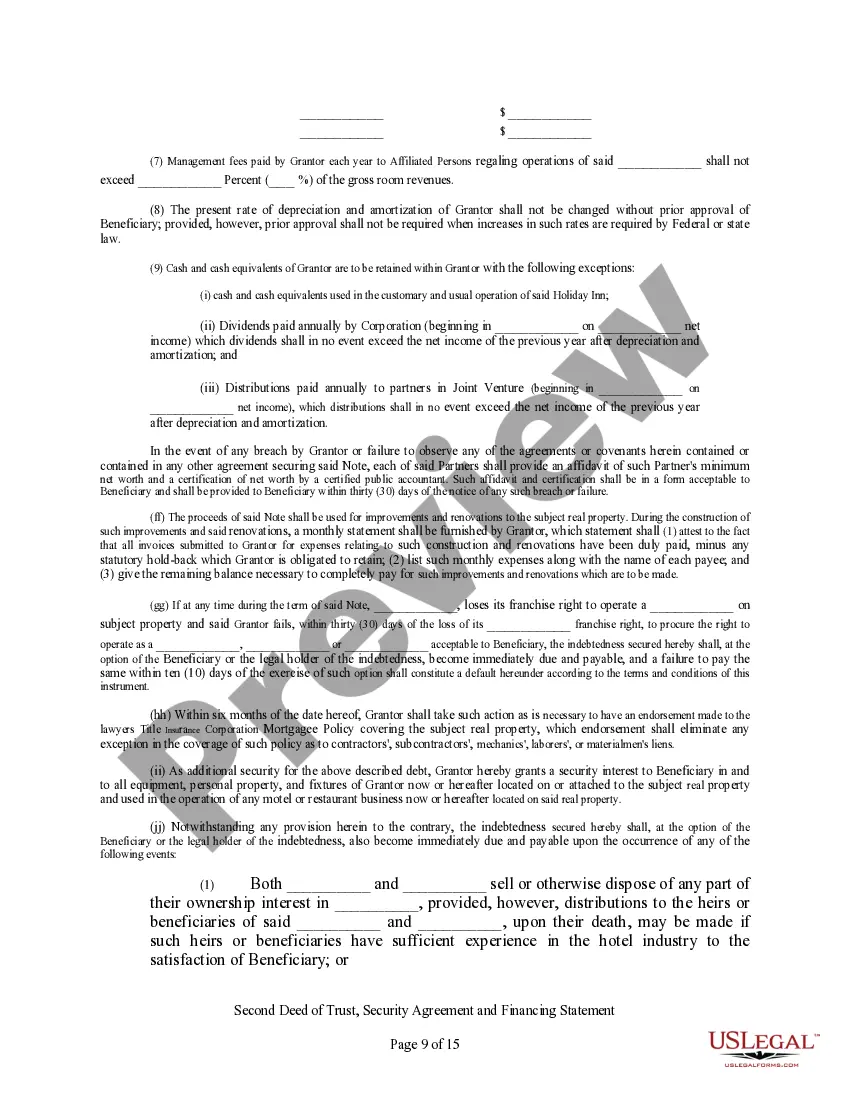
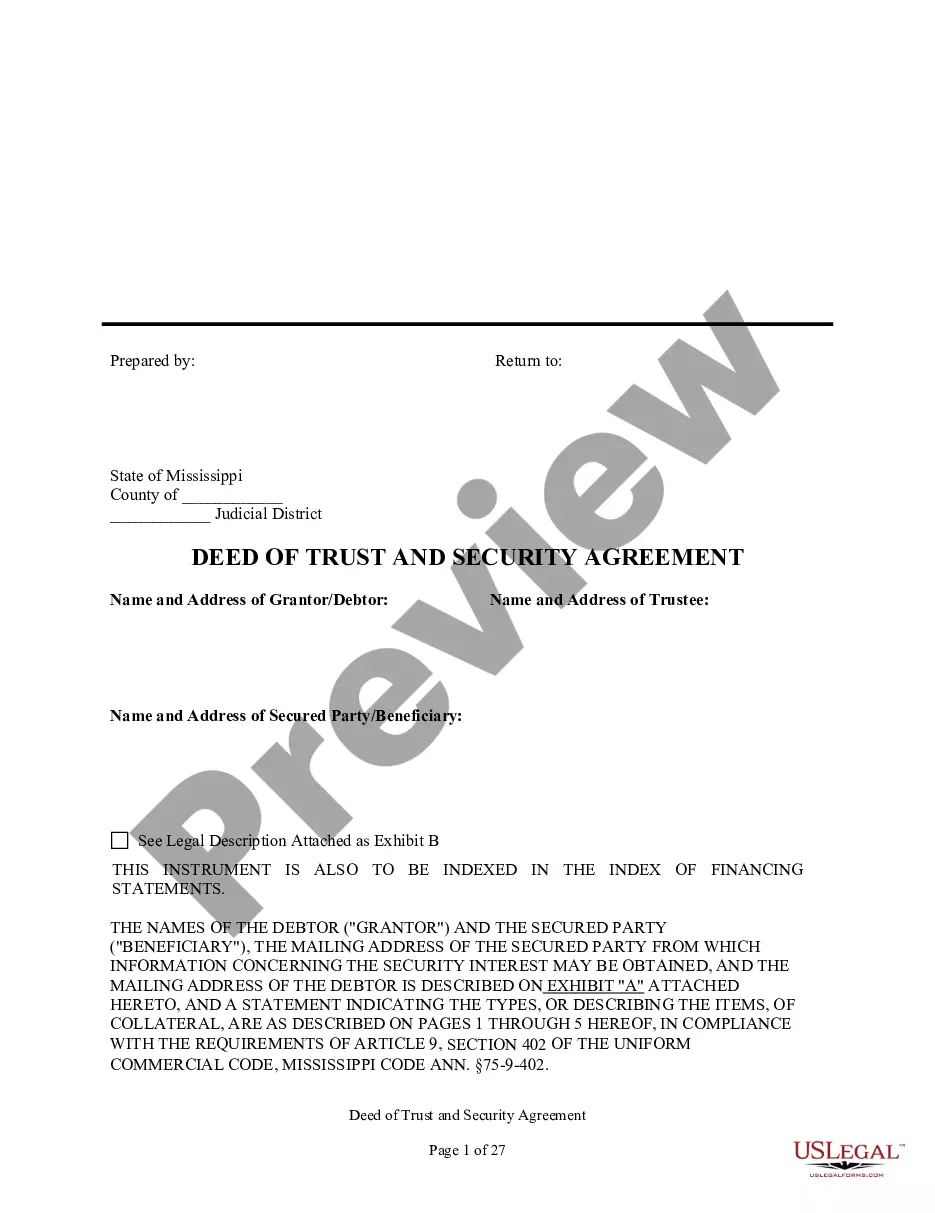
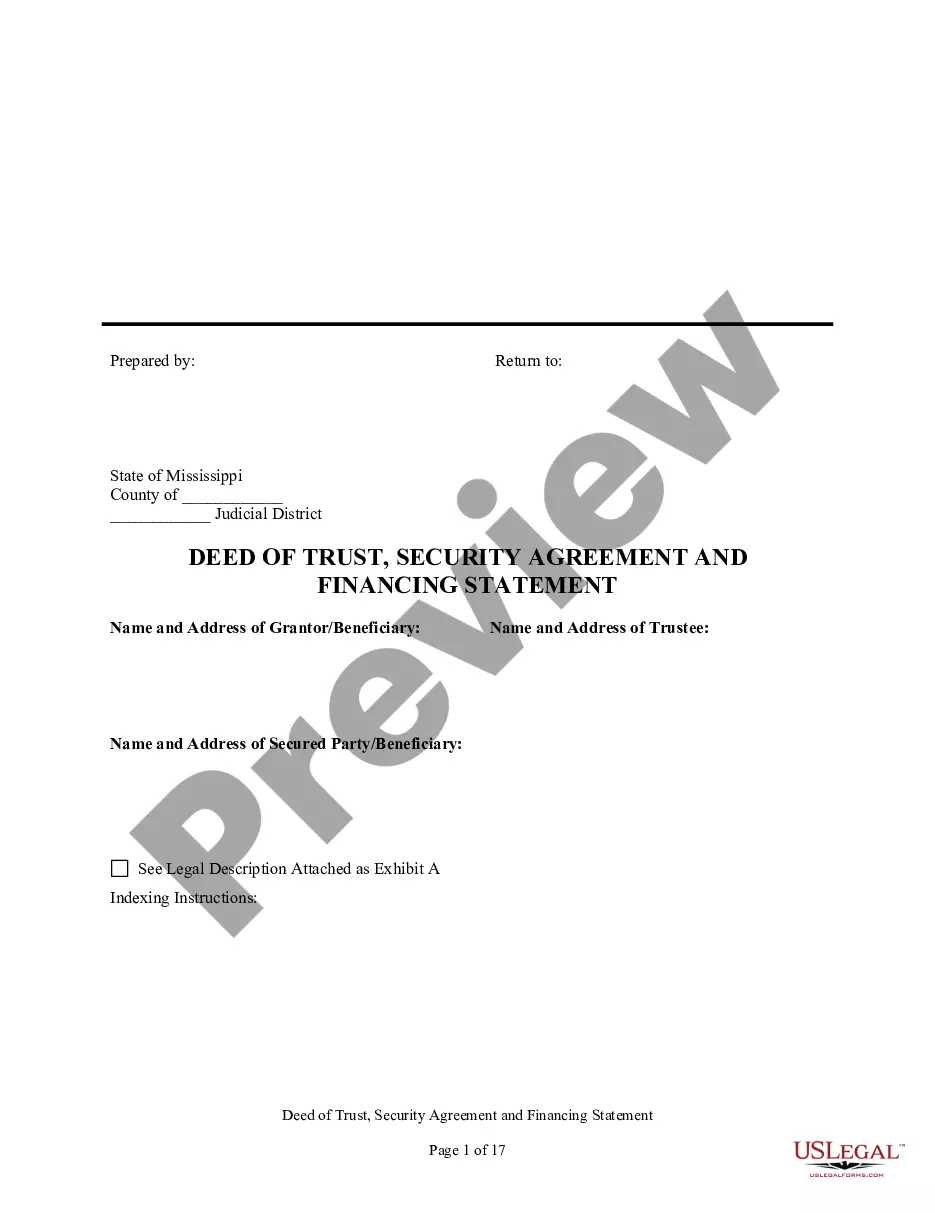
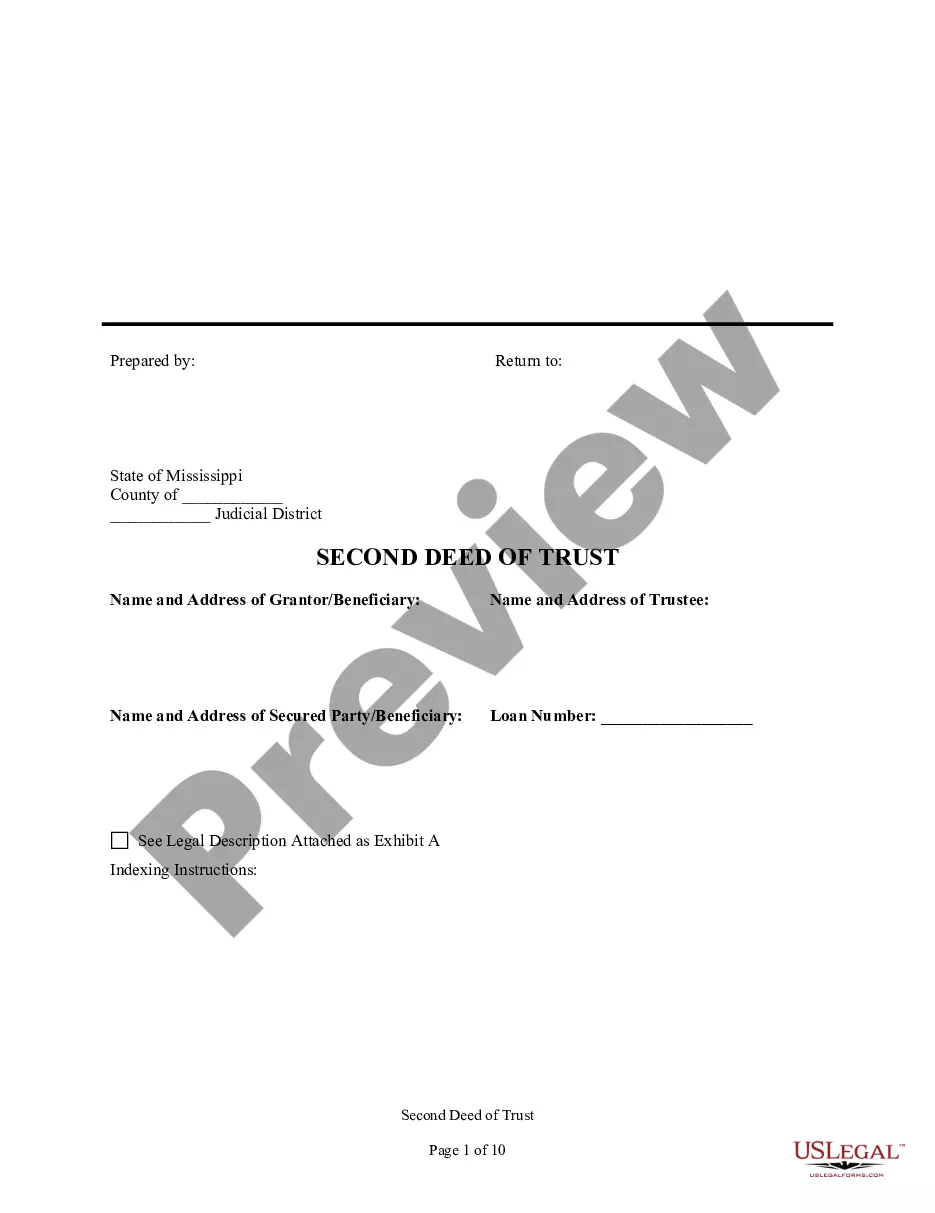
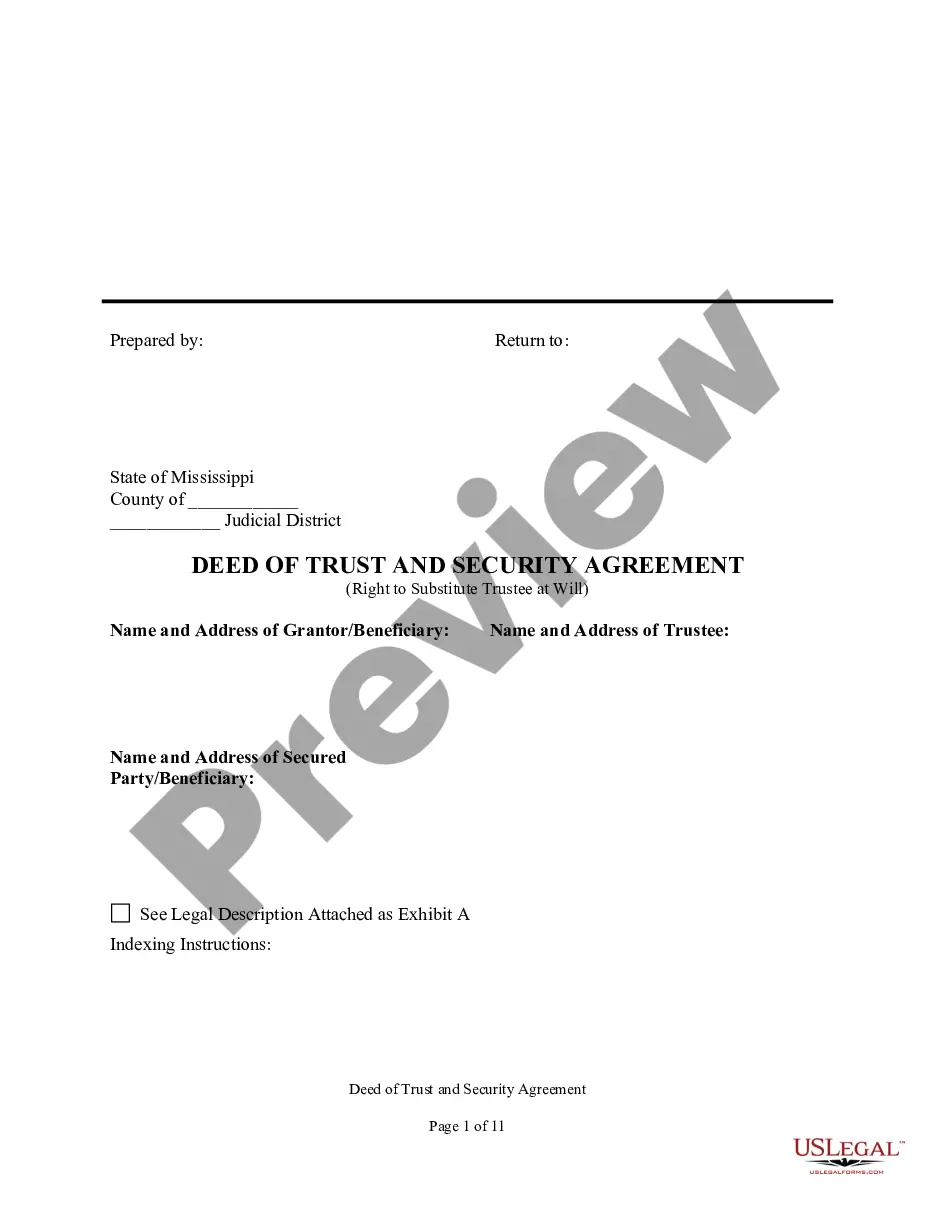
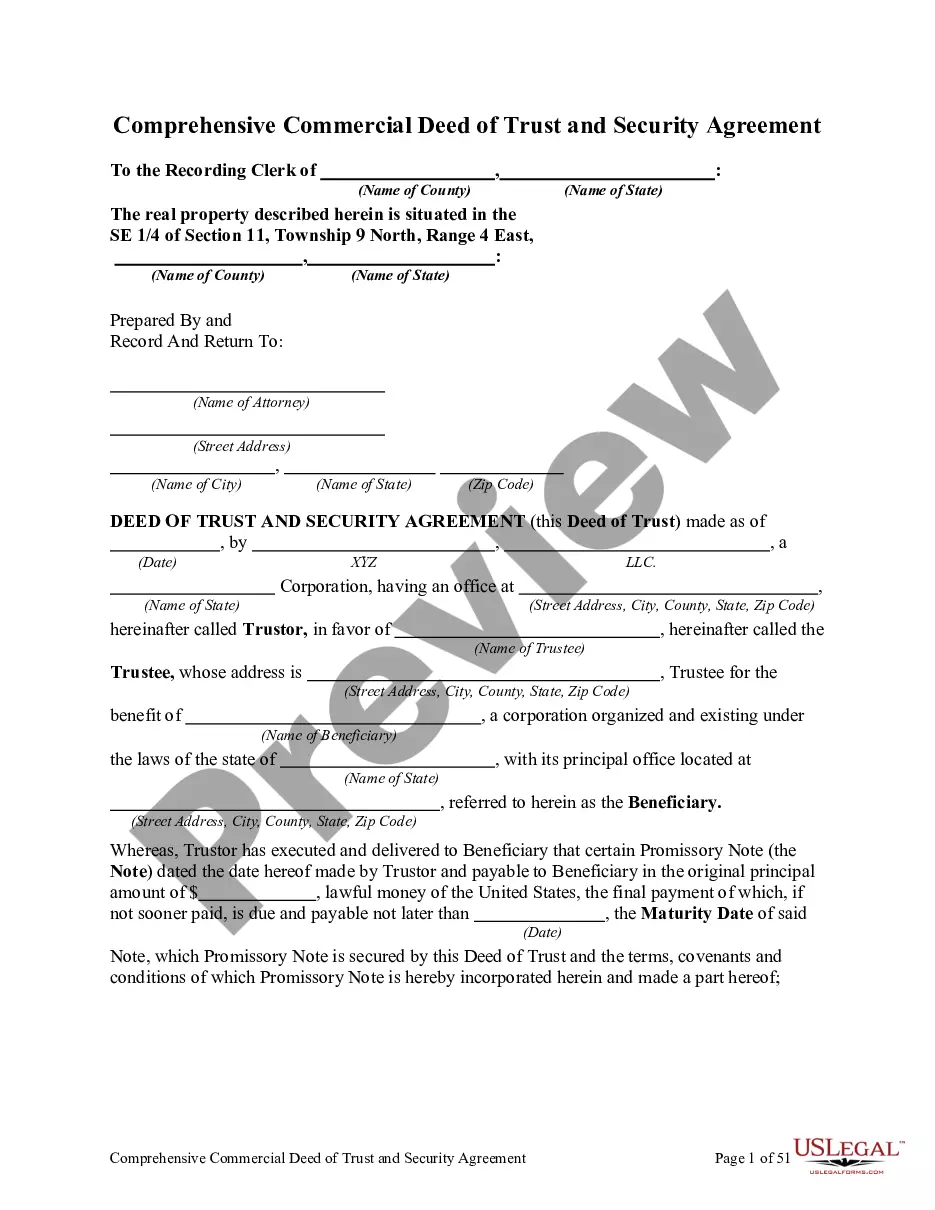
The Second Deed of Trust, Security Agreement, and Financing Statement is a legal document that establishes a secondary lien on a property, subordinate to an existing Deed of Trust. This form is specifically tailored to comply with Mississippi state laws and is essential when borrowing against a property that already has a primary lien. Unlike other deed forms, this document clarifies the rights and obligations of the borrower (Grantor) and the lender (Beneficiary) regarding their interests in the secured property.
Key parts of this document
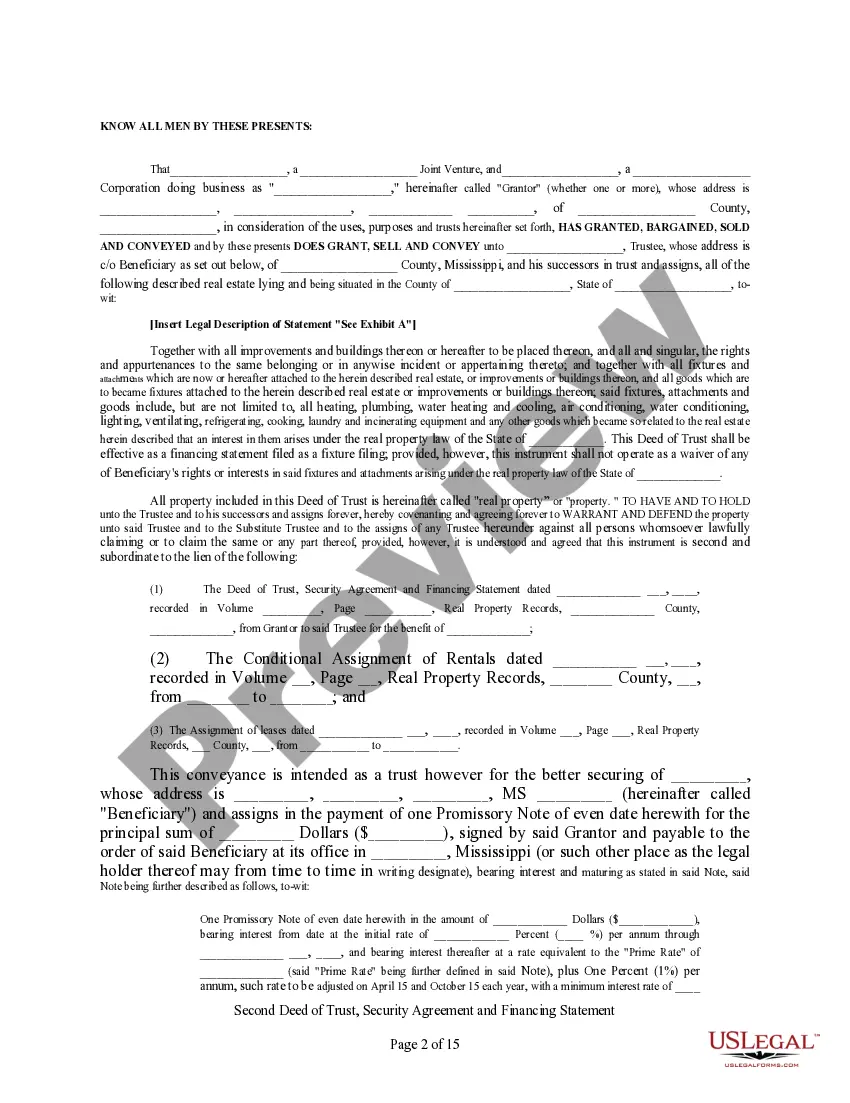
- Legal description of the property secured
- Details regarding existing liens and obligations
- Terms of payment and interest rates
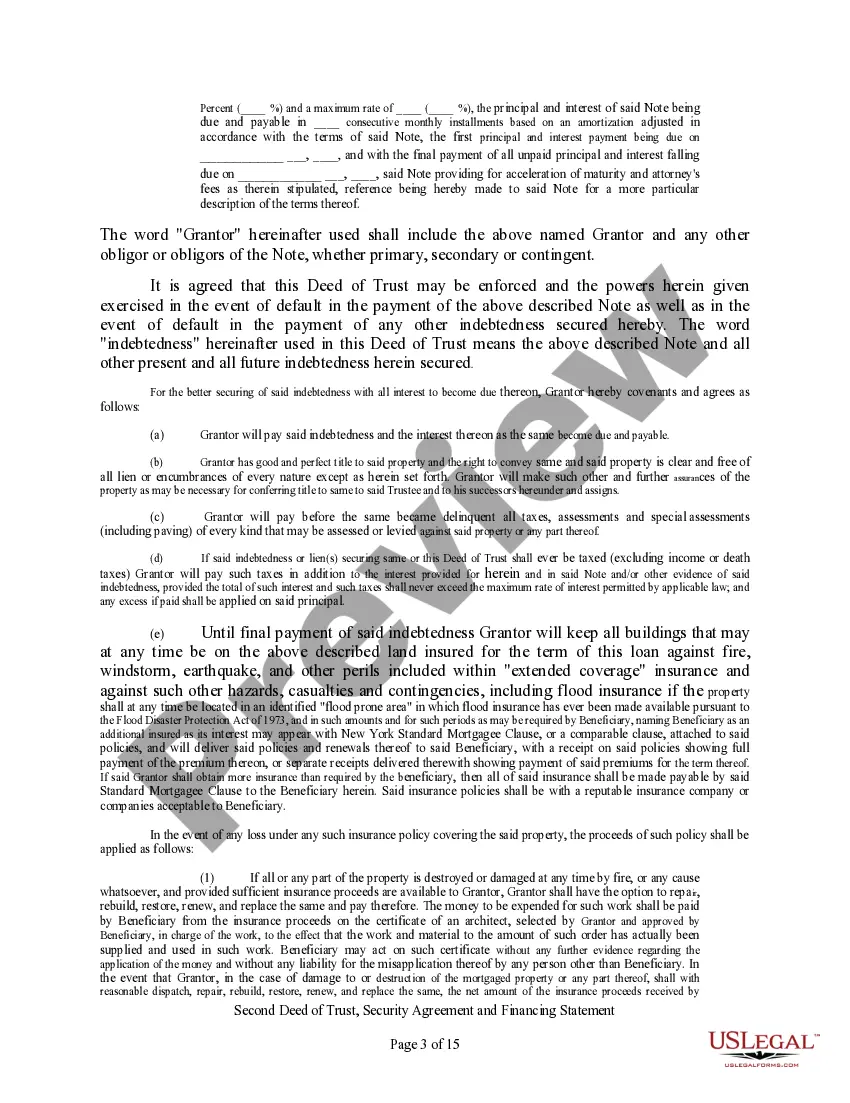
- Covenants and agreements by the Grantor regarding property maintenance and insurance
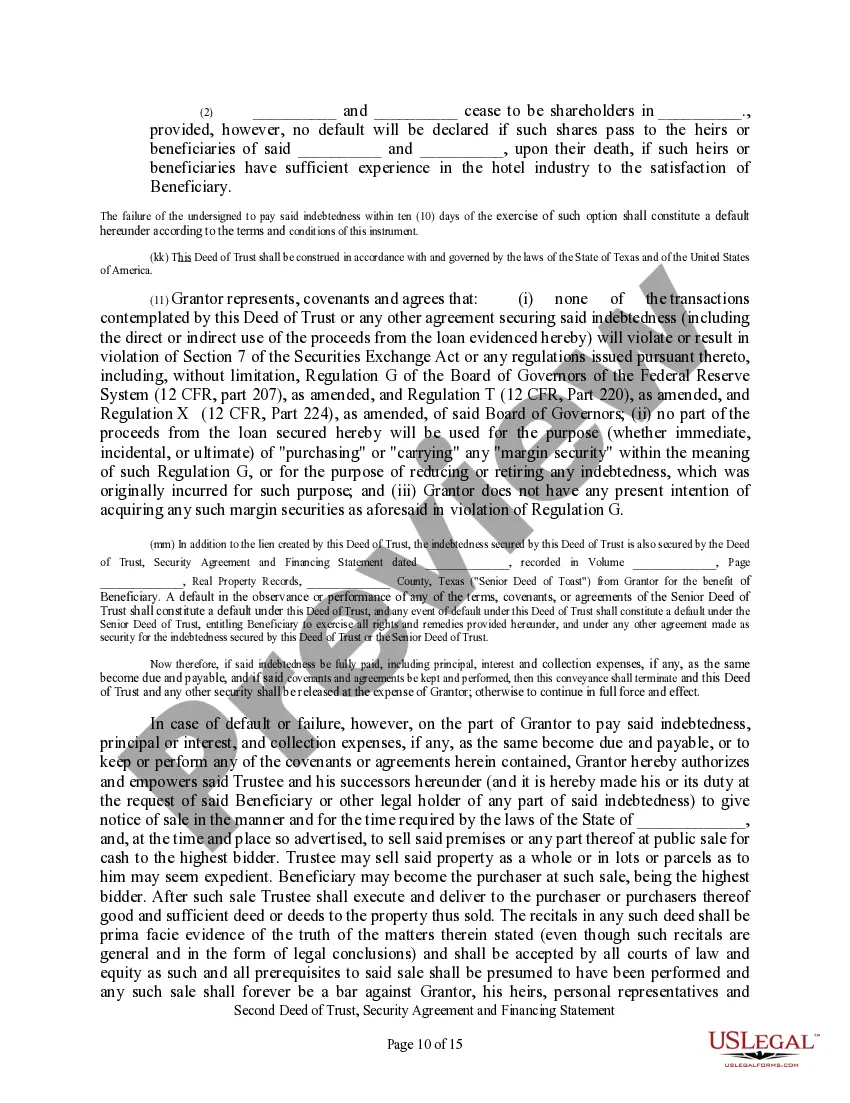
- Rights of the Beneficiary in case of default

When to use this form
This form is used when a property owner wants to take out an additional loan secured by their property, where a primary loan already exists. It is necessary for situations like refinancing existing debt, securing funds for renovations, or consolidating loans without disrupting existing agreements. By establishing a secondary lien, it ensures the new lender has a defined interest in the property while acknowledging the priority of the existing lender.
Who should use this form
- Property owners seeking additional financing secured by their real estate
- Lenders providing a secondary loan or line of credit
- Real estate professionals assisting clients with property financing
- Attorneys and legal advisers drafting or reviewing financing documents
Steps to complete this form
- Identify all parties involved, including the Grantor and Beneficiary.
- Insert the legal description of the property in the designated section.
- Specify the terms of the loan, including amount and interest rates.
- Detail existing liens, including any prior Deeds of Trust.
- Review and sign the form in the presence of a notary if required.
Notarization guidance
This form needs to be notarized to ensure legal validity. US Legal Forms provides secure online notarization powered by Notarize, allowing you to complete the process through a verified video call, available anytime.
Get your form ready online
Our built-in tools help you complete, sign, share, and store your documents in one place.
Make edits, fill in missing information, and update formatting in US Legal Forms—just like you would in MS Word.
Download a copy, print it, send it by email, or mail it via USPS—whatever works best for your next step.
Sign and collect signatures with our SignNow integration. Send to multiple recipients, set reminders, and more. Go Premium to unlock E-Sign.
If this form requires notarization, complete it online through a secure video call—no need to meet a notary in person or wait for an appointment.
We protect your documents and personal data by following strict security and privacy standards.

Make edits, fill in missing information, and update formatting in US Legal Forms—just like you would in MS Word.

Download a copy, print it, send it by email, or mail it via USPS—whatever works best for your next step.

Sign and collect signatures with our SignNow integration. Send to multiple recipients, set reminders, and more. Go Premium to unlock E-Sign.

If this form requires notarization, complete it online through a secure video call—no need to meet a notary in person or wait for an appointment.

We protect your documents and personal data by following strict security and privacy standards.
Avoid these common issues
- Failing to accurately describe the property, which may render the document invalid.
- Omitting the details of existing liens that could affect the priority of the new loan.
- Not ensuring that all parties sign the document, which is necessary for legal enforceability.
- Ignoring state-specific requirements that could impact the validity of the form.
Advantages of online completion
- Convenient access to legal forms available for instant download.
- Editability allows for tailoring the document to specific needs without needing a lawyer for every change.
- Reliability of documents drafted by licensed attorneys, ensuring they meet legal standards.
Legal use & context
- The Second Deed of Trust creates a legally binding obligation between the Grantor and the Beneficiary.
- This document is enforceable under Mississippi law and establishes the priority of claims against the property.
- Failure to meet the obligations outlined in this agreement may result in foreclosure proceedings.
Looking for another form?

Form popularity
FAQ
The person who owns the property usually signs a promissory note and a deed of trust. The deed of trust does not have to be recorded to be valid.
The UCC-1 Financing Statement is filed to protect a lender's or creditor's security interest by giving public notice that there is a right to take possession of and sell certain assets for repayment of a specific debt with a certain debtor.
Party information: names and addresses of the trustor(s), trustee(s), beneficiary(ies), and guarantor(s) (if applicable) Property details: full address of the property and its legal description (which can be obtained from the County Recorder's Office)
Yes, there are key differences between the two. With a deed, you transfer the ownership of the property to one party. In contrast, a deed of trust does not mean the holder owns the property. In an arrangement involving a deed of trust, the borrower signs a contract with the lender with details regarding the loan.
A UCC-1 financing statement (an abbreviation for Uniform Commercial Code-1) is a legal form that a creditor files to give notice that it has or may have an interest in the personal property of a debtor (a person who owes a debt to the creditor as typically specified in the agreement creating the debt).
A deed of trust includes most of the same information as a mortgage, including: The original loan amount. A legal description of the property that's used as security or collateral for the mortgage. The names of parties: trustee, trustor, and beneficiary.
A UCC-1 financing statementalso sometimes referred to as a 'UCC-1 filing,' a 'UCC lien,' or simply a 'UCC-1'is a form that creditors use to create a lien against a debtor's property.
Some owners are put off using solicitors duke to the deed of trust cost. Individuals can write out their own, and use someone else as a witness. However, this may have errors or not be a legally binding document. The investment of getting a deed of trust when buying a property is often worth it in the long term.
The financing statement describes the types of collateral or personal property that is pledged against the value of the loan, and it identifies the parties that have an interest or stake in the collateral if the debtor defaults.