Mississippi Commercial Deed of Trust and Security Agreement
Overview of this form
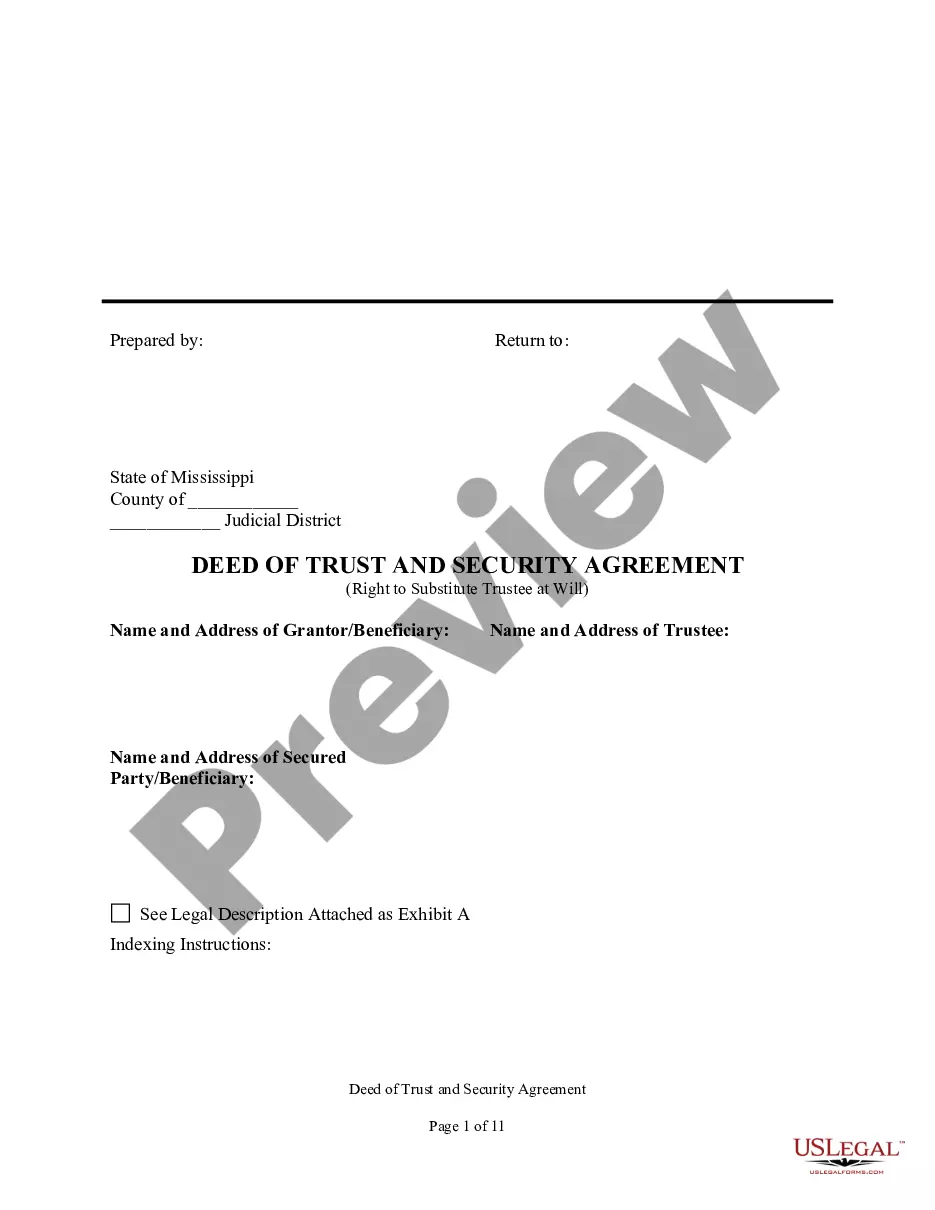
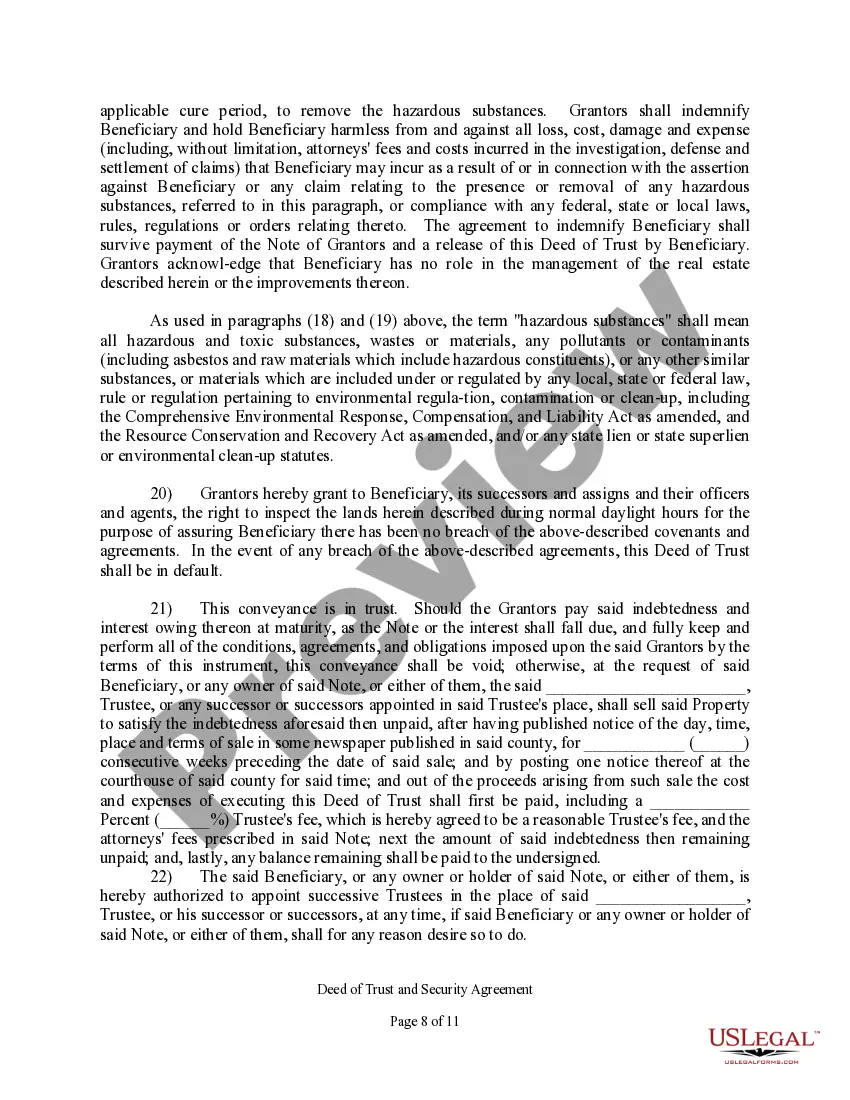
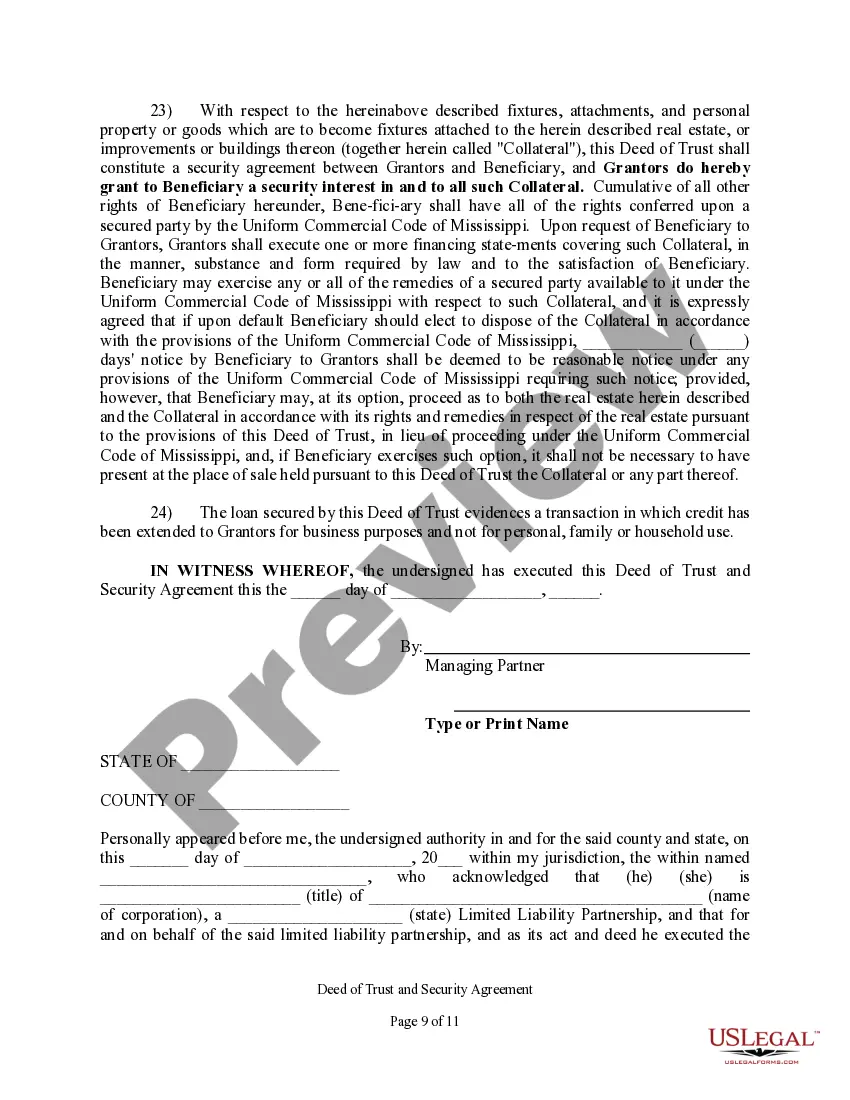
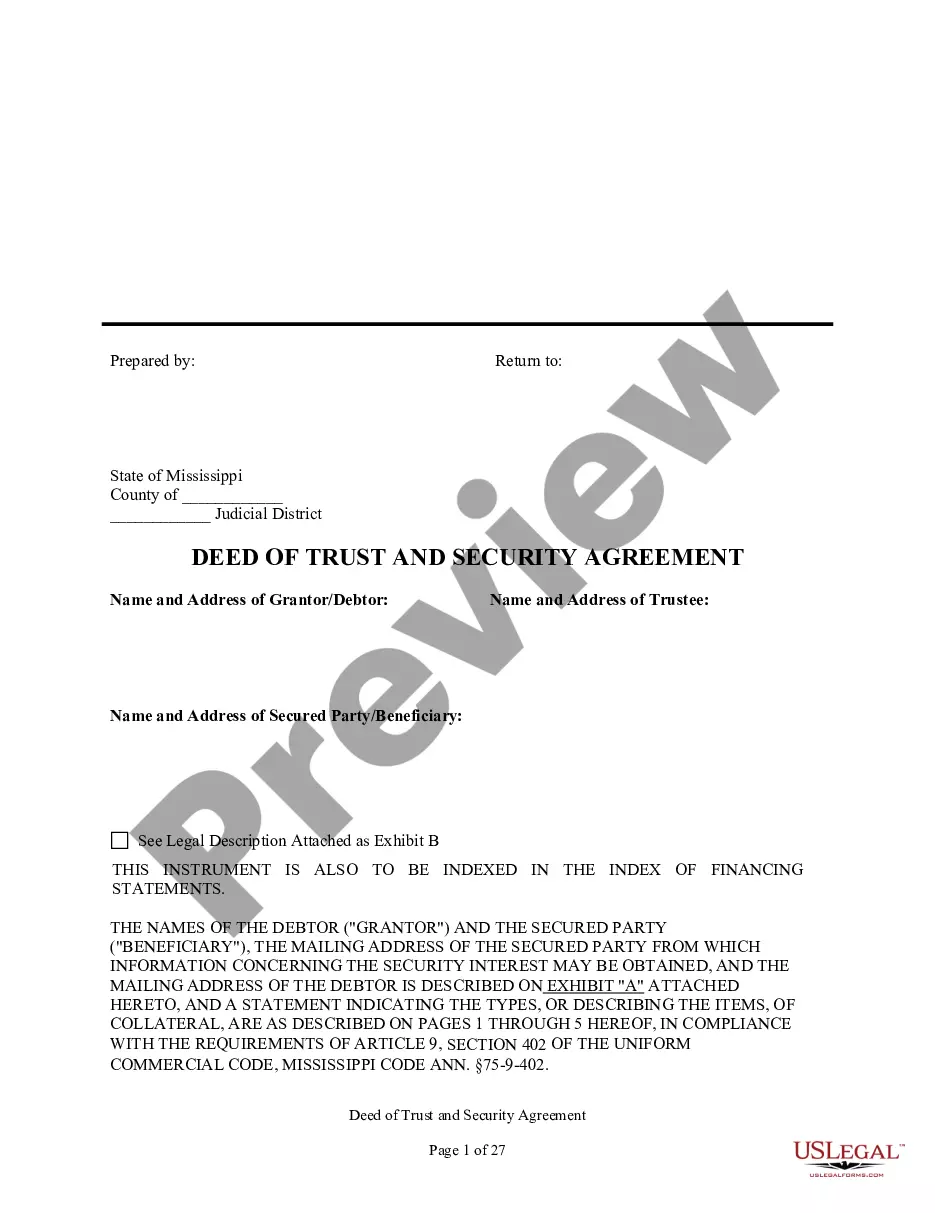
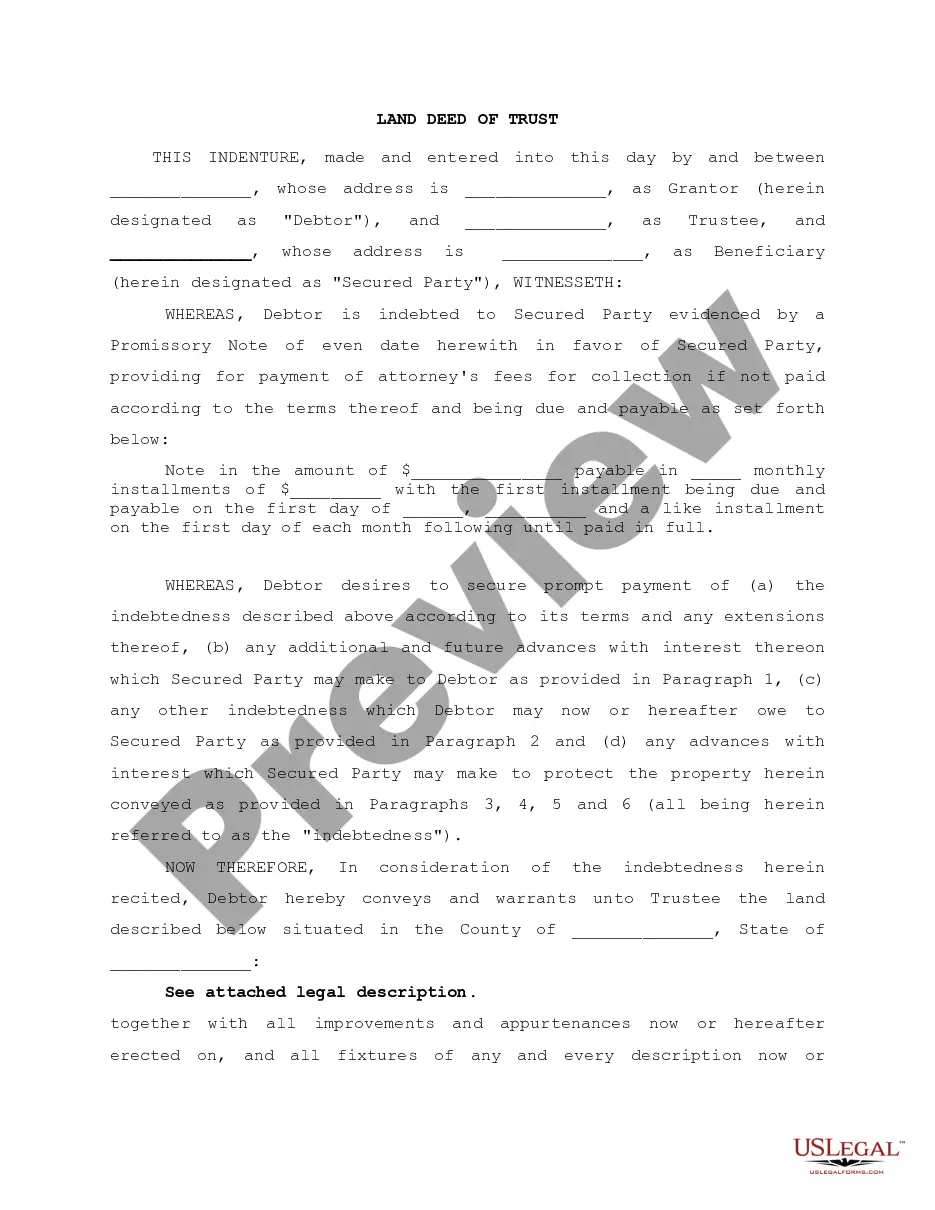
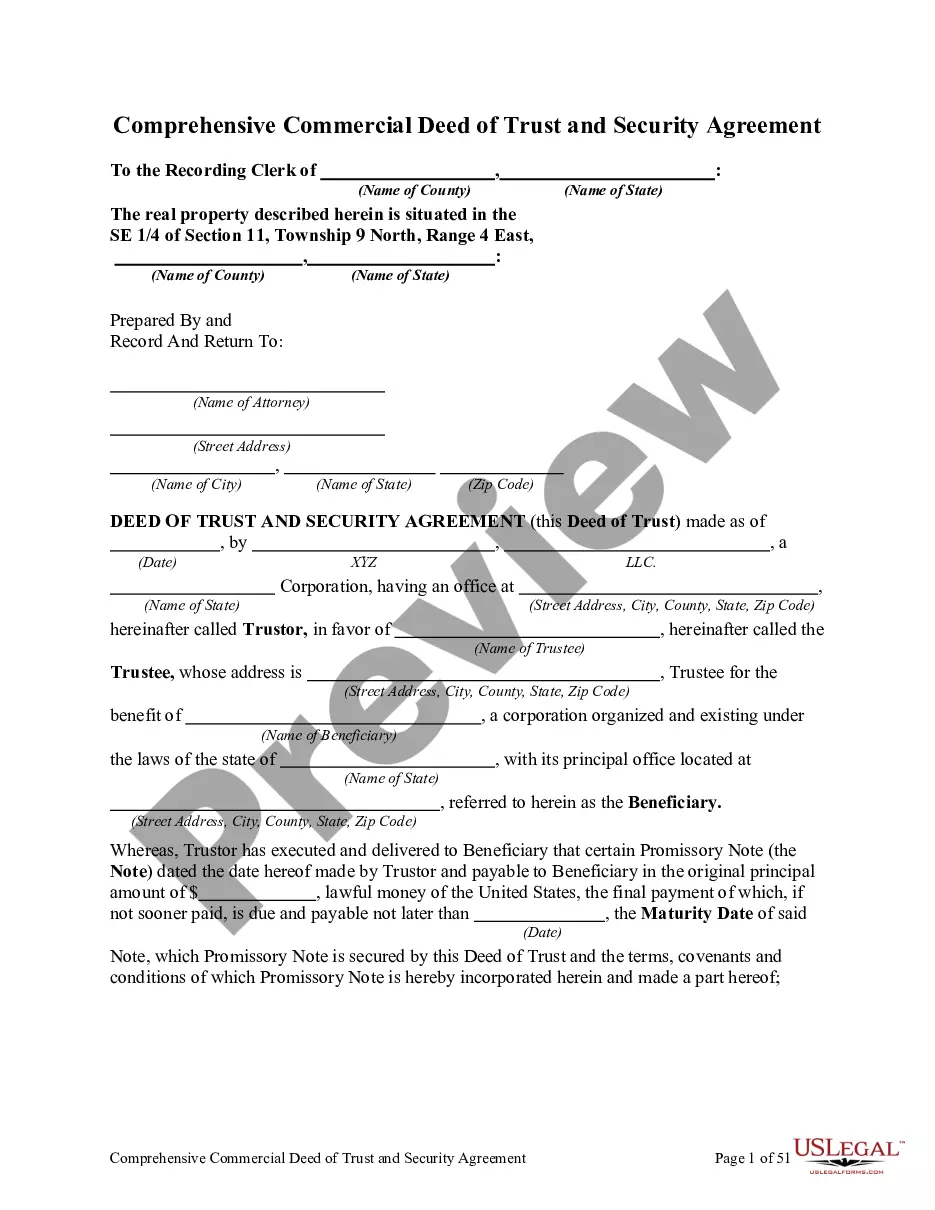
The Commercial Deed of Trust and Security Agreement is a legal document used for securing a mortgage on commercial real estate in Mississippi. This form establishes a trust relationship between the borrower (Grantors) and the lender (Beneficiary), allowing the lender to claim the property if the borrower defaults on their obligations. Unlike a traditional mortgage, a deed of trust involves a third party (the Trustee) who holds the title until the loan is repaid, providing additional security for lenders.
Main sections of this form
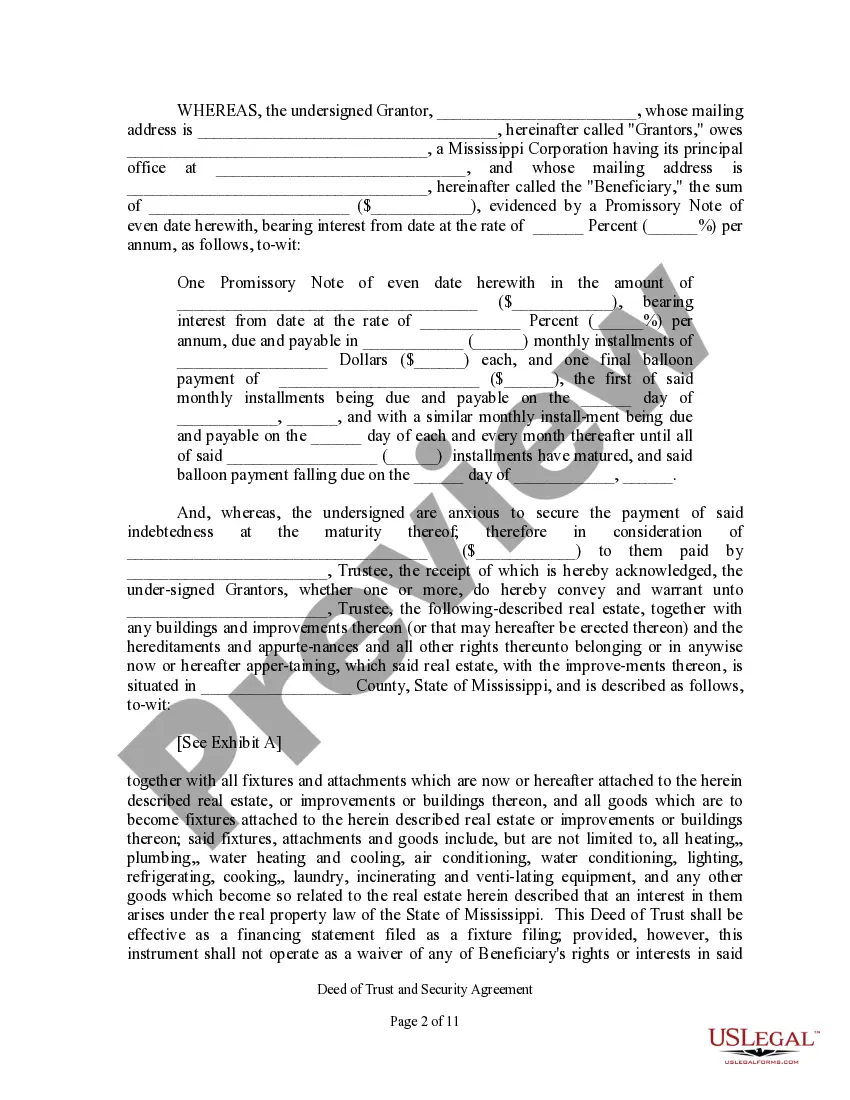
- Promissory Note: Details the amount borrowed, interest rate, and repayment terms.
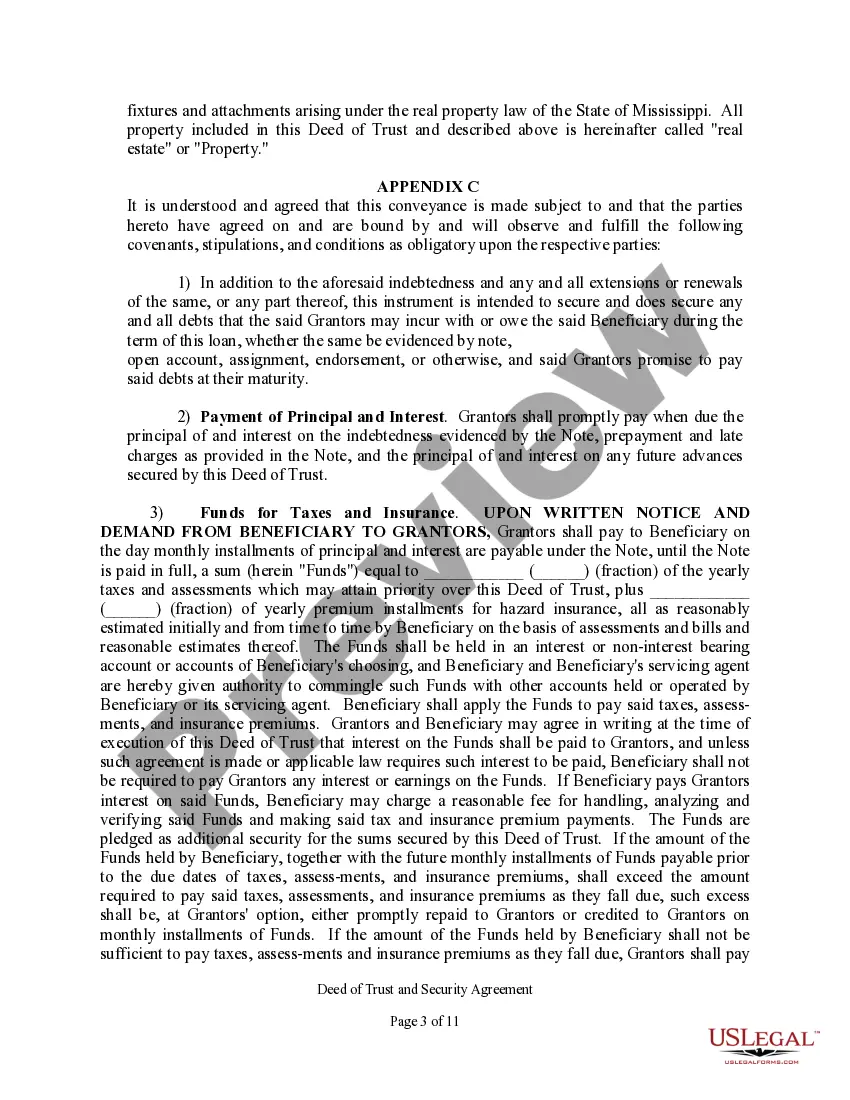
- Security Interest: Grants the lender a security interest in the property and any attached fixtures.
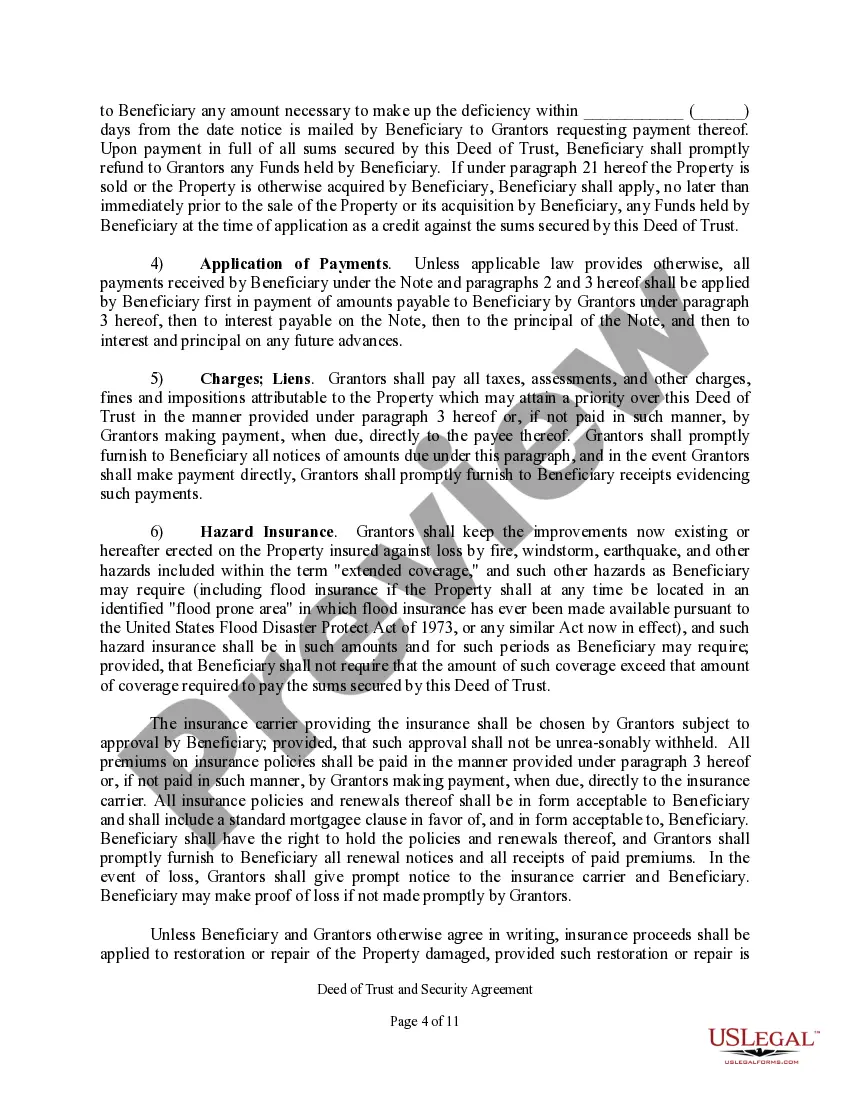
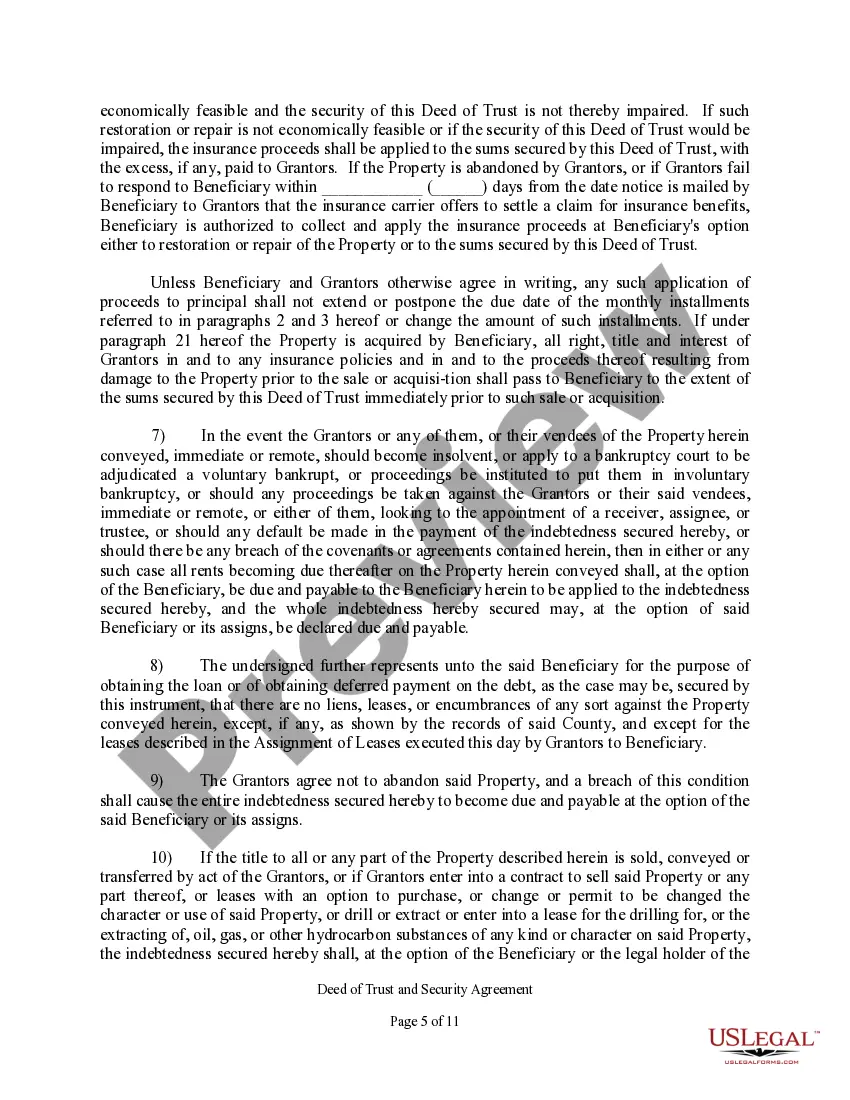
- Covenants: Lists obligations for the borrower regarding maintenance, insurance, and compliance with laws.
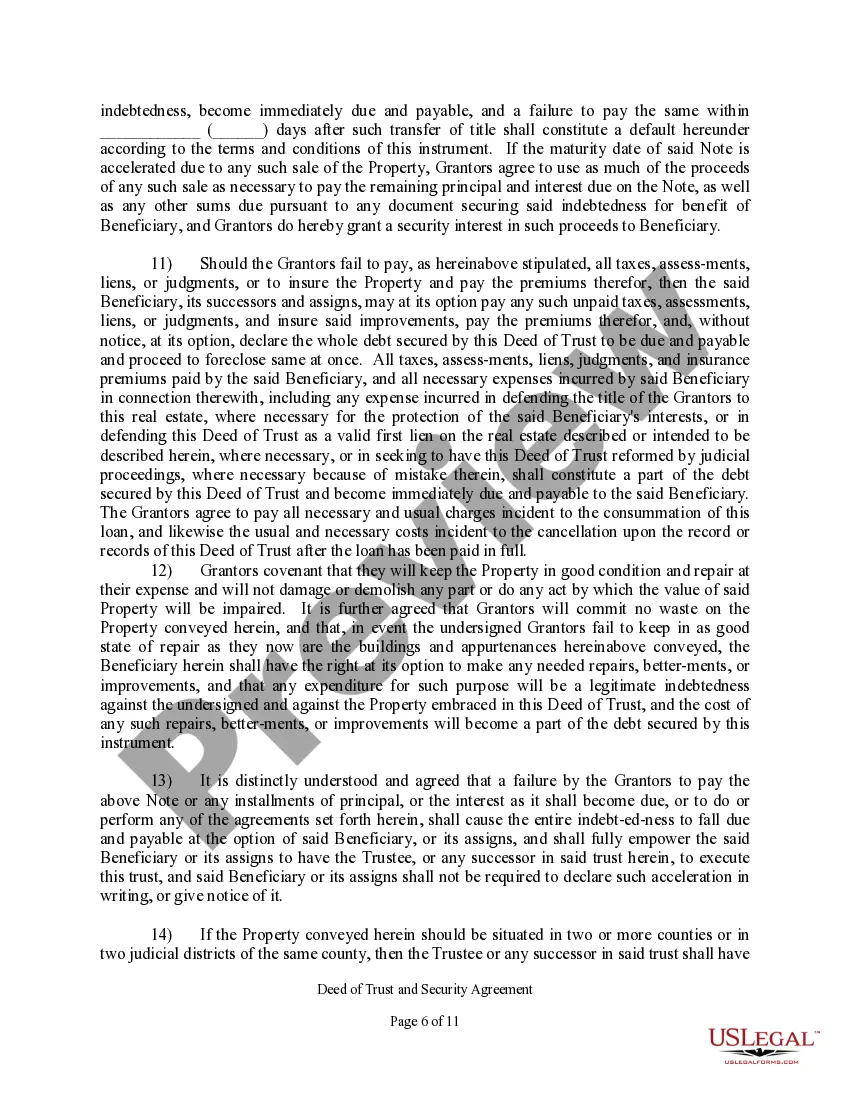
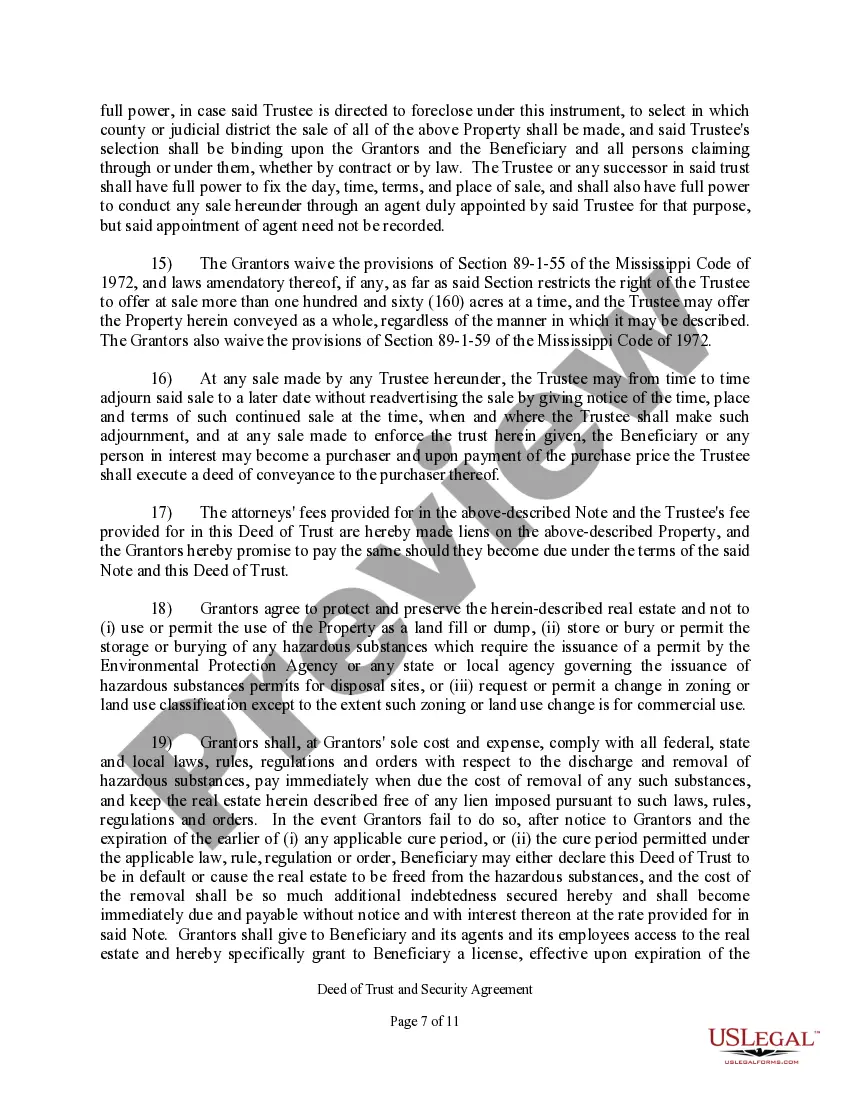
- Default Clauses: Specifies what constitutes a default and the lender's rights in that event.
- Trustee Powers: Outlines the authority of the Trustee to sell the property in case of default.

When to use this document
This form should be used when a business seeks to secure a loan against commercial property. Scenarios include purchasing commercial real estate, refinancing existing loans, or borrowing funds for renovations and improvements. It is essential for ensuring that the lender has a legal claim to the property if the borrower fails to meet their payment obligations.
Who needs this form
- Business owners seeking financing through a loan secured by commercial property.
- Lenders who want to secure their interests in commercial loans.
- Trustees appointed in a deed of trust to manage the property in case of default.
- Attorneys advising clients on commercial property transactions.
Instructions for completing this form
- Identify the parties involved, including the Grantors, Beneficiary, and Trustee.
- Specify the loan amount, interest rate, and repayment terms in the Promissory Note section.
- Describe the property being secured, including its location and any improvements or attachments.
- Include relevant covenants regarding taxes, insurance, and maintenance obligations.
- Enter the date of execution and obtain signatures from all parties involved.
Is notarization required?
This form must be notarized to be legally valid. US Legal Forms provides secure online notarization powered by Notarize, allowing you to complete the process through a verified video call.
Get your form ready online
Our built-in tools help you complete, sign, share, and store your documents in one place.
Make edits, fill in missing information, and update formatting in US Legal Forms—just like you would in MS Word.
Download a copy, print it, send it by email, or mail it via USPS—whatever works best for your next step.
Sign and collect signatures with our SignNow integration. Send to multiple recipients, set reminders, and more. Go Premium to unlock E-Sign.
If this form requires notarization, complete it online through a secure video call—no need to meet a notary in person or wait for an appointment.
We protect your documents and personal data by following strict security and privacy standards.

Make edits, fill in missing information, and update formatting in US Legal Forms—just like you would in MS Word.

Download a copy, print it, send it by email, or mail it via USPS—whatever works best for your next step.

Sign and collect signatures with our SignNow integration. Send to multiple recipients, set reminders, and more. Go Premium to unlock E-Sign.

If this form requires notarization, complete it online through a secure video call—no need to meet a notary in person or wait for an appointment.

We protect your documents and personal data by following strict security and privacy standards.
Common mistakes
- Failing to include a detailed description of the property being secured.
- Not properly identifying all parties involved, especially the Trustee.
- Leaving notable financial details, such as interest rates or repayment schedules, blank.
- Neglecting to sign the form or not obtaining all necessary signatures.
Why complete this form online
- Convenience of accessing and filling out the form from anywhere at any time.
- Editability allows for easy customization to fit specific needs.
- Reliability of documents created by licensed attorneys, ensuring legal compliance.
Legal use & context
- The Commercial Deed of Trust and Security Agreement is legally binding once executed.
- Failure to adhere to terms can result in foreclosure and loss of the secured property.
- This form offers a structured approach to securing loans using real estate as collateral.
What to keep in mind
- The Commercial Deed of Trust is essential for securing loans on commercial properties.
- Properly completing the form is crucial to protect the interests of all parties involved.
- Understanding state-specific requirements is necessary to ensure legality and enforceability.
Looking for another form?
Form popularity
FAQ
Party information: names and addresses of the trustor(s), trustee(s), beneficiary(ies), and guarantor(s) (if applicable) Property details: full address of the property and its legal description (which can be obtained from the County Recorder's Office)
A deed of trust is a three-party document (trustor, trustee, beneficiary), rather than a two-party document (mortgagor, mortgagee). A deed of trust bypasses the need to use the courts to foreclose a commercial loan.The trustor (borrower) gives away bare legal title to the property to the trustee.
To form a Trust, a Trust Deed is prepared and signed. The Trust Deed specifies who the Settlor, Trustees and Discretionary Beneficiaries are. The Trust Deed also provides the Trustees with a full range of administrative powers. This allows the Trustees to undertake virtually any action an individual could do.
Some owners are put off using solicitors duke to the deed of trust cost. Individuals can write out their own, and use someone else as a witness. However, this may have errors or not be a legally binding document. The investment of getting a deed of trust when buying a property is often worth it in the long term.
Yes, there are key differences between the two. With a deed, you transfer the ownership of the property to one party. In contrast, a deed of trust does not mean the holder owns the property. In an arrangement involving a deed of trust, the borrower signs a contract with the lender with details regarding the loan.
The person who owns the property usually signs a promissory note and a deed of trust. The deed of trust does not have to be recorded to be valid.
A trust deedalso known as a deed of trustis a document sometimes used in real estate transactions in the U.S. It is a document that comes into play when one party has taken out a loan from another party to purchase a property.