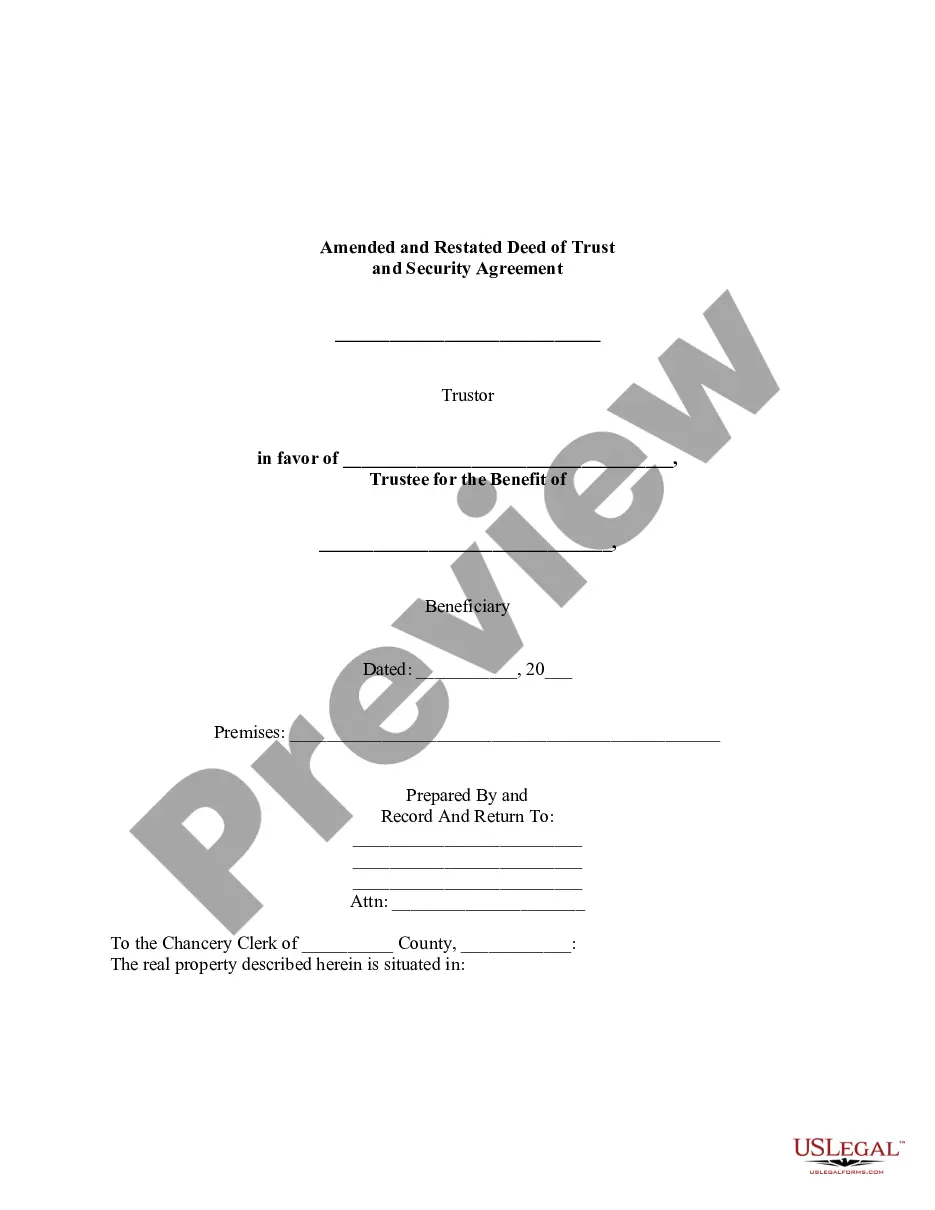
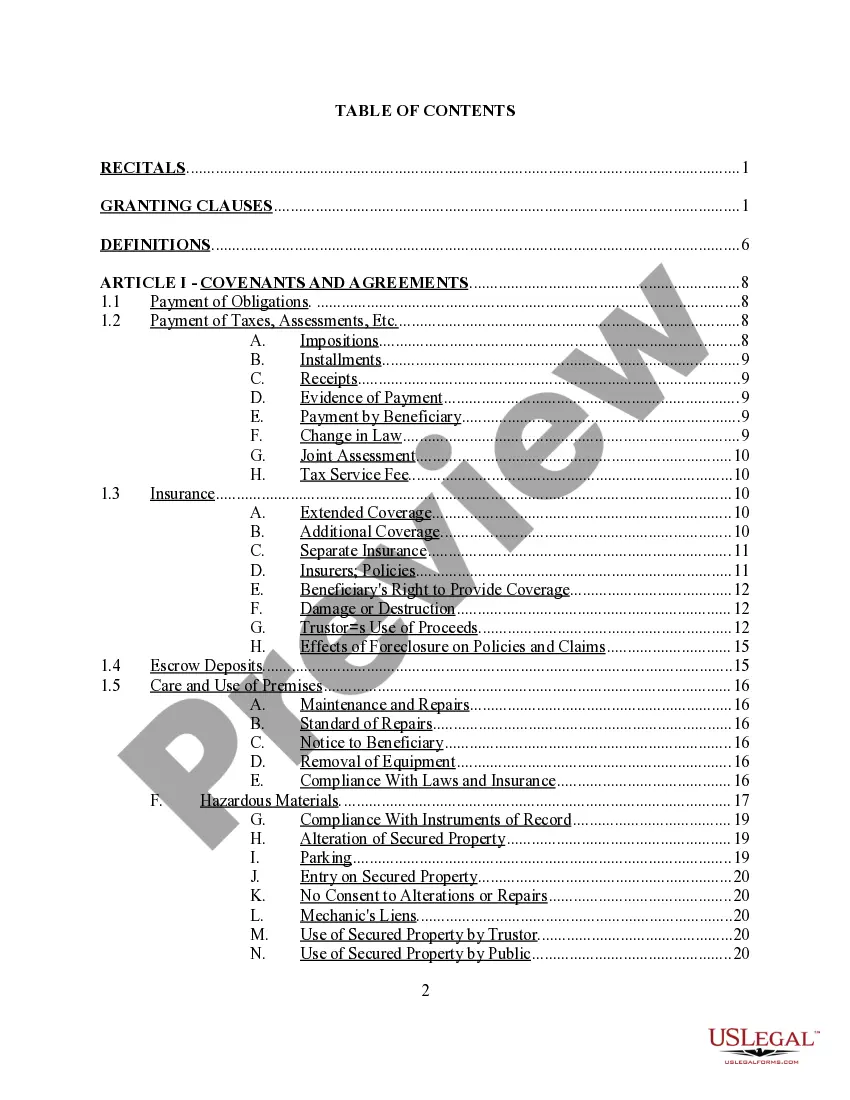
Complex Deed of Trust and Security Agreement
What is this form?
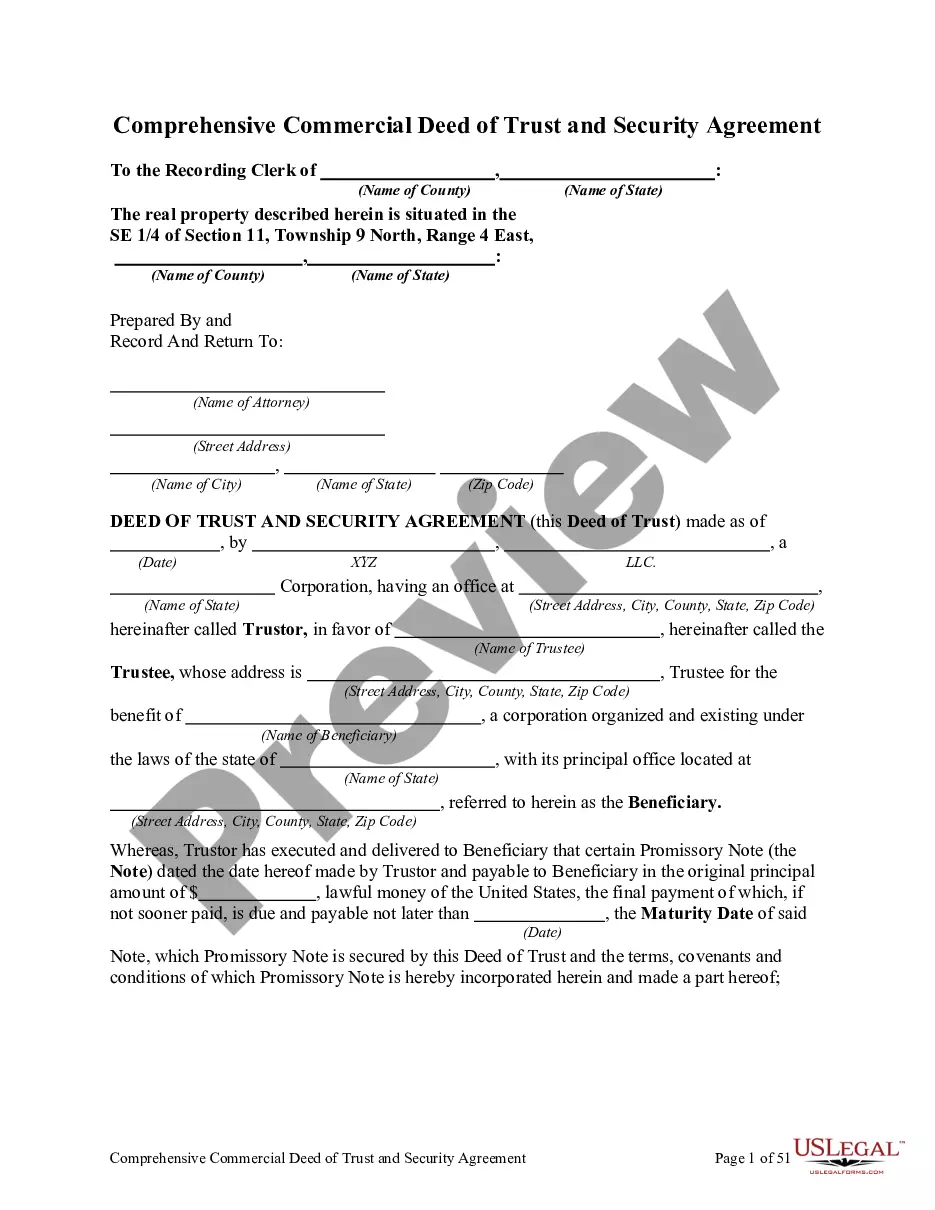
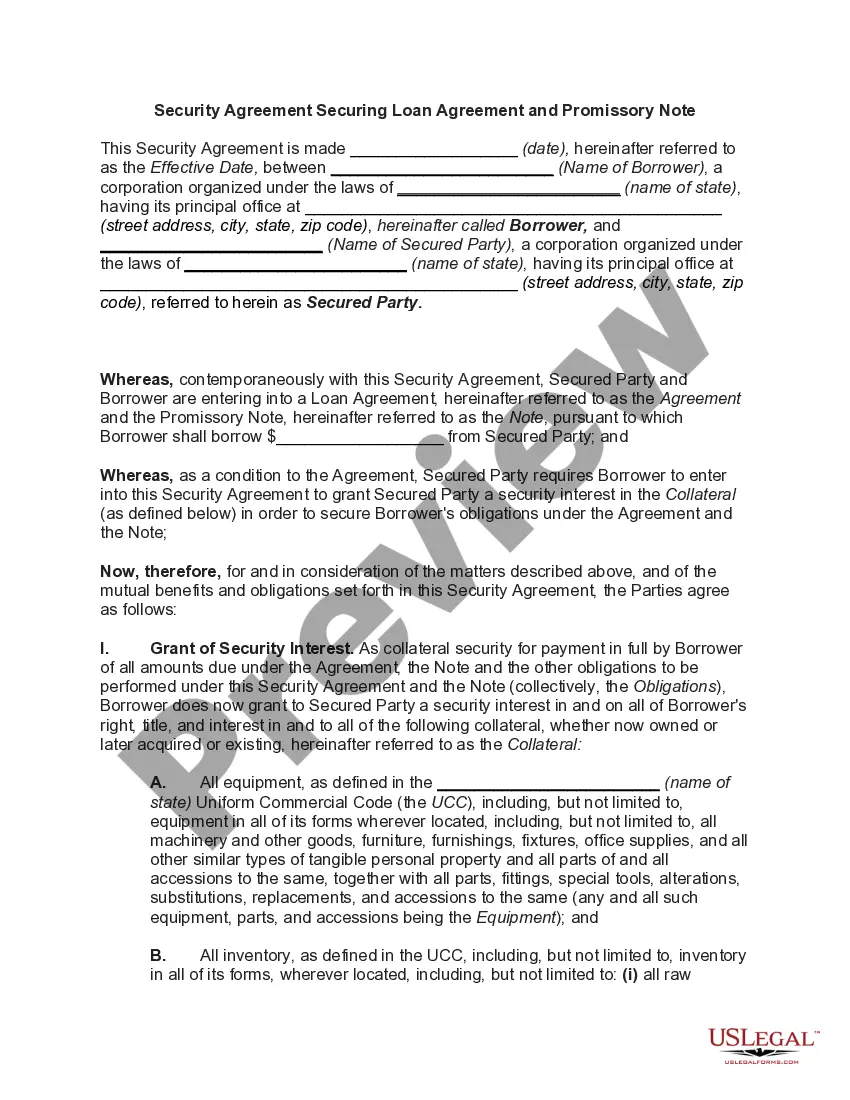
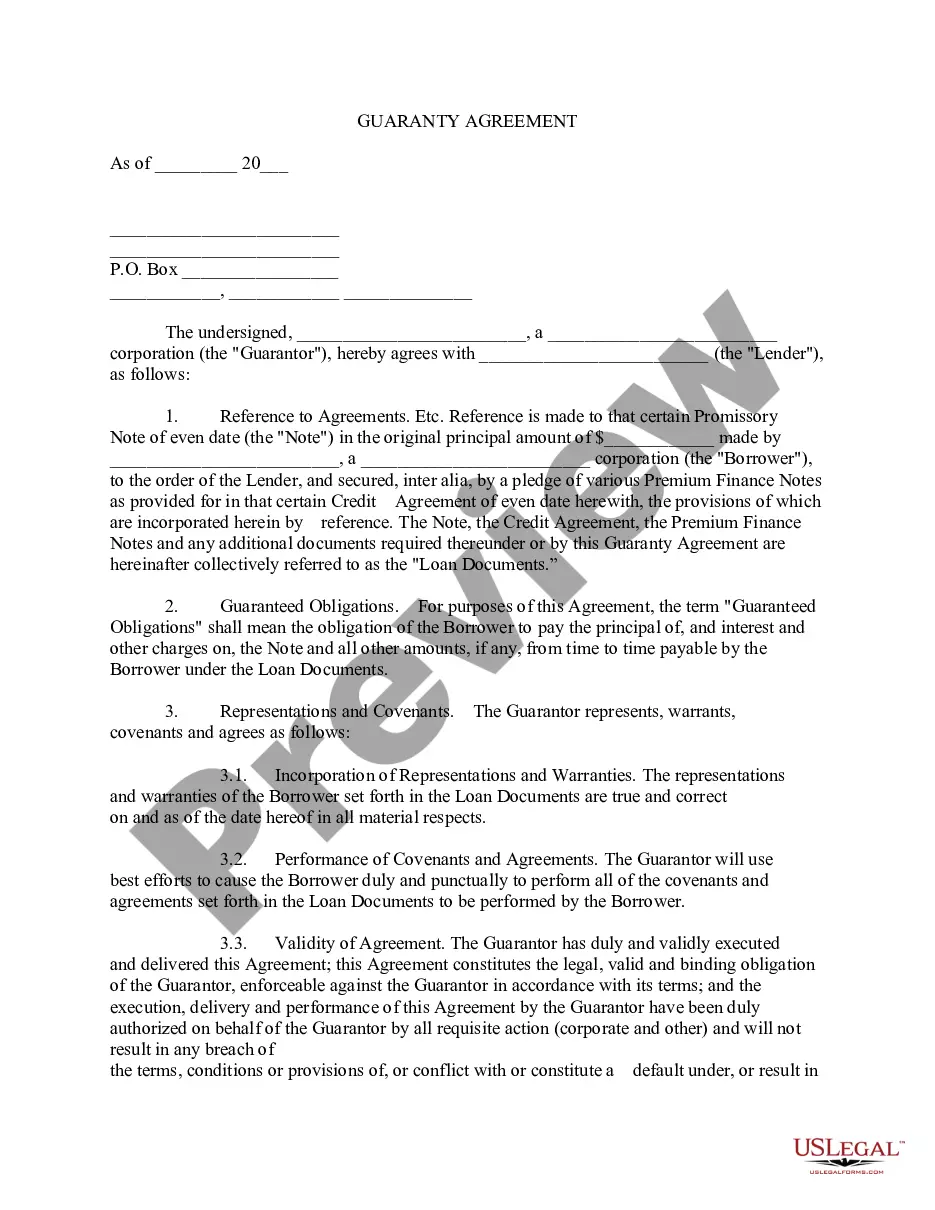
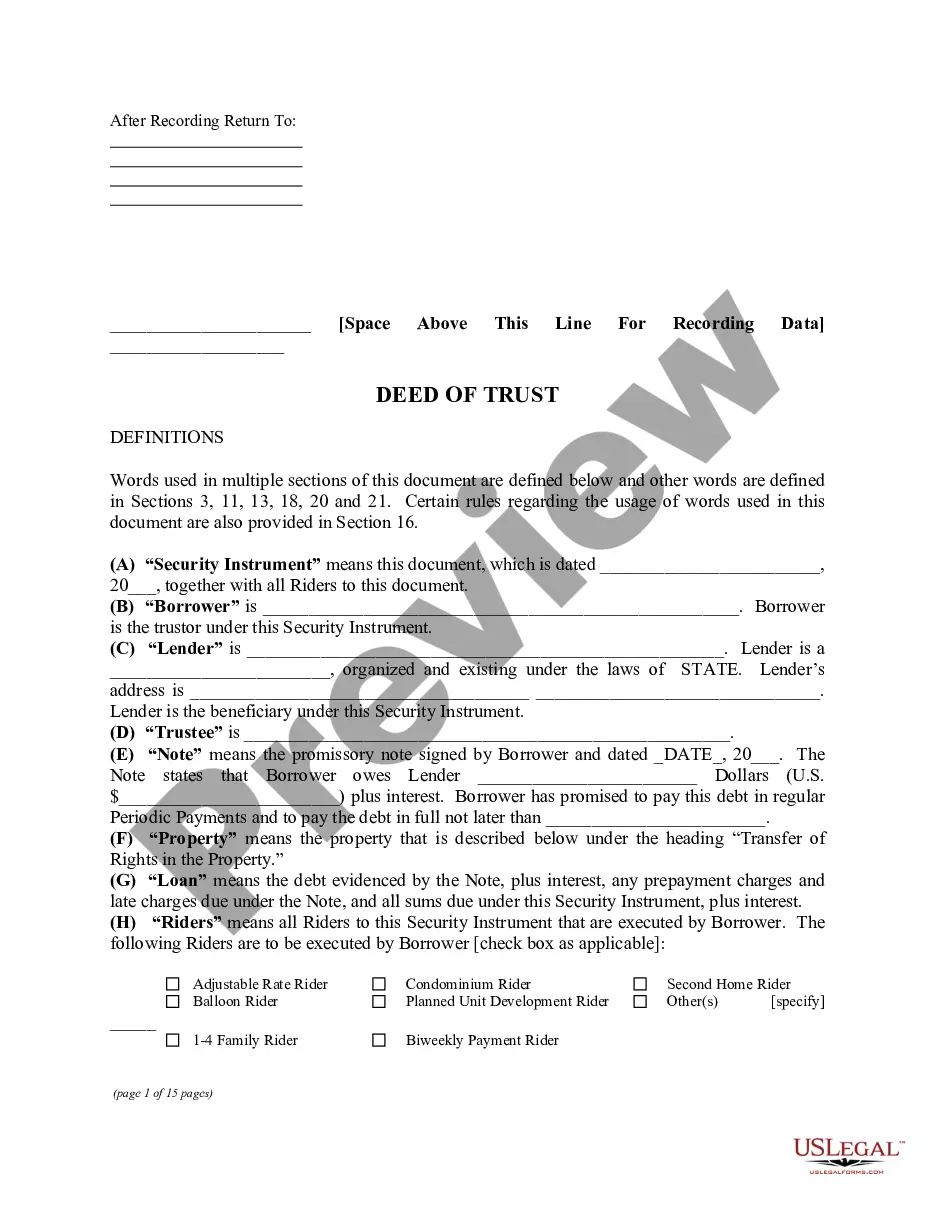
The Complex Deed of Trust and Security Agreement is a legal document that establishes a trust relationship between the Trustor, Trustee, and Beneficiary concerning the security of real property. It outlines the terms under which the lender (Beneficiary) can secure repayment of a loan by placing a lien on the property, which may include both real and personal property. This form is typically more complex than standard deeds of trust, incorporating various covenants, conditions, representations, and events of default to protect the interests of all parties involved.
Form components explained
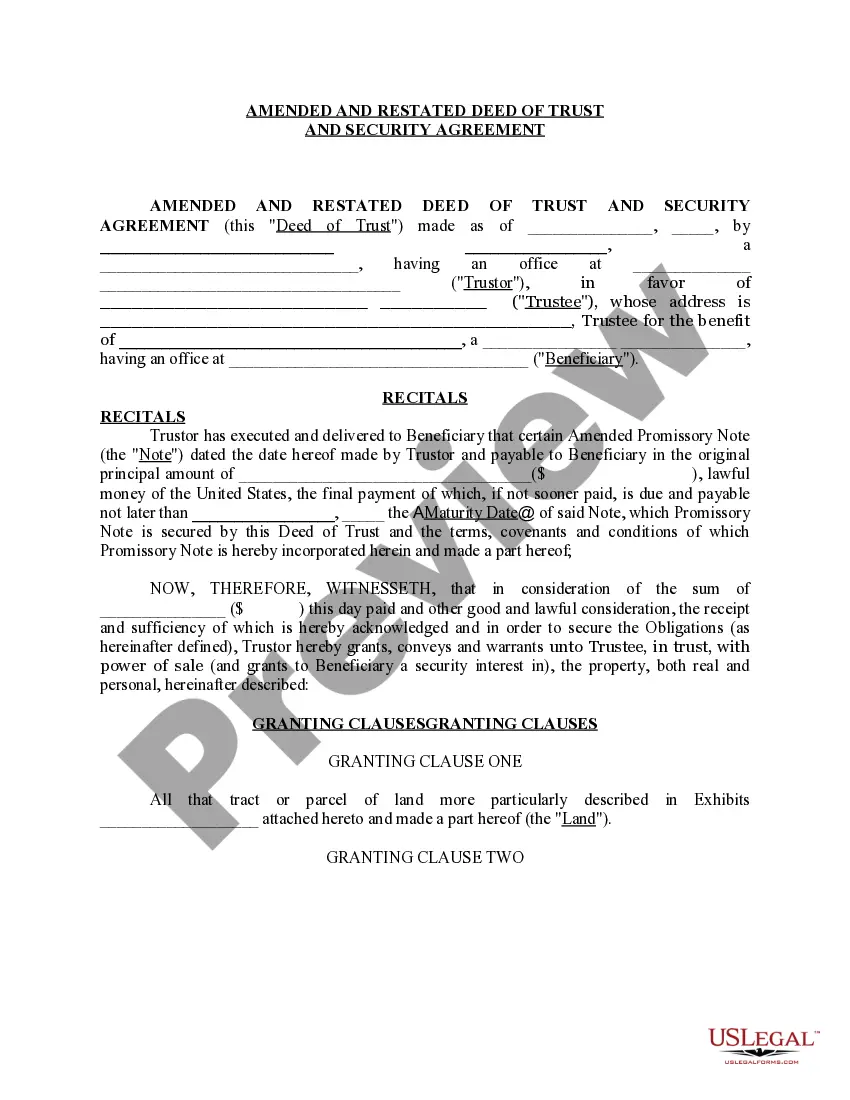
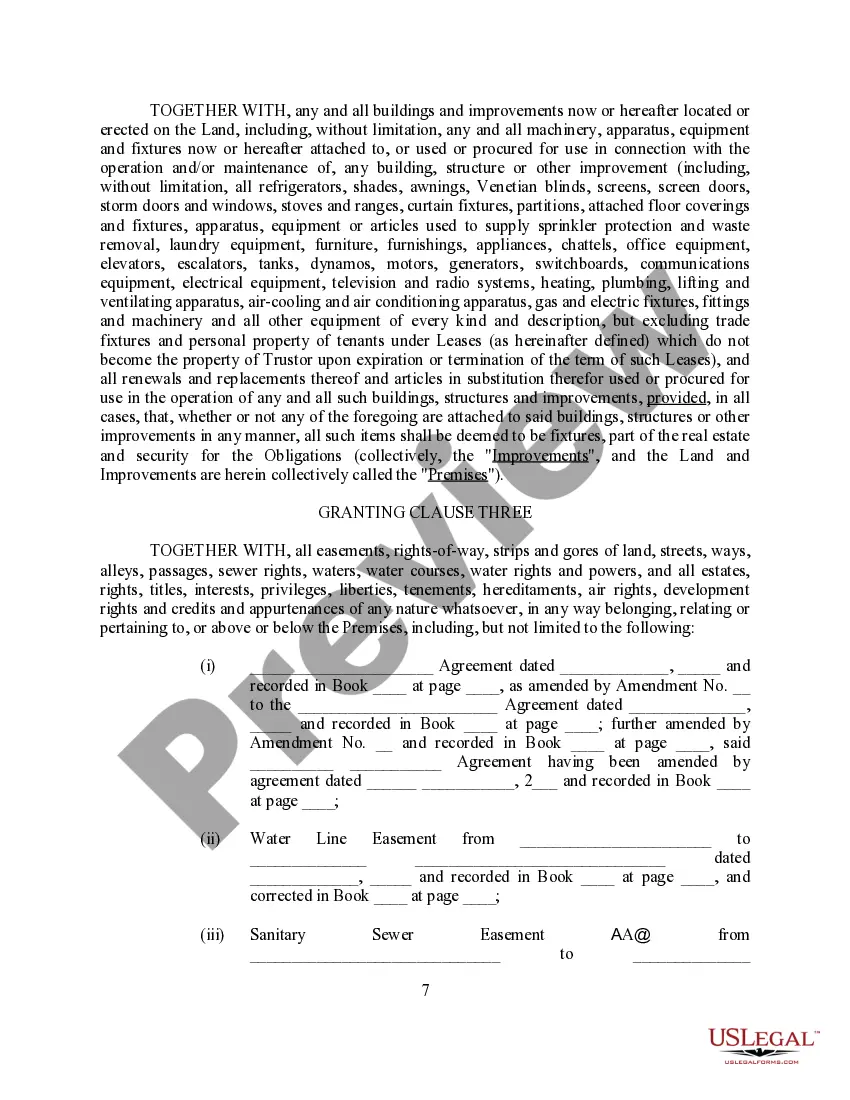
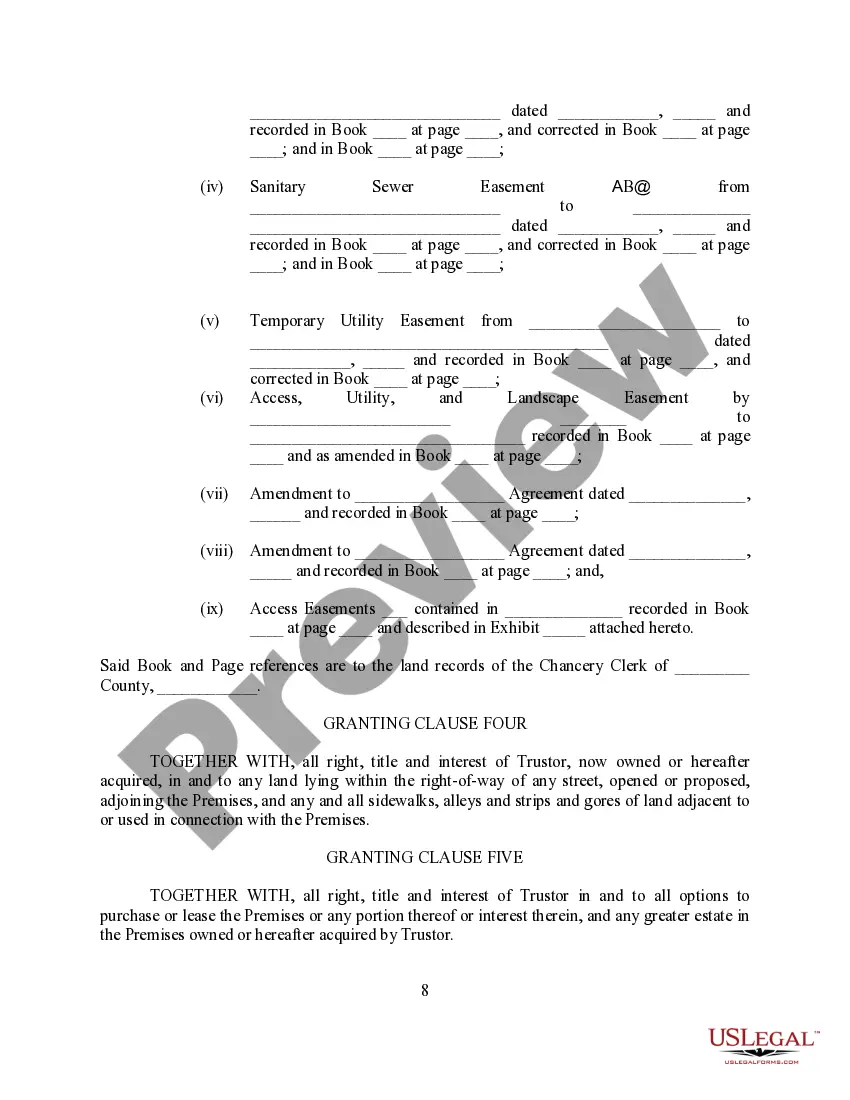
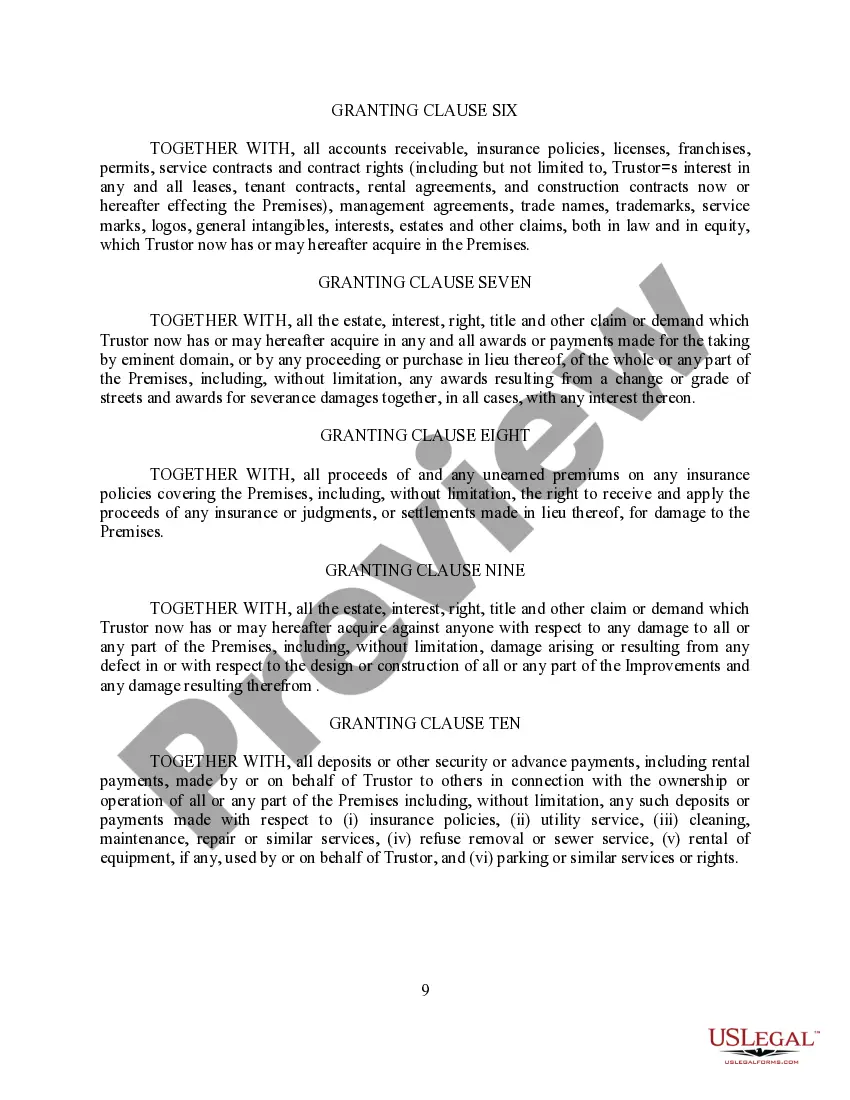
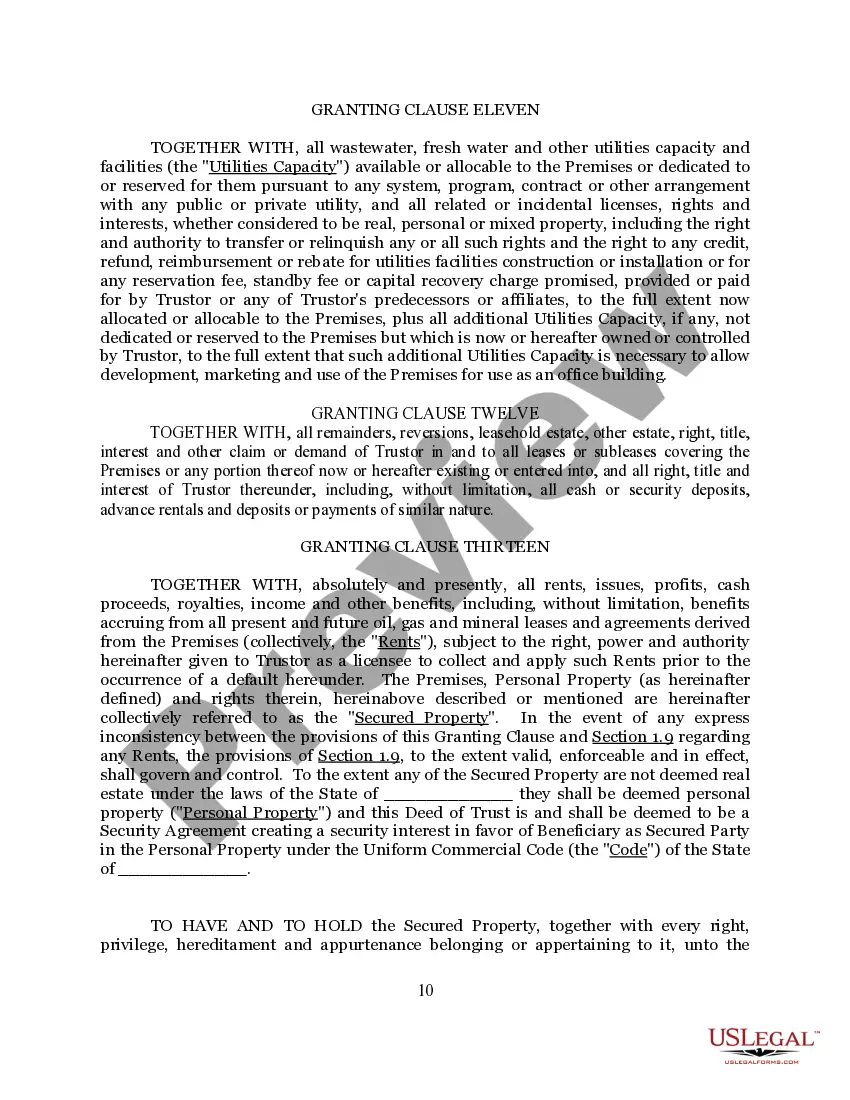
- Granting clauses detailing property security commitment.
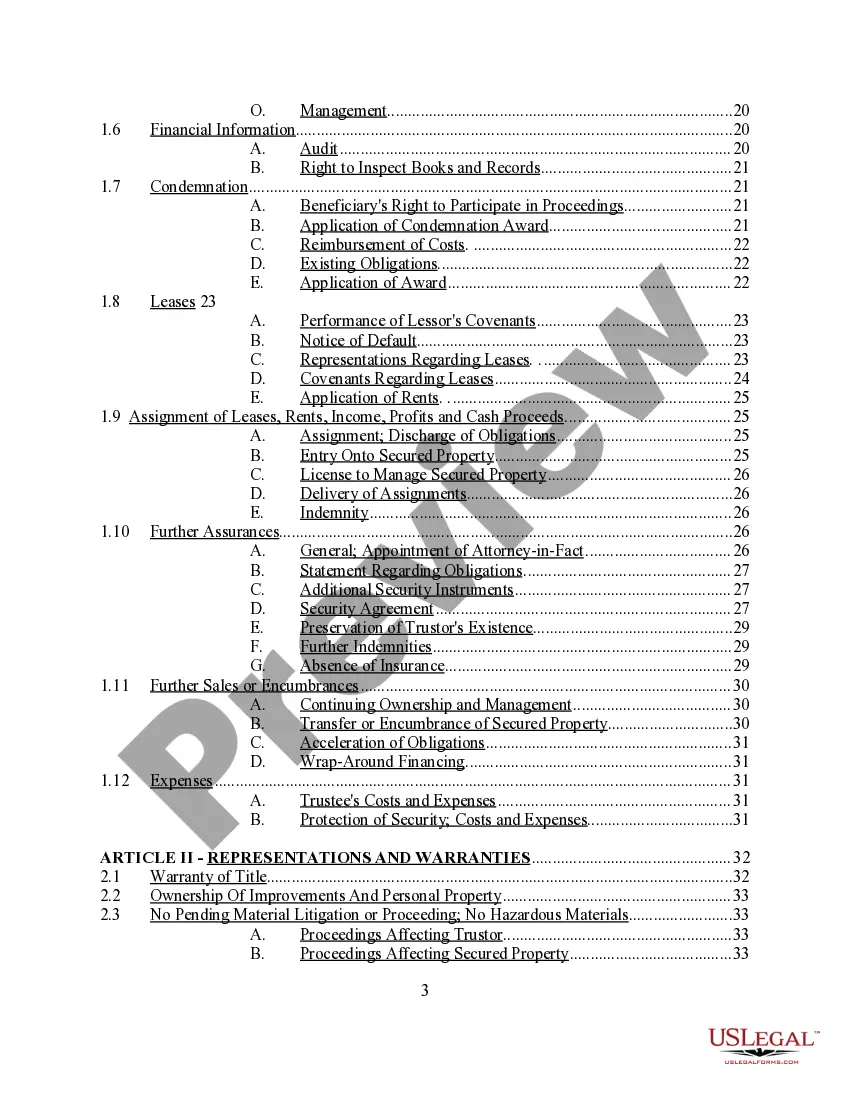
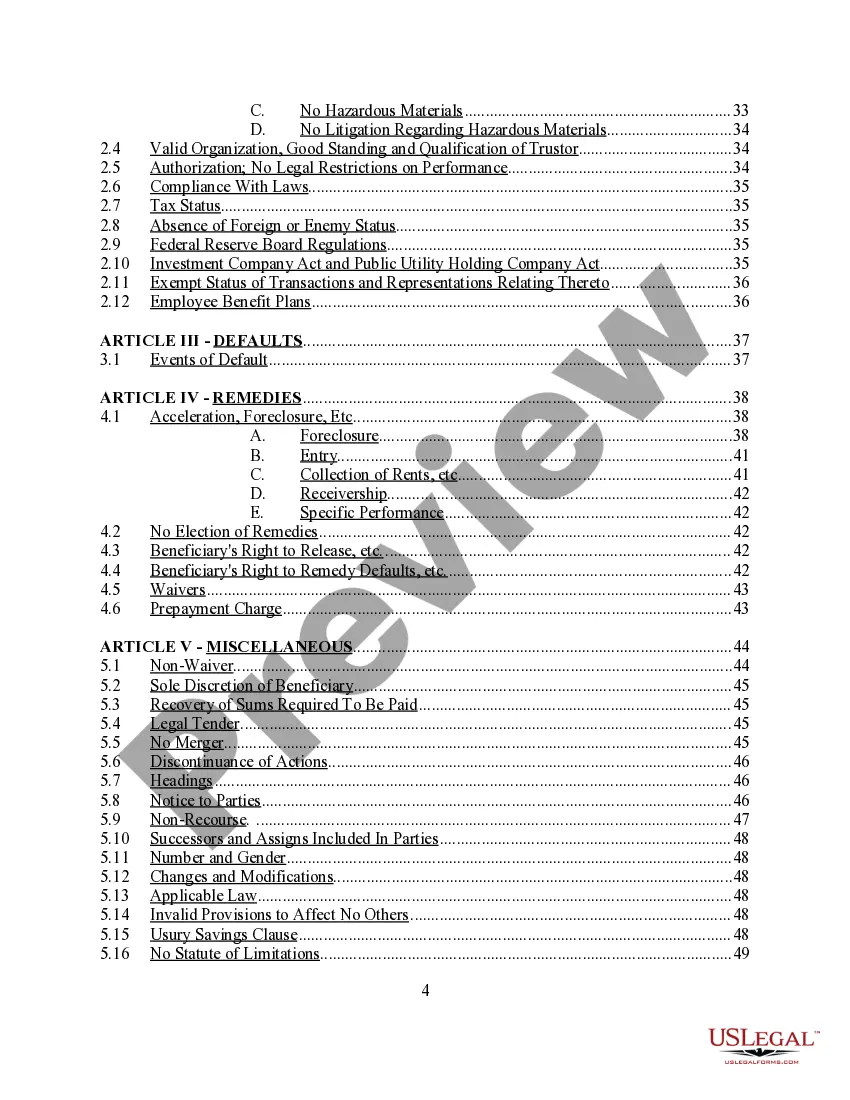
- Covenants concerning payment obligations, taxes, and property maintenance.
- Representations ensuring the Trustor's ownership and legal compliance.
- Provisions for insurance requirements for the secured property.
- Details on default events and associated remedies for the Beneficiary.


When to use this document
This form should be used when a borrower (Trustor) is obtaining a large loan secured by real estate, particularly when multiple types of collateral are involved, or there are complex conditions surrounding the loan agreement. It is suitable for transactions where the lender seeks extensive protections and clarity regarding the property and the obligations of the borrower.
Intended users of this form
- Real estate developers seeking financing for commercial properties.
- Business owners requiring loans secured by property assets.
- Lenders and financial institutions extending credit on secured terms.
- Individual Trustors involved in complex real estate transactions with specific security needs.
Steps to complete this form
Follow these steps to complete the Complex Deed of Trust and Security Agreement:
- Identify the Trustor, Trustee, and Beneficiary within the document.
- Clearly describe the secured property and any personal property included in the agreement.
- Specify the obligations being secured by the Trust and include relevant financial terms.
- Enter any required dates, including the start date and maturity of the loan.
- Ensure all parties sign and date the document as required, including obtaining notarization if necessary.
Does this form need to be notarized?
This document requires notarization to meet legal standards. US Legal Forms provides secure online notarization powered by Notarize, allowing you to complete the process through a verified video call, available 24/7.
Get your form ready online
Our built-in tools help you complete, sign, share, and store your documents in one place.
Make edits, fill in missing information, and update formatting in US Legal Forms—just like you would in MS Word.
Download a copy, print it, send it by email, or mail it via USPS—whatever works best for your next step.
Sign and collect signatures with our SignNow integration. Send to multiple recipients, set reminders, and more. Go Premium to unlock E-Sign.
If this form requires notarization, complete it online through a secure video call—no need to meet a notary in person or wait for an appointment.
We protect your documents and personal data by following strict security and privacy standards.

Make edits, fill in missing information, and update formatting in US Legal Forms—just like you would in MS Word.

Download a copy, print it, send it by email, or mail it via USPS—whatever works best for your next step.

Sign and collect signatures with our SignNow integration. Send to multiple recipients, set reminders, and more. Go Premium to unlock E-Sign.

If this form requires notarization, complete it online through a secure video call—no need to meet a notary in person or wait for an appointment.

We protect your documents and personal data by following strict security and privacy standards.
Common mistakes
- Failing to fully describe the secured property may lead to disputes later.
- Not including all required signatures can render the document unenforceable.
- Skipping any necessary disclosures about existing encumbrances on the property.
- Incorrectly outlining obligations that may lead to confusion about responsibilities.
Benefits of completing this form online
- Immediate access to customizable legal documents at any time.
- Edit and save your form in real-time, ensuring accuracy before finalizing.
- Integrated guidance that simplifies complex legal terminology.
- Secured and confidential storage of your documents for future reference.
Legal use & context
The Complex Deed of Trust and Security Agreement is legally enforceable in U.S. courts, provided it meets state-specific requirements. It outlines the rights and obligations clearly, thus ensuring that both the lender and the borrower understand their positions in the event of a dispute or default.
What to keep in mind
- This document serves as a security agreement, ensuring that the lender can claim the property in case of default.
- It includes detailed provisions for the obligations of the Trustor, enhancing protection for the Beneficiary.
- Parties involved should carefully consider state laws applicable to ensure compliance and validity.
Looking for another form?
Form popularity
FAQ
Party information: names and addresses of the trustor(s), trustee(s), beneficiary(ies), and guarantor(s) (if applicable) Property details: full address of the property and its legal description (which can be obtained from the County Recorder's Office)
The person who owns the property usually signs a promissory note and a deed of trust. The deed of trust does not have to be recorded to be valid.
In real estate in the United States, a deed of trust or trust deed is a legal instrument which is used to create a security interest in real property wherein legal title in real property is transferred to a trustee, which holds it as security for a loan (debt) between a borrower and lender.
Party information: names and addresses of the trustor(s), trustee(s), beneficiary(ies), and guarantor(s) (if applicable) Property details: full address of the property and its legal description (which can be obtained from the County Recorder's Office)
How much each person contributes to the deposit, and how much will be repaid to them. What percentage of the property each person will own, and how the money will be split if the property is sold. How much each person will pay towards the mortgage, and how the mortgage will ultimately be paid off.
A deed of trust involves three parties: a lender, a borrower, and a trustee. The lender gives the borrower money. In exchange, the borrower gives the lender one or more promissory notes. As security for the promissory notes, the borrower transfers a real property interest to a third-party trustee.
Some owners are put off using solicitors duke to the deed of trust cost. Individuals can write out their own, and use someone else as a witness. However, this may have errors or not be a legally binding document. The investment of getting a deed of trust when buying a property is often worth it in the long term.
Yes, there are key differences between the two. With a deed, you transfer the ownership of the property to one party. In contrast, a deed of trust does not mean the holder owns the property. In an arrangement involving a deed of trust, the borrower signs a contract with the lender with details regarding the loan.