Comprehensive Commercial Deed of Trust and Security Agreement
What is this form?
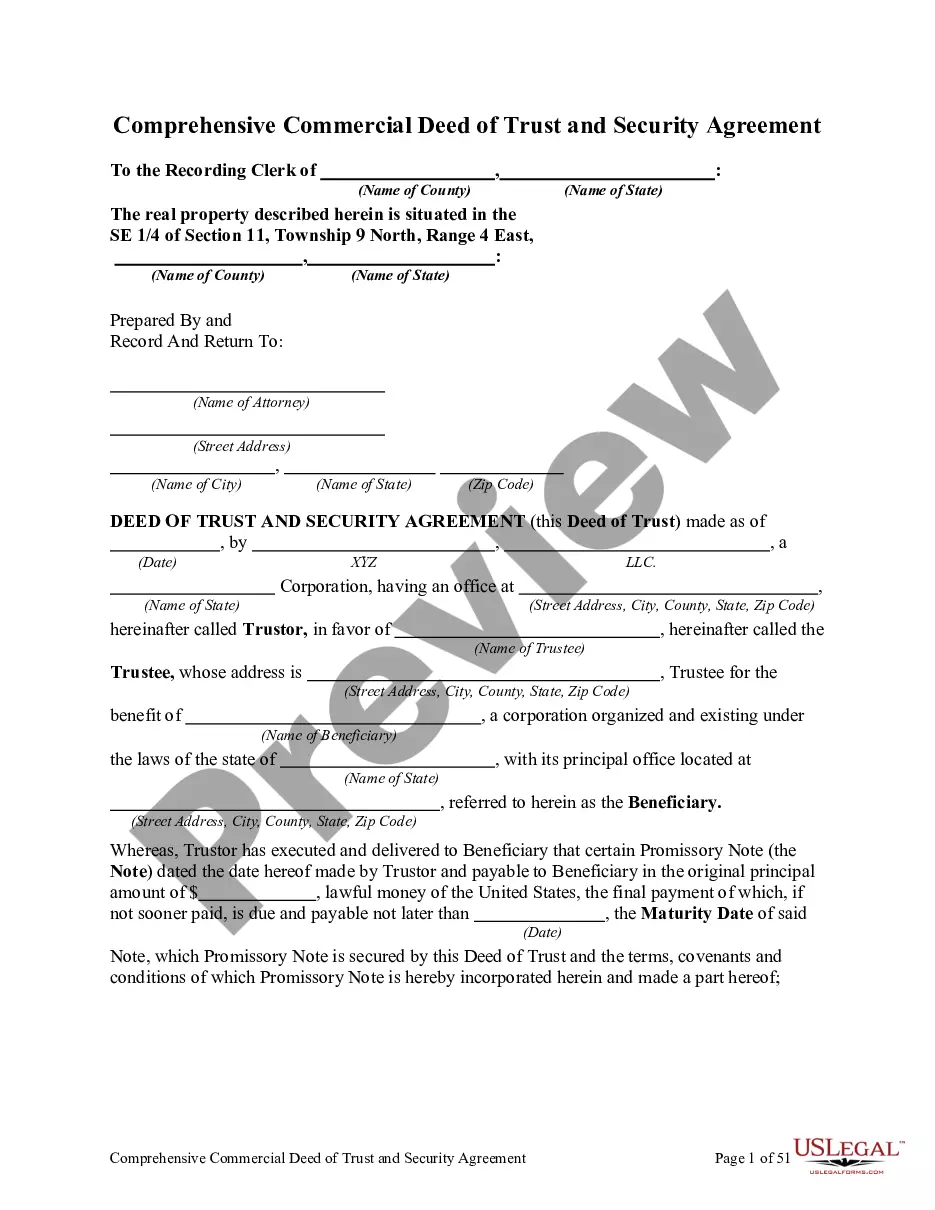
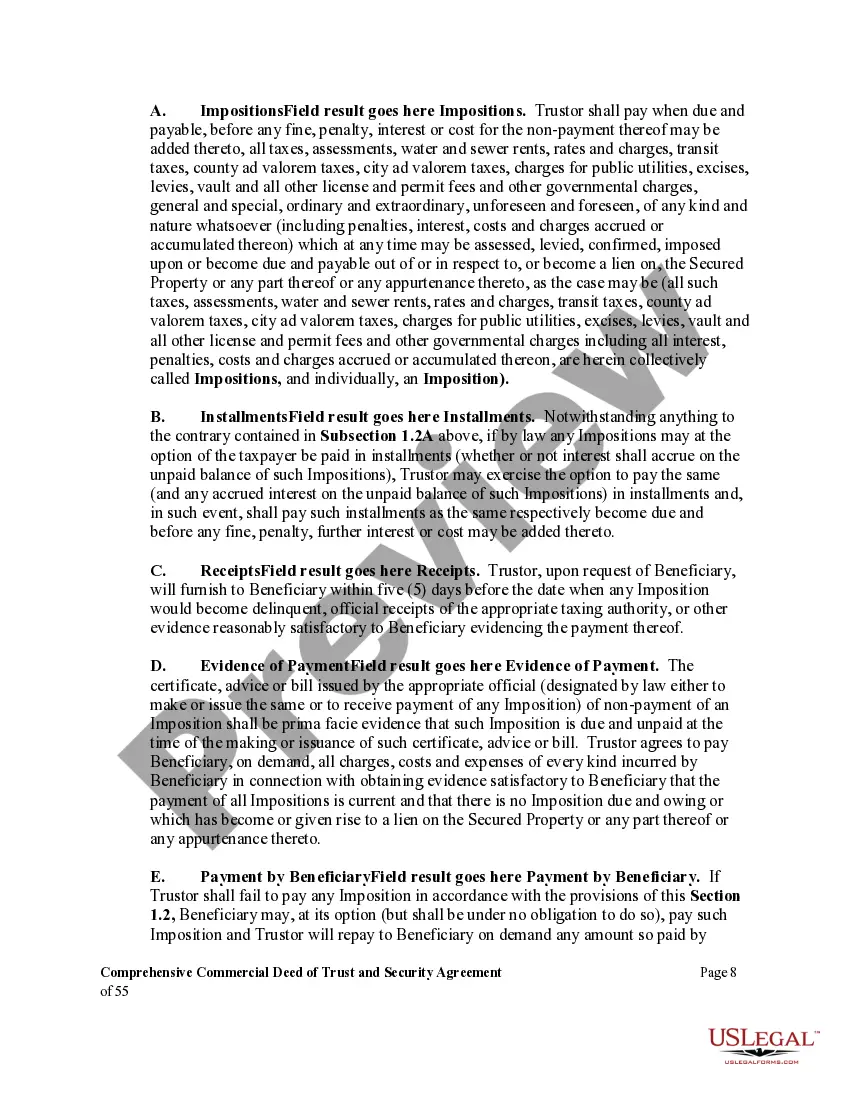
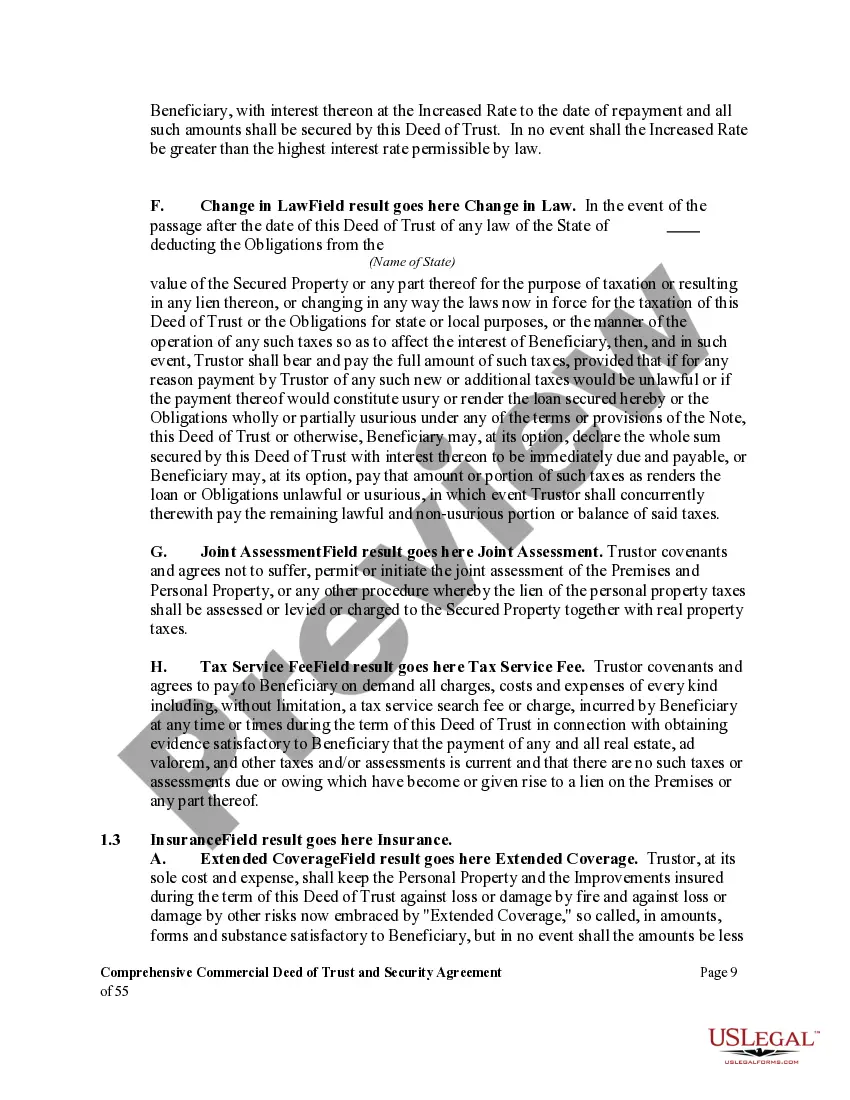
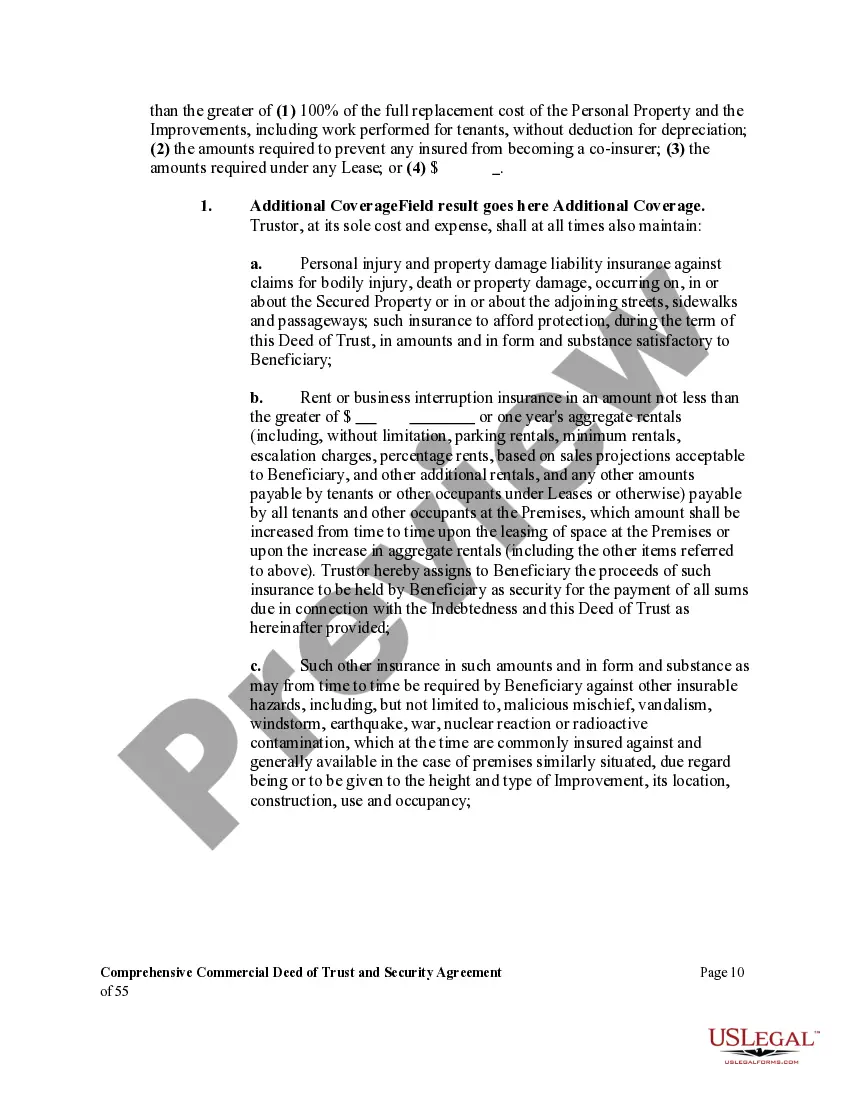
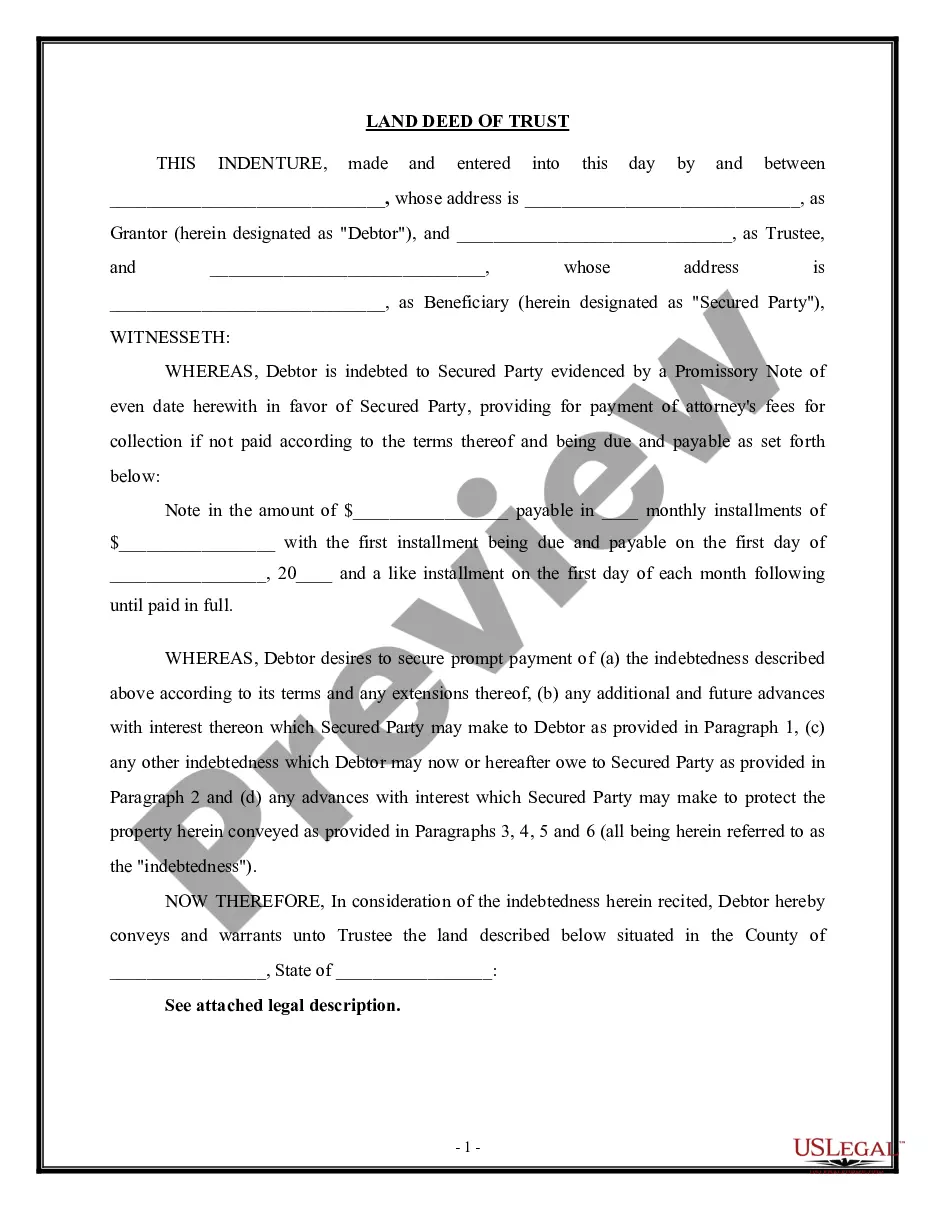
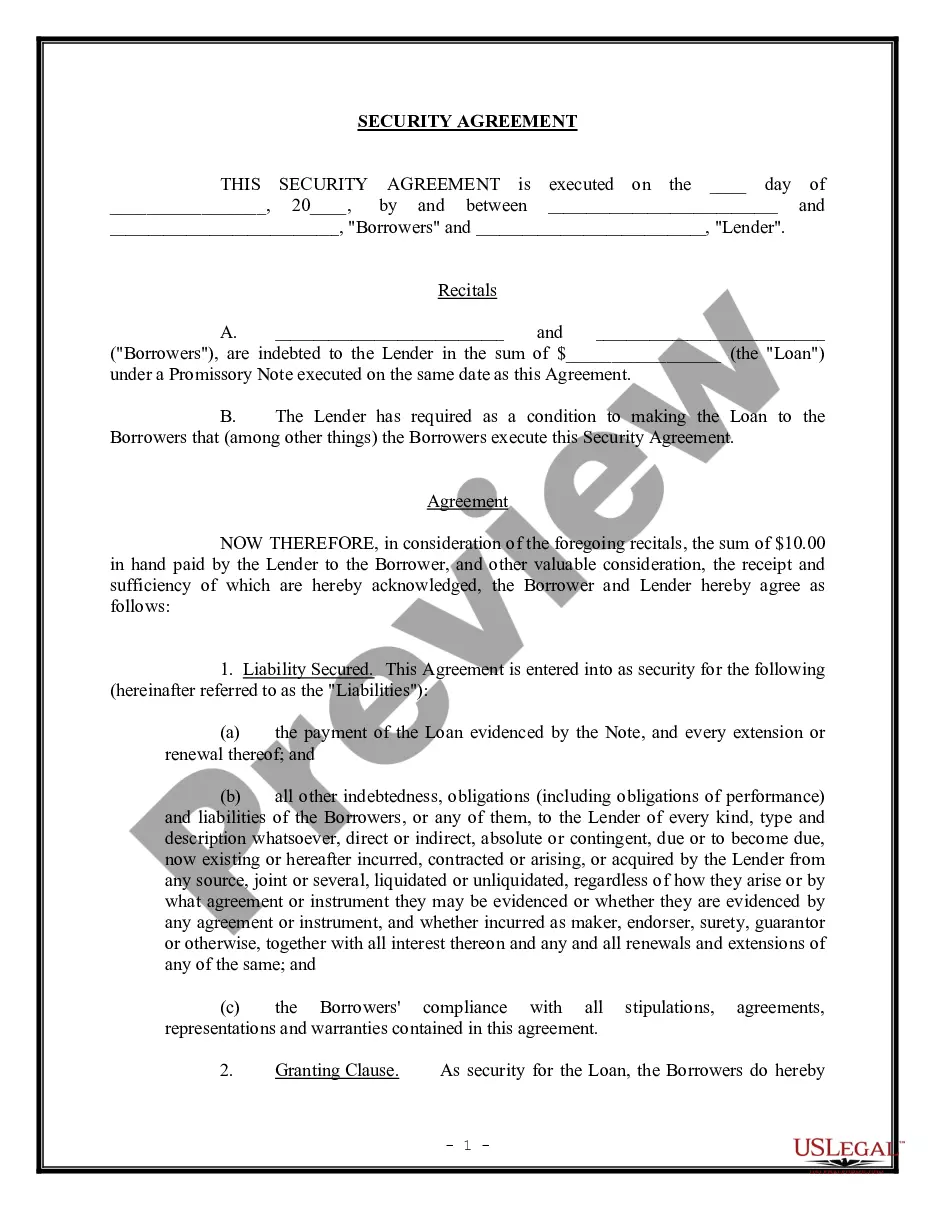
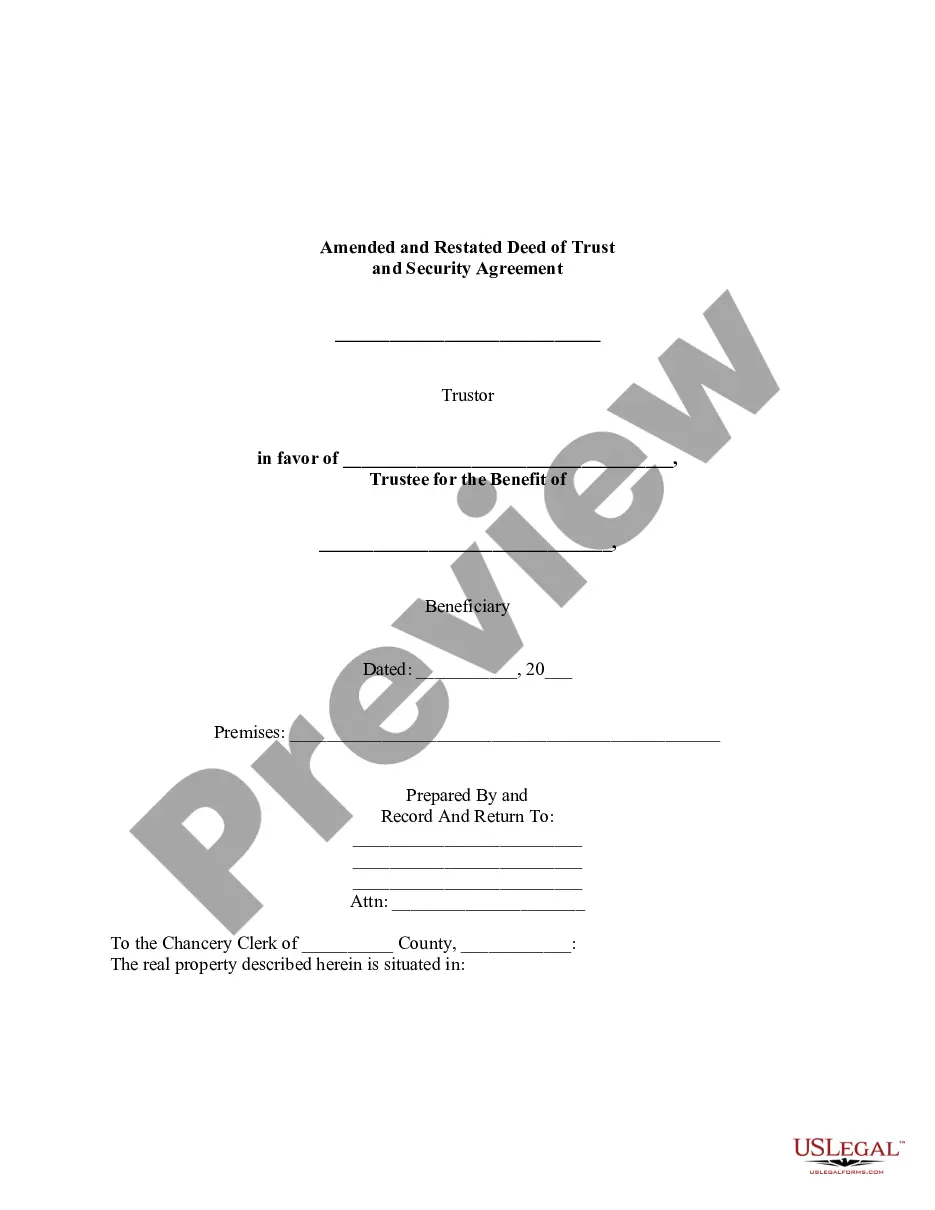
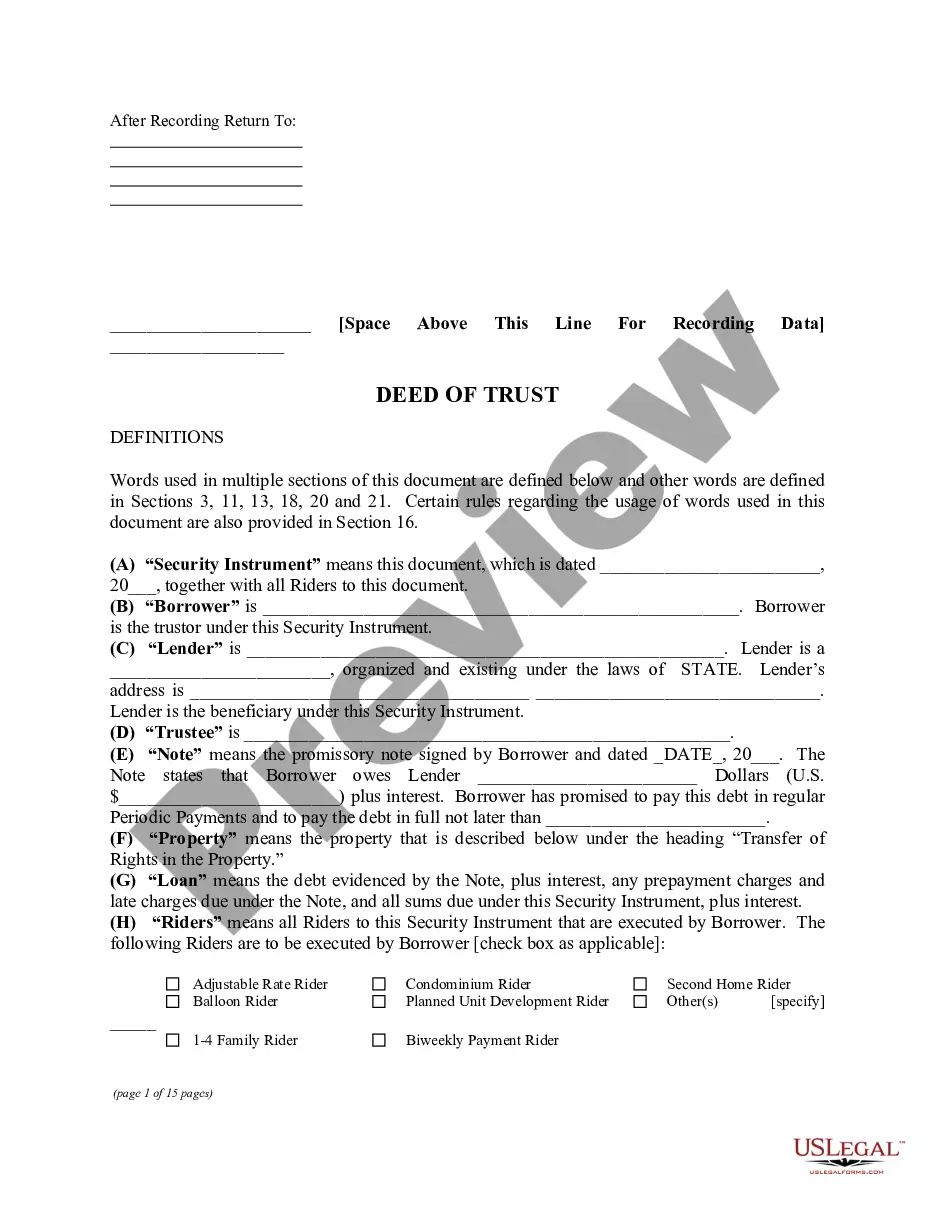
The Comprehensive Commercial Deed of Trust and Security Agreement is a legal document designed to establish a trust structure for securing obligations related to commercial real estate transactions. This form not only serves to protect the interests of the lender but also creates a clear framework for transferring property ownership if the borrower defaults on their obligations. Unlike standard deeds or trust agreements, this form encompasses both real and personal property, making it comprehensive for commercial engagements.
Key components of this form
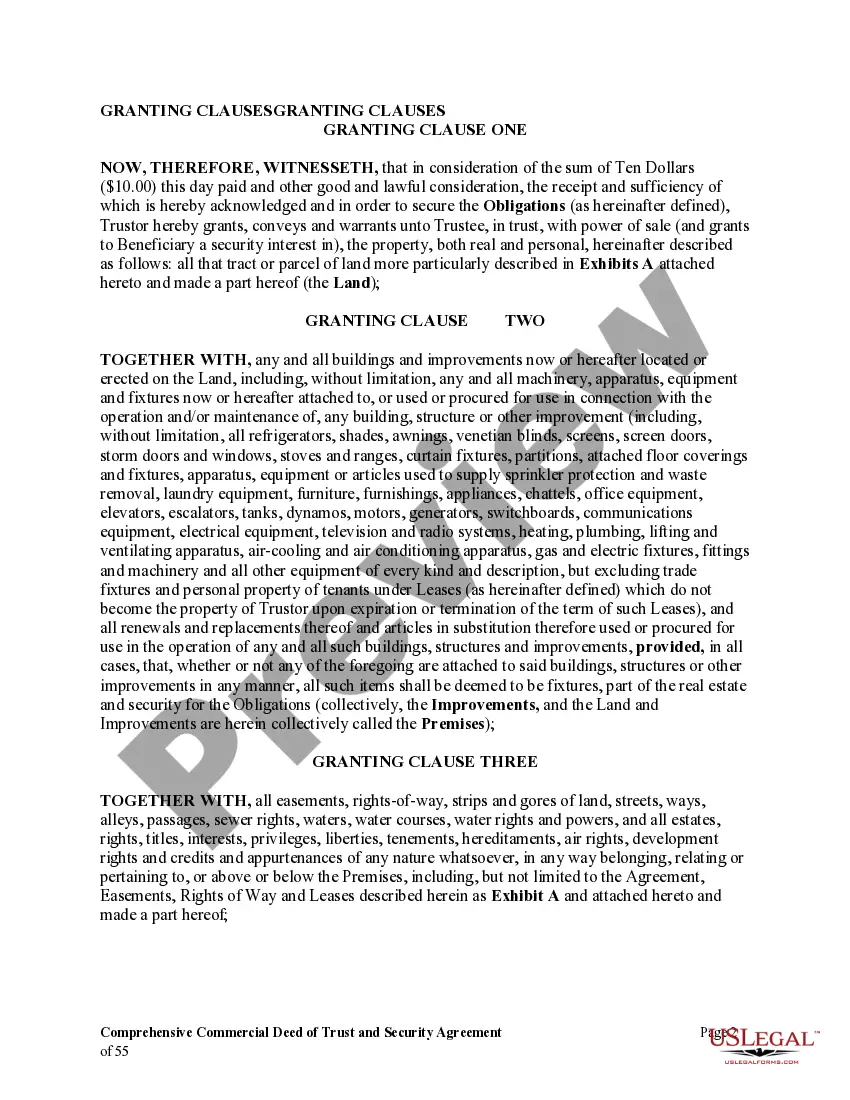
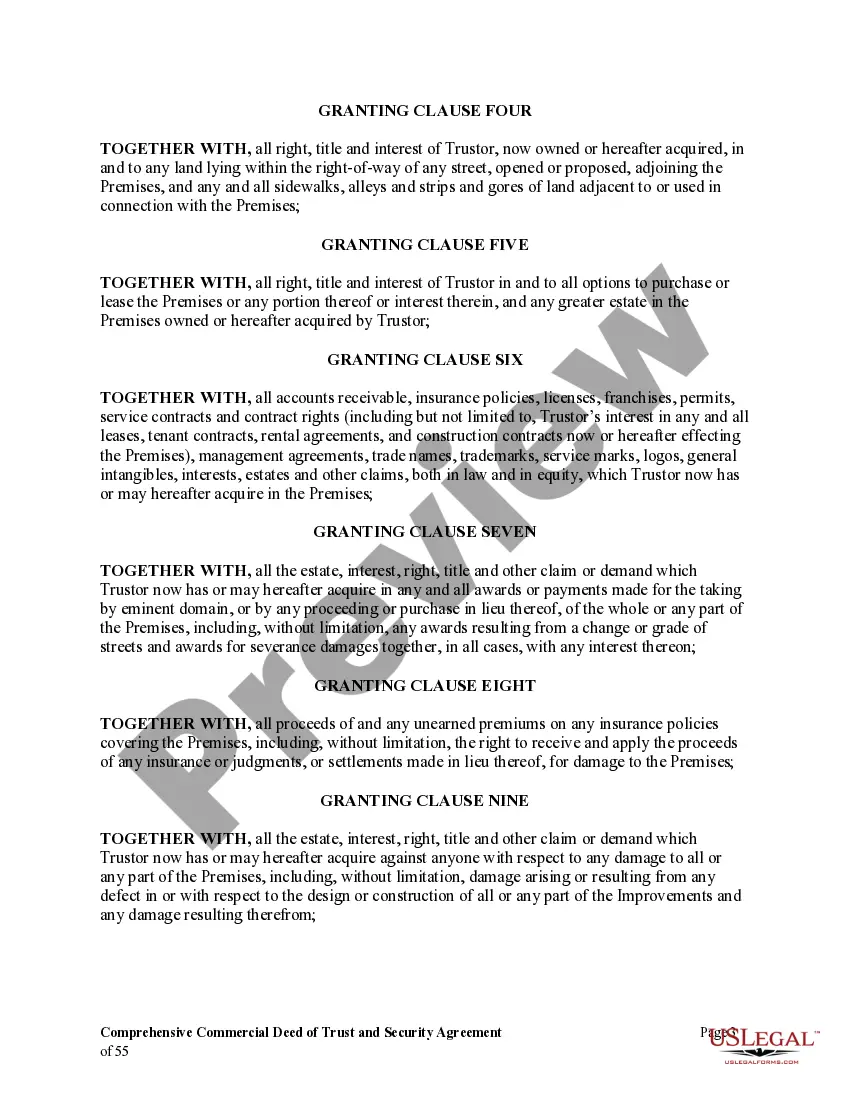
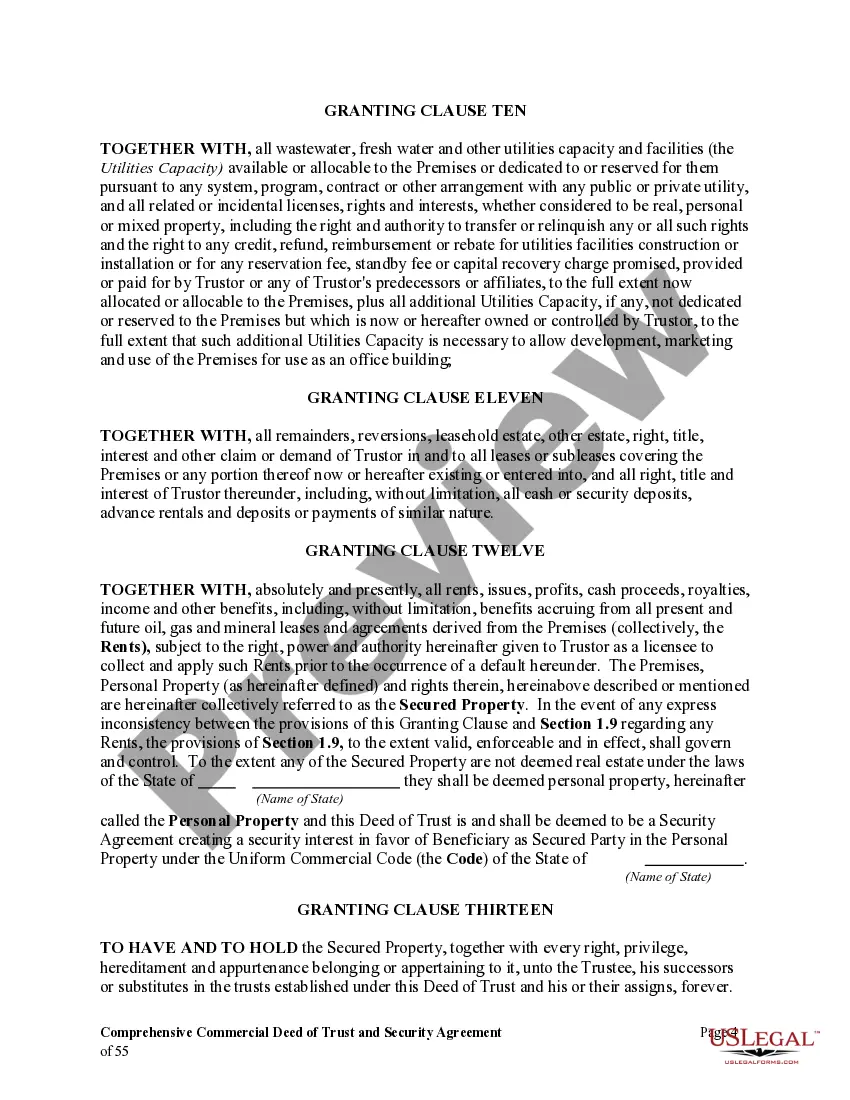
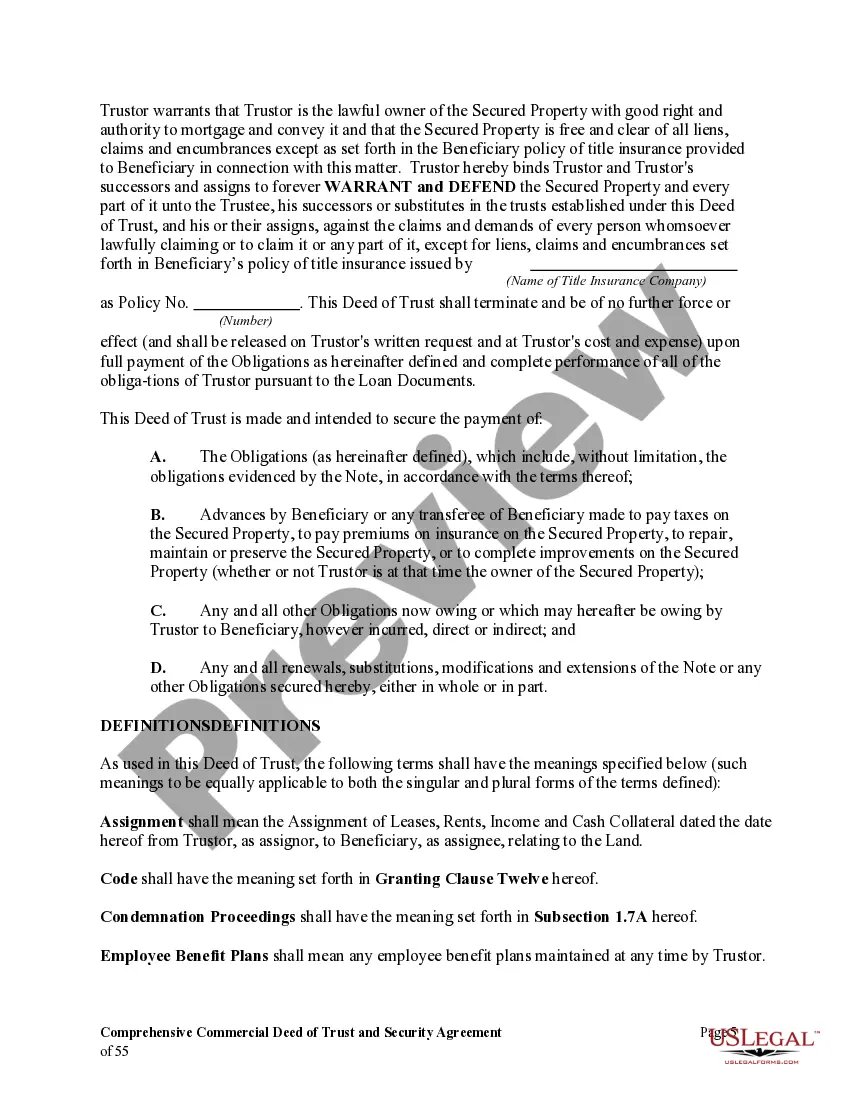
- Granting clauses delineating real and personal property included in the trust.
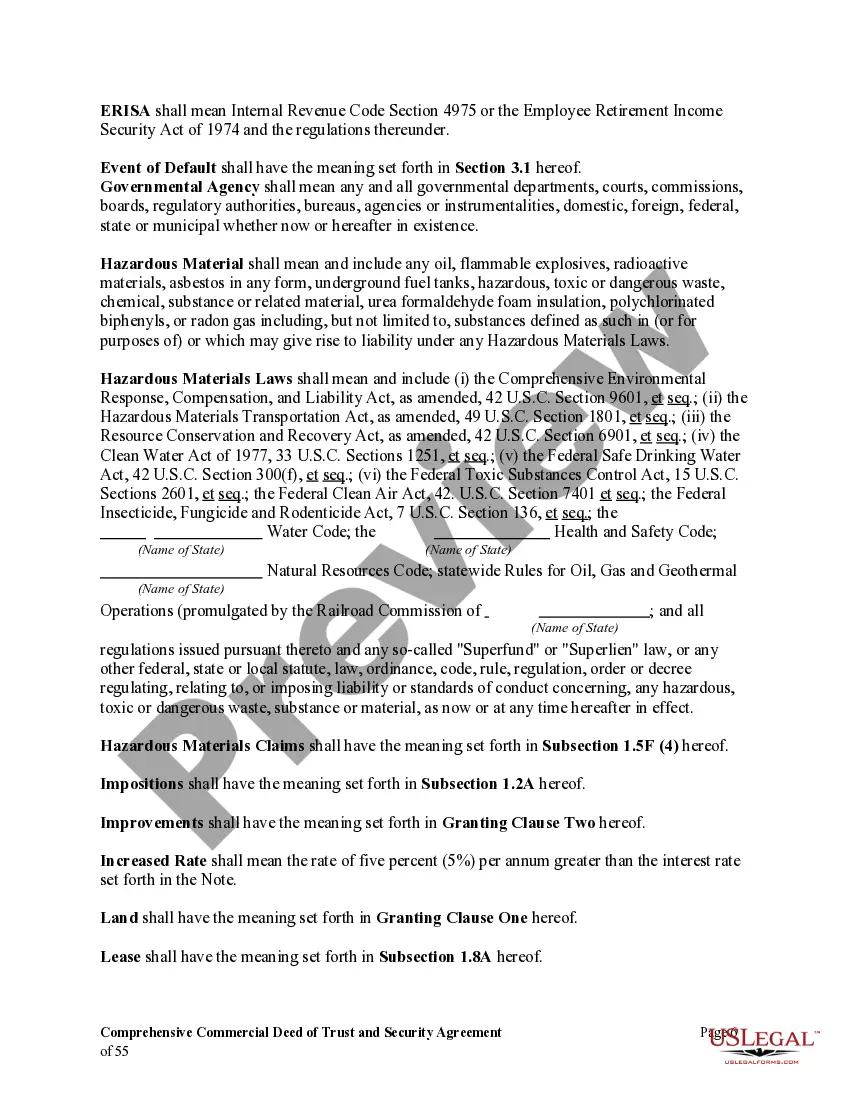
- Definitions of key terms such as "Obligations," "Trustor," and "Beneficiary."
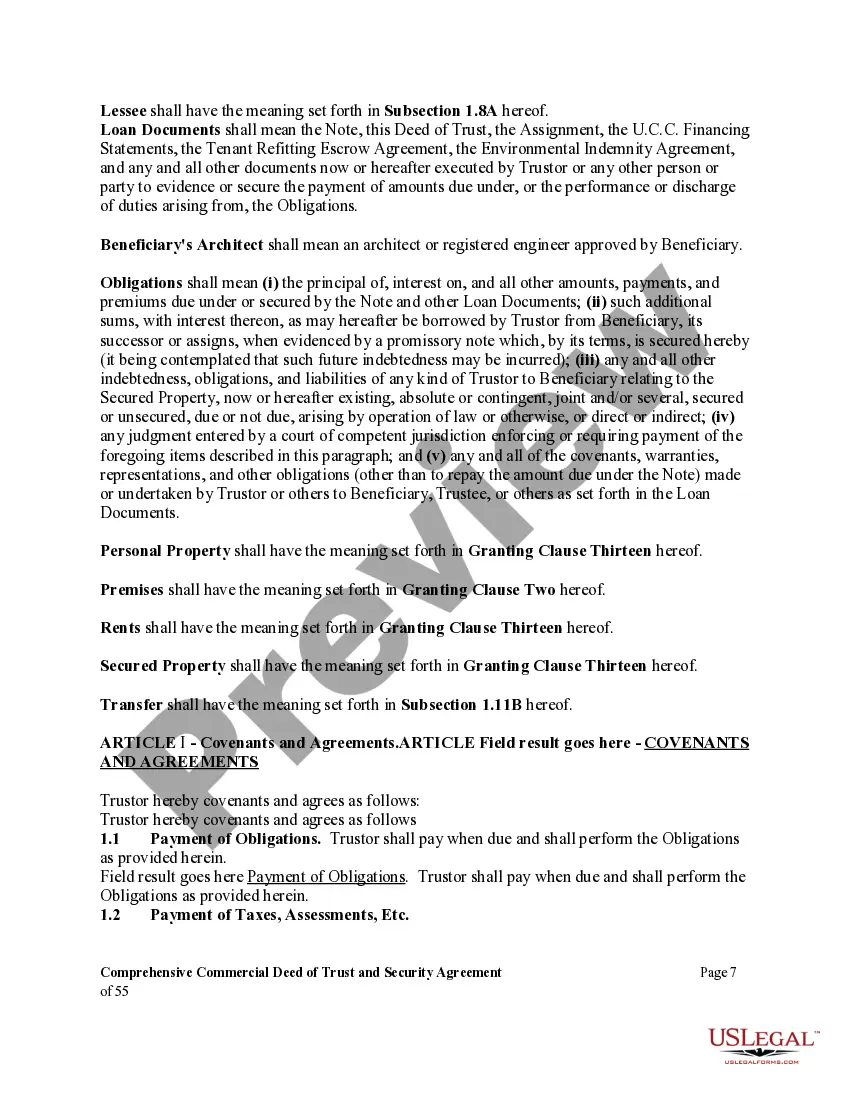
- Covenants and agreements detailing the responsibilities of the Trustor.
- Conditions under which the property may be foreclosed upon default.
- Specifications regarding the handling of insurance, taxes, and other impositions.

When to use this document
This form should be used when individuals or businesses wish to secure a loan or obligation with commercial property. It is particularly relevant in real estate transactions where multiple types of property, like land and associated improvements, are included. Additionally, it is applicable in situations where collateral needs to be clearly defined and secured against potential defaults on the part of the borrower.
Who should use this form
This form is intended for:
- Commercial property owners seeking to secure financing with their real estate.
- Lenders wanting to ensure their investment is protected through a legally binding agreement.
- Real estate professionals or attorneys involved in drafting financial and property agreements.
How to prepare this document
- Identify all parties involved, including the Trustor (borrower) and Beneficiary (lender).
- Clearly specify the property being secured, including all relevant legal descriptions.
- List any additional terms, agreements, and obligations that the Trustor needs to fulfill.
- Ensure all necessary signatures are obtained from all parties involved.
- Consider including notarization if required by state law to validate the agreement.
Does this document require notarization?
This form does not typically require notarization unless specified by local law. However, obtaining notarization may enhance the legal validity of the document.
Get your form ready online
Our built-in tools help you complete, sign, share, and store your documents in one place.
Make edits, fill in missing information, and update formatting in US Legal Forms—just like you would in MS Word.
Download a copy, print it, send it by email, or mail it via USPS—whatever works best for your next step.
Sign and collect signatures with our SignNow integration. Send to multiple recipients, set reminders, and more. Go Premium to unlock E-Sign.
If this form requires notarization, complete it online through a secure video call—no need to meet a notary in person or wait for an appointment.
We protect your documents and personal data by following strict security and privacy standards.

Make edits, fill in missing information, and update formatting in US Legal Forms—just like you would in MS Word.

Download a copy, print it, send it by email, or mail it via USPS—whatever works best for your next step.

Sign and collect signatures with our SignNow integration. Send to multiple recipients, set reminders, and more. Go Premium to unlock E-Sign.

If this form requires notarization, complete it online through a secure video call—no need to meet a notary in person or wait for an appointment.

We protect your documents and personal data by following strict security and privacy standards.
Avoid these common issues
- Failing to accurately describe the property being secured.
- Not including all relevant partiesâ signatures.
- Ignoring local laws that may impose specific requirements on the form.
- Forgetting to attach necessary exhibits or appendices that detail exhibits of property.
Benefits of using this form online
Benefits of using this form online include:
- Easy access to customizable templates.
- Streamlined completion process to minimize errors.
- Integrated guidance to ensure compliance with legal requirements.
- Ability to save and print documents for record-keeping.
Key takeaways
- The Comprehensive Commercial Deed of Trust and Security Agreement is crucial for securing commercial loans.
- It includes various types of properties and sets forth clear obligations and protections.
- Users must ensure compliance with state-specific requirements and include accurate details.
- Proper execution, including signatures and possible notarization, is essential to validate this form.
Looking for another form?
Form popularity
FAQ
Party information: names and addresses of the trustor(s), trustee(s), beneficiary(ies), and guarantor(s) (if applicable) Property details: full address of the property and its legal description (which can be obtained from the County Recorder's Office)
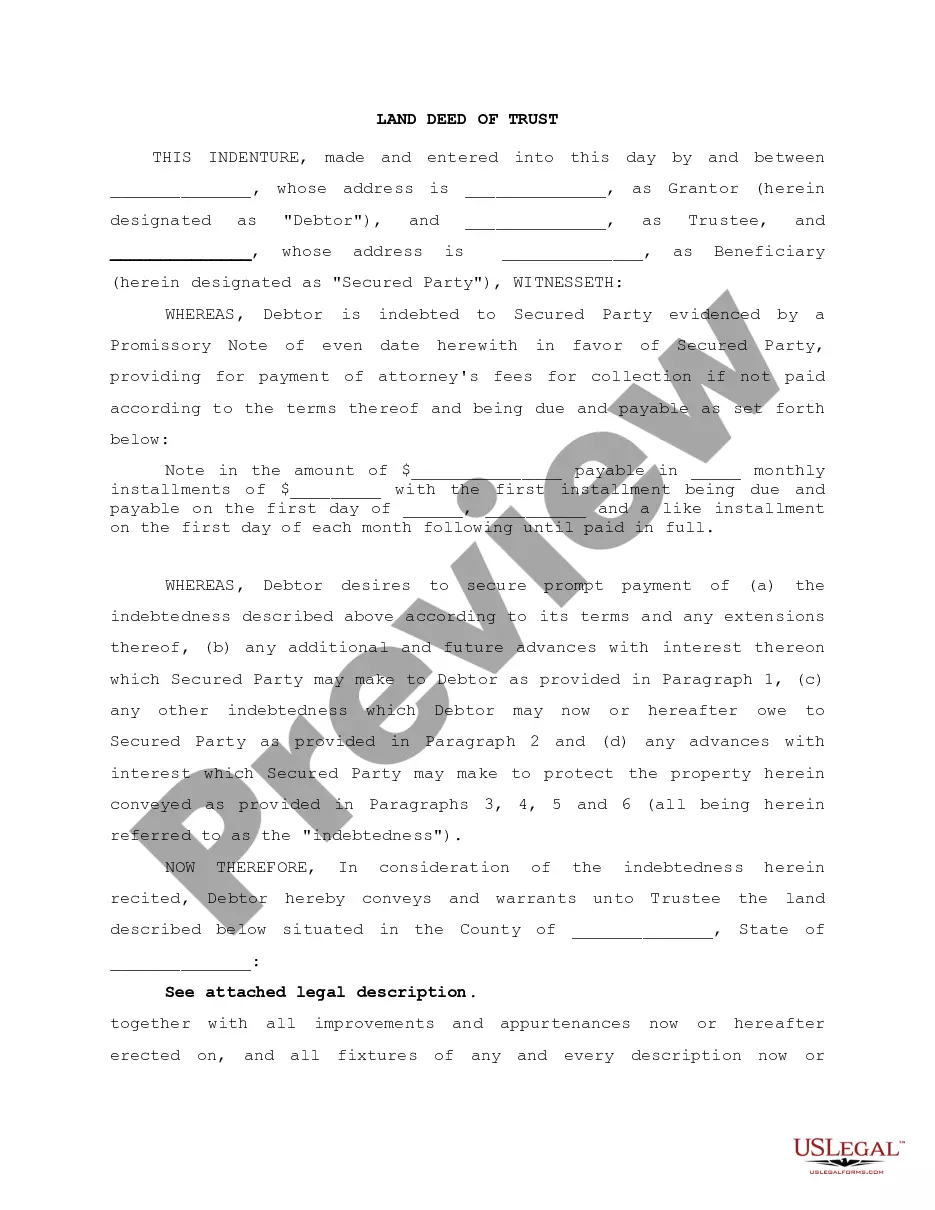
Yes, there are key differences between the two. With a deed, you transfer the ownership of the property to one party. In contrast, a deed of trust does not mean the holder owns the property. In an arrangement involving a deed of trust, the borrower signs a contract with the lender with details regarding the loan.
Some owners are put off using solicitors duke to the deed of trust cost. Individuals can write out their own, and use someone else as a witness. However, this may have errors or not be a legally binding document. The investment of getting a deed of trust when buying a property is often worth it in the long term.
A deed of trust has a borrower, lender and a trustee. The trustee is a neutral third party that holds the title to a property until the loan is completely paid off by the borrower.
A deed of trust involves three parties: a lender, a borrower, and a trustee. The lender gives the borrower money. In exchange, the borrower gives the lender one or more promissory notes. As security for the promissory notes, the borrower transfers a real property interest to a third-party trustee.
A deed of trust is a written instrument with three parties: The trustor, who is the borrower and homeowner. The beneficiary, who is the lender. The trustee, who is a third party such as an insurance company or escrow management agency that holds actual title to the property in trust for the beneficiary.
Some owners are put off using solicitors duke to the deed of trust cost. Individuals can write out their own, and use someone else as a witness. However, this may have errors or not be a legally binding document. The investment of getting a deed of trust when buying a property is often worth it in the long term.
Party information: names and addresses of the trustor(s), trustee(s), beneficiary(ies), and guarantor(s) (if applicable) Property details: full address of the property and its legal description (which can be obtained from the County Recorder's Office)
How much each person contributes to the deposit, and how much will be repaid to them. What percentage of the property each person will own, and how the money will be split if the property is sold. How much each person will pay towards the mortgage, and how the mortgage will ultimately be paid off.