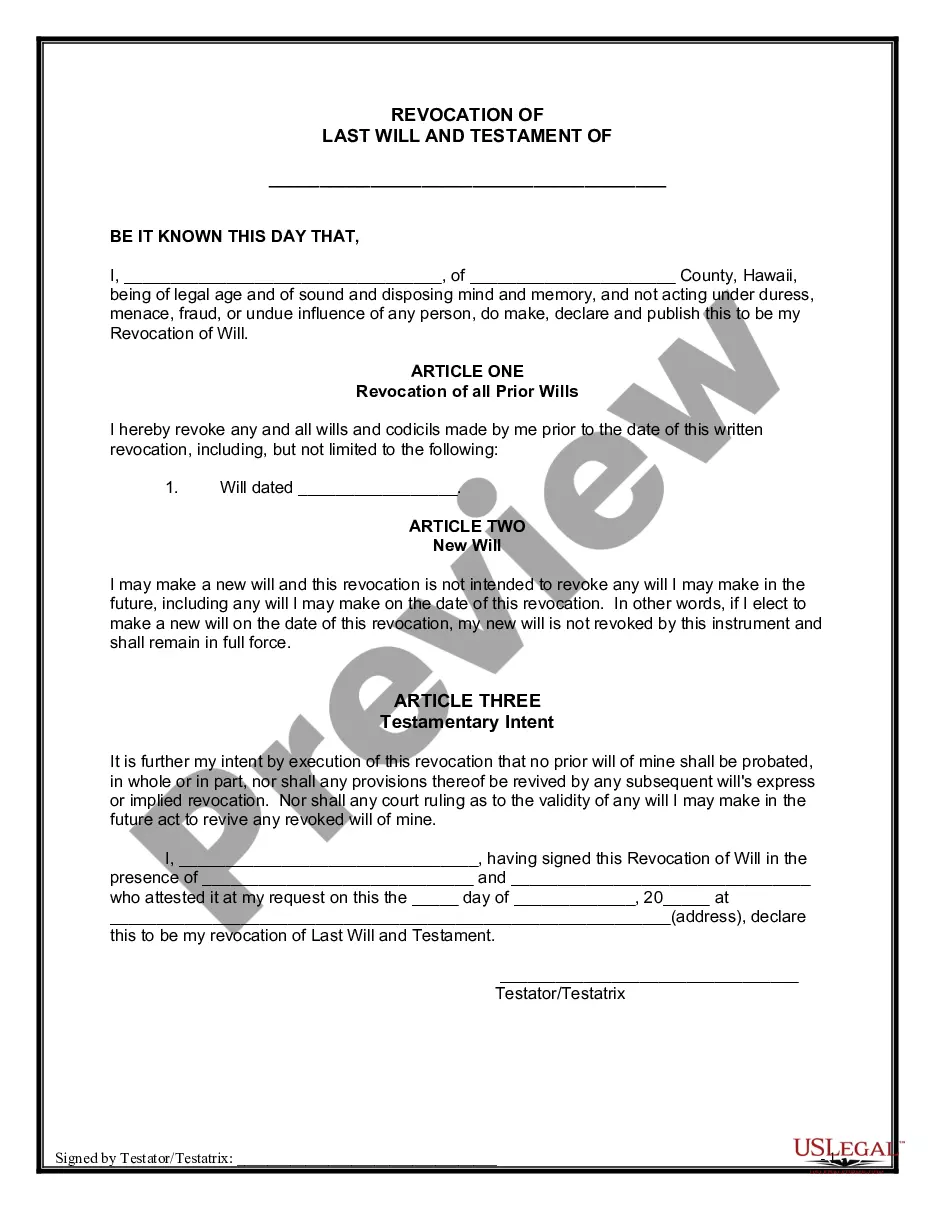
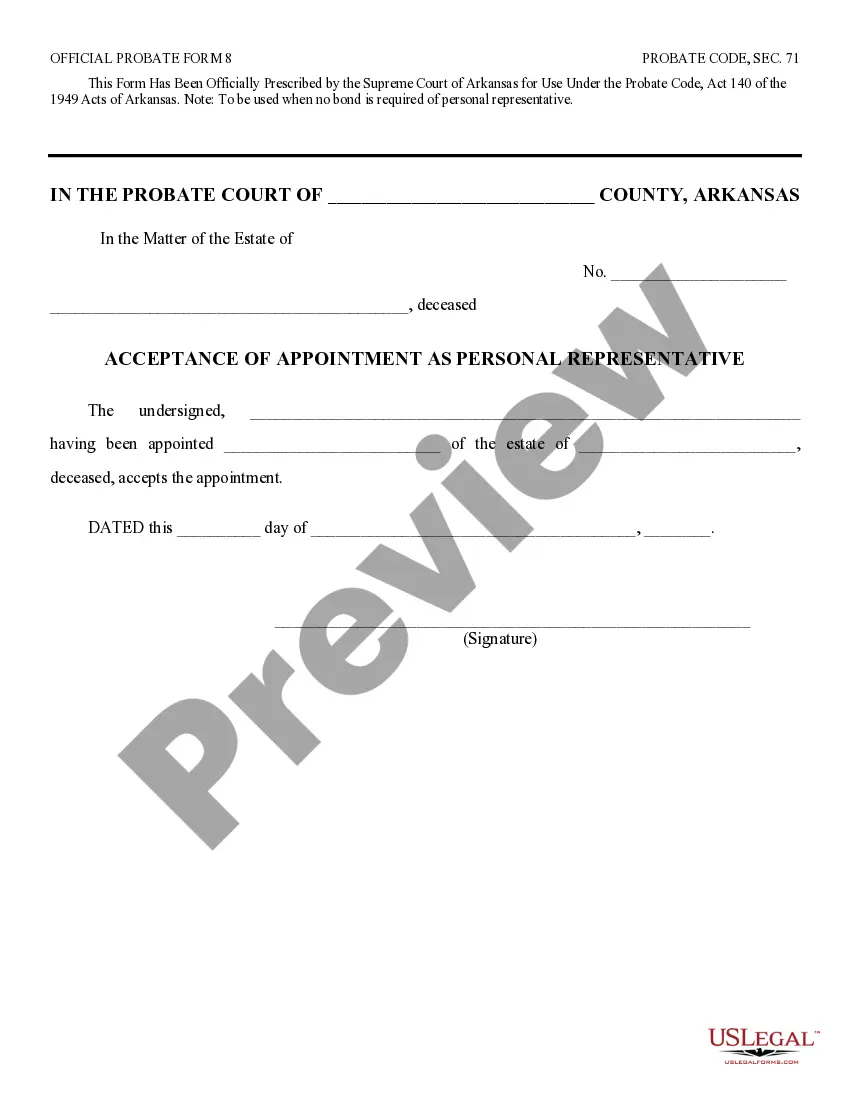
Arkansas Acceptance of Appointment of Personal Representative
What this document covers
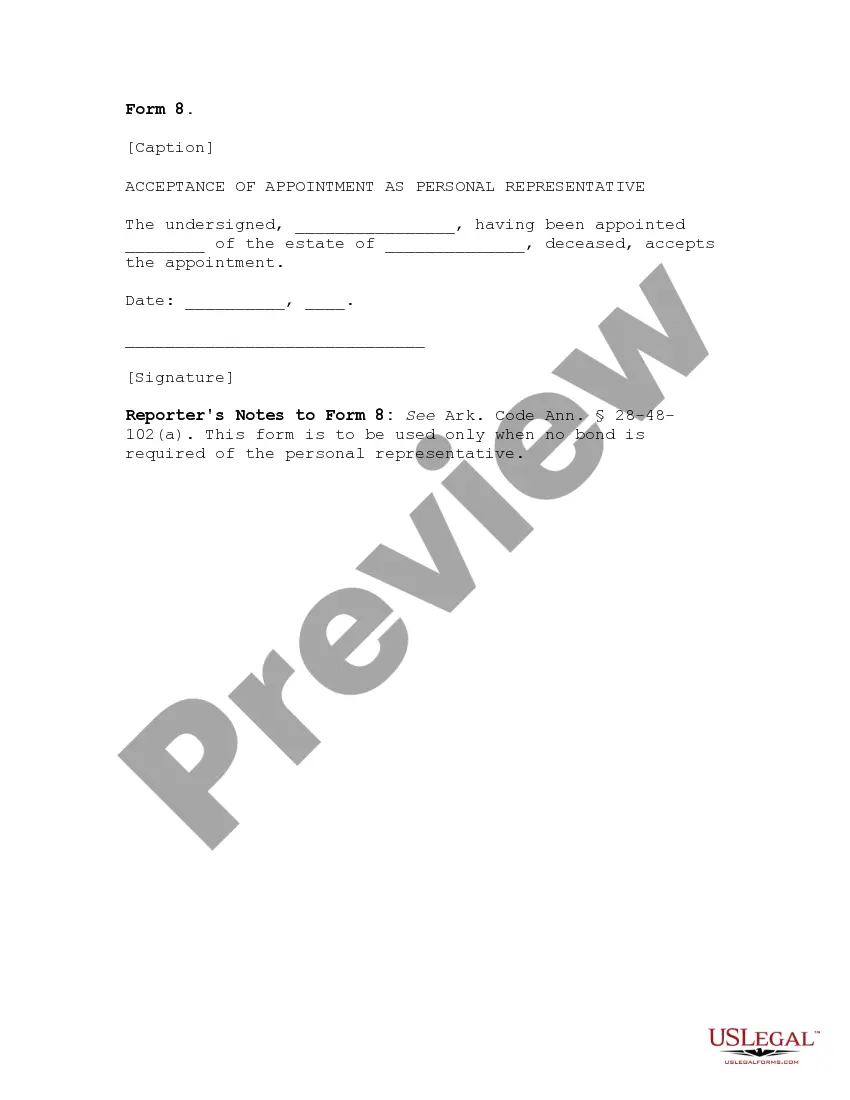
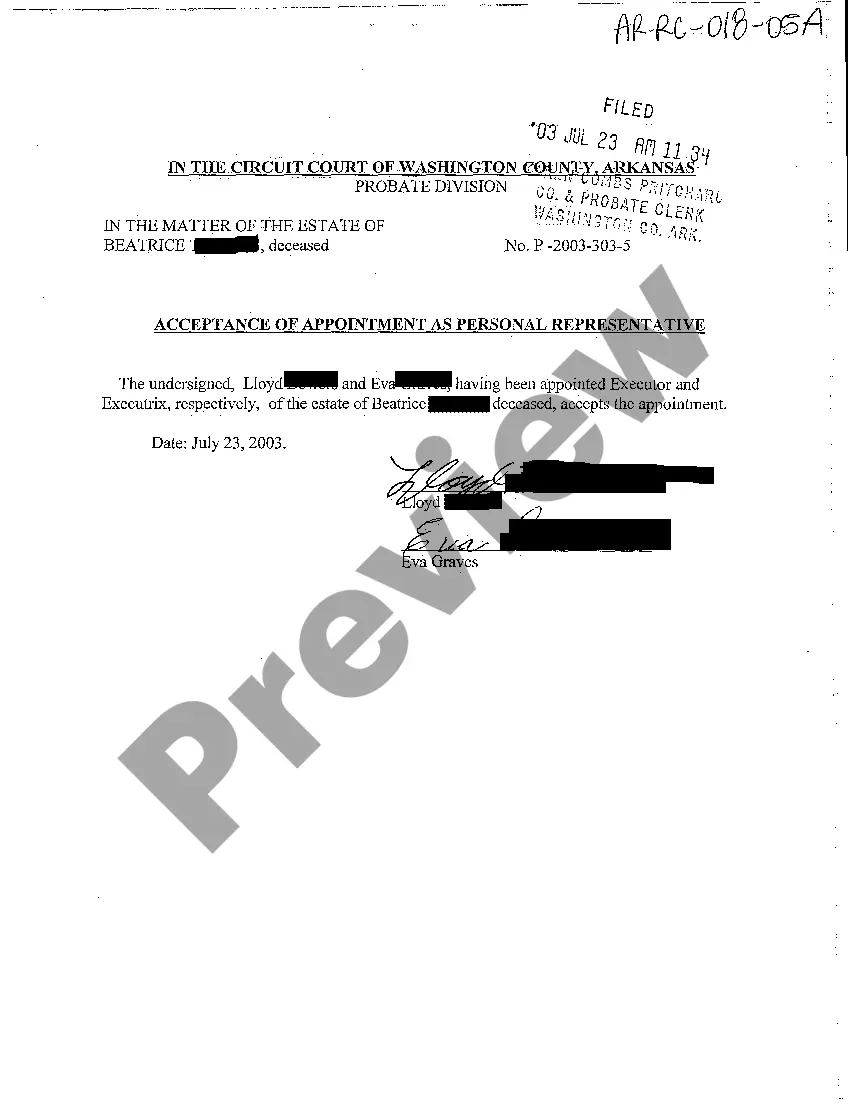
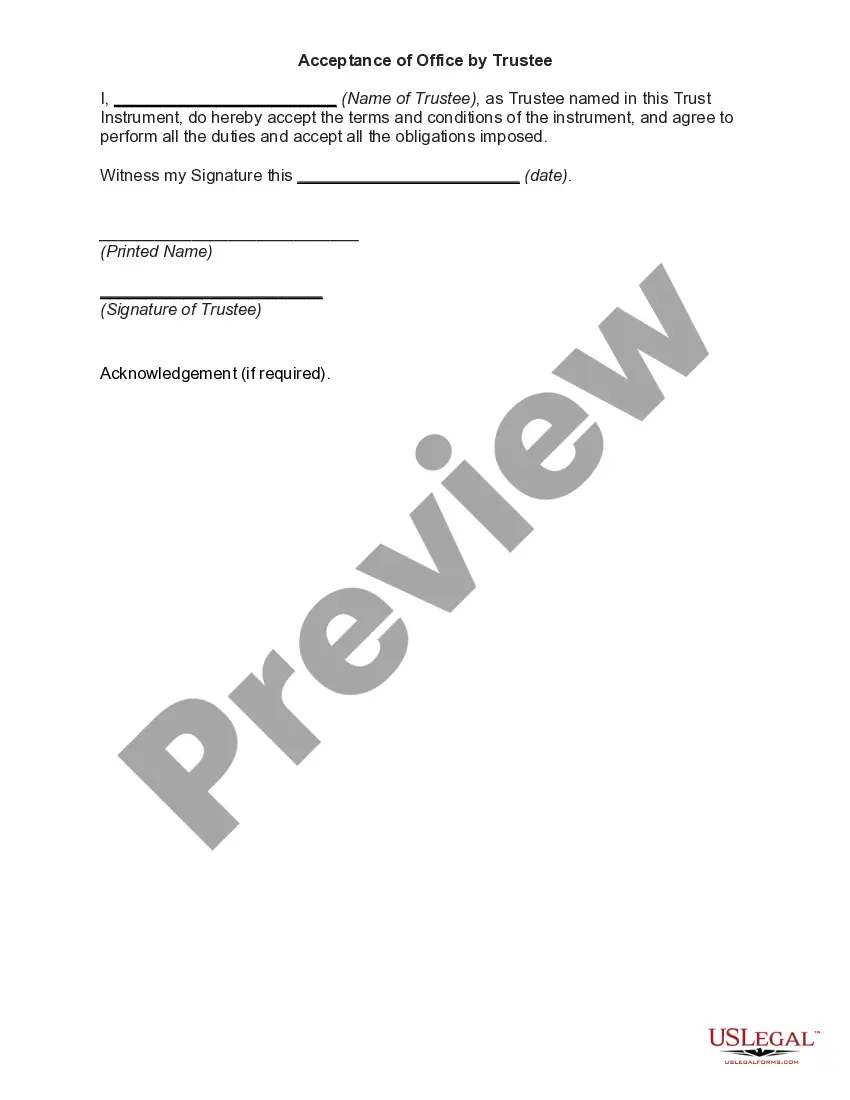
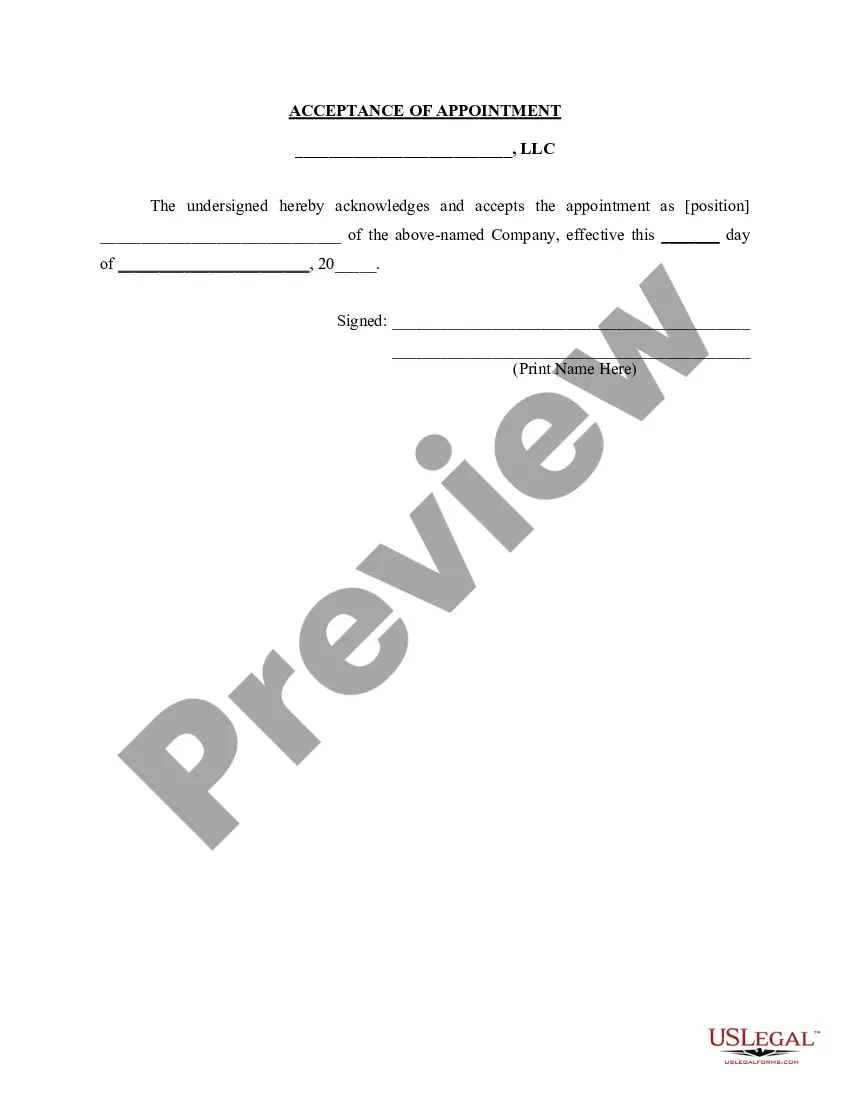
The Acceptance of Appointment of Personal Representative form is an official probate document used to confirm that a personal representative has accepted their role in managing a deceased person's estate. This form is crucial as it establishes the legal authority of the personal representative to carry out their duties. Unlike other estate forms, this one specifically serves to document the acceptance of the court's appointment.
Key parts of this document
- Name of the county and state where the probate court is located.
- The name of the deceased individual whose estate is being managed.
- The case number assigned to the estate case.
- Identification of the personal representative who has been appointed.
- Date of the acceptance of appointment.
- Signature of the personal representative, affirming their acceptance.
Situations where this form applies
This form should be used when an individual has been appointed as a personal representative by the probate court and wishes to formally accept that appointment. It is typically required after the court has issued a letter of appointment and is an essential step in beginning the process of administering the estate.
Who should use this form
- Individuals who have been nominated as personal representatives by the probate court.
- Family members or beneficiaries managing the deceased person's estate.
- Anyone responsible for carrying out the decedent's wishes as outlined in their will.
Instructions for completing this form
- Identify the name of the county and state in which the probate court is located.
- Fill in the name of the deceased individual and their case number as assigned by the court.
- Enter the name of the personal representative accepting the appointment.
- Specify the date of acceptance in the appropriate field.
- Sign the document in the designated signature area to validate the acceptance of the appointment.
Is notarization required?
This form does not typically require notarization unless specified by local law. Always verify requirements with local probate court to ensure compliance.
Get your form ready online
Our built-in tools help you complete, sign, share, and store your documents in one place.
Make edits, fill in missing information, and update formatting in US Legal Forms—just like you would in MS Word.
Download a copy, print it, send it by email, or mail it via USPS—whatever works best for your next step.
Sign and collect signatures with our SignNow integration. Send to multiple recipients, set reminders, and more. Go Premium to unlock E-Sign.
If this form requires notarization, complete it online through a secure video call—no need to meet a notary in person or wait for an appointment.
We protect your documents and personal data by following strict security and privacy standards.

Make edits, fill in missing information, and update formatting in US Legal Forms—just like you would in MS Word.

Download a copy, print it, send it by email, or mail it via USPS—whatever works best for your next step.

Sign and collect signatures with our SignNow integration. Send to multiple recipients, set reminders, and more. Go Premium to unlock E-Sign.

If this form requires notarization, complete it online through a secure video call—no need to meet a notary in person or wait for an appointment.

We protect your documents and personal data by following strict security and privacy standards.
Common mistakes to avoid
- Failing to include the case number, which may lead to processing delays.
- Not signing the form, which renders it invalid.
- Leaving out the date of acceptance, causing potential confusion in the probate process.
Why complete this form online
- Convenient access to the form for immediate use, eliminating the need for physical trips to a law office.
- Editable templates that allow for quick adjustments and accurate completions.
- Reliable resources provided by licensed attorneys ensure the form meets all legal requirements.
Looking for another form?
Form popularity
FAQ
Becoming a personal representative can vary in duration, depending on court schedules and the specifics of the estate. Generally, the process can take a few weeks to several months to complete. Understanding the timeline associated with the Arkansas Acceptance of Appointment of Personal Representative can help you manage expectations and prepare accordingly.
A personal representative holds considerable authority to execute the estate process. This includes paying debts, managing estate assets, and distributing property according to the will or state laws. Being informed about these powers is crucial for anyone involved in the Arkansas Acceptance of Appointment of Personal Representative.
An executor and a personal representative often refer to the same role, although the terms may vary based on context. An executor typically manages the estate according to the deceased's will, while a personal representative may be appointed in cases with or without a will. Understanding this distinction is important when considering the Arkansas Acceptance of Appointment of Personal Representative.
Yes, you can refuse to be a personal representative if you feel unprepared or unwilling to take on this responsibility. It is important to communicate your decision to the court and any involved parties promptly. Declining this role is your right, especially when you consider the demands associated with the Arkansas Acceptance of Appointment of Personal Representative.
Arkansas Code 28 40 111 outlines the regulations regarding the acceptance of appointment for personal representatives. It specifies the legal requirements and obligations that must be met for someone to serve in this capacity. Familiarity with this code can help you navigate the Arkansas Acceptance of Appointment of Personal Representative more effectively.
The appointment of a personal representative is a legal procedure that designates an individual to handle the affairs of a deceased person's estate. This process typically involves the Arkansas court, which officially recognizes the appointee's authority. This step is essential for effectively executing the Arkansas Acceptance of Appointment of Personal Representative.
Being appointed as a personal representative means you take on the responsibility of managing the estate of a deceased person. This role involves settling debts, distributing assets, and ensuring that the deceased's wishes are honored. Your function is crucial for the proper administration of the estate under the Arkansas Acceptance of Appointment of Personal Representative.
To obtain a letter of administration in Arkansas, you must file a petition for administration in the probate court. The court will review your petition before issuing the letter, granting you authority to manage the deceased’s estate. Starting this process swiftly is essential, and US Legal Forms can provide you with the necessary templates to streamline your Arkansas Acceptance of Appointment of Personal Representative.
To file for an estate administrator in Arkansas, complete a petition that outlines your request and relevant information about the decedent. After filing this petition with the appropriate court, you will need to notify all interested parties. Using services like US Legal Forms can help you navigate this task efficiently, providing necessary documents to assist with your Arkansas Acceptance of Appointment of Personal Representative.
An informal appointment of a personal representative refers to the process where the court allows a designated individual to manage the estate without a formal hearing. This streamlined process is often faster and less complicated, making it easier for families during difficult times. It is an effective solution for those looking to carry out responsibilities associated with Arkansas Acceptance of Appointment of Personal Representative without court intervention.