North Carolina Acknowledgment of register of deeds
About this form
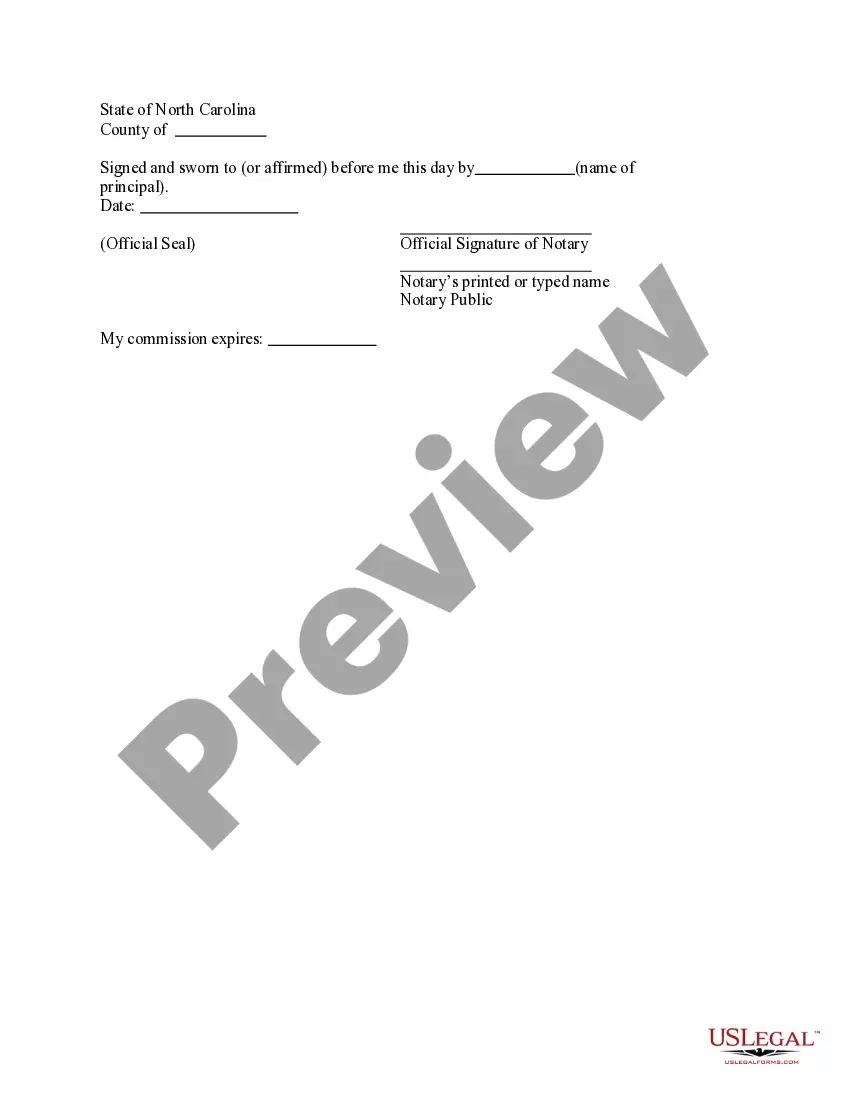
The Acknowledgment of Register of Deeds is a legal form used to verify the identity of individuals signing a document in the presence of a notary public. This form serves to confirm that the signatures are valid and have been made voluntarily. Unlike other forms that may solely capture signatures, this document includes the notary's certification, providing an extra layer of validation to deeds and other important documents.
What’s included in this form
- Identification of the principal: This section requires the name of the individual whose signature is being notarized.
- Notary acknowledgment: This part includes the statement of the notary affirming that the principal has signed the document in their presence.
- Date of acknowledgment: The date on which the acknowledgment takes place must be recorded.
- Notary's official seal: The form must include the official seal and signature of the notary public, indicating legal validation.
- Notaryâs printed name and commission expiration: The notaryâs personal details, including the length of their commission, must be provided.

When to use this form
This form is typically used when an individual needs to sign a legal document, and that document requires notarization for it to be considered legally binding. Common scenarios include transferring property deeds, signing personal contracts, or executing powers of attorney. Having an acknowledgment from the register of deeds provides assurance that the signatures are authentic and that the document is legally enforceable.
Who should use this form
- Individuals signing important documents that require notarization.
- Notaries public responsible for administering the acknowledgment process.
- Legal professionals needing to ensure the validity of signatures on legal documents.
Steps to complete this form
- Identify the parties involved by clearly writing the name of the principal.
- Enter the date of acknowledgment, ensuring it is the exact date when the notarization occurs.
- Have the principal sign the document in the presence of the notary.
- Complete the notary acknowledgment section by filling in the notaryâs details, including their printed name and commission expiration date.
- Affix the notary's official seal and signature to validate the acknowledgment.
Notarization requirements for this form
Yes, this form must be notarized to be legally valid. The signature of a notary public assures that the parties involved are who they claim to be and have signed voluntarily. US Legal Forms offers integrated online notarization services, making this process secure and convenient through 24/7 availability and video conferencing, eliminating the need for in-person visits.
Get your form ready online
Our built-in tools help you complete, sign, share, and store your documents in one place.
Make edits, fill in missing information, and update formatting in US Legal Forms—just like you would in MS Word.
Download a copy, print it, send it by email, or mail it via USPS—whatever works best for your next step.
Sign and collect signatures with our SignNow integration. Send to multiple recipients, set reminders, and more. Go Premium to unlock E-Sign.
If this form requires notarization, complete it online through a secure video call—no need to meet a notary in person or wait for an appointment.
We protect your documents and personal data by following strict security and privacy standards.

Make edits, fill in missing information, and update formatting in US Legal Forms—just like you would in MS Word.

Download a copy, print it, send it by email, or mail it via USPS—whatever works best for your next step.

Sign and collect signatures with our SignNow integration. Send to multiple recipients, set reminders, and more. Go Premium to unlock E-Sign.

If this form requires notarization, complete it online through a secure video call—no need to meet a notary in person or wait for an appointment.

We protect your documents and personal data by following strict security and privacy standards.
Common mistakes
- Failing to sign the document in the presence of the notary.
- Leaving the date or notary details blank.
- Not affixing the official seal of the notary, which can invalidate the acknowledgment.
- Using outdated forms that do not comply with current legal requirements.
Advantages of online completion
- Convenience of accessing and downloading the form at any time.
- Editability allows users to fill out the form seamlessly without errors.
- Reliability, ensuring the form is created with accurate legal language as drafted by licensed attorneys.
Looking for another form?
Form popularity
FAQ
Adding someone to your house deed requires the filing of a legal form known as a quitclaim deed. When executed and notarized, the quitclaim deed legally overrides the current deed to your home. By filing the quitclaim deed, you can add someone to the title of your home, in effect transferring a share of ownership.
Determine if the error is harmless or fatal to the transfer of title. Decide what instrument is best suited to the error. Draft a corrective deed, affidavit, or new deed. Obtain the original signature(s) of the Grantor(s). Re-execute the deed with proper notarization and witnessing.
Failure to record a deed effectively makes it impossible for the public to know about the transfer of a property. That means the legal owner of the property appears to be someone other than the buyer, a situation that can generate serious ramifications.
If a deed is to have any validity, it must be made voluntarily.If FRAUD is committed by either the grantor or grantee, a deed can be declared invalid. For example, a deed that is a forgery is completely ineffective. The exercise of UNDUE INFLUENCE also ordinarily serves to invalidate a deed.
Recording All deeds must be filed in the Register of Deeds in the County where the real estate is located. Signing (§ 47-38) All deeds must be signed with the Grantor(s) signing in front of a Notary Public.
You can correct an error on a California deed through a Correction Deed or Corrective Deed. Usually deed errors are as a result of someone attempting to prepare a deed without proper knowledge or professional help.
A grant deed warrants that the grantor actually owned the title to transfer.The deed must be acknowledged before a notary public or other official authorized by law to administer oaths. The reason for notarizing is to provide evidence that the document is genuine as transaction documents are sometimes forged.
Recording a property interest transfer means that everyone is on notice that the prior owner no longer is responsible for the real estate but that the new owner is in charge.In short, recording a property deed is not just the law; it's a good idea and offers both parties legal protections.
Adding someone to your house deed requires the filing of a legal form known as a quitclaim deed. When executed and notarized, the quitclaim deed legally overrides the current deed to your home. By filing the quitclaim deed, you can add someone to the title of your home, in effect transferring a share of ownership.
When done properly, a deed is recorded anywhere from two weeks to three months after closing.