Mississippi Deed of Trust, Security Agreement and Financing Statement
Understanding this form
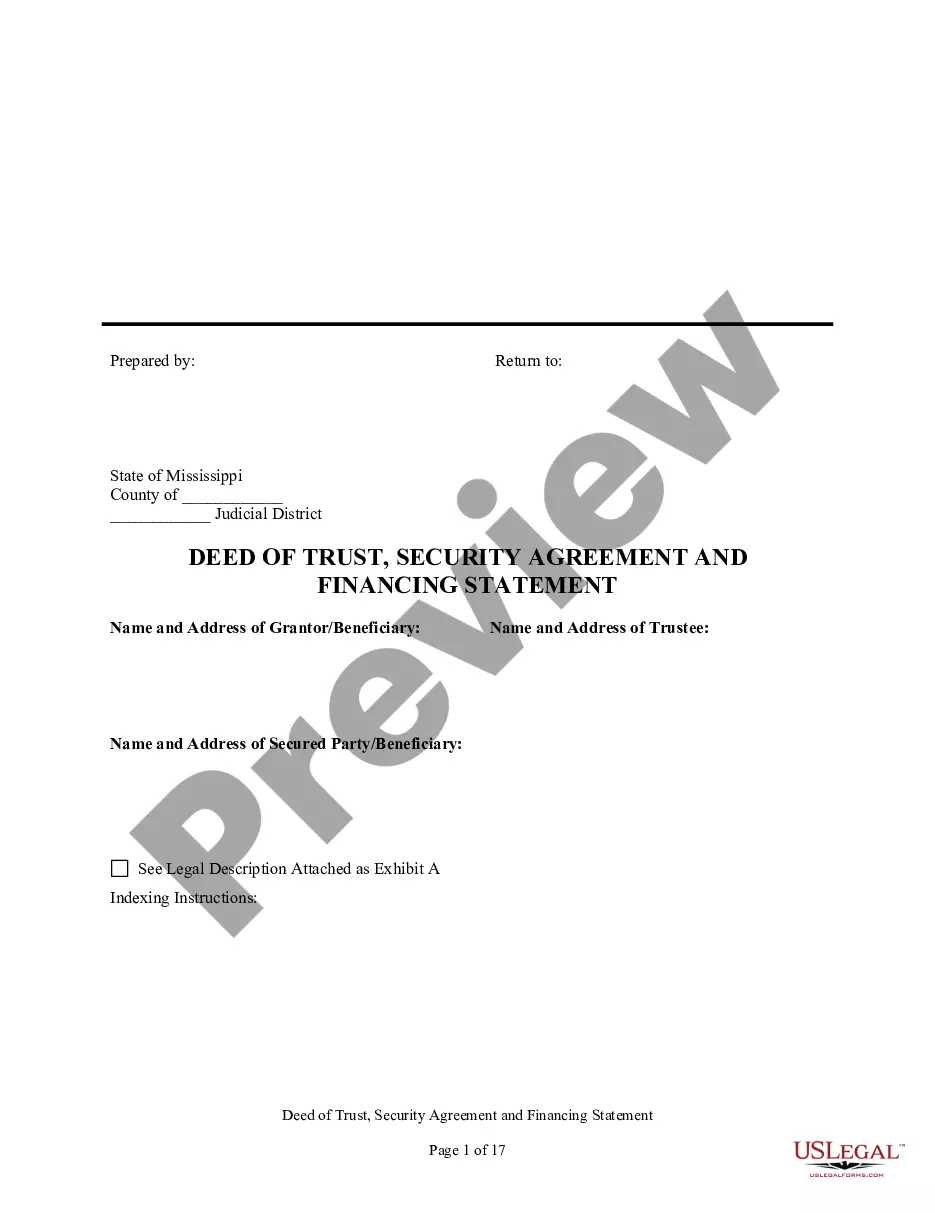
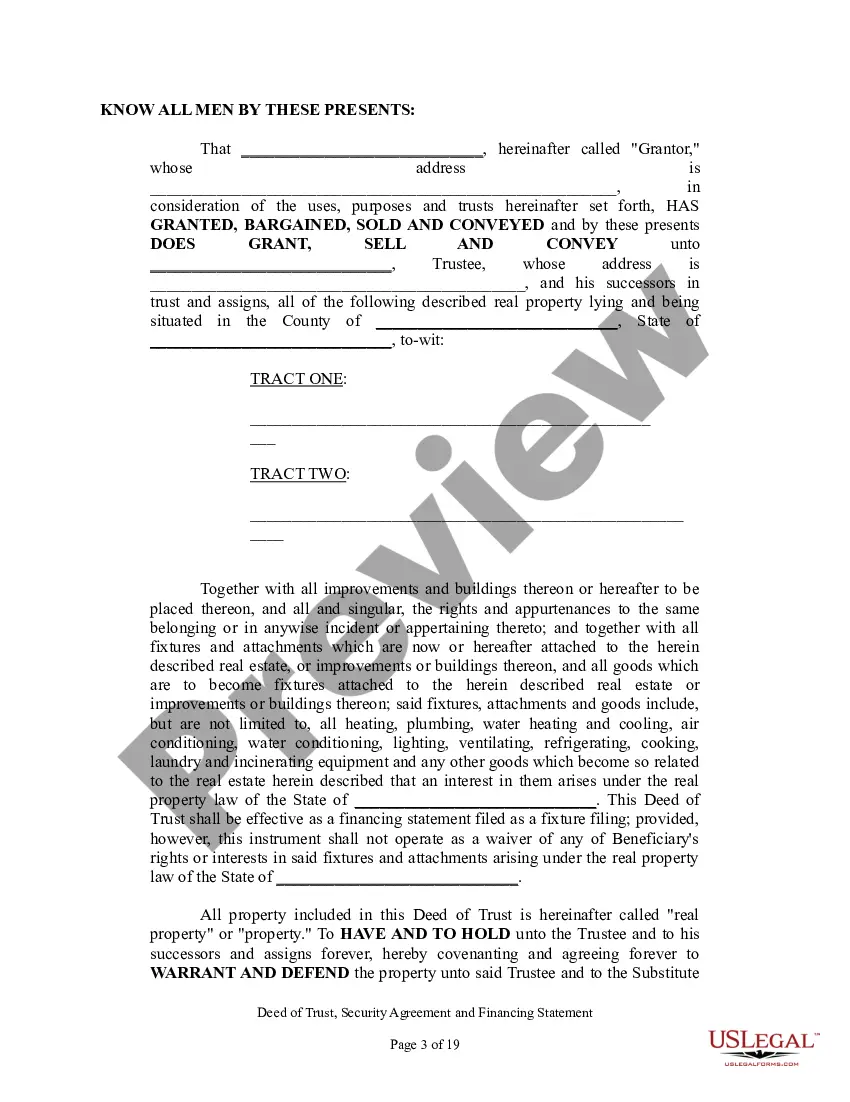
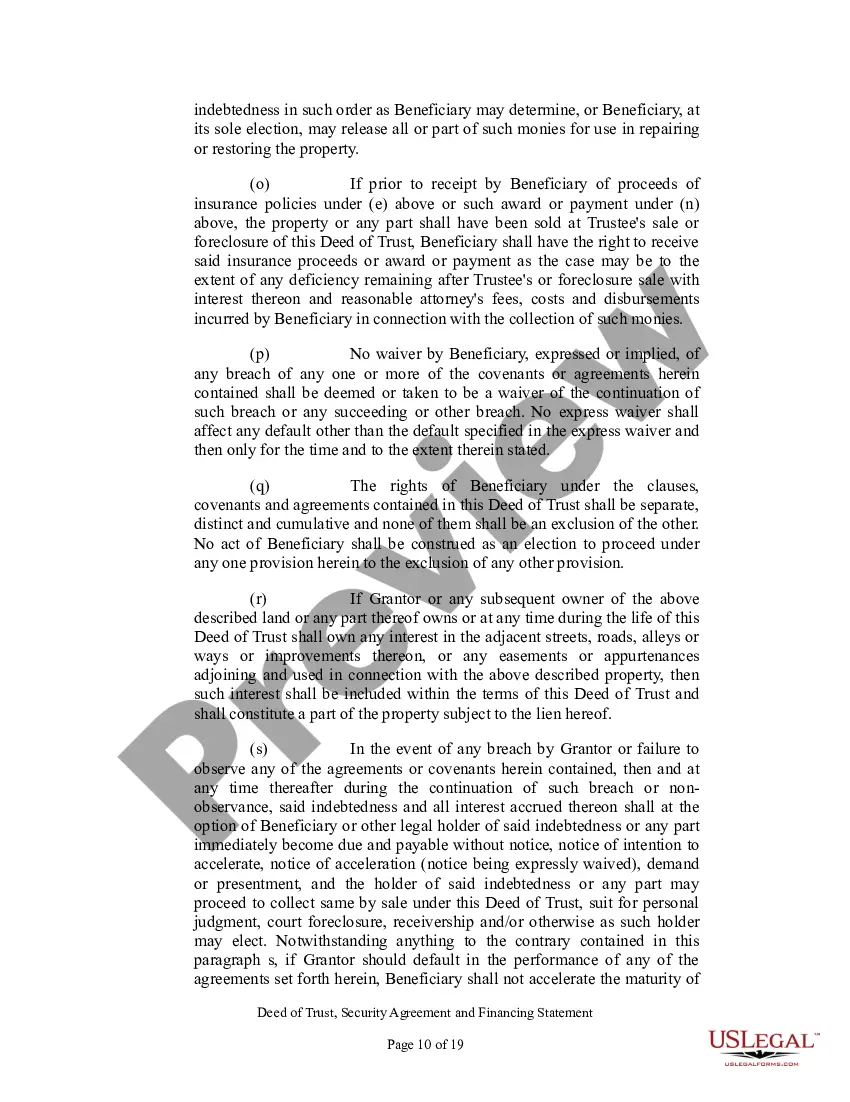
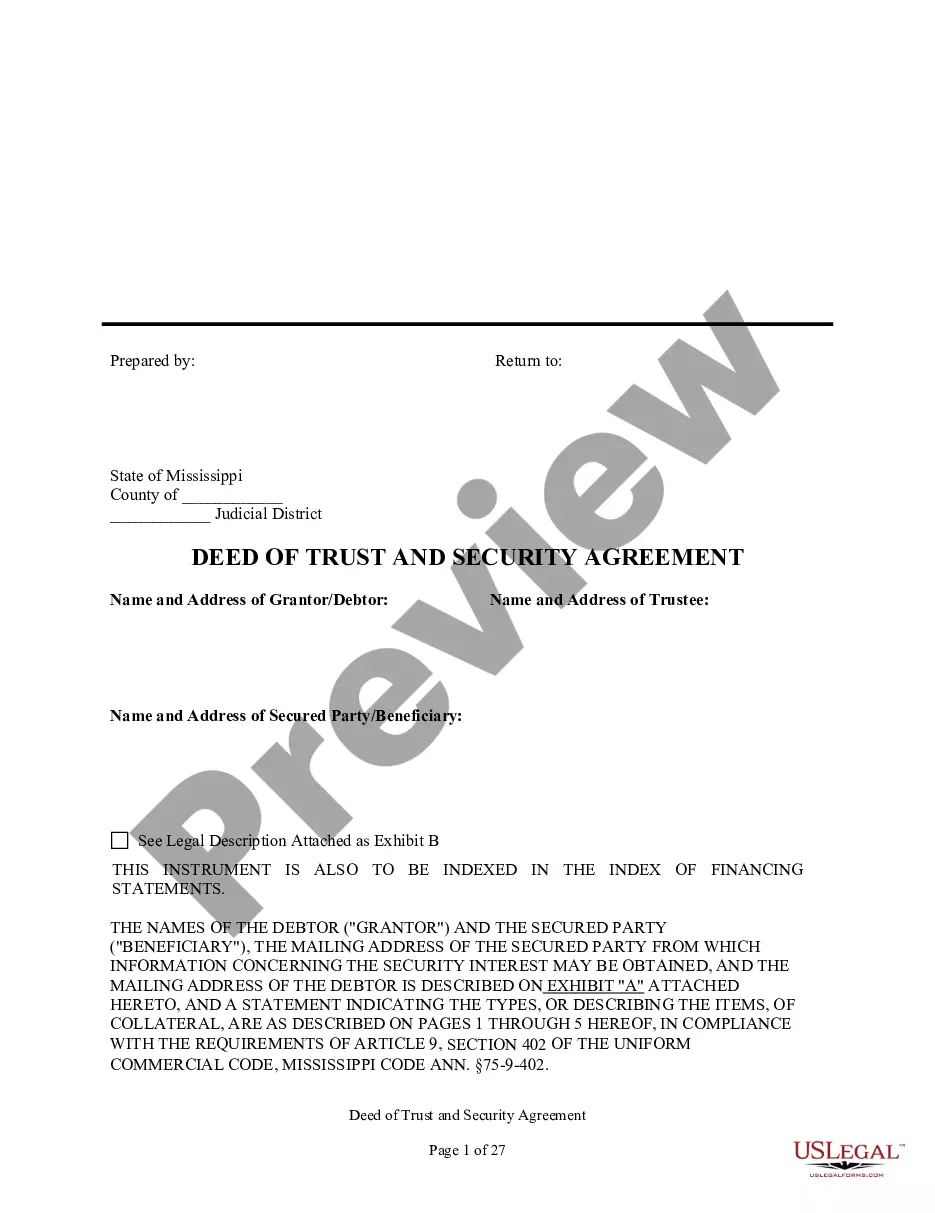
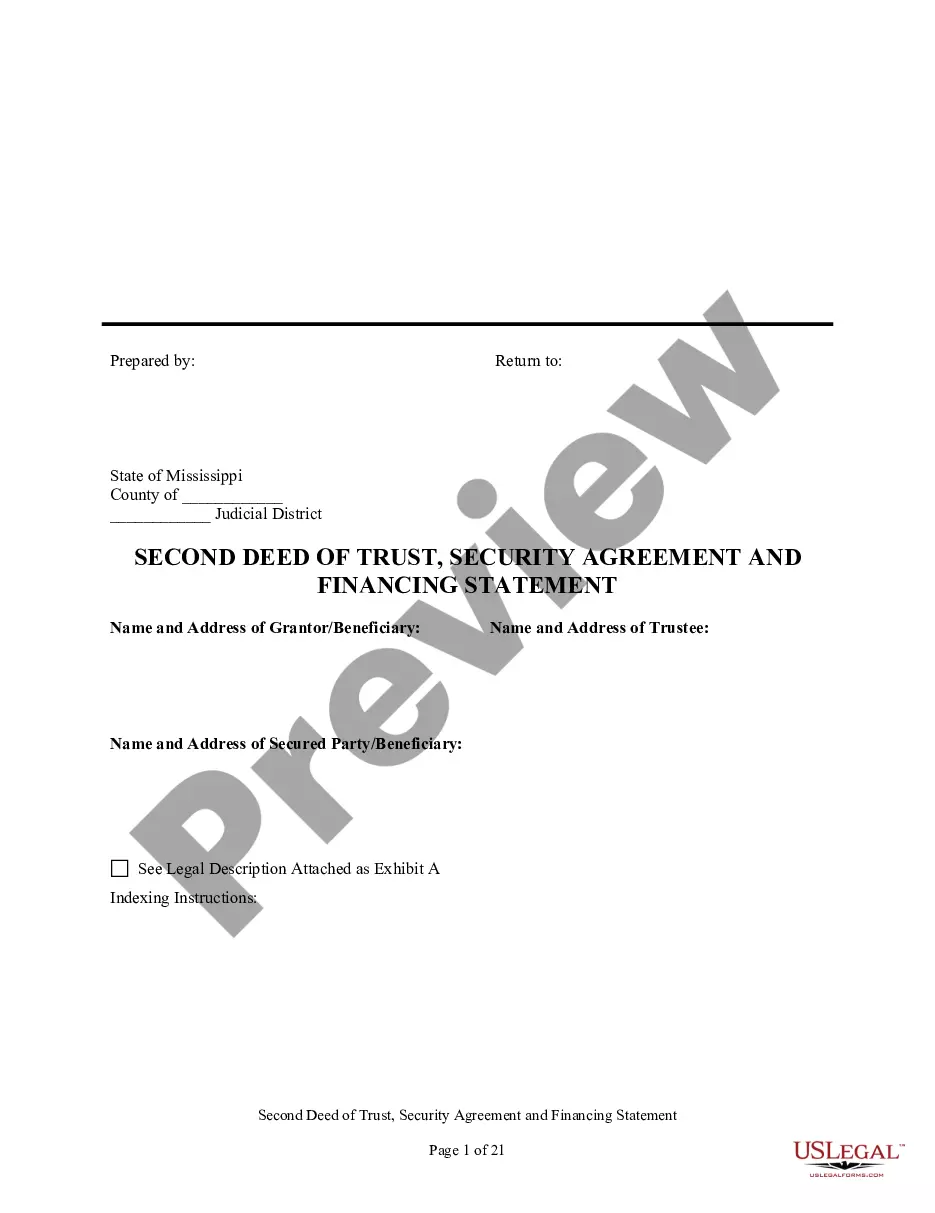
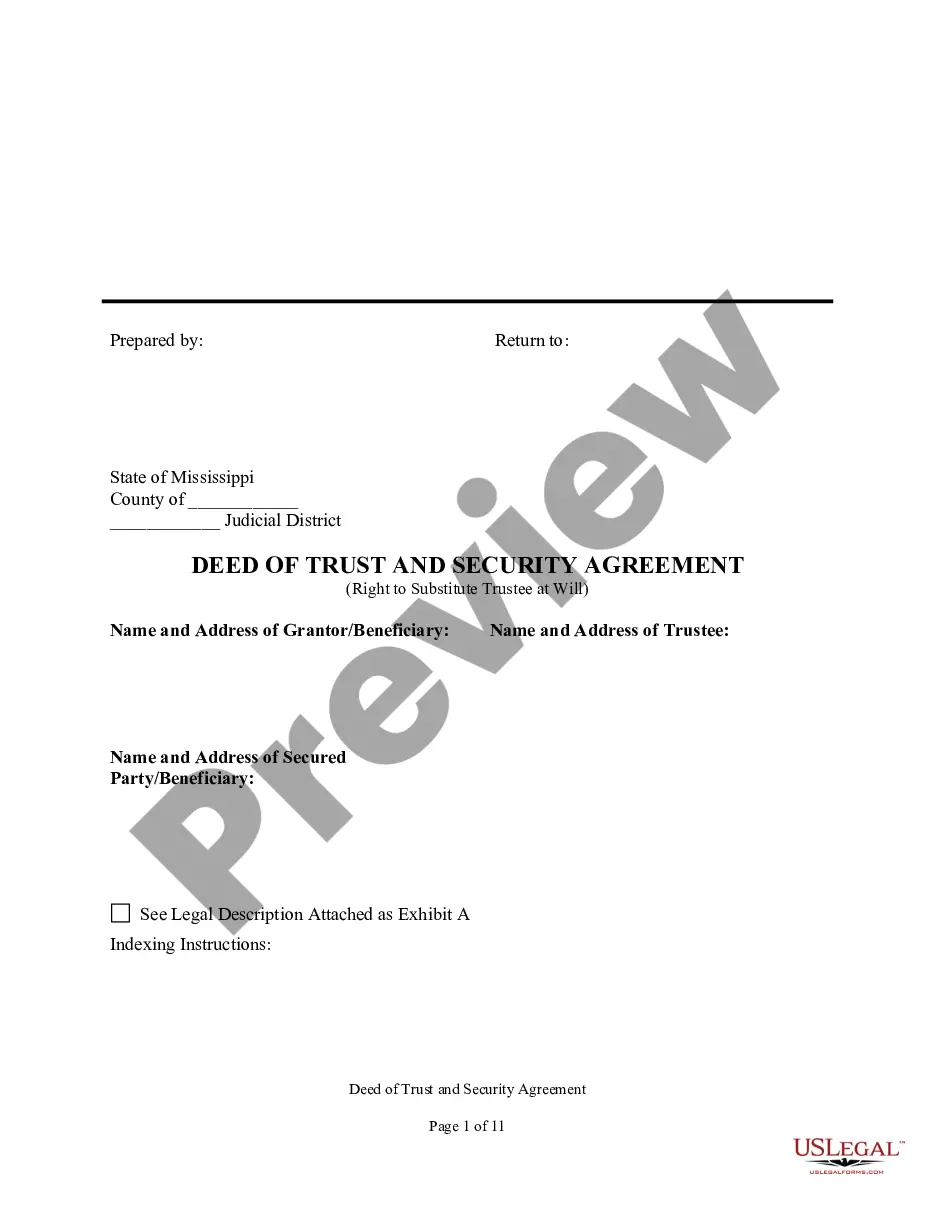
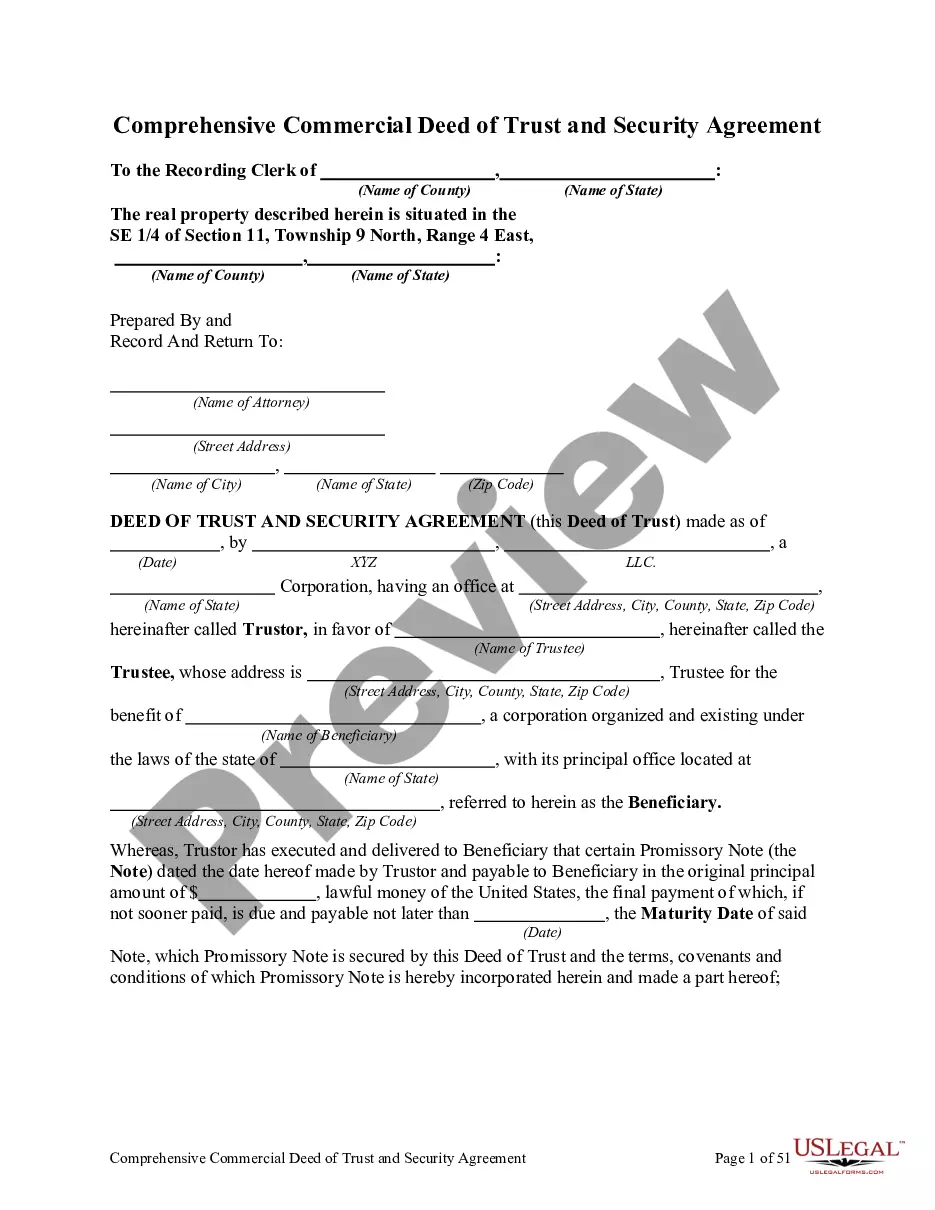
The Deed of Trust, Security Agreement, and Financing Statement is a legal document used to secure a loan by conveying title to real property to a trustee. This form combines three essential components: a deed of trust that establishes a trustee's security interest in the property until the loan is repaid, a security agreement that outlines the terms between the debtor and the secured party, and a financing statement that details the collateral involved. It complies with Mississippi state laws, making it crucial for situations where property serves as collateral for a loan.
Form components explained
- Deed of Trust: Transfers property title to a trustee as security for repayment.
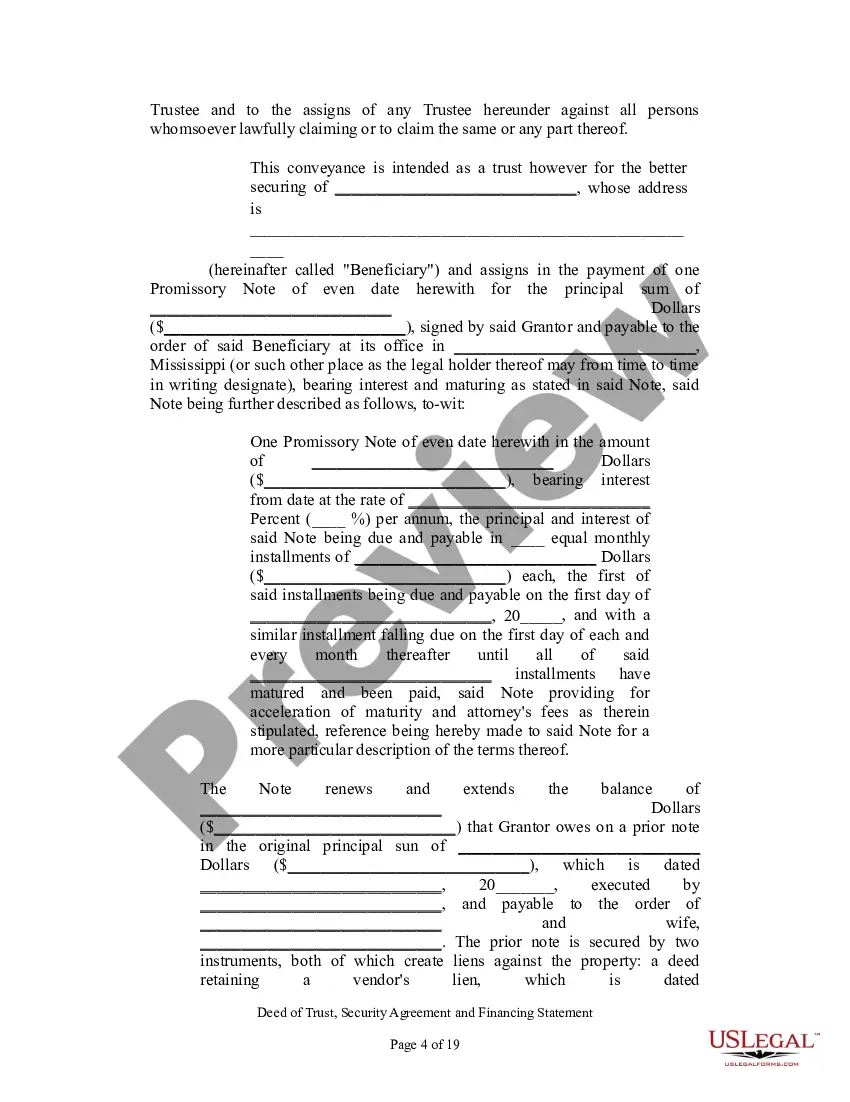
- Security Agreement: Establishes terms for the repayment of the obligation secured by property.
- Financing Statement: Covers specified collateral and helps establish priority over other creditors.
- Property Descriptions: Provides detailed legal descriptions of the real estate involved.
- Default Provisions: Outlines consequences if the borrower fails to repay as agreed.


When to use this document
This form is essential when an individual or business is borrowing money and wants to secure the loan with real property. It is commonly used in real estate transactions involving mortgages, home purchases, or refinancing. Additionally, this form can be utilized when the borrower has existing debts and wishes to consolidate them while securing new financing against their property.
Who can use this document
- Individuals or businesses seeking a loan secured by real estate.
- Lenders who require security interests in real property to mitigate risk.
- Real estate agents and attorneys advising clients in property transactions.
- Homeowners refinancing existing loans with added security agreements.
Completing this form step by step
- Identify and enter the borrowers' and lenders' names and addresses.
- Provide a detailed legal description of the property in the specified sections.
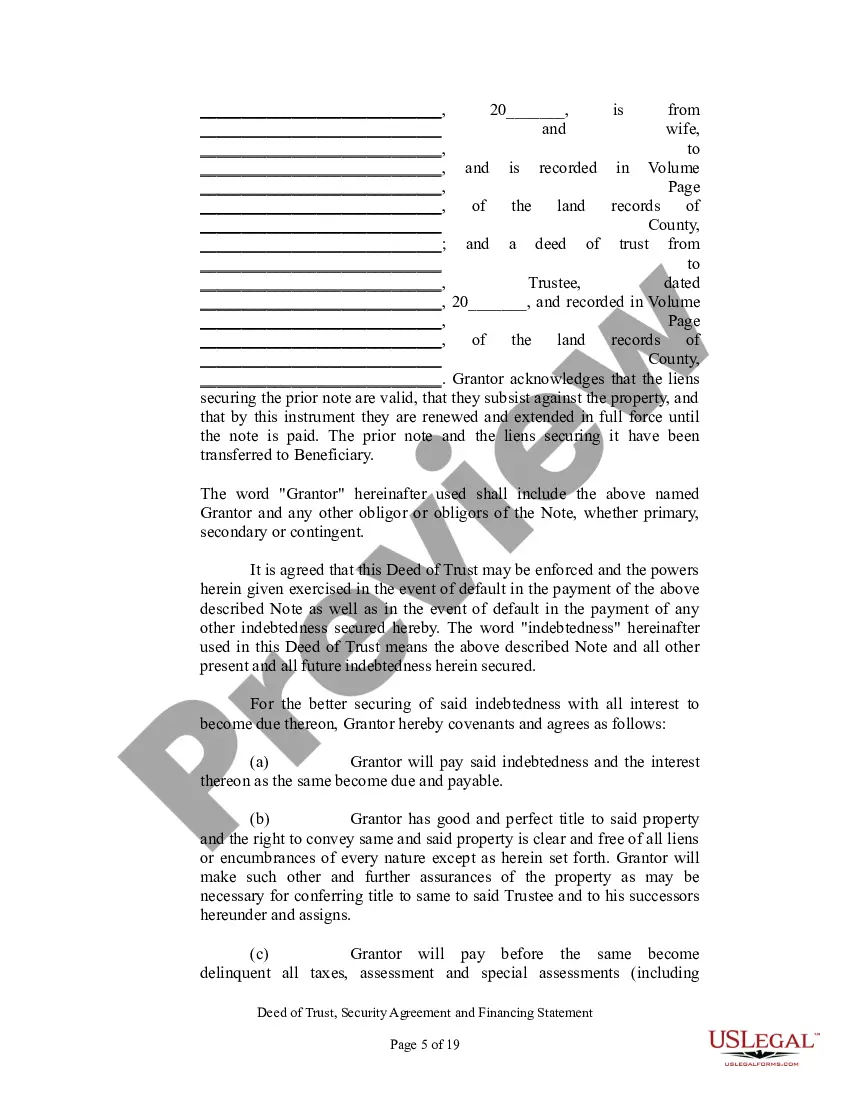
- Specify the loan amount, interest rate, repayment terms, and monthly installment amounts.
- Fill in all relevant information concerning any prior liens and encumberances on the property.
- Have all parties sign the document and ensure that it is notarized if required.
Notarization requirements for this form
This document requires notarization to meet legal standards. US Legal Forms provides secure online notarization powered by Notarize, allowing you to complete the process through a verified video call, available 24/7.
Get your form ready online
Our built-in tools help you complete, sign, share, and store your documents in one place.
Make edits, fill in missing information, and update formatting in US Legal Forms—just like you would in MS Word.
Download a copy, print it, send it by email, or mail it via USPS—whatever works best for your next step.
Sign and collect signatures with our SignNow integration. Send to multiple recipients, set reminders, and more. Go Premium to unlock E-Sign.
If this form requires notarization, complete it online through a secure video call—no need to meet a notary in person or wait for an appointment.
We protect your documents and personal data by following strict security and privacy standards.

Make edits, fill in missing information, and update formatting in US Legal Forms—just like you would in MS Word.

Download a copy, print it, send it by email, or mail it via USPS—whatever works best for your next step.

Sign and collect signatures with our SignNow integration. Send to multiple recipients, set reminders, and more. Go Premium to unlock E-Sign.

If this form requires notarization, complete it online through a secure video call—no need to meet a notary in person or wait for an appointment.

We protect your documents and personal data by following strict security and privacy standards.
Avoid these common issues
- Failing to provide accurate and complete legal descriptions of the property.
- Not outlining all collateral involved in the security agreement.
- Leaving out the specifics of loan terms or payment schedules.
- Not having the document properly signed or notarized when required.
- Neglecting to disclose existing liens or debts that could affect the property.
Benefits of completing this form online
- Convenience of downloading and filling out the form at your own pace.
- Ability to customize the document to reflect specific loan and property details.
- Access to legally vetted content drafted by licensed attorneys.
- Ease of storing and accessing documents electronically.
Looking for another form?

Form popularity
FAQ
The person who owns the property usually signs a promissory note and a deed of trust. The deed of trust does not have to be recorded to be valid.
Can I make a declaration of trust myself? Some owners are put off using solicitors duke to the deed of trust cost. Individuals can write out their own, and use someone else as a witness. However, this may have errors or not be a legally binding document.
Party information: names and addresses of the trustor(s), trustee(s), beneficiary(ies), and guarantor(s) (if applicable) Property details: full address of the property and its legal description (which can be obtained from the County Recorder's Office)
Yes, there are key differences between the two. With a deed, you transfer the ownership of the property to one party. In contrast, a deed of trust does not mean the holder owns the property. In an arrangement involving a deed of trust, the borrower signs a contract with the lender with details regarding the loan.
Name of the trust. Address of the trust. Objects of the trust (Charitable or Religious) One settlor of the trust. Two trustees of the trust (minimum)
Some owners are put off using solicitors duke to the deed of trust cost. Individuals can write out their own, and use someone else as a witness. However, this may have errors or not be a legally binding document. The investment of getting a deed of trust when buying a property is often worth it in the long term.
A deed of trust includes most of the same information as a mortgage, including: The original loan amount. A legal description of the property that's used as security or collateral for the mortgage. The names of parties: trustee, trustor, and beneficiary.