Arkansas Qualifying Affidavit of Personal Sureties
About this form
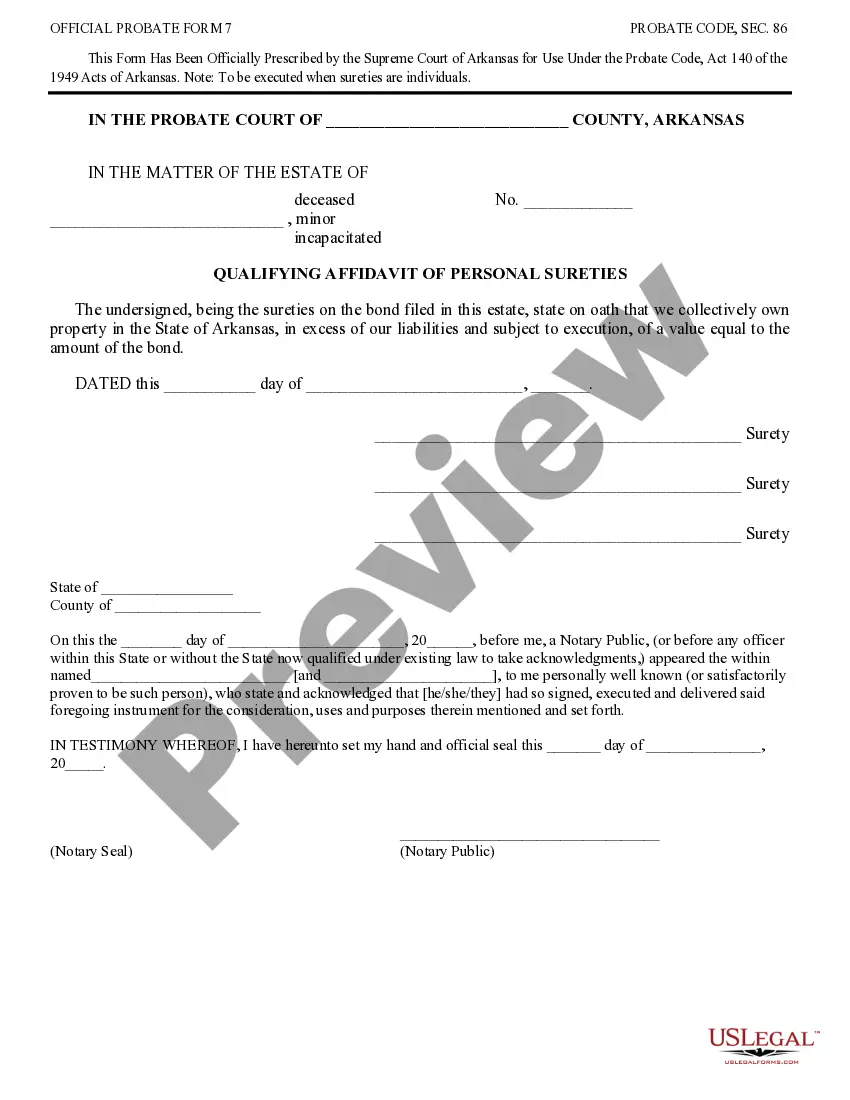
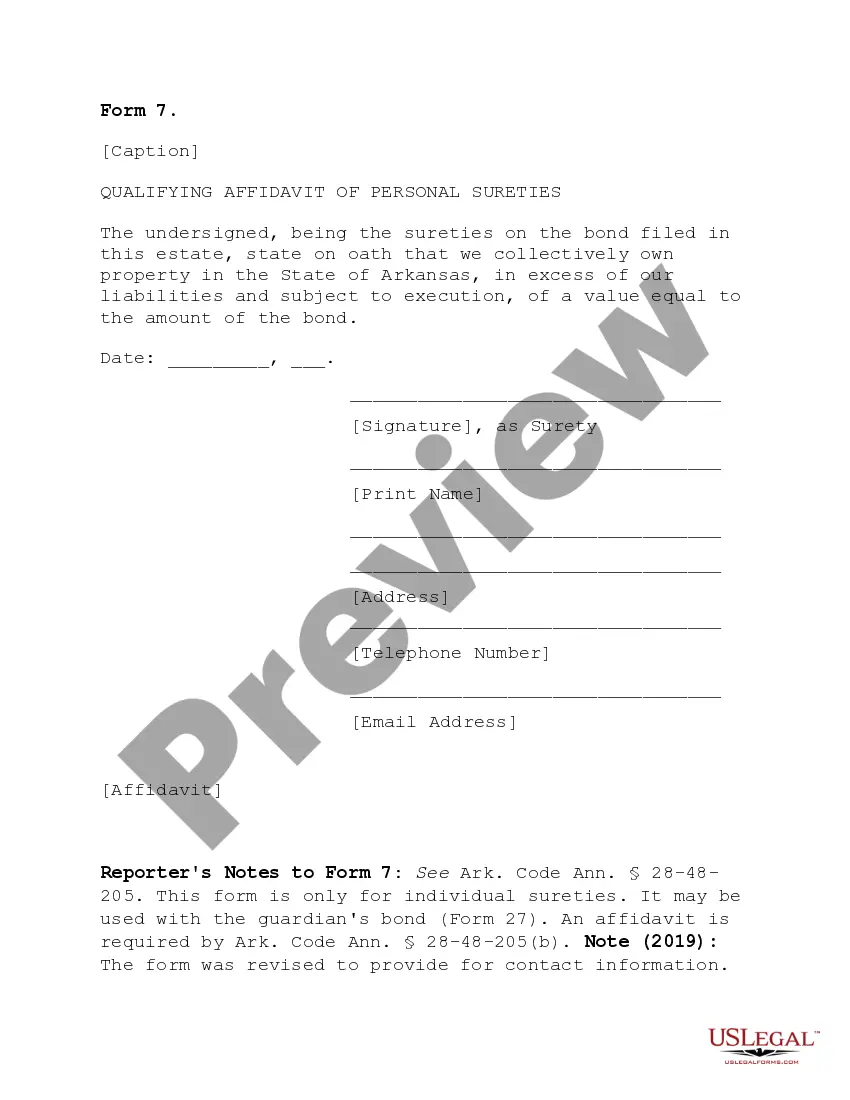
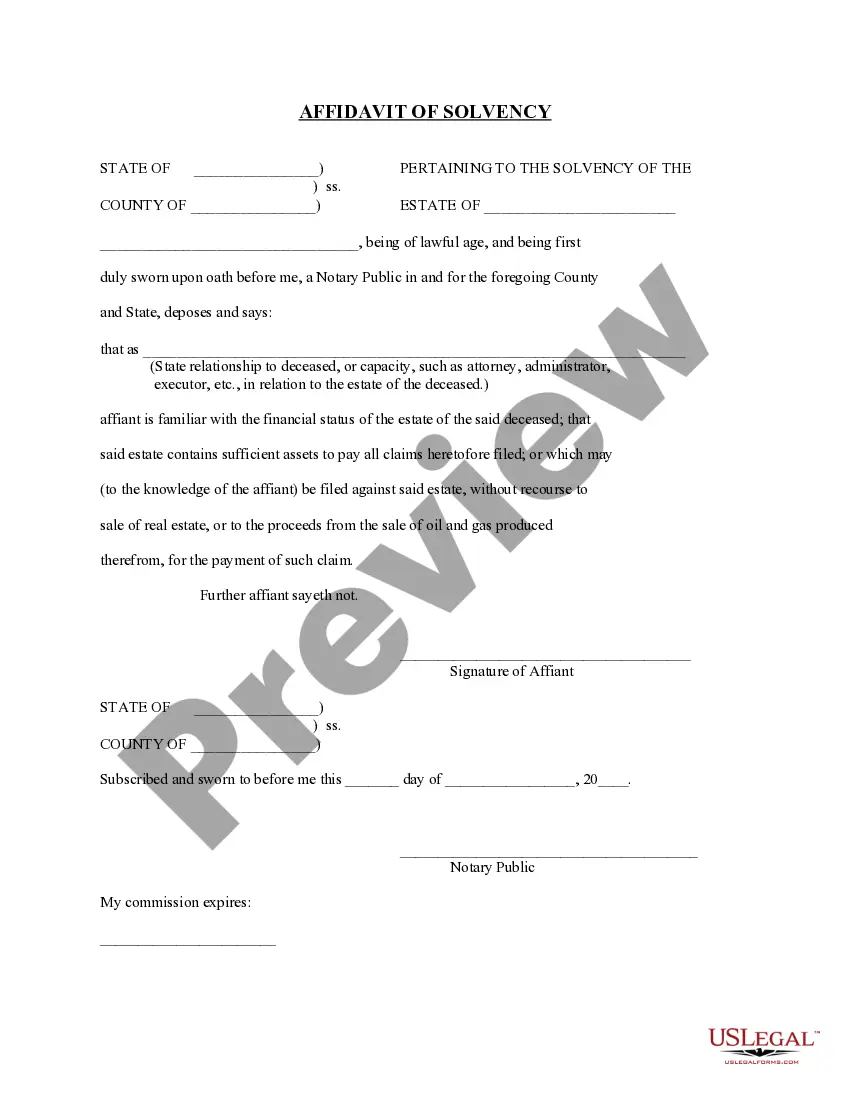
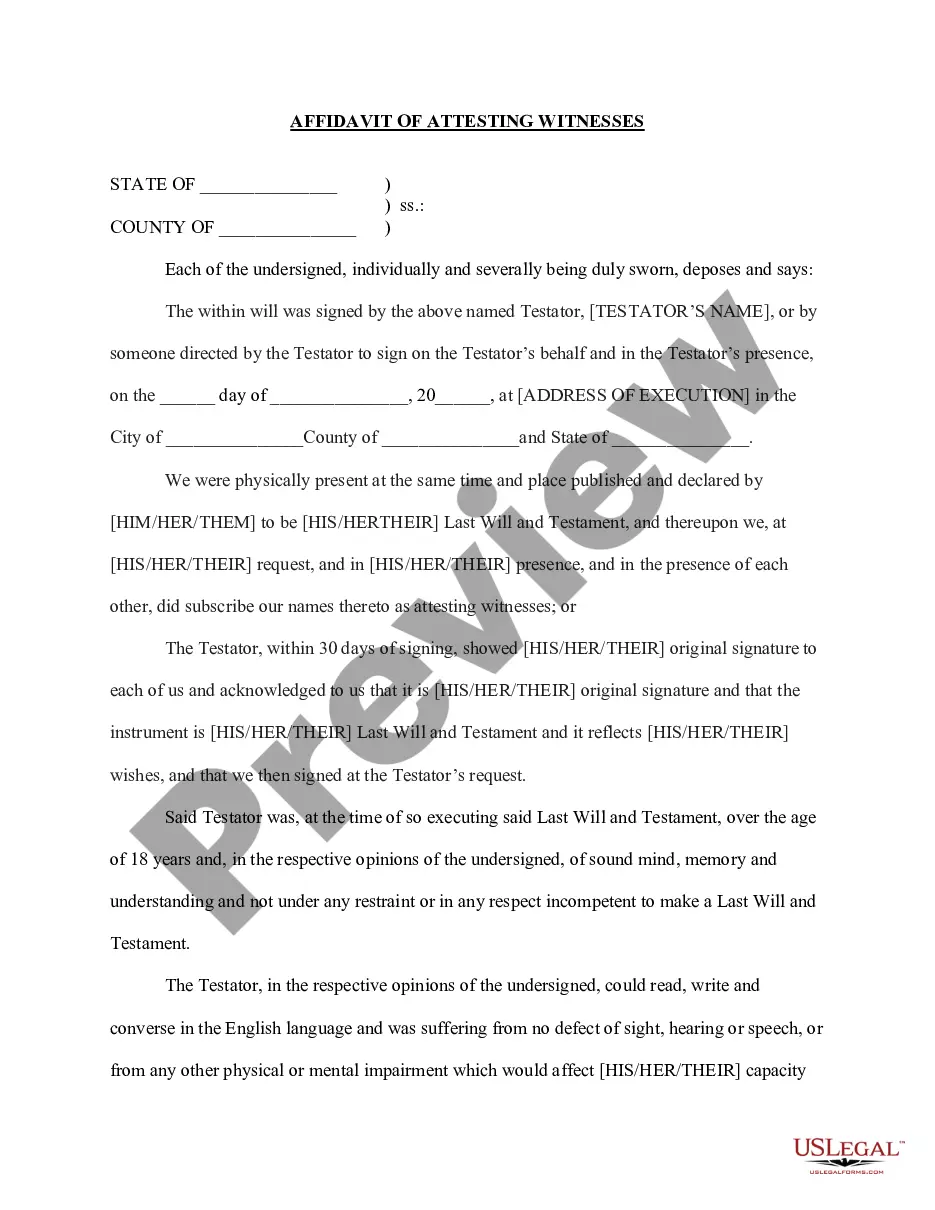
The Qualifying Affidavit of Personal Sureties is an official probate form required to support a bond posted with the probate court. This form is executed by sureties who assure the court that they own sufficient property valued equal to or greater than the bond amount. Unlike other affidavits or bond-related forms, it specifically confirms the sureties' financial responsibility in connection with the management of a deceased or incapacitated person's estate.
Main sections of this form
- Identification of the probate court and county.
- Details about the estate and the deceased or incapacitated individual.
- Affidavit statement by the sureties regarding property ownership and bond amount.
- Signatures of all sureties involved.
- Notary block confirming the affidavit was sworn and subscribed.

Common use cases
This form is needed when a personal representative or administrator of an estate is required to post a bond with the probate court. It should be used when sureties must officially declare their financial capacity to support the bond, ensuring that they hold assets of sufficient value to meet the bond requirements.
Who this form is for
- Personal representatives of an estate required to post a bond.
- Individuals acting as sureties for the personal representative.
- Administrators of estates involving minors or incapacitated individuals.
Steps to complete this form
- Identify the relevant probate court and county at the top of the form.
- Provide details about the estate, including the name of the deceased or incapacitated person.
- Ensure all sureties declare ownership of property that meets or exceeds the bond value.
- Each surety must sign the form, affirming their financial responsibility.
- Have the affidavit notarized to validate the signatures and commitments made by the sureties.
Does this form need to be notarized?
To make this form legally binding, it must be notarized. Our online notarization service, powered by Notarize, lets you verify and sign documents remotely through an encrypted video session.
Get your form ready online
Our built-in tools help you complete, sign, share, and store your documents in one place.
Make edits, fill in missing information, and update formatting in US Legal Forms—just like you would in MS Word.
Download a copy, print it, send it by email, or mail it via USPS—whatever works best for your next step.
Sign and collect signatures with our SignNow integration. Send to multiple recipients, set reminders, and more. Go Premium to unlock E-Sign.
If this form requires notarization, complete it online through a secure video call—no need to meet a notary in person or wait for an appointment.
We protect your documents and personal data by following strict security and privacy standards.

Make edits, fill in missing information, and update formatting in US Legal Forms—just like you would in MS Word.

Download a copy, print it, send it by email, or mail it via USPS—whatever works best for your next step.

Sign and collect signatures with our SignNow integration. Send to multiple recipients, set reminders, and more. Go Premium to unlock E-Sign.

If this form requires notarization, complete it online through a secure video call—no need to meet a notary in person or wait for an appointment.

We protect your documents and personal data by following strict security and privacy standards.
Mistakes to watch out for
- Failing to notarize the affidavit, which could render it invalid.
- Leaving out signatures from one or more sureties.
- Incorrectly stating the value of property, which could jeopardize the bond.
Advantages of online completion
- Easy access to downloadable templates that save time.
- Editable forms allow customization to fit your specific case.
- Reliability of professionally drafted documents by licensed attorneys.
Looking for another form?



Form popularity
FAQ
The limit for a small estate affidavit in Arkansas is currently set at $100,000 in gross assets. This includes all property and financial accounts owned by the deceased. This provision allows heirs to bypass the traditional probate process, making estate management more accessible. The Arkansas Qualifying Affidavit of Personal Sureties is essential for families looking to efficiently settle smaller estates.
The timeline for obtaining a small estate affidavit in Arkansas can vary, but it is generally a swift process. Once you submit the necessary documentation to the probate court, the court may review and approve it within a few days to a couple of weeks. However, timely and accurate submission of the affidavit supports a smoother process. The Arkansas Qualifying Affidavit of Personal Sureties plays a crucial role in expediting this experience.
In Arkansas, the limit for a small estate is set at $100,000 in total assets. This threshold allows families to settle estates quickly and without the lengthy probate process. By utilizing the small estate affidavit, heirs can gain access to funds and property swiftly. Understanding the Arkansas Qualifying Affidavit of Personal Sureties can help streamline this process even further.
Filing a will in Arkansas requires submitting the original document to the appropriate probate court after the testator's death. This should be done promptly to follow state regulations. If the will is valid, the court will initiate the probate process to administer the estate. Engaging with the Arkansas Qualifying Affidavit of Personal Sureties may be beneficial for managing smaller estates without extensive court involvement.
To obtain a small estate affidavit in Arkansas, you must first verify that the estate meets the qualifying criteria, which generally involves having assets below $100,000. You can then complete the small estate affidavit form, available through the court or various legal platforms. Submitting this document allows you to claim the decedent's assets without going through formal probate. The Arkansas Qualifying Affidavit of Personal Sureties is a valuable tool for accessing these assets more easily.
To become an administrator of an estate in Arkansas, you must file a petition with the local probate court. This process starts by providing necessary documents, such as the deceased's will, death certificate, and any relevant identification. Once submitted, the court will review your petition and appoint you as the administrator if approved. Utilizing the Arkansas Qualifying Affidavit of Personal Sureties can streamline your responsibilities if the estate is small.
In Arkansas, the threshold for probate is generally set at $100,000 for estates not subject to a qualifying small estate procedure. If an estate exceeds this amount, the executor or administrator typically needs to initiate the probate process. The Arkansas Qualifying Affidavit of Personal Sureties can help manage smaller estates and avoid probate for less valuable assets. Understanding this threshold simplifies the estate management process for you.
To obtain a letter of testamentary in Arkansas, you first need to file the deceased person's will with the probate court. This document allows the executor to manage the estate legally. You'll also want to follow any specific procedures outlined by the court, ensuring compliance with local laws. For assistance with legal documents, including the Arkansas Qualifying Affidavit of Personal Sureties, USLegalForms can guide you through the necessary forms and processes.
An affidavit of individual surety serves as a financial guarantee from a person who pledges their own assets to back a legal obligation. In Arkansas, this document is often used in scenarios such as bail or securing contracts. It helps establish trust and reassurance for all parties involved, especially when using the Arkansas Qualifying Affidavit of Personal Sureties. To ensure you meet all legal requirements and processes, consider utilizing resources from USLegalForms.
Filing a small estate affidavit in Arkansas is a straightforward process. You must complete the affidavit form by providing information about the decedent's estate and assets, along with beneficiaries' details. Utilizing the Arkansas Qualifying Affidavit of Personal Sureties can help ensure you meet all legal requirements and facilitate a smoother filing experience.