Hawaii Last Will and Testament for a Widow or Widower with Adult Children

What is this form?
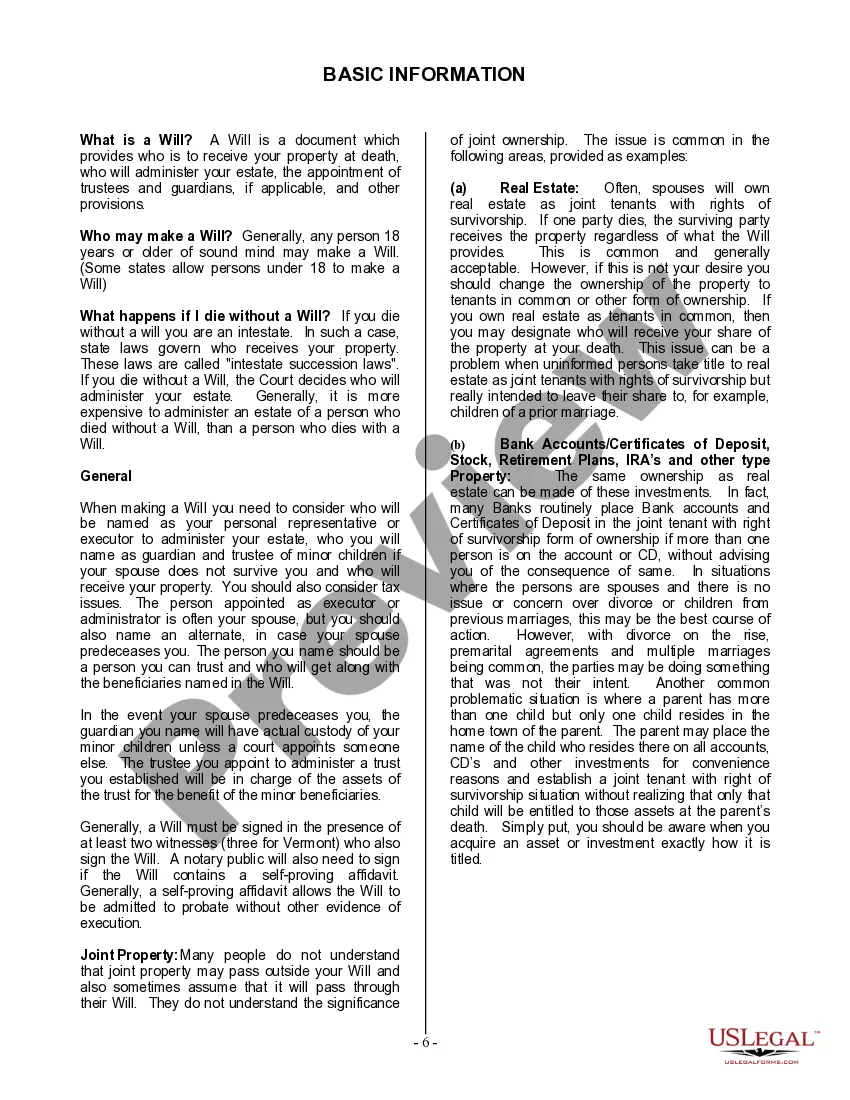
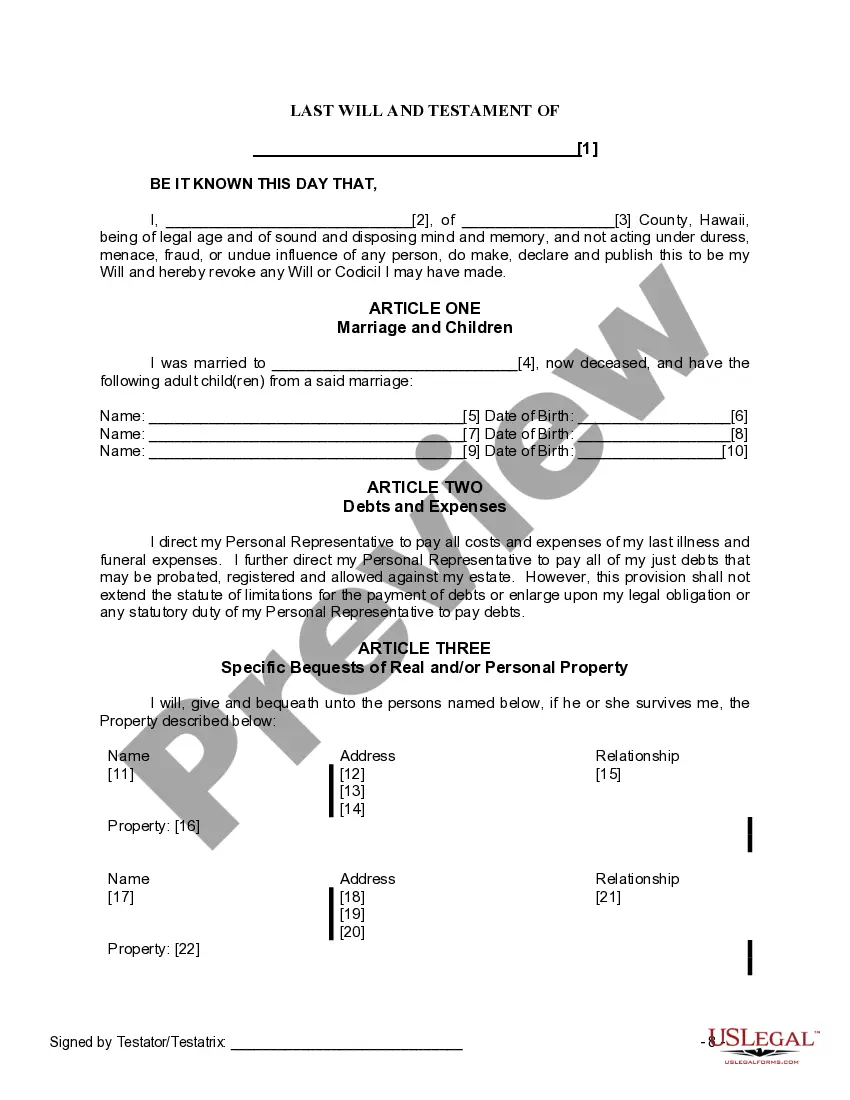
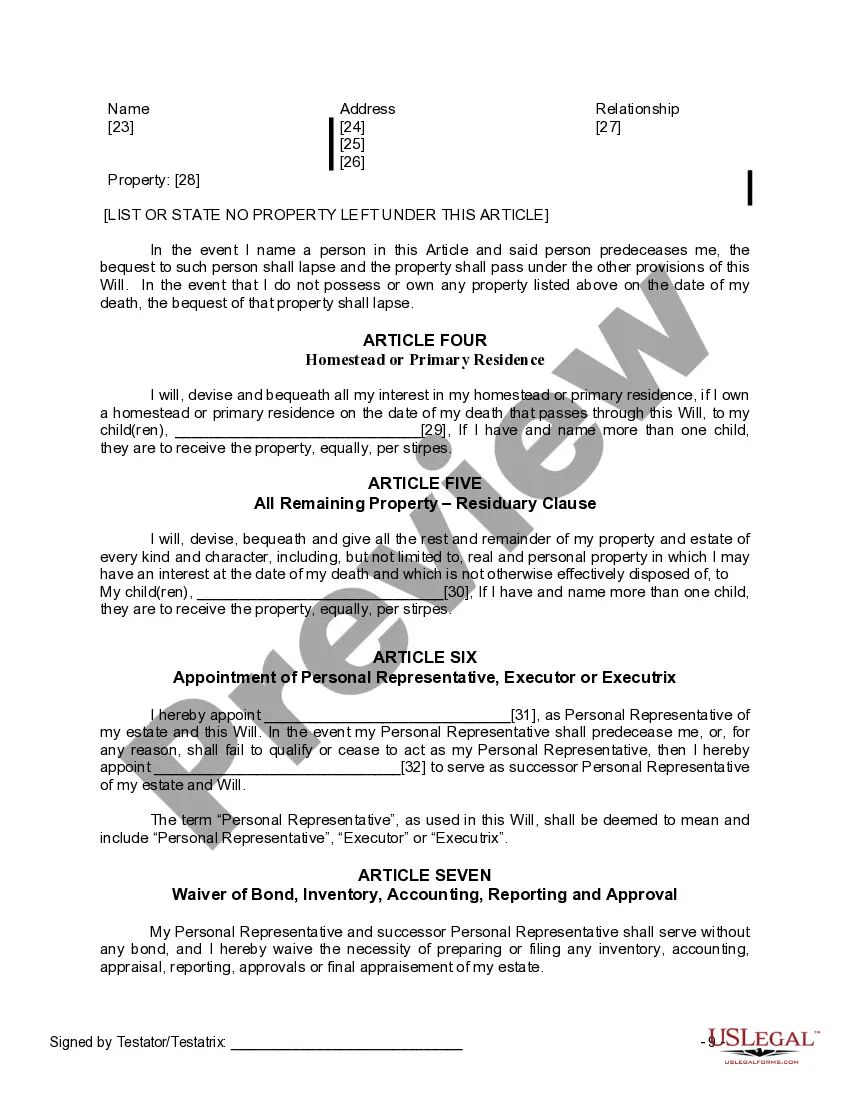
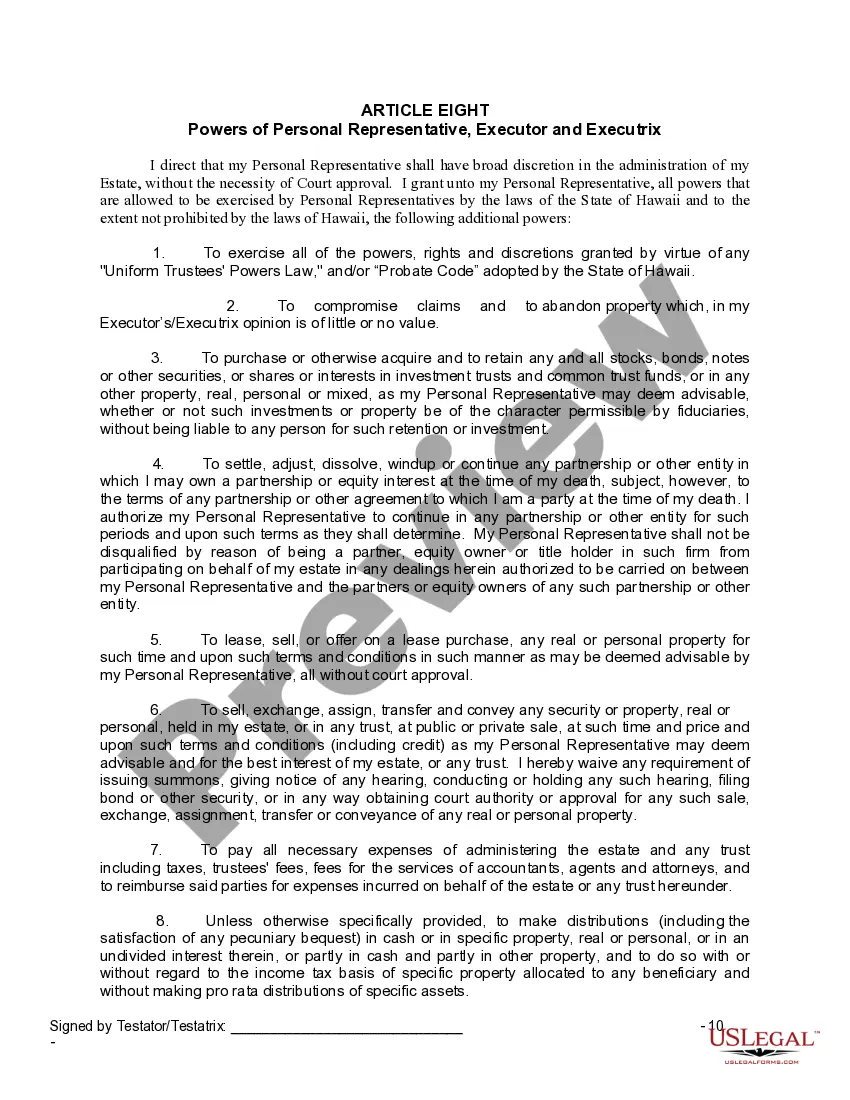
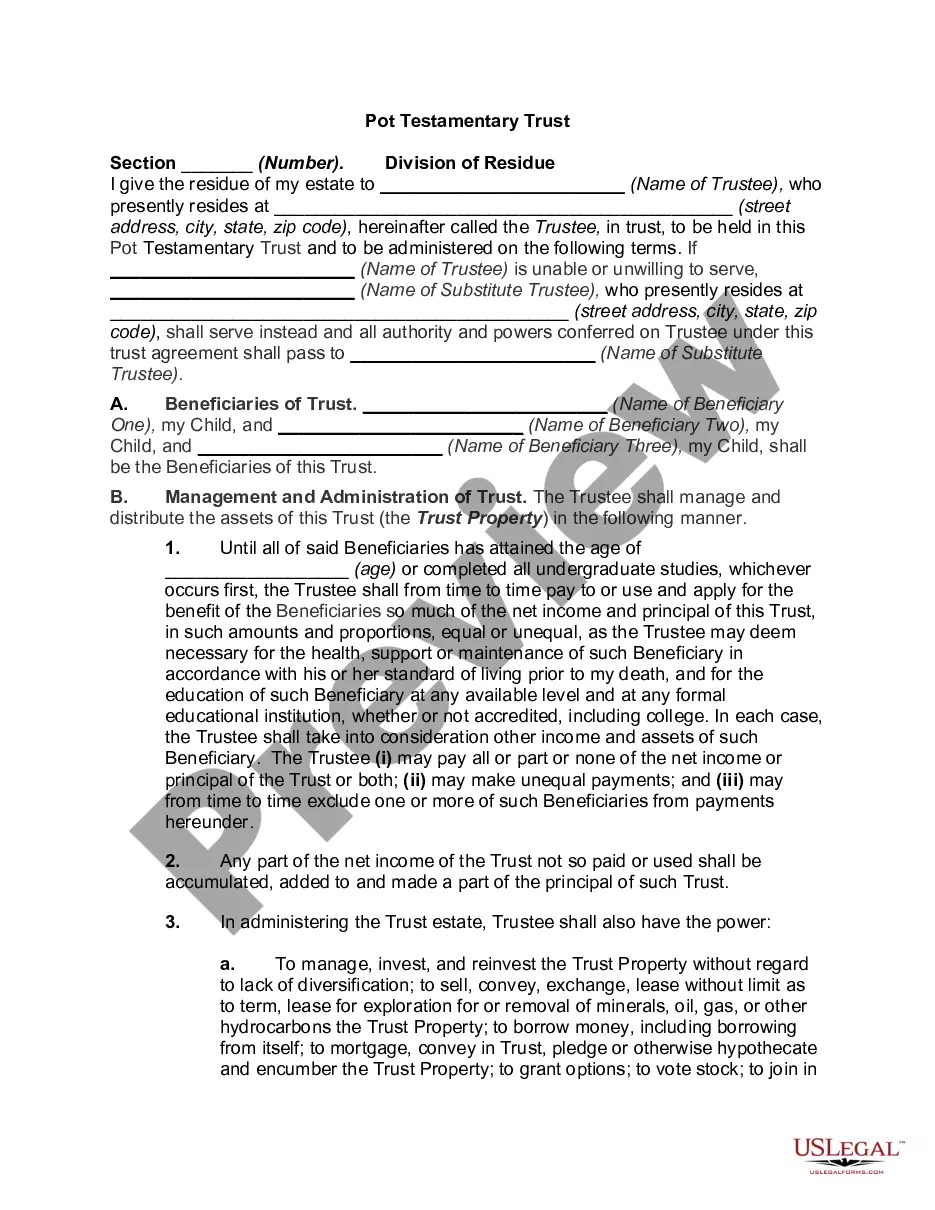
This Last Will and Testament for a Widow or Widower with Adult Children is a legal document that outlines how a person wishes their property and assets to be distributed after their death. It is specifically designed for individuals who are widowed or widowers and have adult children. This form ensures that the individual's wishes are clearly stated and provides instructions for the management of their estate, including the appointment of a personal representative or executor, provisions for the adult children, and any specific bequests. It differs from a standard will by addressing the unique needs of those who are remarried or have specific family dynamics.
Key components of this form
- Appointment of a personal representative to administer the estate.
- Identification of the deceased spouse and listing of adult children.
- Specific bequests of property to individuals or organizations.
- Provisions for the homestead or primary residence.
- Distribution of remaining property not specifically bequeathed.
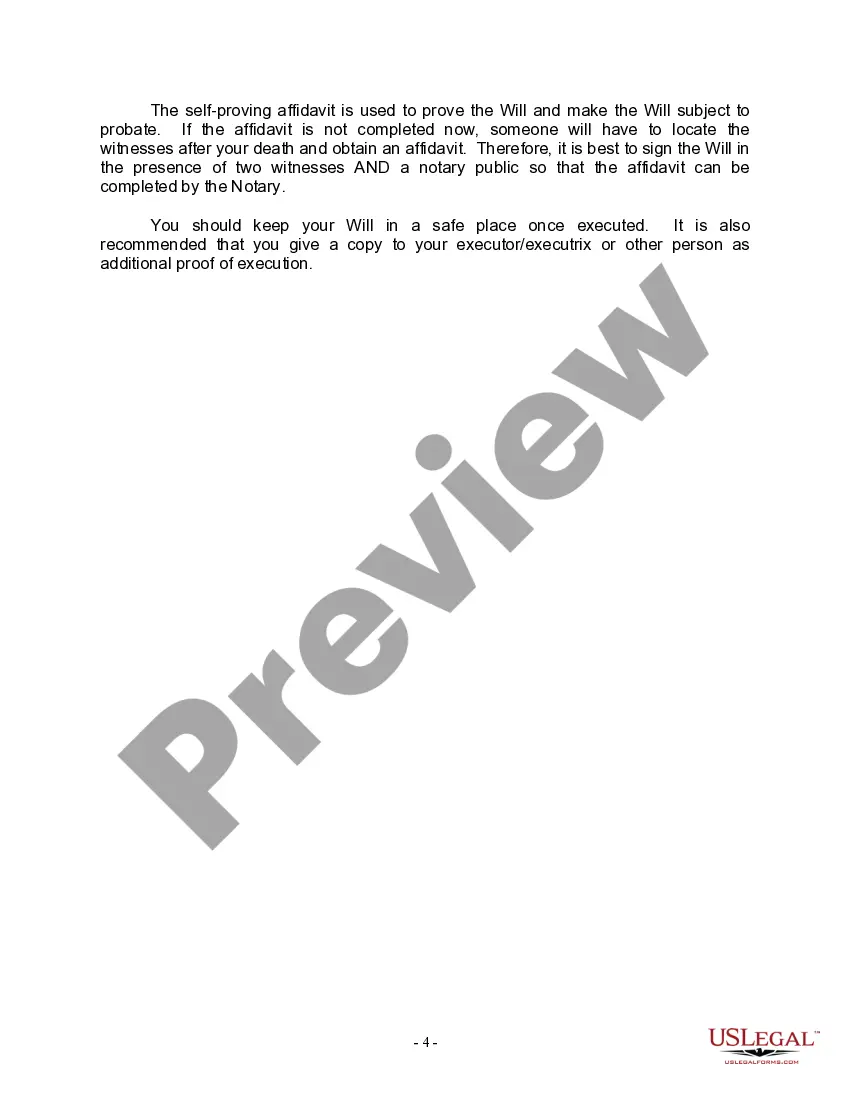
- Self-proving affidavit to simplify the probate process, if applicable.



When to use this document
This form should be used when a widow or widower wishes to outline their wishes regarding the distribution of their assets after their death, particularly when they have adult children. It is suitable if a major life change has occurred, such as the death of a spouse, and it is essential to ensure that your estate is divided according to your preferences. This document is particularly important for ensuring that your adult children are provided for and that your assets are distributed without confusion or dispute.
Who this form is for
- Individuals who are widowed or widowers and have adult children.
- Those wishing to specify how their estate will be distributed after their death.
- Anyone who wants to appoint a personal representative for their estate.
- Those needing to address specific property bequests to individuals or organizations.
Steps to complete this form
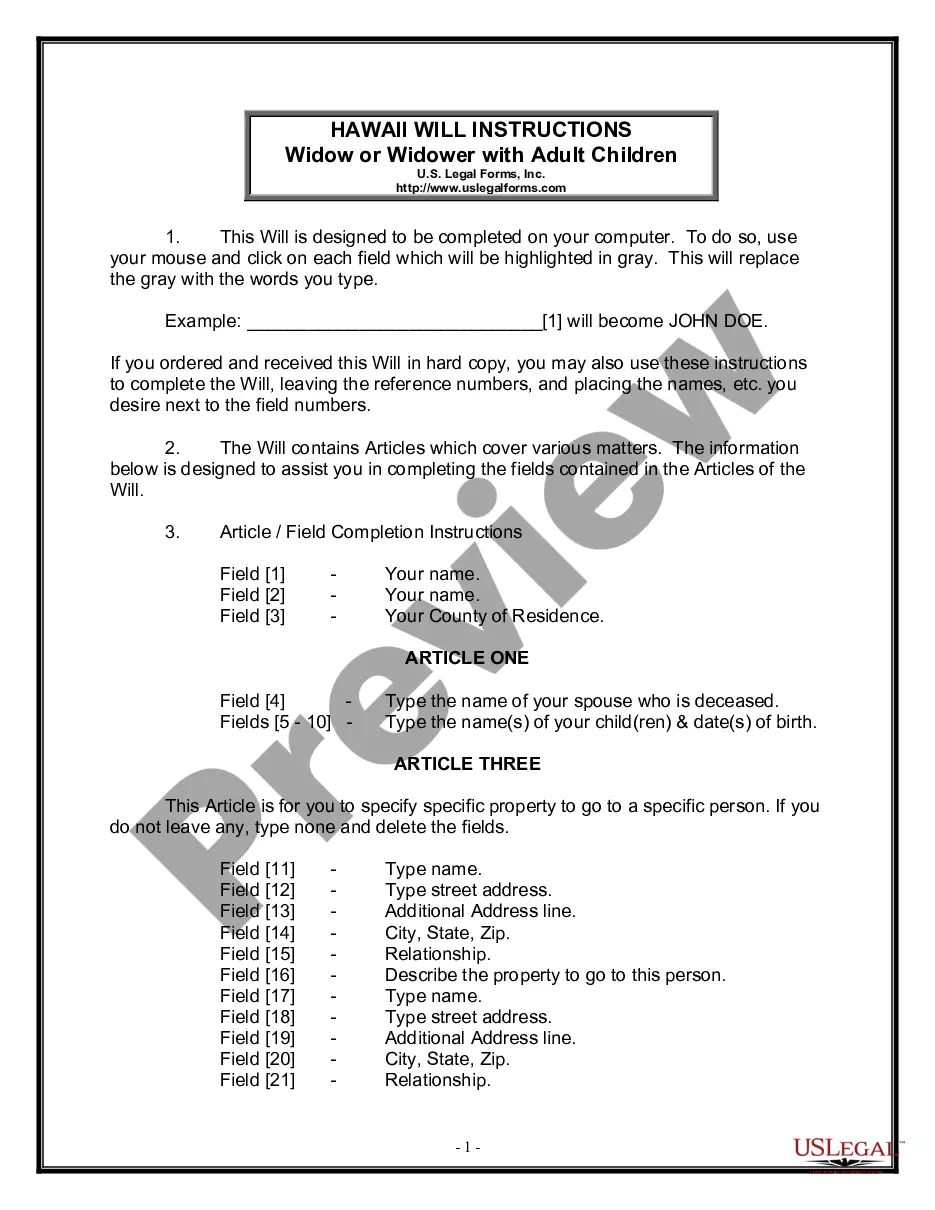
- Identify and enter your full name and county of residence.
- Specify the name of your deceased spouse and list your adult children with their dates of birth.
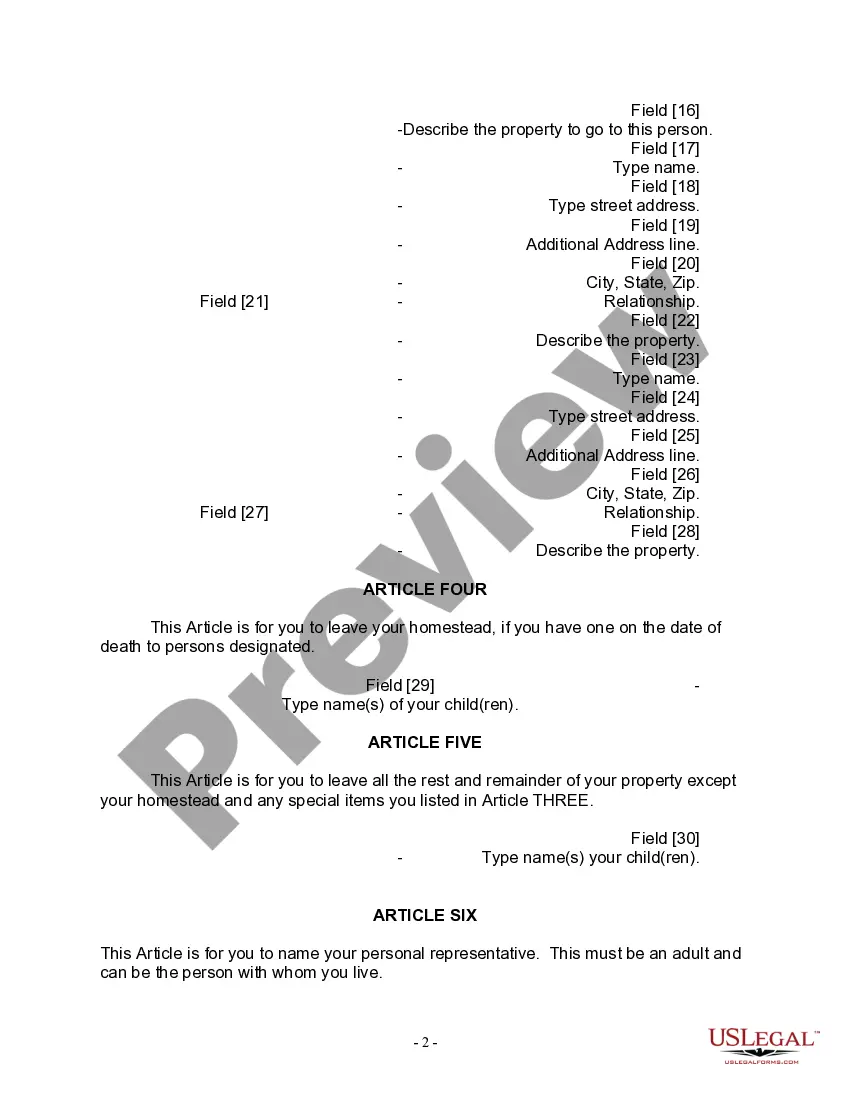
- Detail any specific property you wish to bequeath to individuals or organizations.
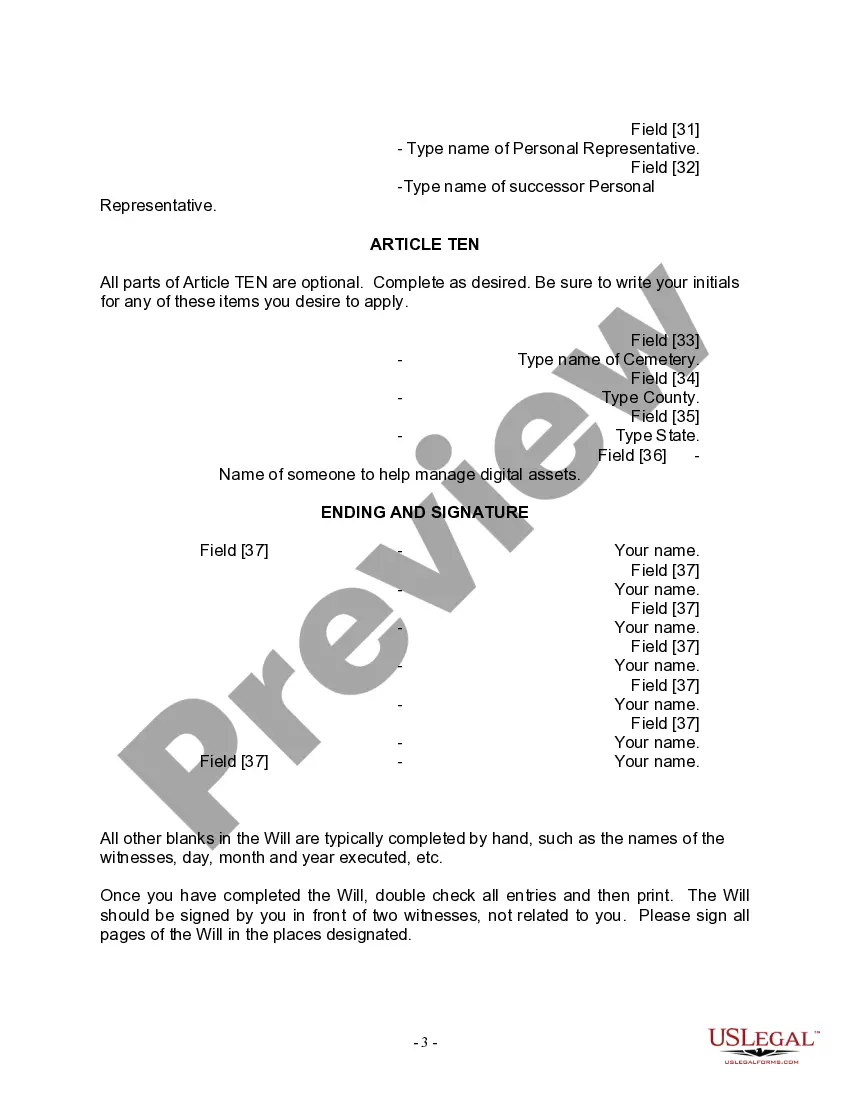
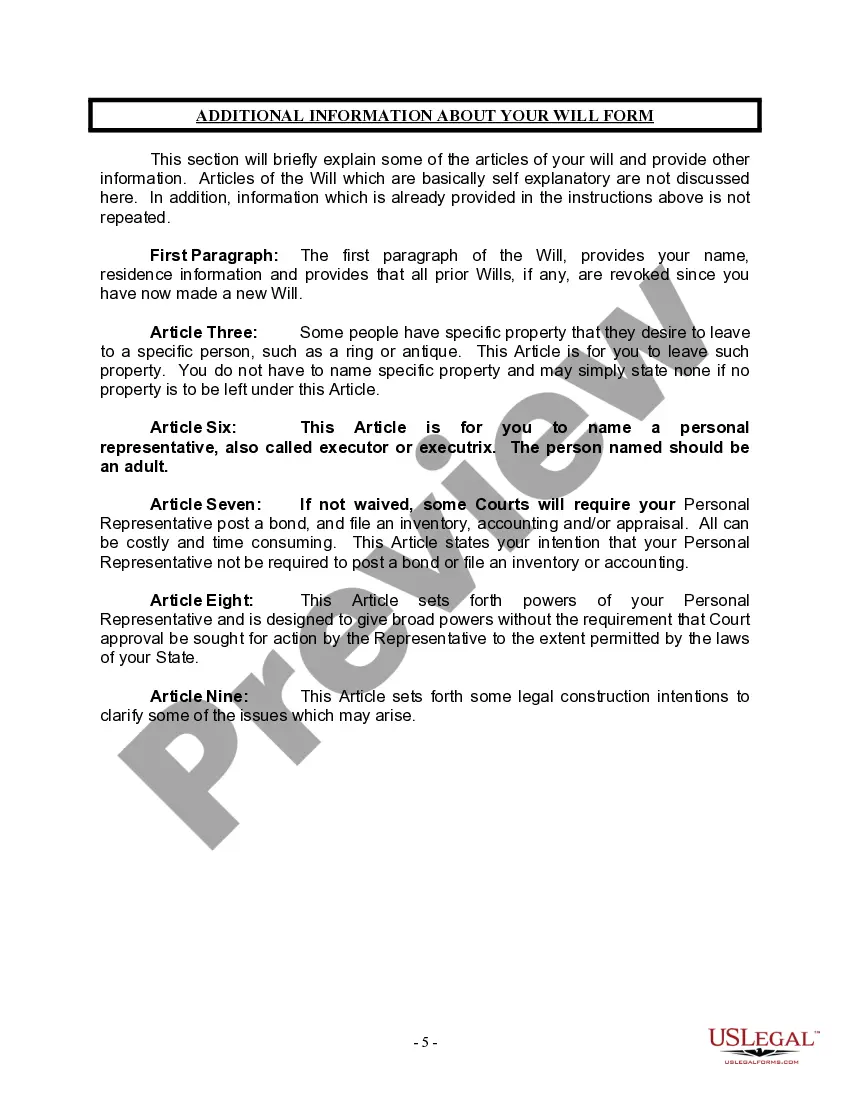
- Appoint a personal representative who will manage your estate.
- Ensure that the form is signed in the presence of two witnesses who are not related to you.
Is notarization required?
This form must be notarized to be legally valid. US Legal Forms provides secure online notarization powered by Notarize, allowing you to complete the process through a verified video call.
Get your form ready online
Our built-in tools help you complete, sign, share, and store your documents in one place.
Make edits, fill in missing information, and update formatting in US Legal Forms—just like you would in MS Word.
Download a copy, print it, send it by email, or mail it via USPS—whatever works best for your next step.
Sign and collect signatures with our SignNow integration. Send to multiple recipients, set reminders, and more. Go Premium to unlock E-Sign.
If this form requires notarization, complete it online through a secure video call—no need to meet a notary in person or wait for an appointment.
We protect your documents and personal data by following strict security and privacy standards.

Make edits, fill in missing information, and update formatting in US Legal Forms—just like you would in MS Word.

Download a copy, print it, send it by email, or mail it via USPS—whatever works best for your next step.

Sign and collect signatures with our SignNow integration. Send to multiple recipients, set reminders, and more. Go Premium to unlock E-Sign.

If this form requires notarization, complete it online through a secure video call—no need to meet a notary in person or wait for an appointment.

We protect your documents and personal data by following strict security and privacy standards.
Avoid these common issues
- Failing to have the will signed by two unrelated witnesses.
- Not stipulating specific bequests or leaving out important assets.
- Neglecting to update the will after significant life events.
Benefits of using this form online
- Convenient access to the form from anywhere with an internet connection.
- Editability allows for customization according to individual needs.
- Reliability and legal compliance guided by experienced legal professionals.
Looking for another form?

Form popularity
FAQ
In a Hawaii Last Will and Testament for a Widow or Widower with Adult Children, the executor is typically the surviving spouse. This individual holds the responsibility of managing the estate, ensuring that the deceased's wishes are honored, and distributing assets according to the will. The surviving spouse can also appoint another trusted person as the executor if they prefer. It's essential to choose someone who can handle these duties effectively.
No, you do not have to register a will for it to be valid in Hawaii. A will becomes effective upon your death if it meets the legal requirements. However, registering your Hawaii Last Will and Testament for a Widow or Widower with Adult Children can provide clarity and ensure that your wishes are easily accessible during probate proceedings.
For a will to be valid in Hawaii, it must be in writing, signed by the testator, and witnessed by two people. Additionally, the testator must be at least 18 years old and of sound mind. Understanding these requirements is essential when creating your Hawaii Last Will and Testament for a Widow or Widower with Adult Children, to protect your estate effectively.
Yes, a widow can change a will, but it must be done through a proper legal process. This can involve drafting a new will or creating a codicil, which is an amendment to the existing will. Always ensure that changes follow the legal requirements for a Hawaii Last Will and Testament for a Widow or Widower with Adult Children to remain valid.
To write a will in Hawaii, start by clearly stating your assets and beneficiaries. Follow this by ensuring you meet the legal requirements, which include being of sound mind, signing the document, and having it witnessed appropriately. Using USLegalForms can streamline the process of drafting a Hawaii Last Will and Testament for a Widow or Widower with Adult Children, making it easier to follow.
The three basic requirements of a valid will in Hawaii are: it must be in writing, it must be signed by you, and it must be witnessed by two competent individuals. Meeting these requirements helps to ensure that your Hawaii Last Will and Testament for a Widow or Widower with Adult Children reflects your true intentions. Failing to comply with these can lead to disputes or invalidation of your will.
Yes, you can write your own Hawaii Last Will and Testament for a Widow or Widower with Adult Children, and it can be notarized. However, it is important to ensure that all legal requirements are met for the will to be valid. Consider using a reliable platform like USLegalForms to help guide you in creating a comprehensive document.
In Hawaii, a last will and testament does not override a marriage. Should you marry after creating a will, your new spouse may have rights to your estate unless specifically excluded. Updating your Hawaii Last Will and Testament for a Widow or Widower with Adult Children after marriage is advisable to reflect your current wishes.
To ensure your Hawaii Last Will and Testament for a Widow or Widower with Adult Children is legal, it must be in writing, signed by you, the testator, and witnessed by two people. These witnesses should not be beneficiaries of the will to avoid conflicts of interest. Properly following these requirements will give your will the legal backing it needs.
You can write your own will in Hawaii, which is a common practice among many individuals. Crafting a Hawaii Last Will and Testament for a Widow or Widower with Adult Children allows you to specify how you want your assets distributed. While writing your own will is possible, utilizing resources like US Legal Forms can provide you with expert guidance and ensure your will meets all legal standards.