Notice to Debt Collector - Falsely Representing a Document's Authority
What is this form?
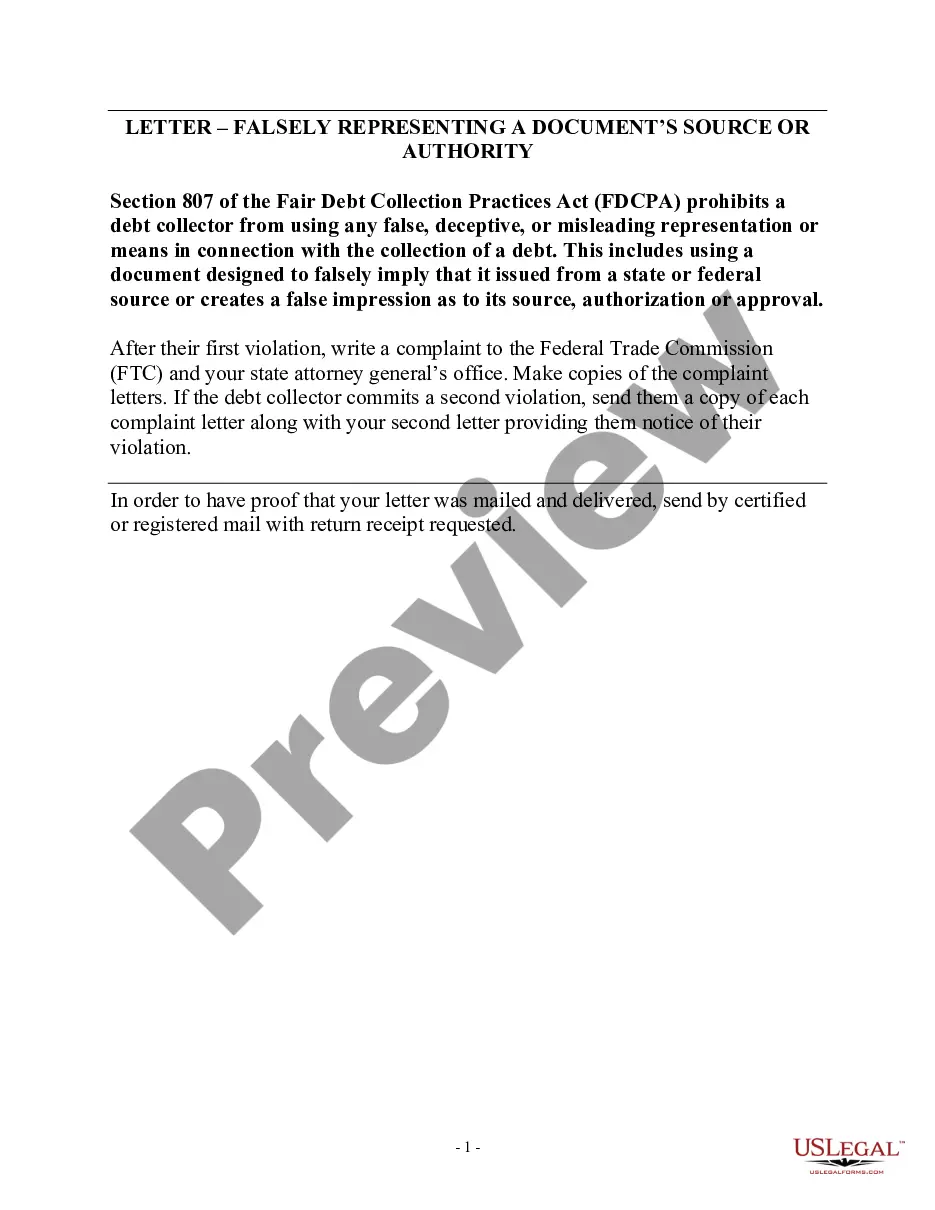
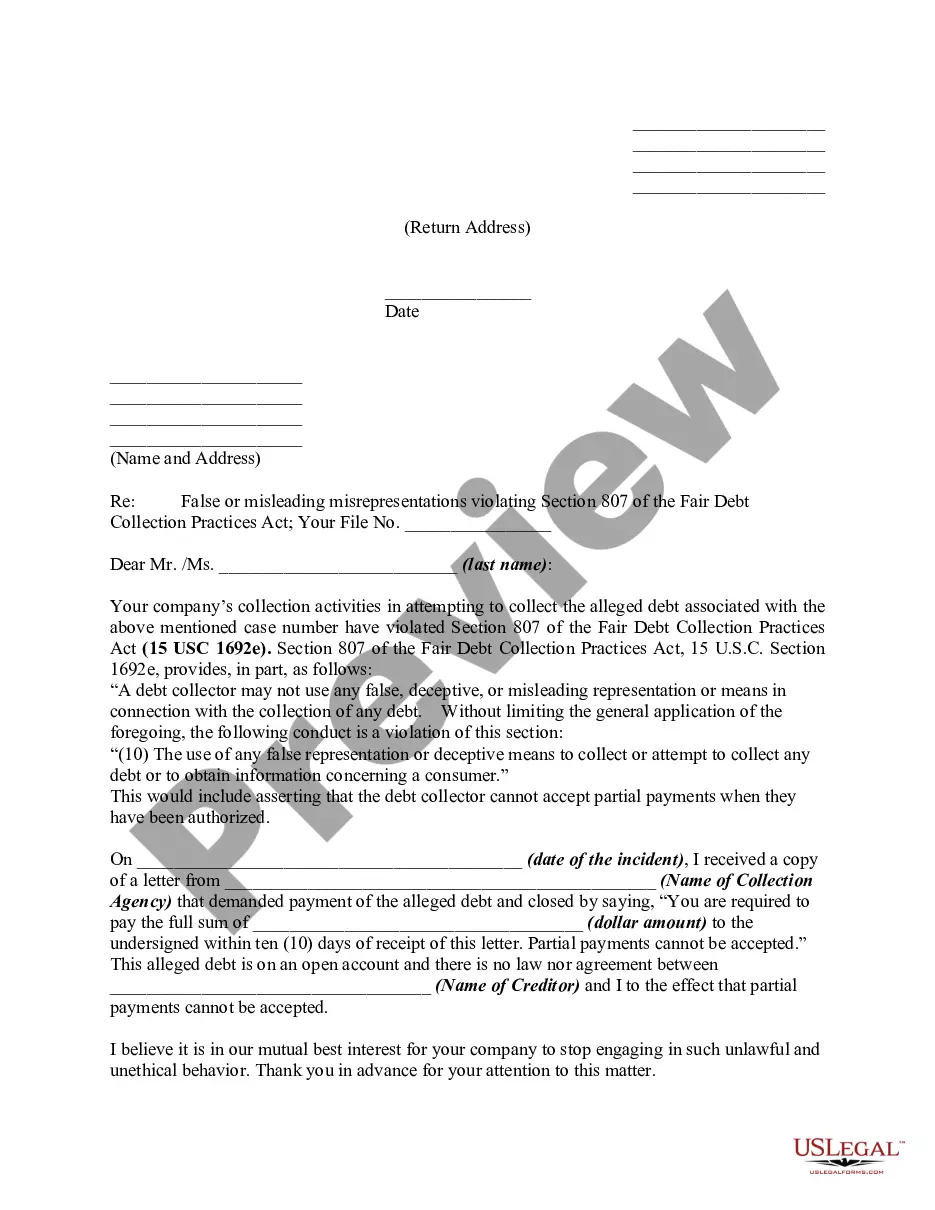
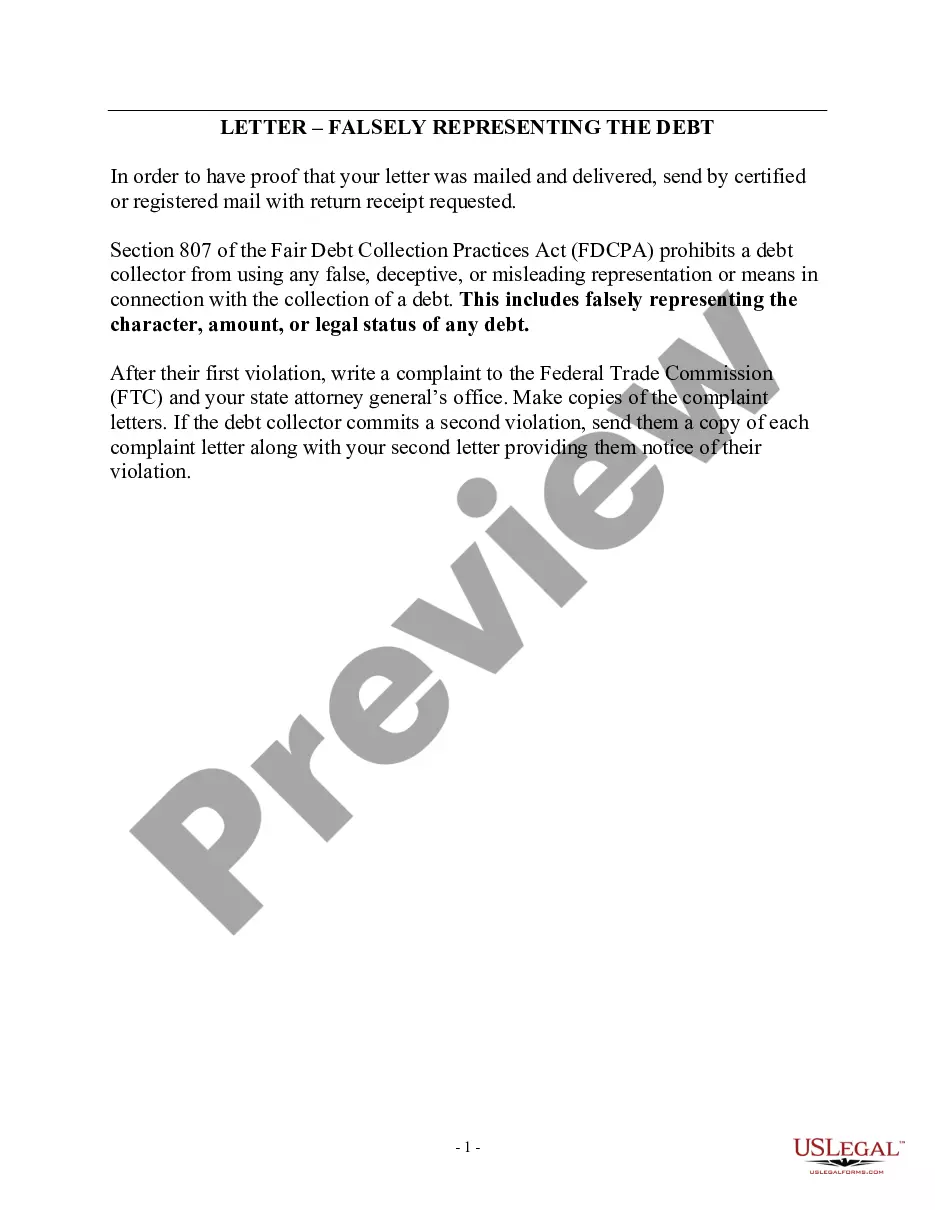
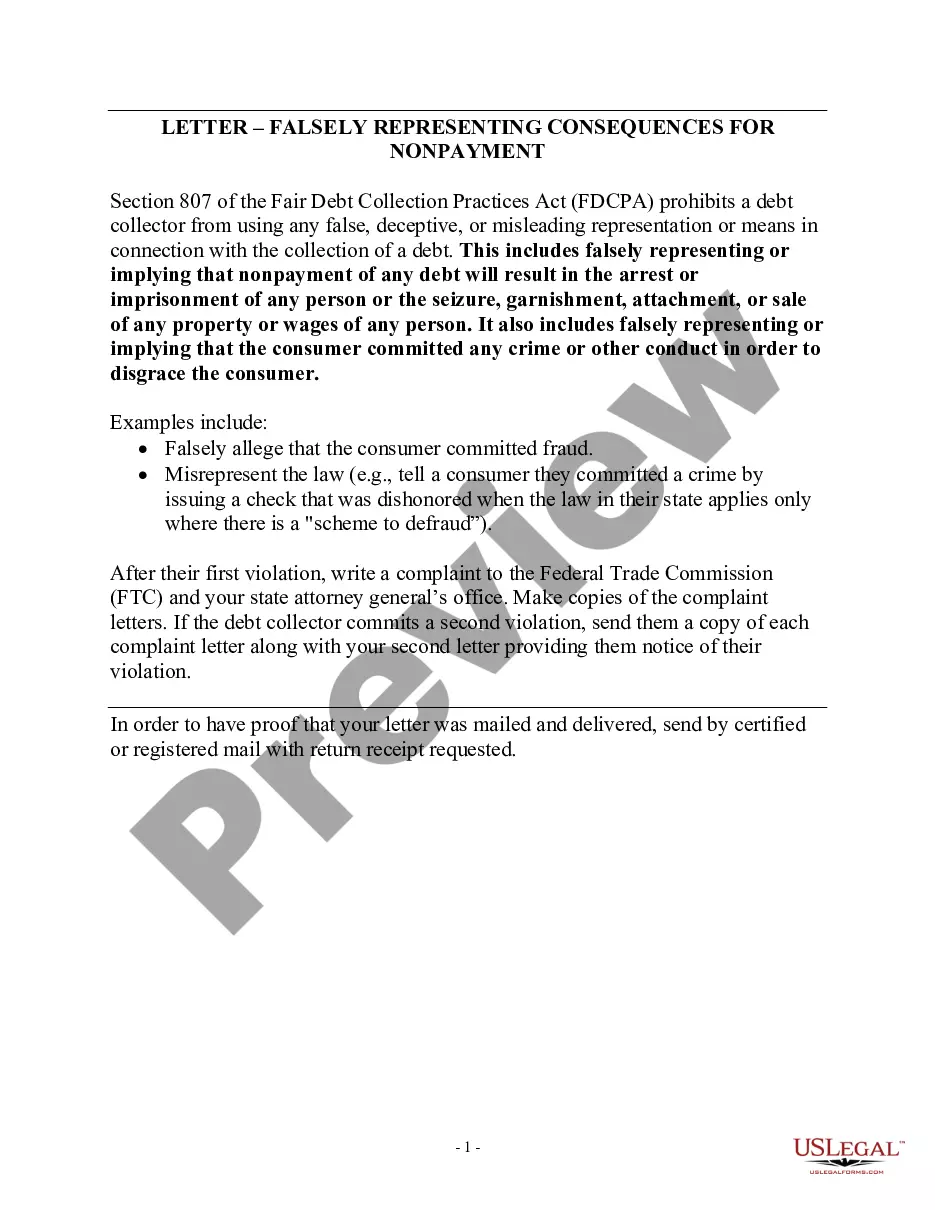
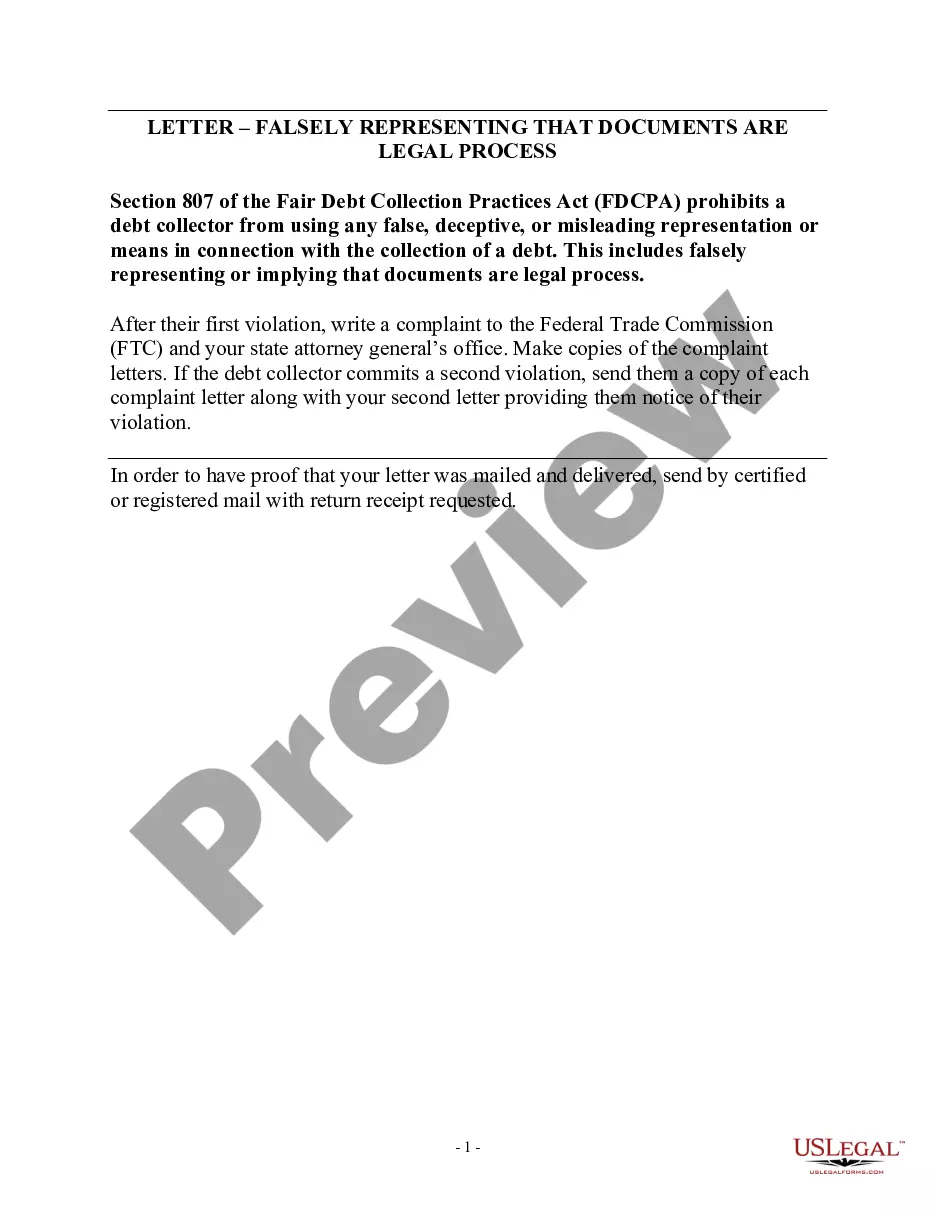
This Notice to Debt Collector - Falsely Representing a Document's Authority is a legal tool used to inform a debt collector about their violation of the Fair Debt Collection Practices Act (FDCPA). This form empowers consumers by documenting deceptive practices, urging compliance with federal laws that protect individuals from unfair debt collection tactics.
What’s included in this form
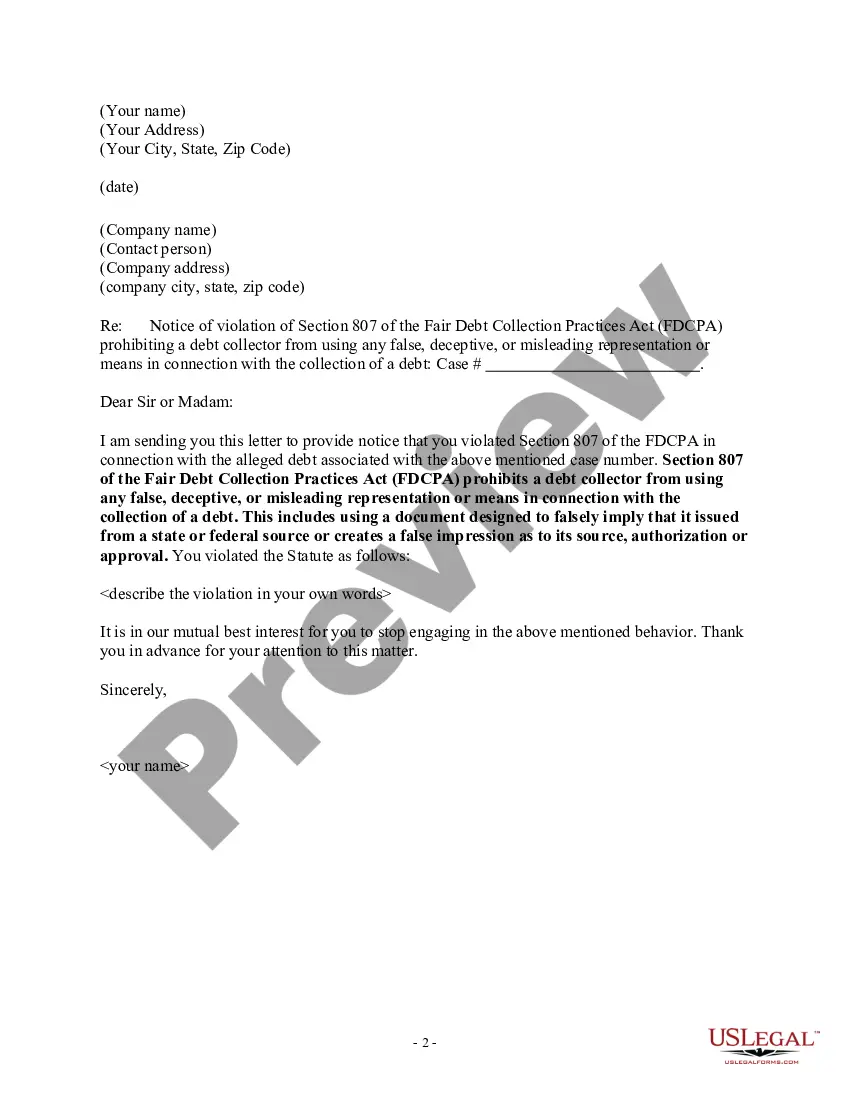
- Identification of parties involved, including the consumer and the debt collector.
- Date of the notice and case number for reference.
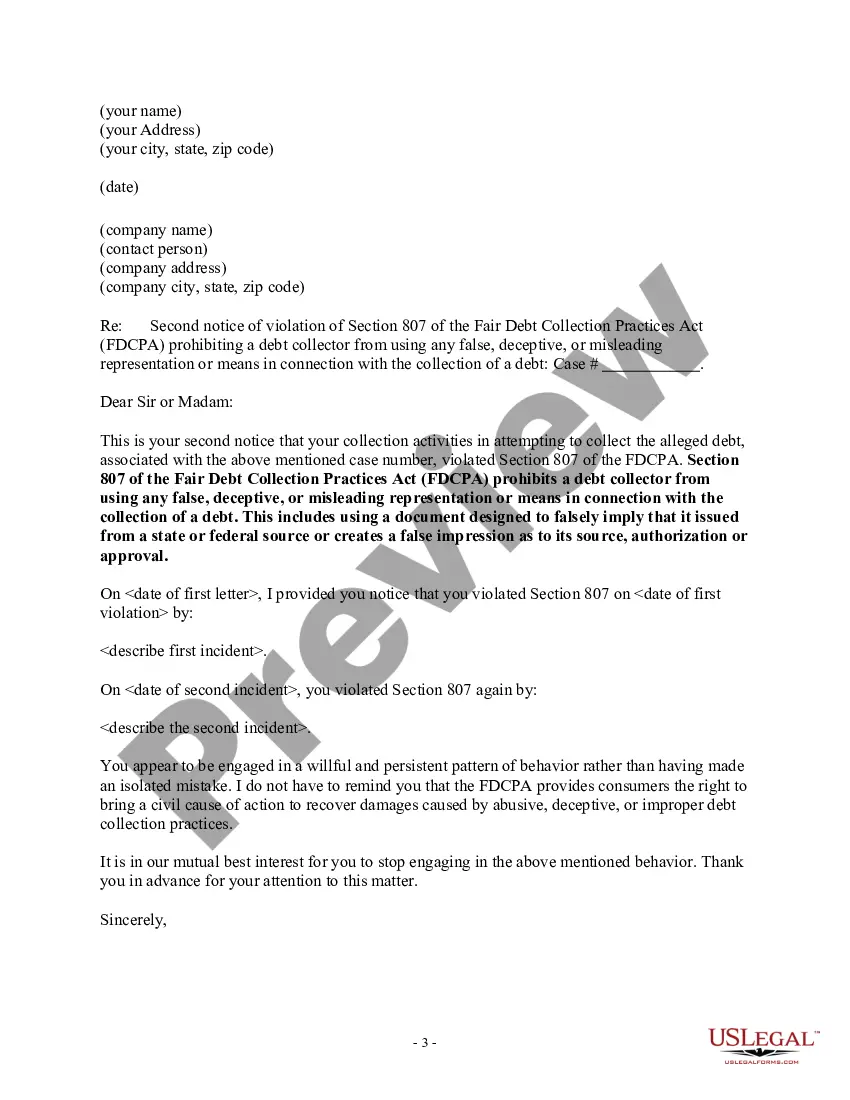
- Specific details about the violation of Section 807 of the FDCPA.
- A request for the debt collector to cease the misleading practices.
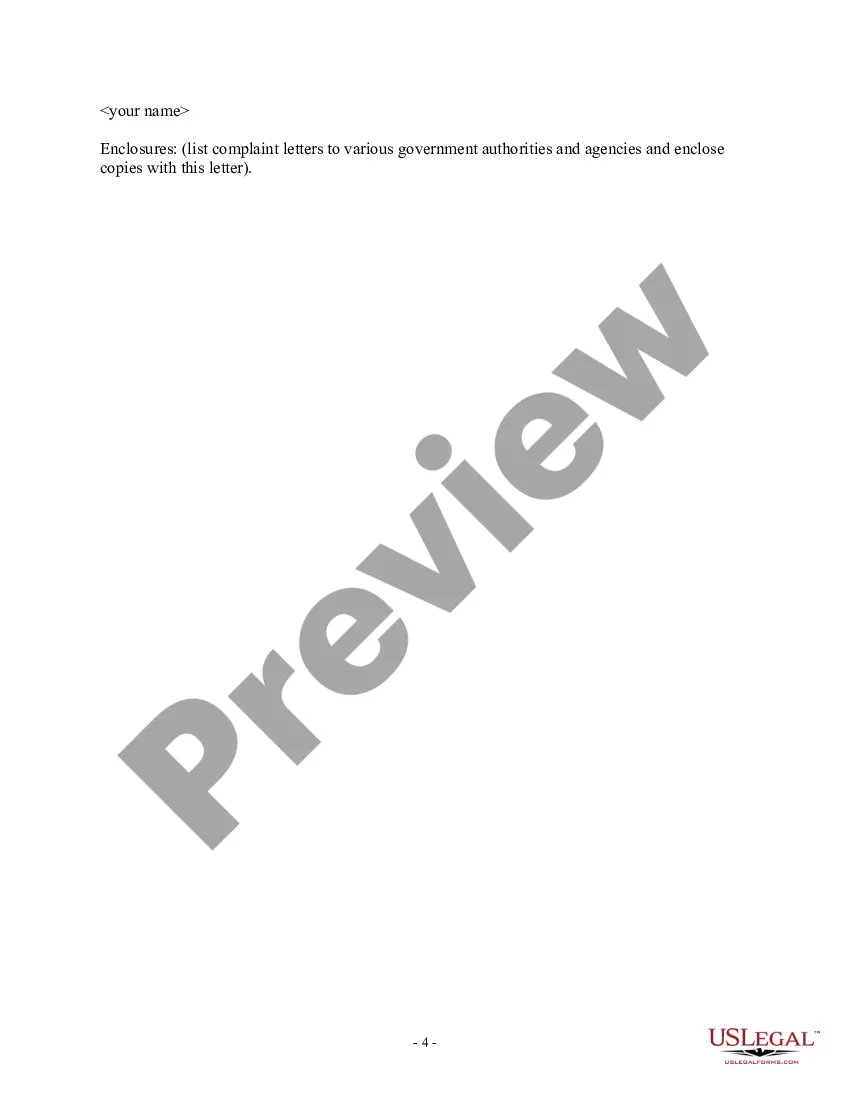
- Options for reporting the violation to regulatory authorities.
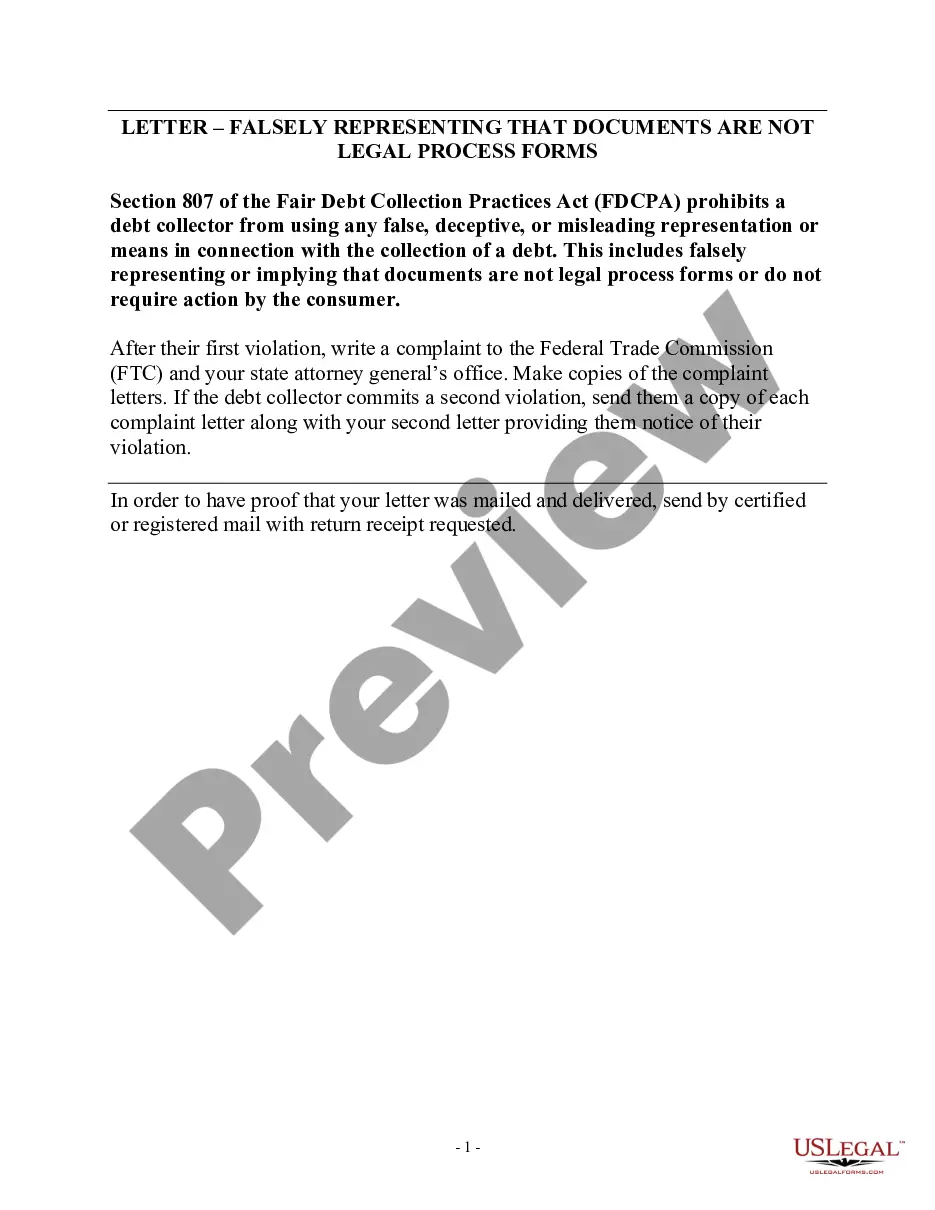
When this form is needed
This form should be used when a debt collector employs misleading representations or means to collect debts, particularly if they utilize documents that seem to be issued by a legitimate federal or state source but are not. Sending this notice serves as an official record of the violation, encouraging the collector to comply with federal debt collection regulations.
Who this form is for
- Consumers who believe they have been subjected to deceptive debt collection practices.
- Individuals who have received fraudulent documents from debt collectors.
- Anyone looking to assert their rights under the FDCPA regarding debt collection.
How to complete this form
- Enter your name and contact information at the top.
- Fill in the name and address of the debt collector.
- Specify the case number related to the debt.
- Clearly describe how the debt collector's actions violated Section 807 of the FDCPA.
- Sign and date the notice and send it via certified mail to the debt collector.
Is notarization required?
This form does not typically require notarization to be legally valid. However, some jurisdictions or document types may still require it. US Legal Forms provides secure online notarization powered by Notarize, available 24/7 for added convenience.
Get your form ready online
Our built-in tools help you complete, sign, share, and store your documents in one place.
Make edits, fill in missing information, and update formatting in US Legal Forms—just like you would in MS Word.
Download a copy, print it, send it by email, or mail it via USPS—whatever works best for your next step.
Sign and collect signatures with our SignNow integration. Send to multiple recipients, set reminders, and more. Go Premium to unlock E-Sign.
If this form requires notarization, complete it online through a secure video call—no need to meet a notary in person or wait for an appointment.
We protect your documents and personal data by following strict security and privacy standards.

Make edits, fill in missing information, and update formatting in US Legal Forms—just like you would in MS Word.

Download a copy, print it, send it by email, or mail it via USPS—whatever works best for your next step.

Sign and collect signatures with our SignNow integration. Send to multiple recipients, set reminders, and more. Go Premium to unlock E-Sign.

If this form requires notarization, complete it online through a secure video call—no need to meet a notary in person or wait for an appointment.

We protect your documents and personal data by following strict security and privacy standards.
Typical mistakes to avoid
- Failing to include specific details about the violation.
- Not sending the letter via certified mail.
- Neglecting to keep copies of all correspondence.
Benefits of completing this form online
- Easily customizable to fit your specific situation.
- Instant access to legal templates drafted by licensed attorneys.
- Convenience of downloading and printing at your convenience.
Legal use & context
- This notice is a key document for consumers in disputing improper debt collection practices.
- Utilizing this form can assist in documenting violations under the FDCPA.
- Consumers have the right to pursue legal action if violations continue after notice is issued.
What to keep in mind
- Using this form helps address violations of the FDCPA by debt collectors.
- It provides a structured way to formally notify the debt collector of their unlawful actions.
- Issuing this notice can enhance your legal position if you consider further action.
Looking for another form?
Form popularity
FAQ
Never Give Them Your Personal Information. A call from a debt collection agency will include a series of questions. Never Admit That The Debt Is Yours. Even if the debt is yours, don't admit that to the debt collector. Never Provide Bank Account Information.
You have the right to sue the collection agency if they act improperly for one year from the improper action. You can sue for lost wages and other expenses incurred, including legal and court costs. Also, the judge is allowed to award you up to $1,000 in punitive damages.
If you pay the collection agency directly, the debt is removed from your credit report in six years from the date of payment. If you don't pay, it purges six years from the last activity date, but you may be at risk for wage garnishment.
When a Debt Collector Calls, How Should You Answer? The phone call from a debt collector never comes at a good timebut the best response is to confront the state of these affairs head-on. You may want to hide or ignore the situation and hope it goes awaybut that can make things worse.
The definition of debt collection harassment is to intimidate, abuse, coerce, bully or browbeat consumers into paying off debt. This happens most often over the phone, but harassment could come in the form of emails, texts, direct mail or talking to friends or neighbors about your debt.
Debt collectors cannot harass or abuse you. They cannot swear, threaten to illegally harm you or your property, threaten you with illegal actions, or falsely threaten you with actions they do not intend to take. They also cannot make repeated calls over a short period to annoy or harass you.
Write a letter disputing the debt. You have 30 days after receiving a collection notice to dispute a debt in writing. Dispute the debt on your credit report. Lodge a complaint. Respond to a lawsuit. Hire an attorney.
Their name. Company name. Address. Call-back phone number. Website URL. State license number, if available as not all states license collectors.
For example, they can't: misrepresent the amount you owe. lie about being attorneys or government representatives. falsely claim you'll be arrested, or claim legal action will be taken against you if it's not true.