Mississippi Jury Instruction - Contributory Negligence for Minor
Overview of this form
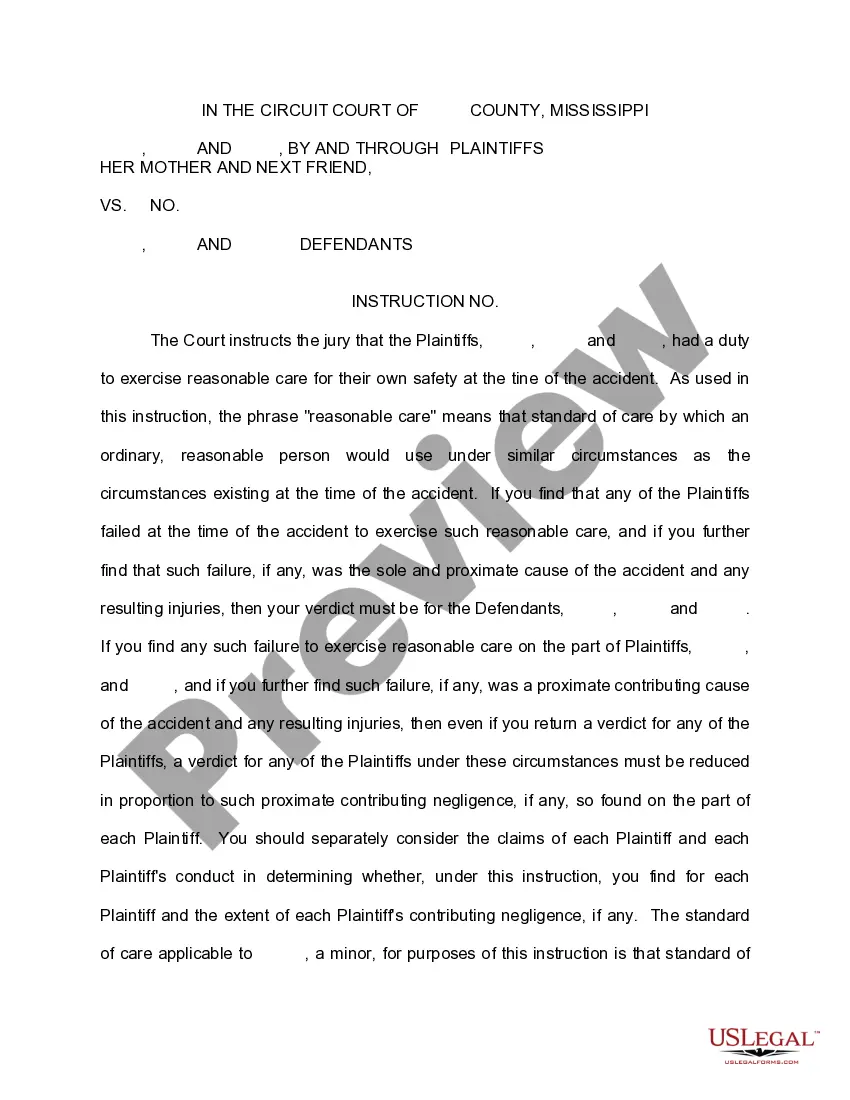
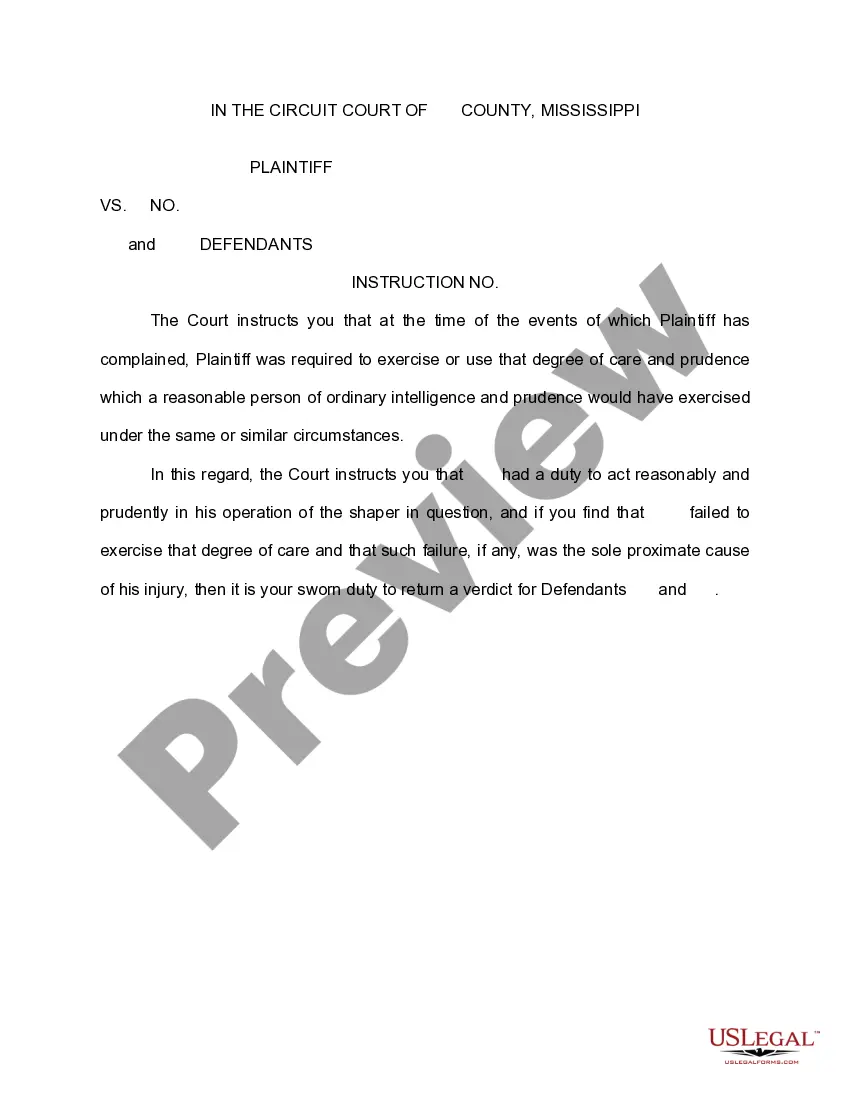
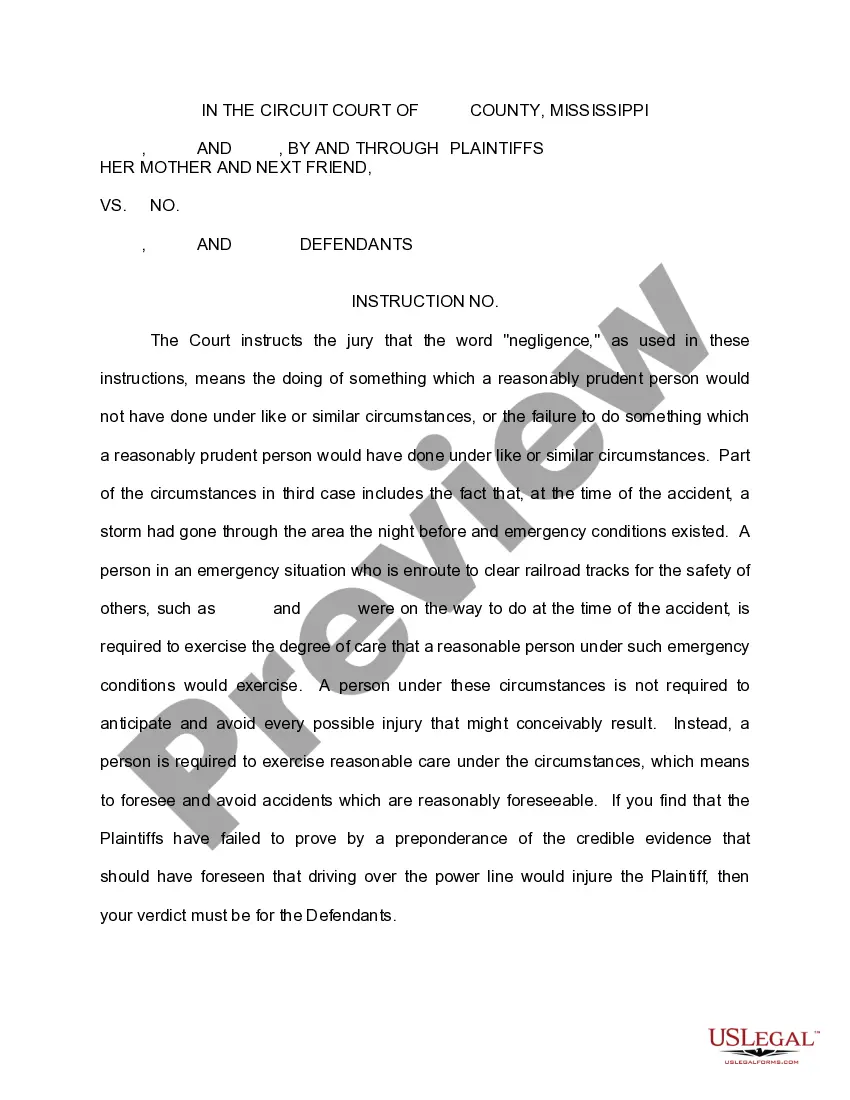
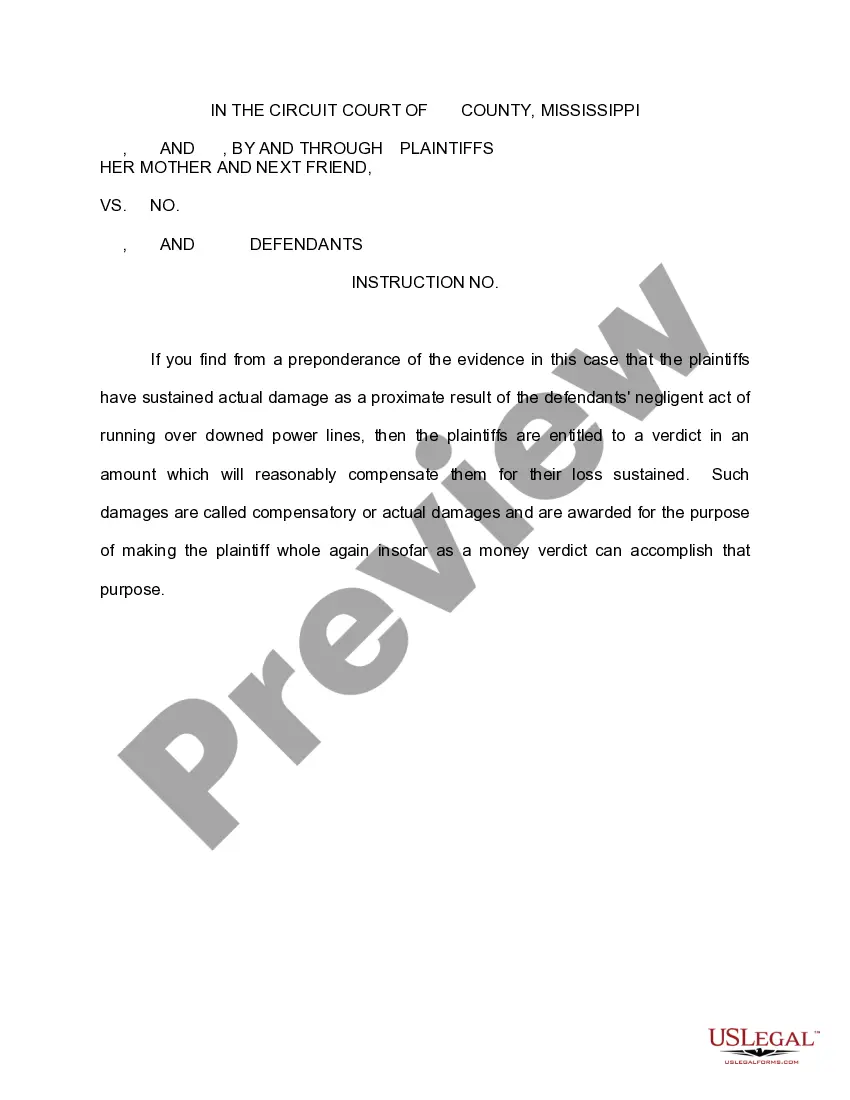
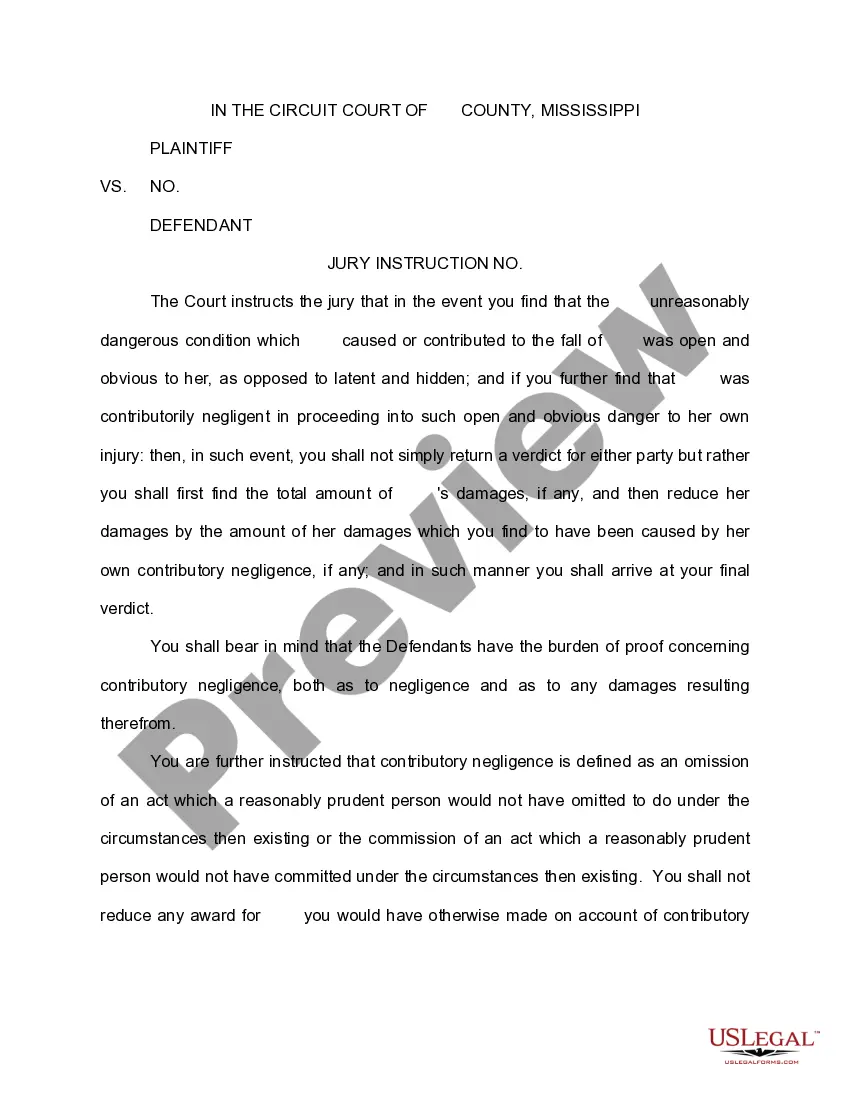
The Jury Instruction - Contributory Negligence for Minor is a legal document used in Mississippi to guide juries on issues related to contributory negligence involving a minor. This specialized instruction clarifies how minor negligence may affect liability in a case. It is designed to educate the jury on relevant legal standards, ensuring they understand the distinctions in cases involving minors as compared to adults.
Key components of this form
- Definition of contributory negligence as it pertains to minors.
- Guidelines on assessing the minorâs actions and their impact on the case.
- Factors to consider when determining negligence in minor cases.
- Legal standards for evaluating evidence related to minor negligence.

When to use this form
This form should be used during court proceedings where issues of contributory negligence are raised in relation to a minor. It is applicable in personal injury cases, accidents, or any situation where a minor's actions may influence liability. Attorneys can introduce this jury instruction to provide the jury with a clear understanding of how to consider the minorâs negligence in their deliberations.
Intended users of this form
- Attorneys representing clients in personal injury lawsuits involving minors.
- Judges requiring standard jury instructions in negligence cases involving minors.
- Legal professionals looking for guidance on jury instruction language in Mississippi.
How to prepare this document
- Review the instruction carefully to ensure it adheres to the relevant legal standards.
- Adjust any specified language as necessary to align with current case law.
- Prepare to present this instruction to the jury during trial proceedings.
Notarization guidance
This form does not typically require notarization unless specified by local law. However, it is advisable to check with the court or legal counsel to confirm any additional requirements for use in legal proceedings.
Get your form ready online
Our built-in tools help you complete, sign, share, and store your documents in one place.
Make edits, fill in missing information, and update formatting in US Legal Forms—just like you would in MS Word.
Download a copy, print it, send it by email, or mail it via USPS—whatever works best for your next step.
Sign and collect signatures with our SignNow integration. Send to multiple recipients, set reminders, and more. Go Premium to unlock E-Sign.
If this form requires notarization, complete it online through a secure video call—no need to meet a notary in person or wait for an appointment.
We protect your documents and personal data by following strict security and privacy standards.

Make edits, fill in missing information, and update formatting in US Legal Forms—just like you would in MS Word.

Download a copy, print it, send it by email, or mail it via USPS—whatever works best for your next step.

Sign and collect signatures with our SignNow integration. Send to multiple recipients, set reminders, and more. Go Premium to unlock E-Sign.

If this form requires notarization, complete it online through a secure video call—no need to meet a notary in person or wait for an appointment.

We protect your documents and personal data by following strict security and privacy standards.
Common mistakes
- Neglecting to verify the instruction's compliance with current Mississippi case law.
- Failing to customize the form to reflect the unique aspects of the case.
- Using outdated or irrelevant legal standards that may mislead the jury.
Benefits of completing this form online
- Convenient access to legal templates drafted by licensed attorneys.
- Easy customization to suit specific case needs and legal requirements.
- Time-saving approach to preparing essential legal documents quickly.
Legal use & context
The jury instruction for contributory negligence regarding minors is enforceable in Mississippi courts, provided it meets the legal standards applicable to negligence disputes. Always ensure the instruction aligns with the most current legal precedents and interpretations.
Summary of main points
- This form serves as a jury instruction on contributory negligence for minors.
- It is essential to verify compliance with Mississippi law.
- Use this instruction in negligence cases involving minors to guide jury deliberations.
Looking for another form?


Form popularity
FAQ
In practice, in order to establish contributory negligence, the defendant must prove that the claimant failed to take reasonable care for their own safety and that this contributed to the damage. question of fact judged objectively and by the application of judicial common sense.
Did the individual at fault owe a duty to the injured party? Was there a breach of said duty? Was the breach also the cause of the legal injury? What was the proximate cause? (could the harm caused be anticipated) What was the extent of the damage caused?
Contributory negligence is a rule that prevents an injured party from collecting any damages after a car accident if they were careless and partially to blame for the wreck. Comparative negligence, on the other hand, allows blame to be shared and damages to be awarded based on each individual's share of the fault.
Examples of medical malpractice contributory negligence include: Failing to fully disclose medical history, including previous surgical procedures and any known allergies. Lying about your personal or family medical history. Engaging in activities that aggravate the injury or medical condition.
Contributory negligence, in law, behaviour that contributes to one's own injury or loss and fails to meet the standard of prudence that one should observe for one's own good. Contributory negligence of the plaintiff is frequently pleaded in defense to a charge of negligence.
Under Mississippi Code section 11-7-15, the state follows a pure "comparative negligence" rule. This means you can still recover damages in a car-accident-related lawsuit, but your award will be reduced according to your share of negligence.
The negligent person owed a duty of reasonable care to the injured person. The negligent person did not act reasonably or breached his or her duty of care. The negligent individual's breach was the cause of the other party's injuries.
Since damages are asserted in the plaintiff's negligence claim against the defendant, the defendant's contributory negligence charge involves only three elements: duty, breach, and causation.