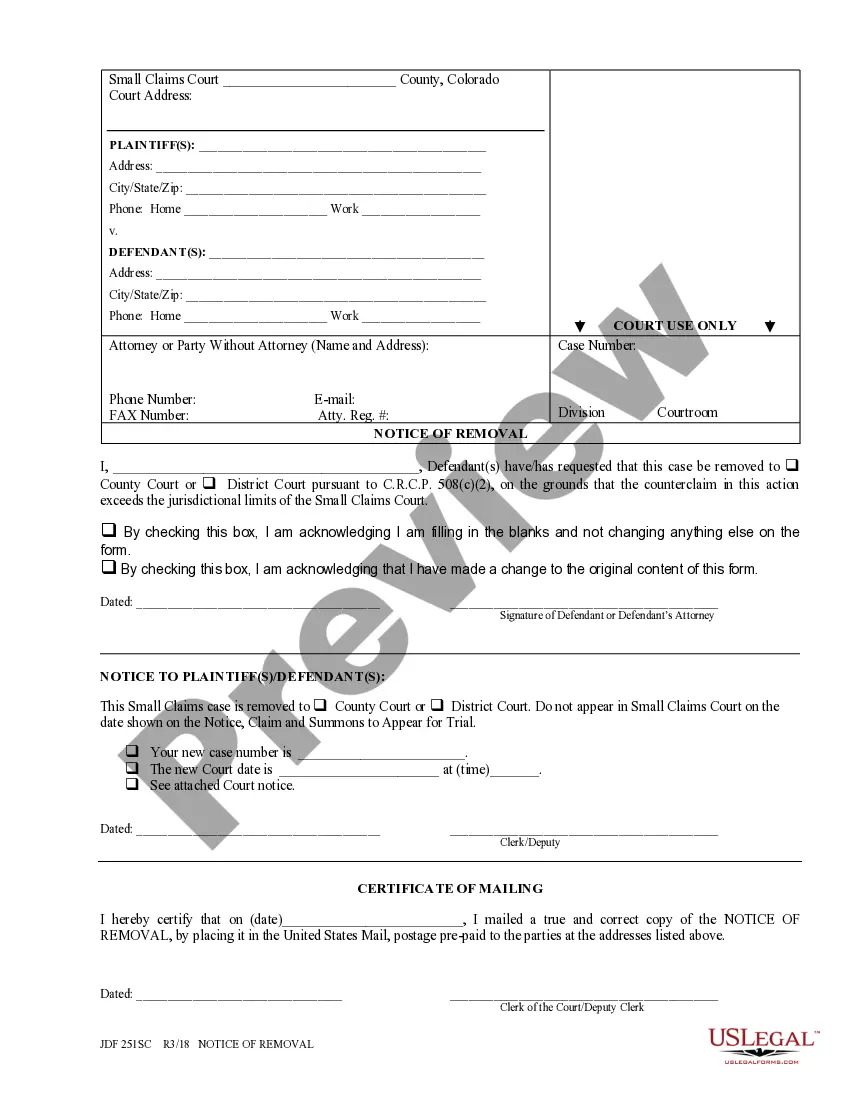
Mississippi Jury Instruction - Contributory Negligence - Fall
What this document covers
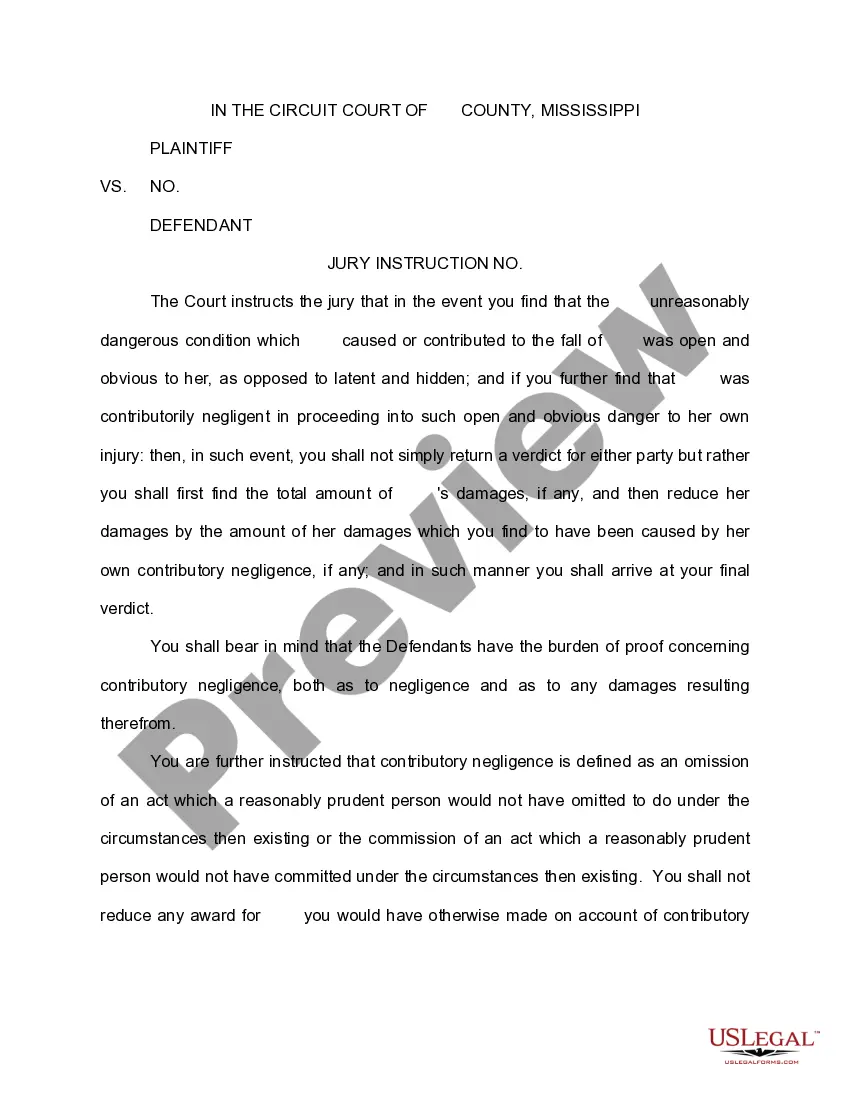
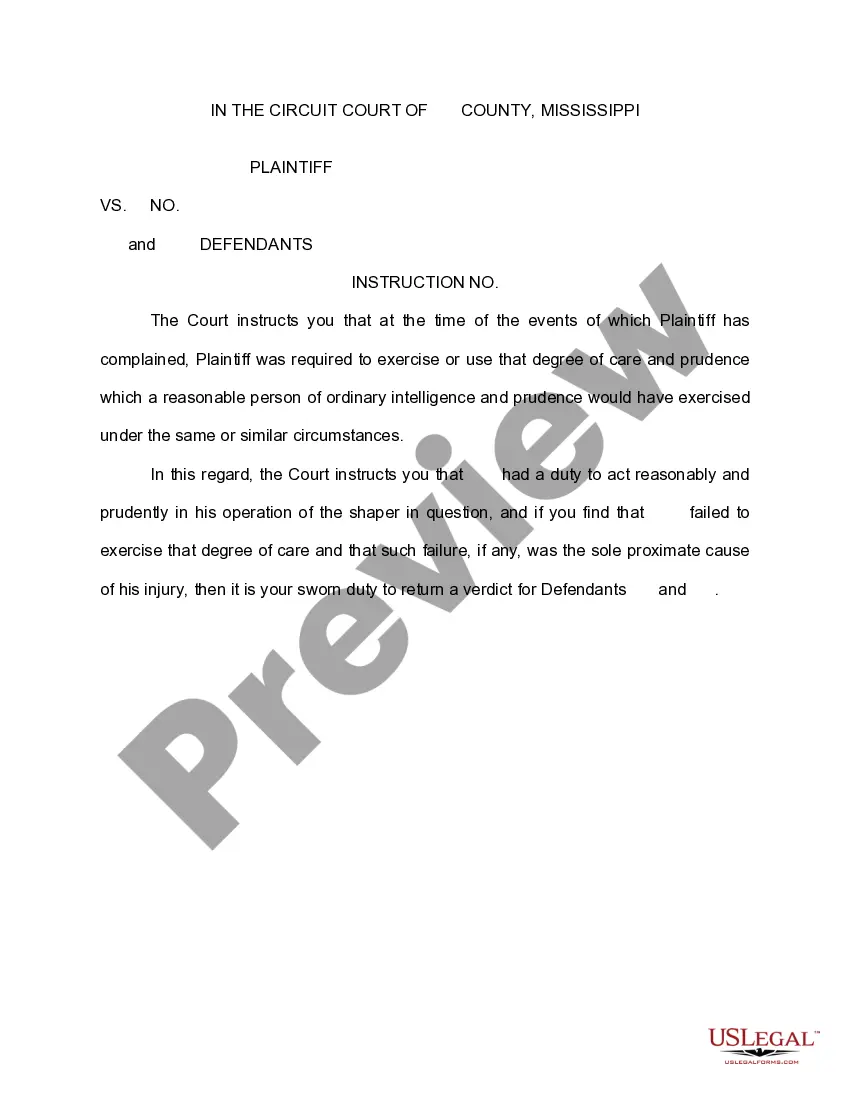
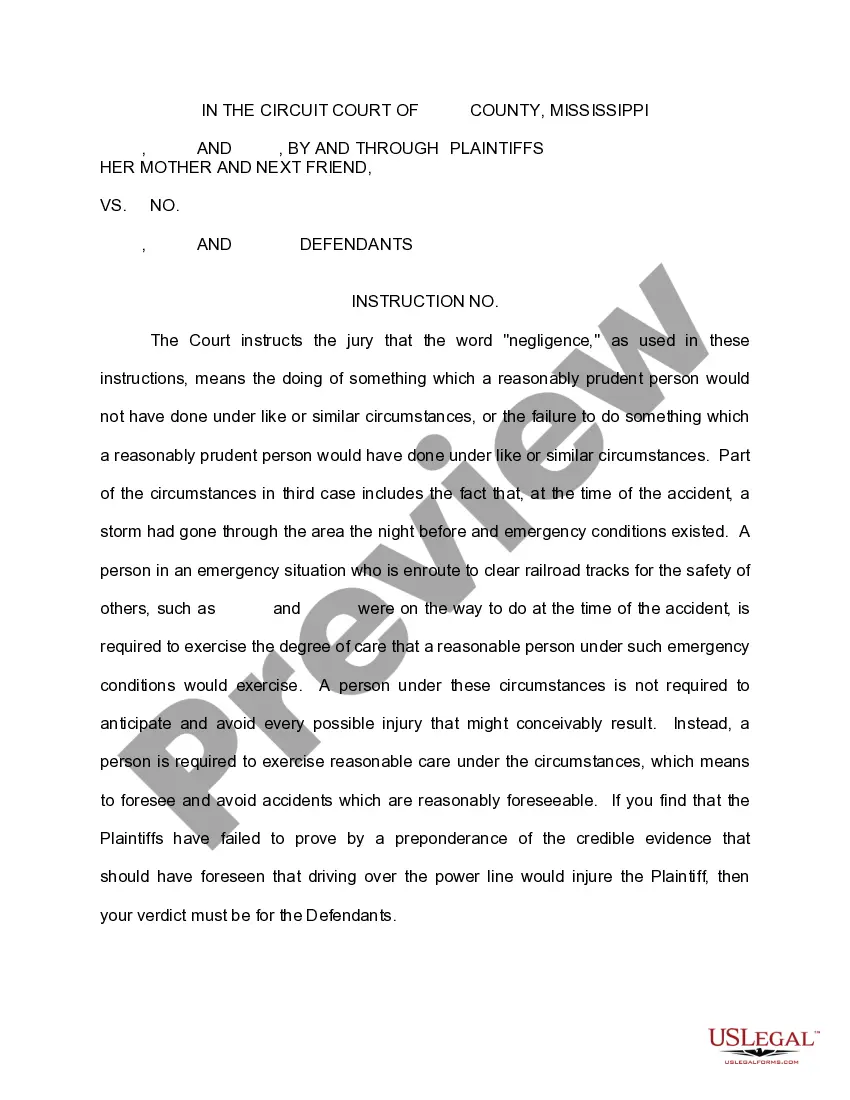
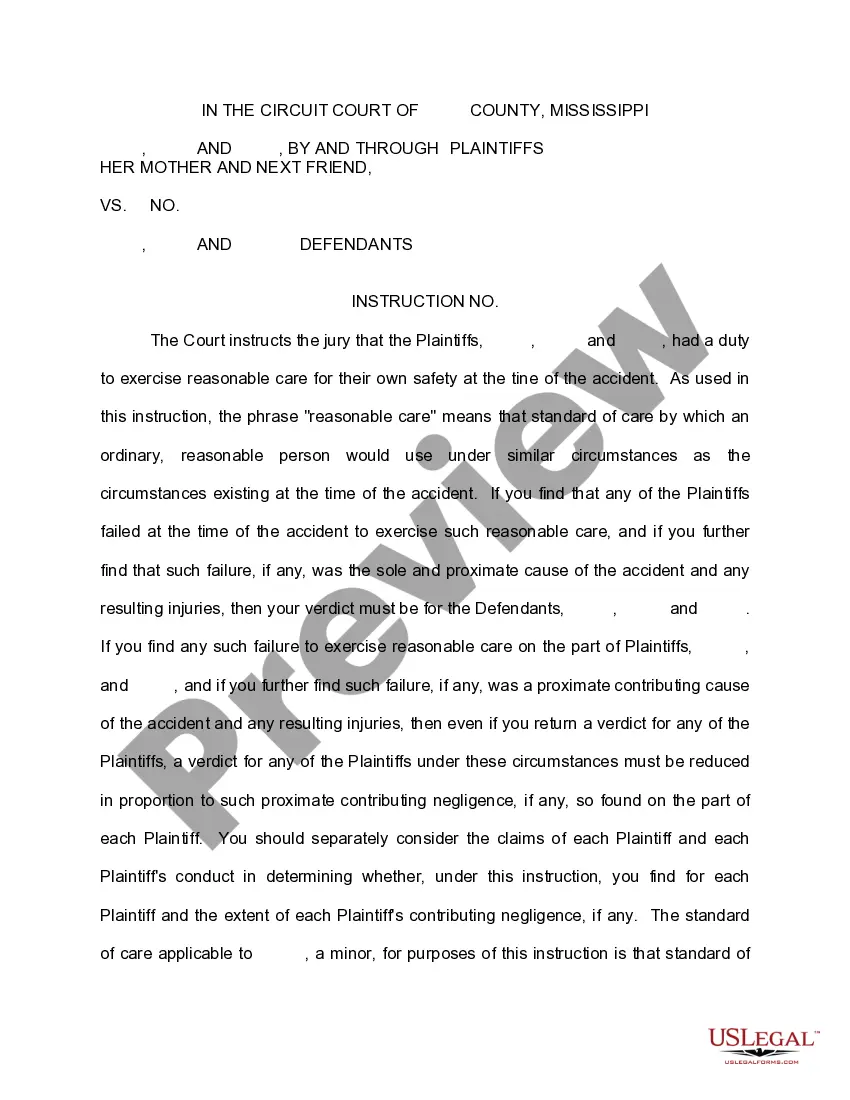
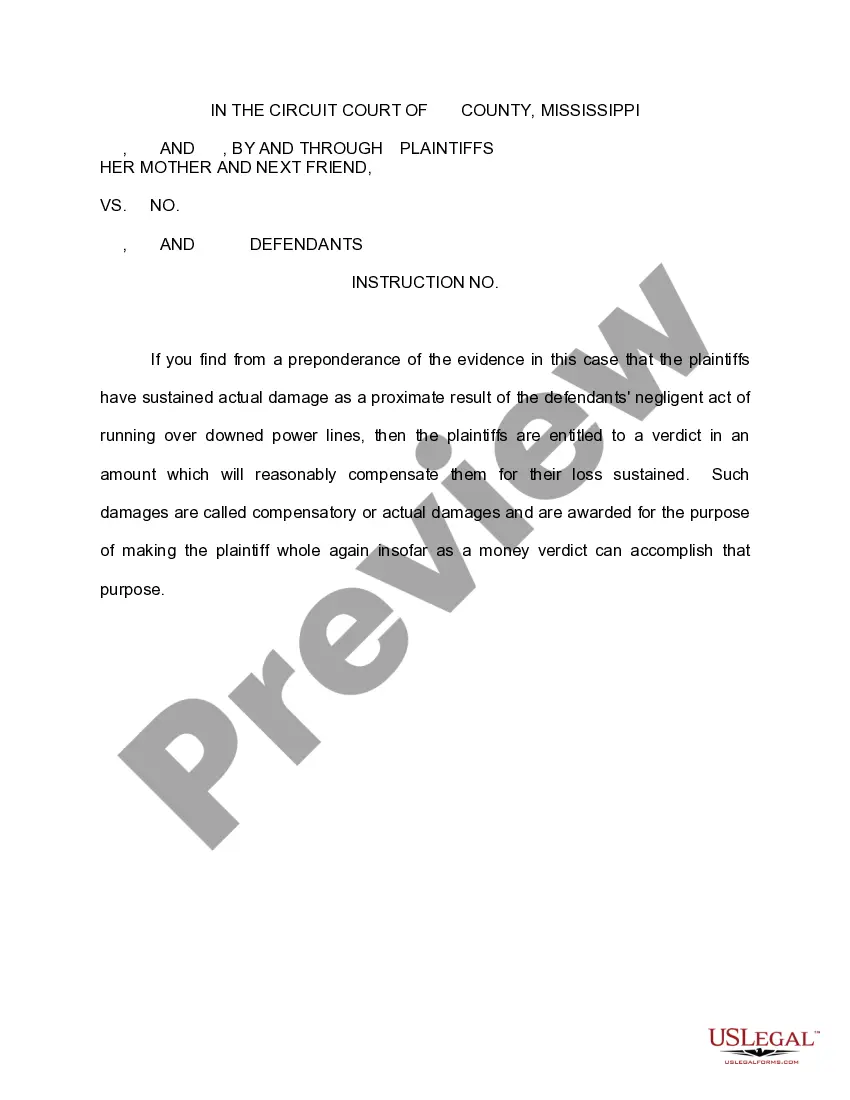
The Jury Instruction - Contributory Negligence - Fall form provides guidance for juries in cases involving falls caused by unreasonably dangerous conditions. It details how to assess the contribution of a plaintiff's negligence to their injuries, helping juries to determine the appropriate amounts of damages. This form is tailored for Mississippi law and should be checked for compliance with current legal standards.
What’s included in this form
- Instruction on assessing if a hazardous condition was open and obvious to the plaintiff.
- Guidelines for determining contributory negligence on the part of the plaintiff.
- Clarification that the burden of proof lies with the defendants regarding contributory negligence.
- Steps for the jury to calculate damages in light of contributory negligence.
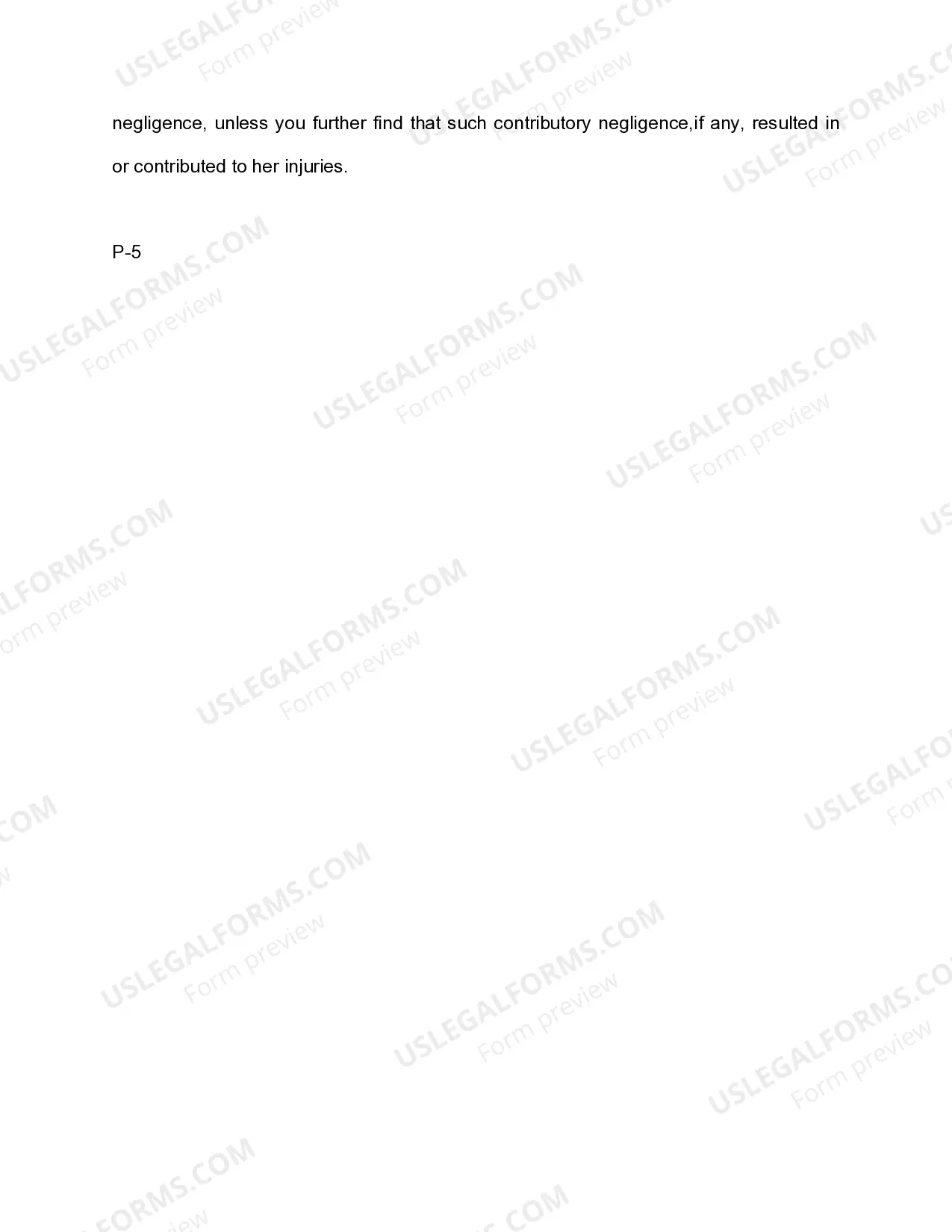
- Definition of contributory negligence in layman's terms.
When to use this form
This form is essential in personal injury cases, particularly those involving falls where the defendant claims the plaintiff was also negligent. It should be used when the jury needs clear instructions on how to evaluate both parties' responsibilities and the impact of the plaintiff's actions on their injuries.
Who should use this form
- Judges presiding over personal injury cases in Mississippi.
- Attorneys representing plaintiffs or defendants in negligence cases.
- Juries assigned to adjudicate cases involving contributory negligence related to falls.
Instructions for completing this form
- Identify the parties involved in the case.
- Review the details of the incident to determine the dangerous condition.
- Assess whether the condition was open and obvious to the plaintiff.
- Evaluate any contributory negligence on the part of the plaintiff.
- Outline how to calculate the final damages based on the findings of negligence.
Notarization guidance
This form does not typically require notarization unless specified by local law. Ensure you check local rules or consult a legal professional to determine if notarization applies to your specific case.
Get your form ready online
Our built-in tools help you complete, sign, share, and store your documents in one place.
Make edits, fill in missing information, and update formatting in US Legal Forms—just like you would in MS Word.
Download a copy, print it, send it by email, or mail it via USPS—whatever works best for your next step.
Sign and collect signatures with our SignNow integration. Send to multiple recipients, set reminders, and more. Go Premium to unlock E-Sign.
If this form requires notarization, complete it online through a secure video call—no need to meet a notary in person or wait for an appointment.
We protect your documents and personal data by following strict security and privacy standards.

Make edits, fill in missing information, and update formatting in US Legal Forms—just like you would in MS Word.

Download a copy, print it, send it by email, or mail it via USPS—whatever works best for your next step.

Sign and collect signatures with our SignNow integration. Send to multiple recipients, set reminders, and more. Go Premium to unlock E-Sign.

If this form requires notarization, complete it online through a secure video call—no need to meet a notary in person or wait for an appointment.

We protect your documents and personal data by following strict security and privacy standards.
Typical mistakes to avoid
- Failing to accurately define contributory negligence for the jury.
- Not adjusting damages based on the jury's findings regarding negligence.
- Using outdated or legally inaccurate language in the jury instruction.
Benefits of completing this form online
- Convenient access to legal templates drafted by licensed attorneys.
- Edit and tailor the form to meet specific case requirements easily.
- Quick downloads save time compared to traditional legal document preparation.
Legal use & context
- This form helps establish clear guidelines for juries in personal injury cases under Mississippi law.
- It ensures that juries understand the implications of contributory negligence on damage awards.
- Adhering to this instructional format can reduce the likelihood of appeals based on jury instructions.
Key takeaways
- The form provides essential instructions for juries on contributory negligence in fall cases.
- Understanding this concept is crucial for fair damage assessment in personal injury litigation.
- Compliance with Mississippi legal standards is necessary for effective use of the form.
Looking for another form?
Form popularity
FAQ
Did the individual at fault owe a duty to the injured party? Was there a breach of said duty? Was the breach also the cause of the legal injury? What was the proximate cause? (could the harm caused be anticipated) What was the extent of the damage caused?
Contributory Negligence. The concept of contributory negligence revolves around a plaintiff's contribution to his or her own damages. Comparative Negligence. Vicarious Liability. Gross Negligence.
Neglect. (transitive) To fail to care for or attend to something. (transitive) To omit to notice; to forbear to treat with attention or respect; to slight. (transitive) To fail to do or carry out something due to oversight or carelessness.
Do you want to hold another party accountable for their negligent behavior? Doing so means you and your lawyer must prove the five elements of negligence: duty, breach of duty, cause, in fact, proximate cause, and harm.