Colorado Landlord Agreement to allow Tenant Alterations to Premises
About this form
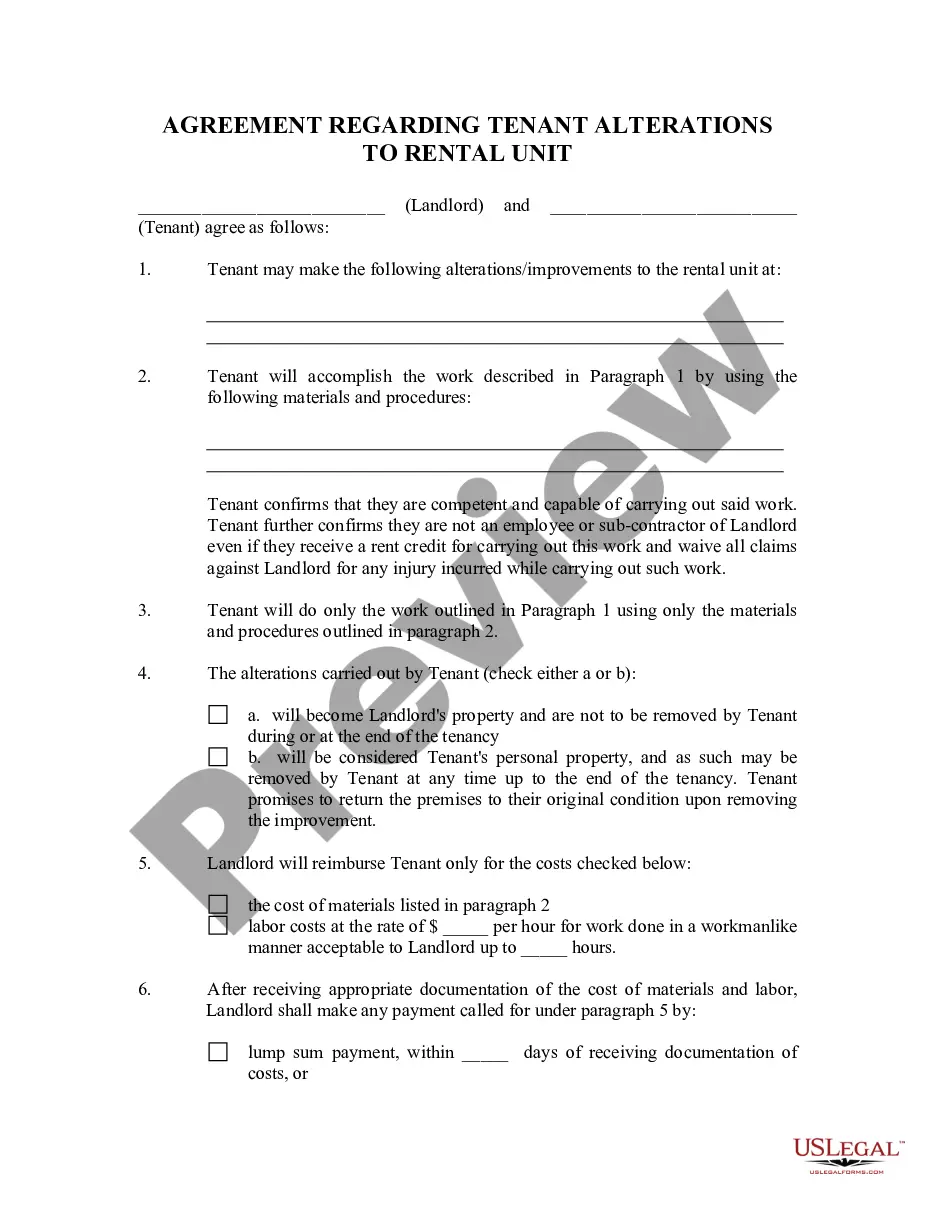
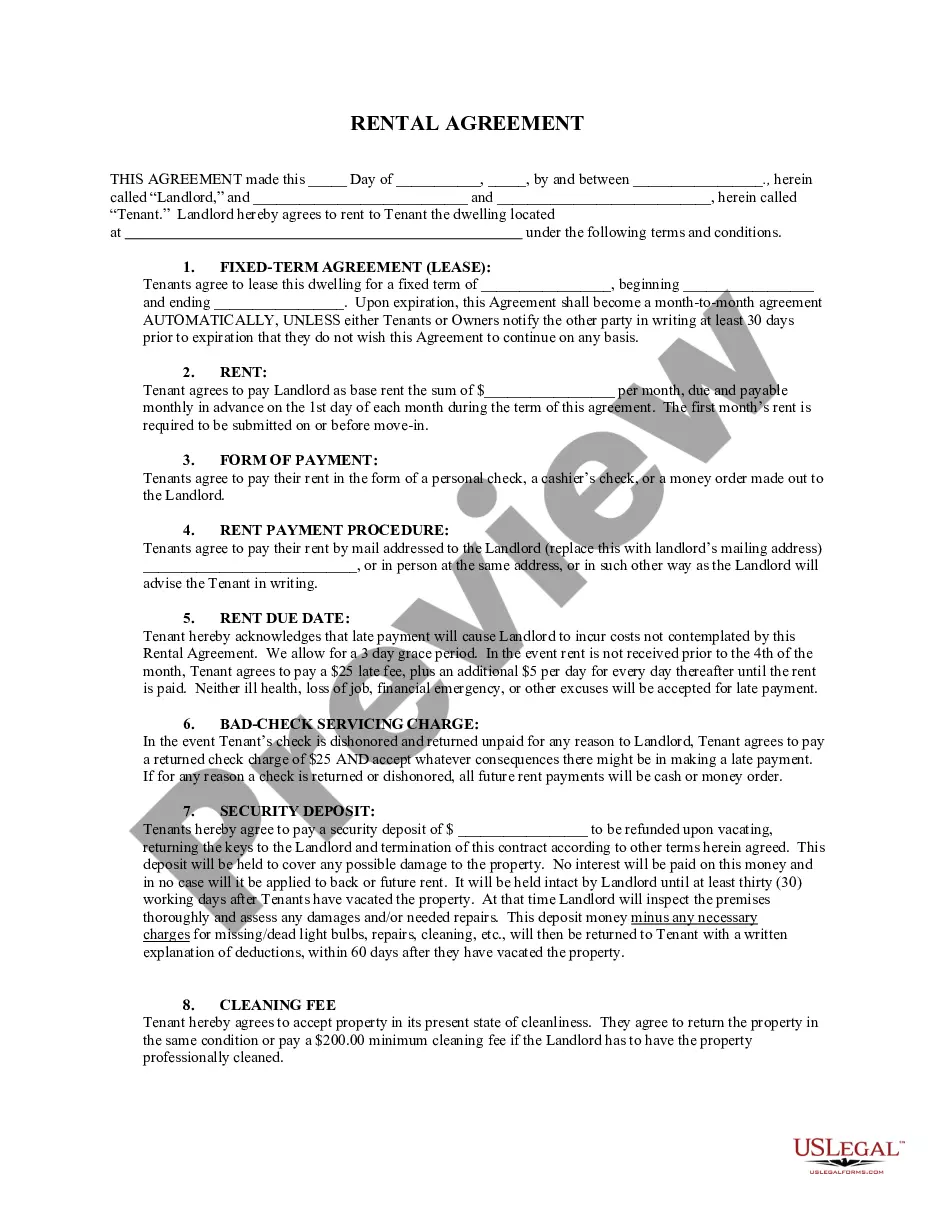
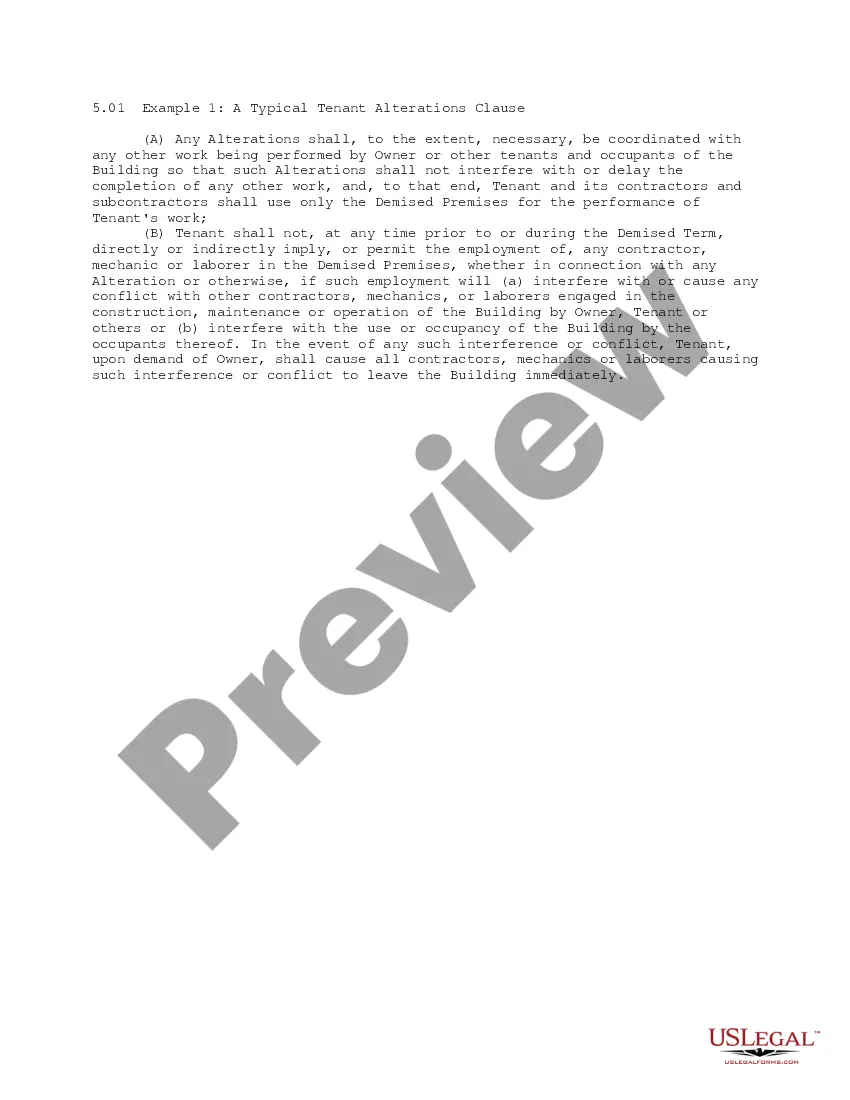
The Landlord Agreement to allow Tenant Alterations to Premises is a legal document that formalizes the agreement between a landlord and a tenant regarding proposed changes to a rental property. This form clarifies the rights and responsibilities of both parties, ensuring there are no misunderstandings about alterations made to the premises. It differs from standard lease agreements by specifically addressing the conditions under which a tenant can make modifications and how these changes will be treated at the end of the tenancy.
Key parts of this document
- Identification of the landlord and tenant, including the rental unit address.
- Details on specific alterations or improvements that the tenant wishes to make.
- Clarification of property ownership regarding the alterations made by the tenant.
- Terms concerning reimbursement for materials and labor costs incurred by the tenant.
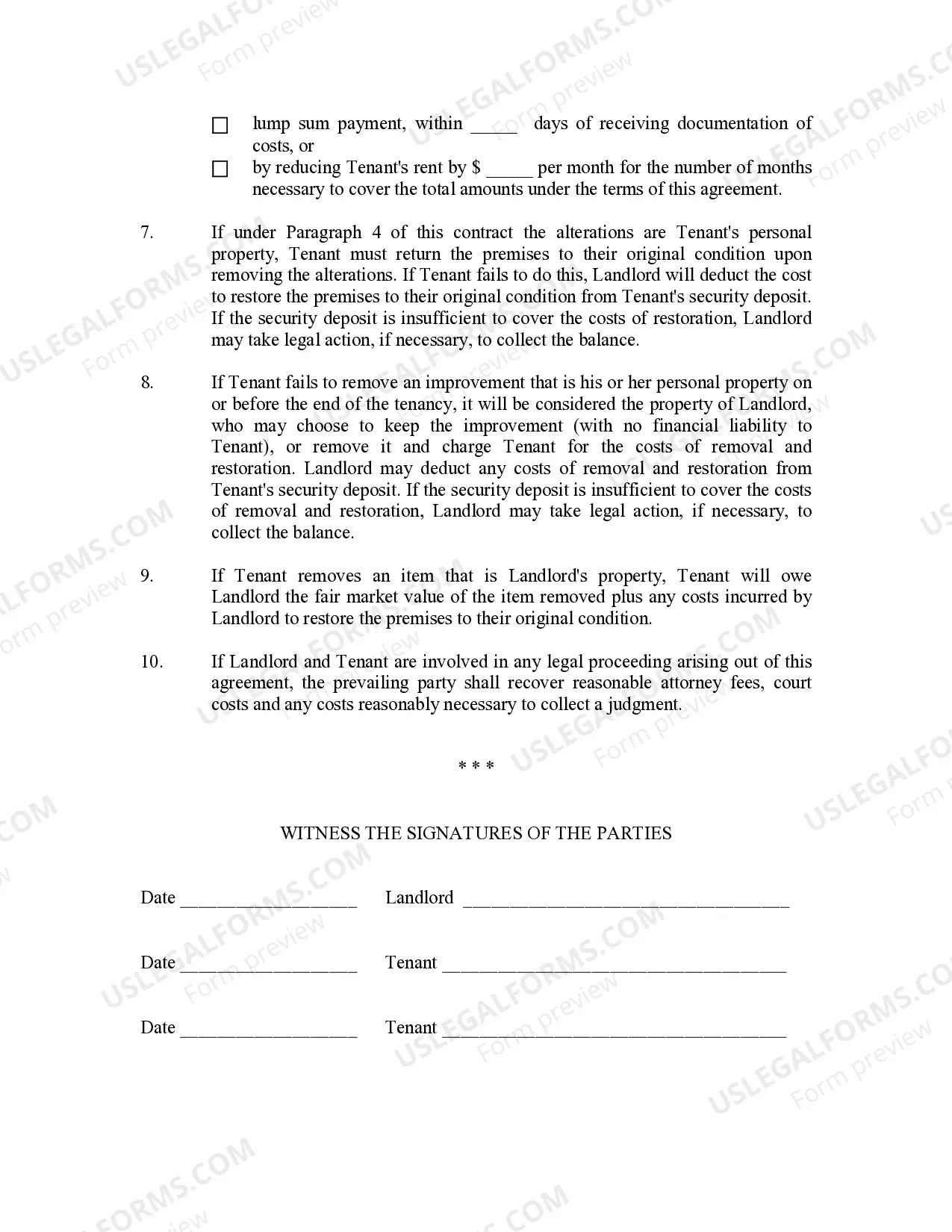
- Conditions for restoring the premises to their original state before moving out.
- Provisions for legal disputes, including recovery of attorney fees by the prevailing party.
When to use this document
This form should be used whenever a tenant wishes to make modifications to a rental property that require agreement from the landlord. Examples include renovations, painting, or installing fixtures. A written agreement helps both parties understand their rights and responsibilities, thereby mitigating potential conflicts over any changes made to the property.
Who should use this form
- Landlords looking to permit alterations by tenants while establishing clear guidelines.
- Tenants who want to ensure they can make changes to their rental unit legally and in recognition of their investment.
- Property management companies managing rental properties on behalf of landlords.
Steps to complete this form
- Identify and enter the names of the landlord and tenant along with the rental unit address.
- Specify the exact alterations or improvements the tenant intends to make.
- Select whether the alterations will become the landlord's property or remain the tenant's personal property.
- Detail reimbursement terms for materials and labor, including any limits on hours or costs.
- Both parties should date and sign the agreement to make it legally binding.
Does this form need to be notarized?
In most cases, this form does not require notarization. However, some jurisdictions or signing circumstances might. US Legal Forms offers online notarization powered by Notarize, accessible 24/7 for a quick, remote process.
Get your form ready online
Our built-in tools help you complete, sign, share, and store your documents in one place.
Make edits, fill in missing information, and update formatting in US Legal Forms—just like you would in MS Word.
Download a copy, print it, send it by email, or mail it via USPS—whatever works best for your next step.
Sign and collect signatures with our SignNow integration. Send to multiple recipients, set reminders, and more. Go Premium to unlock E-Sign.
If this form requires notarization, complete it online through a secure video call—no need to meet a notary in person or wait for an appointment.
We protect your documents and personal data by following strict security and privacy standards.

Make edits, fill in missing information, and update formatting in US Legal Forms—just like you would in MS Word.

Download a copy, print it, send it by email, or mail it via USPS—whatever works best for your next step.

Sign and collect signatures with our SignNow integration. Send to multiple recipients, set reminders, and more. Go Premium to unlock E-Sign.

If this form requires notarization, complete it online through a secure video call—no need to meet a notary in person or wait for an appointment.

We protect your documents and personal data by following strict security and privacy standards.
Common mistakes to avoid
- Failing to clearly specify the alterations can lead to misunderstandings.
- Not addressing who will cover costs can result in disputes later.
- Neglecting to have both parties sign the agreement can render it unenforceable.
Benefits of completing this form online
- Convenient access to legal documents at any time.
- Editable templates that allow customization to fit specific needs.
- Reliable forms drafted by licensed attorneys, ensuring legal compliance.
Legal use & context
- This agreement serves to protect the interests of both landlords and tenants regarding property alterations.
- It provides a clear framework for disputes related to property improvements and their ownership.
- Having a written agreement strengthens legal standing in case of any future disagreements.
Looking for another form?
Form popularity
FAQ
The no alterations clause in a lease typically prohibits tenants from making any changes to the rental property without the landlord's consent. This clause aims to protect the property’s integrity and maintain its value. If you want to modify this clause, consider creating a Colorado Landlord Agreement to allow Tenant Alterations to Premises. This agreement can define what alterations are permissible and establish a clear process for obtaining approval, benefiting both landlords and tenants.
In real estate, an alteration is a modification that affects the existing condition of a property, differentiating it from its original state. This can include renovations, additions, or minor repairs, all of which may need to be documented in a Colorado Landlord Agreement to allow Tenant Alterations to Premises. Understanding these terms helps both landlords and tenants maintain a clear relationship and avoid disputes over property changes. Always seek written consent for alterations to ensure compliance with your lease.
An alteration refers to any modification made to the rental property that changes its structure or appearance. This can include significant changes like removing walls, or smaller modifications such as changing light fixtures. The Colorado Landlord Agreement to allow Tenant Alterations to Premises plays a crucial role in determining which alterations require prior approval. Make sure to consult your agreement and communicate with your landlord before making any alterations.
The changes you can make to a rented property depend on the terms of your lease and the Colorado Landlord Agreement to allow Tenant Alterations to Premises. Generally, tenants may paint walls, install fixtures, or add shelves with prior approval from the landlord. Understanding the specific guidelines in your agreement can help you make appropriate changes without risking your security deposit.
Improvements to rental property include upgrades or changes that enhance its value or functionality. Examples may be installing new flooring, upgrading kitchen appliances, or making energy-efficient modifications. It's important to reference the Colorado Landlord Agreement to allow Tenant Alterations to Premises, as this agreement outlines what improvements are permissible. Always ensure you have the landlord's consent before proceeding with any upgrades.
Yes, modifications to a rented apartment are often possible, but they usually require landlord approval. Modifications might include painting or adding shelves but should align with the terms stated in the lease. Always refer to your Colorado Landlord Agreement to allow Tenant Alterations to Premises to ensure compliance with the conditions set by your landlord.
In Colorado, landlords cannot engage in discriminatory practices or retaliate against tenants for exercising their rights. Essential repairs must be made in a timely manner, and tenants' privacy must be respected. Familiarizing yourself with the Colorado Landlord Agreement to allow Tenant Alterations to Premises can help clarify these rights and responsibilities.
While this FAQ focuses on Colorado, it's noteworthy that new rules can vary by state. In Florida, for instance, recent regulations might address tenant rights and landlord responsibilities related to property maintenance. For Colorado-specific concerns, refer to your Colorado Landlord Agreement to allow Tenant Alterations to Premises, as it may provide relevant insights on anticipated changes in landlord-tenant laws.
Generally, a tenant should not make changes or improvements to a property without the landlord's permission. Unauthorized alterations can lead to disputes or penalties as defined in the lease agreement. This highlights the importance of referencing the Colorado Landlord Agreement to allow Tenant Alterations to Premises to clarify what is permissible.
An alteration to a rental property typically includes any modification that changes the property’s structure or appearance. This can mean anything from painting walls to installing new fixtures. Understanding what constitutes an alteration is crucial, as outlined in the Colorado Landlord Agreement to allow Tenant Alterations to Premises, to ensure harmony between landlords and tenants.