Form of Security Agreement between Everest and Jennings International, Ltd., Everest and Jennings, Inc., and BIL, Ltd.
Understanding this form
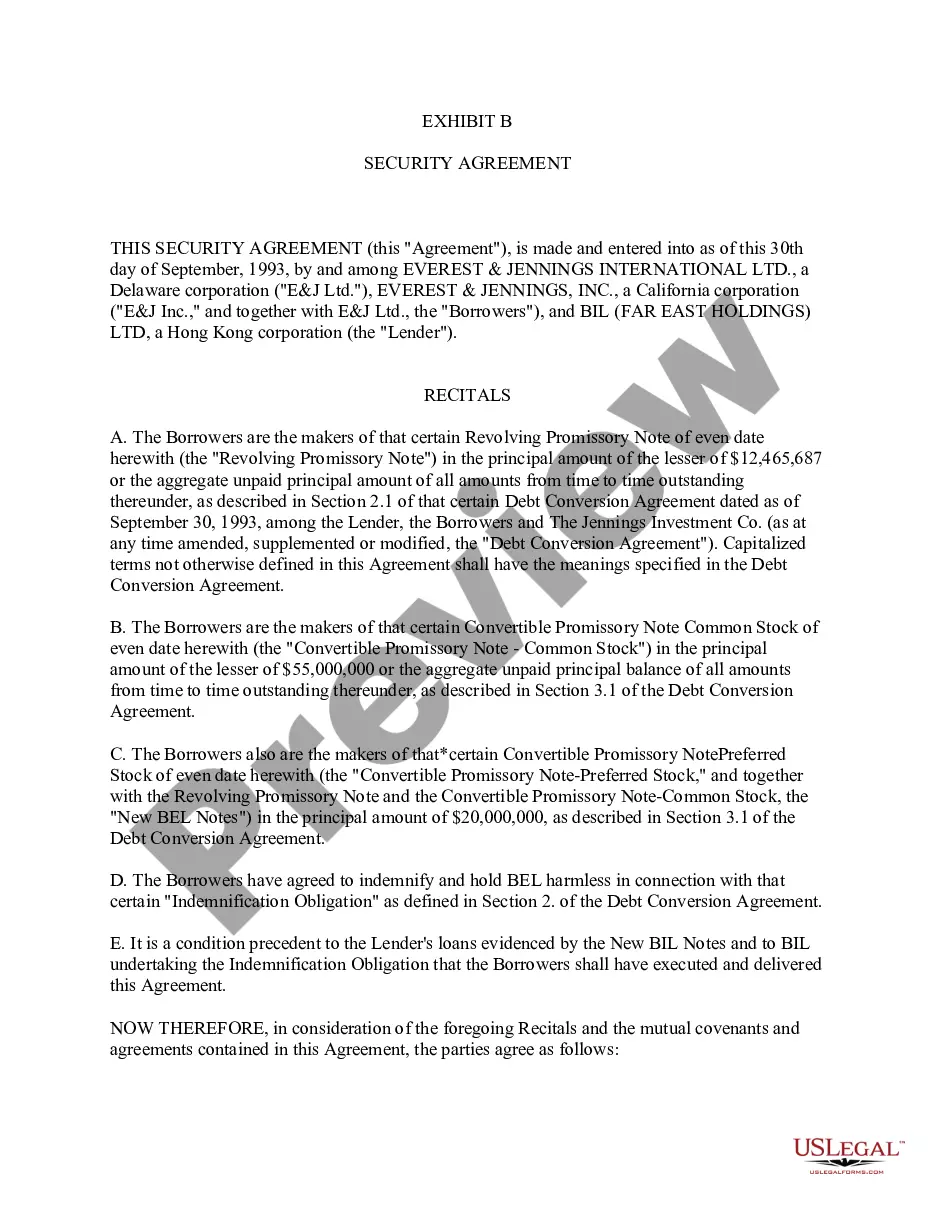
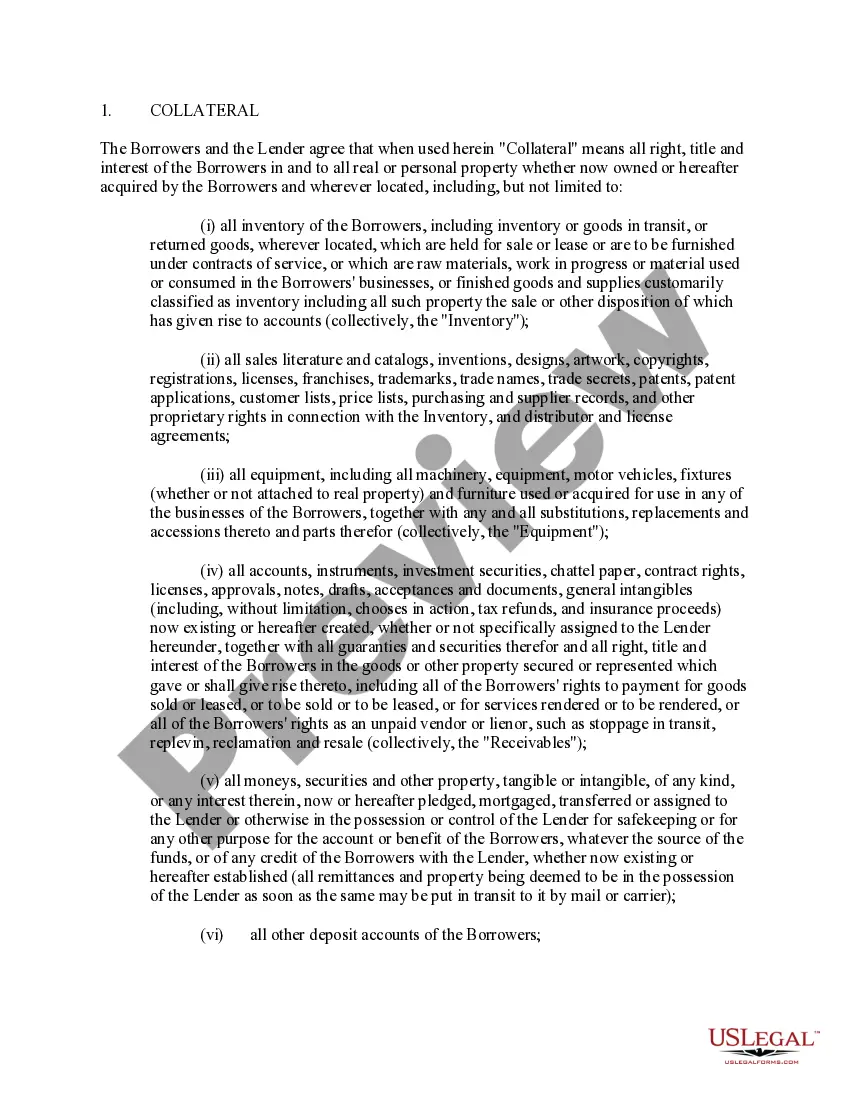
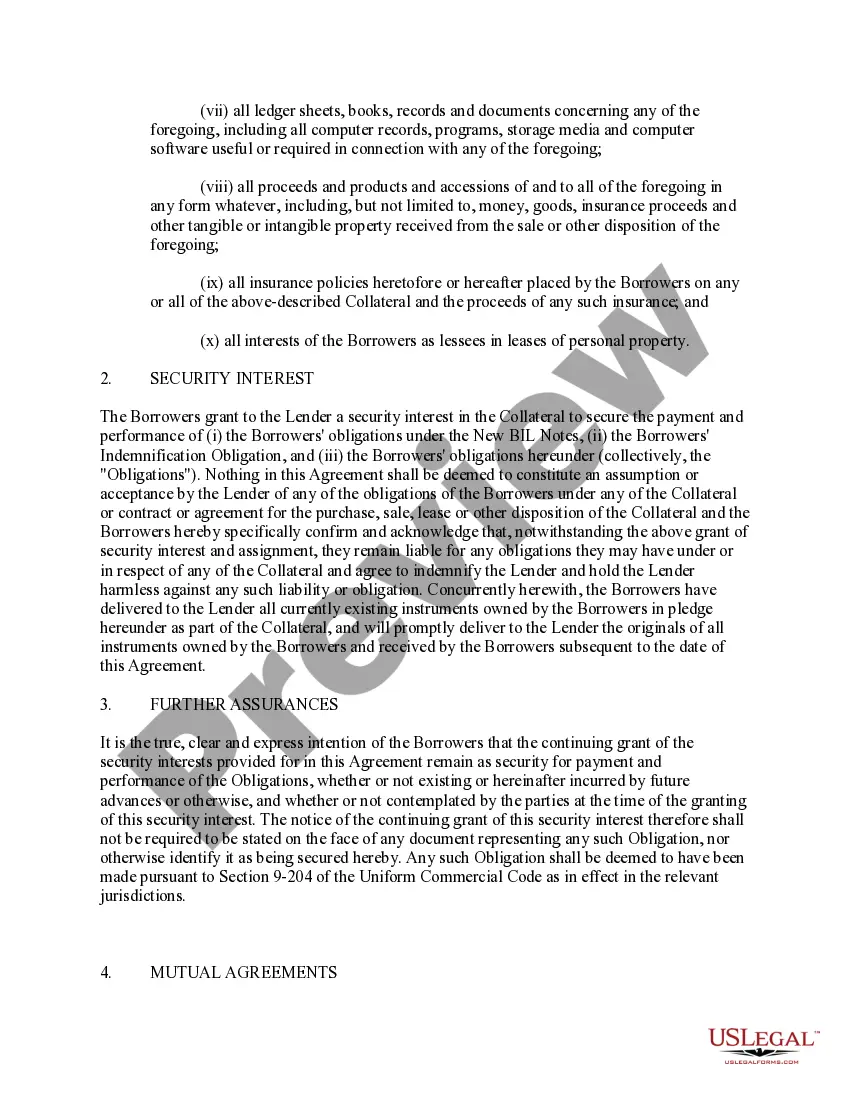
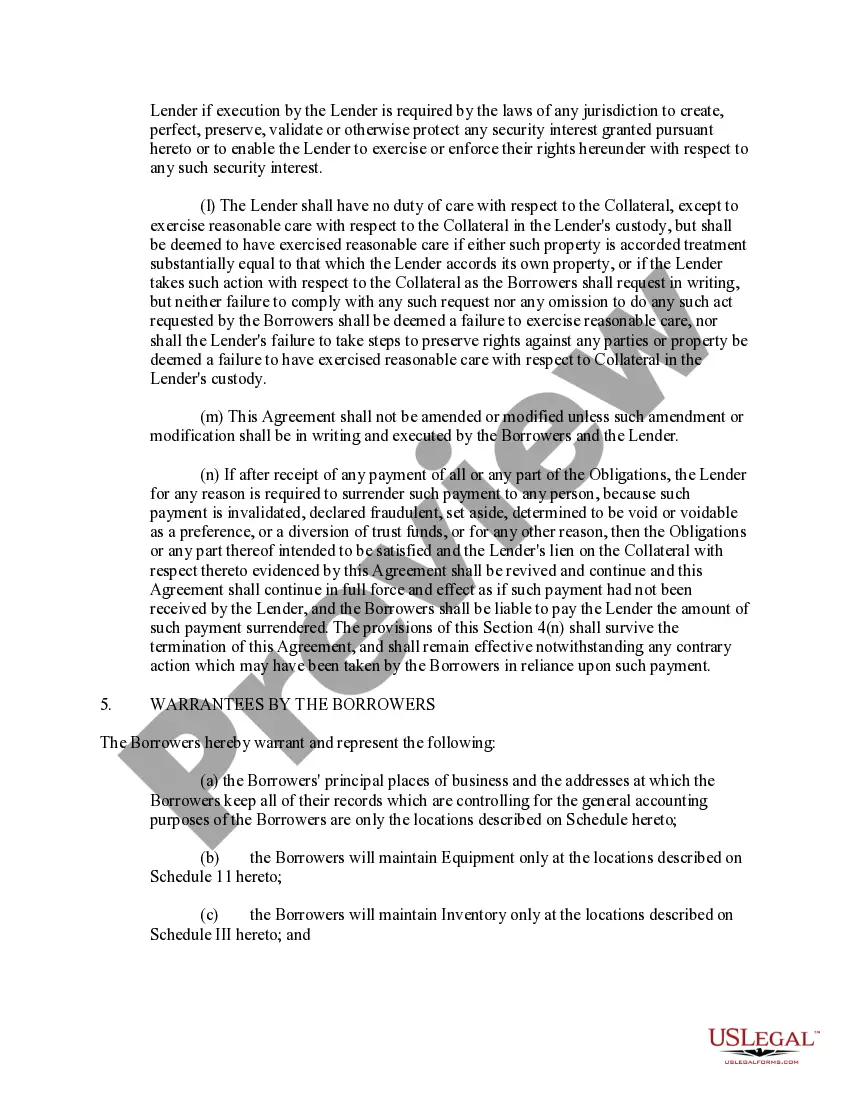
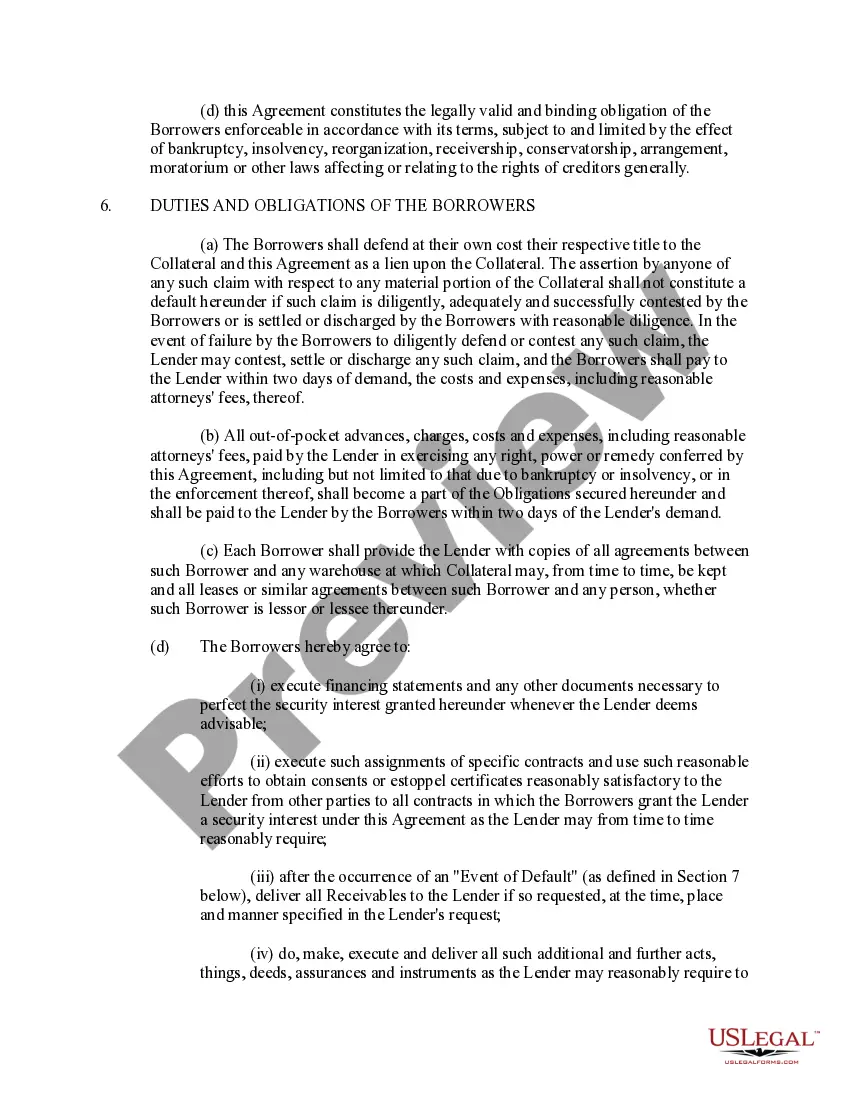
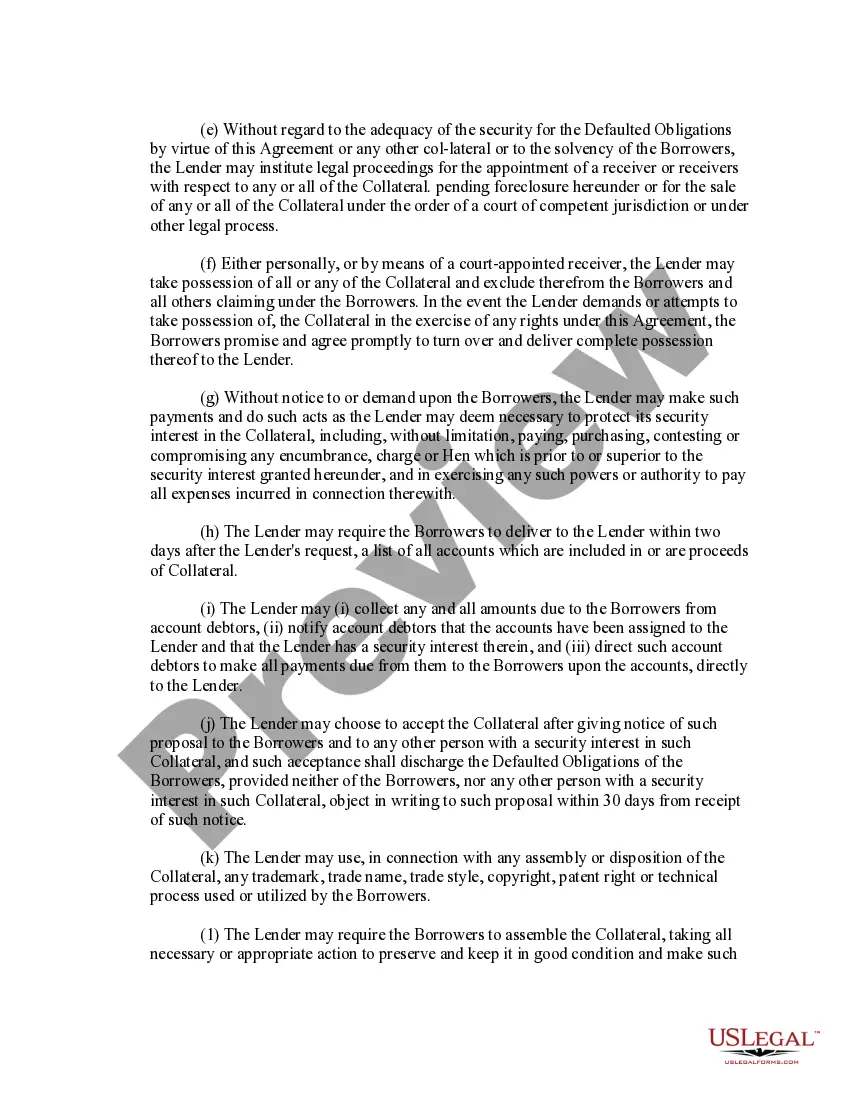
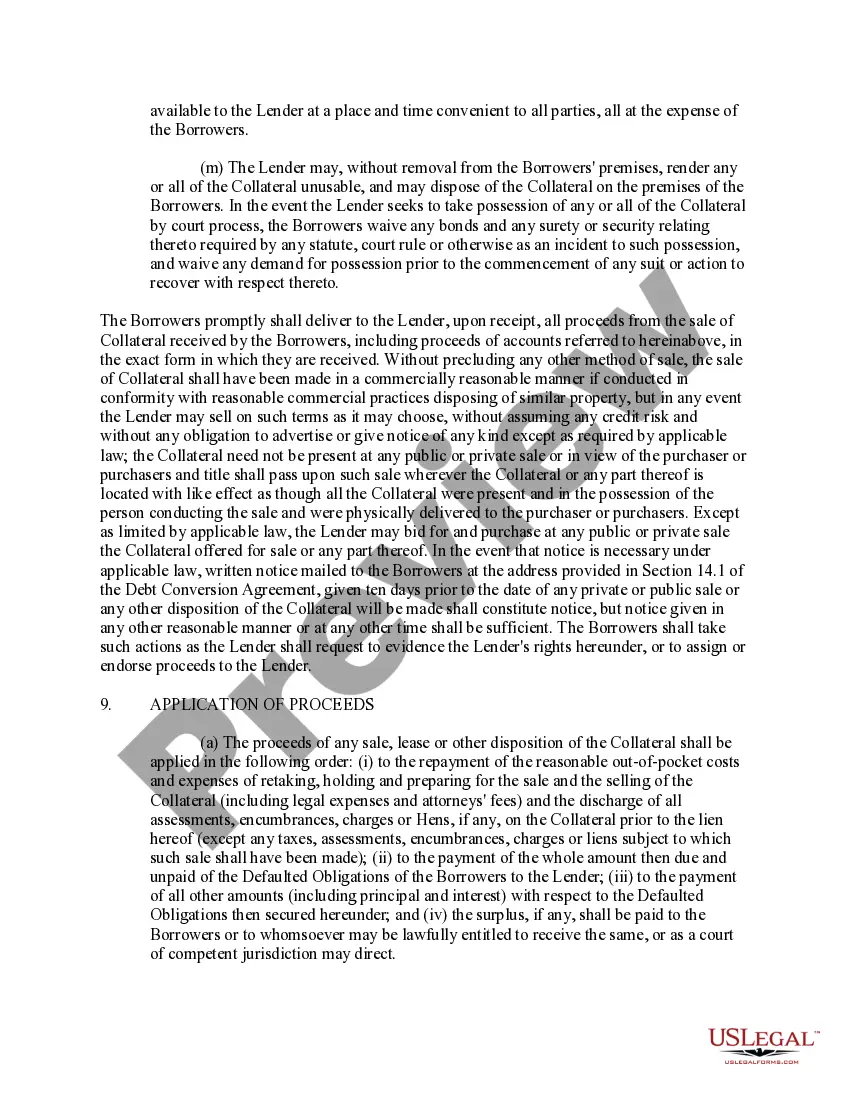
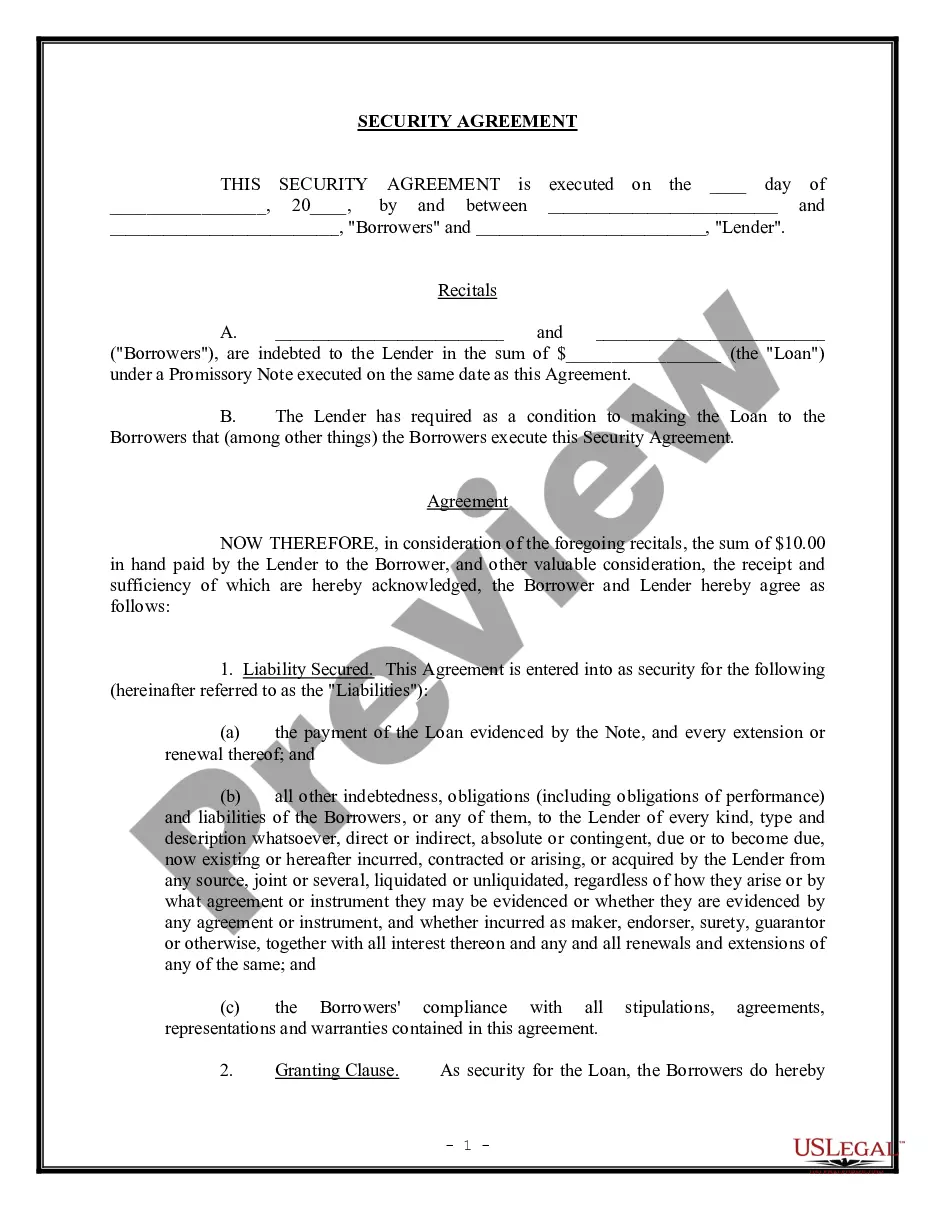
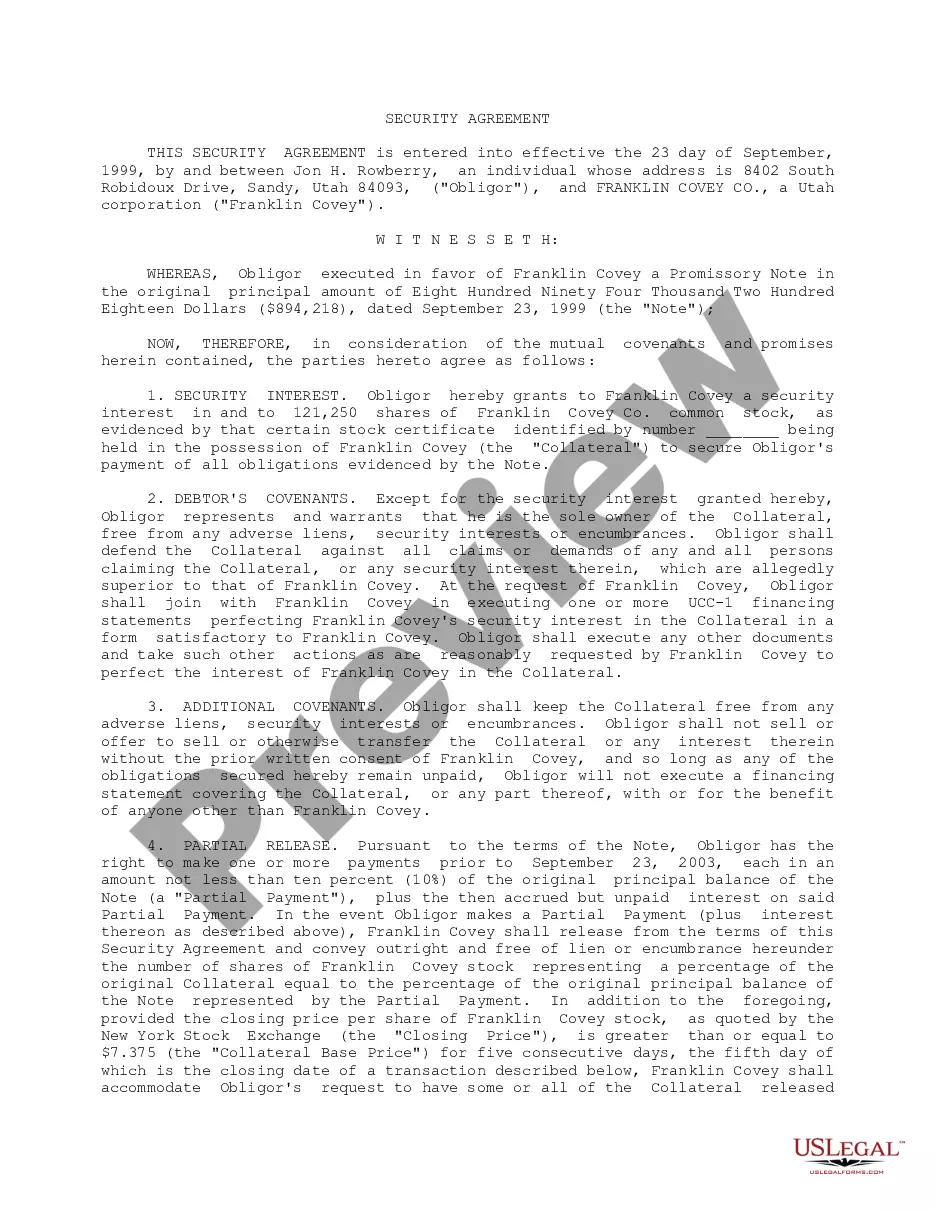
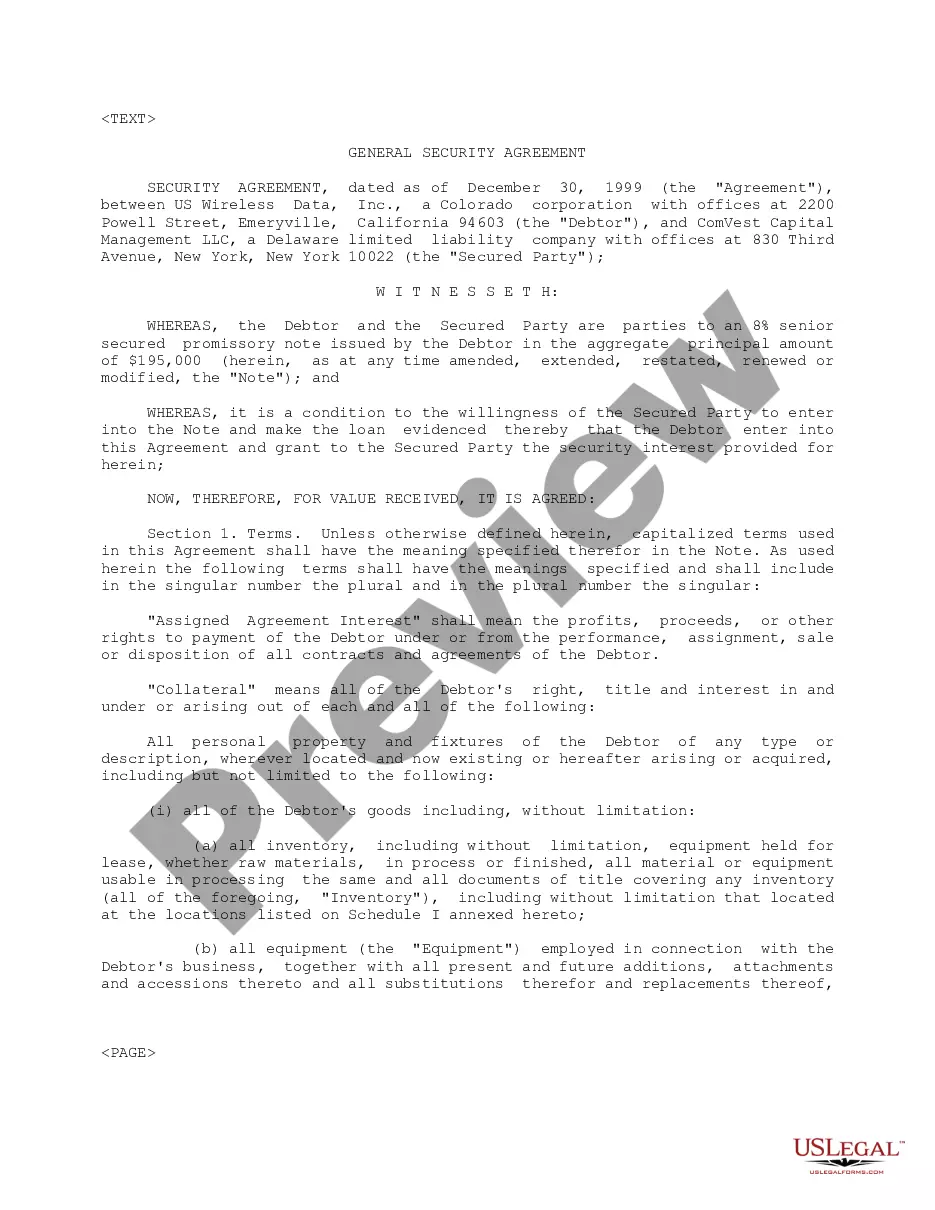
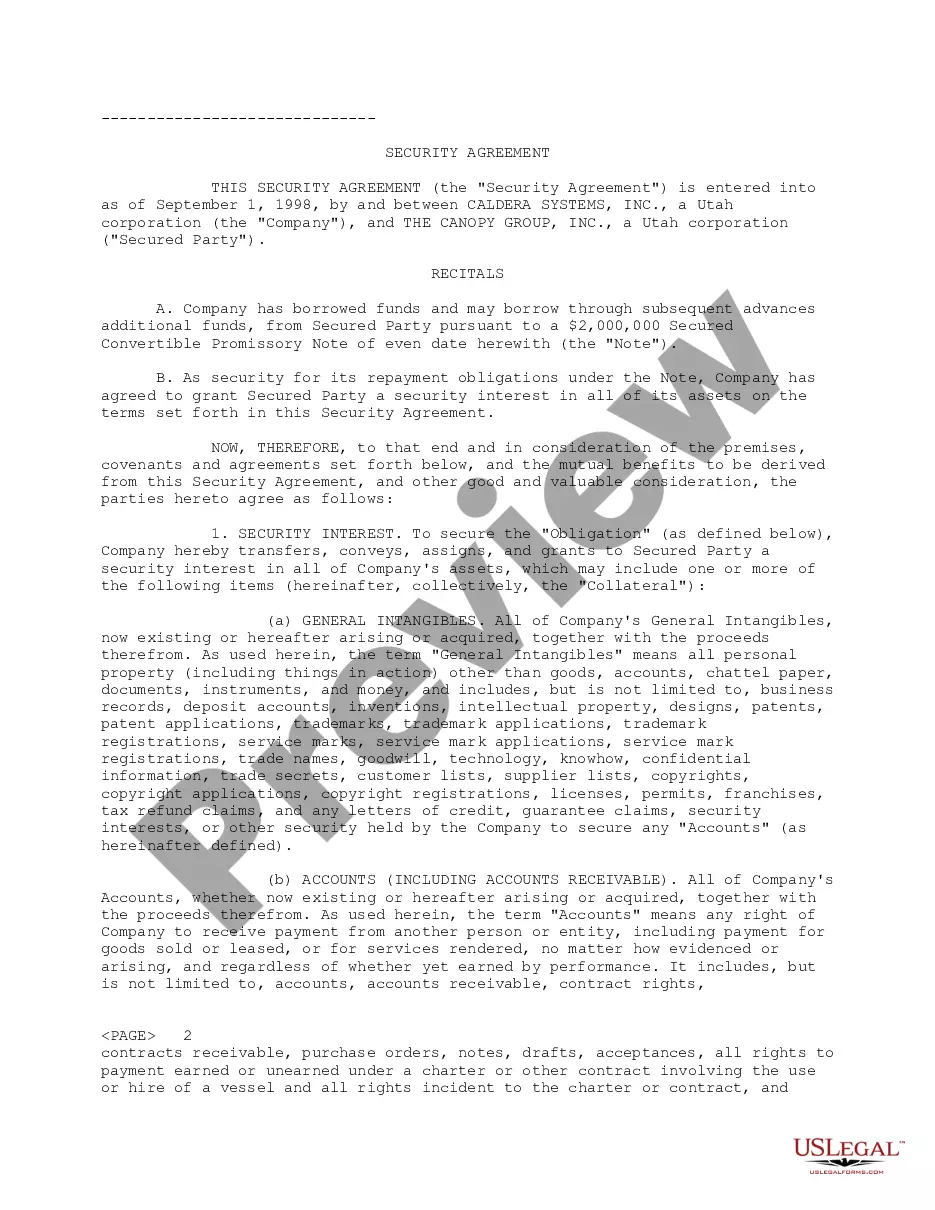
This Security Agreement is a legally binding document that allows a corporation to pledge all of its real and personal property as collateral to secure payment and performance obligations under various promissory notes. It differs from other agreements by specifically detailing the assets involved and the conditions under which they are pledged to a lender.
Key parts of this document
- Identification of the parties involved: the Borrowers (Everest Jennings International, Ltd. and Everest Jennings, Inc.) and the Lender (BIL (Far East Holdings) Ltd.)
- Definition of collateral, including all rights, title, and interest in both real and personal properties.
- Security interest clause stating that the Borrowers grant the Lender a security interest in collateral to secure obligations.
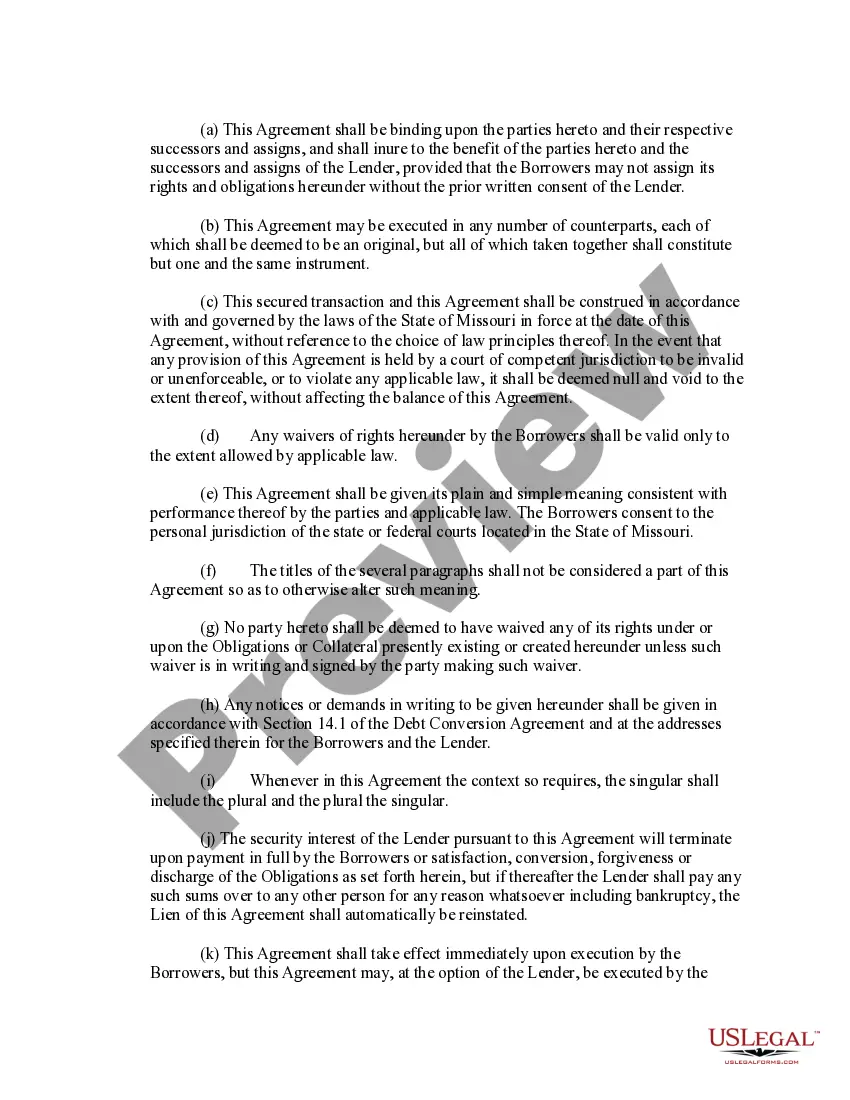
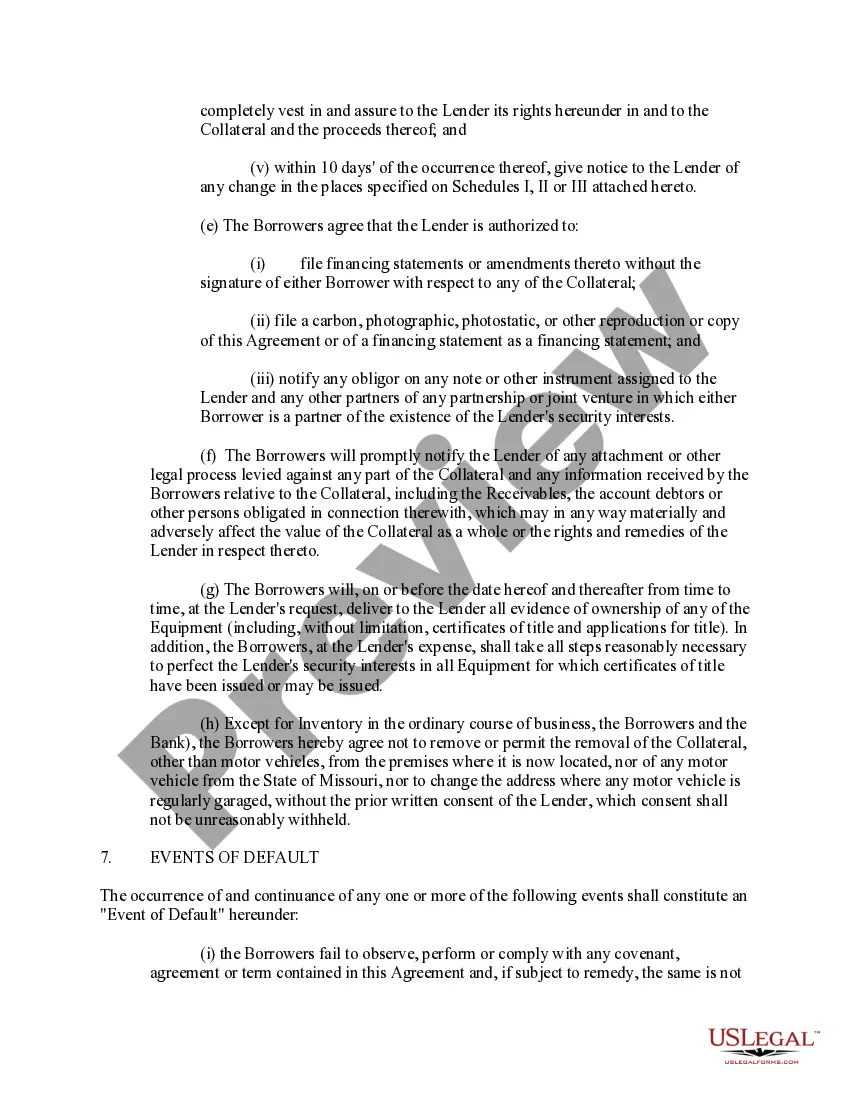
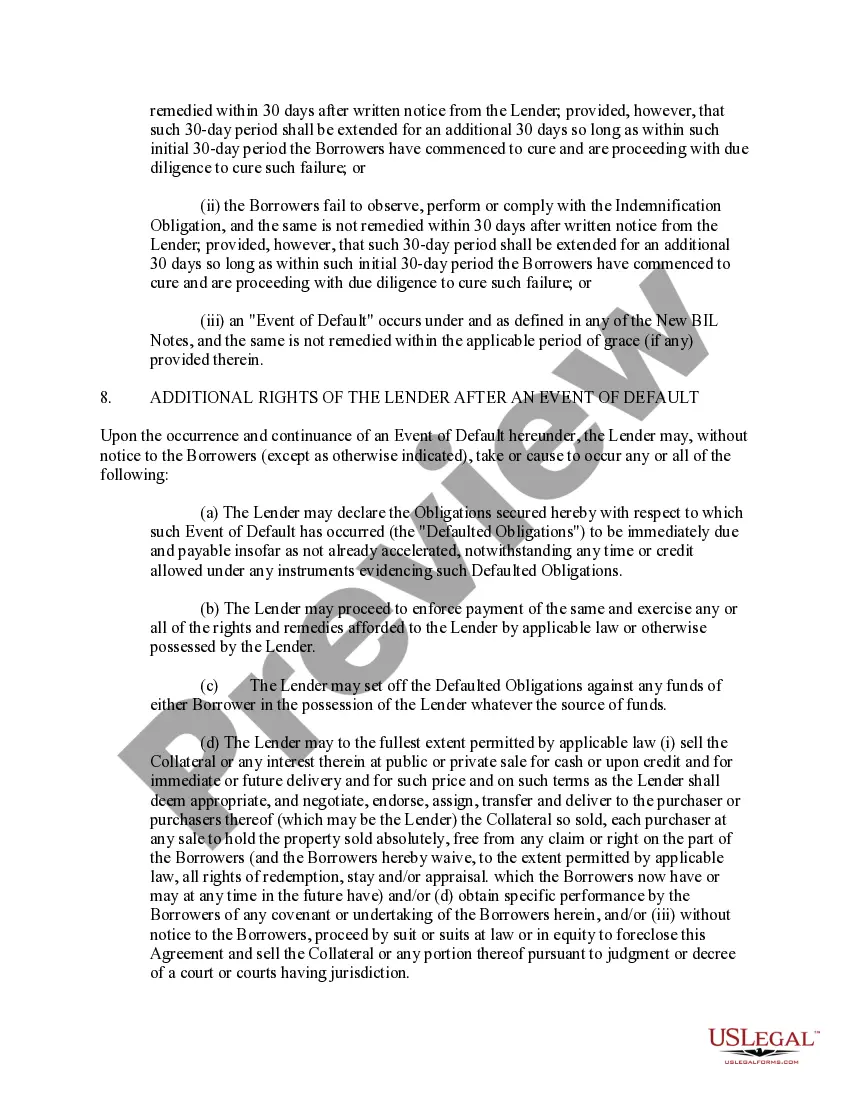
- Events of Default, detailing circumstances under which the Lender can take action.
- Application of proceeds from the sale of collateral after an event of default.

When to use this form
This form should be used when a corporation needs to secure a loan or financial obligation with its assets. It is particularly relevant for businesses seeking funding and willing to offer their property as collateral to ensure the lender's interests are protected in case of default.
Who can use this document
This form is intended for:
- Corporations looking for a loan who have tangible and intangible assets to pledge.
- Businesses entering into financial agreements with lenders that require collateral.
- Financial institutions or lenders requiring documented security for lending agreements.
Steps to complete this form
To complete this Security Agreement, follow these steps:
- Identify and enter the names and details of the Borrowers and Lender.
- Detail the collateral being pledged, specifying each asset type (inventory, equipment, etc.).
- Include a description of the borrower's obligations under relevant promissory notes.
- Sign and date the agreement, ensuring all parties do so to validate the document.
- Review the terms and conditions outlined, including events of default and remedies available to the Lender.
Is notarization required?
This form does not typically require notarization unless specified by local law. However, having a notarized document can provide additional validation of the agreement.
Get your form ready online
Our built-in tools help you complete, sign, share, and store your documents in one place.
Make edits, fill in missing information, and update formatting in US Legal Forms—just like you would in MS Word.
Download a copy, print it, send it by email, or mail it via USPS—whatever works best for your next step.
Sign and collect signatures with our SignNow integration. Send to multiple recipients, set reminders, and more. Go Premium to unlock E-Sign.
If this form requires notarization, complete it online through a secure video call—no need to meet a notary in person or wait for an appointment.
We protect your documents and personal data by following strict security and privacy standards.

Make edits, fill in missing information, and update formatting in US Legal Forms—just like you would in MS Word.

Download a copy, print it, send it by email, or mail it via USPS—whatever works best for your next step.

Sign and collect signatures with our SignNow integration. Send to multiple recipients, set reminders, and more. Go Premium to unlock E-Sign.

If this form requires notarization, complete it online through a secure video call—no need to meet a notary in person or wait for an appointment.

We protect your documents and personal data by following strict security and privacy standards.
Mistakes to watch out for
- Failing to accurately list all collateral assets, which can limit the enforceability of the agreement.
- Not including clear definitions for technical terms, which can lead to misunderstandings.
- Omitting required signatures from all parties involved, making the document void.
Benefits of using this form online
- Convenient online access to download legal forms quickly.
- Edit and customize the agreement to fit specific needs before printing.
- Guidance from licensed attorneys to ensure compliance with legal standards.
- The agreement legally binds the Borrowers to their obligations, making it enforceable in a court of law.
- It is important to understand the limitations as this agreement only pertains to the collateral specified.
Key takeaways
- This Security Agreement secures a corporation's loans with its assets.
- All parties must sign the agreement for it to be legally binding.
- Understand both state-specific rules and the implications of defaulting on obligations.
Looking for another form?
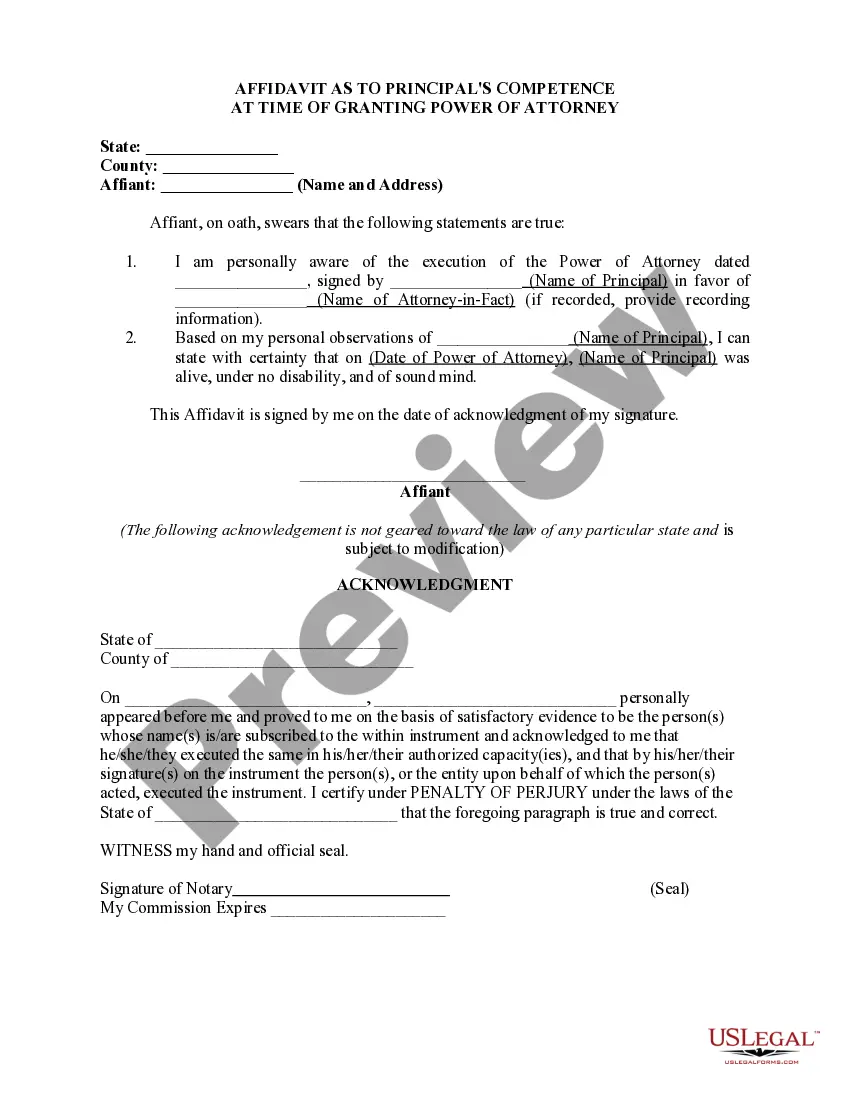
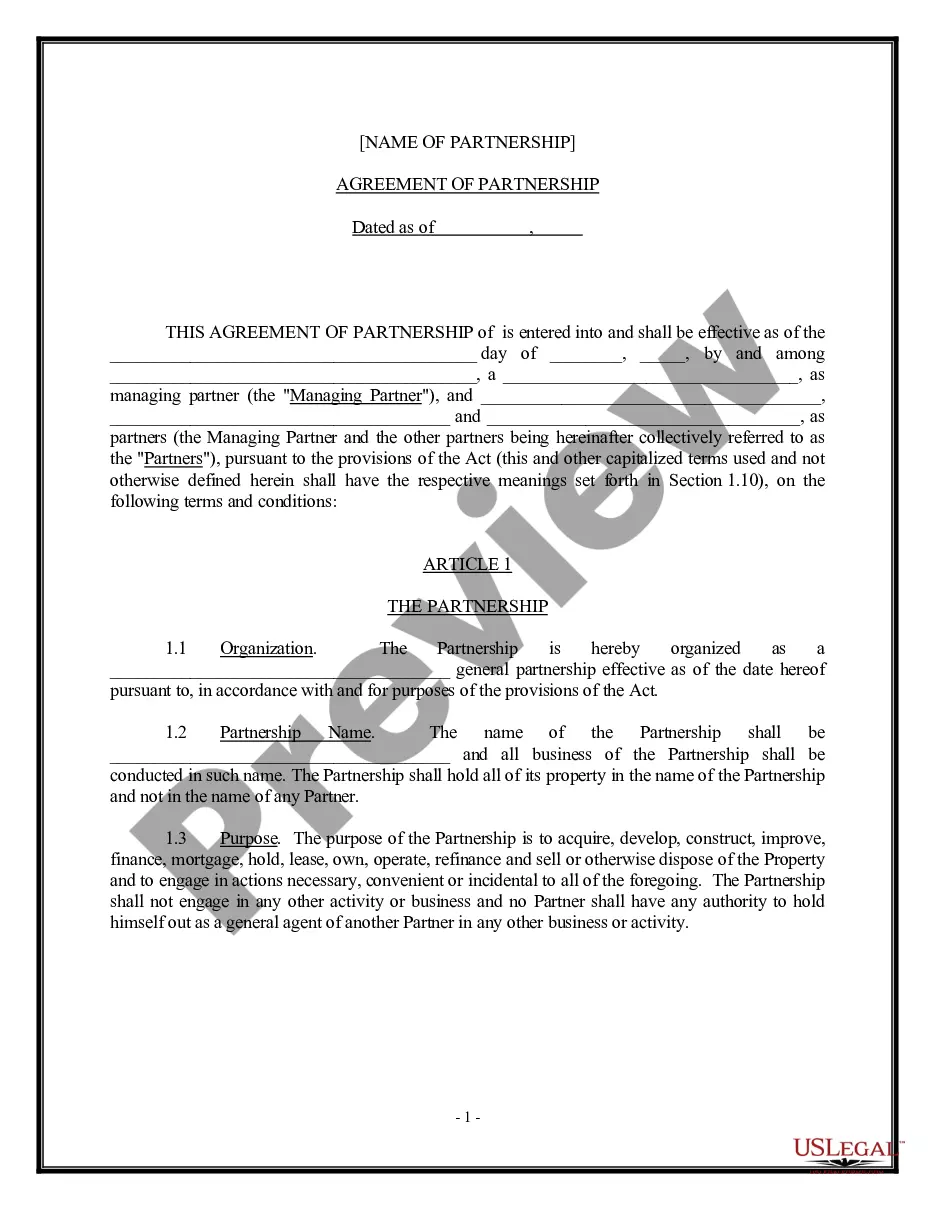
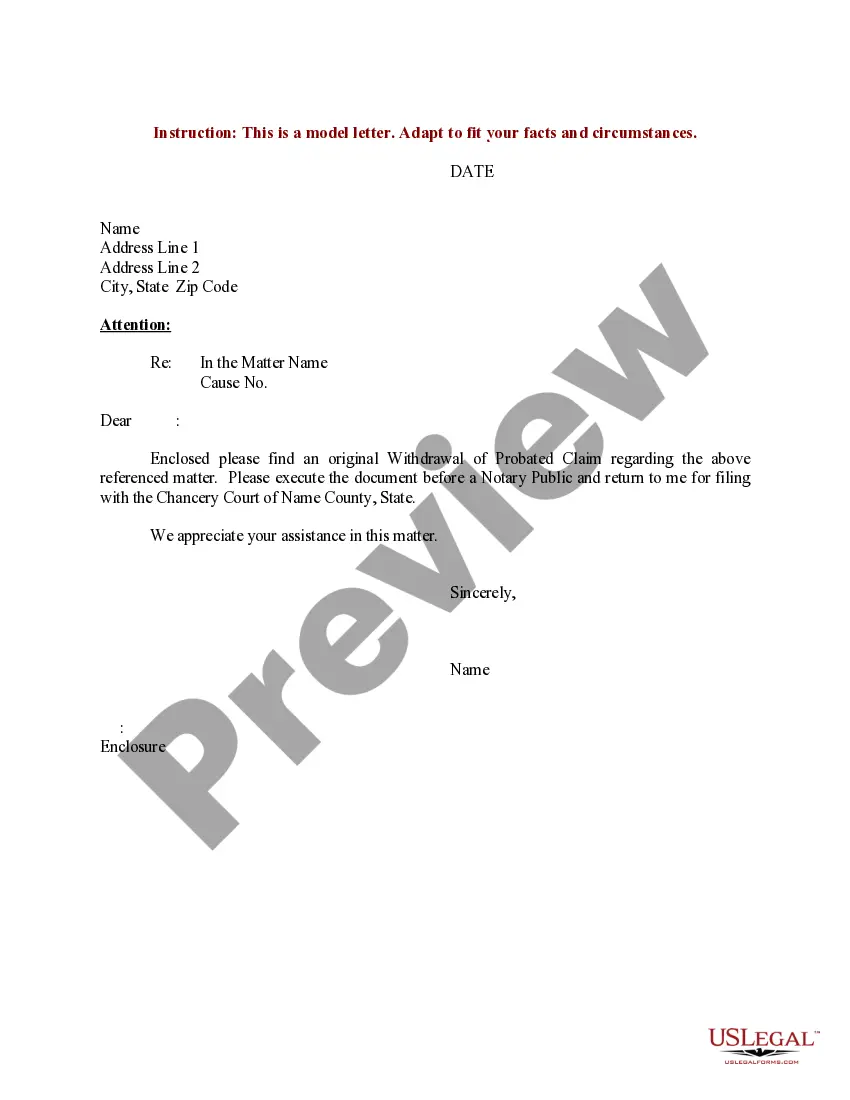
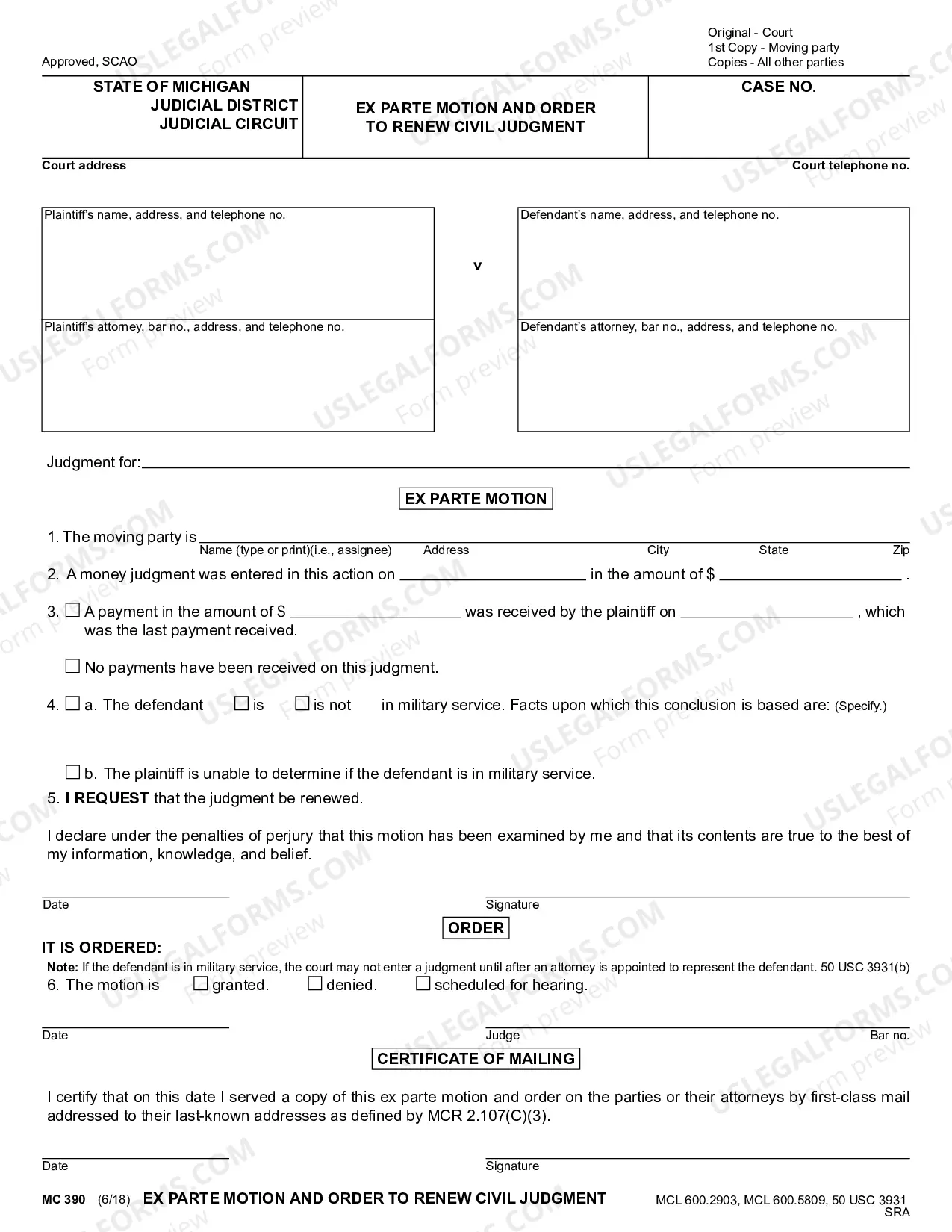
Form popularity
FAQ
KATHMANDU, Nepal Ang Rita Sherpa, who earned global fame by climbing the world's highest mountain, Mount Everest, 10 times without the use of supplemental oxygen, died on Monday at his daughter's house in Kathmandu. He was 72. His death was confirmed by his family and by Nepal's mountaineering associations.
Edmund Hillary (left) and Sherpa Tenzing Norgay reached the 29,035-foot summit of Everest on May 29, 1953, becoming the first people to stand atop the world's highest mountain.
Dead bodies are a common sight on top of Mount Everest. "I cannot believe what I saw up there," Everest filmmaker Elia Saikaly wrote on Instagram last week.In 2015, an avalanche roared through Everest, killing at least 19 people. When people die on Everest, it can be difficult to remove their bodies.
Exact data is unavailable, but government estimates suggest that more than 150 bodies, of the estimated 300 climbers who have died on Mount Everest, remain on the mountain, many deep in snow.
In Southpaw he played a boxer and took a whupping. In Baltasar Kormakur's Everest, which opens the 72nd Venice Festival on Wednesday, he shot scenes at temperatures that were way below zero. To re-create the Everest climb, nearly all the key cast went to the mountain, trudging up to near Base Camp.
Known as one of the most lethal years in Everest's history, 1996 saw the deaths of 15 climbers, eight of whom died on 10 May. On this day 33 climbers from three groups (Mountain Madness, a government-funded Taiwanese group and Adventure Consultants) were attempting to reach the summit.
Base camp exteriors were filmed on the backlot at Cinecitta Studios in Rome, where bright sunlight could be achieved to resemble the lighting at base camp. On 18 April 2014, while the second unit crew was shooting remaining scenes of the film at Camp II on Everest, an avalanche struck, killing 16 Sherpa guides.
Taking Bodies Off Everest At least 200 bodies are spread across the mountain on various routes. Some are buried in deep crevasses. Others now rest in different places from where they died, due to moving glaciers, and a few have been intentionally moved.
This has been one of the deadliest climbing seasons on Mount Everest. With at least 11 deaths, many expert climbers are criticizing the number and experience level of hikers allowed on the mountain. Loads of people died this year, everyone knows, and it's been a carnage.