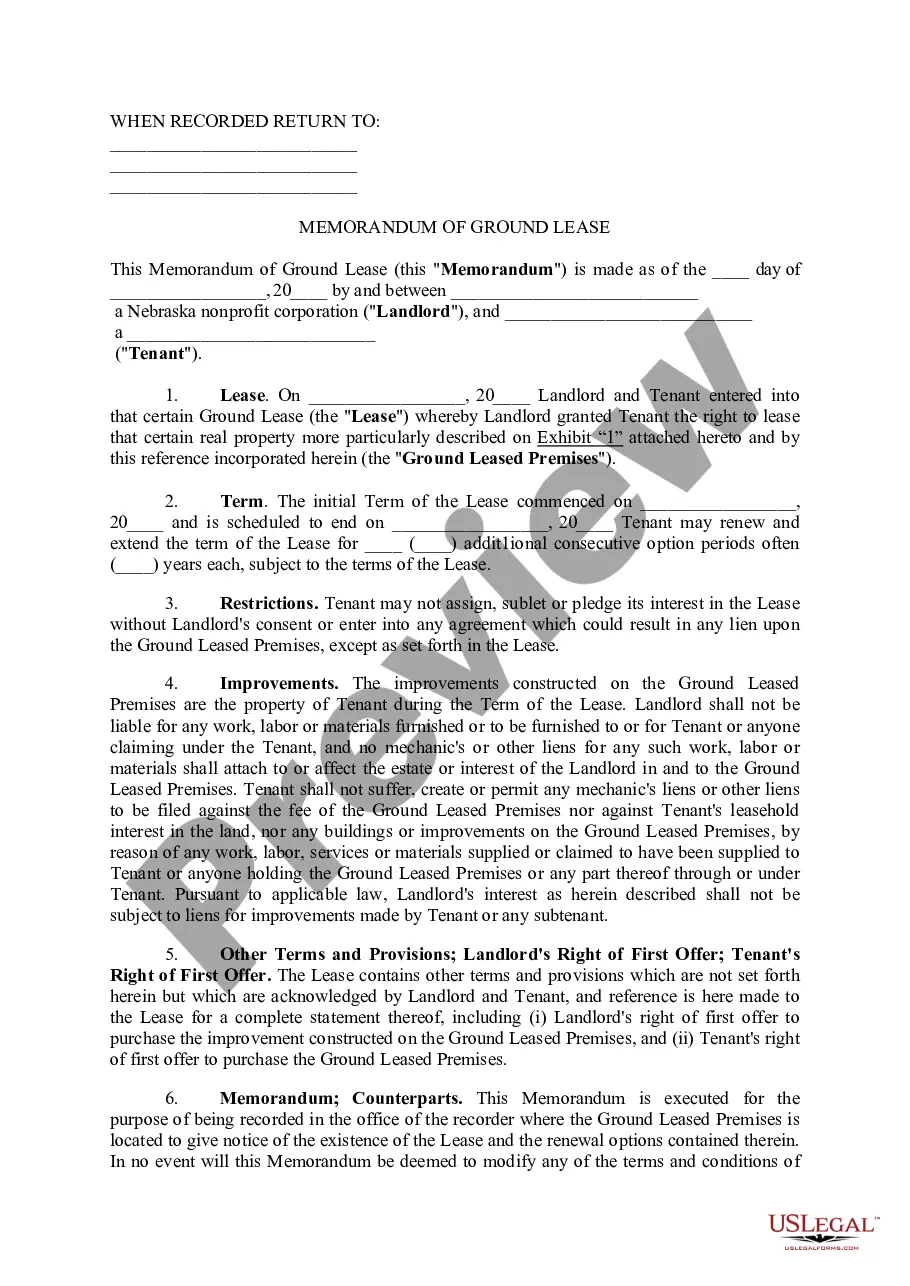
South Carolina Quitclaim Deed from Limited Liability Company to Limited Liability Company
Overview of this form
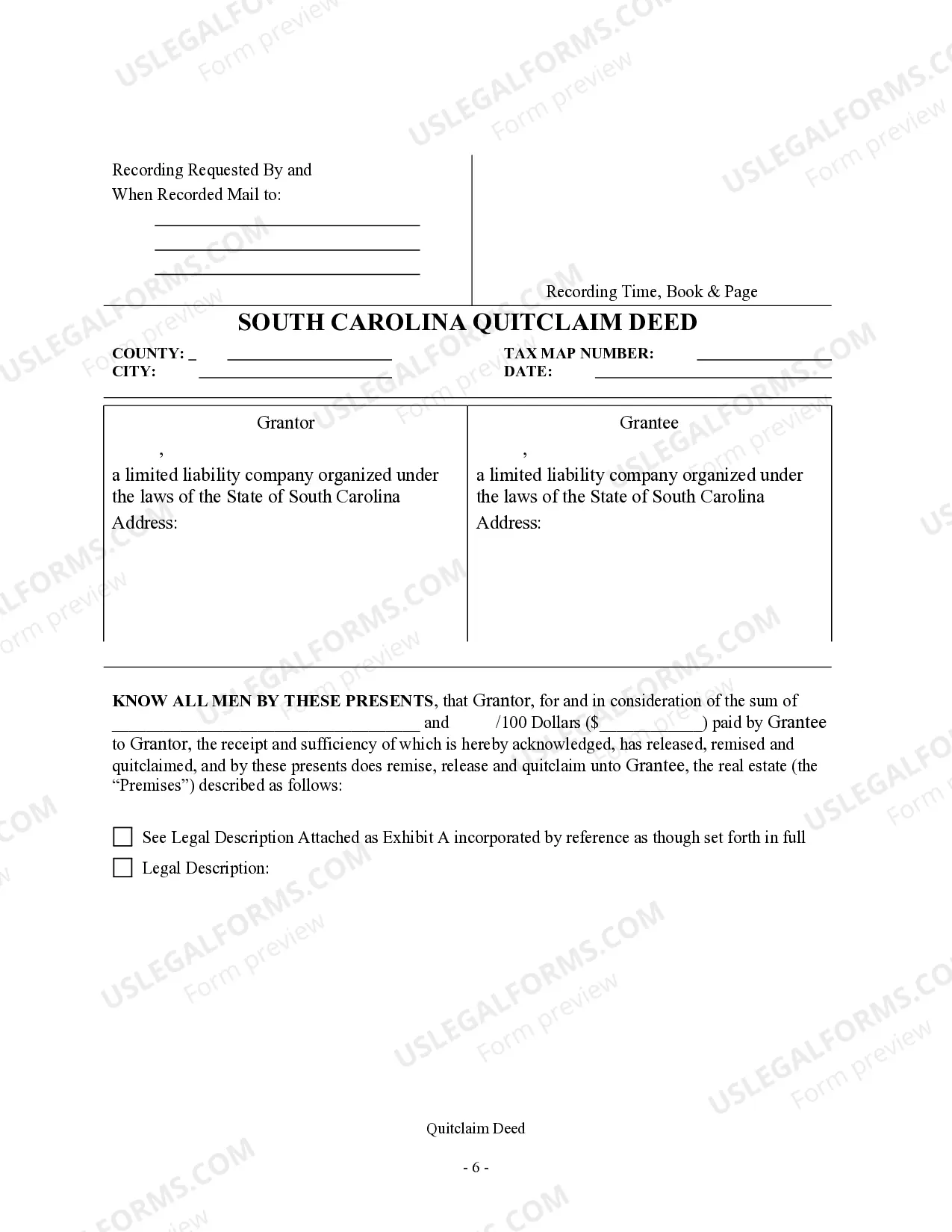
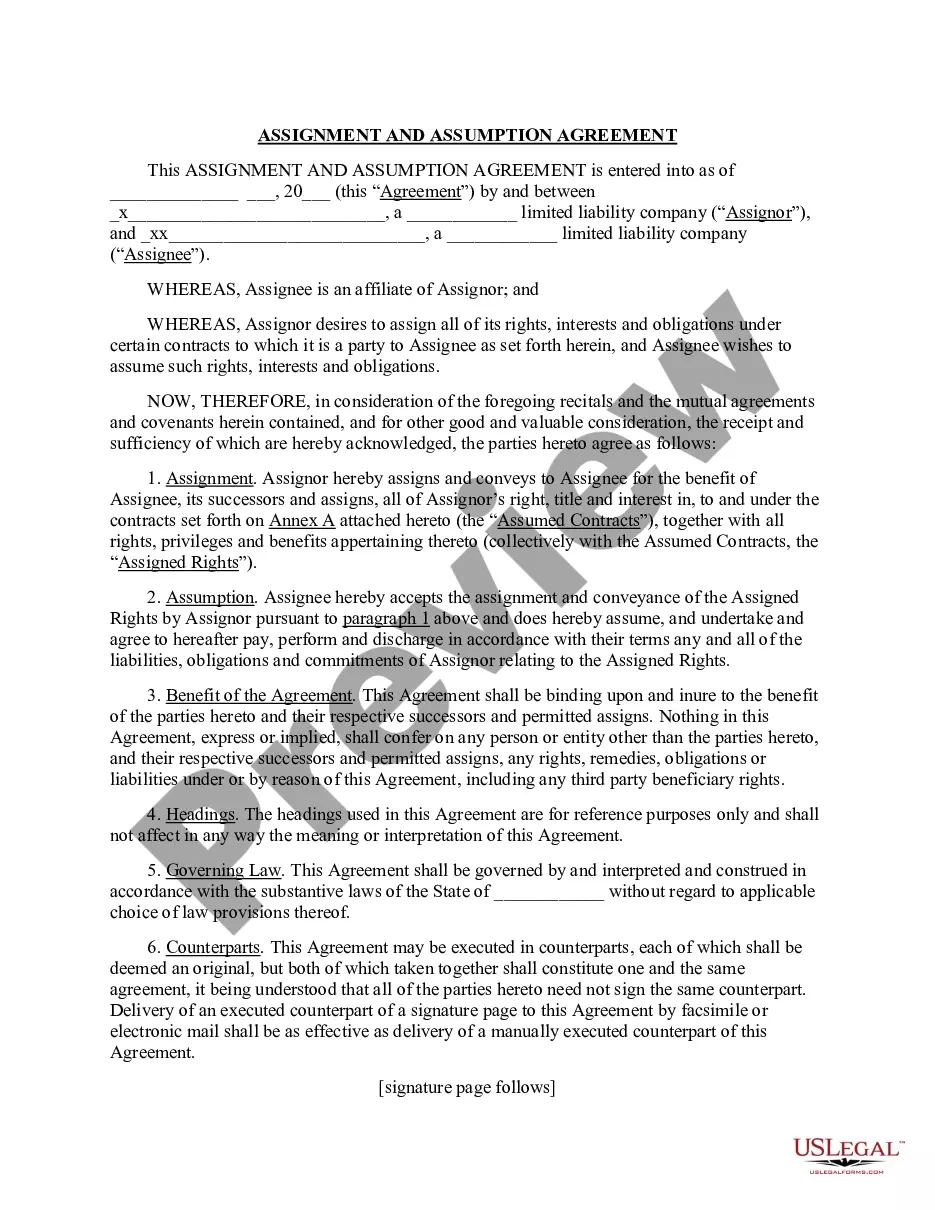
This Quitclaim Deed from Limited Liability Company to Limited Liability Company is a legal document that facilitates the transfer of property between two limited liability companies (LLCs). Unlike other deeds, a quitclaim deed does not guarantee that the title is clear; it simply transfers whatever interest the Grantor has in the property. This form is specifically designed to comply with state statutory laws, ensuring validity in the transfer process.
Form components explained
- Identification of Grantor and Grantee, including their legal names and entity type.
- A description of the property being transferred, including any legal descriptions necessary.
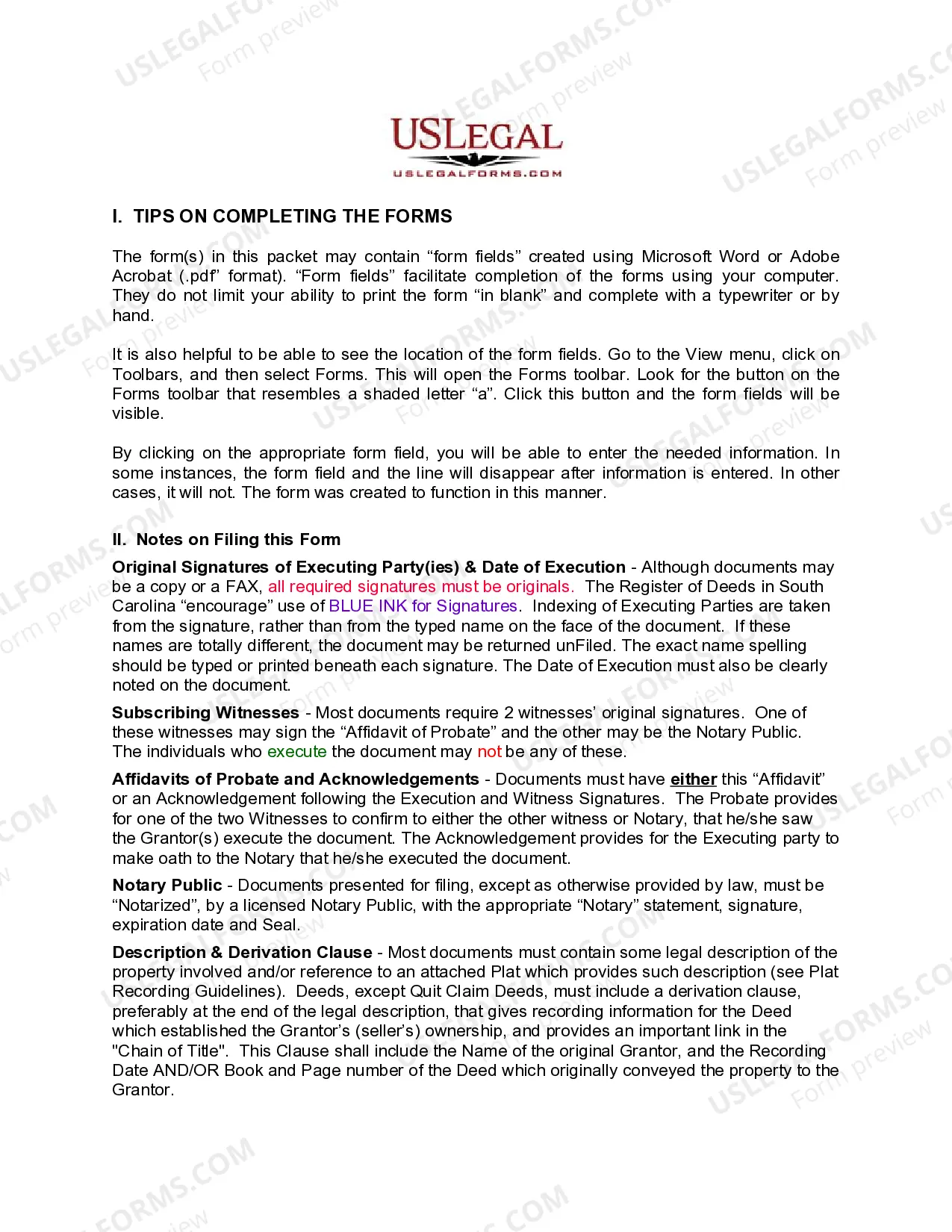
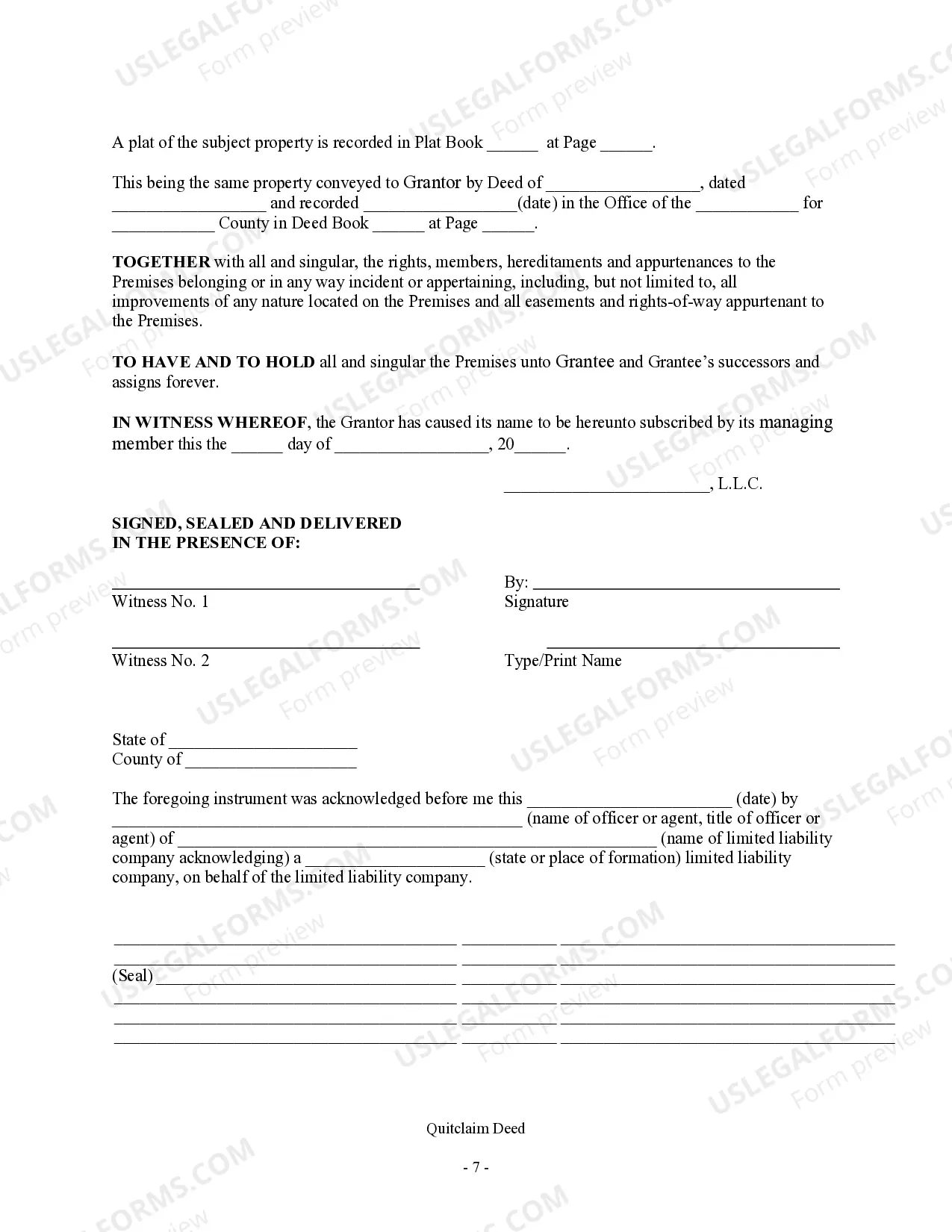
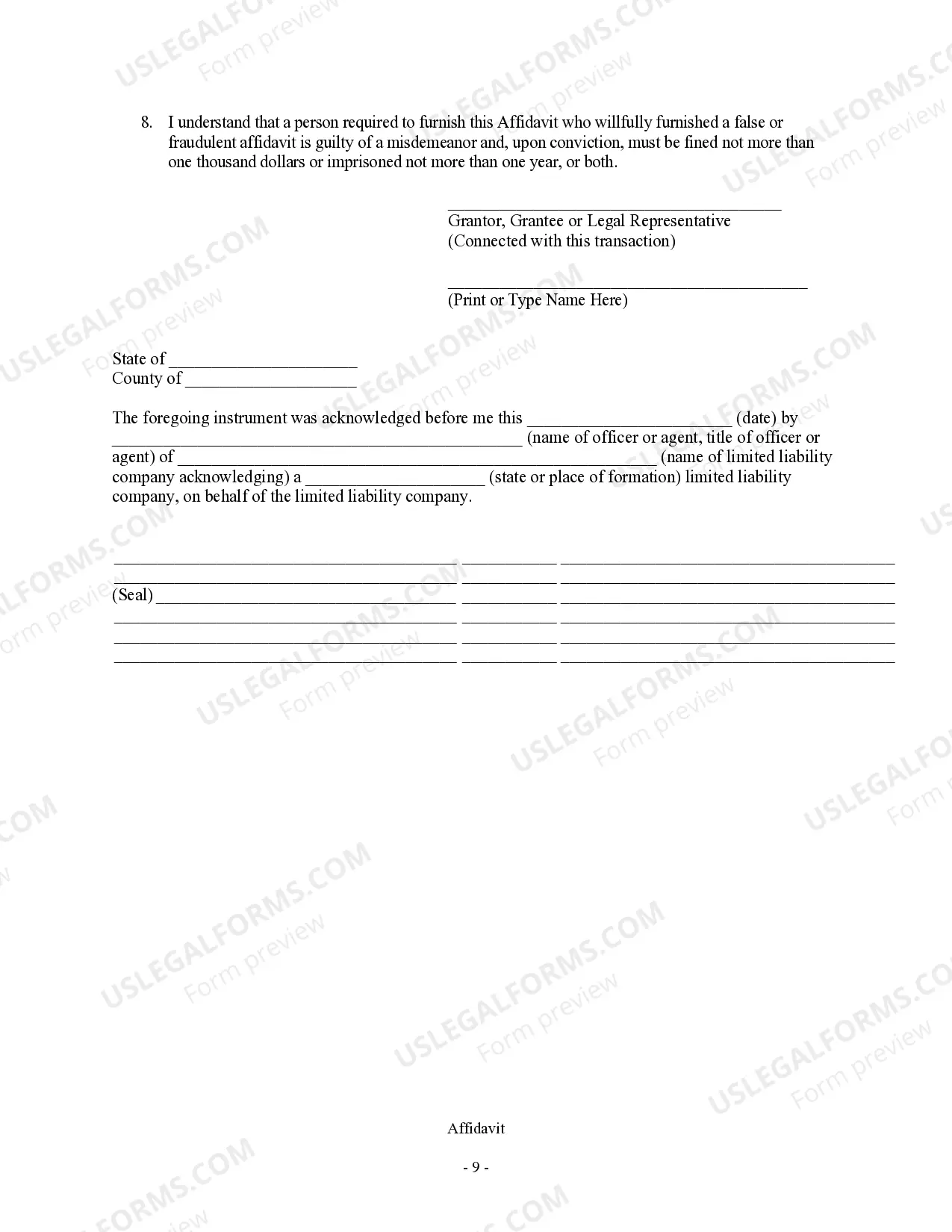
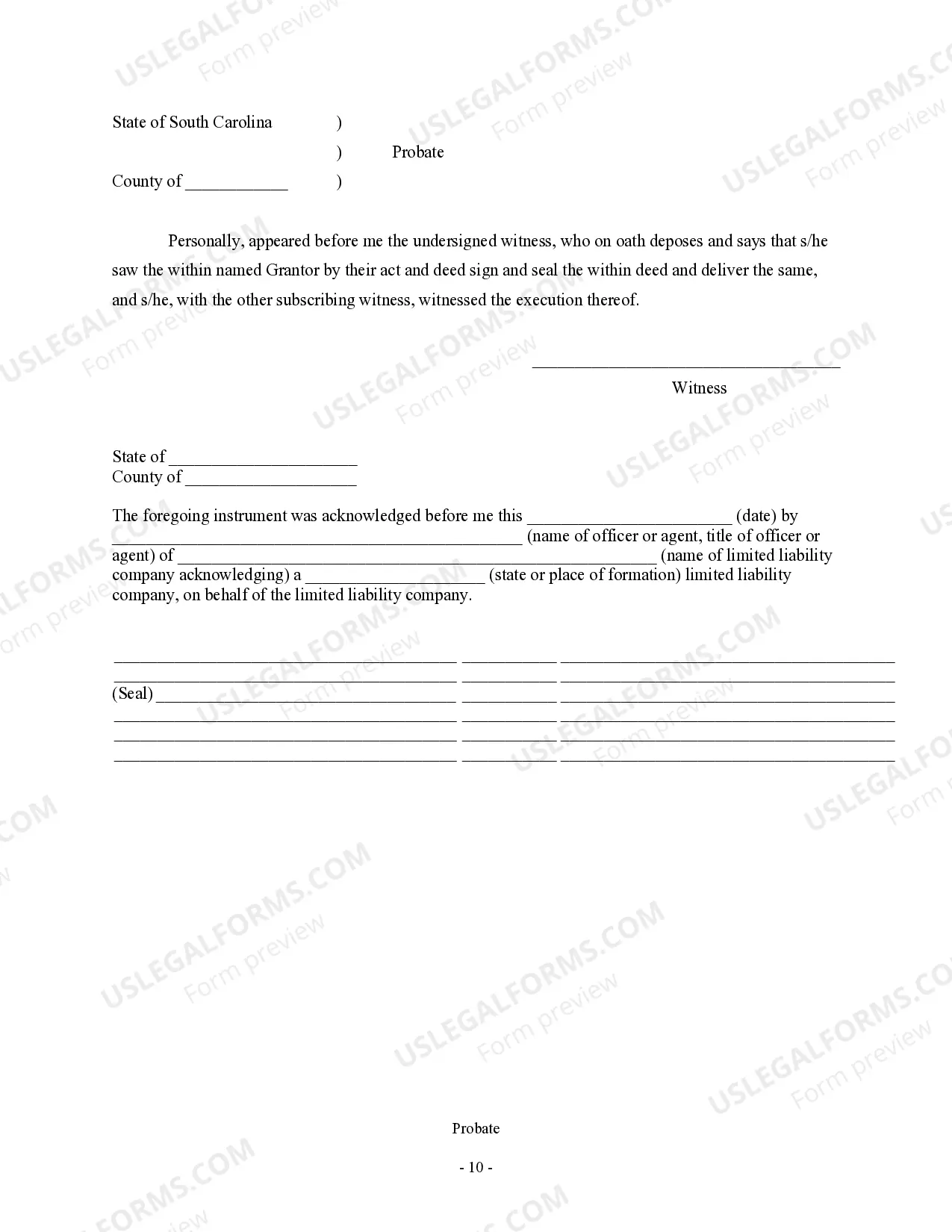
- Original signatures required from parties involved, with specified witnessing and notarization processes.
- Notarization requirement to validate the document.
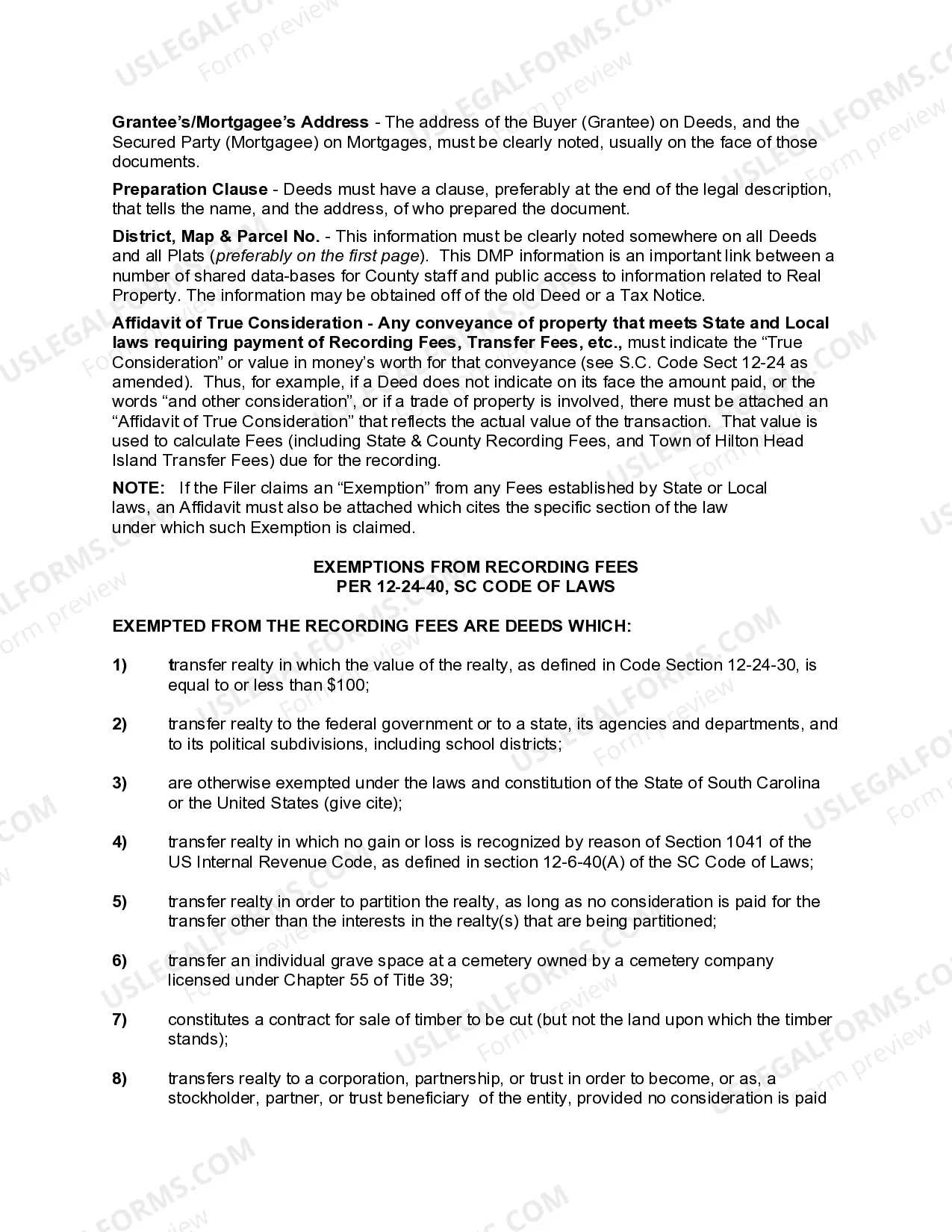
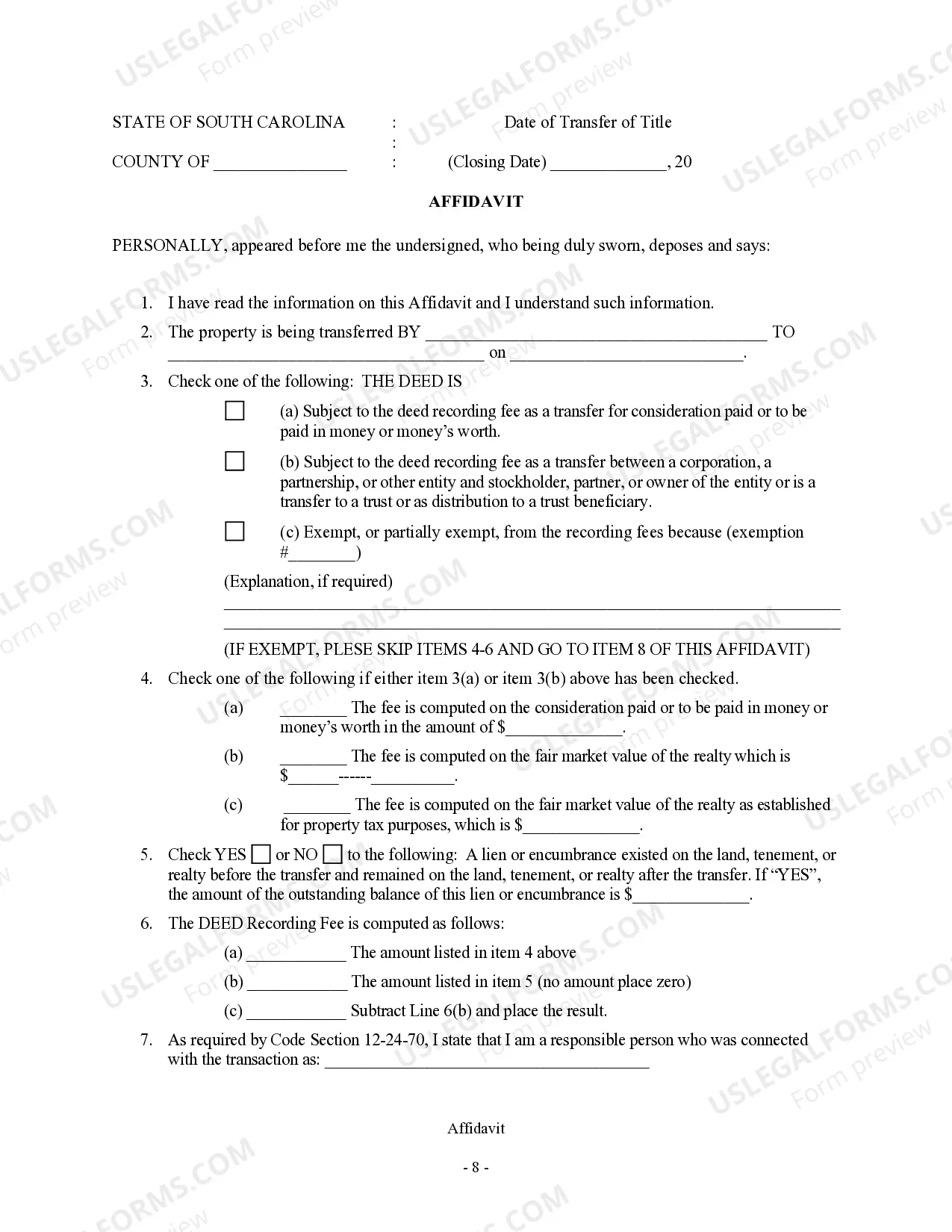
- Affidavit of True Consideration, detailing the value of the transaction.
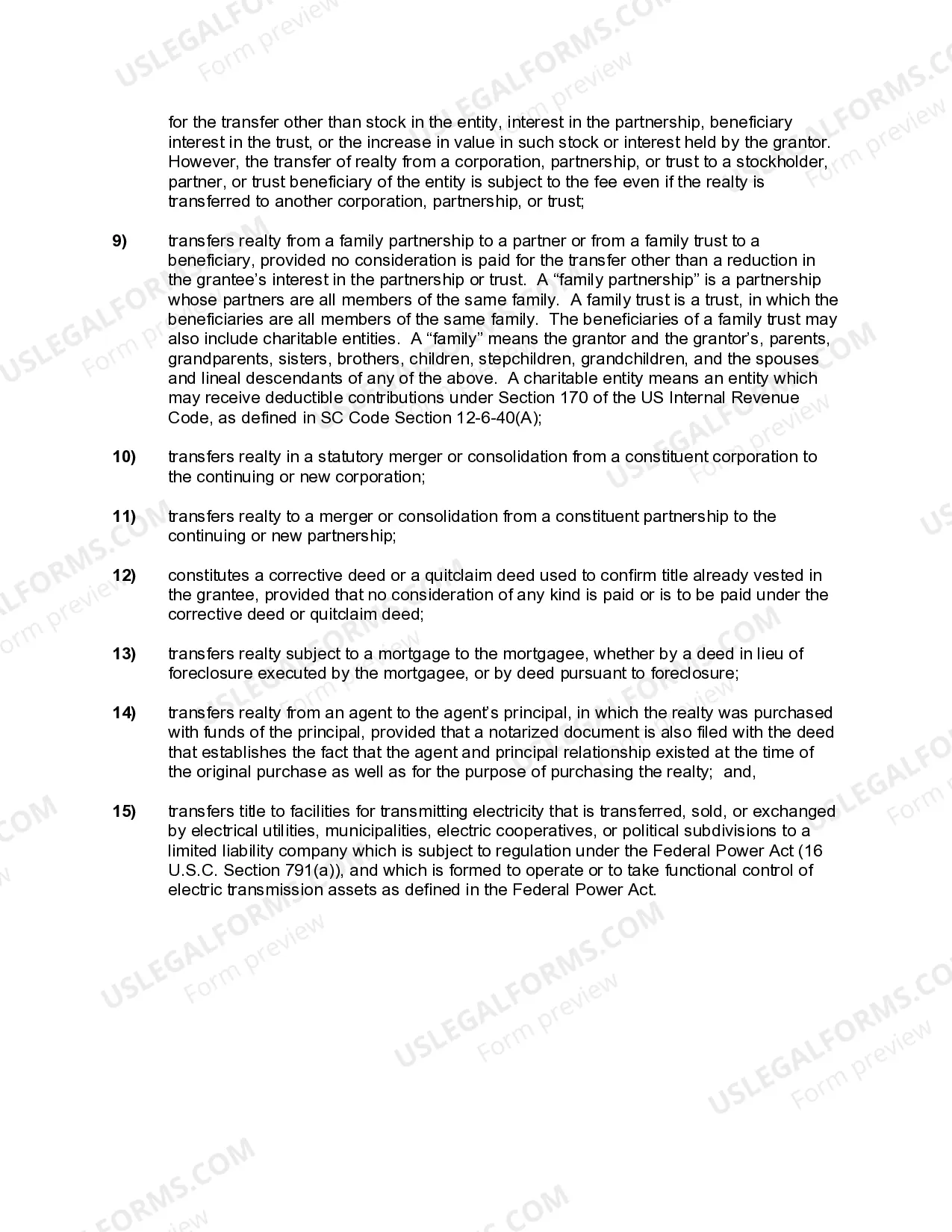
- Clauses for exemptions from recording fees, if applicable.



When this form is needed
This form should be used when a limited liability company wishes to transfer property ownership to another limited liability company without specifying warranties. Common situations include intra-company transfers, restructuring of property holdings, or simplifying ownership among related business entities.
Intended users of this form
- Limited liability companies that own property and are transferring it to another LLC.
- Business owners looking to streamline their property ownership structure.
- Legal representatives of LLCs handling property transfers on behalf of their clients.
Steps to complete this form
- Identify the Grantor and Grantee correctly, using their full legal names.
- Provide a detailed legal description of the property to be transferred.
- Ensure all parties sign the document in the presence of required witnesses and a Notary Public.
- Complete the Affidavit of True Consideration, indicating the value of the transaction.
- Review state-specific filing requirements to ensure compliance.
Is notarization required?
This form must be notarized to be legally valid. US Legal Forms provides secure online notarization powered by Notarize, allowing you to complete the process through a verified video call.
Get your form ready online
Our built-in tools help you complete, sign, share, and store your documents in one place.
Make edits, fill in missing information, and update formatting in US Legal Forms—just like you would in MS Word.
Download a copy, print it, send it by email, or mail it via USPS—whatever works best for your next step.
Sign and collect signatures with our SignNow integration. Send to multiple recipients, set reminders, and more. Go Premium to unlock E-Sign.
If this form requires notarization, complete it online through a secure video call—no need to meet a notary in person or wait for an appointment.
We protect your documents and personal data by following strict security and privacy standards.

Make edits, fill in missing information, and update formatting in US Legal Forms—just like you would in MS Word.

Download a copy, print it, send it by email, or mail it via USPS—whatever works best for your next step.

Sign and collect signatures with our SignNow integration. Send to multiple recipients, set reminders, and more. Go Premium to unlock E-Sign.

If this form requires notarization, complete it online through a secure video call—no need to meet a notary in person or wait for an appointment.

We protect your documents and personal data by following strict security and privacy standards.
Avoid these common issues
- Failing to include a proper legal description of the property.
- Not obtaining original signatures from all parties involved.
- Overlooking the requirement for notarization or appropriate witnessing.
- Incorrectly filling out the Affidavit of True Consideration.
Benefits of completing this form online
- Convenience of accessing and filling out the form from anywhere.
- Ability to edit and customize the document as needed.
- Ensured reliability and compliance with state laws.
Main things to remember
- This Quitclaim Deed is specifically designed for property transactions between LLCs.
- Accuracy in filling out the form ensures a smoother transfer process.
- Always verify local requirements to avoid common pitfalls during execution.
Looking for another form?
Form popularity
FAQ
Laws § 27-7-20. Recording All forms must be filed at the County Recorders of Deeds. Signing (A§ 30-5-30) A quit claim deed in South Carolina is required to be authorized by a notary public and two (2) subscribing witnesses.
The grantor must sign the quitclaim deed in the presence of two credible witnesses. The quitclaim deed must also be subscribed by the two witnesses. The address of the grantee is needed in order to record this type of real estate document.
Since LLCs are more like partnerships, you cannot force partnerships between people without their agreement. You can only transfer an LLC's ownership interests if all the other LLC owners agree, and even then, only if the state law allows for it.
A Quitclaim Deed must be notarized by a notary public or attorney in order to be valid.Consideration in a Quitclaim Deed is what the Grantee will pay to the Grantor for the interest in the property.
In South Carolina, the grantor must sign the deed in front of two witnesses and in the presence of an individual authorized by the state to administer an oath. Record the completed deed at the local county Recorder's office, along with an Affidavit of True Consideration (S.C. Code Ann.
But you might be wondering if an owner can transfer a deed to another person without a real estate lawyer. The answer is yes. Parties to a transaction are always free to prepare their own deeds.A quitclaim deed, for example, is far simpler than a warranty deed.
What Should I Know About Quitclaim Deeds in South Carolina? You are buying the least amount of protection of any deed. A quitclaim deed conveys whatever interest the grantor currently has in the property if any. The grantor only remises, releases and quitclaims his or her interest in the property to the grantee.
How to Quitclaim Deed to LLC. A quitclaim deed to LLC is actually a very simple process. You will need a deed form and a copy of the existing deed to make sure you identify titles properly and get the legal description of the property.
Step 1: Form an LLC or Corporation. You can't transfer your real estate property, or any other personal property, into your LLC or corporation until you've actually formed a new legal entity. Step 2: Complete a Quitclaim Deed. Step 3: Record Your Quitclaim Deed.