Colorado Application for Sublease
What is this form?
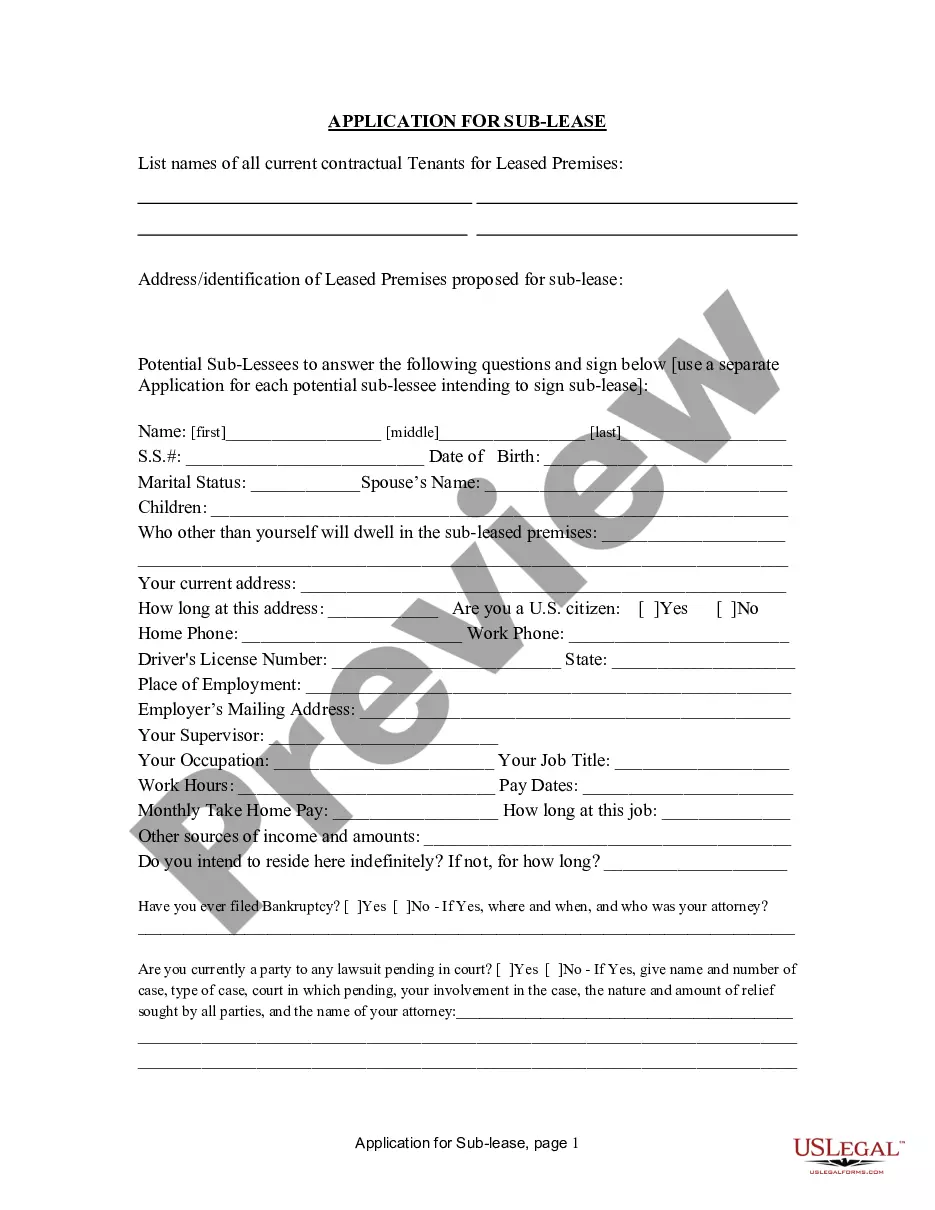
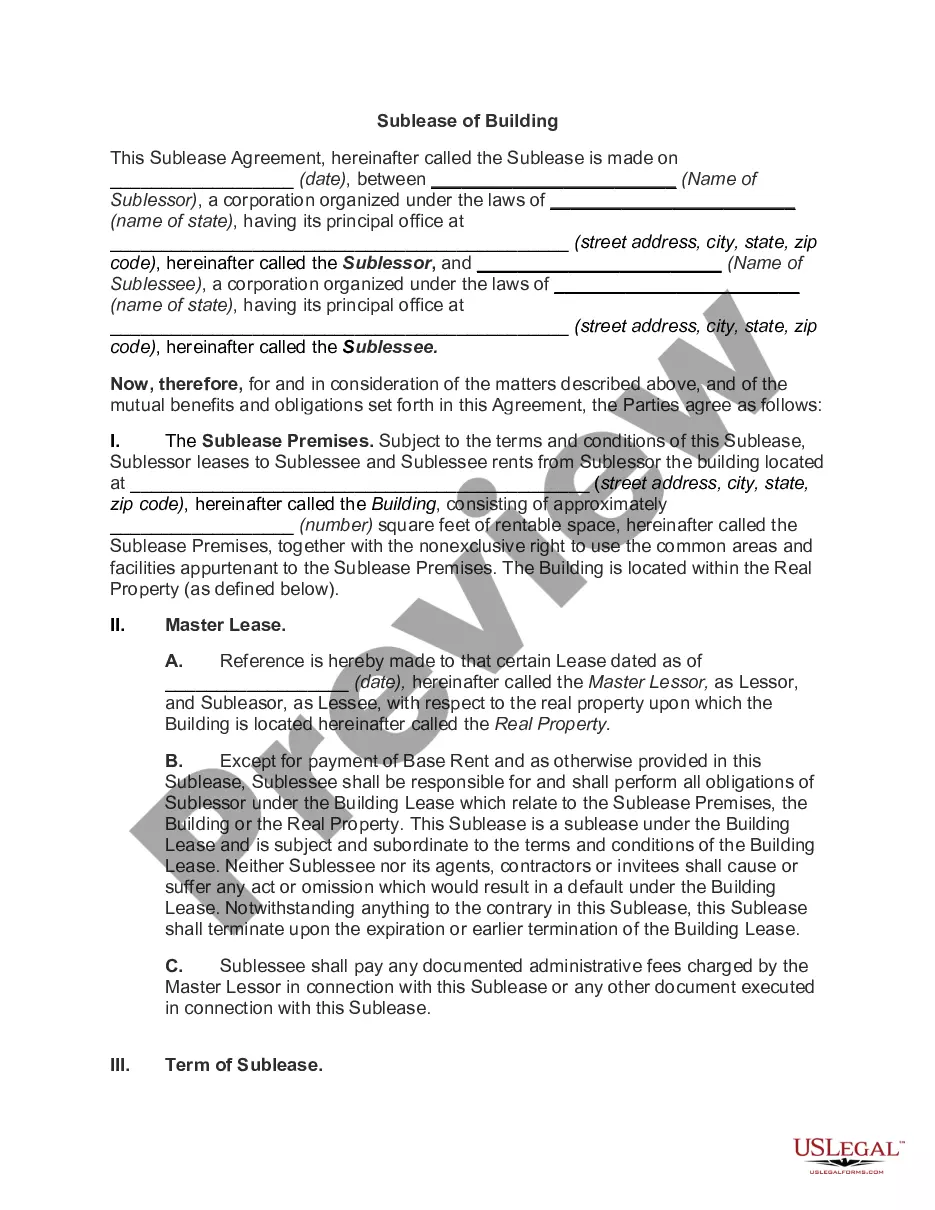
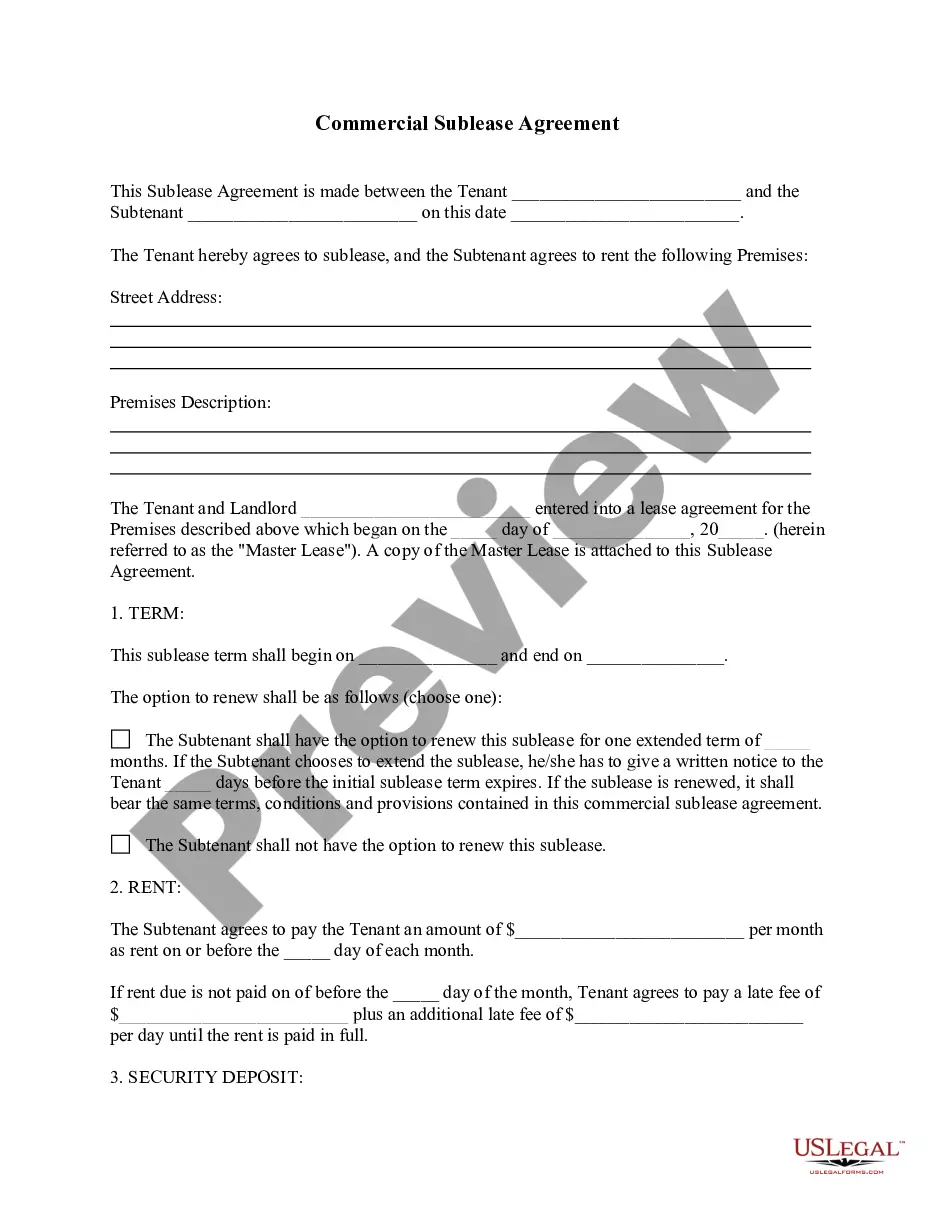
The Application for Sublease is a legal document that allows a potential sub-tenant to apply to a landlord for permission to sublet a rental property. This form streamlines the approval process by providing essential information about the applicant, which aids the landlord's decision-making regarding the sublease. Unlike other rental agreements, this specific application focuses on the sub-tenant's qualifications and their intent to abide by the original lease terms.
Key components of this form
- Personal information of the sub-tenant, including name, address, and marital status.
- Details on occupation, including employer information and income verification.
- Confirmation of U.S. citizenship and bankruptcy history.
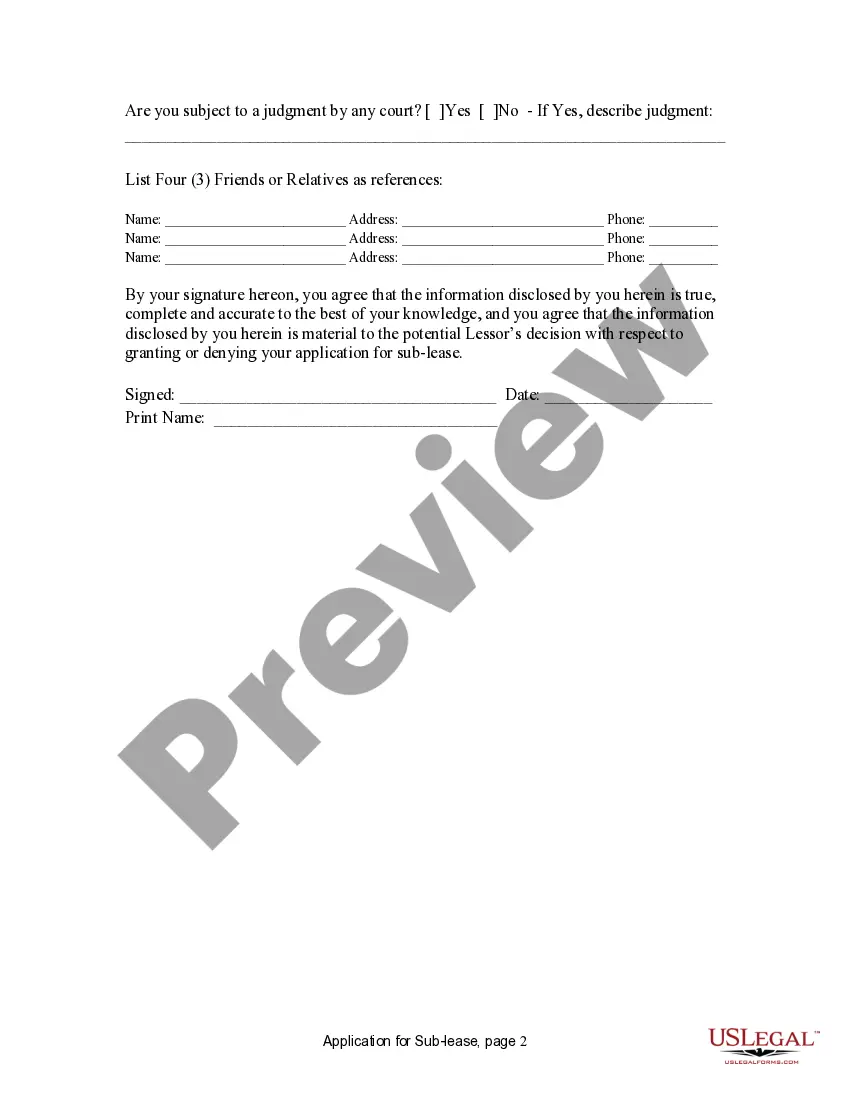
- References from friends or relatives.
- A declaration that the information provided is true and accurate.
When to use this document
This form is applicable when a tenant wishes to sublet their rental property and must seek approval from the landlord. It is especially useful in scenarios where the original lease permits subleasing only with the landlord's consent. Utilizing this application helps to establish a formal record of the sub-tenant's qualifications and intentions.
Who can use this document
- Current tenants looking to sublet their rental property.
- Potential sub-tenants requiring landlord approval.
- Landlords seeking to evaluate prospective sub-tenants.
How to prepare this document
- Provide your personal details, including marital status and current address.
- Fill in your employment information, including your employer's name and contact details.
- Indicate your income sources and confirm your U.S. citizenship status.
- List references, including three friends or relatives with their contact information.
- Sign and date the application, confirming the accuracy of the information provided.
Does this document require notarization?
This form does not typically require notarization to be legally valid. However, some jurisdictions or document types may still require it. US Legal Forms provides secure online notarization powered by Notarize, available 24/7 for added convenience.
Get your form ready online
Our built-in tools help you complete, sign, share, and store your documents in one place.
Make edits, fill in missing information, and update formatting in US Legal Forms—just like you would in MS Word.
Download a copy, print it, send it by email, or mail it via USPS—whatever works best for your next step.
Sign and collect signatures with our SignNow integration. Send to multiple recipients, set reminders, and more. Go Premium to unlock E-Sign.
If this form requires notarization, complete it online through a secure video call—no need to meet a notary in person or wait for an appointment.
We protect your documents and personal data by following strict security and privacy standards.

Make edits, fill in missing information, and update formatting in US Legal Forms—just like you would in MS Word.

Download a copy, print it, send it by email, or mail it via USPS—whatever works best for your next step.

Sign and collect signatures with our SignNow integration. Send to multiple recipients, set reminders, and more. Go Premium to unlock E-Sign.

If this form requires notarization, complete it online through a secure video call—no need to meet a notary in person or wait for an appointment.

We protect your documents and personal data by following strict security and privacy standards.
Avoid these common issues
- Failing to provide complete and accurate information, which may lead to application denial.
- Not including sufficient references or failing to update reference contact details.
- Overlooking to sign or date the application, rendering it invalid.
Why use this form online
- Convenience of downloading and completing the form at your own pace.
- Editability allows for easy updates to ensure all information is current.
- Reliable legal templates drafted by licensed attorneys, ensuring legal compliance.
Looking for another form?
Form popularity
FAQ
In Colorado, subleasing typically requires your landlord's approval, so begin by reviewing your rental agreement. After gaining consent, prepare a sublease contract that outlines all terms and conditions. It's advisable to ensure that the subtenant understands their responsibilities. For those unfamiliar with the process, using the Colorado Application for Sublease from USLegalForms can provide clarity and structure.
To secure a sublease quickly, you can start by advertising your property on popular rental platforms and community boards. Utilizing social media can also expedite the outreach to potential tenants. Additionally, preparing a solid Colorado Application for Sublease can help streamline the decision-making process for interested parties, making it more appealing for them to commit.
The subleasing process begins with obtaining your landlord's consent, followed by drafting a sublease agreement. Once approved, you can find a suitable subtenant and formalize the arrangements. It's important to outline the terms clearly to protect both parties involved. Using the Colorado Application for Sublease can simplify this process immensely.
To apply for a sublease, you should first check your lease agreement for any subletting provisions. After that, you can create a sublease agreement and present it to your landlord for approval. In most cases, you’ll need to provide the subtenant's information, as well as complete any necessary forms. For an efficient process, consider using the Colorado Application for Sublease through platforms like USLegalForms.
The deposit for a sublease typically varies depending on the landlord's policies and the property's value. Generally, the deposit can range from one month's rent to a higher amount based on the terms set in the original lease. It's vital to clarify these details with your landlord to avoid surprises. This is also an important factor to review in your Colorado Application for Sublease.
Many landlords dislike subleasing because it introduces uncertainty and may cause potential damages. They fear losing control over who lives in their property. Landlords often worry that a subtenant may not uphold the same standards as the original tenant. Understanding these concerns can help you approach the subleasing process, particularly when managing your Colorado Application for Sublease.
In Texas, the rules for subletting depend largely on the lease agreement. Landlords usually require tenants to seek permission before subletting. Moreover, it's essential to ensure that the new tenant meets the landlord's requirements. Therefore, if you're looking into the Colorado Application for Sublease, be sure to follow similar guidelines.
Consent to sublease is a formal agreement by the landlord allowing the original tenant to lease out their rented space to a subtenant. This process is crucial in a Colorado Application for Sublease, ensuring that all terms are understood and agreed upon. Obtaining consent protects both the landlord’s rights and the original tenant's ability to sublease, enhancing the overall transparency of the arrangement.
An example of consent in contract law is when one party agrees to the terms proposed by another. In a Colorado Application for Sublease, for instance, if your landlord reviews and approves your sublease arrangement, this indicates mutual agreement. Clear documentation of consent is crucial for any legal transaction to be valid and enforceable, including subleases.
You might say, 'I signed a Colorado Application for Sublease to allow my friend to occupy my apartment while I travel.' This sentence showcases the action of subleasing your property, highlighting the importance of clear documentation and agreement among all parties involved. Providing a solid example helps others understand how subleasing functions in everyday situations.