Hobbs Act Robbery
What is this form?
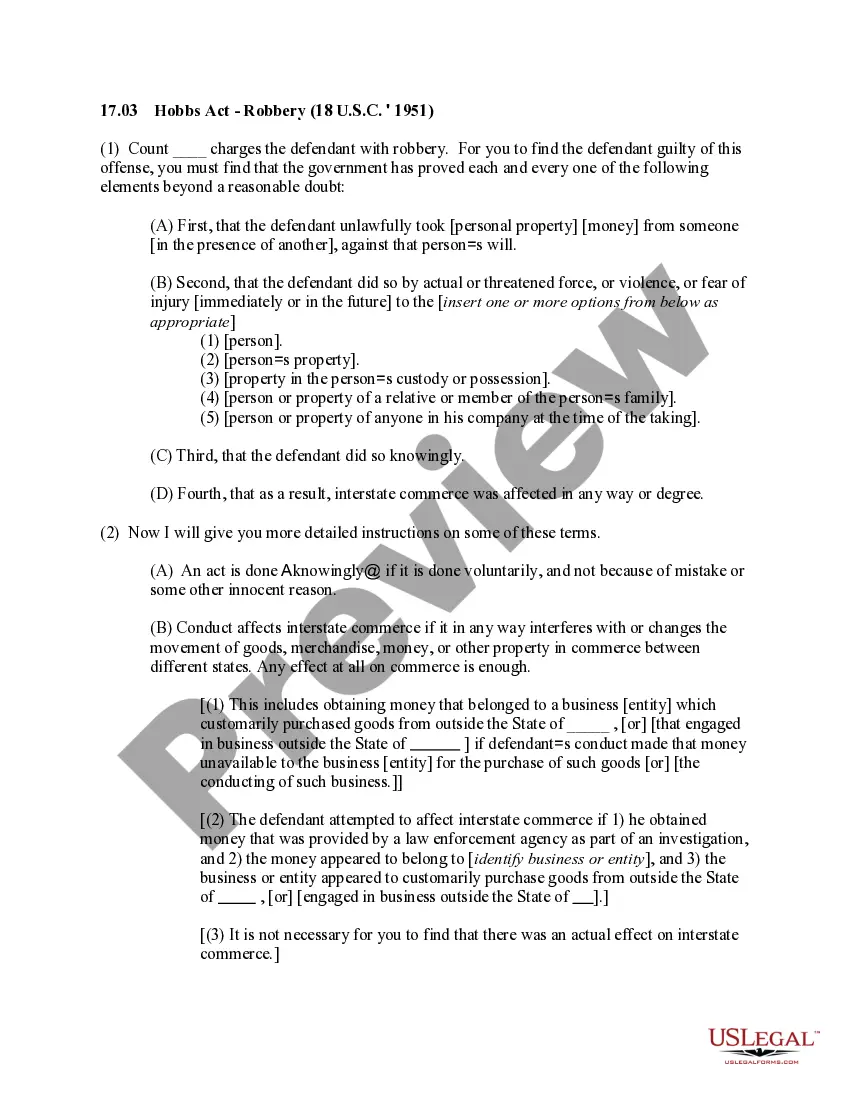
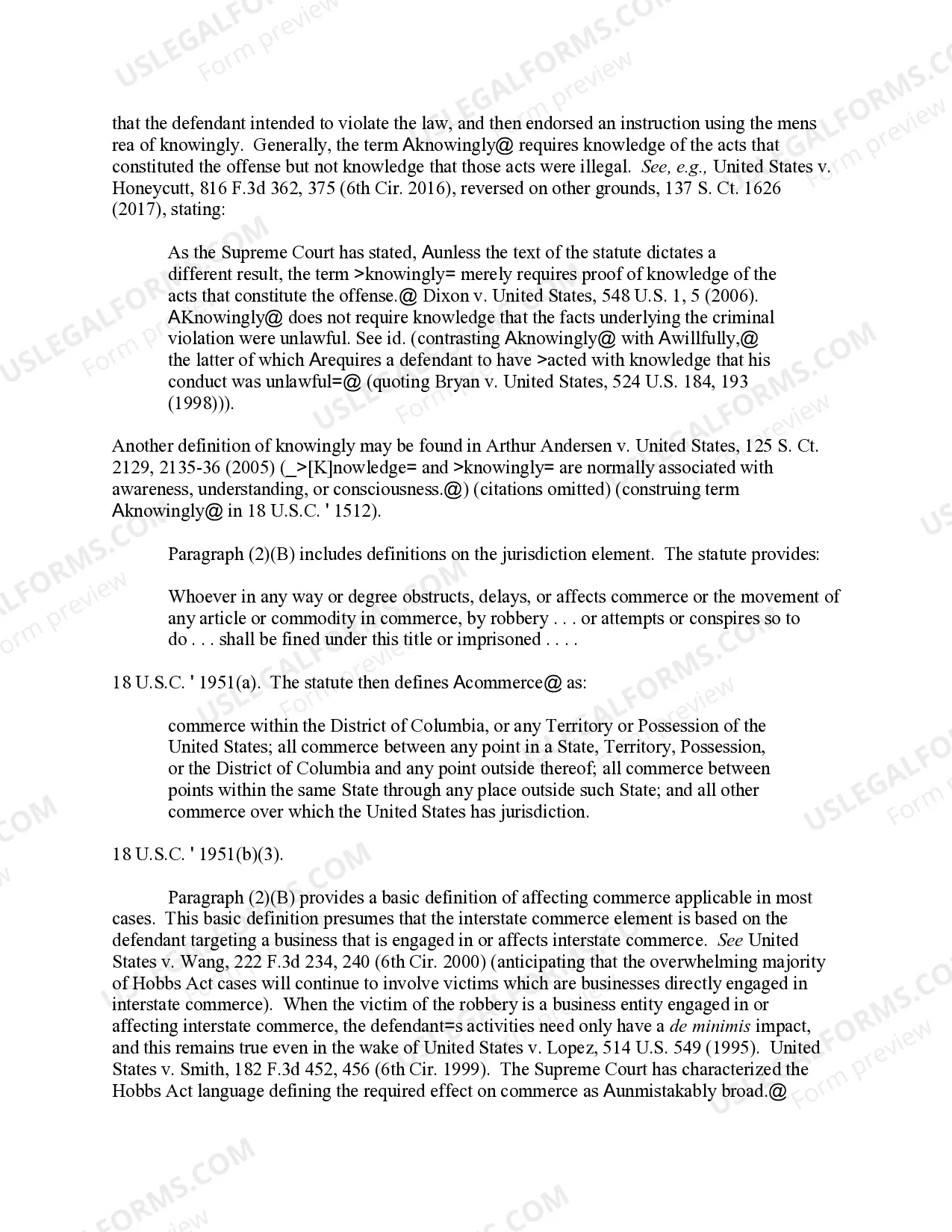
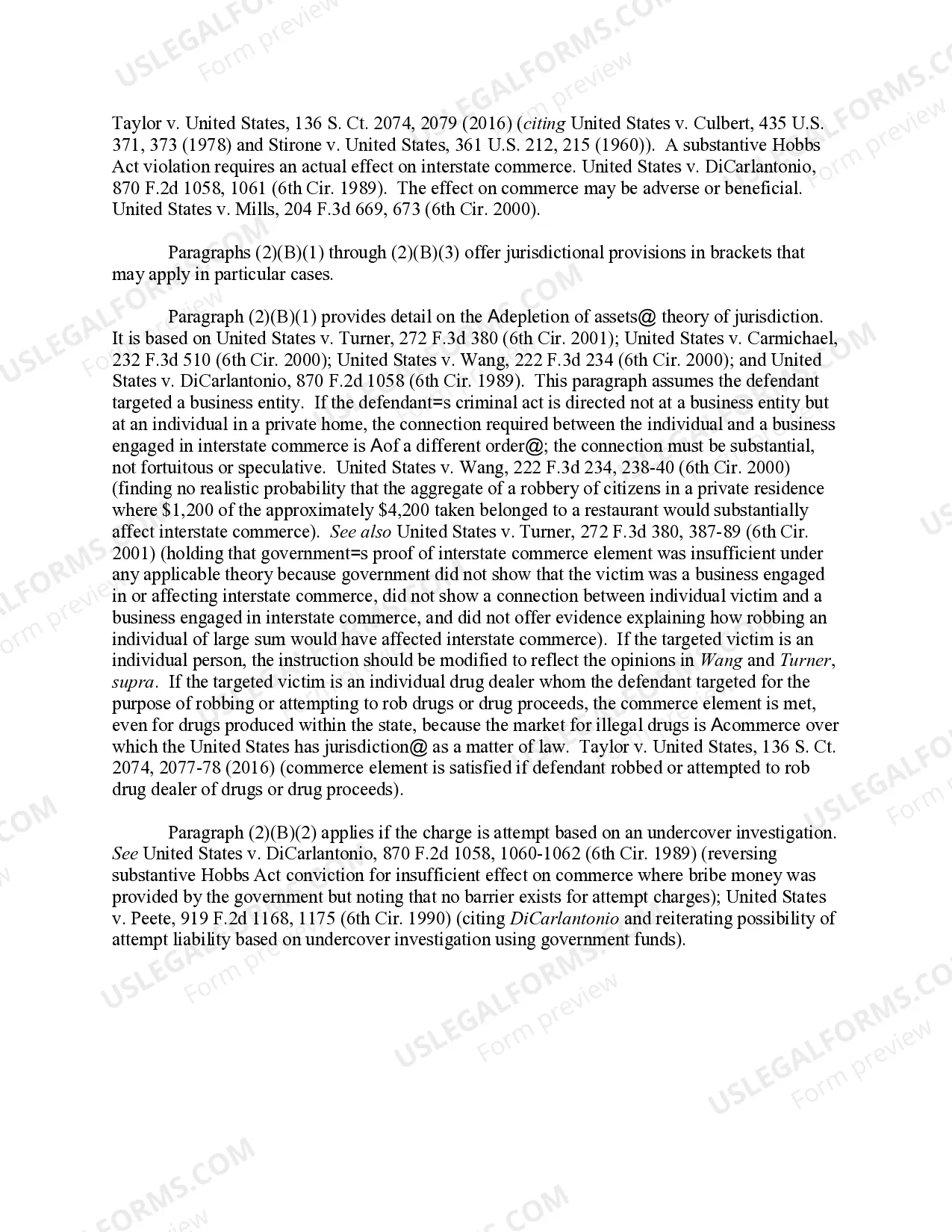
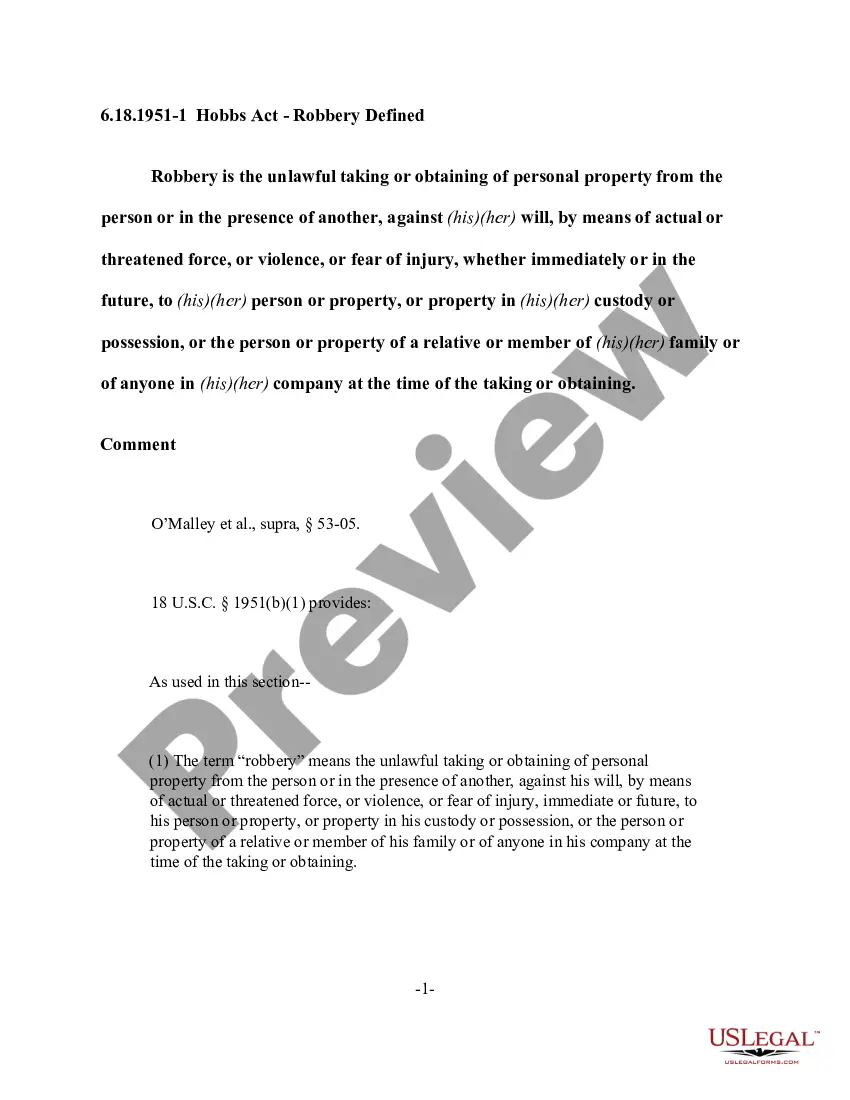
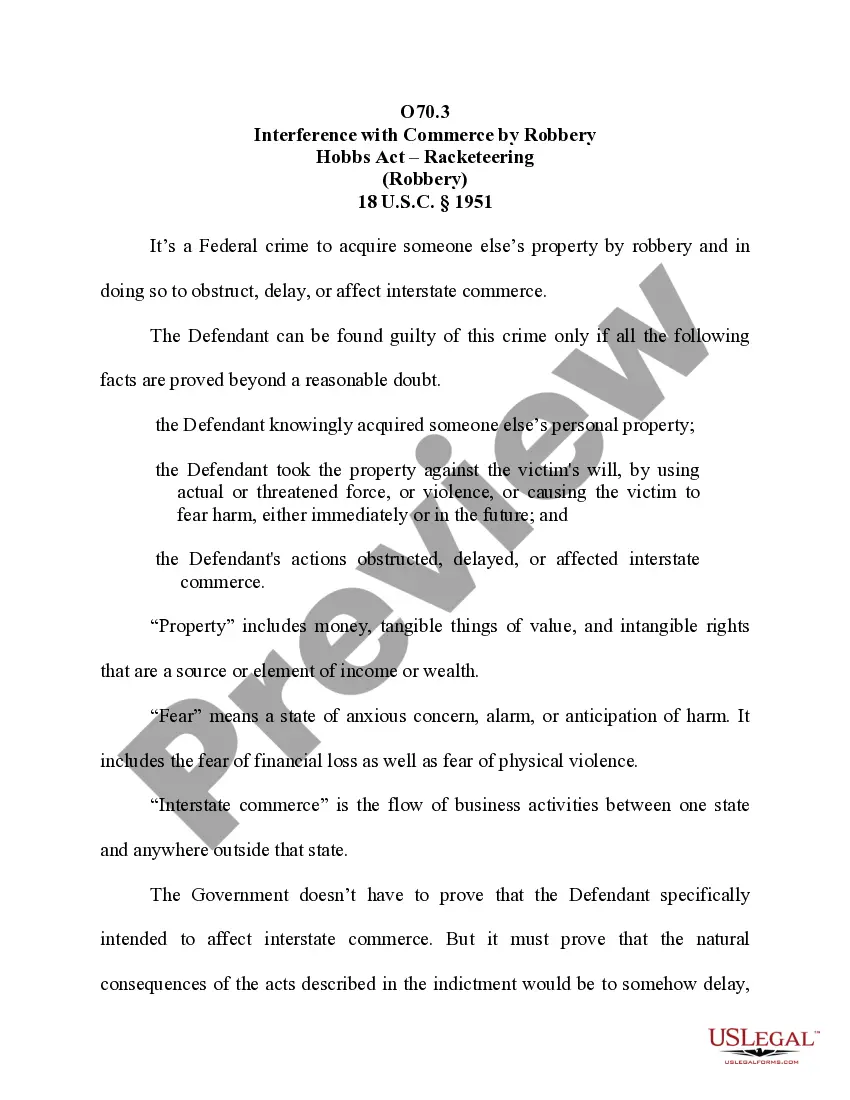
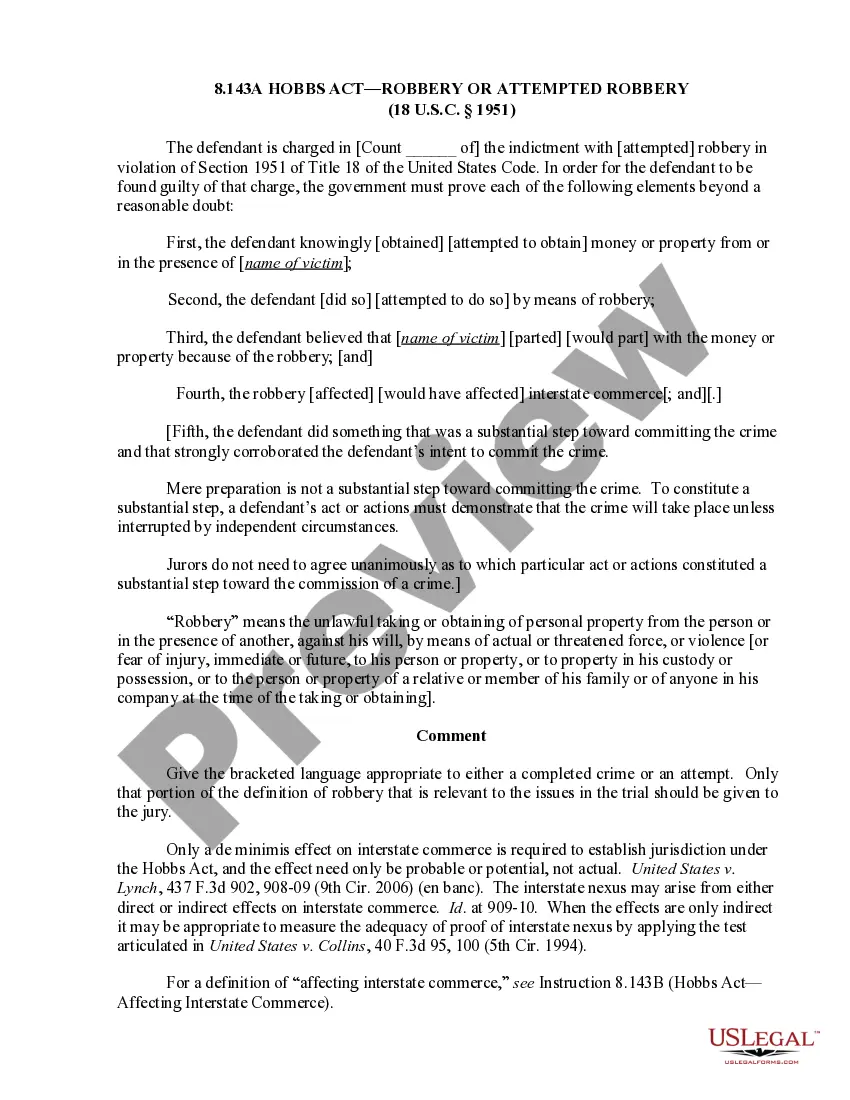
The Hobbs Act Robbery form outlines the legal definitions and elements required to prove an offense under the Hobbs Act, specifically relating to robbery. It differs from other robbery forms by emphasizing the impact on interstate commerce as a crucial element of the crime. This legal document serves as a guideline for understanding the prosecution's burden of proof in Hobbs Act robbery cases, ensuring clarity on the application of the law in such instances.
Main sections of this form
- Identification of the charge against the defendant.
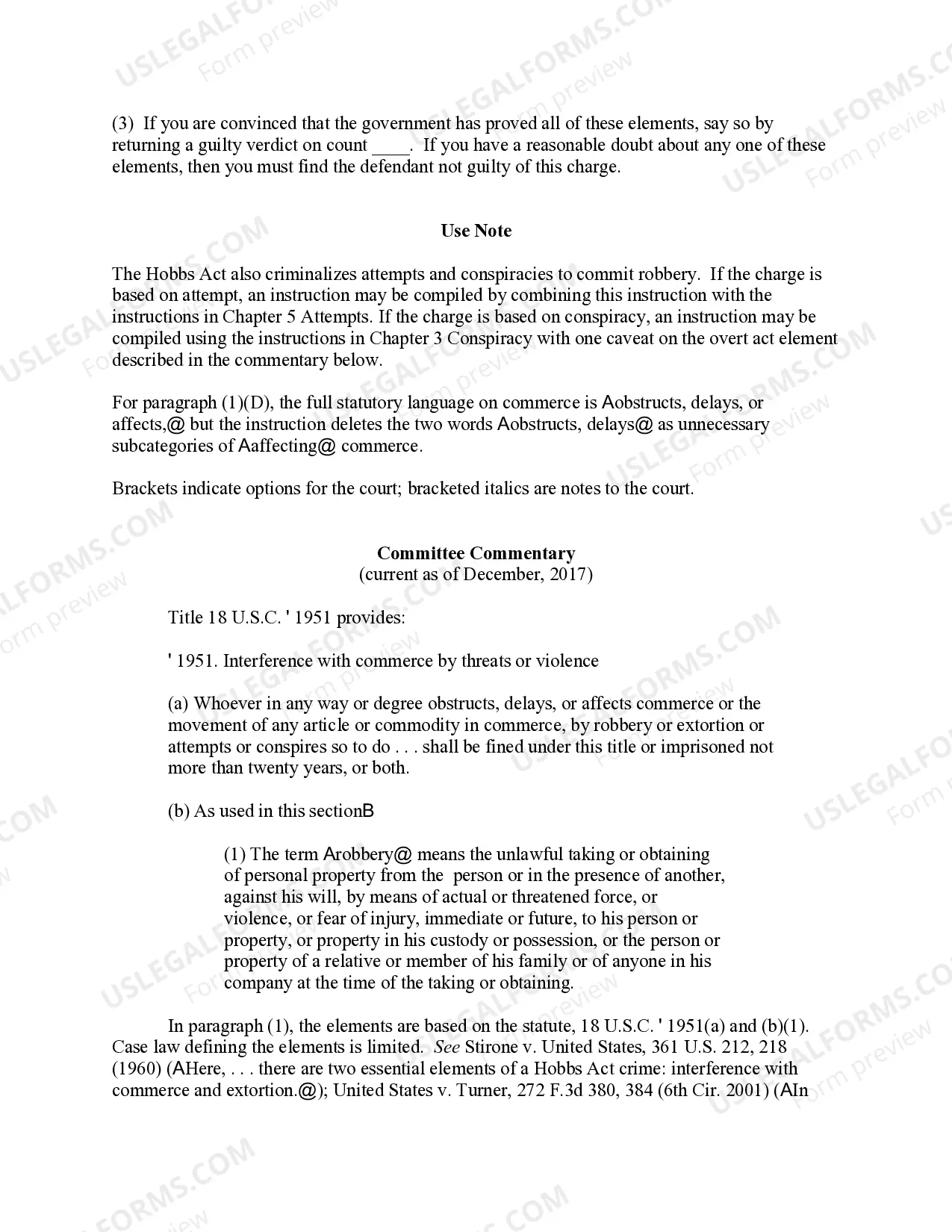
- Elements that need to be proven for a guilty verdict, including unlawful taking and the effect on commerce.
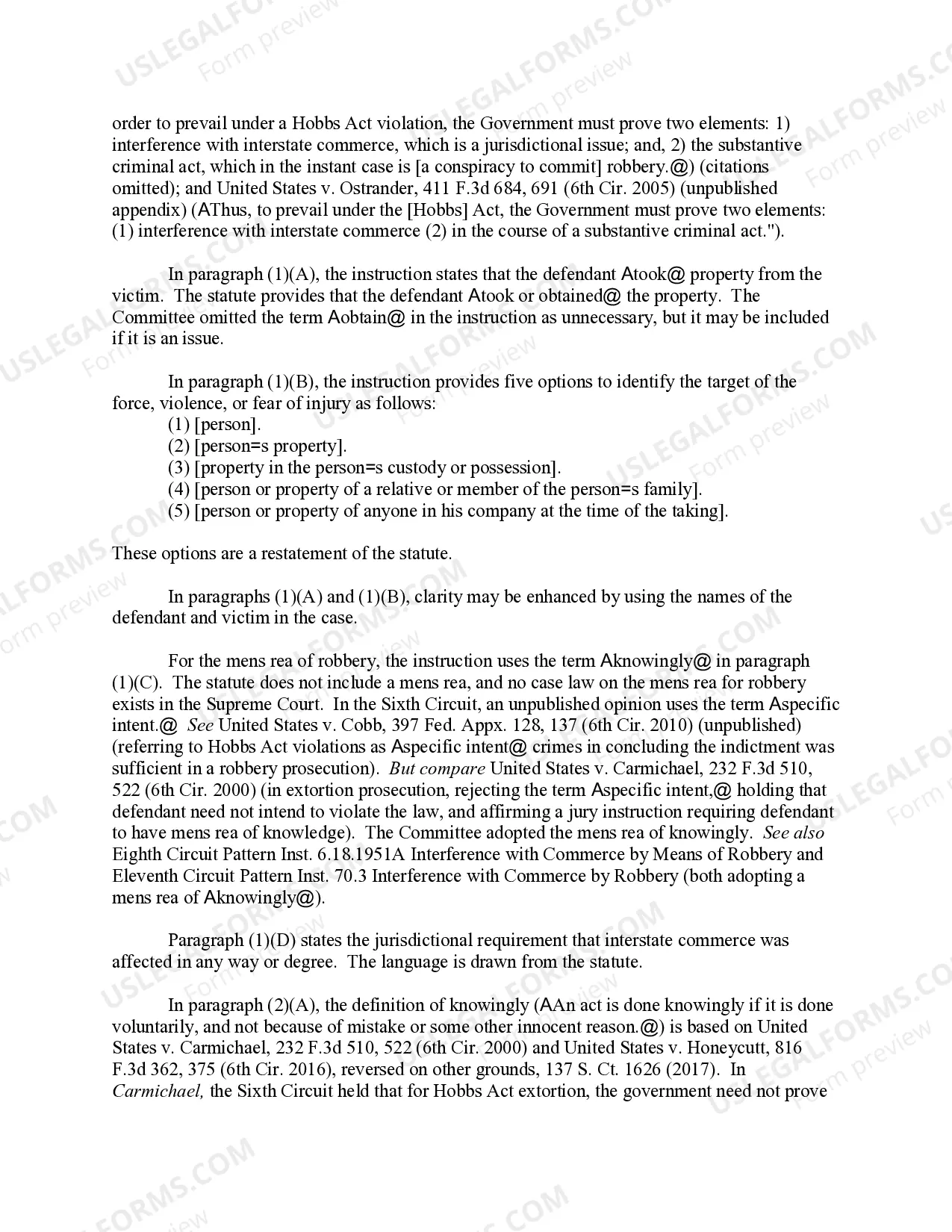
- Definition of "knowingly" and its implications for mens rea.
- Instructions for the court regarding jury considerations in easy-to-understand terms.
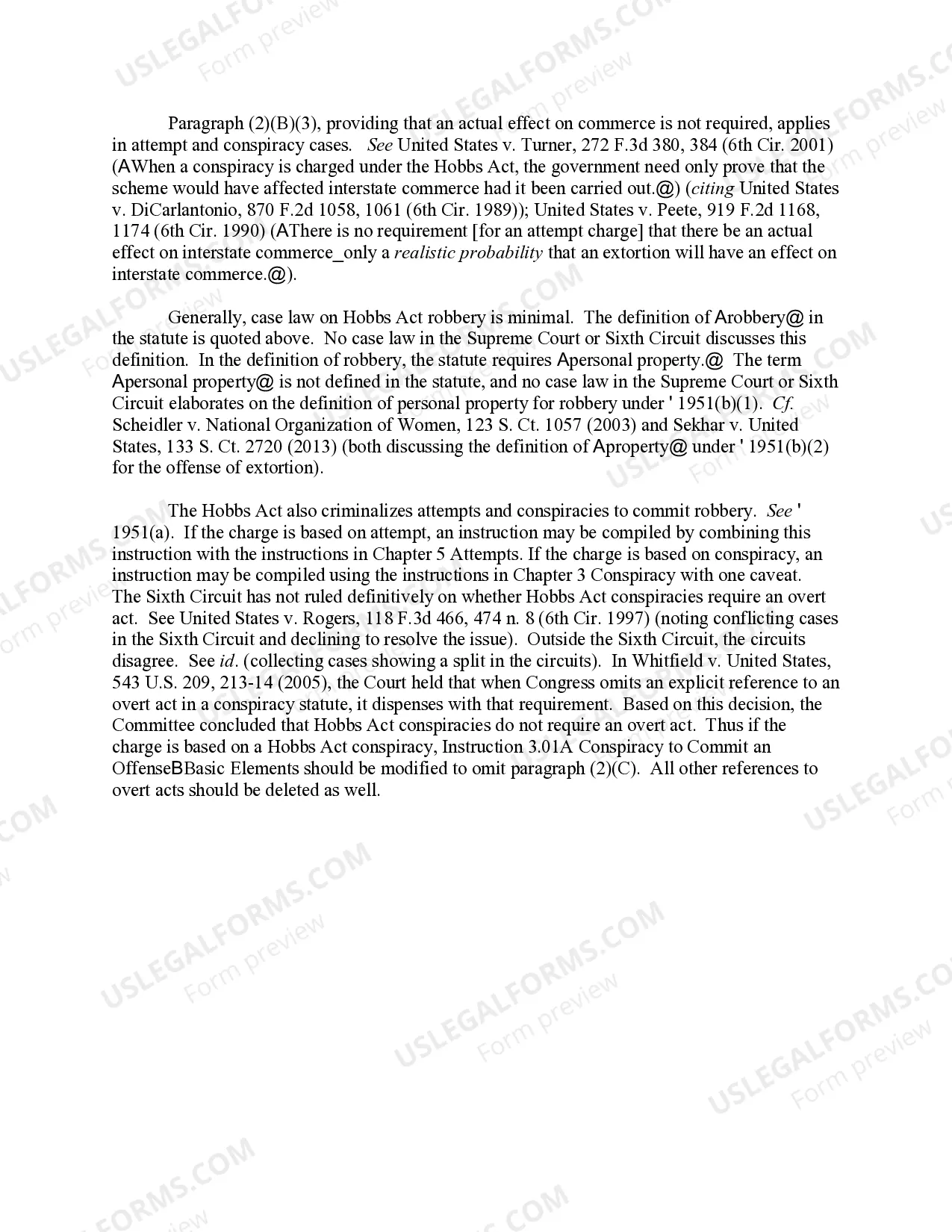
- Details on attempts and conspiracies related to robbery under the Hobbs Act.
When to use this document
This form is used in legal settings when a defendant is charged with robbery under the Hobbs Act. It is particularly relevant in cases where the robbery involves threats or uses of violence and has an effect, however minimal, on interstate commerce. Legal practitioners may utilize this form when preparing jury instructions or outlining the necessary elements of the charge during a trial.
Who can use this document
- Attorneys representing defendants or plaintiffs in Hobbs Act robbery cases.
- Judges presiding over cases involving allegations of Hobbs Act robbery.
- Legal scholars and students studying federal robbery statutes.
- Any parties involved in criminal proceedings where the Hobbs Act is applicable.
Completing this form step by step
- Identify the defendant and the applicable charge in the first section.
- List each element of the crime as required for prosecution, ensuring all criteria are met.
- Define the term "knowingly" as it applies to the defendant's actions.
- Include specific details about how interstate commerce was affected.
- Ensure the jury instructions are clear and understandable for laypersons.
Notarization requirements for this form
This form does not typically require notarization unless specified by local law. It is advisable to consult local regulations to determine if any additional documentation is needed to support the use of this form in court.
Get your form ready online
Our built-in tools help you complete, sign, share, and store your documents in one place.
Make edits, fill in missing information, and update formatting in US Legal Forms—just like you would in MS Word.
Download a copy, print it, send it by email, or mail it via USPS—whatever works best for your next step.
Sign and collect signatures with our SignNow integration. Send to multiple recipients, set reminders, and more. Go Premium to unlock E-Sign.
If this form requires notarization, complete it online through a secure video call—no need to meet a notary in person or wait for an appointment.
We protect your documents and personal data by following strict security and privacy standards.

Make edits, fill in missing information, and update formatting in US Legal Forms—just like you would in MS Word.

Download a copy, print it, send it by email, or mail it via USPS—whatever works best for your next step.

Sign and collect signatures with our SignNow integration. Send to multiple recipients, set reminders, and more. Go Premium to unlock E-Sign.

If this form requires notarization, complete it online through a secure video call—no need to meet a notary in person or wait for an appointment.

We protect your documents and personal data by following strict security and privacy standards.
Typical mistakes to avoid
- Failing to clearly define all elements of the crime, especially the impact on interstate commerce.
- Not providing enough evidence or explanations about the term "knowingly."
- Overlooking the importance of correctly applying the definitions from the Hobbs Act statute.
Why complete this form online
- Easy accessibility, allowing legal representatives to download and modify the document as needed.
- Time-saving as practitioners can quickly find the exact language required for instructions.
- Reliability of the form, which is drafted by licensed attorneys ensuring compliance with current laws.
Looking for another form?

Form popularity
FAQ
It was originally used to curtail racketeering in labor disputes, which was a common phenomenon at that time. Today, the Hobbs Act is commonly used by federal prosecutors to target public corruption, street gangs, commercial disputes, and union corruption.
The statute, despite being conceived and enacted as an anti-racketeering measure in disputes between labor and management, is frequently used in connection with cases involving public corruption, commercial disputes, and corruption directed at members of labor unions.
Both attempts and conspiracy to commit a Hobbs Act robbery are punishable by the same maximum term of imprisonment of not more than 20 years as for a substantive Hobbs Act robbery.
The present Hobbs Act began as the Anti-Racketeering Act of 1934, which Congress initially passed to combat the use of interstate commerce by organized crime, specifically racketeering.
The Hobbs Act prohibits actual or attempted robbery or extortion affecting interstate or foreign commerce "in any way or degree." Section 1951 also proscribes conspiracy to commit robbery or extortion without reference to the conspiracy statute at 18 U.S.C. § 371.
The Hobbs Anti-Racketeering Act of 1946 (P.L. 79?486, 60 Stat. 420), passed as an amendment to the Anti-Racketeering Act of 1934, was part of Congress's efforts to combat labor racketeering and the activities of organized crime.