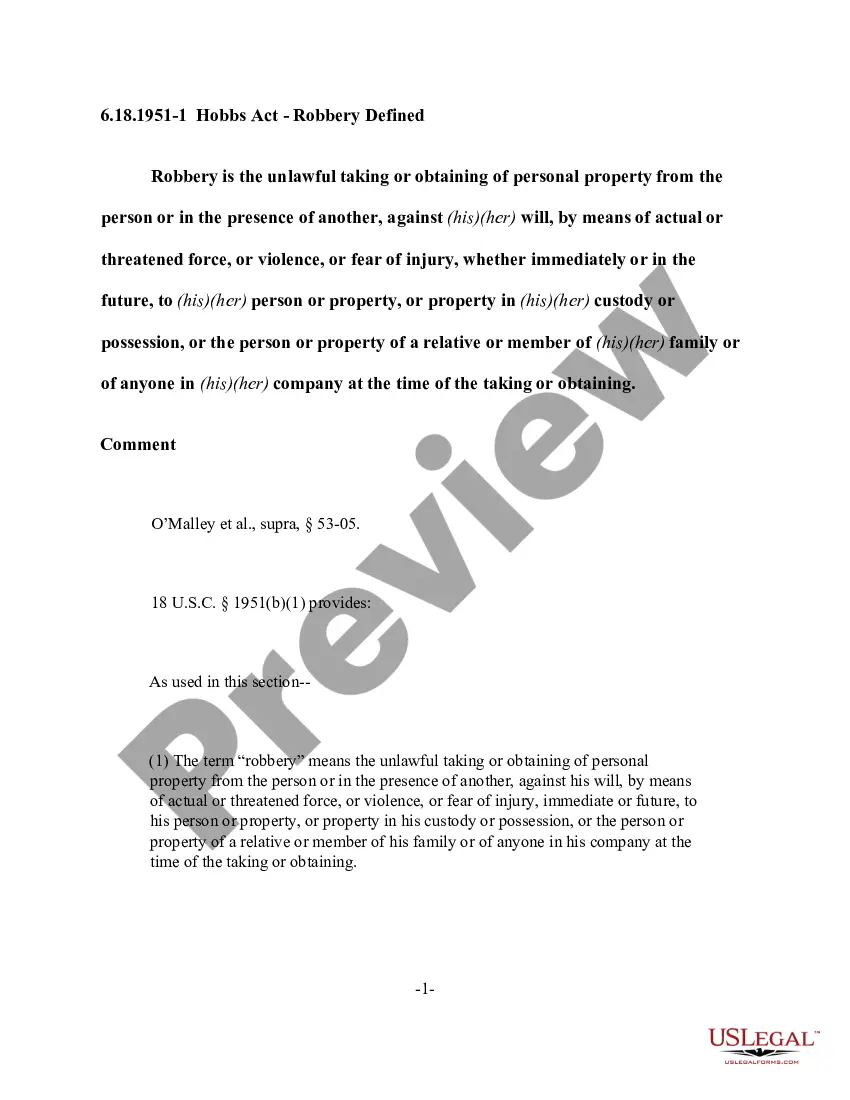
Hobbs Act - Robbery Defined
Understanding this form
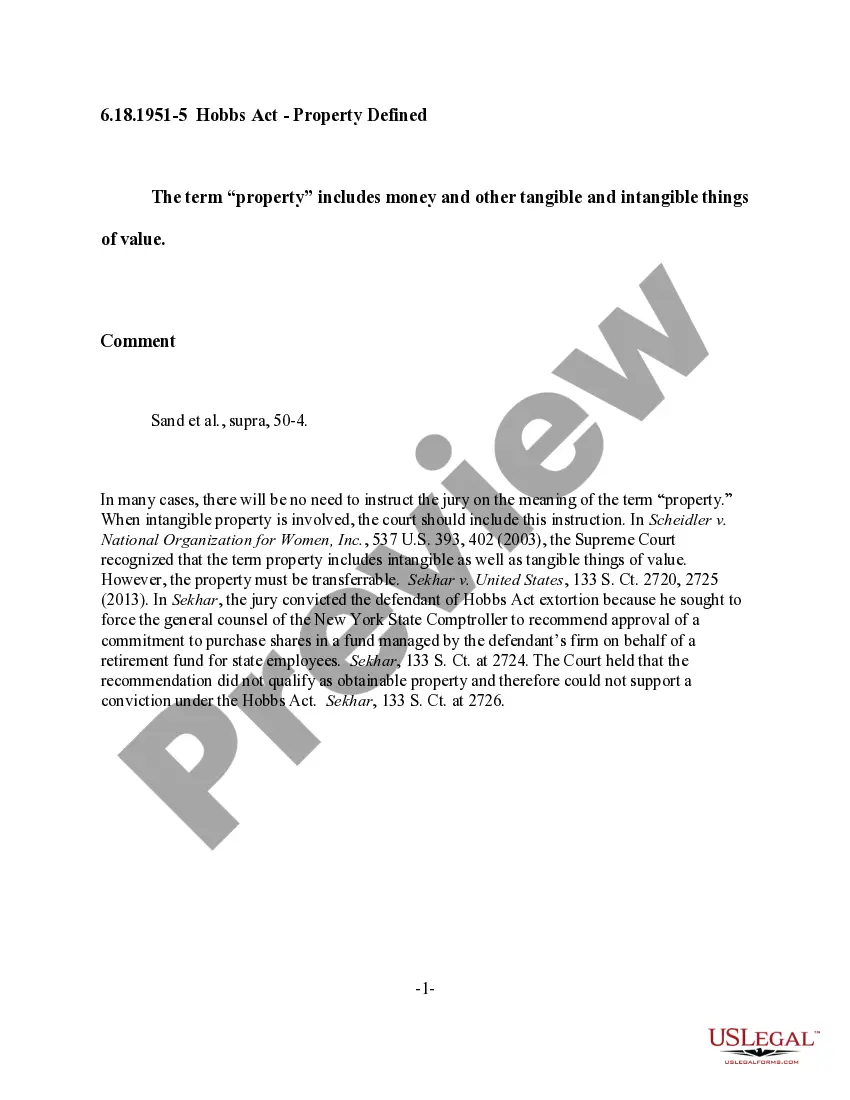
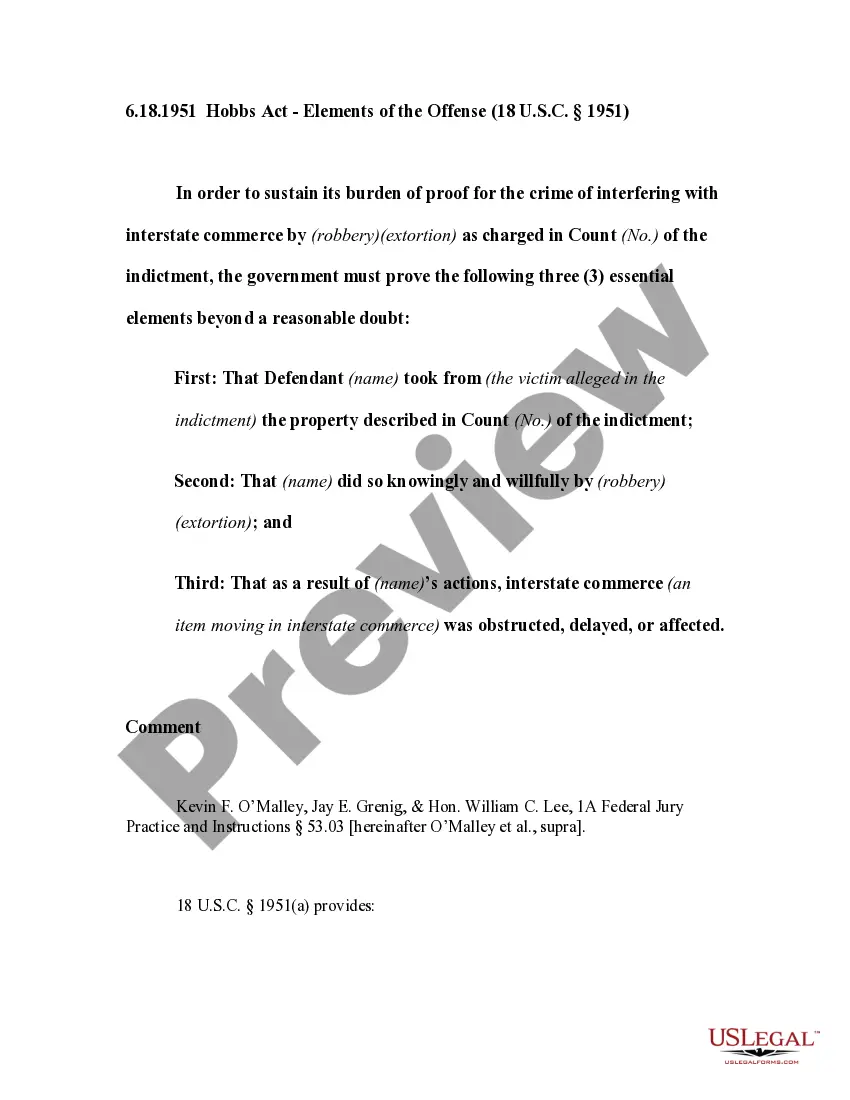
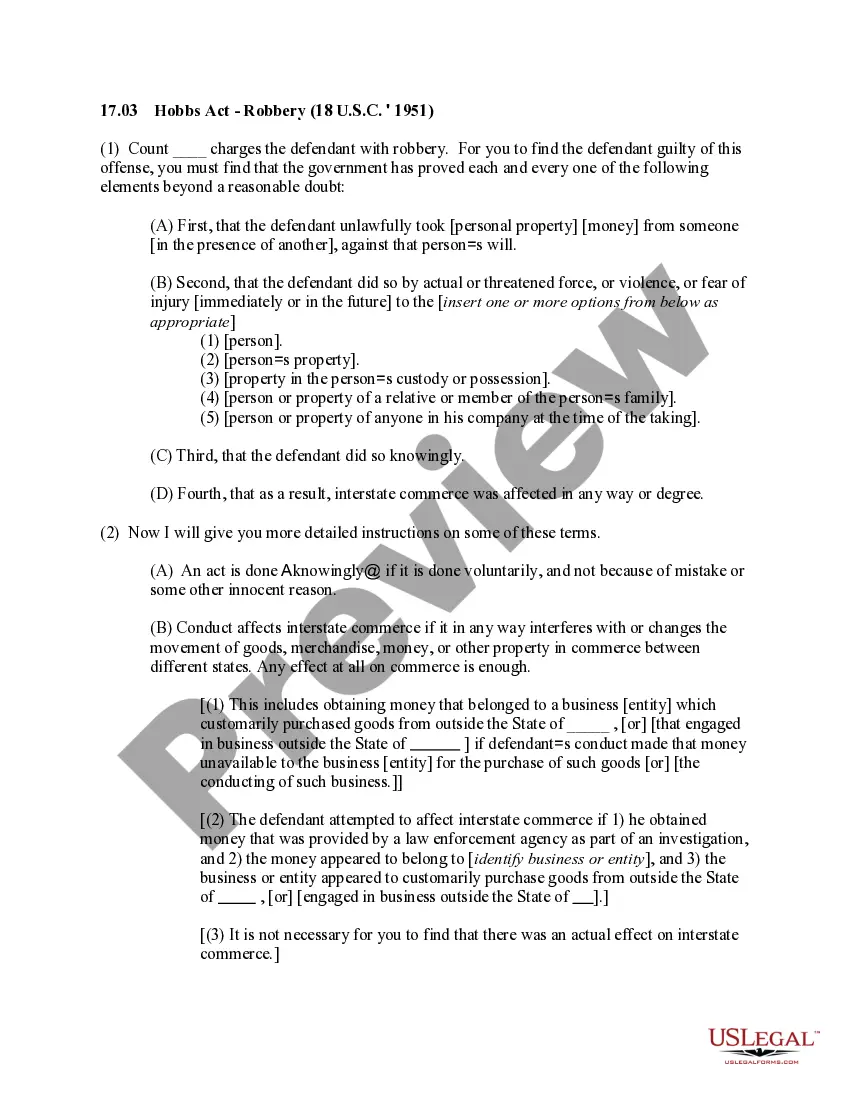
The Hobbs Act - Robbery Defined form outlines the legal definition of robbery as specified under federal law. This form is essential for understanding the elements that constitute robbery, distinguishing it from other property crimes. It serves as a crucial reference for legal practitioners, law enforcement, and individuals looking to comprehend the implications of this serious offense.
Key components of this form
- Unlawful taking or obtaining of personal property.
- Actions must be against the will of the victim.
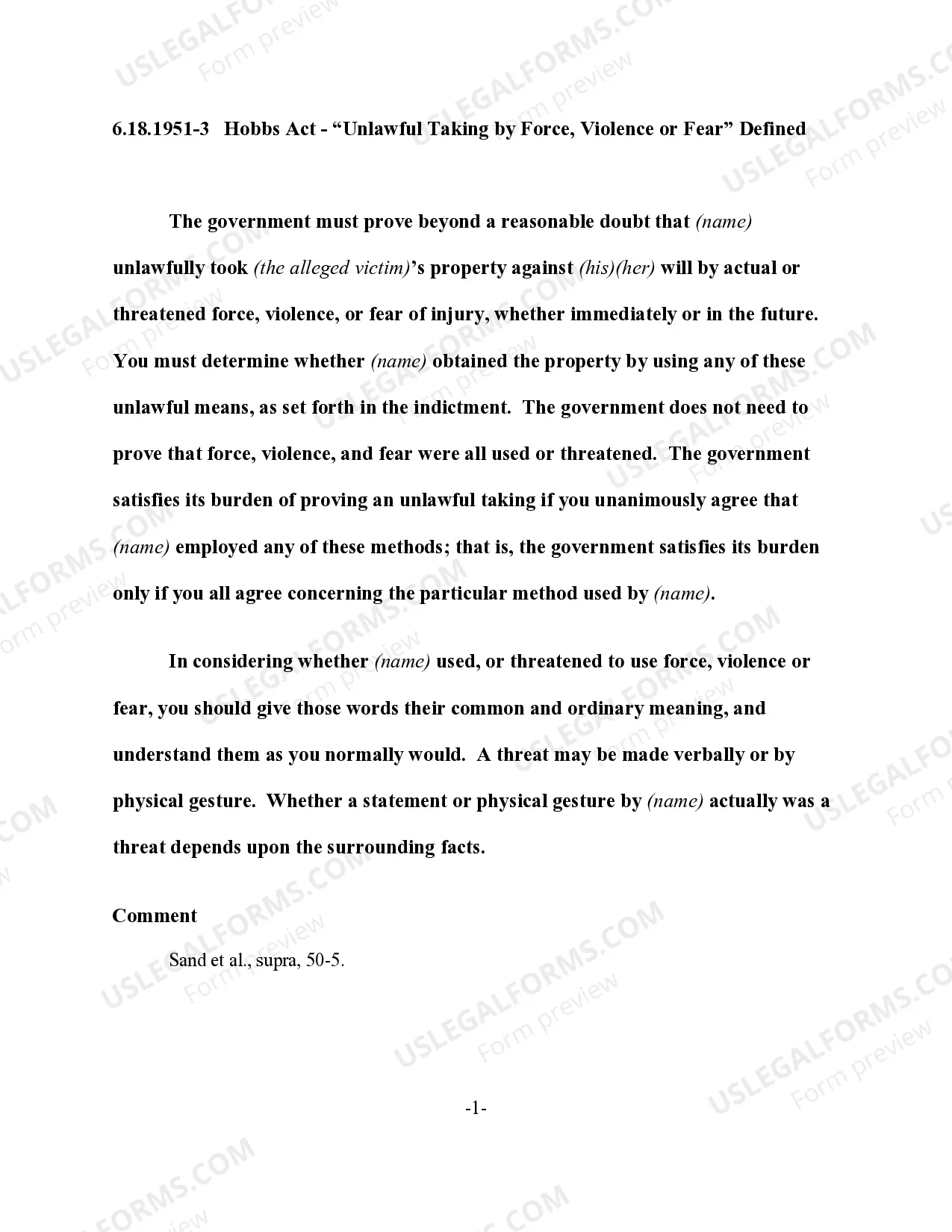
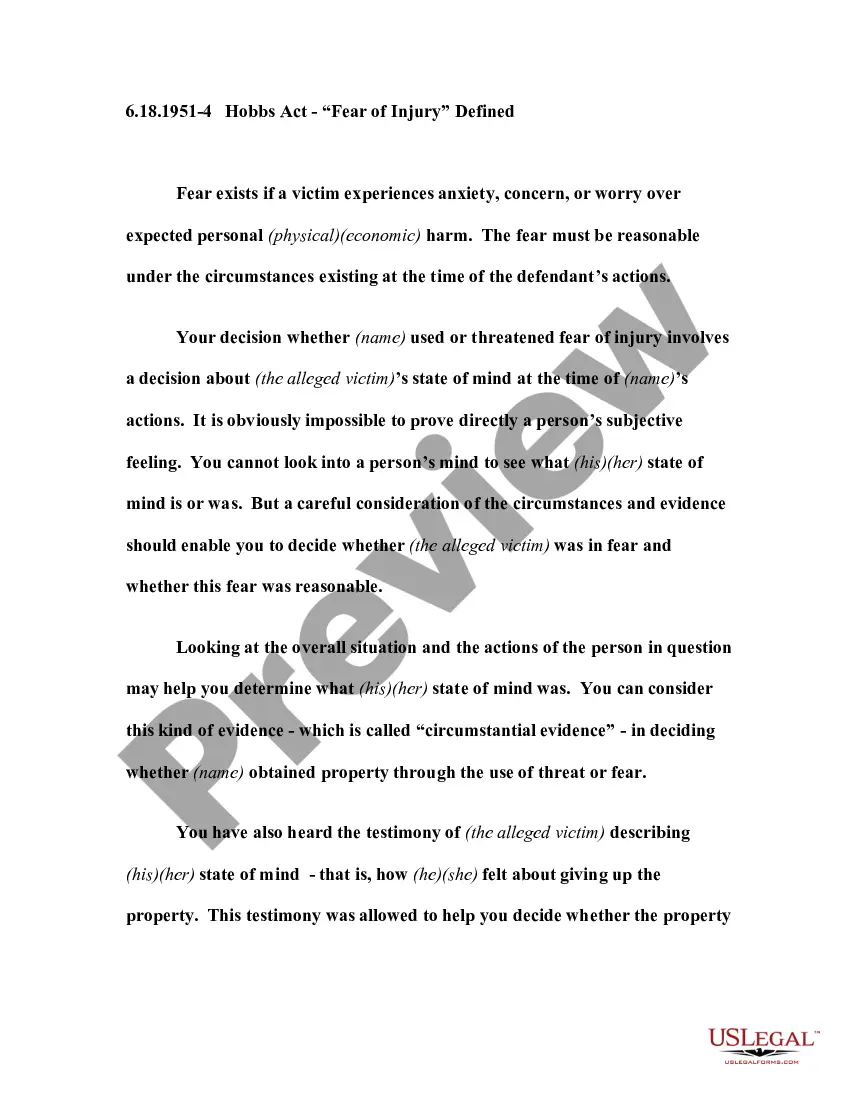
- Includes force, violence, or threats that instill fear.
- Covers property in the custody of the victim, family members, or companions.
- Citations from relevant legal statutes, such as 18 U.S.C. § 1951.
When to use this document
This form is used in legal contexts whenever there is a need to assert that an act constitutes robbery under the Hobbs Act. Law enforcement officials may refer to this form during investigations, while legal professionals might utilize it to build cases or defenses pertaining to robbery charges.
Who needs this form
- Law enforcement officers investigating robbery cases.
- Criminal defense attorneys representing clients accused of robbery.
- Prosecutors handling robbery cases.
- Individuals seeking to understand their rights or legal standings related to robbery charges.
Instructions for completing this form
- Review the legal definition of robbery provided in the form.
- Identify key facts relevant to the case or scenario being examined.
- Consider any circumstances of force, threats, or intimidation detailed in the case.
- Ensure all information reflects the context in which the act is being analyzed.
- Consult with a legal expert if clarification on the language or implications is needed.
Notarization requirements for this form
This form does not typically require notarization unless specified by local law. However, verifying with legal counsel or local regulations is advisable to ensure compliance.
Get your form ready online
Our built-in tools help you complete, sign, share, and store your documents in one place.
Make edits, fill in missing information, and update formatting in US Legal Forms—just like you would in MS Word.
Download a copy, print it, send it by email, or mail it via USPS—whatever works best for your next step.
Sign and collect signatures with our SignNow integration. Send to multiple recipients, set reminders, and more. Go Premium to unlock E-Sign.
If this form requires notarization, complete it online through a secure video call—no need to meet a notary in person or wait for an appointment.
We protect your documents and personal data by following strict security and privacy standards.

Make edits, fill in missing information, and update formatting in US Legal Forms—just like you would in MS Word.

Download a copy, print it, send it by email, or mail it via USPS—whatever works best for your next step.

Sign and collect signatures with our SignNow integration. Send to multiple recipients, set reminders, and more. Go Premium to unlock E-Sign.

If this form requires notarization, complete it online through a secure video call—no need to meet a notary in person or wait for an appointment.

We protect your documents and personal data by following strict security and privacy standards.
Common mistakes to avoid
- Failing to recognize that robbery must involve the victim's presence or immediate vicinity.
- Confusing robbery with theft, which does not require the use of force or intimidation.
- Overlooking the importance of the victim's perception of fear or threat.
Why complete this form online
- Instant access to a legally relevant document prepared by licensed attorneys.
- Convenience of downloading and saving the form for future reference.
- Ability to update and customize the content as needed for individual cases.
Legal use & context
- Understanding the legal definition of robbery is critical for appropriate charges.
- Knowledge of the Hobbs Act assists in distinguishing federal from state law issues.
- Crucial for establishing the elements required to prove a case in court.
Summary of main points
- The Hobbs Act provides a comprehensive definition of robbery under federal law.
- Understanding its components is essential for legal professionals and individuals.
- Applicable across all states, though local laws may vary in related matters.
Looking for another form?

Form popularity
FAQ
A conviction under the Hobbs Act requires proof beyond a reasonable doubt that (1) the defendant knowingly or willfully committed, or attempted or conspired to commit, robbery or extortion, and (2) the defendant's conduct affected interstate commerce.
Prosecuted under 18 USC 1951, a violation of the Hobbs Act is committed by obstructing, delaying, or affecting commerce or the movement of any article or commodity in commerce, by robbery or extortion or an attempt or conspiracy so to do, or if one commits or threatens physical violence to any person or property in
A person commits the federal offense of extortion if he or she transmits in interstate or foreign commerce any demand or request for ransom or for a reward for the release of a kidnapped person, any threat to kidnap or injure another person, or any threat to injure the property or reputation of another person or to
The present Hobbs Act began as the Anti-Racketeering Act of 1934, which Congress initially passed to combat the use of interstate commerce by organized crime, specifically racketeering.
Brief Synopsis: A Hobbs Act Robbery is not a crime of violence under federal sentencing guidelines because the definition of a Hobbs Act robbery include more conduct than is included in the federal definition of a crime of violence.
The Hobbs Act, named after United States Representative Sam Hobbs (D-AL) and codified as 18 U.S.C. § 1951, is a United States federal law enacted in 1946 that prohibits actual or attempted robbery or extortion that affect intrastate or foreign commerce. It also forbids conspiracy to do so.