Interference with Commerce by Robbery Hobbs Act - Racketeering (Robbery)
What is this form?
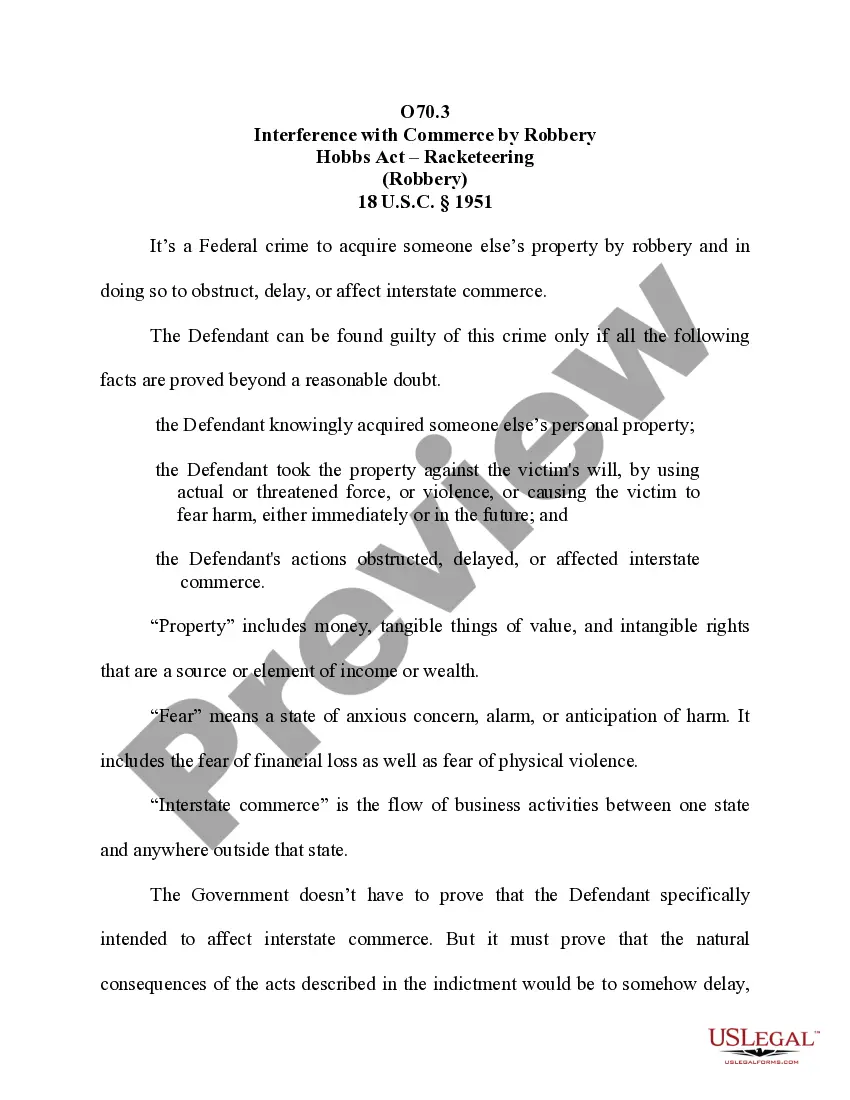
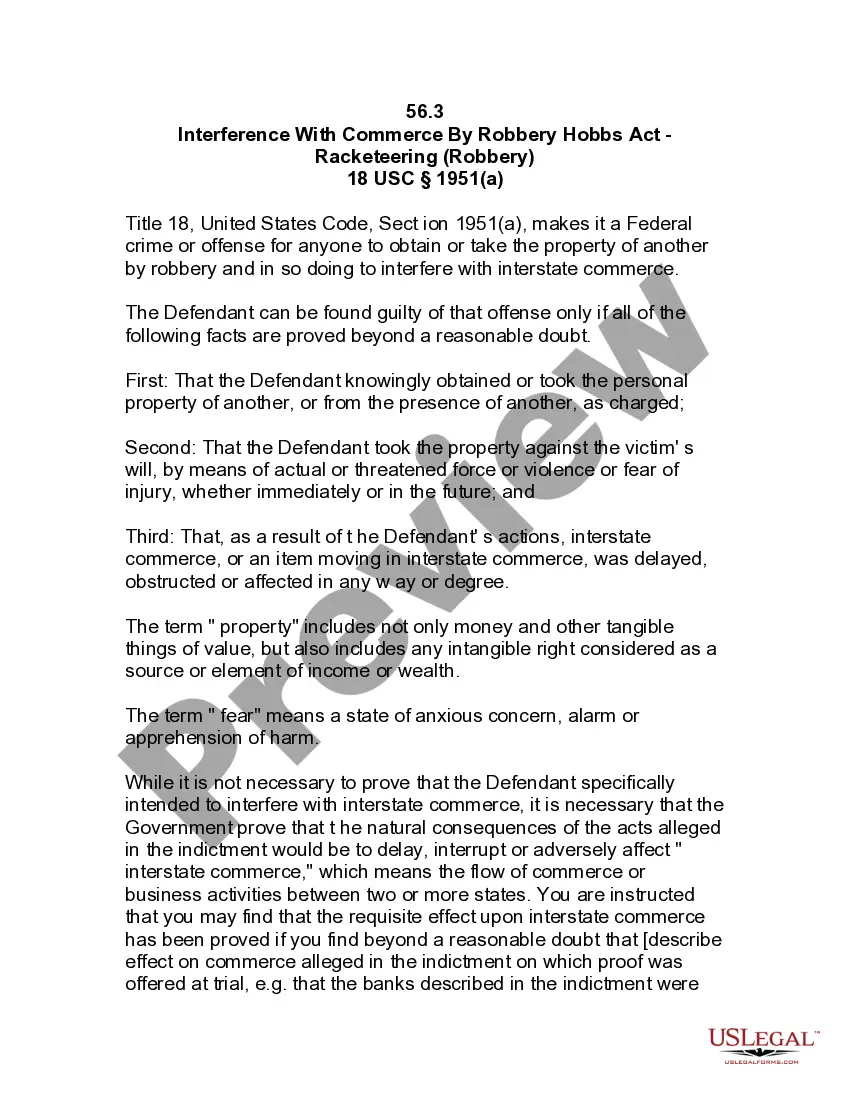
The Interference with Commerce by Robbery under the Hobbs Act is a legal form used to outline the federal crime of robbery that disrupts interstate commerce. This document specifies the elements that must be proven for a defendant to be found guilty of robbery affecting commerce and differs from other robbery forms by emphasizing the interstate commerce component as defined under federal law.
Main sections of this form
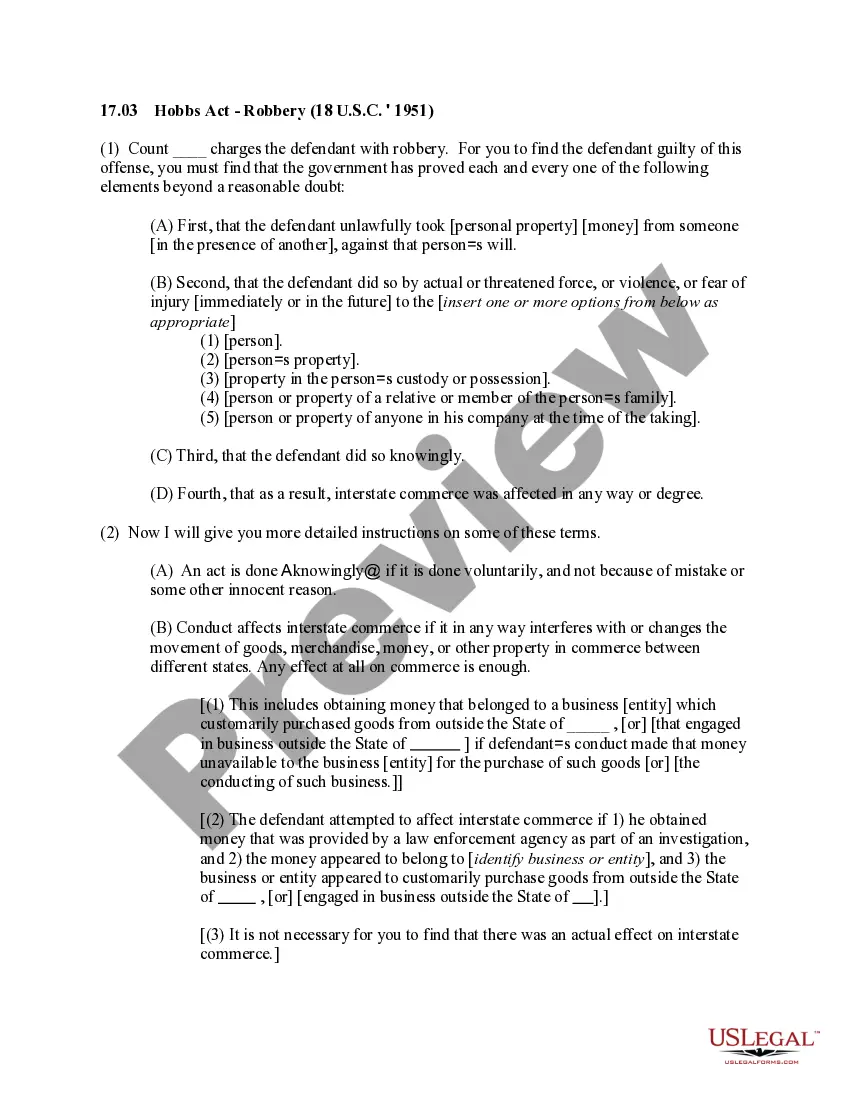
- Definition of robbery: Includes acquiring property against the victim's will through force or threats.
- Explanation of interstate commerce: Actions that obstruct or affect business activities between states.
- Clarification of what constitutes property: Money, tangible items, and intangible rights are included.
- Requirement of proving fear: The victim must feel a state of concern or alarm, which can include financial fear.
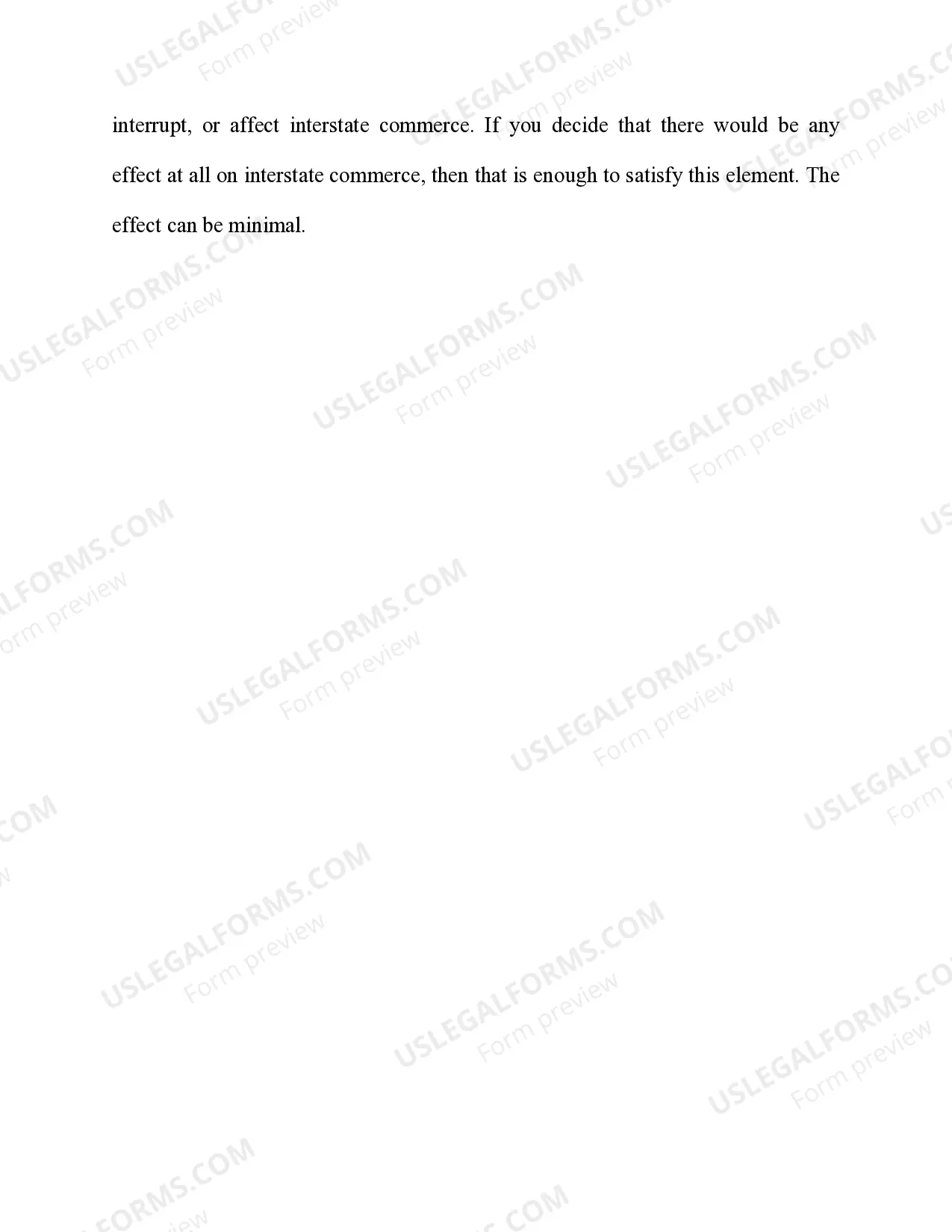
- Burden of proof: The government must demonstrate the natural consequences of the defendant's actions may affect commerce.
When to use this form
This form is utilized in federal criminal cases where an individual is charged with robbery that interferes with interstate commerce as defined under the Hobbs Act. It can be relevant in situations where a robbery involves theft of property that impacts business activities between states, such as robbery that disrupts supply chains, transactions, or the flow of goods.
Who this form is for
This form is intended for:
- Legal professionals handling federal criminal cases involving robbery.
- Defendants facing charges related to robbery that disrupts interstate commerce.
- Prosecutors in federal court who need to outline the elements of the crime for a jury.
Completing this form step by step
- State the name of the defendant clearly.
- Outline the details of the robbery incident, specifying how the property was taken.
- Identify the type of property involved and its relevance to interstate commerce.
- Document any threats or force used during the robbery.
- Include evidence of how the defendant's actions affected interstate commerce.
Notarization guidance
Notarization is not commonly needed for this form. However, certain documents or local rules may make it necessary. Our notarization service, powered by Notarize, allows you to finalize it securely online anytime, day or night.
Get your form ready online
Our built-in tools help you complete, sign, share, and store your documents in one place.
Make edits, fill in missing information, and update formatting in US Legal Forms—just like you would in MS Word.
Download a copy, print it, send it by email, or mail it via USPS—whatever works best for your next step.
Sign and collect signatures with our SignNow integration. Send to multiple recipients, set reminders, and more. Go Premium to unlock E-Sign.
If this form requires notarization, complete it online through a secure video call—no need to meet a notary in person or wait for an appointment.
We protect your documents and personal data by following strict security and privacy standards.

Make edits, fill in missing information, and update formatting in US Legal Forms—just like you would in MS Word.

Download a copy, print it, send it by email, or mail it via USPS—whatever works best for your next step.

Sign and collect signatures with our SignNow integration. Send to multiple recipients, set reminders, and more. Go Premium to unlock E-Sign.

If this form requires notarization, complete it online through a secure video call—no need to meet a notary in person or wait for an appointment.

We protect your documents and personal data by following strict security and privacy standards.
Common mistakes to avoid
- Failing to sufficiently demonstrate the impact on interstate commerce.
- Neglecting to provide detailed accounts of the robbery involving threats or force.
- Misinterpreting the legal definitions of property relevant to the charge.
Benefits of completing this form online
- Convenient access to the legal template from anywhere.
- Editable format allows for customization to fit specific case details.
- Reliability ensured by templates drafted by licensed attorneys with knowledge of federal law.
Legal use & context
- This form outlines the legal structure for charging suspects under federal law.
- Understanding the components can aid in both prosecution and defense strategies.
- Factors such as the effect on commerce do not need to be proven with a specific intent but rather as a natural consequence of the defendant's actions.
What to keep in mind
- The Hobbs Act addresses robberies affecting interstate commerce as a serious federal crime.
- Comprehensive proof of the actions and their effects on commerce is crucial for establishing guilt.
- This form should be utilized when facing or prosecuting robbery charges under federal law.
Looking for another form?


Form popularity
FAQ
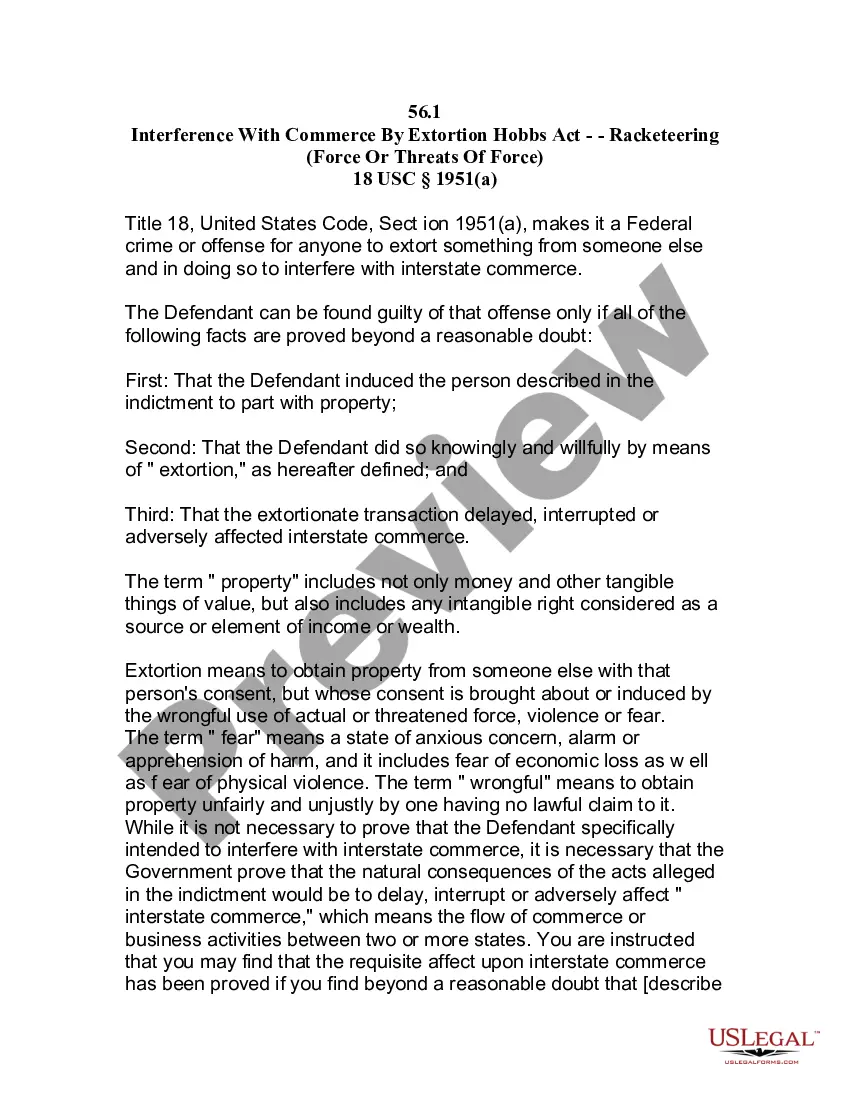
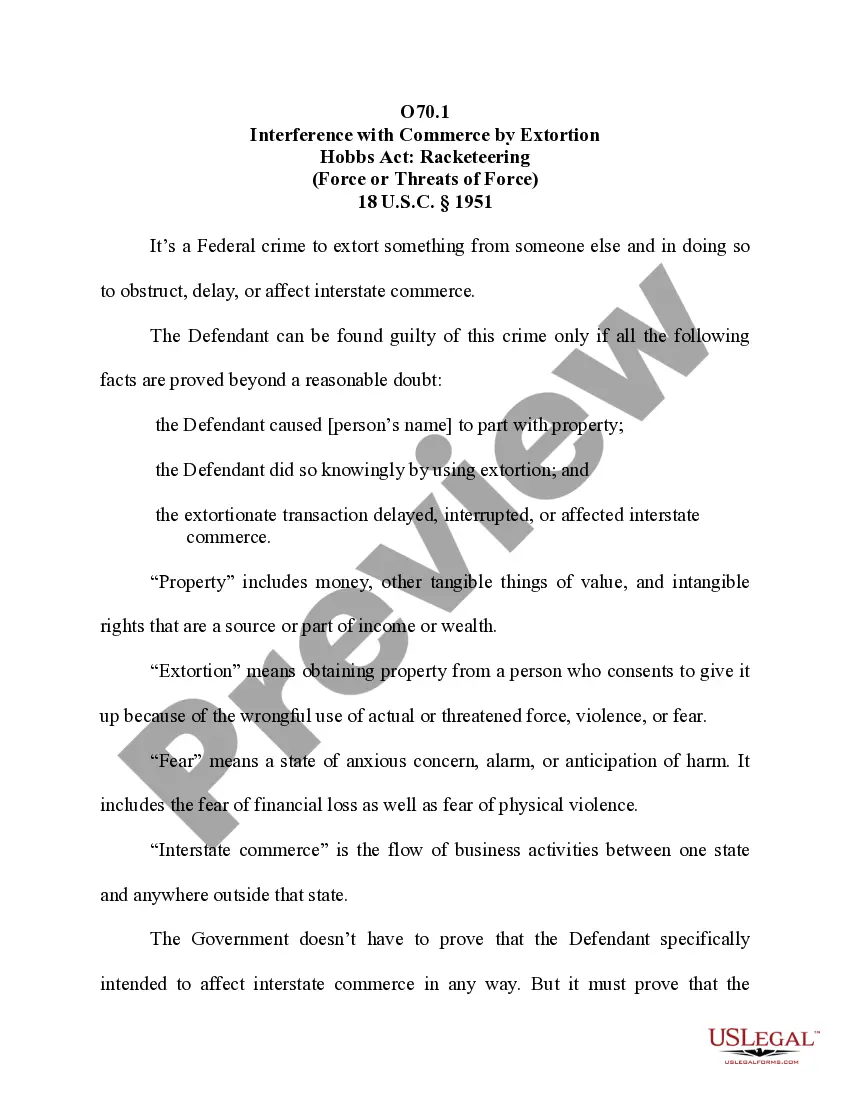
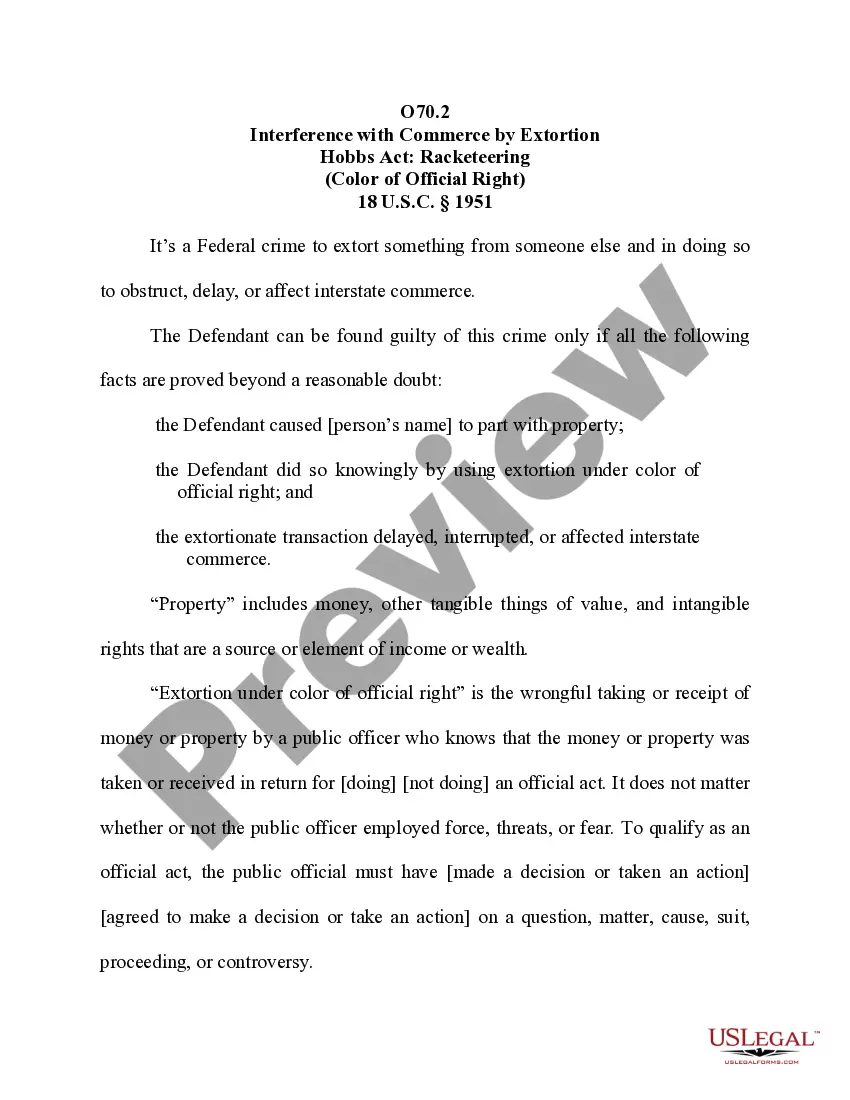
This chapter focuses on the Hobbs Act (18 U.S.C. § 1951) which prohibits actual or attempted robbery or extortion affecting interstate or foreign commerce. Section 1951 also proscribes conspiracy to commit robbery or extortion without reference to the conspiracy statute at 18 U.S.C. § 371.
A conviction under the Hobbs Act requires proof beyond a reasonable doubt that (1) the defendant knowingly or willfully committed, or attempted or conspired to commit, robbery or extortion, and (2) the defendant's conduct affected interstate commerce.
Whoever in any way or degree obstructs, delays, or affects commerce or the movement of any article or commodity in commerce, by robbery or extortion or attempts or conspires so to do, or commits or threatens physical violence to any person or property in furtherance of a plan or purpose to do anything in violation of
4.18.1951 Interference with Commerce by Robbery or Extortion (Hobbs Act), 18 U.S.C. § 1951 See Statute. Defendant is accused of obstructing, delaying and affecting commerce by committing robbery; extortion. It is against federal law to obstruct, delay or affect commerce by committing robbery; extortion.
?(a) Whoever in any manner obstructs, delays, or affects commerce or the movement of commerce by robbery or extortion or attempts, conspires, or threatens physical violence to a person or property in furtherance of a plan to do anything in violation of this statute shall be fined or imprisoned up to twenty years, or
The Hobbs Act prohibits actual or attempted robbery or extortion affecting interstate or foreign commerce "in any way or degree." Section 1951 also proscribes conspiracy to commit robbery or extortion without reference to the conspiracy statute at 18 U.S.C. § 371.
Interference in interstate commerce is any instance in which a person delays, obstructs or otherwise affects commerce. This can be the sale of or the movement of any type of commodity.