Petition for Partial and Early Distribution of Estate
What this document covers
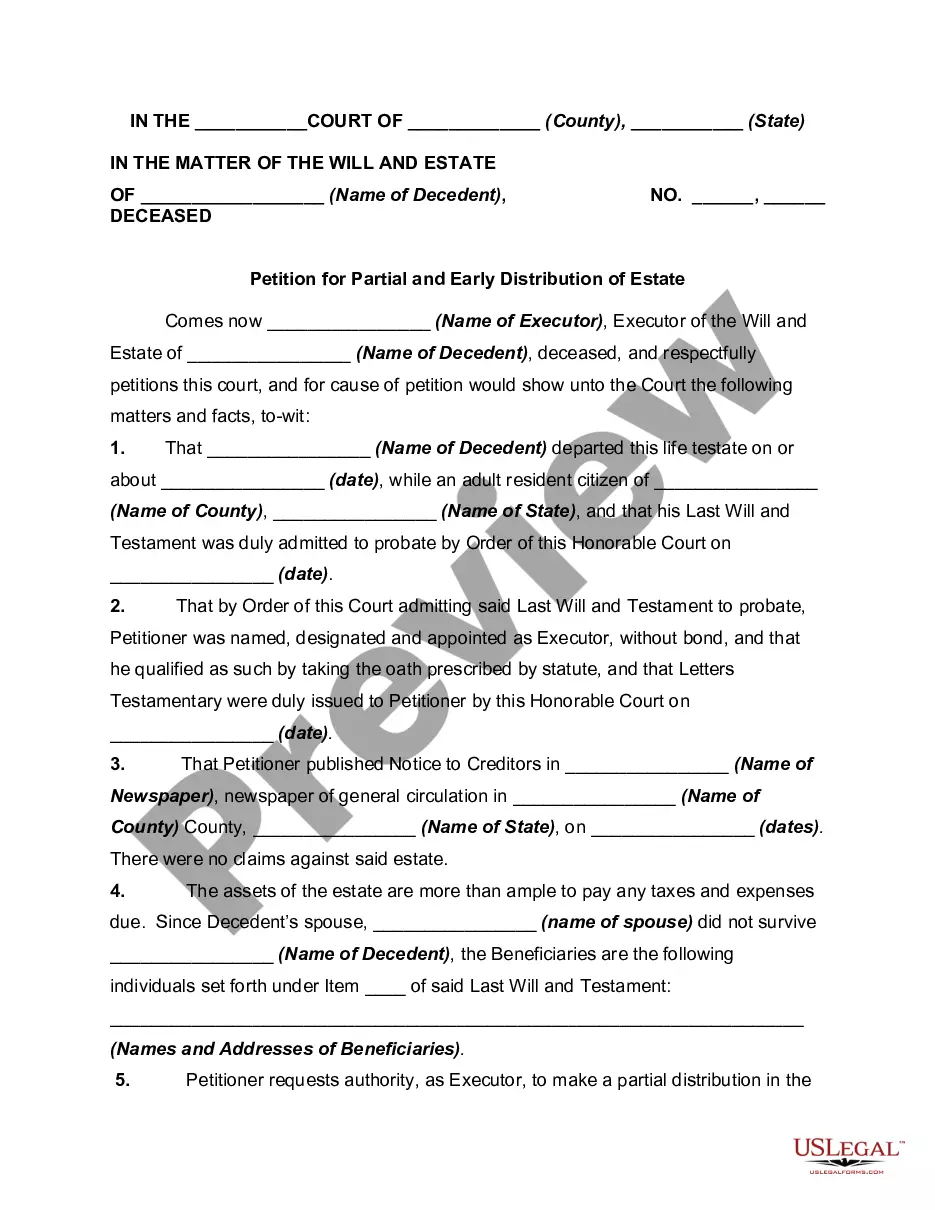
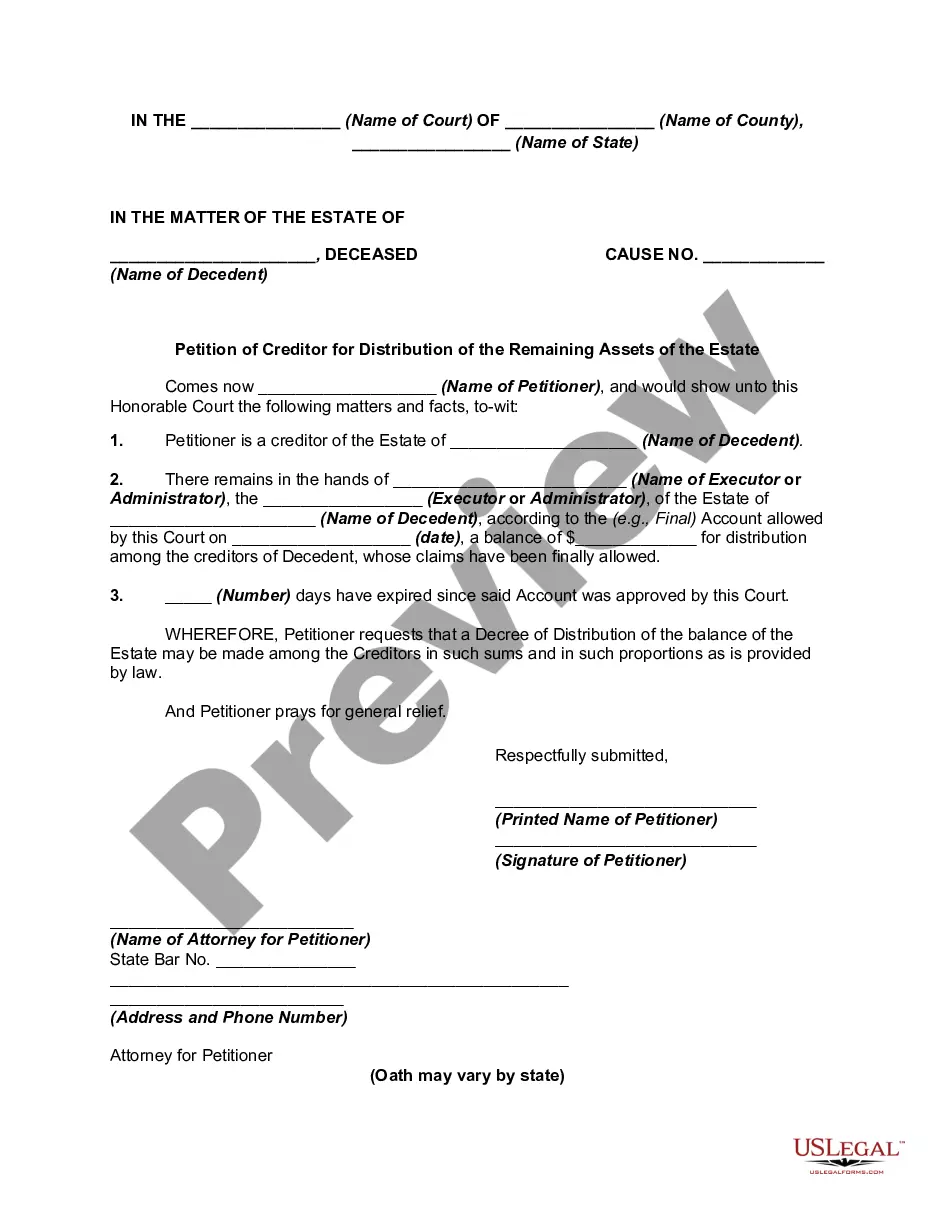
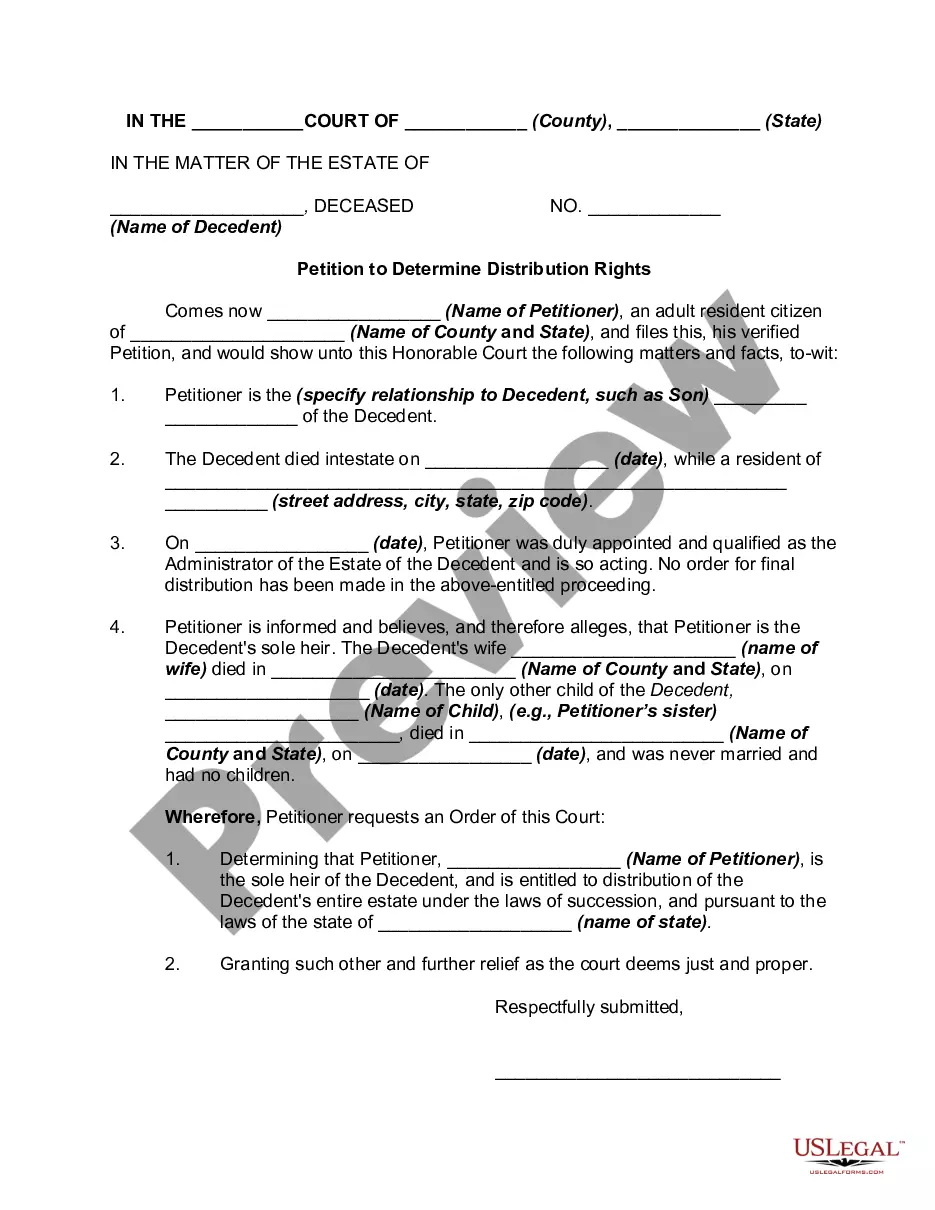
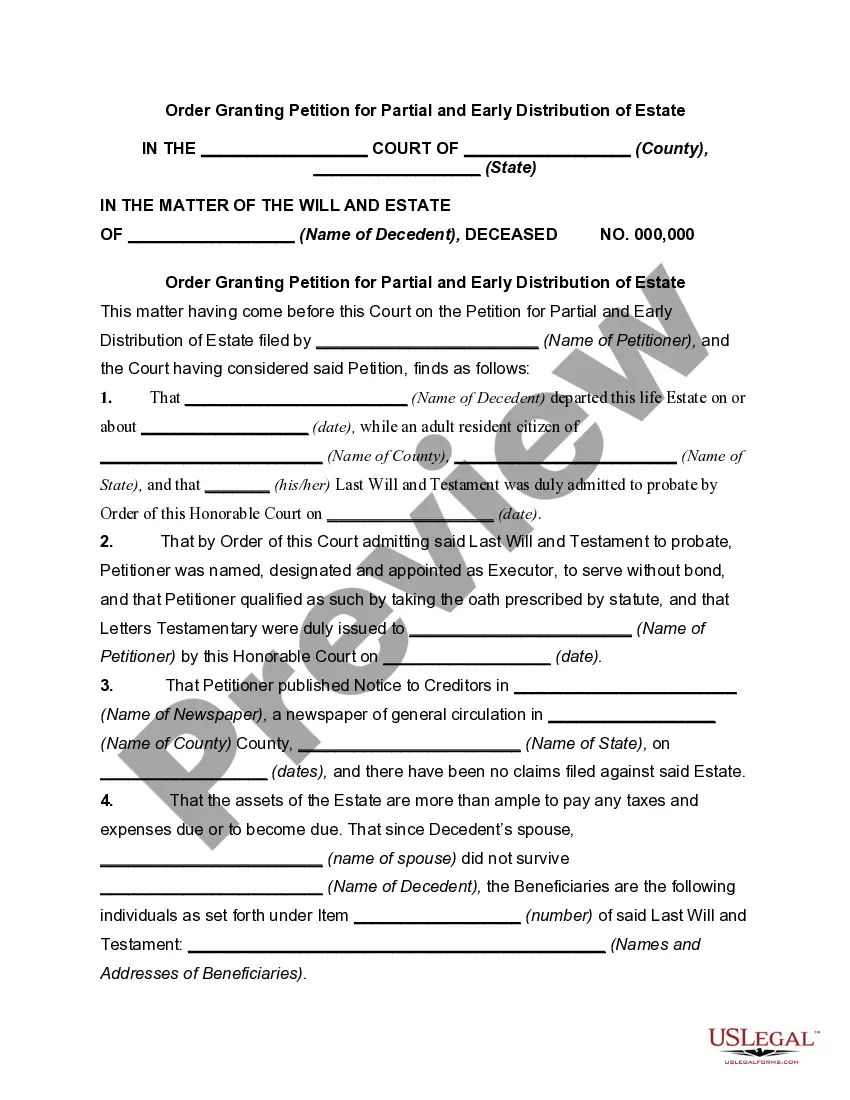
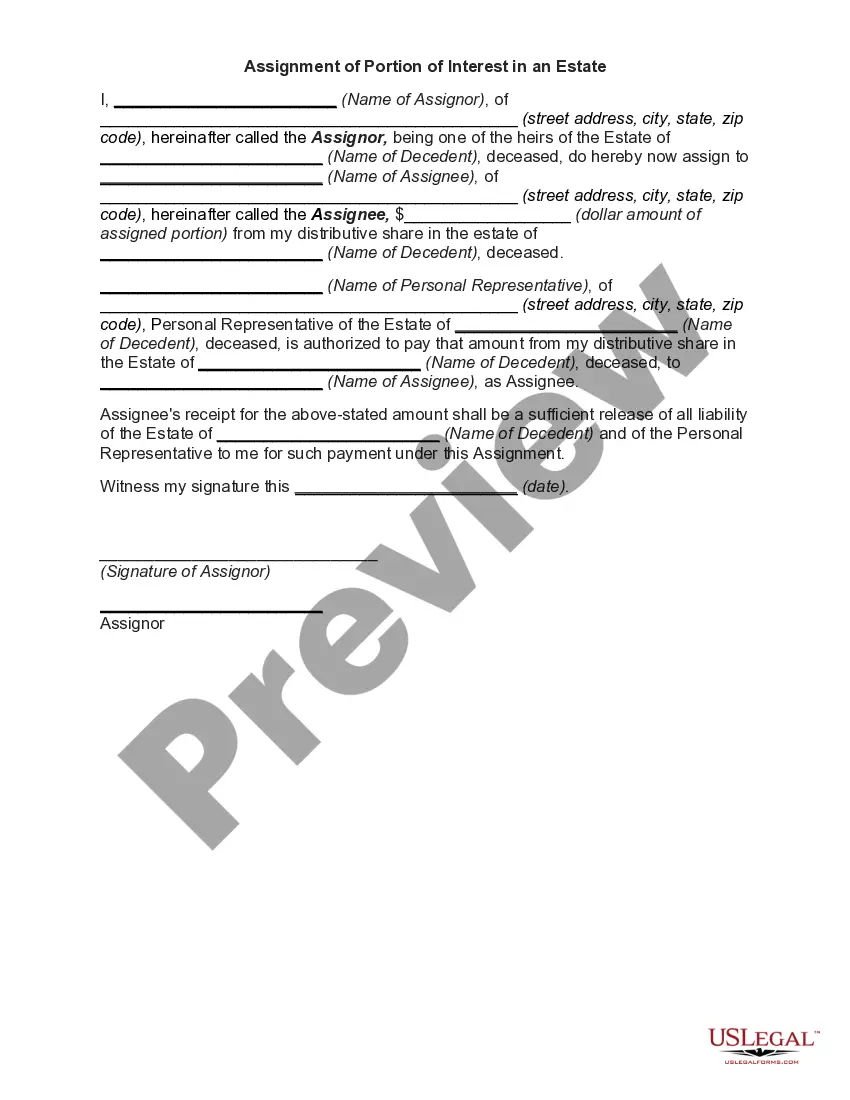
The Petition for Partial and Early Distribution of Estate is a legal document that allows an executor to request permission from the court to distribute a portion of an estate's assets to beneficiaries before the estate is fully settled. This form is particularly useful in situations where beneficiaries need access to funds before the estate is officially closed, distinguishing it from other distribution forms that typically require complete closure of the estate.
Key parts of this document
- Case identification: title and number of the estate case.
- Executor details: name and appointment information of the executor.
- Notice to creditors: documentation of publication to inform creditors of the probate process.
- Beneficiary information: names and addresses of individuals entitled to a distribution.
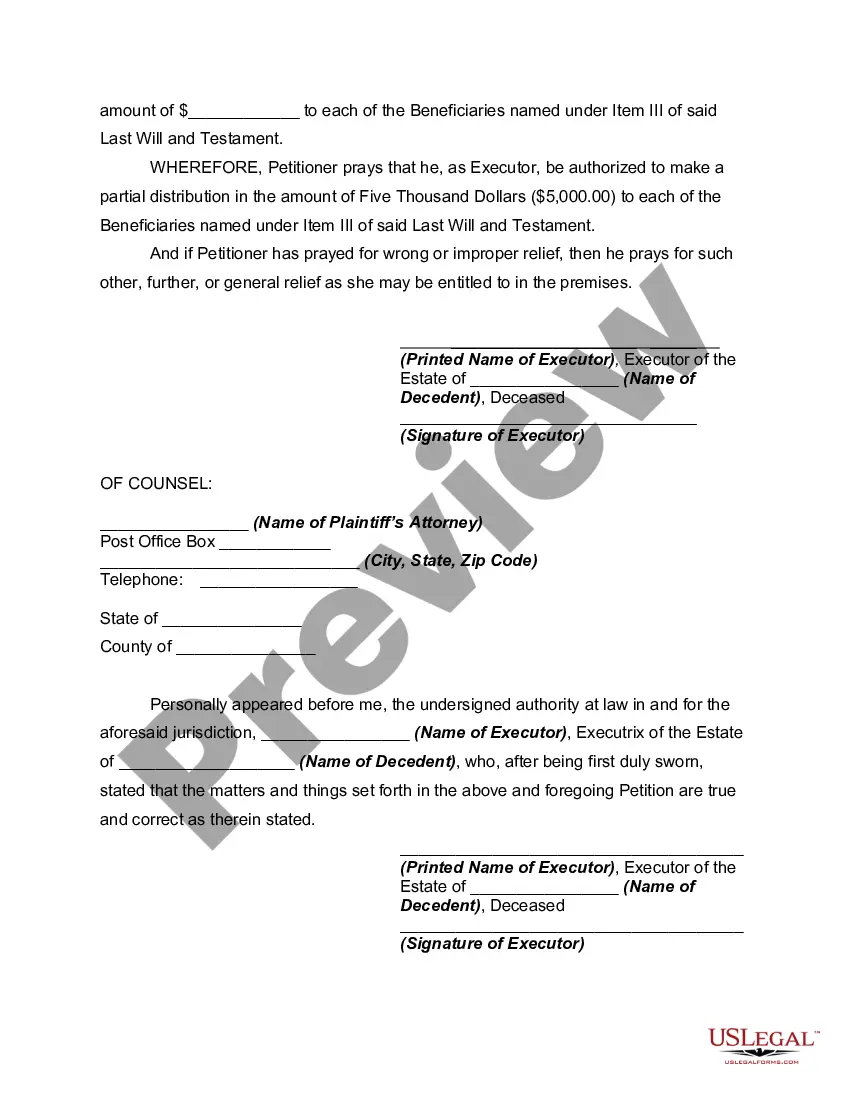
- Requested distribution amount: specific dollar amount requested for each beneficiary.
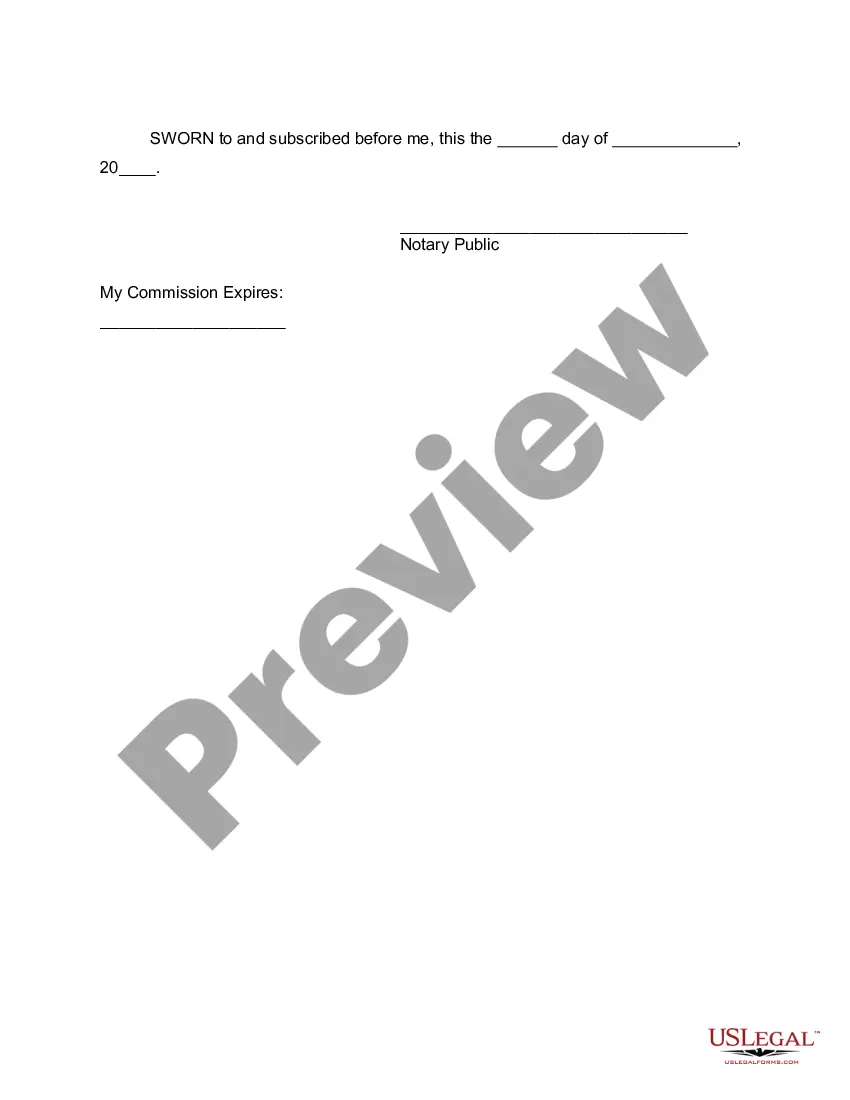
- Executor's signature and notary section: validation of the petition with necessary signatures.
When this form is needed
This form should be used when an executor seeks to make a partial distribution to beneficiaries after the period for creditors to make claims has expired, and the estate has sufficient assets to cover potential taxes and administrative expenses. It is ideal in circumstances where the full closing of the estate would take an extended time, such as when waiting on IRS closing letters, allowing for beneficiaries to receive early access to funds.
Who can use this document
- Executors of estates who are managing the distribution of assets under a will.
- Beneficiaries needing early access to their inheritance before estate closure.
- Attorneys representing clients in estate management and probate matters.
Steps to complete this form
- Fill in the decedent's name and details about their passing.
- Insert the name and qualifications of the executor along with the date Letters Testamentary were issued.
- Document the notice provided to creditors and confirm there are no claims against the estate.
- Detail the list of beneficiaries including their names and addresses.
- State the amount requested for distribution to each beneficiary.
- Sign the petition in front of a notary public to validate the document.
Does this document require notarization?
This form must be notarized to be legally valid. US Legal Forms provides secure online notarization powered by Notarize, allowing you to complete the process through a verified video call.
Get your form ready online
Our built-in tools help you complete, sign, share, and store your documents in one place.
Make edits, fill in missing information, and update formatting in US Legal Forms—just like you would in MS Word.
Download a copy, print it, send it by email, or mail it via USPS—whatever works best for your next step.
Sign and collect signatures with our SignNow integration. Send to multiple recipients, set reminders, and more. Go Premium to unlock E-Sign.
If this form requires notarization, complete it online through a secure video call—no need to meet a notary in person or wait for an appointment.
We protect your documents and personal data by following strict security and privacy standards.

Make edits, fill in missing information, and update formatting in US Legal Forms—just like you would in MS Word.

Download a copy, print it, send it by email, or mail it via USPS—whatever works best for your next step.

Sign and collect signatures with our SignNow integration. Send to multiple recipients, set reminders, and more. Go Premium to unlock E-Sign.

If this form requires notarization, complete it online through a secure video call—no need to meet a notary in person or wait for an appointment.

We protect your documents and personal data by following strict security and privacy standards.
Common mistakes to avoid
- Failing to notify all potential creditors before filing the petition.
- Incorrectly estimating the estate's assets available for distribution.
- Not including all required beneficiary information.
- Missing signatures or notarial acknowledgments on the completed form.
Why use this form online
- Immediate access to comprehensive legal form templates.
- Customizable fields to tailor the form to your specific situation.
- Convenient download option allows for printing and filing at your convenience.
- Reviewed by licensed attorneys to ensure reliability and compliance with legal standards.
Looking for another form?
Form popularity
FAQ
A. Generally, beneficiaries have to wait a certain amount of time, say at least six months. That time is used to allow creditors to come forward and to pay them off with the estate assets. (In some cases, an executor may make partial distributions to the heirs after he or she estimates the debts.
Those requirements are: That the estate assets are distributed at least 6 months after the deceased's date of death; That the executor has published a 30 day notice of his/her intent to distribute the estate; and. That the time specified in the notice has expired.
The executor will need to wait until the 2 month time limit is up, before distributing the estate. Six month limit to bring a claim in other cases, it can be sensible for the executors not to pay any beneficiaries until at least 6 months after receiving the grant of probate.
When the executor has paid off the debts, filed the taxes and sold any property needed to pay bills, he can submit a final estate accounting to the probate court. Once the probate court approves the accounting, he can distribute assets to you and other beneficiaries according to the terms of the will.
A simple estate with just a few, easy-to-find assets may be all wrapped up in six to eight months. A more complicated affair may take three years or more to fully settle.
If the estate is small and has a reasonable amount of debt, six to eight months is a fair expectation. With a larger estate, it will likely be more than a year before everything settles.
A personal representative has the discretion to make a partial distribution of assets during the administration of the estate.Once final expenses have been made and the estate is ready to close, the personal representative can distribute the remaining assets to the beneficiaries.
The length of time an executor has to distribute assets from a will varies by state, but generally falls between one and three years.
Final Distribution and Closing the Estate: 1-3 Months During the probate process, you may distribute some assets, like tangible personal property. However, in most states you are required to wait to distribute financial assetssuch as proceeds from the property saleuntil the final probate hearing.