Statement of Expenses
What is this form?
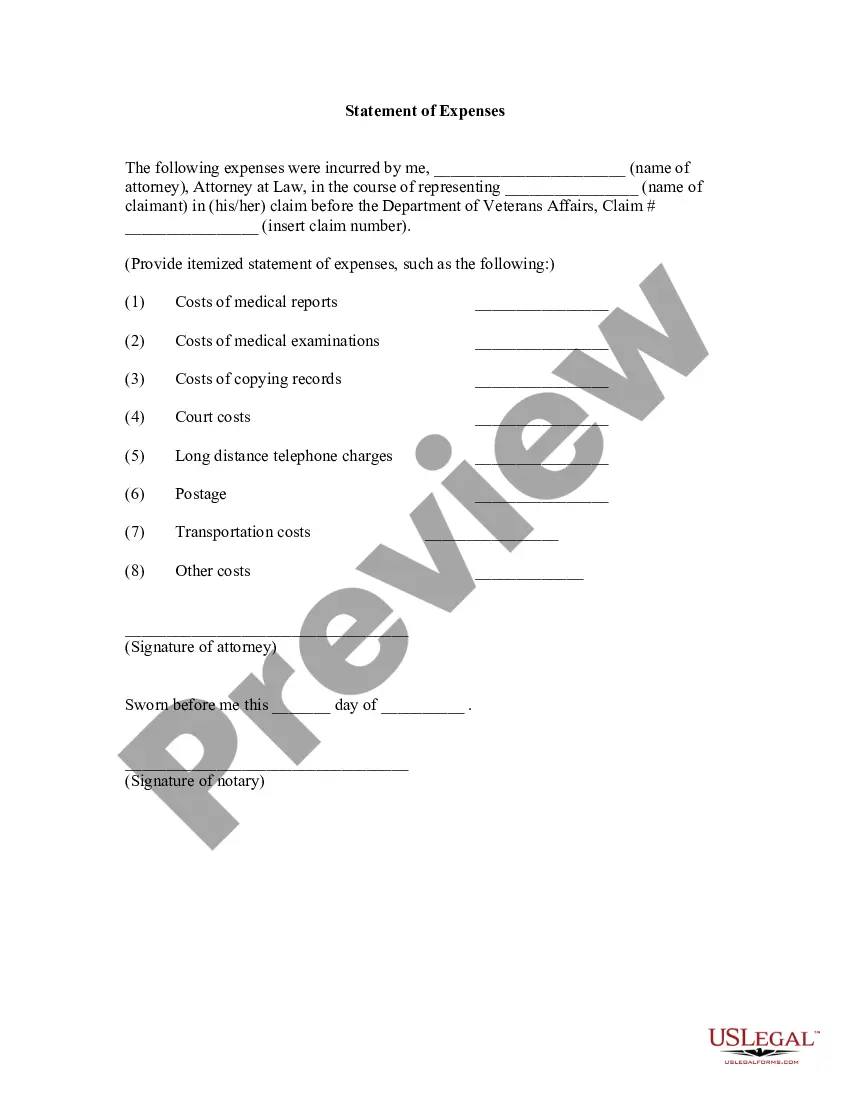
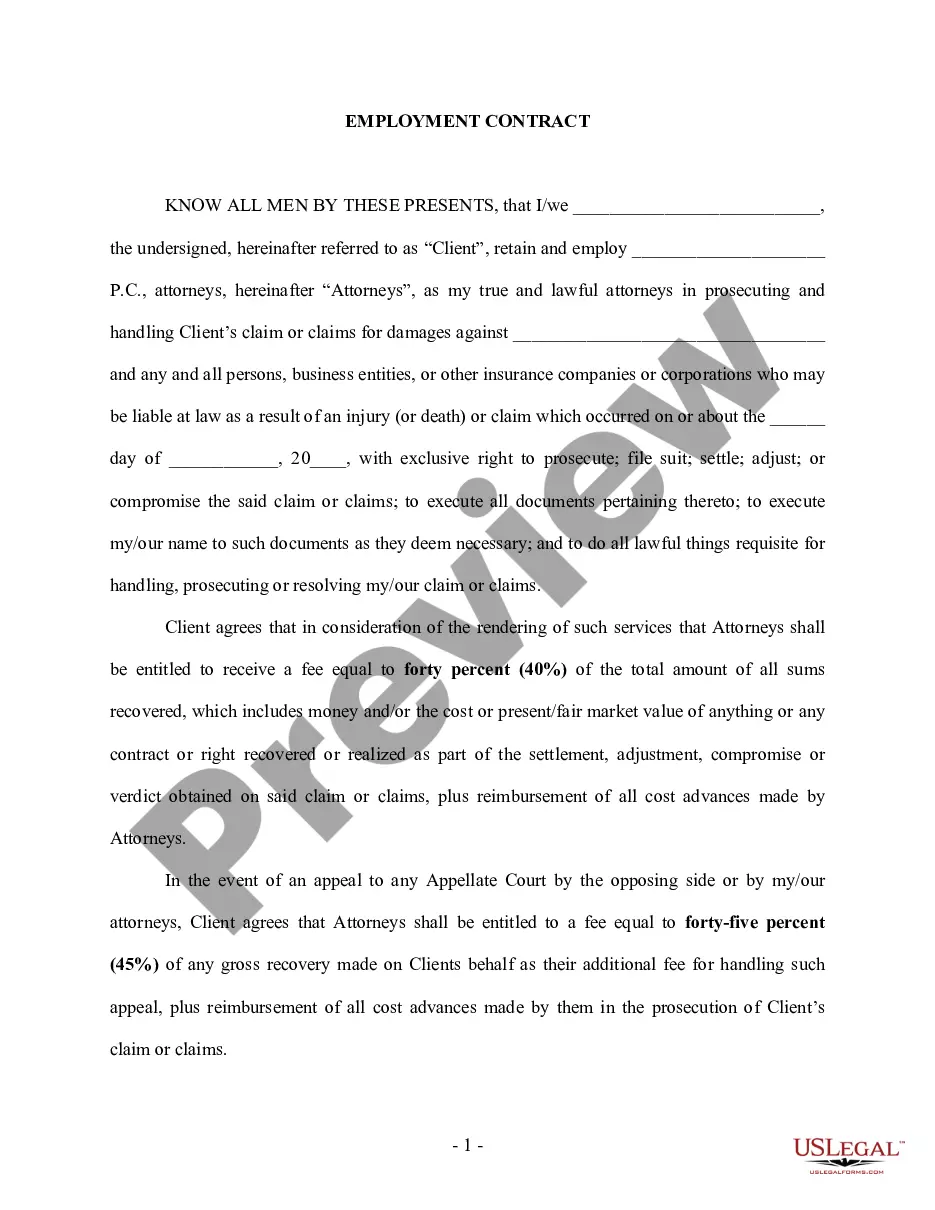
The Statement of Expenses is a legal document prepared by an attorney during the representation of a client before the Department of Veterans Affairs. This form details the specific expenses incurred by the attorney while handling the clientâs claim. It provides an itemized list of costs related to the legal services rendered, distinguishing it from other legal forms that may not emphasize expense reporting.
Key components of this form
- Name of the attorney preparing the form
- Name of the claimant being represented
- Claim number associated with the representation
- Itemized statement of expenses, including costs for medical reports, examinations, copying records, court costs, long-distance calls, postage, and transportation
- Signature of the attorney
- Notary public signature to affirm the document

When to use this document
This form should be used when an attorney has incurred expenses while representing a client in a claim before the Department of Veterans Affairs. It is essential for accurately documenting these expenses to ensure transparency and proper reimbursement when applicable.
Who can use this document
- Attorneys representing clients in claims before the Department of Veterans Affairs
- Clients who have engaged legal services related to their veterans' claims
Steps to complete this form
- Enter the name of the attorney preparing the form.
- Insert the name of the claimant being represented.
- Provide the specific claim number associated with the representation.
- List each type of expense incurred, with corresponding amounts in the itemized statement.
- Sign the form as the attorney indicating the acknowledgment of these expenses.
- Have the form notarized by a notary public, who will also sign the document.
Notarization guidance
Yes, this form must be notarized to be legally valid. Notarization helps confirm the authenticity of the signatures and the integrity of the document. US Legal Forms offers integrated online notarization services for convenience, allowing you to get documents notarized securely via video call at any time.
Get your form ready online
Our built-in tools help you complete, sign, share, and store your documents in one place.
Make edits, fill in missing information, and update formatting in US Legal Forms—just like you would in MS Word.
Download a copy, print it, send it by email, or mail it via USPS—whatever works best for your next step.
Sign and collect signatures with our SignNow integration. Send to multiple recipients, set reminders, and more. Go Premium to unlock E-Sign.
If this form requires notarization, complete it online through a secure video call—no need to meet a notary in person or wait for an appointment.
We protect your documents and personal data by following strict security and privacy standards.

Make edits, fill in missing information, and update formatting in US Legal Forms—just like you would in MS Word.

Download a copy, print it, send it by email, or mail it via USPS—whatever works best for your next step.

Sign and collect signatures with our SignNow integration. Send to multiple recipients, set reminders, and more. Go Premium to unlock E-Sign.

If this form requires notarization, complete it online through a secure video call—no need to meet a notary in person or wait for an appointment.

We protect your documents and personal data by following strict security and privacy standards.
Common mistakes
- Failure to include the claim number, which is essential for reference.
- Omitting details of specific expenses, making it unclear what costs were incurred.
- Not obtaining a signature from a notary public, potentially invalidating the document.
Why complete this form online
- Convenience of completing the form at any time without the need for a physical visit.
- Editability allows modifications before finalizing the document.
- Access to templates drafted by licensed attorneys ensures accuracy and compliance with legal standards.
Looking for another form?




Form popularity
FAQ
Why - The expense report must provide information as to why the expense was incurred. The business purpose should substantiate why the expenses are reasonable and appropriate for the university. The ?why? should include the primary reason for the expense.
An expense is a type of expenditure that flows through the income statement and is deducted from revenue to arrive at net income. Due to the accrual principle in accounting, expenses are recognized when they are incurred, not necessarily when they are paid for.
General overview of the difference between invoices and expense reports: Invoices are generally sent by a business to receive payment from a customer. Expense Reports are usually sent by an employee to their manager for approval.
What is an Expense Policy? A company expense policy is a guide for employees who make purchases using company funds. Expense policies outline allowable work-related expenses and purchases, the reimbursement process (including expense reports), and other details to help your business manage spend.
An expense report contains a categorized and itemized list of expenses that were made on behalf of the organization. This report helps the employer or finance team determine what money was spent, what was purchased, and how much of the expenditure is approved for reimbursement.
An income and expenditure statement is a type of financial document designed to identify all forms of income that is received within a given period, while also documenting all payments or expenditures that were related to that same period.
Expenses and liabilities should not be confused with each other. One is listed on a company's balance sheet, and the other is listed on the company's income statement. Expenses are the costs of a company's operation, while liabilities are the obligations and debts a company owes.
What Are Examples of Expenses? Examples of expenses include rent, utilities, wages, salaries, maintenance, depreciation, insurance, and the cost of goods sold. Expenses are usually recurring payments needed to operate a business.