Environmental Matters Hazardous Substances
What is this form?
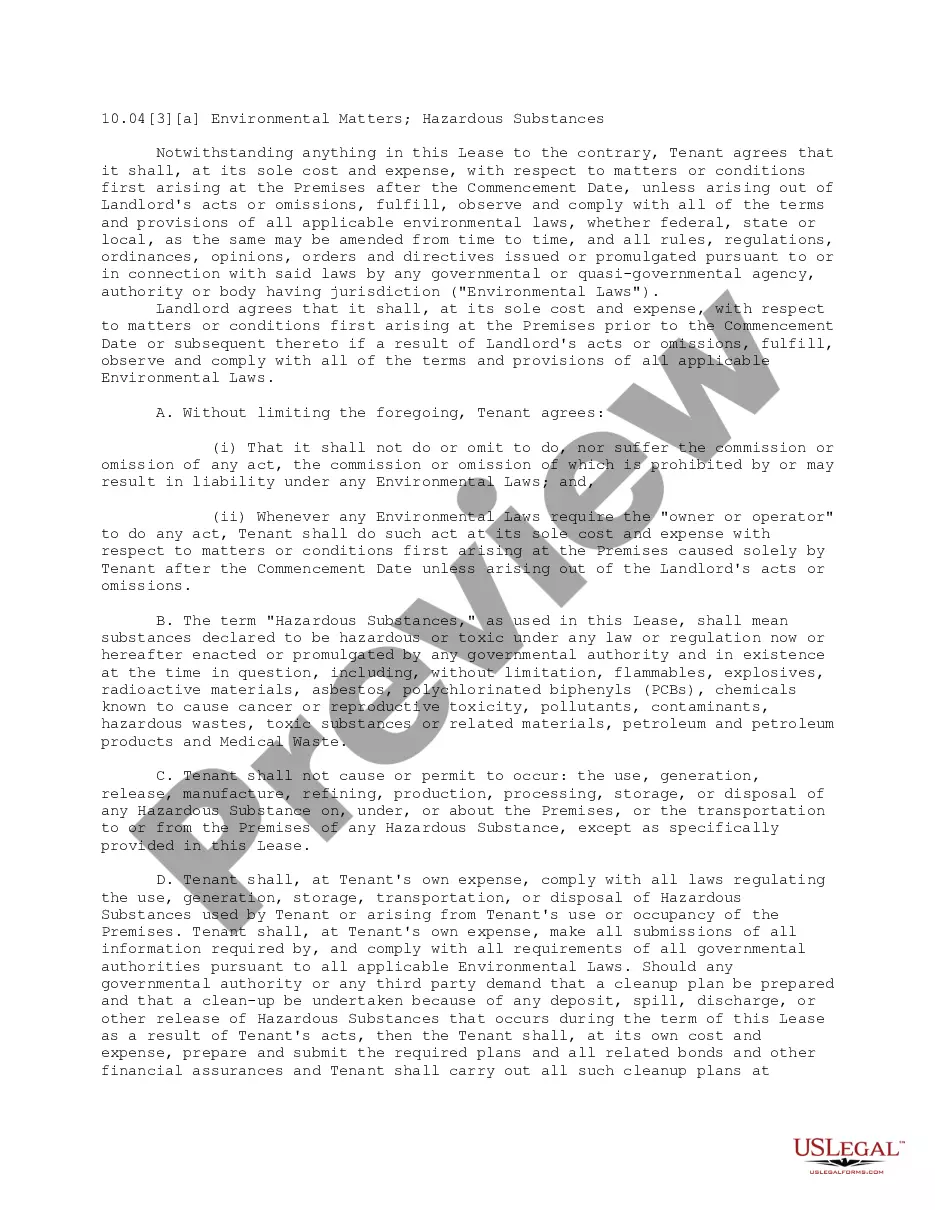
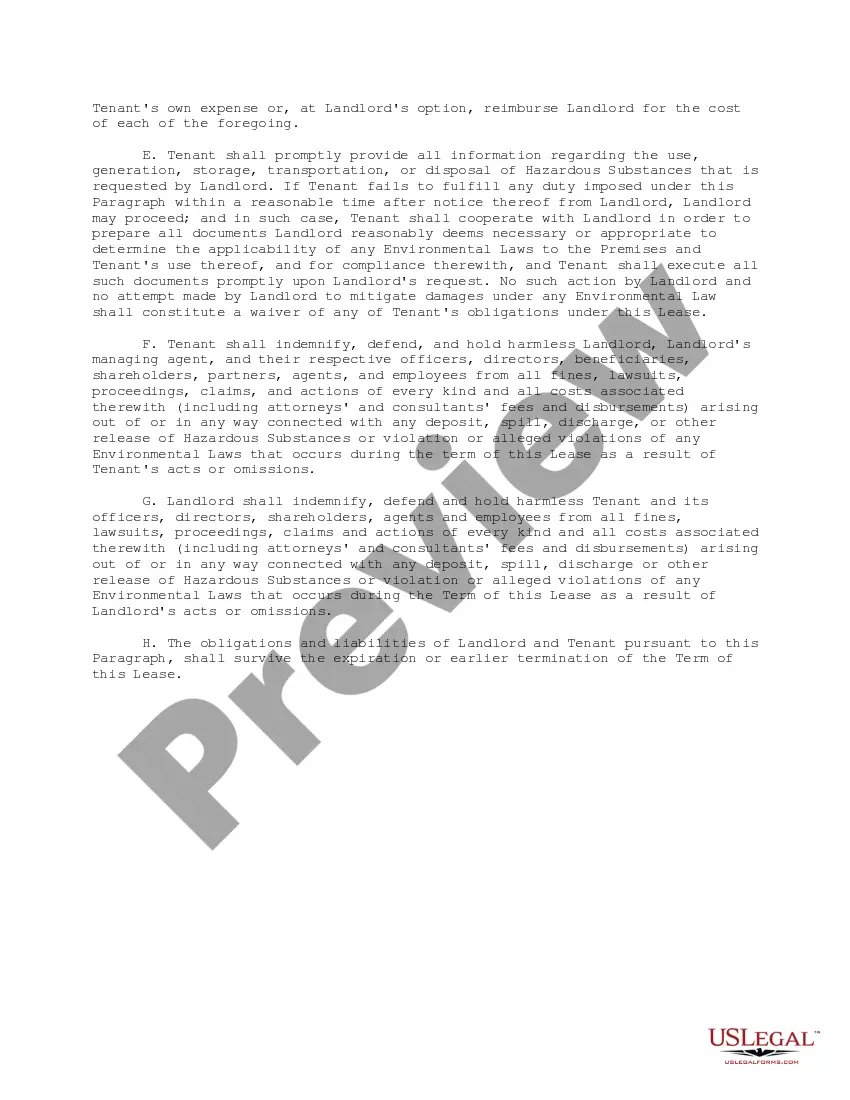
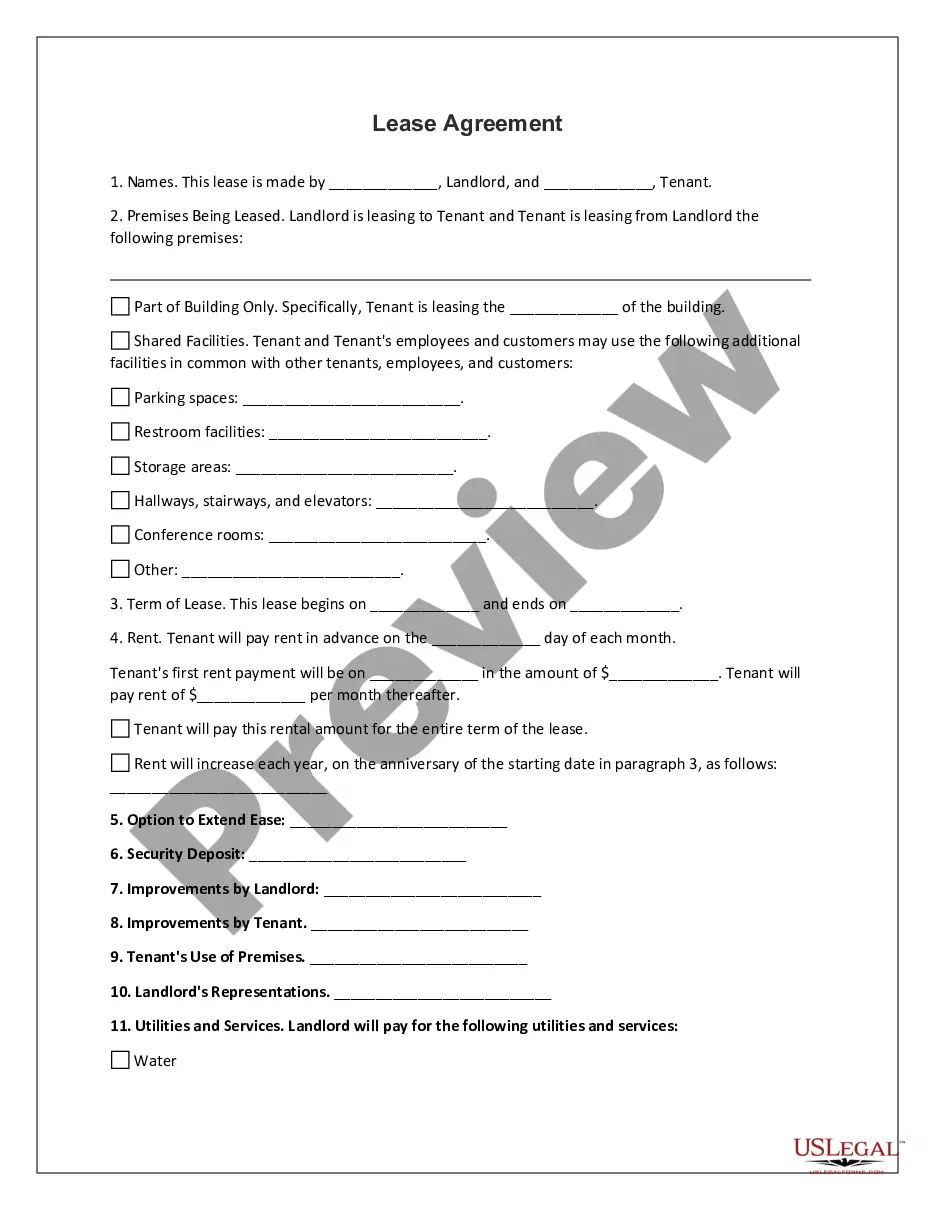
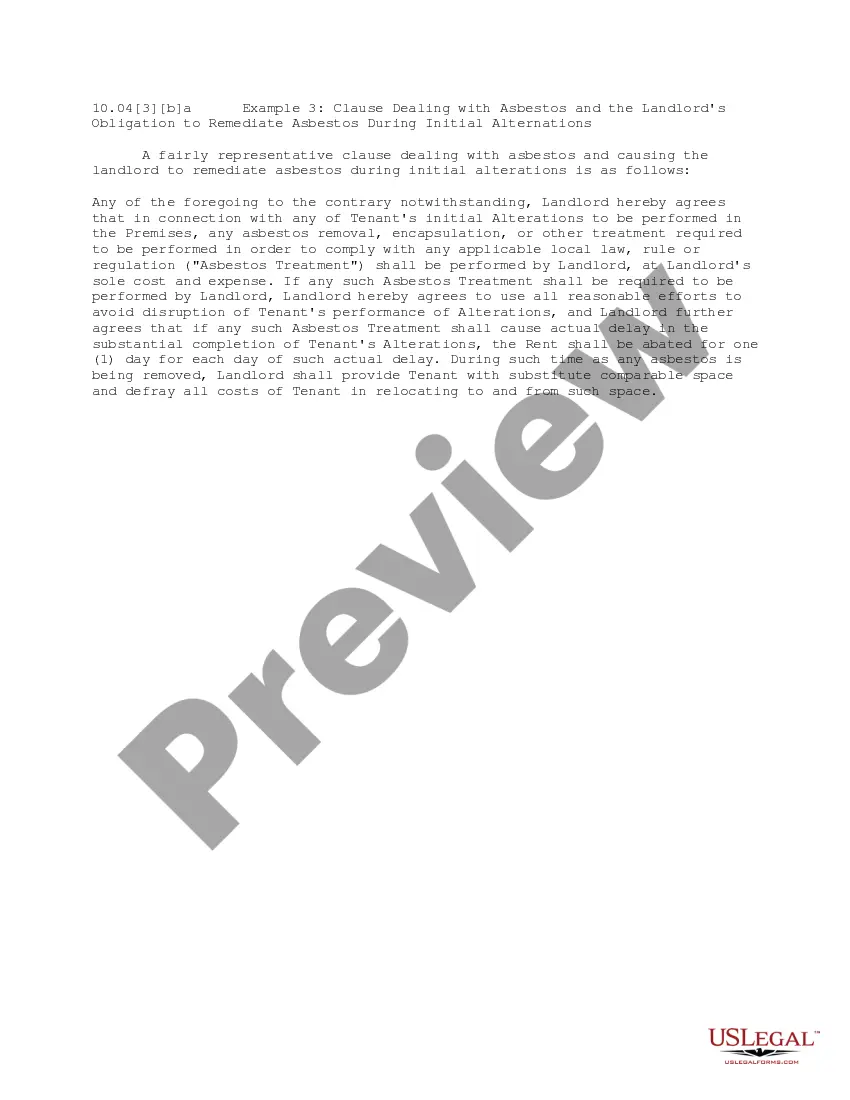
The Environmental Matters Hazardous Substances form is a legal document used in office leases to outline the obligations of landlords and tenants concerning environmental laws. It ensures that both parties understand their responsibilities related to hazardous substances, promoting compliance with local, state, and federal regulations. Unlike standard lease agreements, this form specifically addresses environmental concerns that may arise during the tenancy.
Main sections of this form
- Tenant and Landlord obligations regarding environmental laws.
- Definition of Hazardous Substances as per applicable laws.
- Requirements for compliance with hazardous materials regulations.
- Duties related to cleanup and remediation in case of spills or releases.
- Indemnification clauses protecting both parties from legal claims.
Situations where this form applies
This form should be used when entering into an office lease agreement where the property may involve handling or exposure to hazardous substances. It is essential when the tenant will engage in activities that could potentially release harmful materials, or when the landlord needs to ensure compliance with environmental regulations relevant to the premises.
Who this form is for
- Commercial landlords who wish to establish clear environmental responsibilities.
- Tenants involved in industries that may produce hazardous waste or substances.
- Property managers looking to protect their interests regarding environmental compliance.
- Real estate attorneys assisting clients in drafting or reviewing lease agreements.
How to complete this form
- Identify the parties involved, specifying the landlord and tenant names.
- Describe the premises being leased, including address and property details.
- Define obligations regarding hazardous substances and environmental compliance.
- Specify any indemnification agreements between the landlord and tenant.
- Include signatures and dates to confirm acceptance of the lease terms.
Notarization guidance
This form does not typically require notarization unless specified by local law. However, having it notarized may provide additional legal protection and validation of the agreement.
Get your form ready online
Our built-in tools help you complete, sign, share, and store your documents in one place.
Make edits, fill in missing information, and update formatting in US Legal Forms—just like you would in MS Word.
Download a copy, print it, send it by email, or mail it via USPS—whatever works best for your next step.
Sign and collect signatures with our SignNow integration. Send to multiple recipients, set reminders, and more. Go Premium to unlock E-Sign.
If this form requires notarization, complete it online through a secure video call—no need to meet a notary in person or wait for an appointment.
We protect your documents and personal data by following strict security and privacy standards.

Make edits, fill in missing information, and update formatting in US Legal Forms—just like you would in MS Word.

Download a copy, print it, send it by email, or mail it via USPS—whatever works best for your next step.

Sign and collect signatures with our SignNow integration. Send to multiple recipients, set reminders, and more. Go Premium to unlock E-Sign.

If this form requires notarization, complete it online through a secure video call—no need to meet a notary in person or wait for an appointment.

We protect your documents and personal data by following strict security and privacy standards.
Common mistakes
- Failing to accurately define hazardous substances, which can lead to legal disputes.
- Not including clear obligations for cleanup responsibilities.
- Omitting signatures from both parties, rendering the agreement invalid.
Benefits of completing this form online
- Convenient access to a comprehensive legal form without needing a lawyer initially.
- Editability allows for customization to fit specific lease arrangements.
- Secure storage of the completed form for future reference or enforcement.
Legal use & context
- This form helps establish clear responsibilities for managing hazardous materials, reducing liability risks.
- Compliance with environmental laws is crucial as failure to adhere may result in significant fines and legal actions.
- The lease obligations lasting beyond the termination of the lease ensure ongoing protection from potential environmental issues.
Looking for another form?

Form popularity
FAQ
Inspect all hazardous waste areas weekly. Document and fix any concerns. Respond to spills. Clean up and dispose of properly. Maintain structures and containment and safety equipment.
It can include any single or combination of toxic chemical, biological, or physical agents in the environment, resulting from human activities or natural processes, that may impact the health of exposed subjects, including pollutants such as heavy metals, pesticides, biological contaminants, toxic waste, industrial and
The best way to deal with hazardous waste is not to produce it or to produce less of it. You can help protect people and the environment by reading product labels and choosing the least hazardous products available.
Physical hazards. Biological hazards. Chemical hazards. Cultural/practice-related hazards. Social hazards.
Chemical hazards. Jobs that involve handling chemicals present health risks to the employees. Biological hazards. Unseen hazards. Ergonomic hazards. Electrical hazards.
Common environmental chemical pollutants include pesticides and herbicides, volatile organics (VOCs) such as benzene, toluene; and chloroform, heavy metals such as lead, mercury, and arsenic; air contaminants such as carbon monoxide, ozone, particulate matter (PM), and second hand smoke; and persistent organic
The EPA defines three types of hazardous waste: listed, characteristic, and mixed radiological waste. Each of these categories has subcategories that can become very precise, but the basics are as follows.
Ignitability, or something flammable. corrosivity, or something that can rust or decompose. reactivity, or something explosive. toxicity, or something poisonous.
Formaldehyde. Mercury. Lead. Asbestos. Hazardous/Toxic Air Pollutants. Per- and Polyfluoroalkyl Substances (PFAS) Pesticide Chemicals. Glyphosate. Polychlorinated Biphenyls (PCBs)