Mississippi Second Deed of Trust
About this form
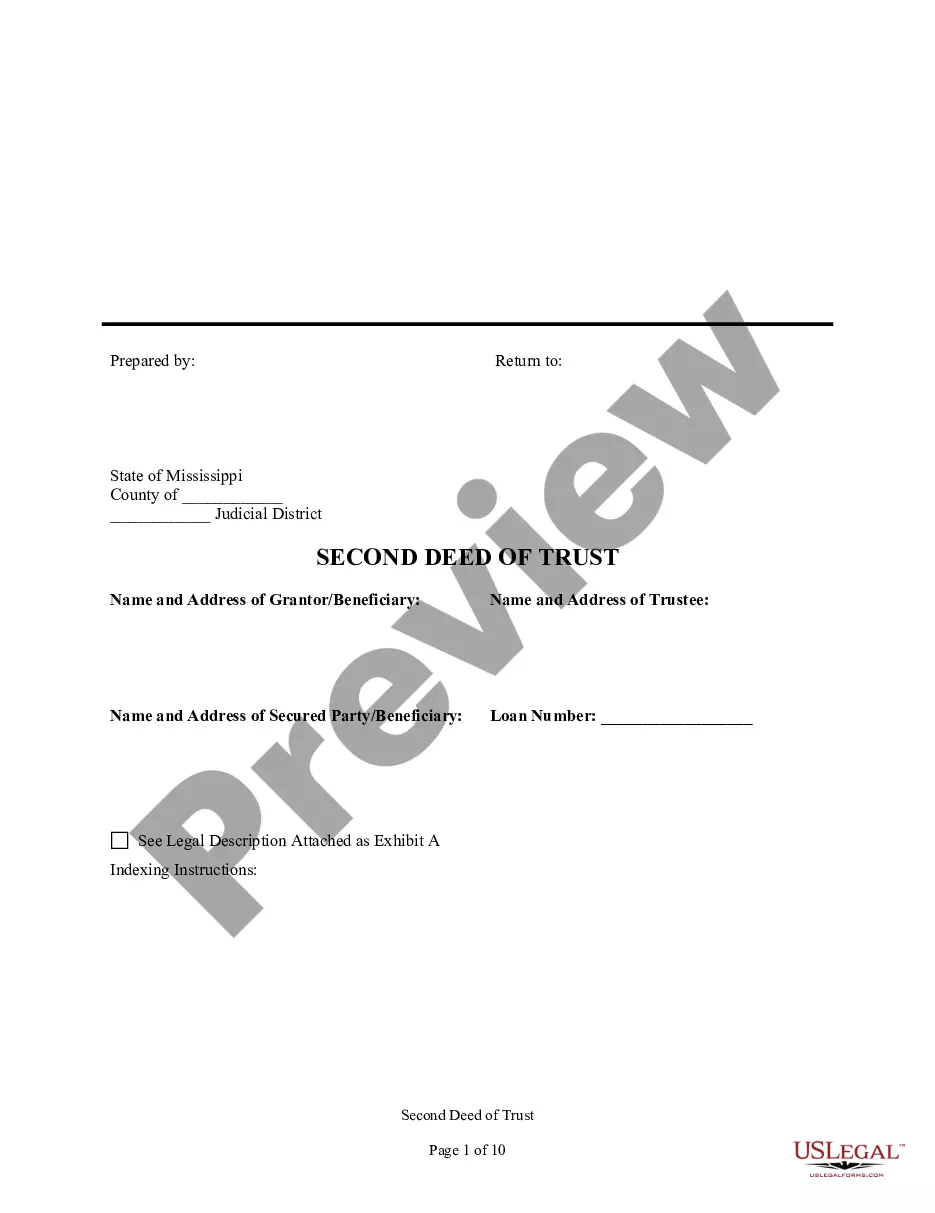
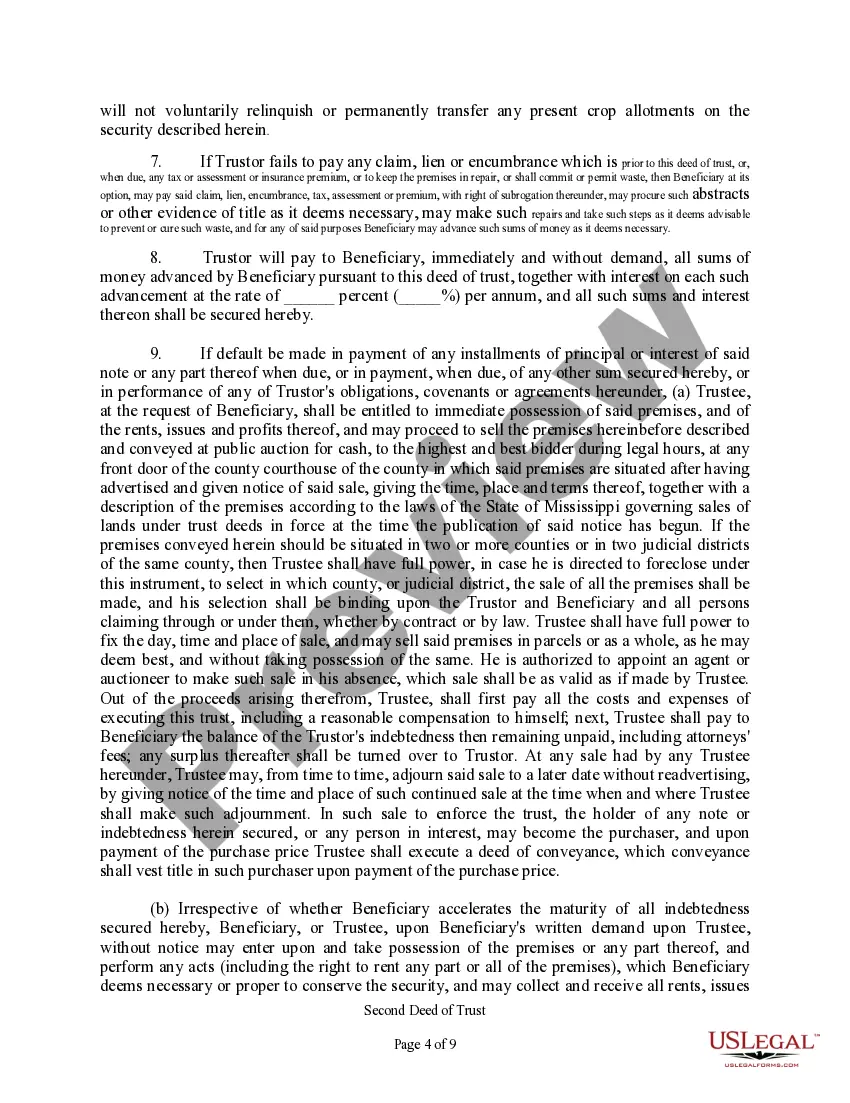
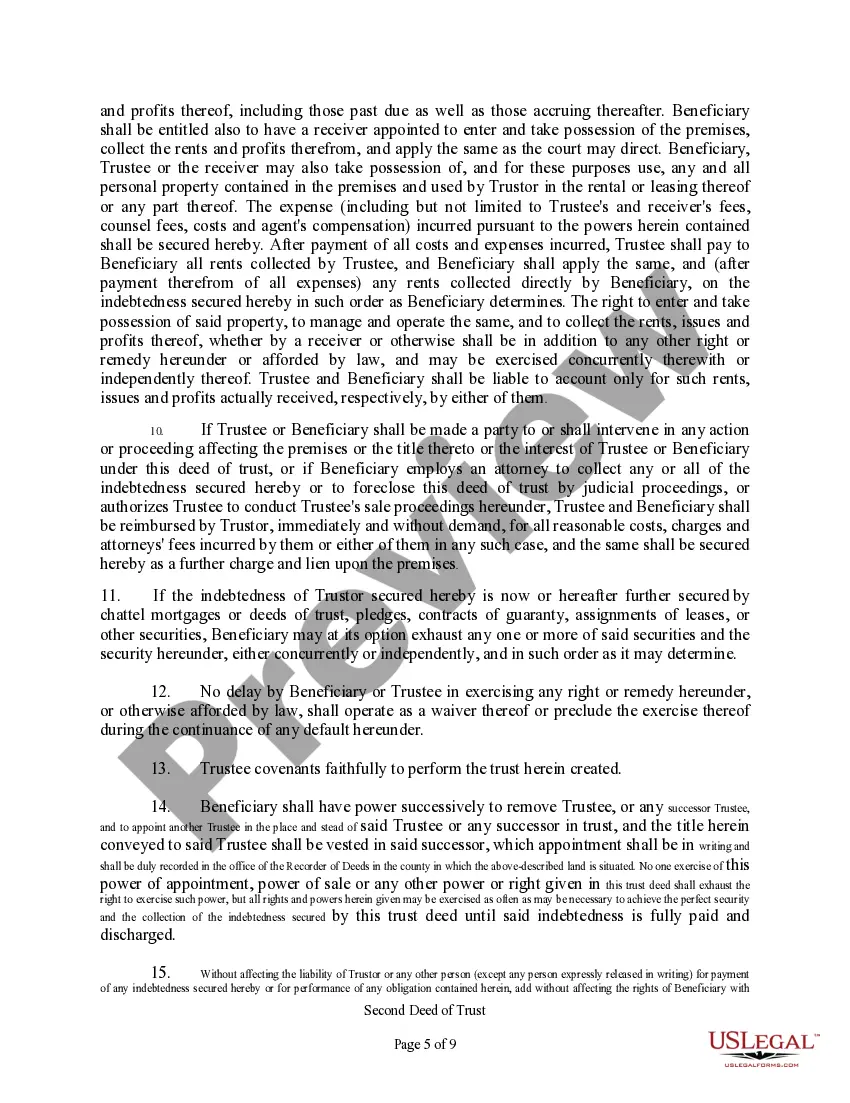
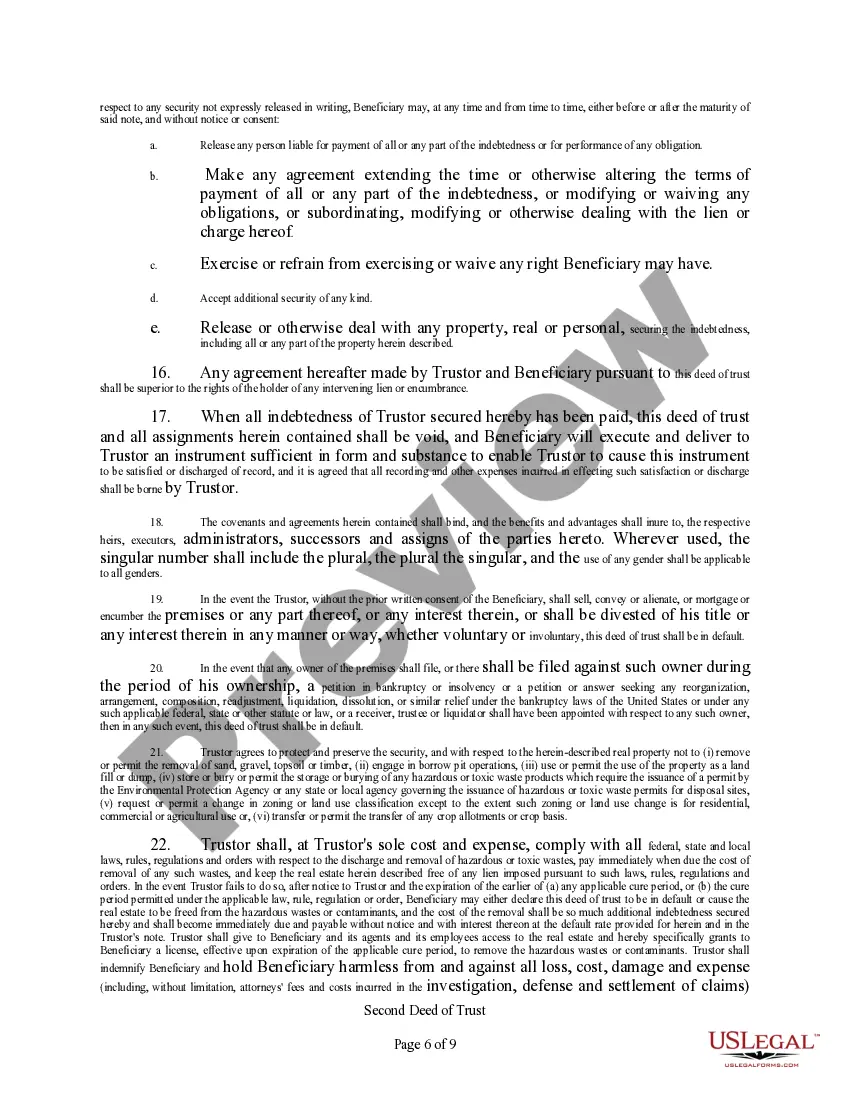
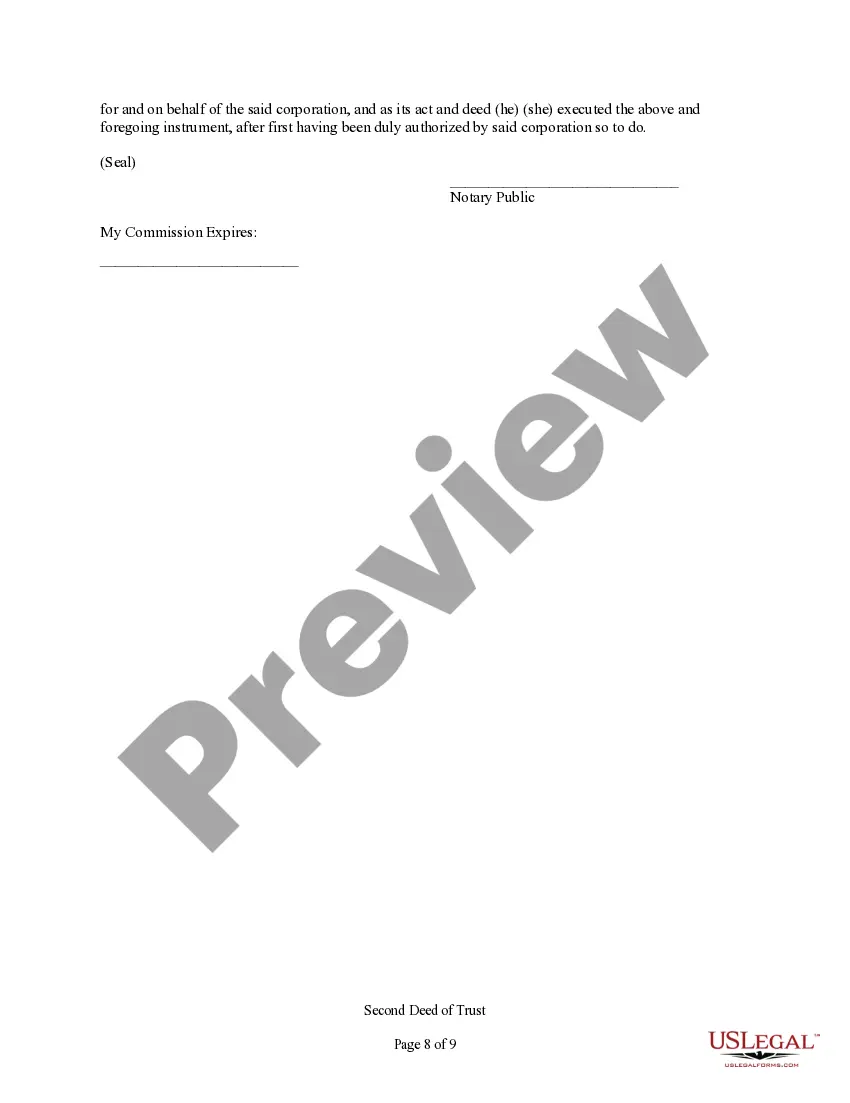
The Second Deed of Trust is a legal document that establishes a lien on a property, serving as security for a loan. This deed is subordinate to a previous deed of trust, meaning it is secondary in priority. Unlike a first deed of trust, this form ensures that the lender (Beneficiary) has a legal claim to the property only after the obligations of the first deed have been satisfied. It is particularly relevant in Mississippi since it complies with state laws regarding property security.
Key parts of this document
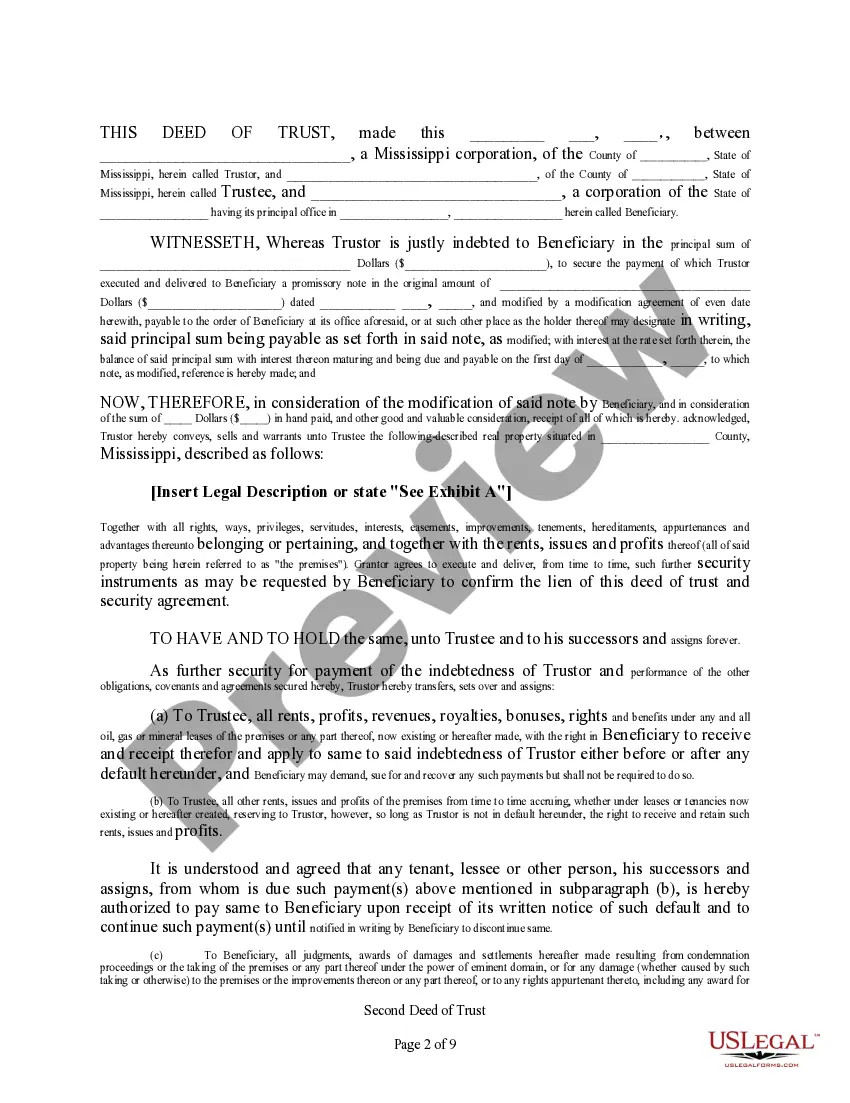
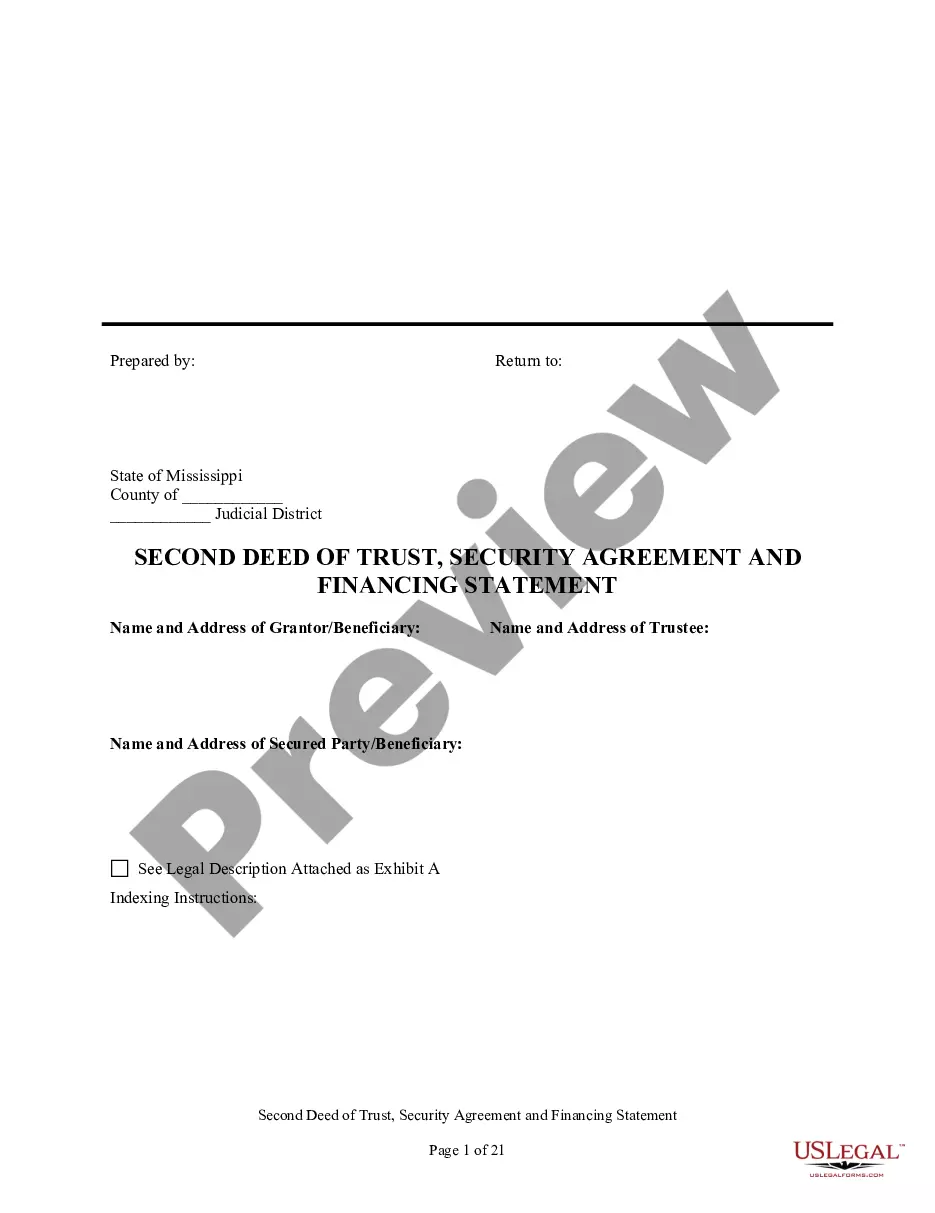
- The parties involved: Trustor (borrower) and Beneficiary (lender).
- Indebtedness amount: Comparison of principal and interest amounts owed.
- Property description: Legal identification of the real estate used as security.
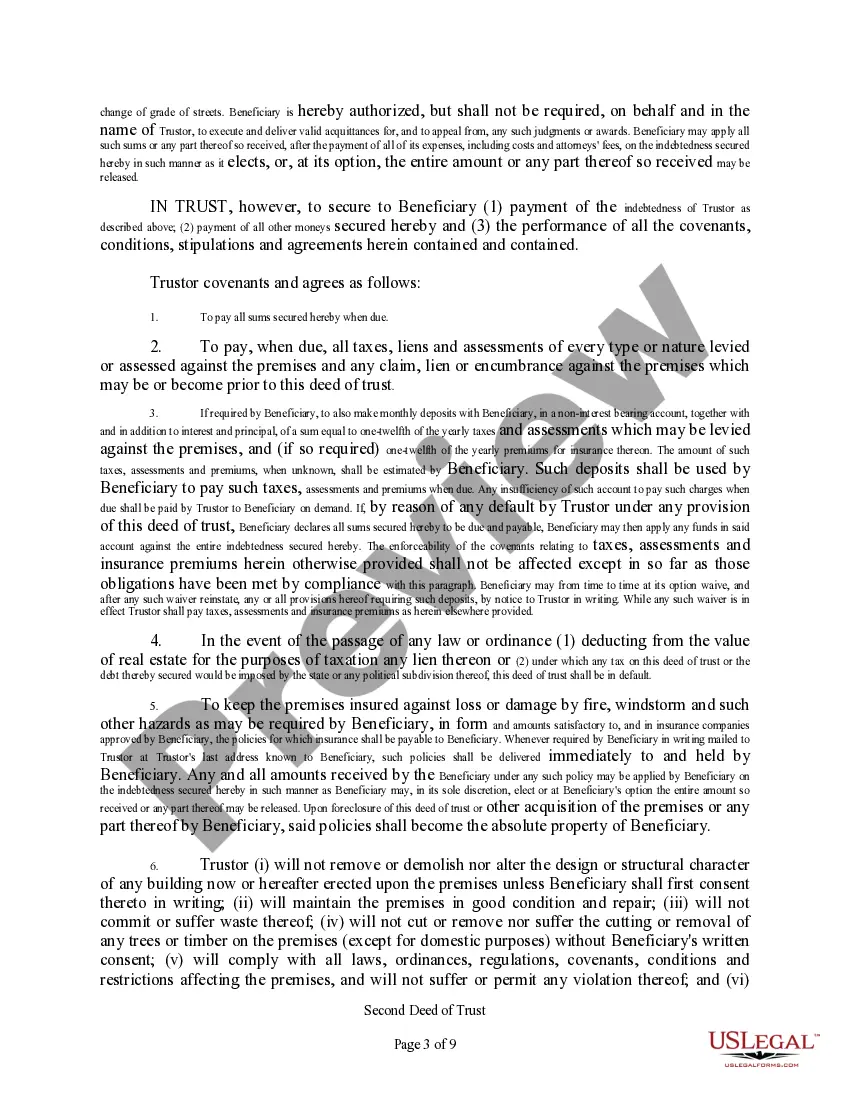
- Covenants: Obligations of the Trustor such as paying taxes, maintaining insurance, and ensuring property upkeep.
- Potential foreclosure provisions: Terms under which the Beneficiary can initiate foreclosure on the property.
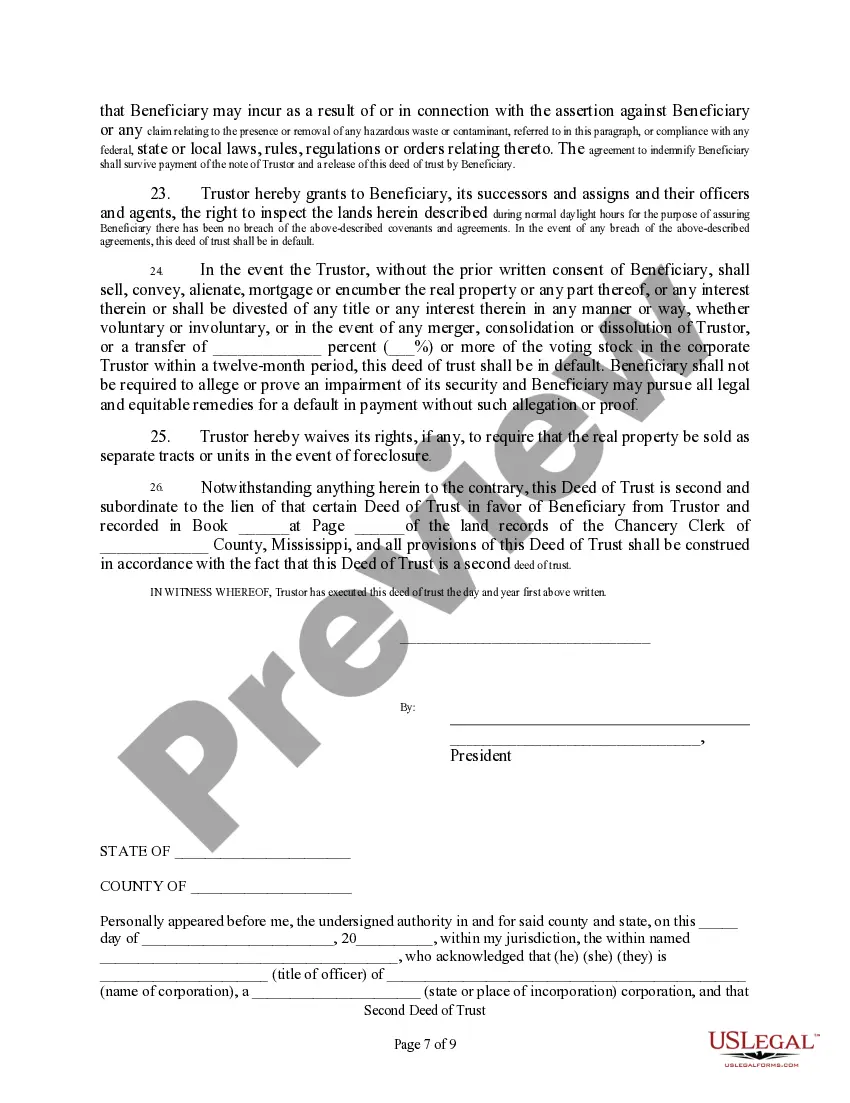
- Signature and notarization requirements: Validation through signatures and potential notarization for legal effectiveness.


Common use cases
The Second Deed of Trust is used when a borrower needs to secure additional financing with existing property as collateral. It is particularly useful when a property already has a primary mortgage, and the borrower seeks a second loan to finance home improvements, debt consolidation, or other financial needs while ensuring that the property secures both loans. This form is also applicable when refinancing or modifying existing obligations.
Who can use this document
This form is intended for:
- Homeowners seeking additional funds while maintaining an existing mortgage.
- Real estate investors looking to leverage property for further investments.
- Borrowers who need to consolidate debts with property collateral.
- Licensed real estate professionals assisting clients in securing additional financing.
How to prepare this document
- Identify the parties: Clearly state the names of the Trustor and Beneficiary.
- Specify the indebtedness: Fill in the loan amount with appropriate interest rates and payment details.
- Describe the property: Provide a legal description of the property being secured.
- Complete the covenants: Indicate the Trustor's obligations regarding maintenance and payment of taxes and insurance.
- Sign and date the document: Ensure proper execution by all parties involved, including any required notarization.
Does this document require notarization?
To make this form legally binding, it must be notarized. Our online notarization service, powered by Notarize, lets you verify and sign documents remotely through an encrypted video session.
Get your form ready online
Our built-in tools help you complete, sign, share, and store your documents in one place.
Make edits, fill in missing information, and update formatting in US Legal Forms—just like you would in MS Word.
Download a copy, print it, send it by email, or mail it via USPS—whatever works best for your next step.
Sign and collect signatures with our SignNow integration. Send to multiple recipients, set reminders, and more. Go Premium to unlock E-Sign.
If this form requires notarization, complete it online through a secure video call—no need to meet a notary in person or wait for an appointment.
We protect your documents and personal data by following strict security and privacy standards.

Make edits, fill in missing information, and update formatting in US Legal Forms—just like you would in MS Word.

Download a copy, print it, send it by email, or mail it via USPS—whatever works best for your next step.

Sign and collect signatures with our SignNow integration. Send to multiple recipients, set reminders, and more. Go Premium to unlock E-Sign.

If this form requires notarization, complete it online through a secure video call—no need to meet a notary in person or wait for an appointment.

We protect your documents and personal data by following strict security and privacy standards.
Common mistakes
- Failing to provide a complete legal description of the property.
- Leaving out dates or key details in the financial terms.
- Not having the document notarized when required.
- Neglecting to read and understand the covenants before signing.
Why use this form online
- Convenience of immediate access: Download and complete the form at your own pace.
- Editability: Easily make changes to your information before finalizing.
- Reliability: Forms are curated by licensed attorneys to ensure compliance with legal standards.
Looking for another form?
Form popularity
FAQ
When you are ready to sign a deed of trust, the parties will need to sign in the presence of a notary public.The deed of trust must then be recorded with the county where the property is located, and each of the parties (the trustor, trustee, and lender) should keep a copy of the recorded document.
A deed of trust is a written instrument with three parties: The trustor, who is the borrower and homeowner. The beneficiary, who is the lender. The trustee, who is a third party such as an insurance company or escrow management agency that holds actual title to the property in trust for the beneficiary.
Yes, there are key differences between the two. With a deed, you transfer the ownership of the property to one party. In contrast, a deed of trust does not mean the holder owns the property. In an arrangement involving a deed of trust, the borrower signs a contract with the lender with details regarding the loan.
The person who owns the property usually signs a promissory note and a deed of trust. The deed of trust does not have to be recorded to be valid.
Although recording statutes vary between U.S. states, they virtually all require that an interest in real property be formally recorded in the appropriate county office in order to be valid.If your deed has not been recorded, you are not recognized as the legal owner of your property.
Giving the wrong legal address for the property or the wrong amount of the debt can render the deed unenforceable. In some cases, the error is easy to fix, and the court will rule the deed is enforceable.
Party information: names and addresses of the trustor(s), trustee(s), beneficiary(ies), and guarantor(s) (if applicable) Property details: full address of the property and its legal description (which can be obtained from the County Recorder's Office)
Failure to record a deed effectively makes it impossible for the public to know about the transfer of a property. That means the legal owner of the property appears to be someone other than the buyer, a situation that can generate serious ramifications.
Some owners are put off using solicitors duke to the deed of trust cost. Individuals can write out their own, and use someone else as a witness. However, this may have errors or not be a legally binding document. The investment of getting a deed of trust when buying a property is often worth it in the long term.