Reassignment
Understanding this form
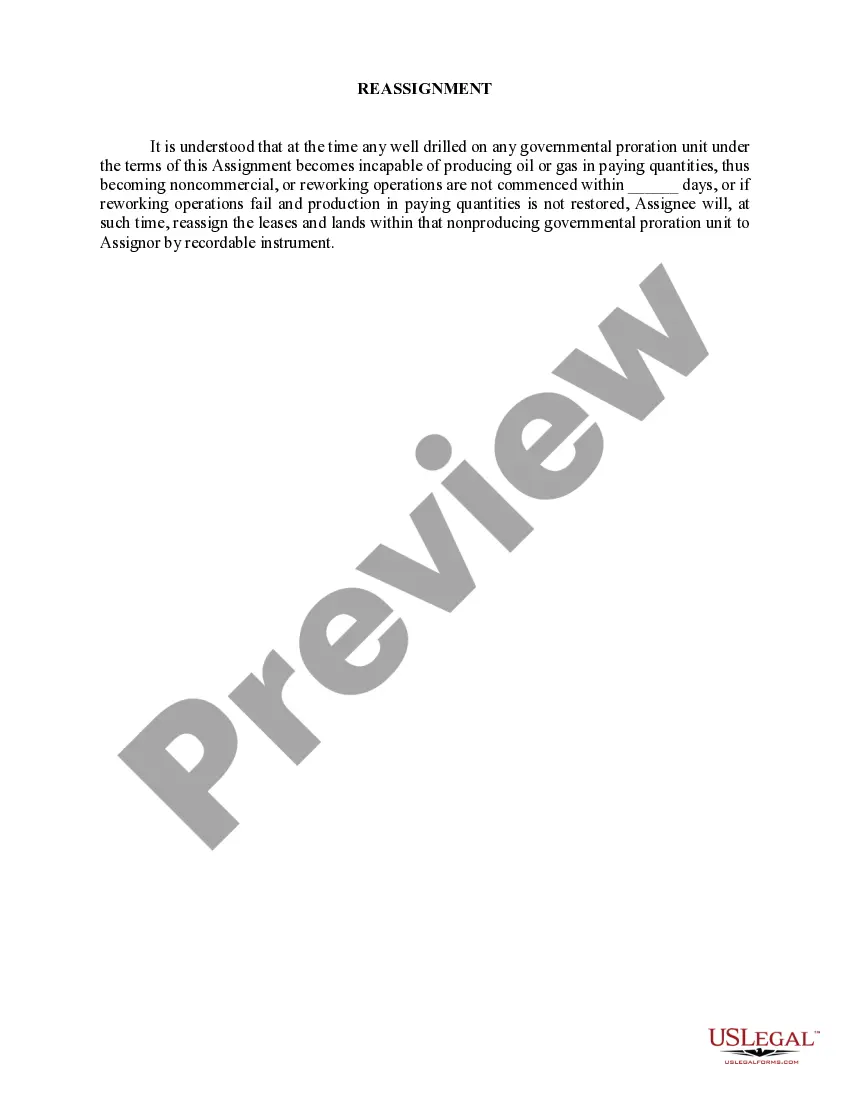
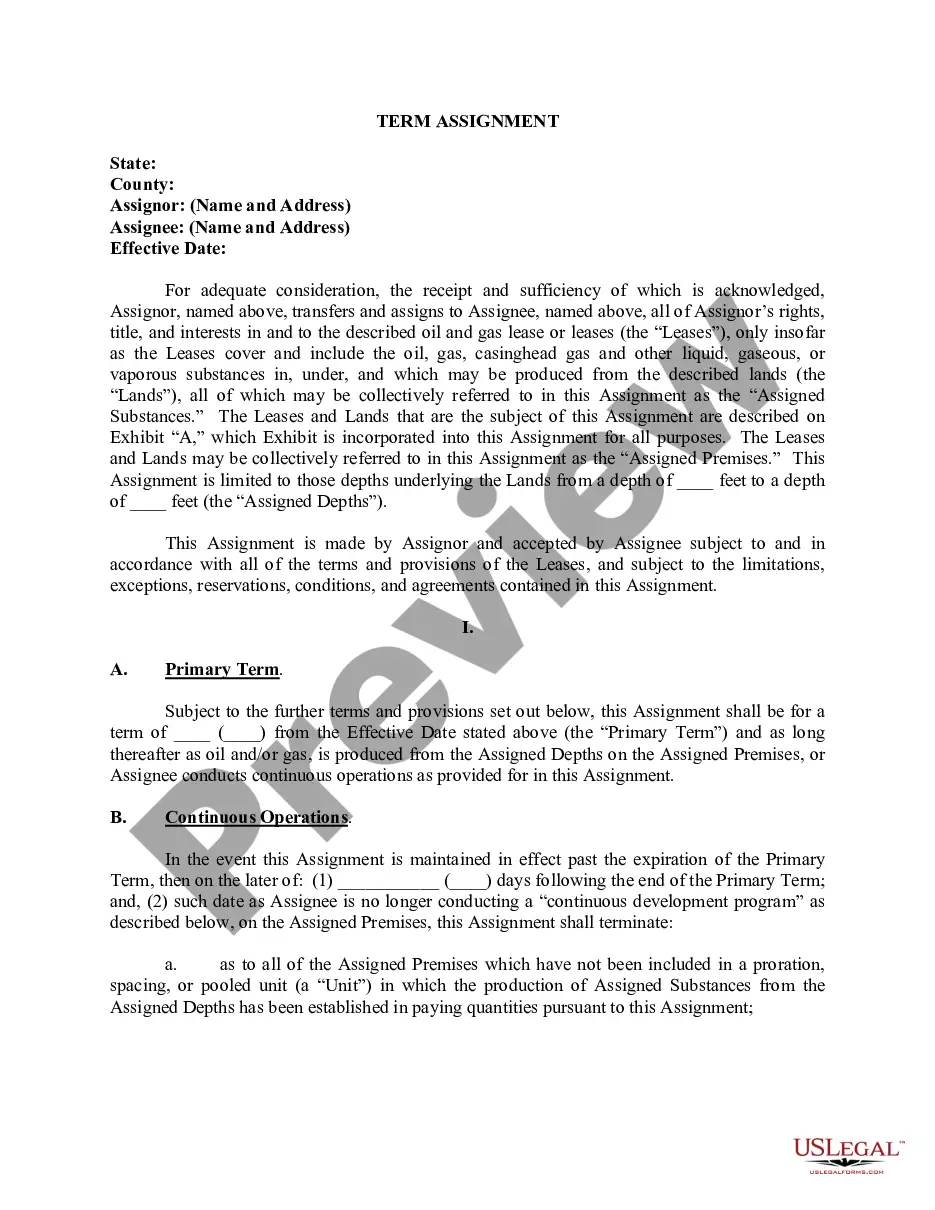
The Reassignment form facilitates the transfer of leases and lands within a governmental proration unit when certain conditions make the associated well non-commercial. This form is essential for defining the specific circumstances under which an assignee must reassign these rights back to the assignor, differing from other forms which might address lease assignments or terminations without specifying production capabilities.
What’s included in this form
- Identification of the parties involved: Assignor and Assignee.
- Conditions defining non-commercial production, including time frames for reworking operations.
- Specification of the governmental proration unit and the associated leases and lands.
- Requirements for the reassignment to be executed by a recordable instrument.
Situations where this form applies
This form should be utilized when a well drilled in a governmental proration unit becomes incapable of producing oil or gas in paying quantities. It is particularly relevant when reworking efforts are either unsuccessful or not initiated within a specified timeframe, thus necessitating the reassignment of rights back to the original leaseholder.
Who this form is for
- Landowners or operators who need to reclaim unused leases.
- Assignees looking to formalize the reassignment of non-producing leases.
- Attorneys or legal representatives managing lease agreements in the oil and gas sector.
How to prepare this document
- Identify the Assignee and Assignor by providing their legal names.
- Specify the governmental proration unit and any relevant property details.
- Outline the conditions under which the leases will be reassigned, including the specified timeframe for reworking operations.
- Ensure the form is signed and dated by both parties.
- File the reassignment by preparing a recordable instrument for official purposes.
Does this form need to be notarized?
This form does not typically require notarization unless specified by local law. It is advisable to check with local regulations to ensure compliance.
Get your form ready online
Our built-in tools help you complete, sign, share, and store your documents in one place.
Make edits, fill in missing information, and update formatting in US Legal Forms—just like you would in MS Word.
Download a copy, print it, send it by email, or mail it via USPS—whatever works best for your next step.
Sign and collect signatures with our SignNow integration. Send to multiple recipients, set reminders, and more. Go Premium to unlock E-Sign.
If this form requires notarization, complete it online through a secure video call—no need to meet a notary in person or wait for an appointment.
We protect your documents and personal data by following strict security and privacy standards.

Make edits, fill in missing information, and update formatting in US Legal Forms—just like you would in MS Word.

Download a copy, print it, send it by email, or mail it via USPS—whatever works best for your next step.

Sign and collect signatures with our SignNow integration. Send to multiple recipients, set reminders, and more. Go Premium to unlock E-Sign.

If this form requires notarization, complete it online through a secure video call—no need to meet a notary in person or wait for an appointment.

We protect your documents and personal data by following strict security and privacy standards.
Common mistakes
- Failing to specify the timeframe for reworking operations, which can lead to misunderstandings.
- Not providing complete and accurate property descriptions.
- Omitting signatures or dates, which would invalidate the form.
Advantages of online completion
- Convenience of completing the form from anywhere, at any time.
- Editable templates allow for customization to fit specific needs.
- Access to legally vetted content drafted by licensed attorneys, ensuring reliability.
- The Reassignment form is legally binding once completed and signed by both parties.
- It is essential to ensure that the form is filed with the appropriate governmental authority if required for the reassignment to be effective.
What to keep in mind
- The Reassignment form is crucial for transferring nonproducing leases between parties.
- Understanding the proper conditions and timeframes for reassignment can prevent legal issues.
- Ensure that all parties are identified and that the form is correctly executed to maintain enforceability.
Looking for another form?
Form popularity
FAQ
In simple situations where you own the vehicle outright and wish to transfer ownership to someone else, all you must do is complete a title certificate. Once you have filled out and signed the certificate, the buyer or recipient can take the title to a local DMV office and officially transfer ownership.
Directly under the statement Assignment of title by registered owner, write in the date the car was sold. On the next line, write in the name or names of the buyers and their address. On the next line, write in the odometer reading. Where it says Signature(s) of buyer, the buyer or buyers must sign the title.
A motor vehicle dealer purchasing the vehicle does not have to re-title the vehicle. This is considered a sale for resale. Vehicle sales for resale between licensed dealers are referred to as reassignments.
There are two locations you must sign. Sign on the front of the title where it is marked Signature of Owner or Agent. Sign the back of the title where it is marked "Signature of Seller/Agent." Print your name on the back of the title where it reads "Printed Name (Same as Signature)."
On the title where it says Signature(s) of all purchaser(s), all persons who are buying the car should sign their names. Next to that, the seller should sign their name. On the next line, all buyers and sellers should print their names.
Seller / Registered Owner Steps On the back of the title you will fill in the top block ASSIGNMENT OF A VEHICLE. Enter the date in the spaces indicated on the first line. Fill in the buyer name and address on the next line. Buyer provides name of buyer's lienholder, if any.
Back of the title top right - sign name(s) on the line where it reads "Signature(s) of Seller(s)." Back of the title right below where you signed name(s) - print name(s) on the line where it reads "Hand Printed Name(s) of Seller(s)."
In simple situations where you own the vehicle outright and wish to transfer ownership to someone else, all you must do is complete a title certificate. Once you have filled out and signed the certificate, the buyer or recipient can take the title to a local DMV office and officially transfer ownership.