Oregon Warranty Deed from an Individual to Two Individuals / Husband and Wife
Understanding this form
The Warranty Deed from an Individual to Two Individuals, also known as a Quitclaim Deed, is a legal document used to transfer property ownership from one individual (the Grantor) to two individuals, typically a married couple or two co-owners. This form ensures that the Grantees receive full rights to the property and complies with all state statutory laws, providing a clear framework for the transfer of title. Unlike other deeds, a warranty deed offers an assurance of clear title and protection against future claims on the property, making it a reliable choice for property transfers.
What’s included in this form
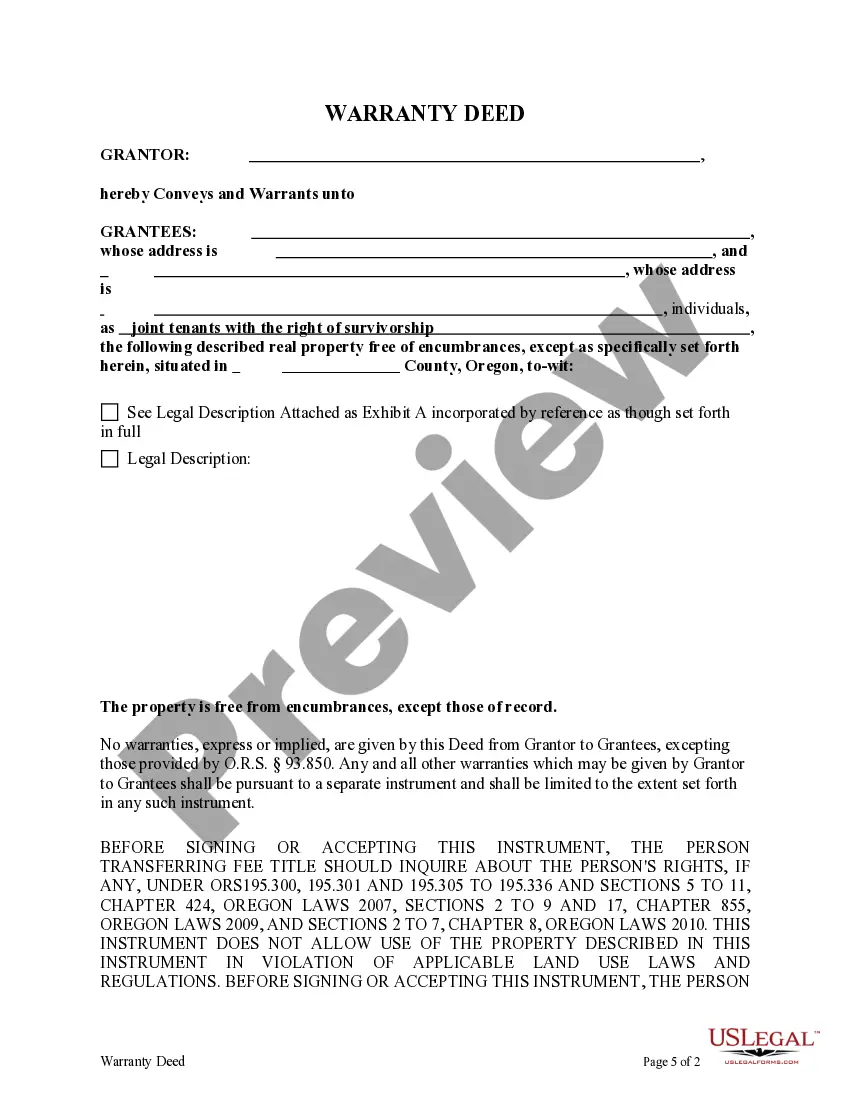
- Identification of the Grantor who conveys the property.
- Details of the Grantees who will receive the property.
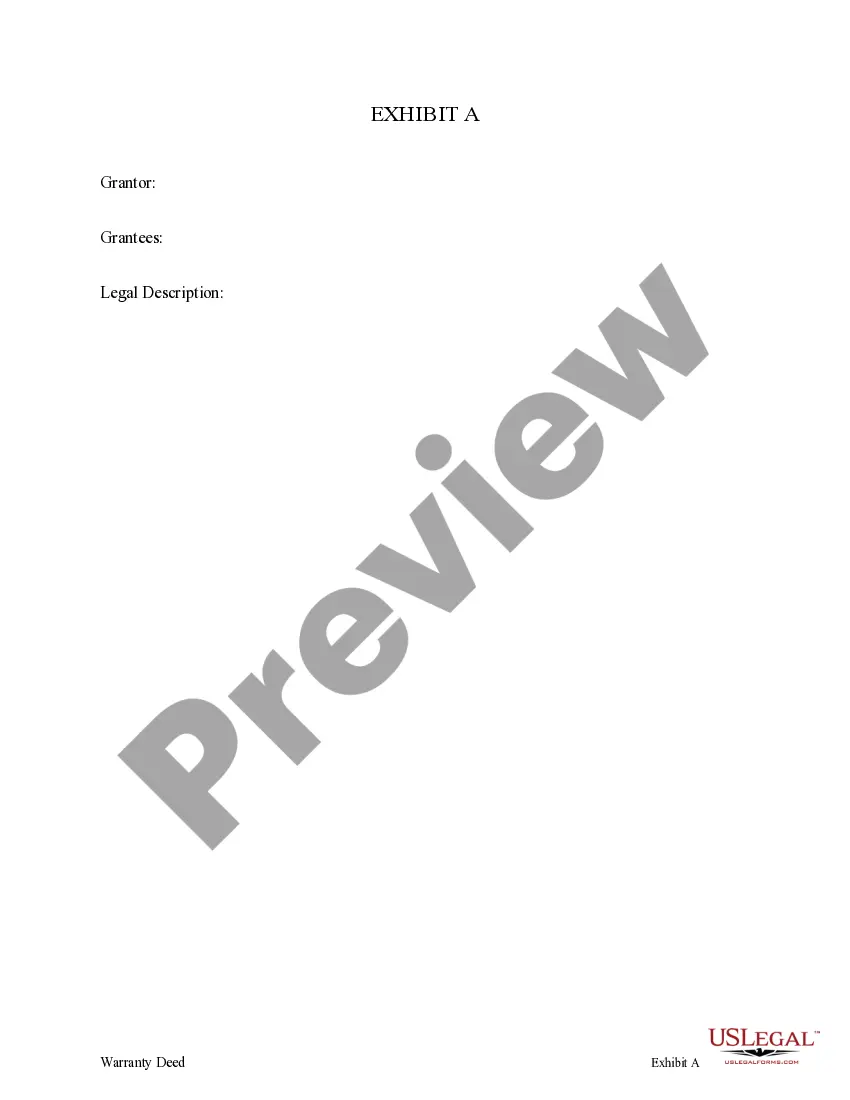
- Description of the property being transferred.
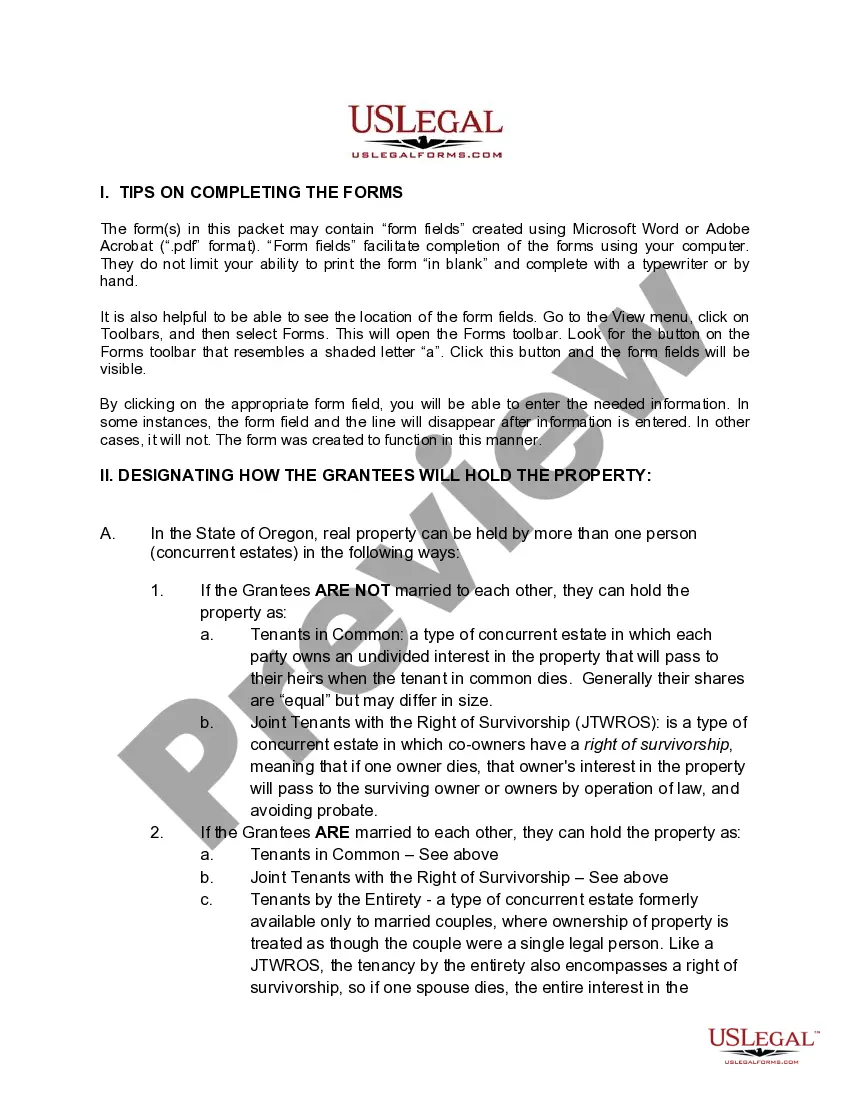
- Specification of how the Grantees will hold the property (e.g., Joint Tenants with Right of Survivorship, Tenants in Common, or Tenants by the Entirety).
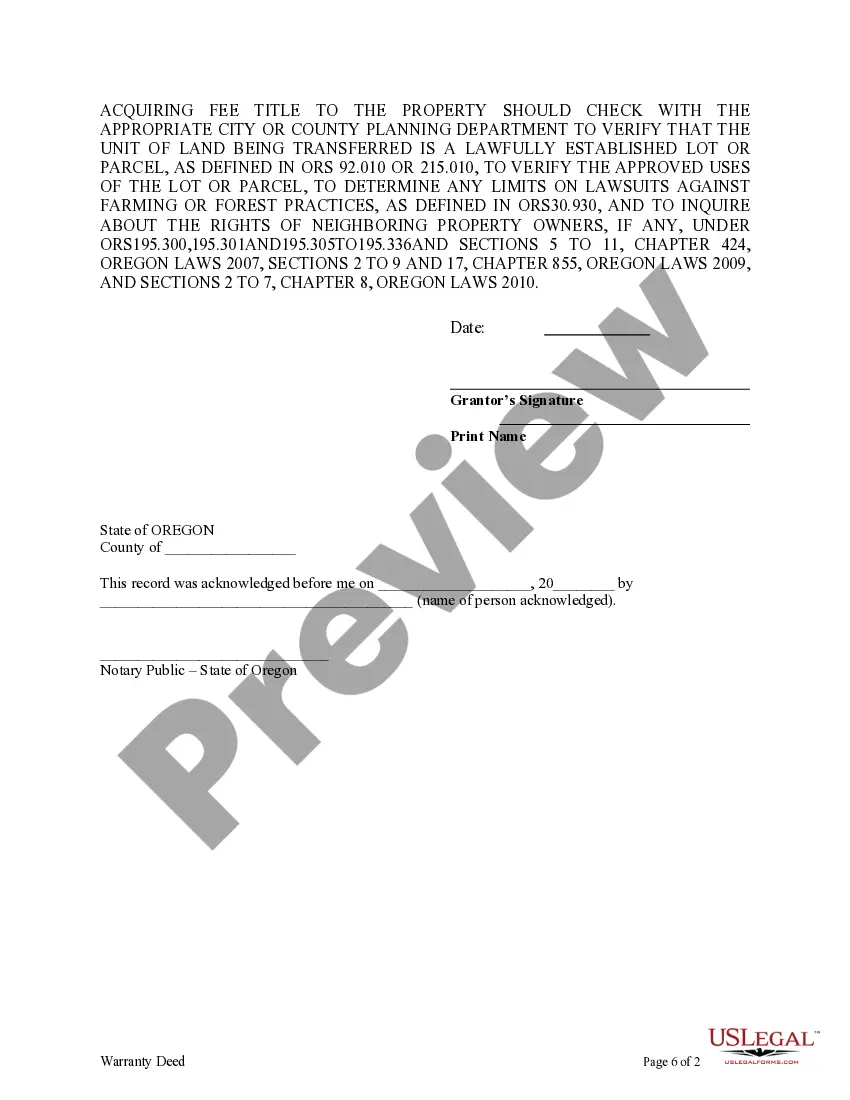
- Signature lines for the Grantor, and potentially for witnesses or notaries, depending on state requirements.
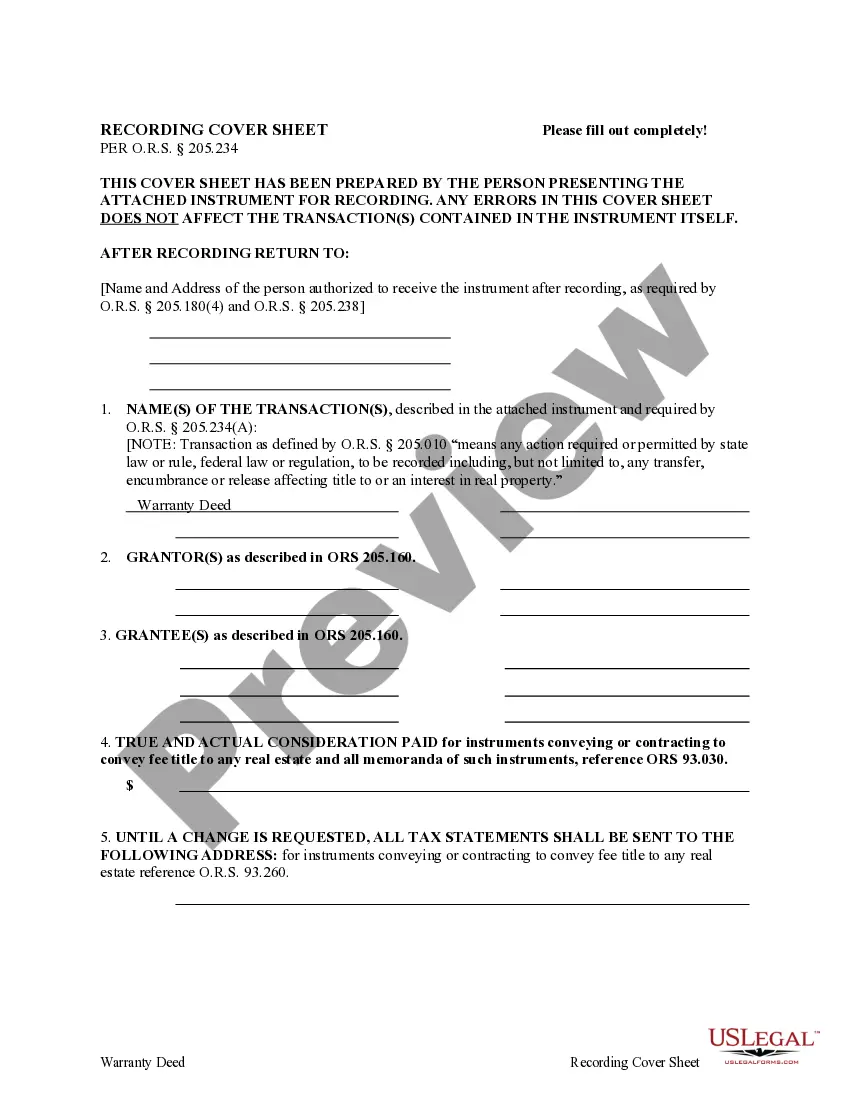
- Recording cover sheet for official filing with appropriate authorities.




Common use cases
This form is used when an individual wishes to transfer ownership of real estate to two individuals, such as a married couple. It is particularly relevant in situations where property is being gifted, transferred as part of an estate plan, or in a divorce settlement. Additionally, if the parties wish to ensure a specific form of co-ownership, such as Joint Tenants with Right of Survivorship, this deed provides the necessary legal framework.
Who should use this form
- Individuals looking to transfer property to a married couple or two co-owners.
- Homeowners wanting to change titles to better reflect ownership intentions.
- People involved in estate planning who wish to gift property to family members.
- Parties to divorce settlements needing to reassign property ownership.
How to prepare this document
- Identify the Grantor by entering their full name and details.
- Specify the Grantees' names, typically the two individuals receiving the property.
- Provide a complete description of the property being conveyed.
- Select the method of holding the property (e.g., Joint Tenants with Right of Survivorship). This may require additional consideration or explanation.
- Ensure the Grantor signs the deed, and if necessary, include witnesses or a notary public for validation.
- Complete and attach the recording cover sheet and submit it to local authorities for official recording.
Notarization requirements for this form
To make this form legally binding, it must be notarized. Our online notarization service, powered by Notarize, lets you verify and sign documents remotely through an encrypted video session.
Get your form ready online
Our built-in tools help you complete, sign, share, and store your documents in one place.
Make edits, fill in missing information, and update formatting in US Legal Forms—just like you would in MS Word.
Download a copy, print it, send it by email, or mail it via USPS—whatever works best for your next step.
Sign and collect signatures with our SignNow integration. Send to multiple recipients, set reminders, and more. Go Premium to unlock E-Sign.
If this form requires notarization, complete it online through a secure video call—no need to meet a notary in person or wait for an appointment.
We protect your documents and personal data by following strict security and privacy standards.

Make edits, fill in missing information, and update formatting in US Legal Forms—just like you would in MS Word.

Download a copy, print it, send it by email, or mail it via USPS—whatever works best for your next step.

Sign and collect signatures with our SignNow integration. Send to multiple recipients, set reminders, and more. Go Premium to unlock E-Sign.

If this form requires notarization, complete it online through a secure video call—no need to meet a notary in person or wait for an appointment.

We protect your documents and personal data by following strict security and privacy standards.
Common mistakes
- Failing to specify how the Grantees will hold the property.
- Not completing the recording cover sheet correctly, leading to potential delays.
- Omitting necessary signatures or witnesses required by the state.
- Using outdated or incorrect property descriptions that may affect validity.
Why use this form online
- Convenient access to download and complete the form at any time.
- Editability to customize the document as needed before printing.
- Reliability, knowing the form adheres to state laws and requirements.
- Immediate availability for personal and business use without needing to visit a law office.
Looking for another form?
Form popularity
FAQ
The simplest way to add a spouse to a deed is through a quitclaim deed. This type of deed transfers whatever ownership rights you have so that you and your spouse now become joint owners. No title search or complex transaction is necessary. The deed will list you as the grantor and you and your spouse as grantees.
It's important to note that a warranty deed does not actually prove the grantor has ownership (a title search is the best way to prove that), but it is a promise by the grantor that they are transferring ownership and if it turns out they don't actually own the property, the grantor will be responsible for compensating
Joint tenancy. Property owned in joint tenancy automatically passes to the surviving owners when one owner dies.In Oregon, each co-owner must own an equal share. A transfer to a husband and wife creates a tenancy by the entirety, not joint tenancy (see below).
The Oregon special warranty deed is a legal document transferring property from an owner of an interest in property to another person. This is a warranty deed, but the warranty is limited to the time frame involving seller's ownership of the property.
A conveyance of land in Oregon, or of any estate or interest therein located in Oregon, can be created, transferred, or declared by a deed in writing and should be signed by the person of lawful age (or their agent) from whom the estate or interest is intended to pass.
A special warranty deed to real estate offers protection to the buyer through the seller's guarantee that the title has been free and clear of encumbrances during their ownership of the property. It does not guarantee clear title beyond their ownership.
A warranty deed guarantees that: The grantor is the rightful owner of the property and has the legal right to transfer the title.The title would withstand third-party claims to ownership of the property. The grantor will do anything to ensure the grantee's title to the property.
The simplest way to add a spouse to a deed is through a quitclaim deed. This type of deed transfers whatever ownership rights you have so that you and your spouse now become joint owners. No title search or complex transaction is necessary. The deed will list you as the grantor and you and your spouse as grantees.
It will not protect against title issues that arose prior to the time the seller took occupancy. Consequently, it offers less protection to buyers, and more protection to sellers, than a general warranty deed, which is the most common option for selling or buying a property.