Florida Declaration of Covenant and Conditions of a Subdivision
What this document covers
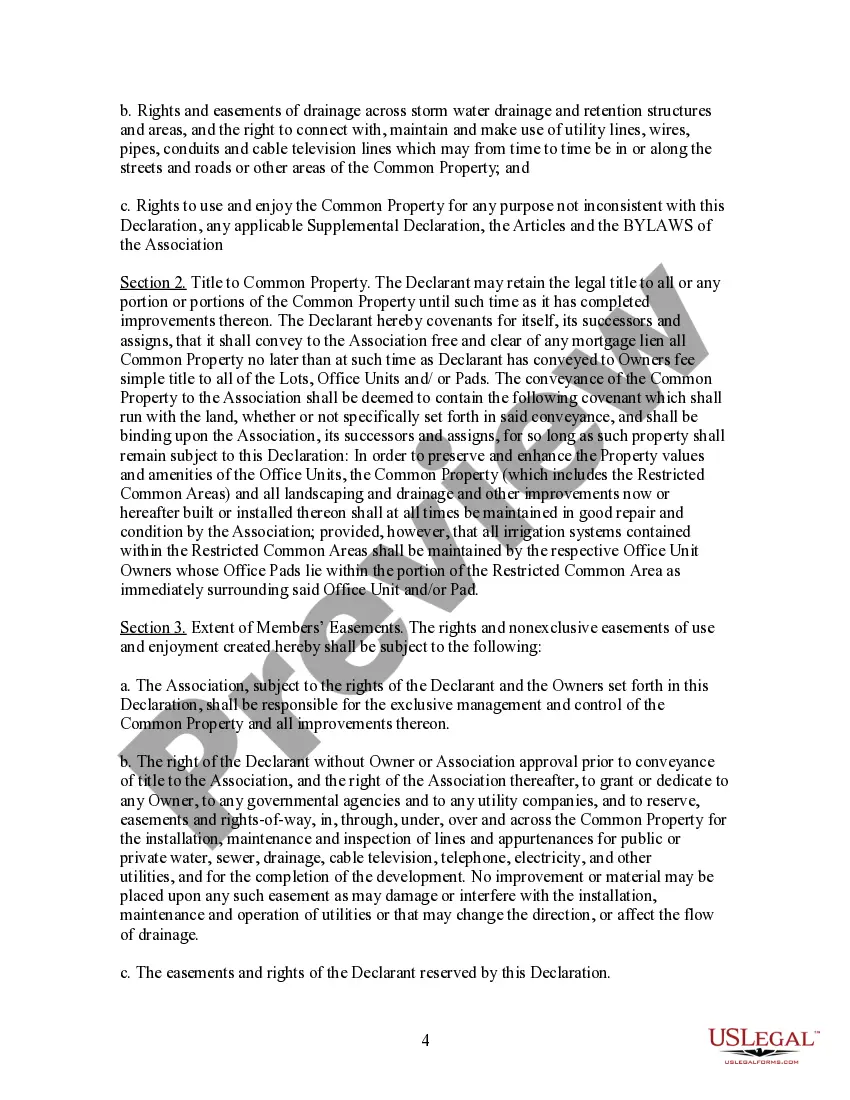
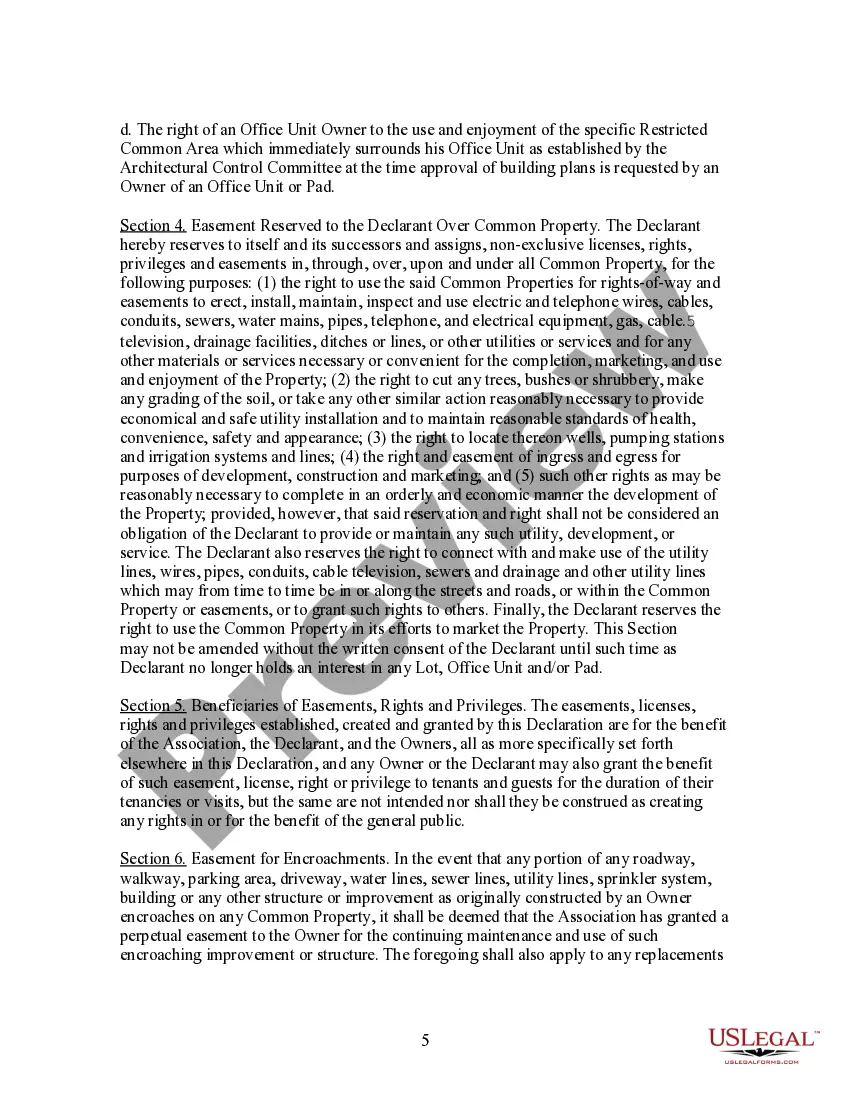
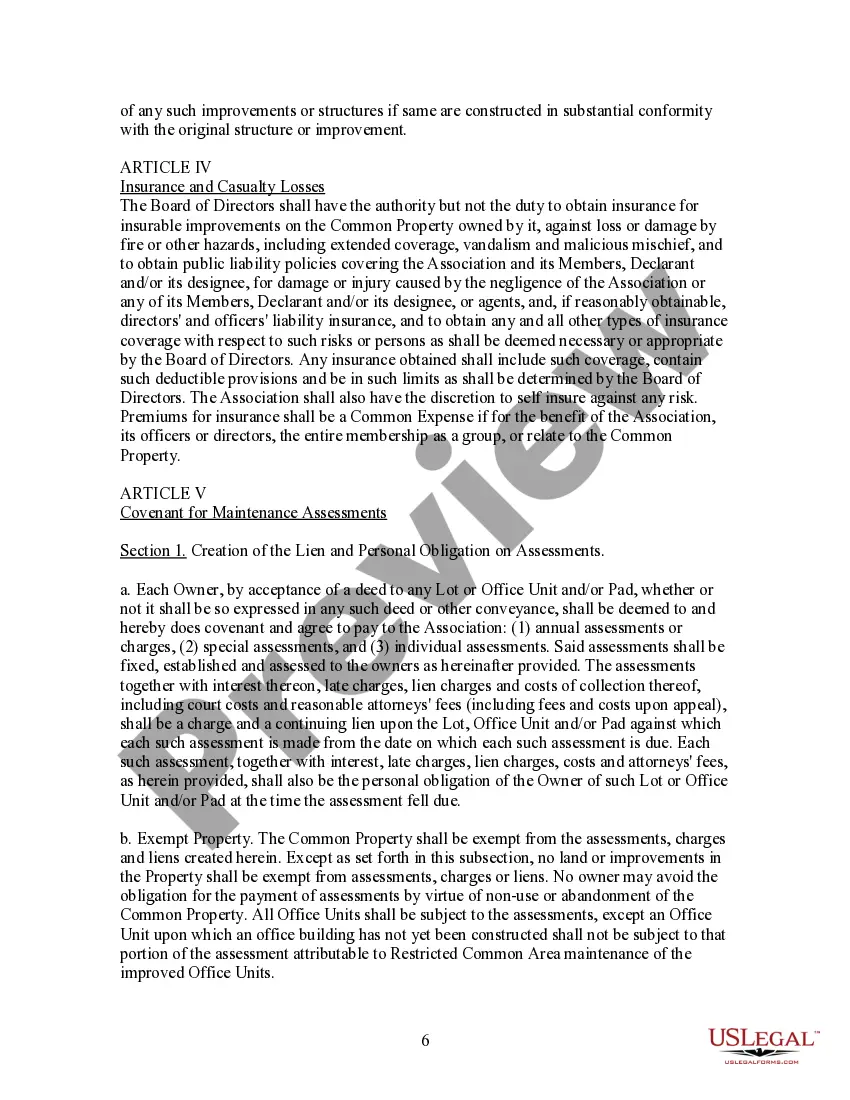
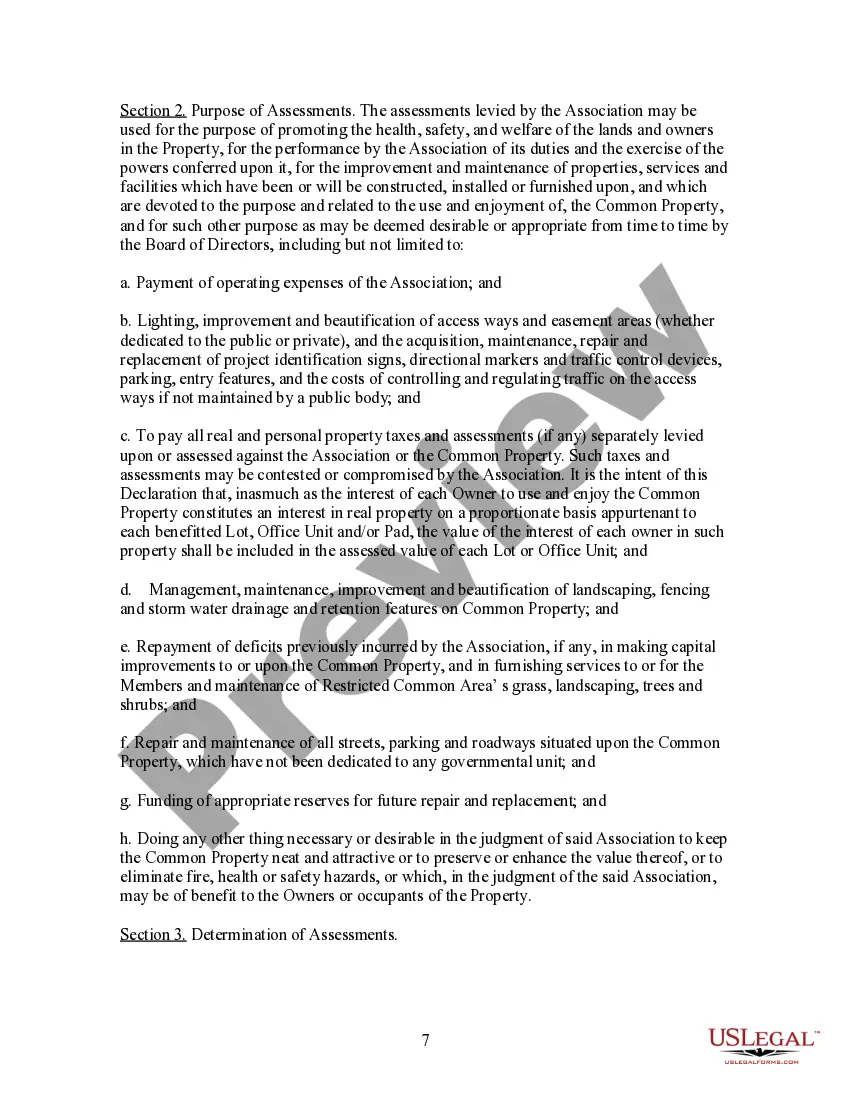
The Declaration of Covenant and Conditions of a Subdivision is a legal document establishing the rules and regulations that govern a residential or commercial subdivision. This form outlines the rights and responsibilities concerning property use, maintenance, and shared areas in the subdivision. Unlike standard property deeds, this declaration specifies community standards aimed at preserving property values and ensuring a harmonious living environment among residents.
Form components explained
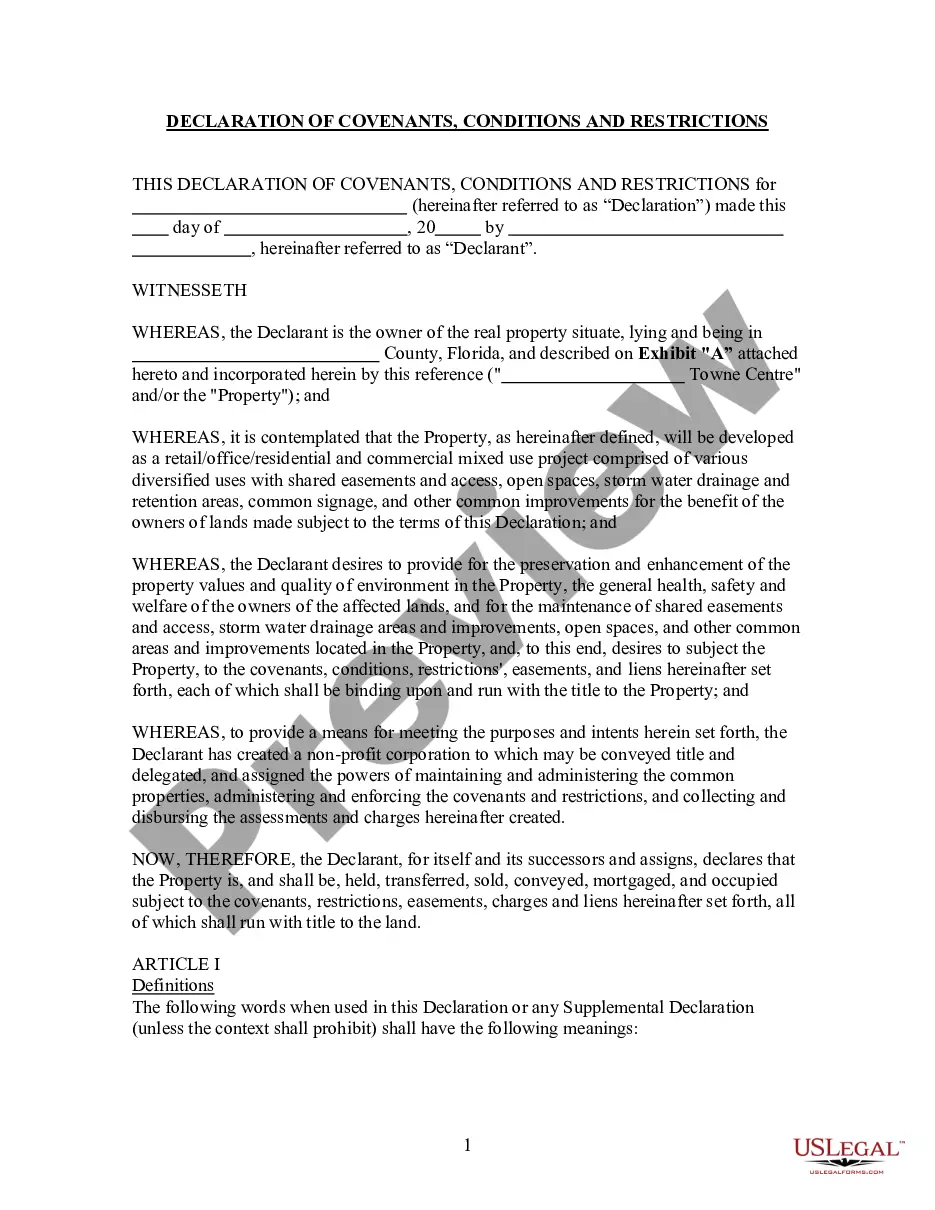
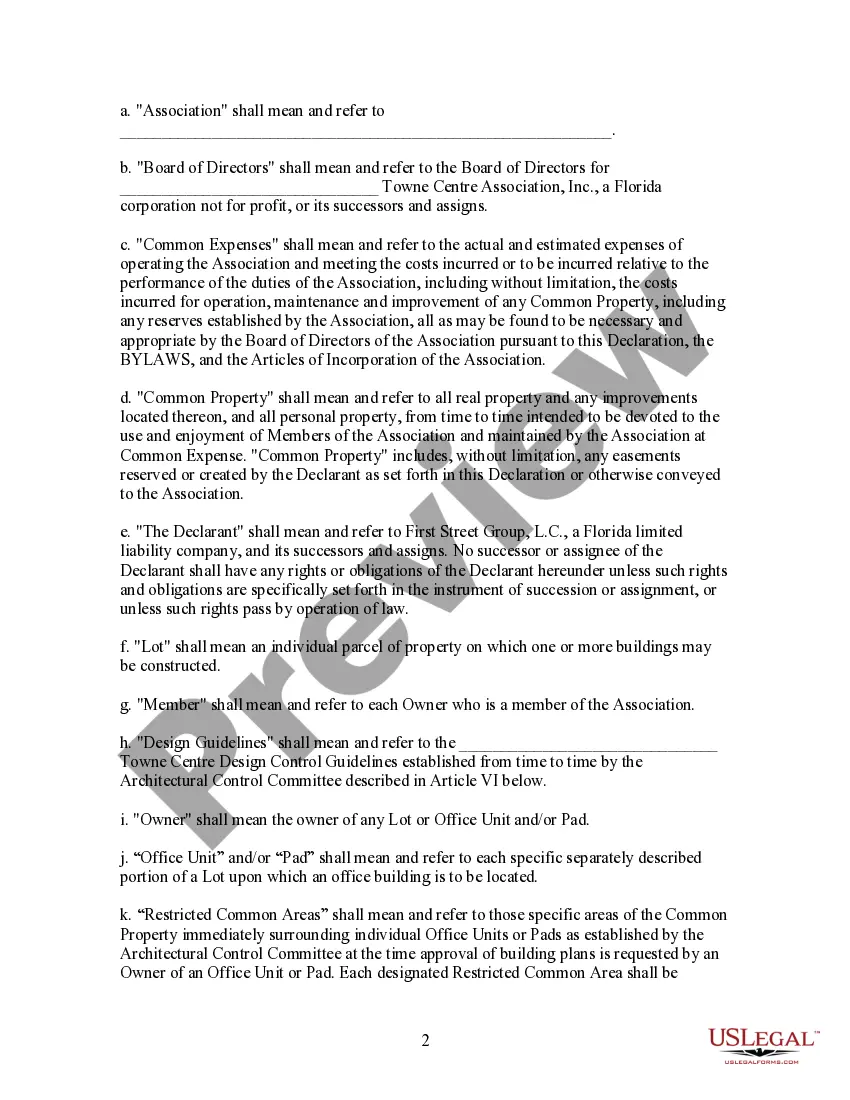
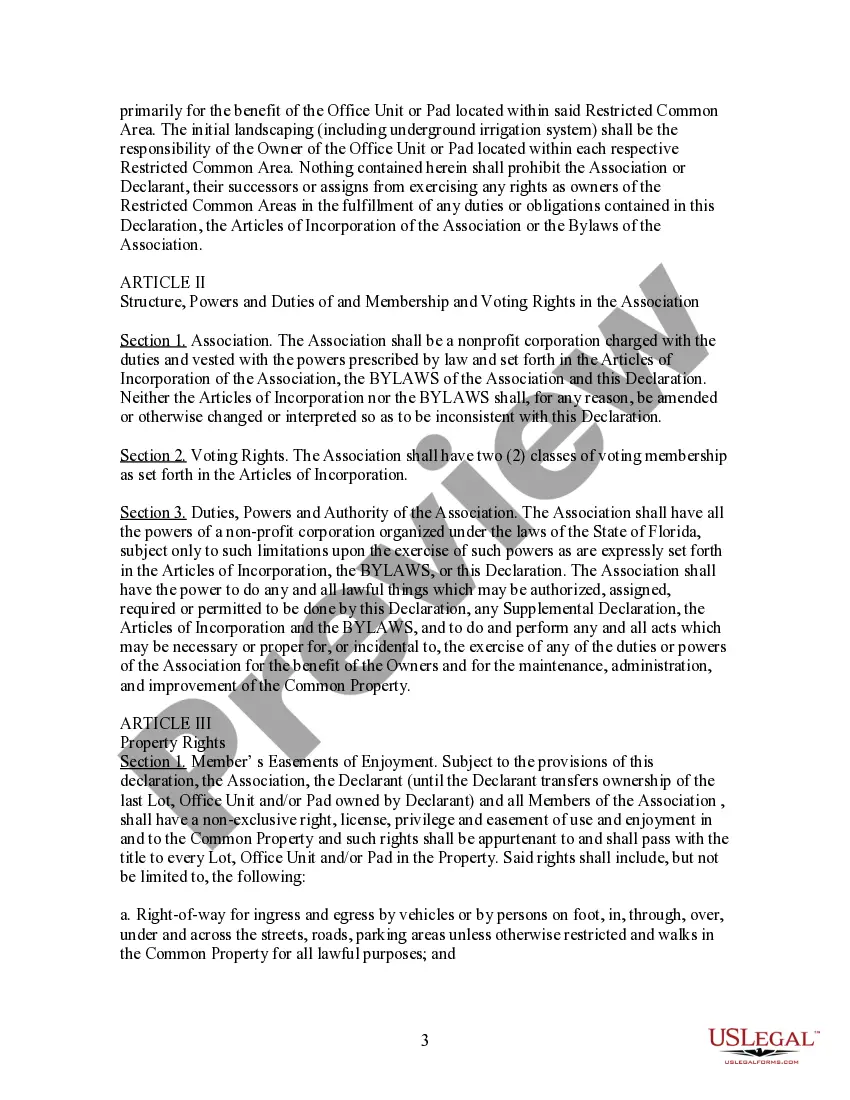
- Definitions: Clarifies key terms such as "Association," "Member," and "Common Property."
- Association Structure: Details the formation, powers, responsibilities, and voting rights of the Association.
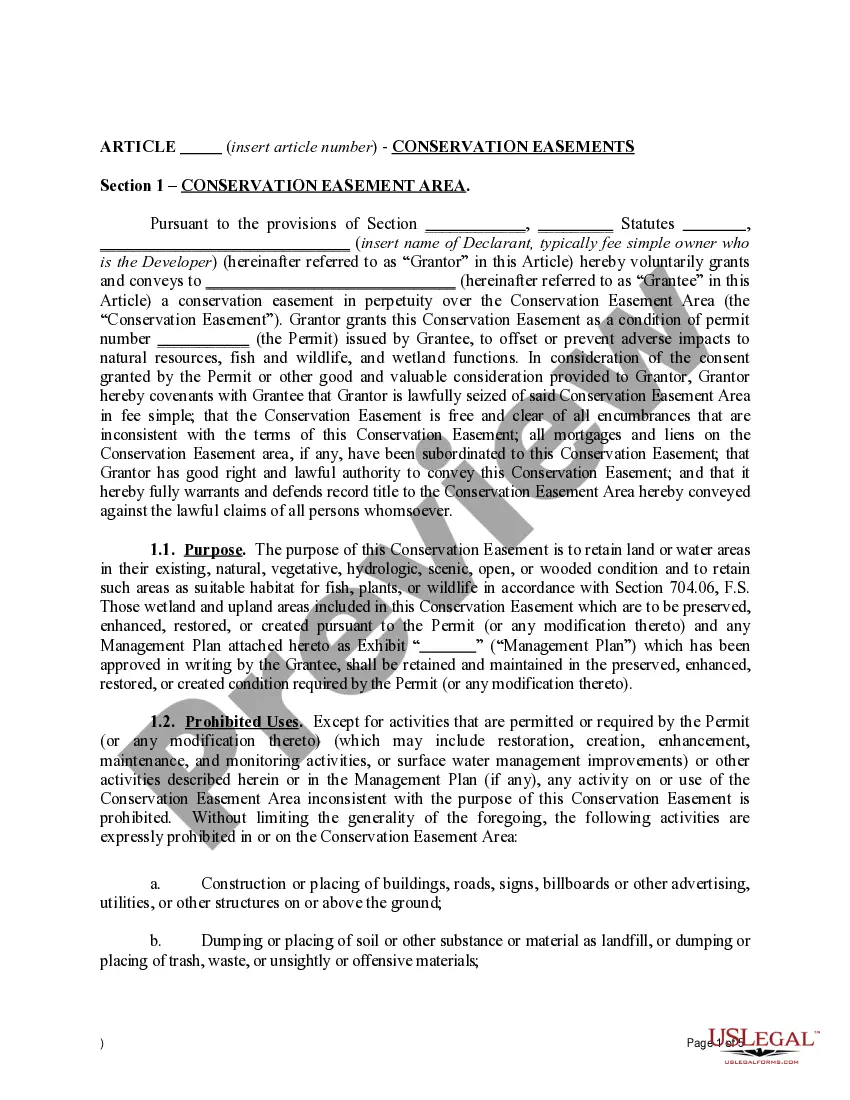
- Covenants and Restrictions: States the obligations and limitations imposed on property owners for maintaining property standards.
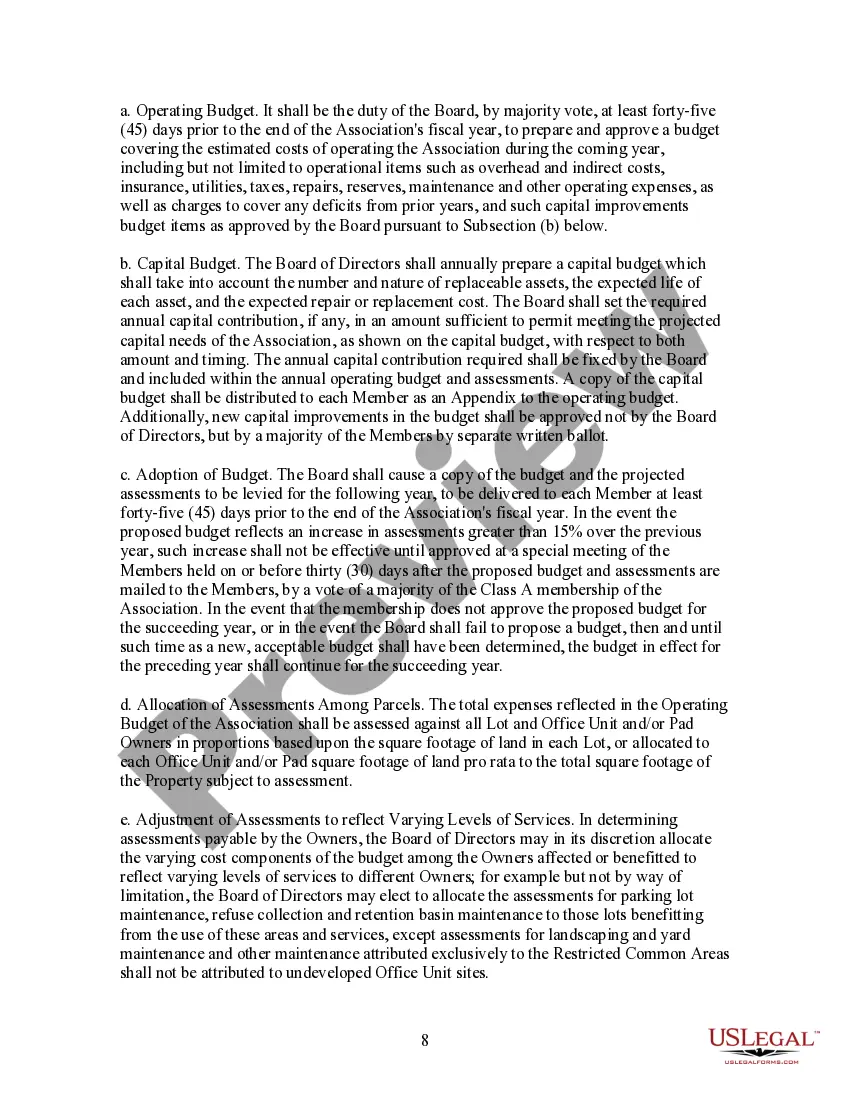
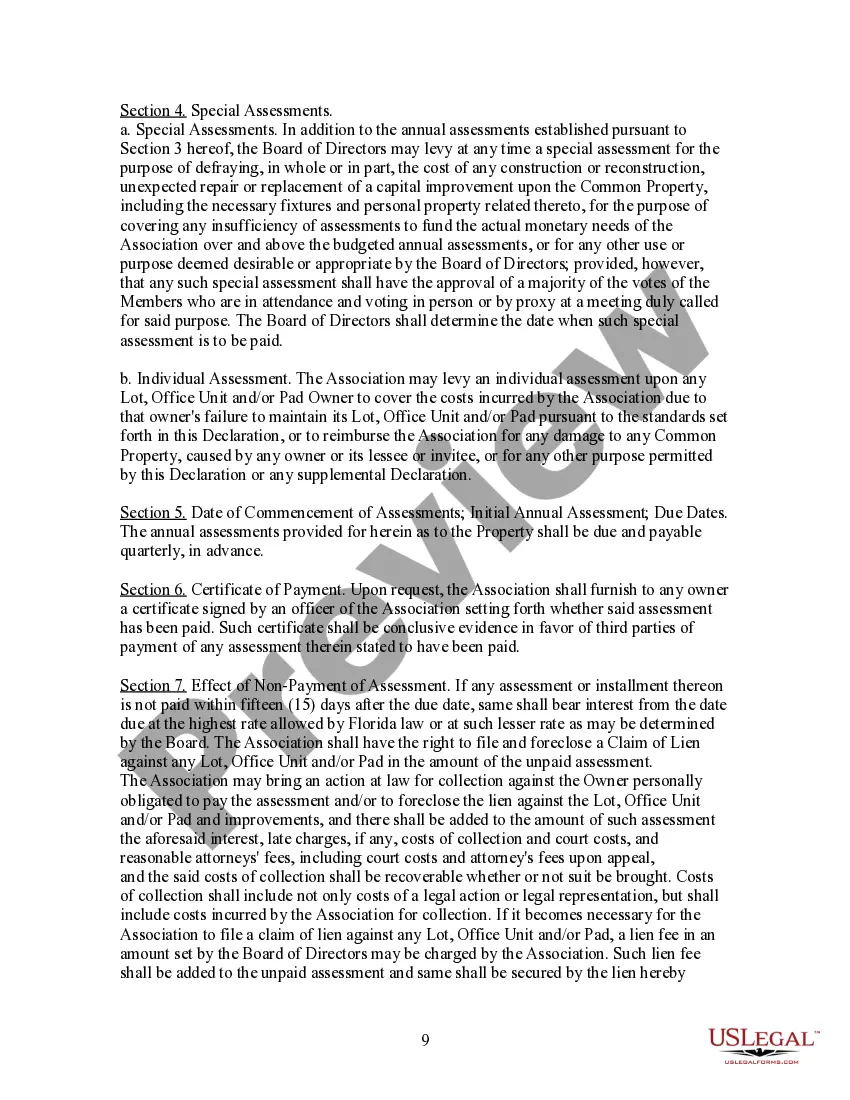
- Assessments: Describes the process for levying assessments for maintenance and other communal expenses.
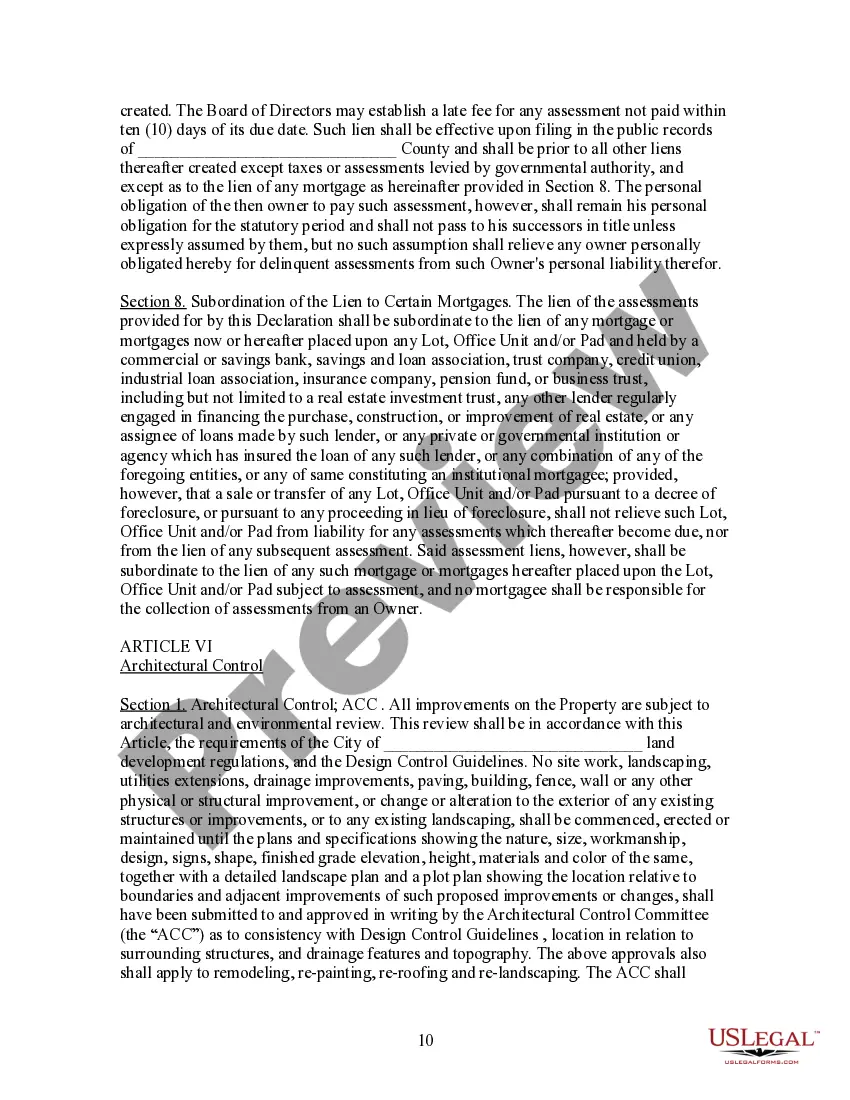
- Architectural Control: Outlines the approval process for new construction and alterations on properties within the subdivision.

When to use this form
This form should be used when establishing a new subdivision or modifying the covenants of an existing subdivision. It is essential for community developers, homeowners' associations, or groups of property owners looking to set clear guidelines for property usage and maintenance, protect property values, and create a unified community standard.
Who can use this document
- Developers creating a new subdivision.
- Homeowners' associations managing existing communities.
- Property owners in a subdivision seeking to enforce or amend community regulations.
- Real estate professionals facilitating property transactions in neighborhoods with specific community standards.
Completing this form step by step
- Identify the Declarant: Fill in the name of the individual or organization responsible for creating the declaration.
- Define the Property: Describe the property and attach any necessary exhibits that outline specific details.
- Specify the Association: Clearly define the homeowners' association and its powers, including the voting rights of members.
- Detail the Covenants: State the specific restrictions and obligations that will apply to property owners in the subdivision.
- Obtain Signatures: Ensure that all necessary parties sign the declaration to make it legally binding.
Does this form need to be notarized?
This form does not typically require notarization unless specified by local law. It is essential, however, to confirm the requirements based on the jurisdiction where the property is located.
Get your form ready online
Our built-in tools help you complete, sign, share, and store your documents in one place.
Make edits, fill in missing information, and update formatting in US Legal Forms—just like you would in MS Word.
Download a copy, print it, send it by email, or mail it via USPS—whatever works best for your next step.
Sign and collect signatures with our SignNow integration. Send to multiple recipients, set reminders, and more. Go Premium to unlock E-Sign.
If this form requires notarization, complete it online through a secure video call—no need to meet a notary in person or wait for an appointment.
We protect your documents and personal data by following strict security and privacy standards.

Make edits, fill in missing information, and update formatting in US Legal Forms—just like you would in MS Word.

Download a copy, print it, send it by email, or mail it via USPS—whatever works best for your next step.

Sign and collect signatures with our SignNow integration. Send to multiple recipients, set reminders, and more. Go Premium to unlock E-Sign.

If this form requires notarization, complete it online through a secure video call—no need to meet a notary in person or wait for an appointment.

We protect your documents and personal data by following strict security and privacy standards.
Avoid these common issues
- Failing to include all necessary definitions and key terms.
- Not clearly specifying the powers and responsibilities of the homeowners' association.
- Neglecting to attach required exhibits or supplemental documents that outline property descriptions.
- Omitting signatures from all relevant parties, which can render the declaration unenforceable.
Advantages of online completion
- Accessibility: Download and complete the form anytime from anywhere.
- Editability: Easily customize the form to fit specific needs without hassle.
- Reliable: Use templates drafted by licensed attorneys to ensure legal compliance.
Looking for another form?
Form popularity
FAQ
Yes, land covenants are typically part of the public record and can be accessed through the local county recorder's office. These records are essential for understanding property rights and restrictions. Using the Florida Declaration of Covenant and Conditions of a Subdivision can guide you in your search for public land covenants.
You can find out what covenant was on a property by reviewing the property deed, which usually outlines any existing restrictions. Public records at your local county clerk’s office may provide access to these documents. The Florida Declaration of Covenant and Conditions of a Subdivision can also clarify which covenants apply to your community.
To discover property restrictions, check your title documents and consult with the local county clerk's office for recorded covenants. Many counties also offer online databases where you can search for this information. Utilizing resources like US Legal Forms can streamline this search for property restrictions.
To make restrictive covenants enforceable, the provisions must be clearly written and recorded in the county property records. Additionally, they should comply with local laws and public policy. The Florida Declaration of Covenant and Conditions of a Subdivision serves as a useful template for drafting enforceable covenants.
Deed restrictions on an entire subdivision are typically established by the original developer or builder during the development process. These covenants are intended to maintain property values and a certain aesthetic within the community. The Florida Declaration of Covenant and Conditions of a Subdivision outlines these restrictions and can inform future homeowners.
In a residential subdivision, restrictive covenants are generally enforced by the HOA or a designated enforcement committee. If an HOA does not exist, affected property owners may have the ability to enforce restrictions. Familiarity with the Florida Declaration of Covenant and Conditions of a Subdivision can guide property owners in what actions to take.
When there is no homeowners association (HOA) to enforce deed restrictions, individual property owners or groups of neighbors may initiate action. They can work together to address violations through a community agreement or legal channels. Understanding the Florida Declaration of Covenant and Conditions of a Subdivision is vital for knowing your rights and obligations.
To find covenants, conditions, and restrictions related to your property, start by reviewing your property deed or title documents. Additionally, you can visit the county recorder's office or check online property records. The Florida Declaration of Covenant and Conditions of a Subdivision typically provides detailed information on these restrictions.
In a typical subdivision, the responsibility for enforcing deed covenants often falls on the homeowners association (HOA). However, if there is no HOA, individual property owners may take the initiative to ensure compliance. It is important to understand the terms outlined in the Florida Declaration of Covenant and Conditions of a Subdivision to identify enforcement mechanisms.
Covenants, conditions, and restrictions (CC&Rs) are essential components of the Florida Declaration of Covenant and Conditions of a Subdivision. They define property use, architectural standards, and community behavior, ensuring all homeowners adhere to certain expectations. Including guidelines for landscaping, fencing, and building modifications, these rules foster a cohesive community appearance. Familiarizing yourself with the CC&Rs can greatly enhance your property ownership experience and prevent potential conflicts.