Temporary Pastoral Supply Agreement
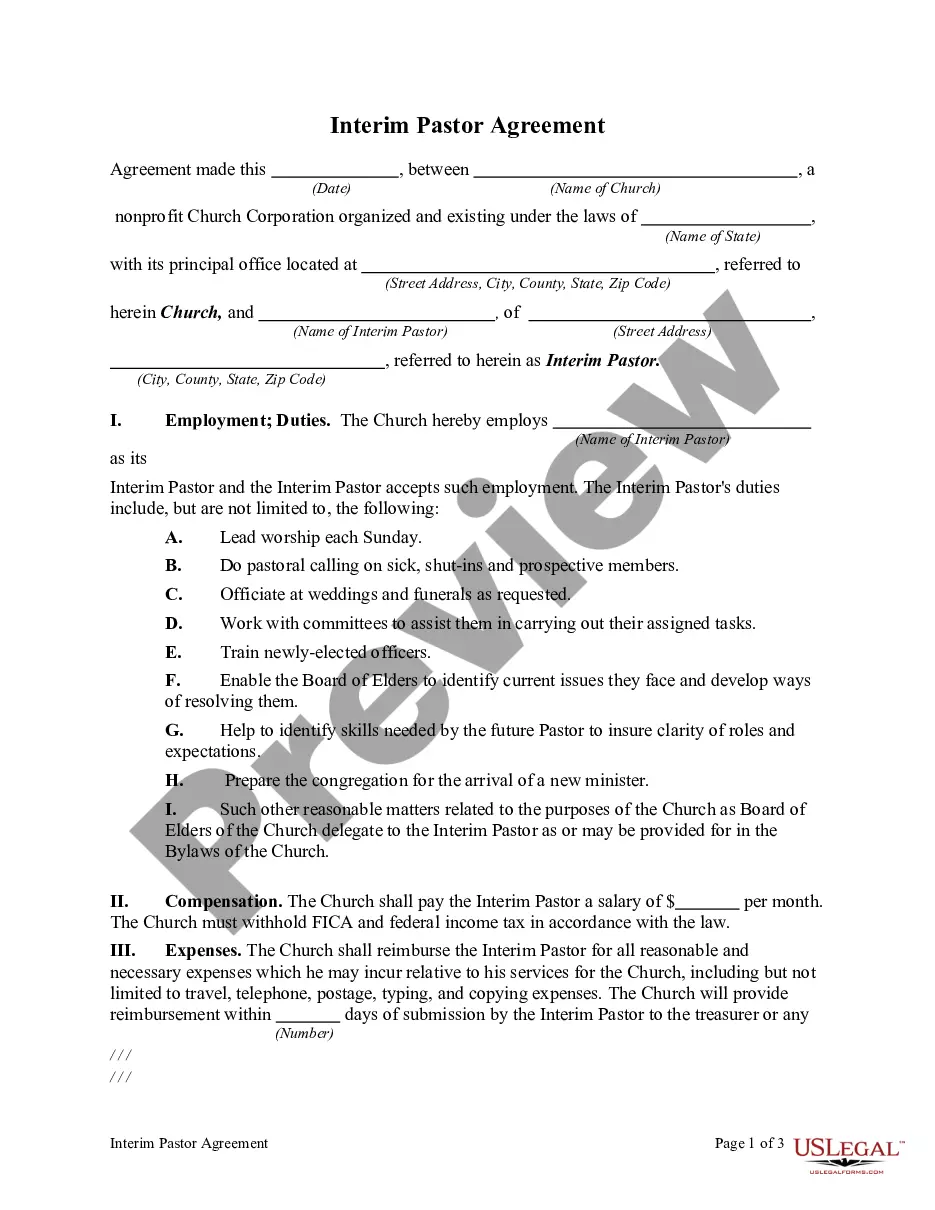
About this form
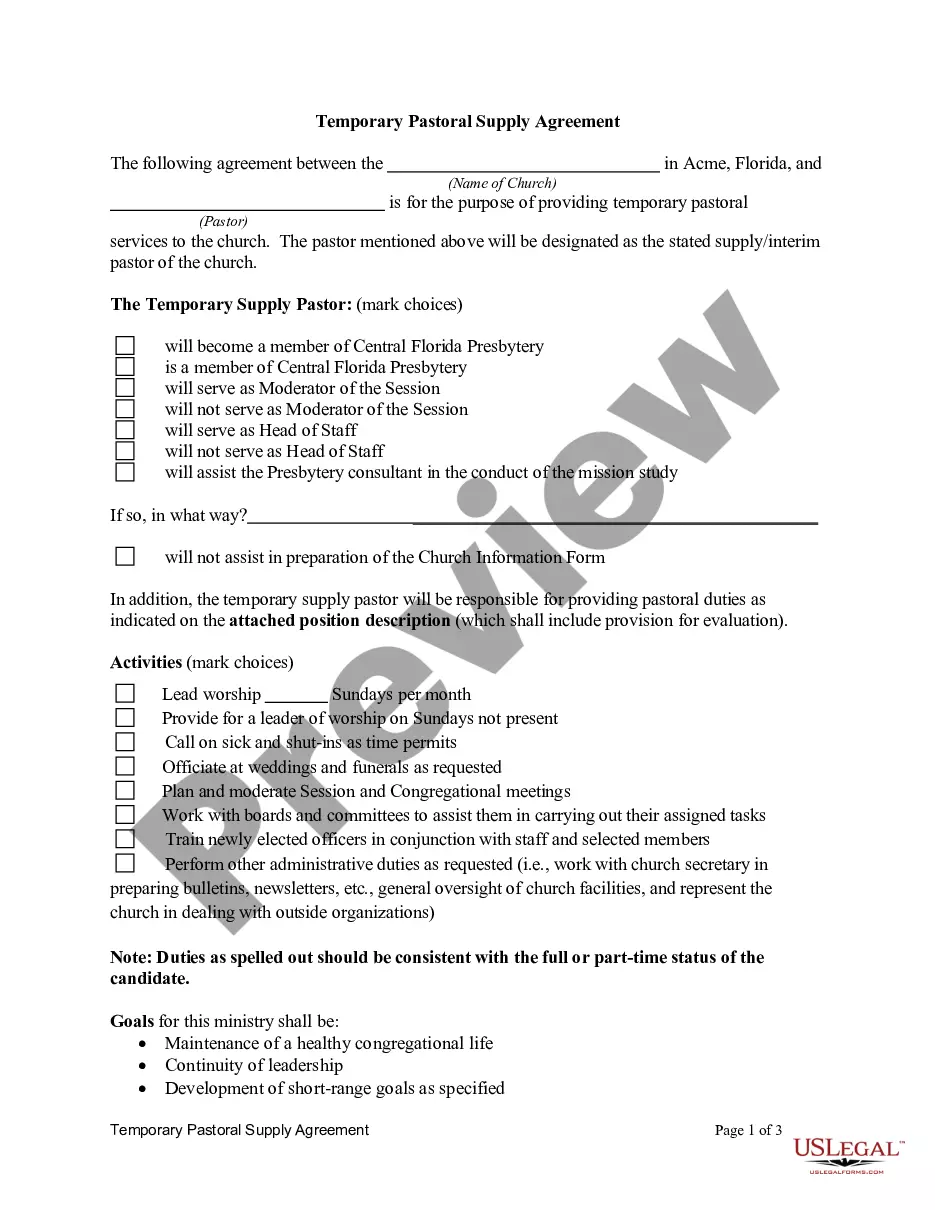
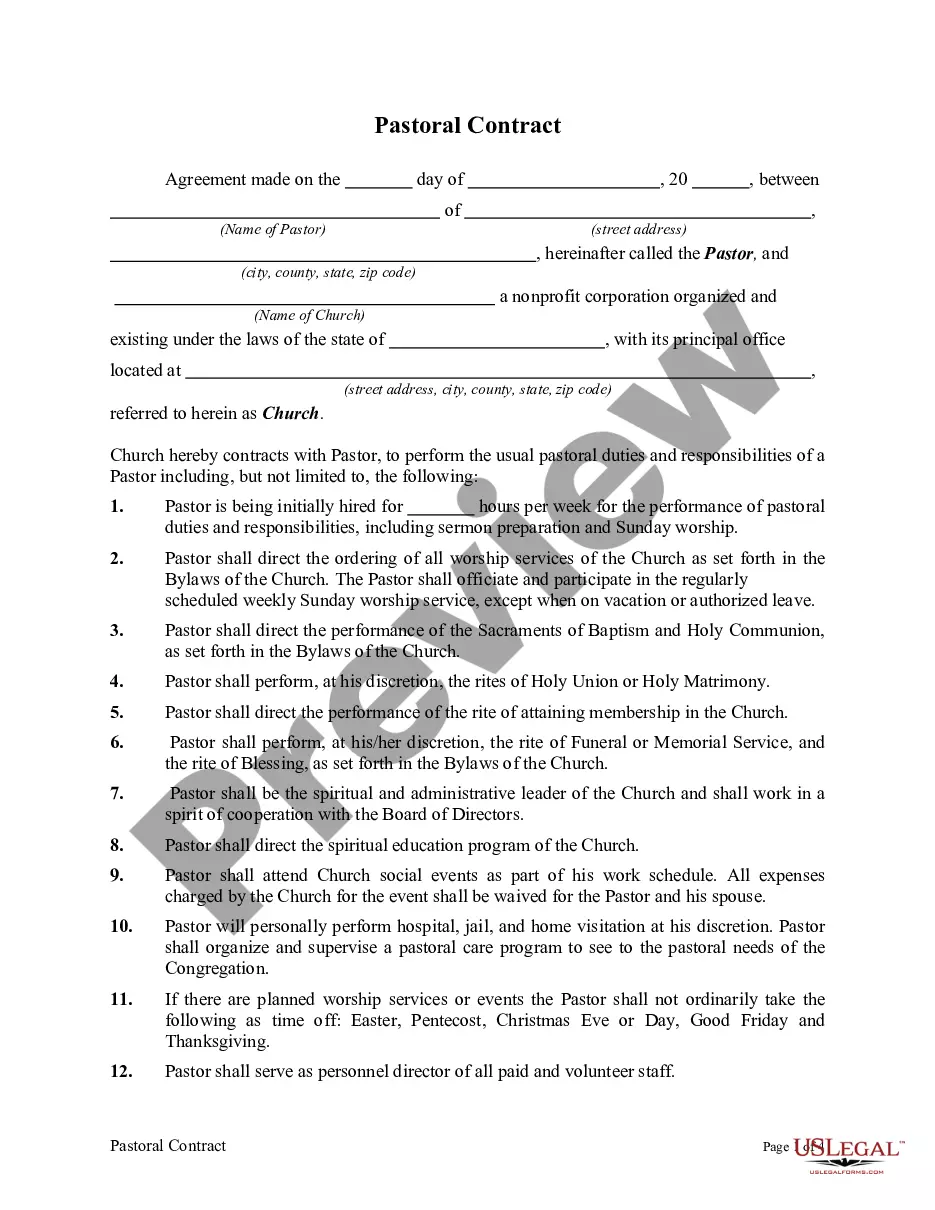
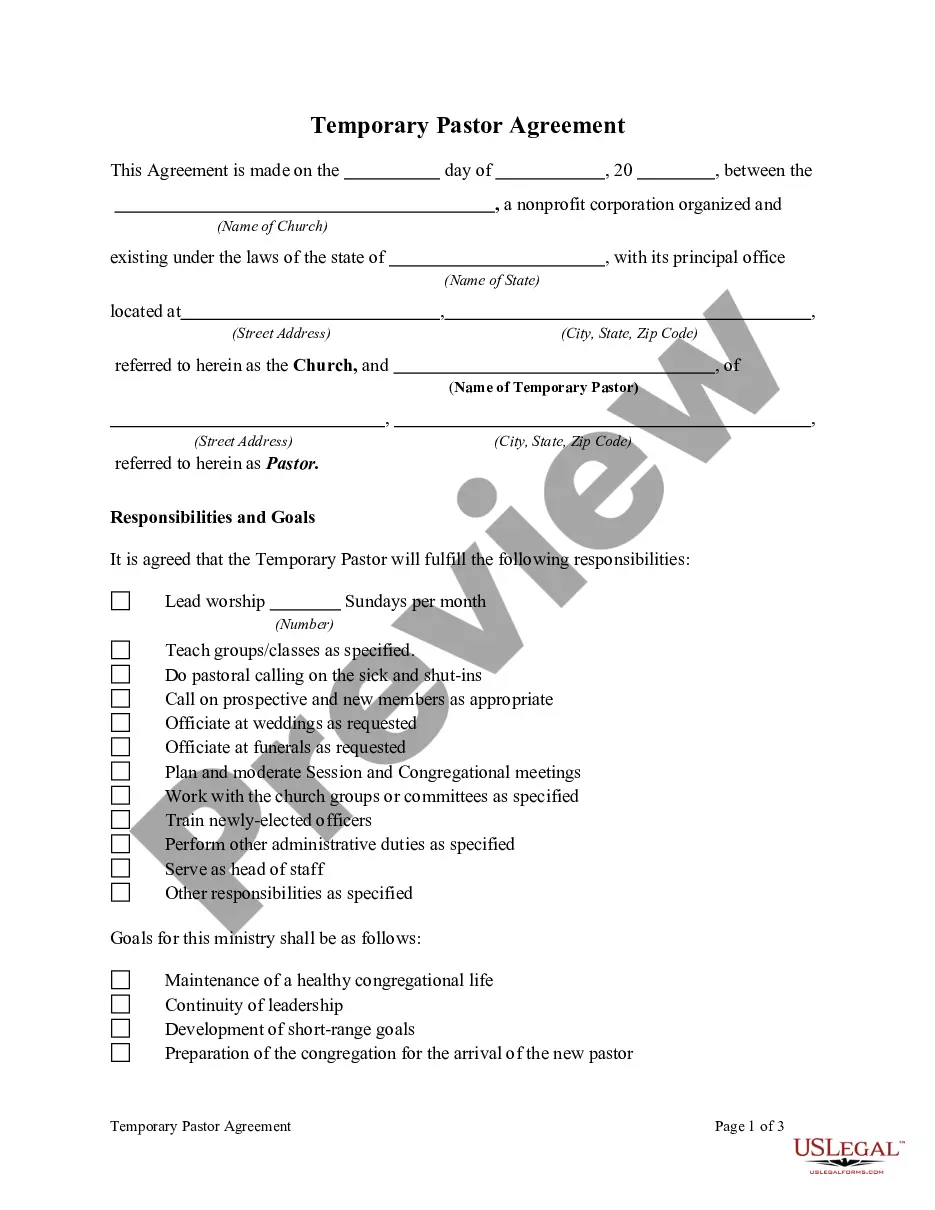
The Temporary Pastoral Supply Agreement is a legal document used by churches to appoint a minister to temporarily fulfill pastoral duties when there is no installed pastor available. This agreement lays out the roles and responsibilities of the minister, known as a stated supply, or a temporary supply, and specifies the terms under which the minister will serve. This form is distinct from other pastoral agreements as it is focused on maintaining leadership continuity while preparing for the eventual placement of a permanent pastor.
What’s included in this form
- Identification of the temporary minister and their specific roles.
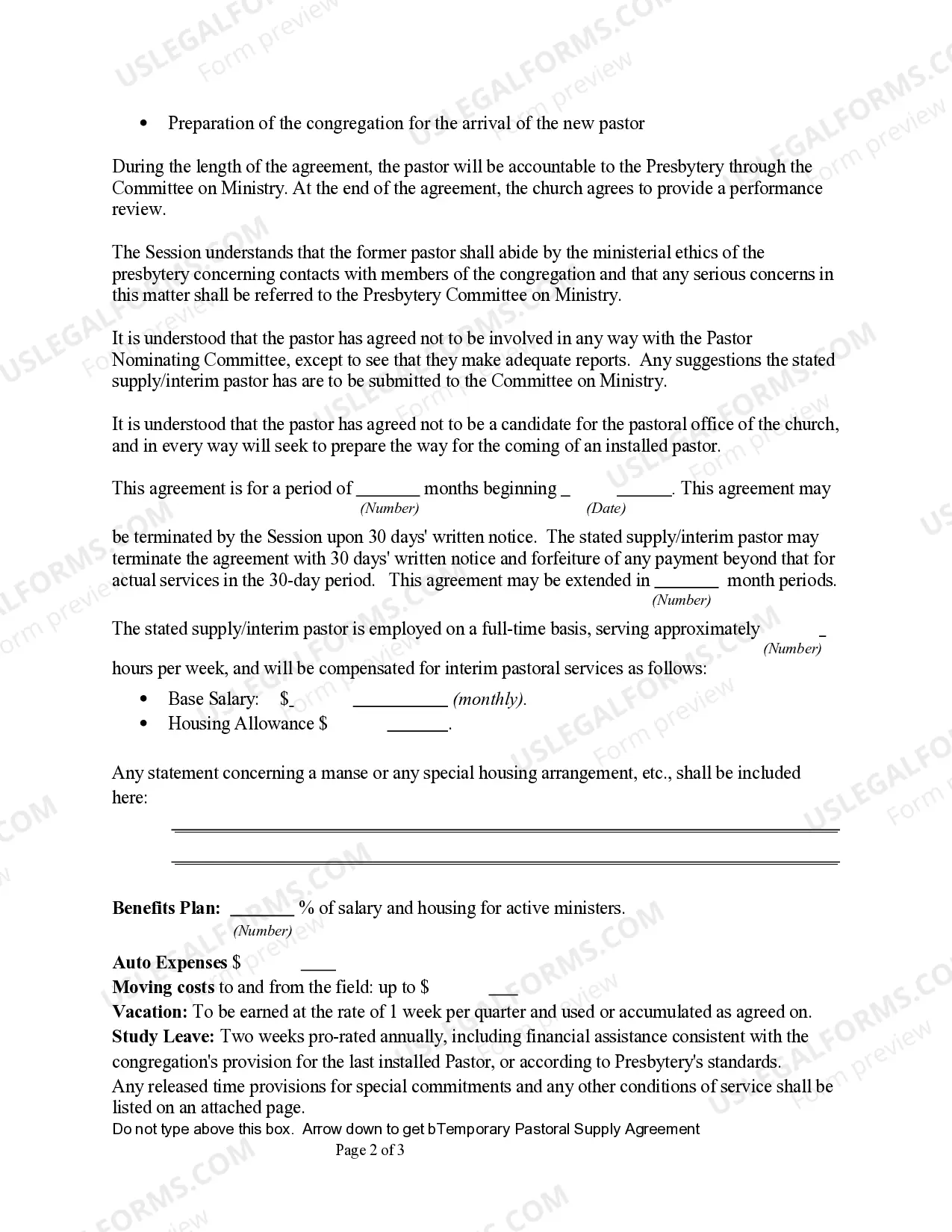
- Duration of the agreement, not exceeding twelve months.
- Responsibilities, including officiating services and administrative duties.
- Consultation with the presbytery and session.
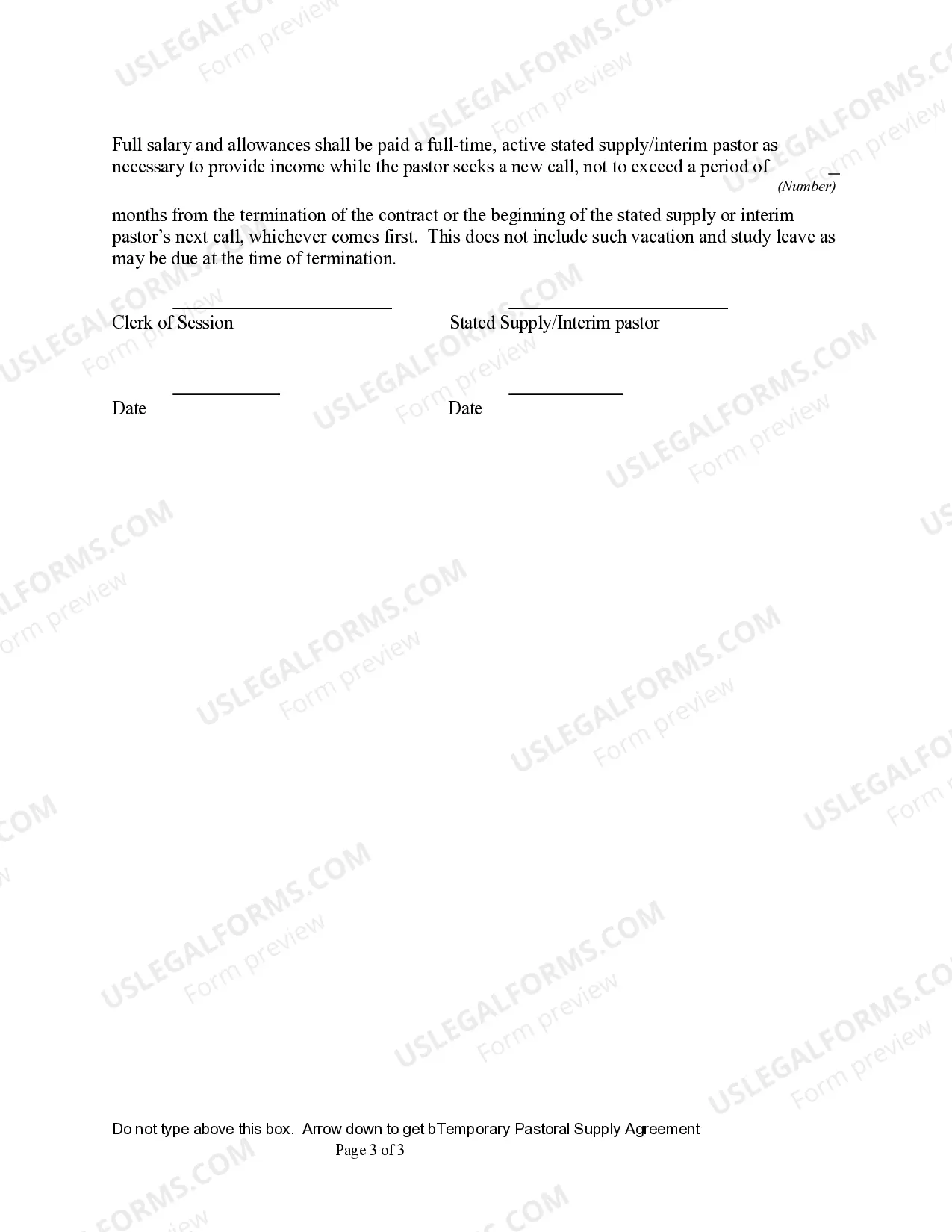
- Performance review and accountability measures.
- Provisions for study leave and other conditions of service.
When to use this form
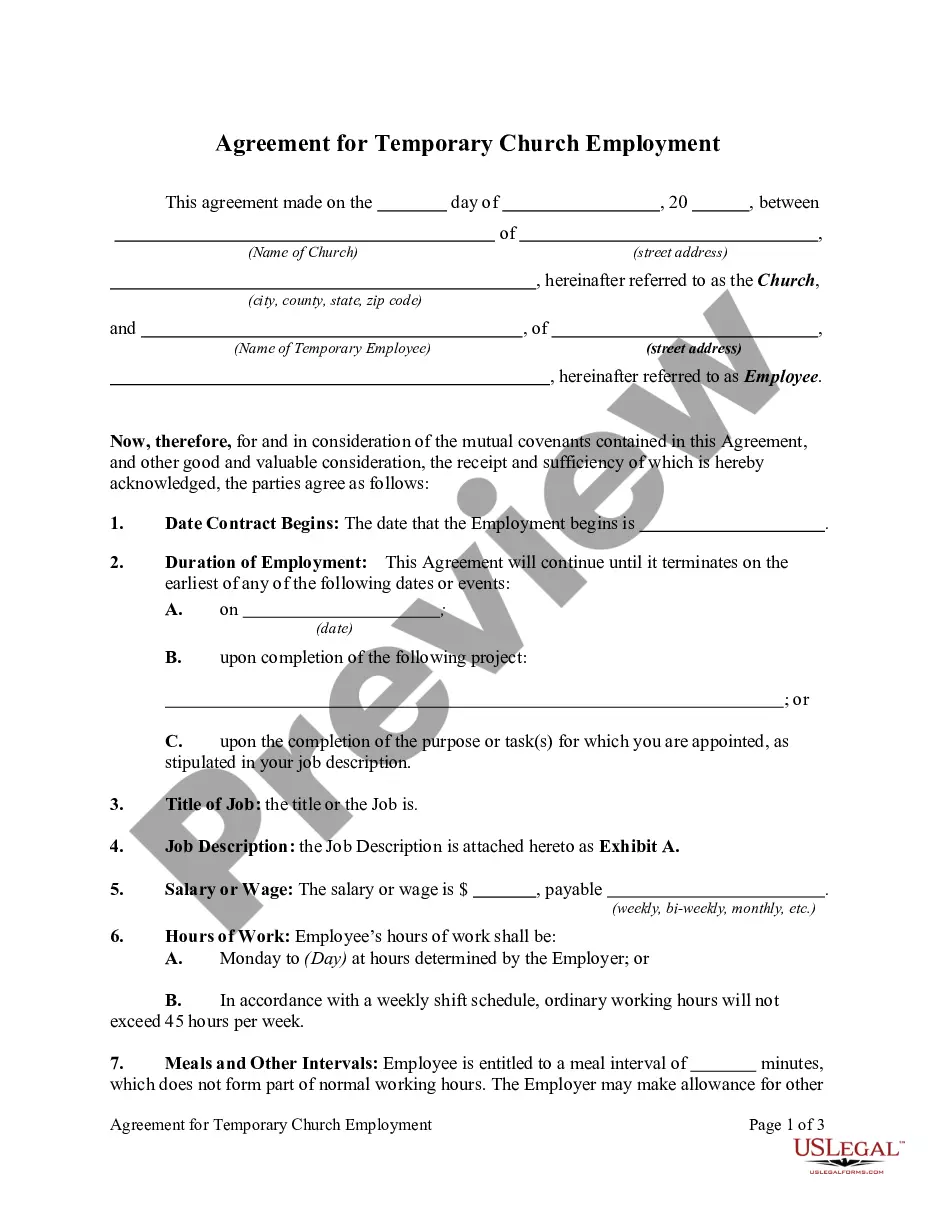
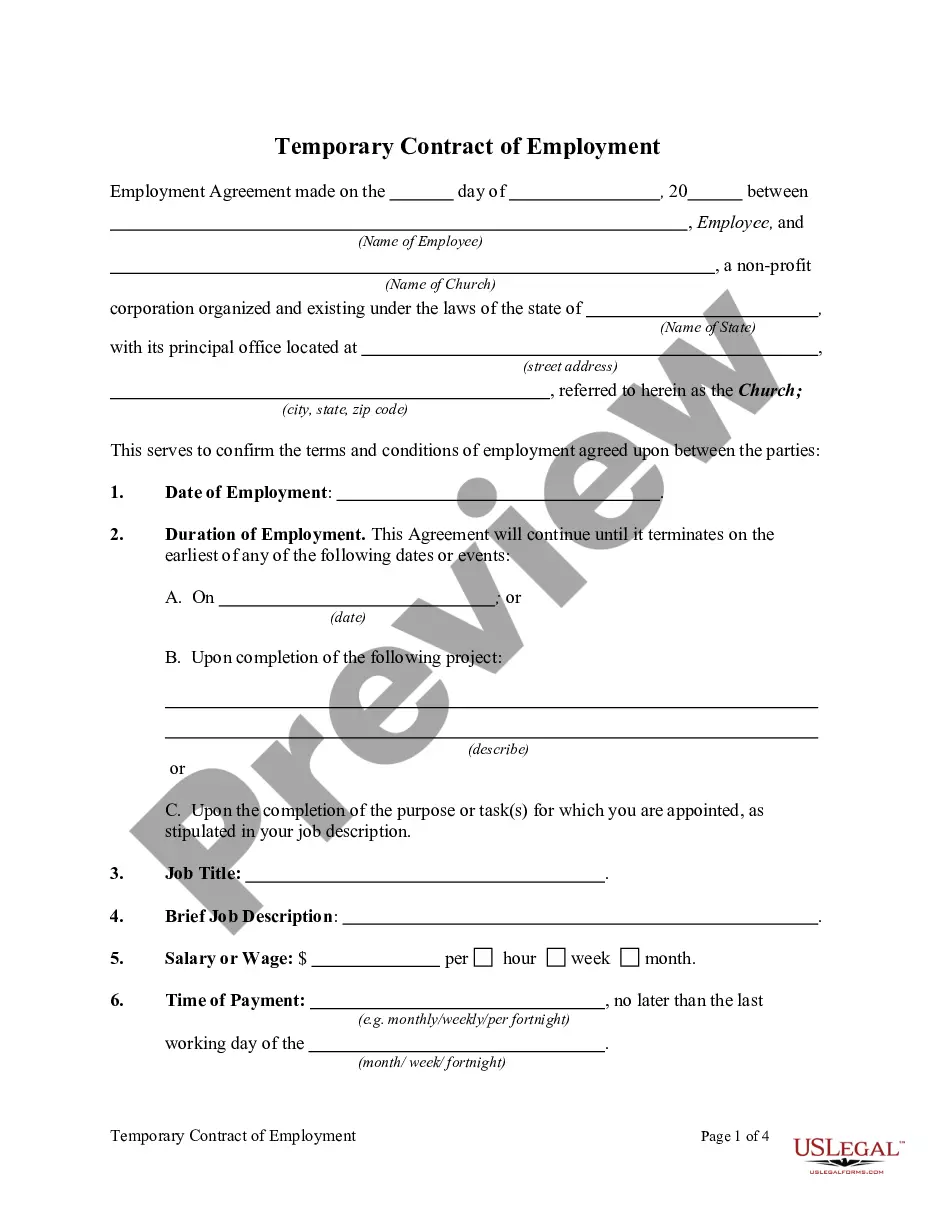
This form is appropriate for use when a church requires immediate pastoral leadership due to a vacancy or when the current pastor is unable to perform their duties. It is essential during transitional periods to ensure that worship services and church functions continue seamlessly and that the congregation remains supported. Churches should consider this form when planning for the arrival of a new installed pastor or addressing temporary gaps in leadership.
Who can use this document
This form is intended for:
- Church sessions looking for a temporary pastor.
- Presbyteries involved in minister appointments.
- Ministers being offered temporary supply roles.
- Congregations preparing for the transition to a new permanent pastor.
Completing this form step by step
- Begin by entering the names and details of the temporary pastor and the church.
- Specify the duration for which the temporary supply will serve.
- List the duties and responsibilities expected of the temporary pastor.
- Include any provisions related to study leave or other conditions of service.
- Ensure that the agreement is reviewed and approved by the presbytery committee.
- Obtain signatures from all parties involved to finalize the agreement.
Notarization guidance
In most cases, this form does not require notarization. However, some jurisdictions or signing circumstances might. US Legal Forms offers online notarization powered by Notarize, accessible 24/7 for a quick, remote process.
Get your form ready online
Our built-in tools help you complete, sign, share, and store your documents in one place.
Make edits, fill in missing information, and update formatting in US Legal Forms—just like you would in MS Word.
Download a copy, print it, send it by email, or mail it via USPS—whatever works best for your next step.
Sign and collect signatures with our SignNow integration. Send to multiple recipients, set reminders, and more. Go Premium to unlock E-Sign.
If this form requires notarization, complete it online through a secure video call—no need to meet a notary in person or wait for an appointment.
We protect your documents and personal data by following strict security and privacy standards.

Make edits, fill in missing information, and update formatting in US Legal Forms—just like you would in MS Word.

Download a copy, print it, send it by email, or mail it via USPS—whatever works best for your next step.

Sign and collect signatures with our SignNow integration. Send to multiple recipients, set reminders, and more. Go Premium to unlock E-Sign.

If this form requires notarization, complete it online through a secure video call—no need to meet a notary in person or wait for an appointment.

We protect your documents and personal data by following strict security and privacy standards.
Avoid these common issues
- Failing to consult with the presbytery prior to finalizing the agreement.
- Incomplete description of the roles and responsibilities of the temporary pastor.
- Neglecting to specify the review process at the end of the term.
- Not ensuring proper signatures from both church officials and the temporary pastor.
Why use this form online
- Convenience of downloading and completing the form at your own pace.
- Editability to tailor the agreement to specific church needs.
- Access to legal templates drafted by licensed attorneys, ensuring compliance with relevant laws.
- Easy retrieval for future reference and updates.
Legal use & context
- The agreement is legally binding once signed by all parties involved.
- Ensure that all roles and responsibilities are clearly defined to avoid disputes.
- Regular reviews and consultation with the presbytery help maintain accountability.
What to keep in mind
- The Temporary Pastoral Supply Agreement is essential for churches in transition.
- Clearly outline the duties and terms of service for the temporary minister.
- Consult with presbytery for compliance and support throughout the process.
- Utilizing this form online offers convenience and access to professional legal templates.
Looking for another form?


Form popularity
FAQ
Do not be demanding. Take careful note of specifications and expectations. Think in terms of fairness. Be careful of setting up an opportunistic relationship. Consider cultural and ethical norms. Consider this step carefully.
Supply Chain Agreements. Companies are faced with a wide array of agreements in the development, manufacturing, and distribution of their products. Many of these arrangements involve joint ventures, output or requirements contracts, take-or-pay financing arrangements, equipment leasing, or franchising.
In the aggregate, master supply agreements, or MSAs, are generally contracts that come into existence when a company maintains several contracts with the same supplier, and therefore seeks to streamline the process by merging them into a single agreement.
A supply agreement is an agreement for the sale of goods from one party, the supplier, to another, the purchaser.Often, some of the essential terms will be missing from the agreement, which can lead to issues for both parties.
The name and addresses of both parties. timeframes. responsibilities of both parties. pricing and payment details, including schedule and invoicing process.
A supply agreement states the terms and conditions under which one company will manufacture and supply goods to another. A supply contract may be exclusive or non-exclusive, include standards on product quality, and should state how product orders will be handled.
A manufacturing supply agreement between a buyer and a seller, drafted as an exclusive requirements contract, in favor of the seller. This resource includes key obligations of the buyer and seller, each party's intellectual and personal property rights and commonly used warranty and indemnification provisions.
The name and addresses of both parties involved. A description of the supplier's services and requirements. Payments terms and frequency of payments. Confidentiality clauses. Refunds and compensation clauses. Renewal terms. Signatures, dates and witness signatures if applicable.